It’s also important to prune some of the older canes right down to the ground – not just the ends of the branches. This allows new canes to emerge and encourages more vigorous blooming.
If the temperature takes a dive just as the buds are opening or while they are developing, you may find that they freeze in place and never open.
An unusually cold winter can also take a toll on a shrub’s ability to flower, and branches may die off or suffer frost damage.
You can inhibit the effects of excessive chilling and freezing by wrapping smaller shrubs in burlap when extremely low temperatures are in the forecast.
In addition, if you water shrubs occasionally during the winter, when the weather is dry and the ground isn’t frozen, they may be better equipped to handle a sudden deep freeze.
Believe it or not, plants with water inside them are less likely to suffer freeze damage than those that are very dry.
Shrubs that reach mature dimensions with infrequent pruning are likely to have a lot of old wood that no longer bears flowers, because they are slowing down in their old age.
Be sure to open up dense middles so that the shrub receives sunshine all the way to the ground.
In a couple of years, you should have an abundance of fresh canes and blossoms.
6. Premature Bloom
Sometimes the weather plays tricks on us, with a false spring or Indian summer. This can also fool the shrubs into thinking it’s time to bloom.
I’ve had forsythia bloom sparsely in the fall, and then sparsely again the following spring.
Off-season blooming may even result in no spring bloom, if enough buds have a chance to open in the unseasonable warmth.
This is one cause without remedy, but it doesn’t mean there’s anything wrong with your plant.
7. Too Shady
Ideally, forsythia thrives in a full-sun location. If it’s planted in a shady spot, this may be the cause of few or no flowers appearing in spring.
If you have a plant that isn’t getting at least six hours of sunlight a day, consider moving it.
If this is not feasible, evaluate nearby trees and shrubs to see if they may be pruned to allow more light to reach your forsythia.
And remember the importance of sunlight for future plantings!
Blooms You Can Count On
Knowing these seven reasons why you forsythia may not bloom takes the mystery out of the occasional disappointment and enables you to be proactive in most cases.
With the exception of premature blooming which you can’t control, there are ways to avoid the other causes and foster the growth of thriving bushes flush with bright yellow blossoms that bid a cheery goodbye to winter.
Have you had forsythia bushes fail to bloom? Tell us about your experience in the comments section below.
Get 24 fresh versions of classic St. Patrick’s Day recipes, including our homemade shamrock shake, shepherd’s pie, corned beef and cabbage, perfect mashed potatoes, and Irish beef stew.
Price: $15.99 - $13.99 (as of Mar 03, 2026 09:11:45 UTC – Details)
2PCS Fitness Resistance Band for Stretching and Yoga, Number Stretch Resistance Band with Clear Markings, 8-Section Elastic Training Bands for Full Body Stretching Shaping Versatile Resistance Band: Perfect for yoga, Pilates, stretching, and fitness training. This band helps improve flexibility, strength, and mobility for all fitness levels. Adjustable Resistance: Features clear numeric markings, allowing you to track your progress and adjust the resistance easily for different exercises and intensity levels. Comfortable & Easy to Use: Made from high-quality elastic material, this band provides optimal stretch without compromising comfort. Ideal for at-home workouts, gyms, or on-the-go training. Multi-Purpose for All: Great for beginners, advanced practitioners, or anyone in between. Whether you’re rehabbing or enhancing your workouts, this band is a perfect addition to your routine. Portable & Compact: Lightweight and easy to carry, this resistance band can be folded to fit in your gym bag, making it convenient for traveling or working out at home.
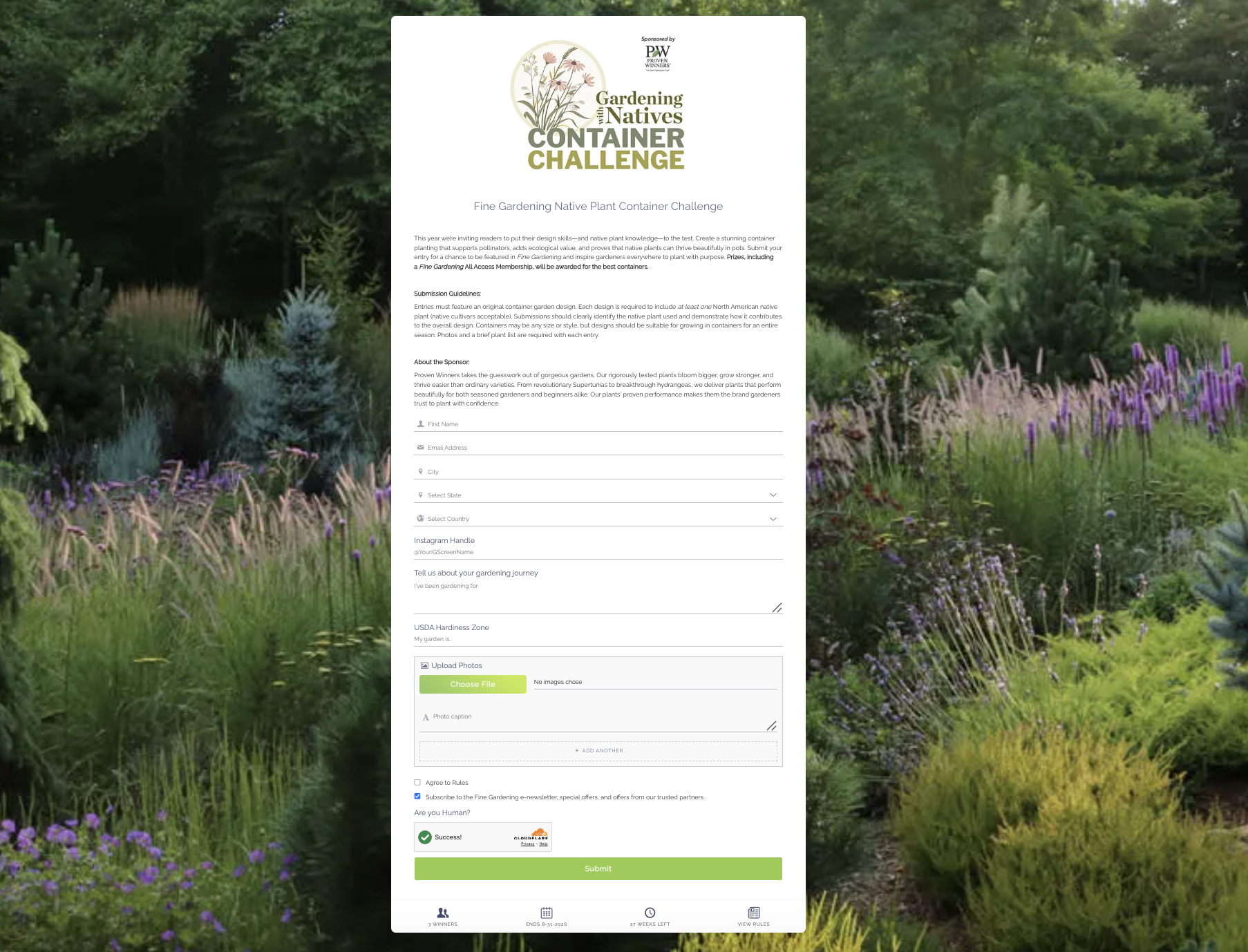
This year, we’re inviting readers to put their design skills—and native plant knowledge—to the test. Create a stunning container planting that supports pollinators, adds ecological value, and proves that native plants can thrive beautifully in pots. Submit your entry for a chance to be featured in Fine Gardening and inspire gardeners everywhere to plant with purpose.
CONTAINER CHALLENGE PRIZES
Please see details below for the rules
Grand Prize – Valued between $550-$850 (depending on the AquaPots Lites chosen)
Runner-Up Prizes (3 total including Crowd Favorite Award)
$250 e-gift certificate to shop at provenwinners.com for plants, AquaPots Lites, and more
PLUS a Fine Gardening All Access Membership
Native containers from Mt. Cuba Center
Submission Guidelines:
Entries must feature an original container garden design. Each design is required to include at least one North American native plant (native cultivars acceptable). Submissions should clearly identify the native plant used and demonstrate how it contributes to the overall design. Containers may be any size or style, but designs should be suitable for growing in containers for an entire season. Photos and a brief plant list are required with each entry.
About the Sponsor:
Proven Winners® takes the guesswork out of gorgeous gardens. Our rigorously tested plants bloom bigger, grow stronger, and thrive easier than ordinary varieties. From revolutionary Supertunias to breakthrough hydrangeas, we deliver plants that perform beautifully for both seasoned gardeners and beginners alike. Our plants’ proven performance makes them the brand gardeners trust to plant with confidence.
Incorporating native plants into container designs is a simple yet meaningful way to extend ecological benefits beyond traditional garden beds. Even a single native species can provide nectar, pollen, foliage, or fruit that supports local pollinators, birds, and beneficial insects that ornamental exotics often cannot sustain. In containers—whether on a patio, balcony, or entryway—native plants help bridge the gap between decorative gardening and habitat gardening, transforming small spaces into functional pieces of the larger ecosystem.
Designs Where Natives Are the Star
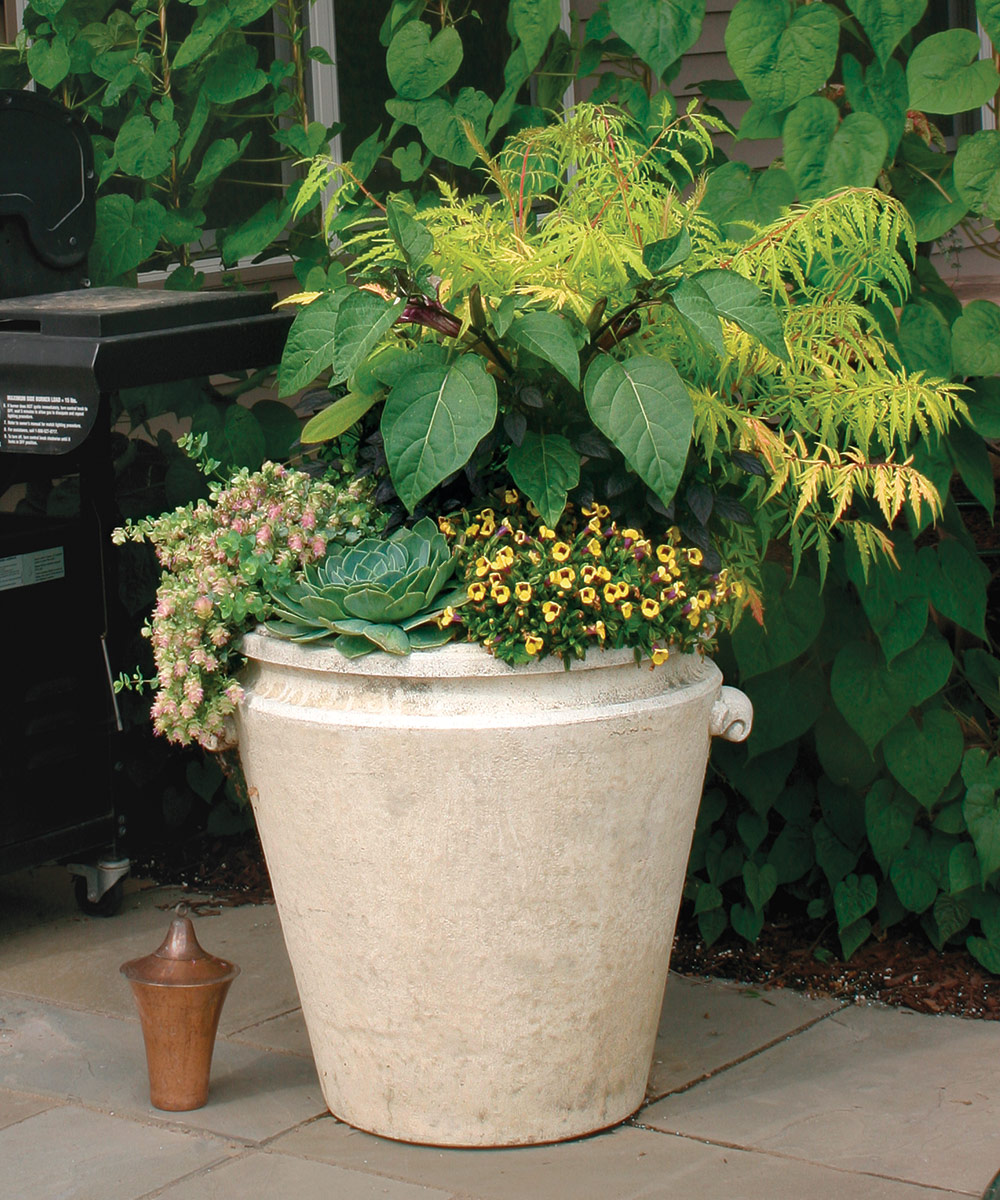
Tiger Eyes™ sumac (Rhus typhina ‘Bailtiger’, Zones 4–8) is a native that turns bright orange in autumn. Here it is paired with ‘Kent Beauty’ ornamental oregano (Origanum ‘Kent Beauty’, Zones 5–8) and Catalina® Gilded Grape torenia (Torenia ‘Dancat 266’, annual) among others. See the full design here.Design by Scott Endres.
Tiger Eyes™ sumac (Rhus typhina ‘Bailtiger’) is a golden, cutleaf cultivar of staghorn sumac, a species native to eastern and central North America. Because it is derived from a native tree, it retains much of the ecological value of the straight species. Staghorn sumac supports numerous native moth and butterfly larvae, provides nectar and pollen for pollinators, and produces dense clusters of red fruit that persist into winter, feeding birds when other resources are scarce. In a container design dominated by ornamental exotics, Tiger Eyes™ serves as the ecological anchor—bringing native plant benefits such as habitat support and seasonal wildlife food while still delivering striking chartreuse foliage and brilliant fall color.
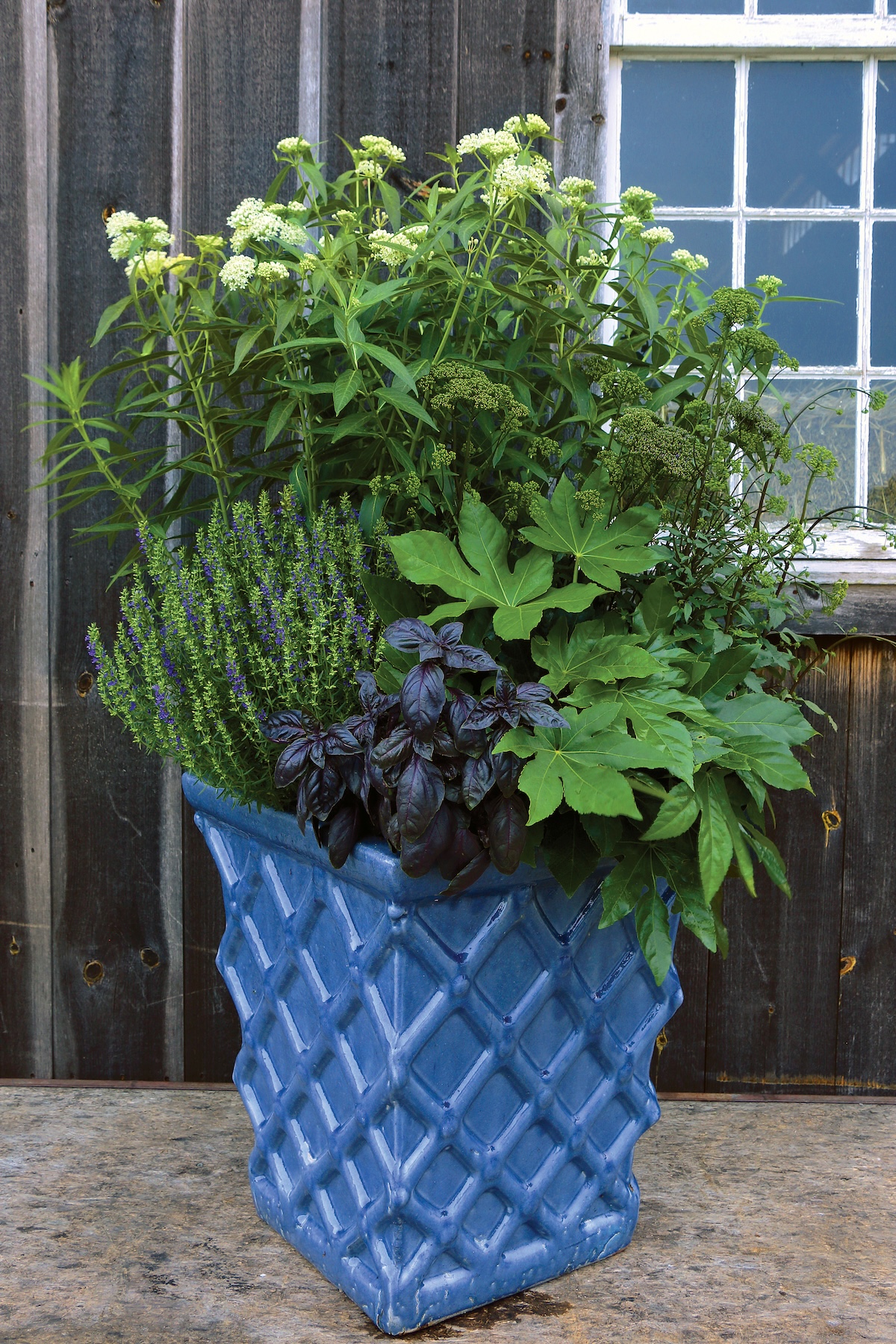
‘Ice Ballet’ swamp milkweed (Asclepias incarnata ‘Ice Ballet’, Zones 3–9) is combined with Rock hyssop (Hyssopus officinalis subsp. aristatus, Zones 4–9) and Japanese aralia (Fatsia japonica, Zones 8–10) in this texture-filled design. See the full planting plan here. Design by Sarah Partyka.
‘Ice Ballet’ swamp milkweed (Asclepias incarnata ‘Ice Ballet’) is a white-flowering cultivar of a species native to much of the eastern and central United States, where it naturally grows in moist meadows, stream banks, and low areas. As a selection of this North American native, it maintains the ecological strengths that make swamp milkweed such a valuable garden plant. Its nectar-rich blooms attract a wide range of pollinators, including native bees, butterflies, and hummingbirds, and like all milkweeds, it serves as a host plant for monarch butterfly caterpillars. By incorporating ‘Ice Ballet’ into a design, gardeners gain both luminous midsummer flowers and meaningful habitat support rooted in regional ecosystems.
‘Ruby Falls’ redbud (Cercis canadensis ‘Ruby Falls’, Zones 5–9) is a vibrant vertical element in this container, which is paired with Prairie Fire™ sedge (Carex testacea ‘Indian Summer’, Zones 6–9) of New Zealand origin, and lion’s tail (Leonotis leonurus, Zones 6–11) from South Africa—both of which could easily be swapped for native plants. Design by Nancy Sweet.
‘Ruby Falls’ redbud (Cercis canadensis ‘Ruby Falls’) is a weeping, purple-leaved cultivar of eastern redbud, a small understory tree native to much of the eastern and central United States, from the Great Lakes south to Texas and Florida. In early spring, its rosy-pink flowers emerge along bare branches, providing an important nectar source for native bees and other early pollinators when few other plants are in bloom. The heart-shaped foliage serves as host plant material for several moth and butterfly species, and its seedpods offer minor wildlife value later in the season. Eastern redbud brings both ornamental appeal and genuine habitat support to garden beds and large containers alike, enhancing mixed plantings with a strong native foundation.
Fine Gardening Recommended Products
Spear & Jackson 4930FZ Razorsharp Telescopic Tree Pruner
Fine Gardening receives a commission for items purchased through links on this site, including Amazon Associates and other affiliate advertising programs.
Telescopic tree pruner with SK5 carbon steel blade which stays sharper for longer. Variable length telescopic handle extends up to 92 Inch (2340mm). Lopper for cutting branches up to 1.2″ (30mm). 13 inch (330mm) saw is ideal for cutting thicker branches. Supplied with a long cord and pull-action handle. Part of the Razorsharp Advantage collection, the obvious choice for gardeners who demand and expect precise, powerful performance. “Grow Your Own” Great British Growing 2020 Award Winners.
The Regenerative Landscaper: Design and Build Landscapes That Repair the Environment
Fine Gardening receives a commission for items purchased through links on this site, including Amazon Associates and other affiliate advertising programs.
2024 Nautilus Award Gold Medal Winner! This awe-inspiring guide weaves together permaculture design, food resiliency, climate adaptation, community organizing, and indigenous wisdom that you can implement in your own backyard.
Razor-Back Potato/Refuse Hook
Fine Gardening receives a commission for items purchased through links on this site, including Amazon Associates and other affiliate advertising programs.
Price: $11.99 (as of Mar 02, 2026 21:11:11 UTC – Details)
Introduce Name: Fitness Resistance Band Color: Muliticolor Product Specifications: 35.4×1.6 inch Material: Polyester-Cotton Package included 3pcs x Band
8-Section Adjustable Resistance-The 8-section design of this Dance pilates Stretching Belt allows for targeted stretching and toning Versatile Resistance Band-This tool is not just for dancing but also great for stretching, toning, and resistance training Comfortable & Easy to Use-Make from Polyester Cotton., this belt is enduring and designed to bear rigorous workouts, ensuring long terms use Multi-Purpose for All-Equipped with digital elastics, this belt offer adjustable resistance to suit your fitness needs, making it for Pilates or Latin dancing Portable & Compact-Lightweight and easy to carry, this resistance band can be folded to fit in your gym bag, making it convenient for traveling or working out at home.
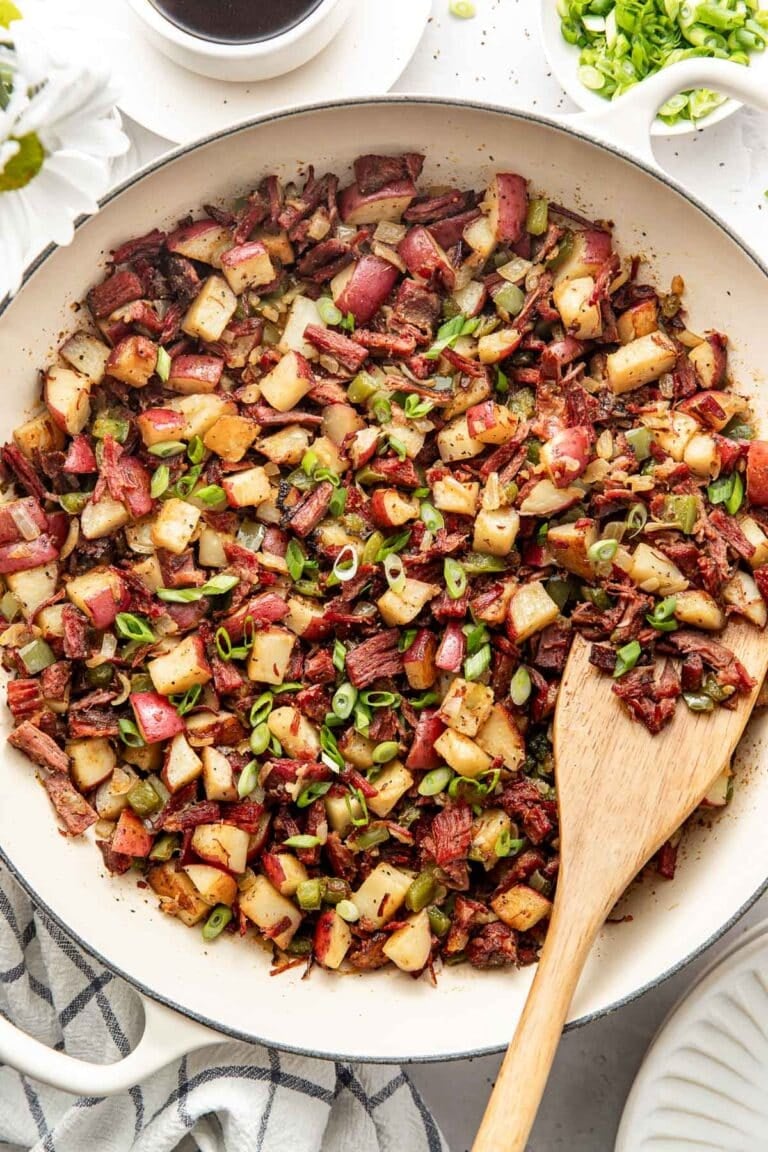
This homemade, crispy corned beef hash recipe features golden potatoes, corned beef, onions, and bell peppers. It’s perfect for a hearty breakfast or brunch.
Price: $14.99 (as of Mar 02, 2026 09:10:38 UTC – Details)
2026 Upgrade Fitness Resistance Band for Stretching and Yoga 【8-Level Adjustable Design】 The 8-level adjustable design allows you to adjust the length and resistance according to your needs 【Compact And Portable】Gluteus maximus resistance band, Light and easy to carry, this fitness band is perfect for on-the-go training. Take it anywhere—home, gym, or travel—and maintain your workout routine. Numbered resistance bands for glutes 【Sturdy Resistance Band Construction】Our resistance bands are built to last, featuring handles for arm stretches and reliable performance 【Stretching And Yoga Assistance】This resistance band can boosts flexibility, making it ideal for yoga and stretching routines. It provides targeted support for deeper stretches. Stretching tools for flexibility 【Fitness Resistance Band for Stretching and Yoga】Resistance bands with loops, Spend just 5 mins a day stretching with it, and your shoulders will feel less stiff, plus you’ll be able to lift your legs a little higher
Almost 5 out of every 10 households are doing some kind of gardening in the US. Even Gen Z is getting into plants — not just for looks, but for relaxation and joy. Gardening has become more than a hobby; it’s a lifestyle.
So chances are, one of your neighbors is already growing something. And let’s be honest — a little healthy competition makes it more fun.
Starting early is the real secret to a successful garden.
Apart from growing just edibles, having raised flower beds add beauty and personality to your backyard.
It not only makes your garden look beautiful, but it also brings helpful pollinators to your vegetable plants.
Flowers attract bees and butterflies that help your veggies grow better. When pollination improves, you often get more fruits and healthier plants.
26 Flower Bed Ideas for Spring Garden
Spring is a great time to refresh your garden because the weather is pleasant, the soil is soft, and flowers can grow strong roots and bloom well.
After a dull winter, adding bright flowers — especially some that bloom year-round — keeps your garden fresh, colorful, and lively beyond just spring.
1. Tulip & Daffodil Color Burst Bed
A tulip and daffodil bed is one of the easiest ways to create a strong spring impact. These bulbs are early bloomers that instantly fill your garden with bright color after winter.
Plant the bulbs in clusters rather than single lines for a fuller look. Mixing yellow daffodils with red, pink, or purple tulips adds contrast and depth.
Spring’s cool weather helps these bulbs bloom longer and keeps the flowers fresh. They also require very little maintenance once planted in well-drained soil.
After flowering, let the leaves stay until they turn yellow. This helps the bulbs store energy and come back beautifully next spring.
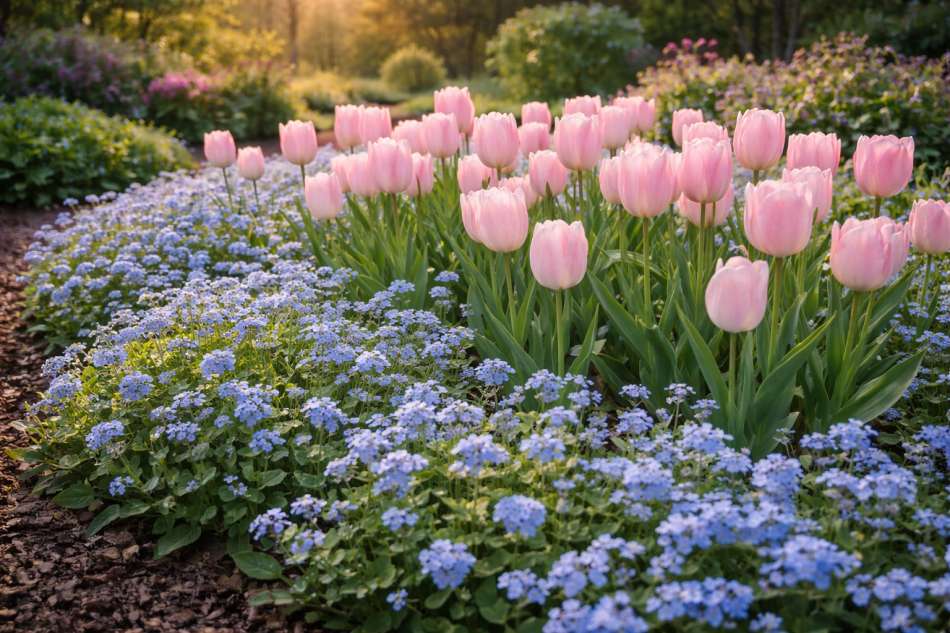
A pastel-themed flower bed gives your spring garden a soft and calming look. Shades like light pink, lavender, baby blue, and white feel fresh and perfect for the season.
You can mix flowers like petunias, alyssum, and pansies to create a gentle color blend. Plant them in groups so the soft tones stand out clearly instead of looking scattered.
Spring sunlight makes pastel colors glow without looking too harsh. The mild temperatures also help these flowers bloom longer and stay healthy.
Adding some light green foliage between the blooms keeps the bed balanced. This style works well near entrances, pathways, or seating areas for a peaceful spring vibe.
3. Layered Spring Flower Bed
A layered flower bed adds depth and structure to your spring garden. It is designed by placing tall plants at the back, medium plants in the middle, and short flowers in the front.
This layout allows every plant to get enough sunlight and prevents smaller flowers from being hidden. It also makes the flower bed look full and organized.
Spring is the best time to plan layers because many plants grow actively in cool weather. You can easily see how heights and colors work together.
Choose early and mid-spring bloomers to keep the layers colorful for weeks. This method works well along fences, walls, or house borders.
4. Pollinator-Friendly Spring Flower Bed
You can combine Lavender and Coneflowers to create a fragrant, purple-hued buffet that provides sturdy landing pads for butterflies and long-lasting nectar for bees.
A pollinator-friendly bed helps your garden look beautiful while supporting nature. In spring, bees and butterflies become active and look for fresh nectar.
Plant bright, open flowers that are easy for pollinators to reach. Mixing different bloom times ensures food is available throughout the season.
Spring weather supports strong flower growth, which means more nectar and pollen. Healthy blooms attract more helpful insects.
This type of flower bed also benefits nearby vegetable plants. Better pollination can lead to healthier plants and improved harvest.
You can also pair Snapdragons and Pansies to create a structured, colorful display that thrives in controlled soil, allowing these upright blooms to stay neat and accessible along your garden paths.
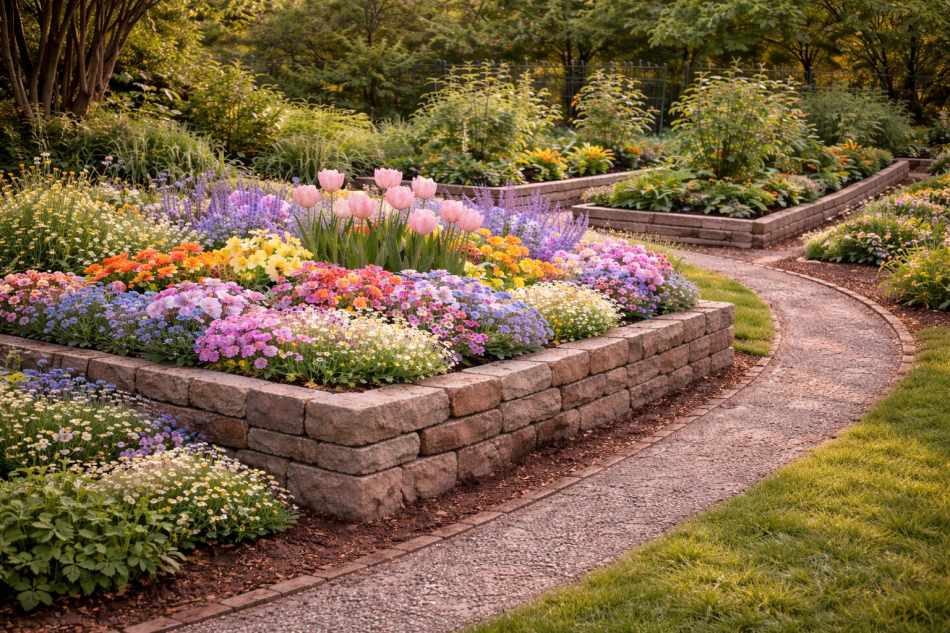
A raised flower bed is a good option for spring planting. It improves drainage and warms up faster than ground soil, which helps plants grow early in the season.
Spring rains can sometimes make soil heavy and wet. Raised beds prevent water from collecting around roots and reduce the risk of rot.
You can control the soil quality easily by adding compost and fresh garden soil. This gives spring flowers a healthy start.
Raised beds also keep your garden neat and well-structured. They work well in small yards or along patios.
6. Cottage-Style Spring Flower Bed
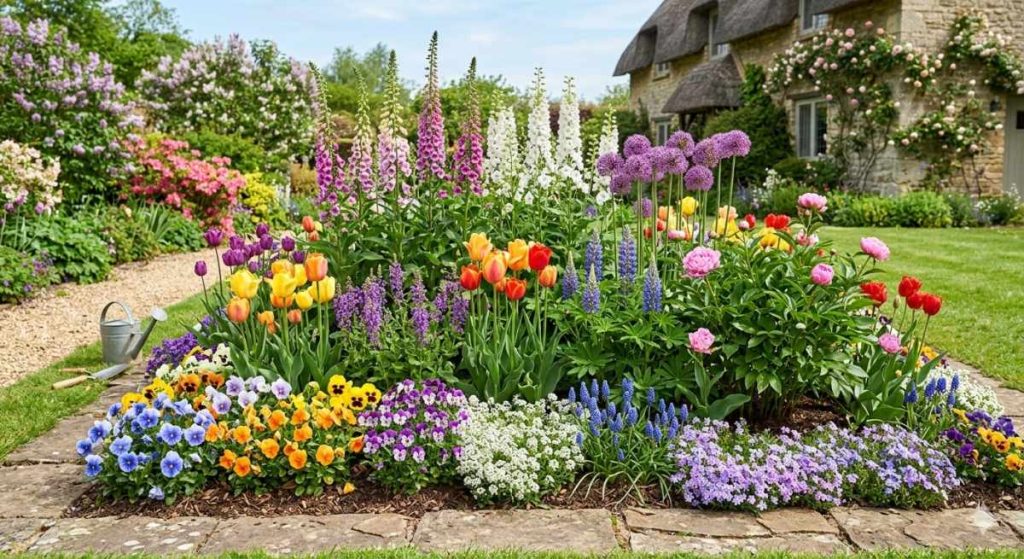
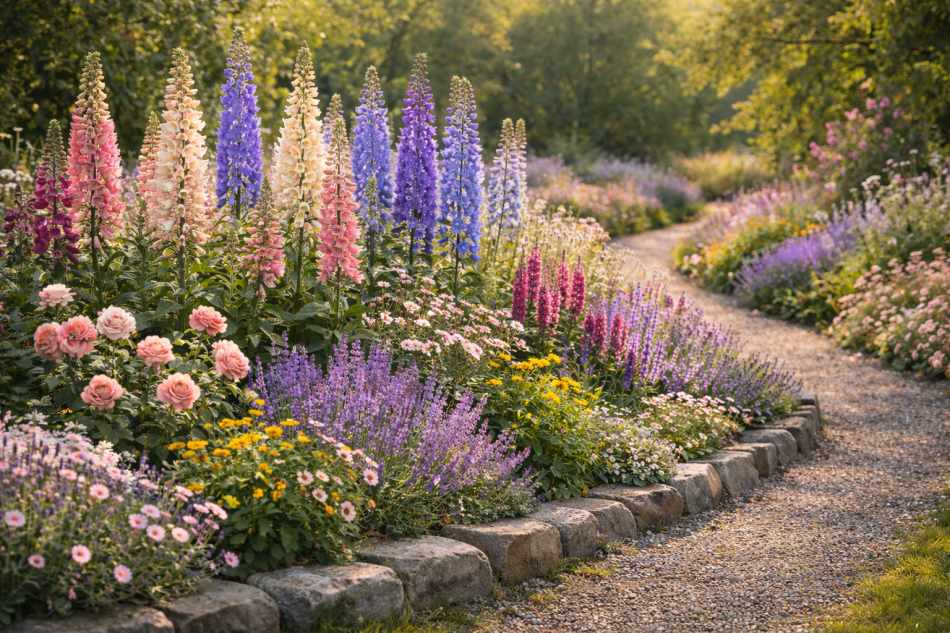
Plant Foxgloves and Delphiniums to create that quintessential tall, whimsical backdrop that gives your cottage garden its signature vertical “wild” charm.
A cottage-style flower bed looks natural and slightly wild. It mixes different flowers closely together for a soft and full appearance.
Spring is the perfect time to create this look because many flowers bloom at the same time. The mix of colors and shapes makes the bed lively and attractive.
Instead of strict rows, plant flowers in loose groups. This gives a relaxed and charming feel.
You can combine early and mid-spring bloomers to keep the bed colorful for a longer time. This style works well in front yards and garden pathways.
7. Spring Border Flower Bed
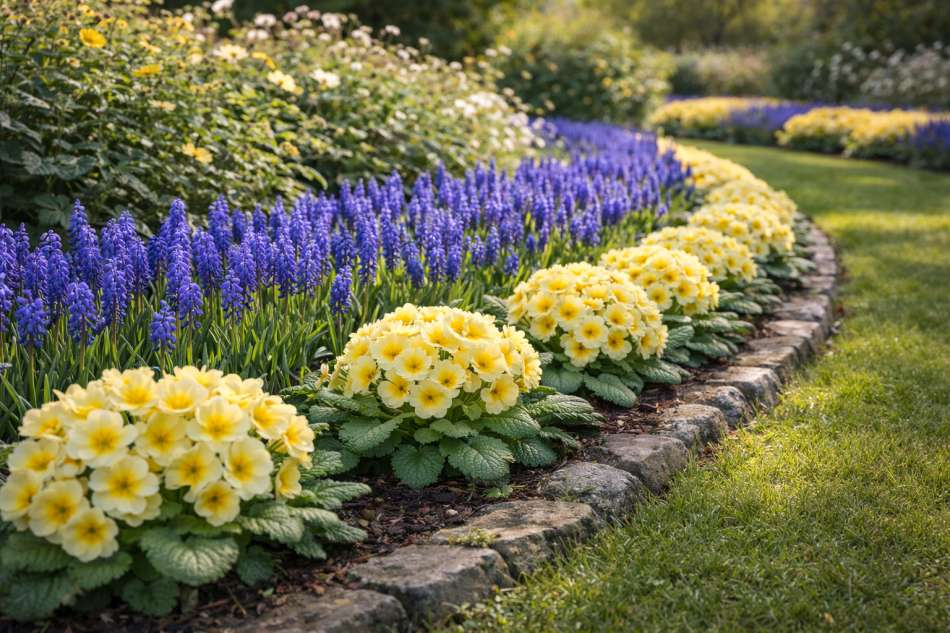
Grow Grape Hyacinths with Primroses to create a striking, rhythmic border of blues and yellows that stays neat while providing a cheerful welcome to your guests.
A spring border flower bed is perfect for lining pathways, fences, or driveways. It clearly defines spaces while adding fresh seasonal color.
Choose compact spring flowers that grow evenly and stay neat. Plant them close enough to create a full and continuous look.
Spring’s mild temperatures help border plants establish quickly. Regular watering during early growth keeps them healthy and blooming.
Mix early and mid-spring bloomers so the border stays colorful for weeks. This type of bed makes your garden look organized and welcoming.
You can blend White Bleeding Hearts and Lily of the Valley to craft a sophisticated, all-white sanctuary that captures the soft spring light with delicate, nodding bells.
A monochrome flower bed uses different shades of one color. It creates a clean and elegant look in your spring garden.
You can choose shades like all pink, all white, or all purple. Mixing light and dark tones adds depth without making the bed look too busy.
Spring light makes single-color beds stand out clearly. The soft seasonal sunlight keeps the colors fresh and balanced.
This idea works well in small gardens where too many colors may look crowded. It gives a simple but strong visual impact.
9. Wildflower-Inspired Spring Flower Bed
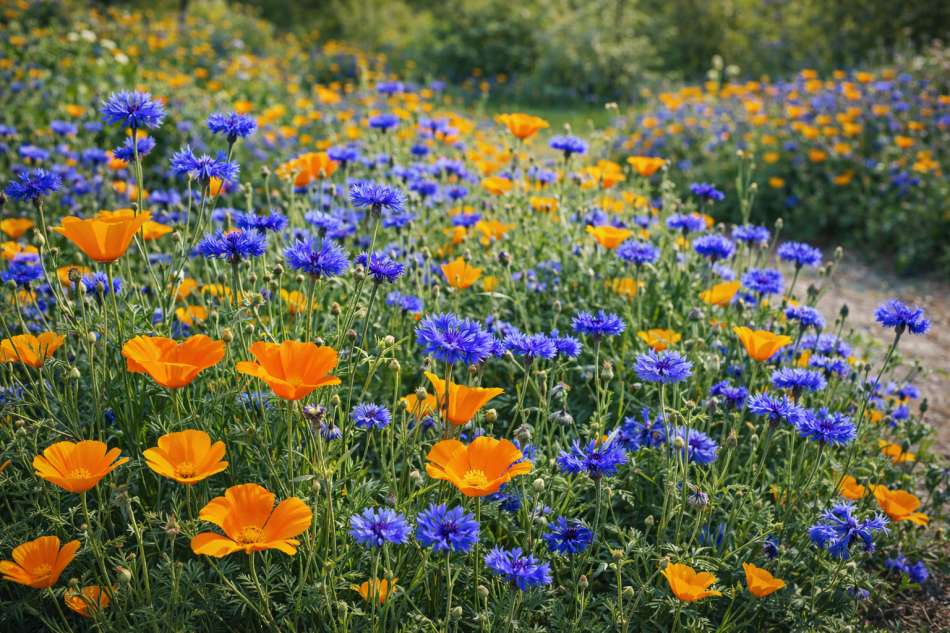
Grow California Poppies and Cornflowers to create a sun-drenched “meadow” look that effortlessly fills empty spaces with a bold, untamed contrast of orange and electric blue.
If you like a more natural look, a wildflower-style bed is a great spring idea. It feels relaxed, colorful, and slightly untamed.
Instead of planting in perfect rows, scatter seeds or plant in loose groups. This gives the bed a soft and flowing appearance.
Spring is ideal for this because many wildflowers grow quickly in cool, mild weather. They fill empty spaces fast and create a cheerful mix of colors.
This type of bed also supports bees and butterflies. It’s low-maintenance and perfect if you don’t want a very formal garden style.
10. Fragrant Spring Flower Bed
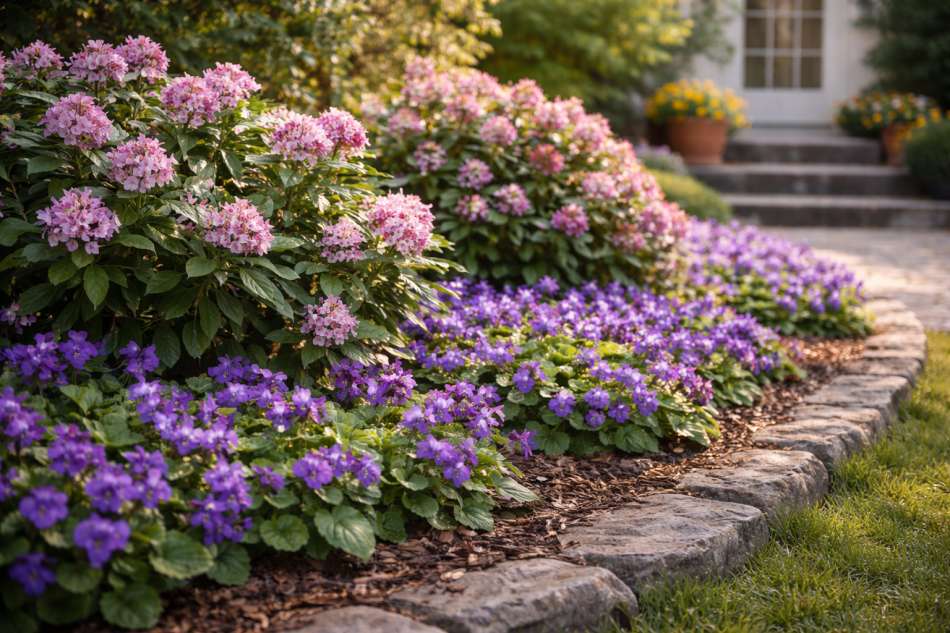
You can plant Daphne and Sweet Violets near your front door to greet guests with a delicate, clean scent that travels beautifully on the cool, crisp spring breeze.
A fragrant flower bed makes your spring garden feel even more special. It not only looks beautiful but also smells fresh and inviting.
Plant flowers near seating areas, windows, or entryways so you can enjoy the scent daily. Spring air helps carry the fragrance naturally around the garden.
Cool temperatures help many fragrant flowers bloom well without stress. Regular watering and sunlight keep them healthy and long-lasting.
This idea works best when you mix early and mid-spring bloomers. That way, your garden smells pleasant for most of the season.
11. Rock-Edged Spring Flower Bed
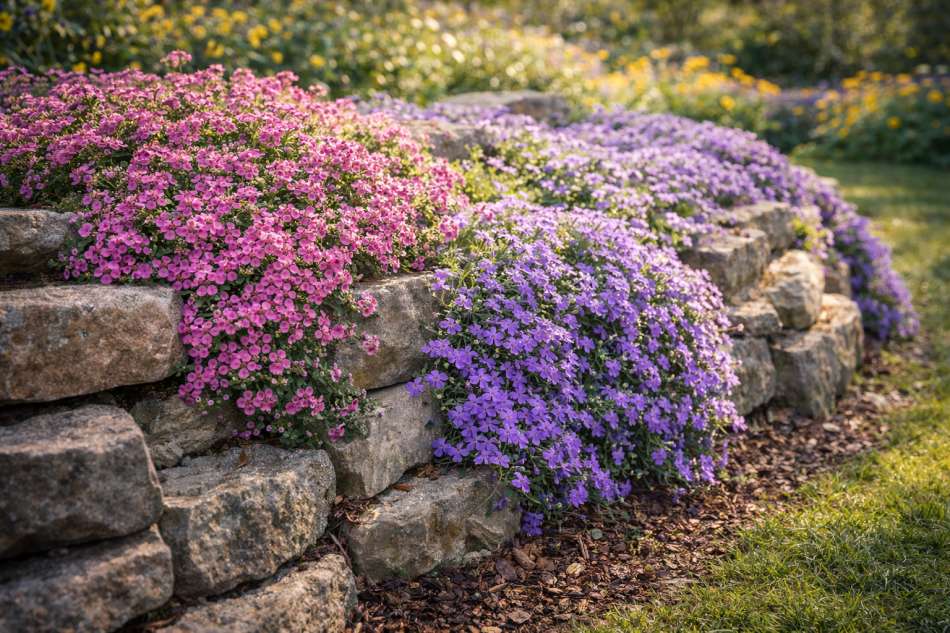
Plant Rock Cress and Creeping Phlox against the stones to create a cascading “living carpet” that softens the hard edges with vibrant explosions of pink and purple.
A rock-edged flower bed gives your spring garden a clean and finished look. The stones clearly separate the flowers from the lawn or walkway.
Spring is a good time to set this up because the soil is soft and easy to shape. You can arrange the rocks while planting your seasonal blooms.
The rocks also help hold the soil in place during spring rains. This keeps your flower bed neat and prevents soil from washing away.
Choose bright spring flowers inside the border to create a strong contrast. The natural stone makes the colors stand out even more.
12. Corner Spring Flower Bed
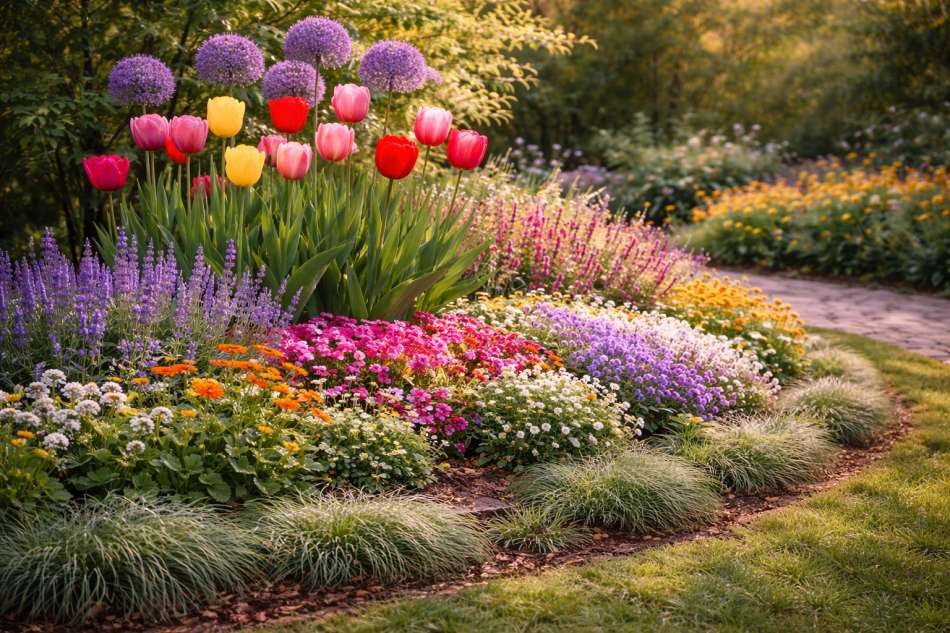
You can anchor your corner with Tall Tulips and Alliums in the back to create a striking vertical focal point that draws the eye upward.
A corner flower bed is perfect for filling empty spaces in your yard. It turns unused areas into bright and attractive spots during spring.
You can design it in a triangular or curved shape to fit the space. Start with taller plants at the back and shorter ones in front.
Spring flowers grow quickly in mild weather, so the corner fills up fast. This makes the area look lively within a few weeks.
Using a mix of early and mid-spring bloomers keeps the corner colorful for longer. It’s a simple way to improve the overall look of your garden.
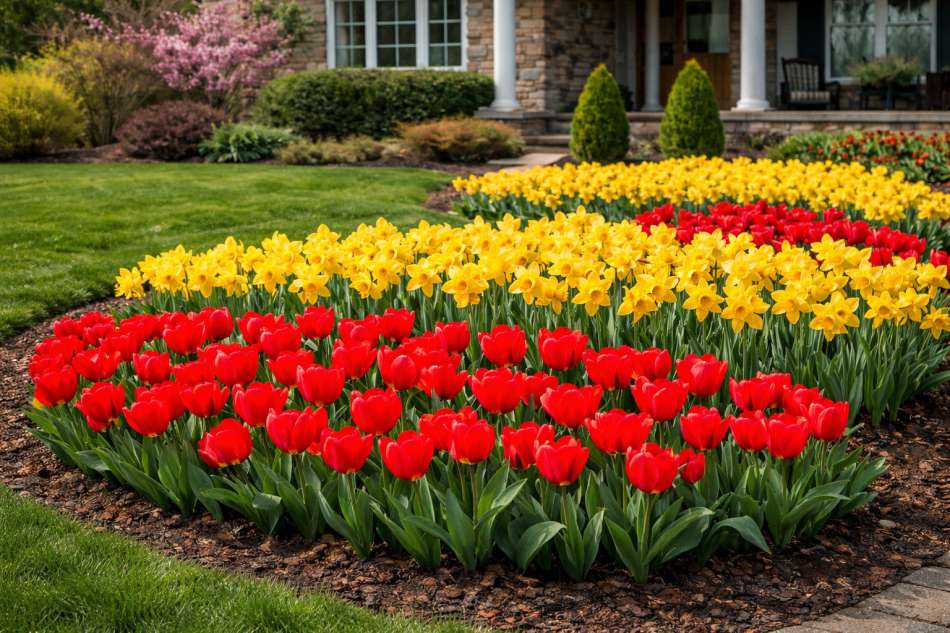
You can plant a bold sweep of Red Emperors and Golden Daffodils to create a high-contrast, “stop-and-stare” display that radiates warmth and energy from the very first day of spring.
A front-yard statement flower bed is good because it instantly improves your home’s appearance. It creates a strong first impression during the bright spring season.
Spring flowers bloom fresh and colorful, making the entrance look lively. Bold shades like red, yellow, and purple stand out beautifully in natural sunlight.
Choose plants that grow evenly and fill the space well. This keeps the bed looking full and balanced from a distance.
Adding a mix of early and mid-spring bloomers helps maintain color for weeks. A well-planned statement bed makes your home look cared for and welcoming.
14. Flower and Herb Spring Bed
You can grow Chives and Calendula to create a stunning display of edible purple pom-poms and bright orange petals that double as a gourmet garnish for your spring salads.
A flower and herb bed is good because it combines beauty and usefulness in one space. You get colorful blooms along with fresh herbs for daily use.
Spring weather supports fast growth for both flowers and herbs. Mild temperatures help young plants establish strong roots.
Plant herbs in small clusters between flowering plants for a neat look. This mix also attracts pollinators, which benefits both types of plants.
This type of bed works well in small gardens or near the kitchen area. It keeps your garden practical while still looking bright and fresh in spring.
15. Low-Maintenance Spring Flower Bed
You can combine Daylilies and Coneflowers to create a tough, self-sufficient display that returns reliably every year with very little help from you.
A low-maintenance spring flower bed is easy and simple to manage, especially if you are new to gardening. It requires less effort but still looks bright and fresh.
Choose hardy spring flowers that grow well in mild weather. These plants adjust quickly and do not need constant care.
Prepare the soil well at the start and add compost for healthy growth. Once established, most spring flowers only need regular watering.
This type of bed is perfect if you want color without spending too much time on upkeep. It keeps your garden neat and cheerful with minimal work.
16. Small-Space Spring Flower Bed
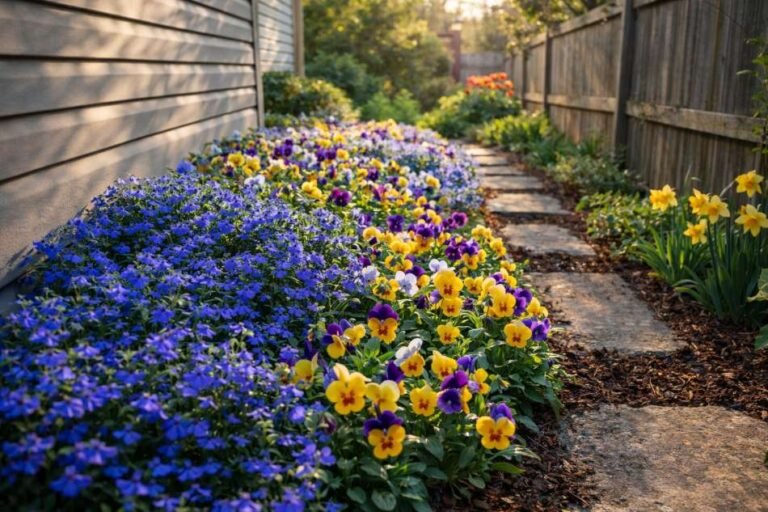
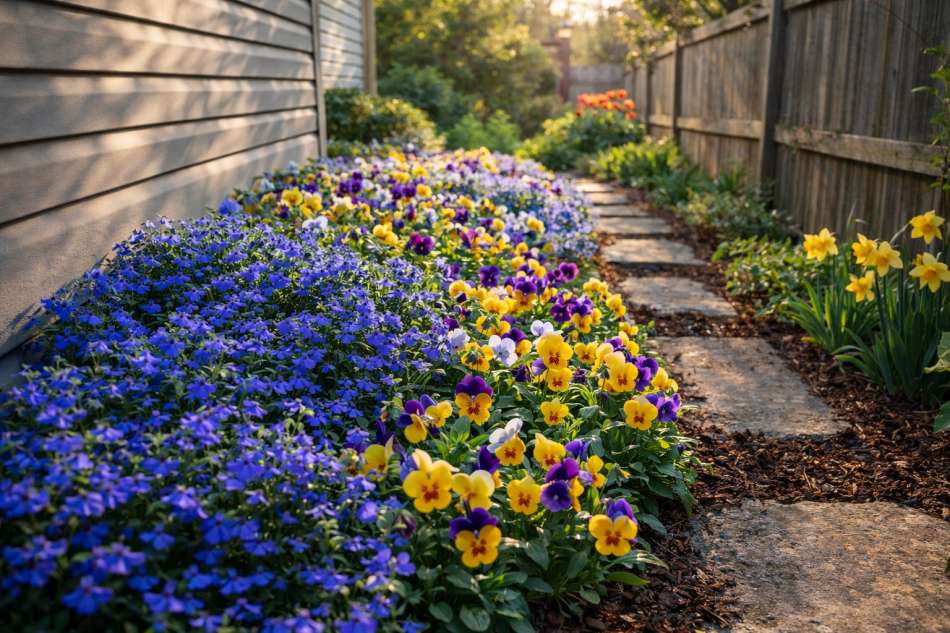
You can also combine Lobelia and Violas into the foreground to provide a dense, jewel-toned spill of color that makes even the narrowest side yard feel lush and intentionally designed.
A small-space spring flower bed is easy and simple to create, even in compact gardens. You do not need a large yard to enjoy spring blooms.
Use vertical space by placing taller plants at the back and shorter ones in front. This makes the area look fuller without feeling crowded.
Spring flowers grow actively in cool weather, so small beds fill up quickly. Regular sunlight and watering help them stay healthy.
This idea works well for balconies, narrow side yards, or small corners. It proves that even limited space can look colorful in spring.
17. Circular Spring Flower Bed
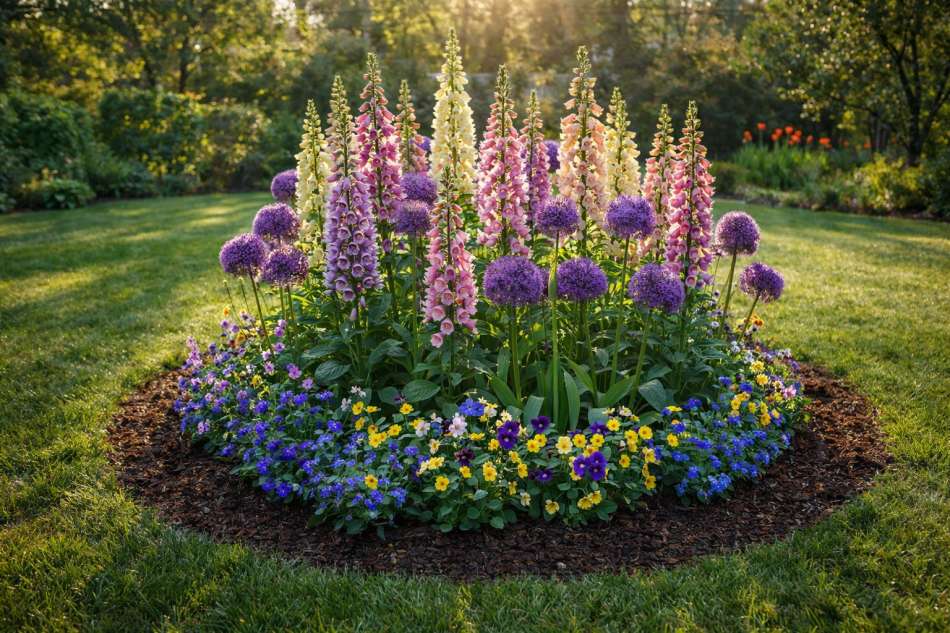
You can plant Tall Foxgloves and Ornamental Onions to create a striking vertical “hub” that commands attention from every angle of your lawn.
A circular spring flower bed creates a balanced and eye-catching design. It works well in the center of a lawn or around a tree.
Plant taller spring flowers in the middle and shorter ones around the edges. This keeps the shape clear and visually neat.
Spring is a good time to build this bed because the soil is easy to dig and shape. Flowers establish quickly in mild weather.
Using a mix of early and mid-spring bloomers keeps the circle colorful for a longer period. It becomes a natural focal point in the garden.
18. Seasonal Rotation Spring Flower Bed
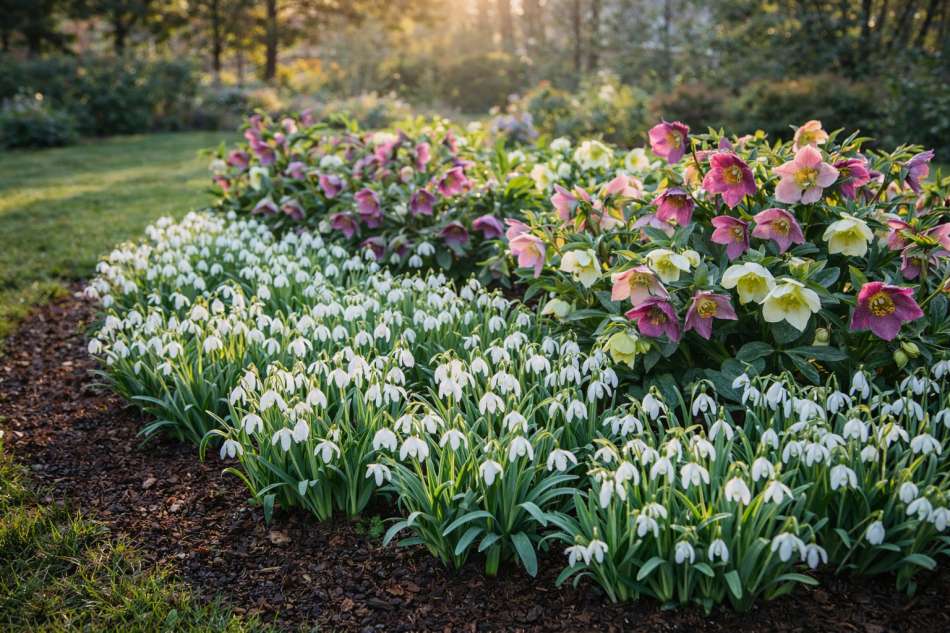
You can start your rotation with Snowdrops and Hellebores to wake up the soil with resilient, early-season blooms that thrive in the crisp, late-winter air.
A seasonal rotation flower bed keeps your garden active and changing. It allows you to replace plants as each bloom cycle ends.
Start with early spring flowers, then add mid- and late-spring varieties. This keeps the bed looking fresh without empty gaps.
Spring weather supports quick root growth, making it easier for new plants to adjust. Healthy soil preparation helps each new set of flowers perform well.
This type of bed requires planning but gives long-lasting results. It ensures your garden stays colorful throughout the spring season.
19. Mixed Height Spring Flower Bed
Layer the flower bed with Mid-height Tulips and Low-growing Violas in the front to fill every gap with a lush, tiered carpet of color that keeps the soil shaded and the design balanced.
A mixed height spring flower bed is good for the garden because it creates depth and makes the space look fuller. Different plant heights help fill empty gaps and use the space properly.
In spring, many flowers grow actively, so combining tall, medium, and short plants gives a balanced look. Taller blooms stand out while shorter ones cover the soil.
This design also improves air flow between plants, which keeps them healthier. Good spacing reduces the risk of common spring plant diseases.
With proper planning, this type of bed stays colorful and structured throughout the season. It makes the garden look well-designed and lively.
20. Shaded Area Spring Flower Bed
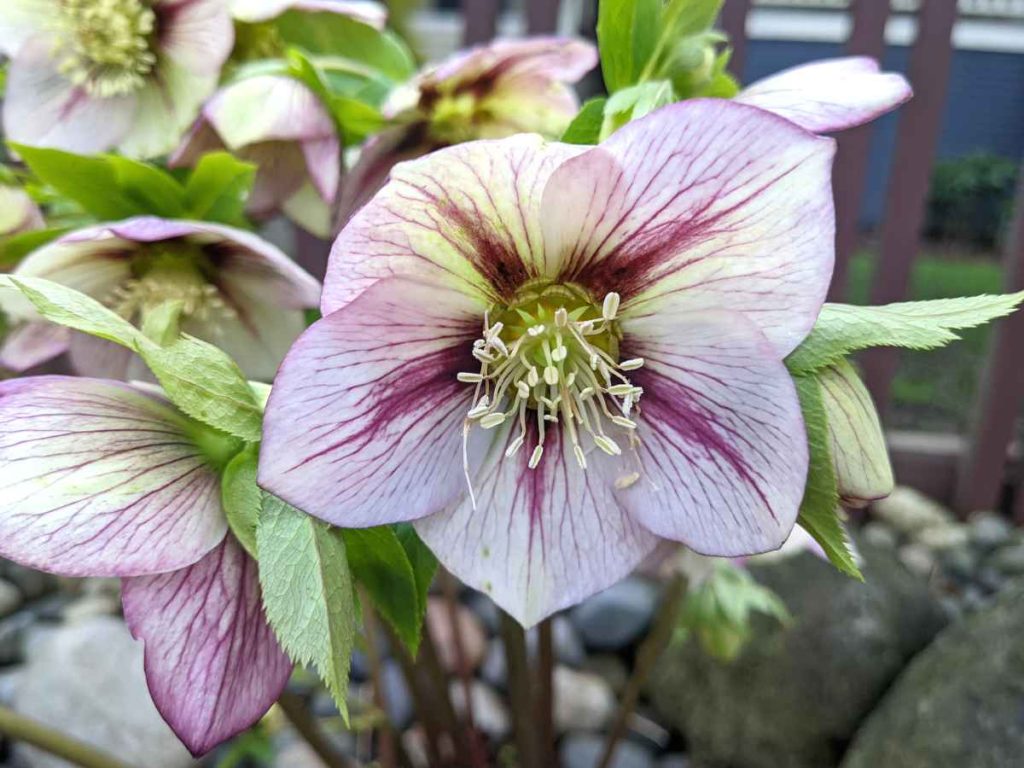
You can plant Bleeding Hearts among Hellebores to add elegant, nodding blooms that bring soft color and delicate texture to the quietest, shaded parts of your garden.
A shaded spring flower bed is good for the garden because it makes use of areas that do not get full sunlight. Instead of leaving them empty, you can turn them into soft, green spaces.
Spring is a good time to plant shade-loving flowers because the weather is cool and gentle. Plants establish roots before summer heat arrives.
Choose flowers that grow well in partial shade and keep the soil moist. Adding compost improves soil quality and supports steady growth.
This type of bed adds variety to your garden layout. It ensures even the quieter corners look fresh and active in spring.
21. Early-Blooming Spring Flower Bed
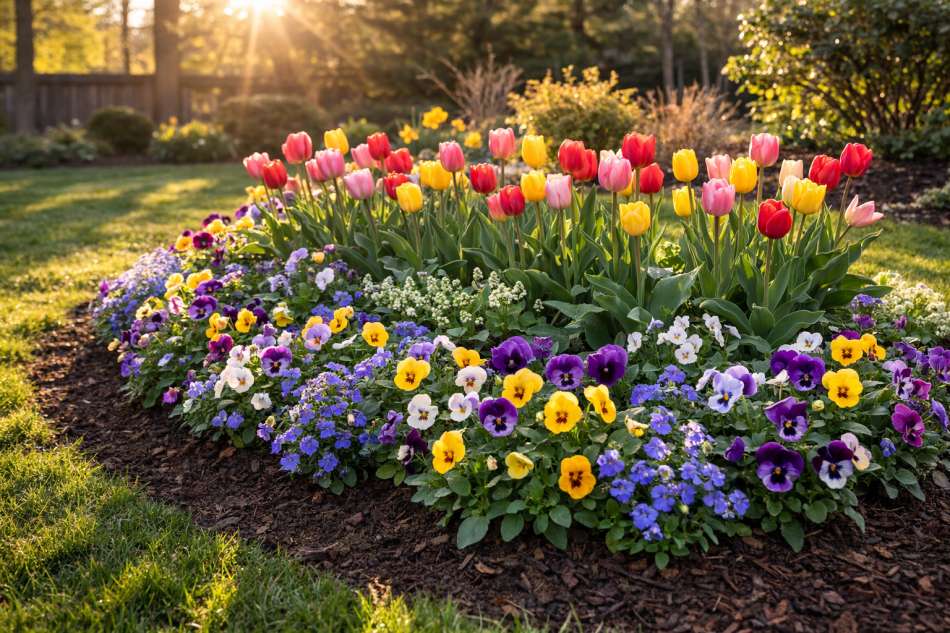
Grow early-blooming plants like pansies, primroses, snapdragons, and calendula for this type of bed. These flowers handle cool spring temperatures well and start blooming quickly.
Early bloomers are perfect for adding the first splash of color after winter. They brighten up empty spaces while other plants are still growing.
Plant them in groups for a fuller look and better visual impact. Regular watering and light feeding help them stay fresh.
This bed keeps your garden lively from the very beginning of spring. It sets the tone for the rest of the season.
22. Long-Blooming Spring Flower Bed
Grow long-blooming plants like petunias, geraniums, verbena, and marigolds in this bed. These flowers continue blooming well beyond early spring.
They are useful because they maintain color even as other spring flowers fade. This keeps your garden from looking empty.
Plant them in well-drained soil and give enough sunlight for steady growth. Removing faded flowers helps them bloom longer.
This type of bed supports color through spring and into summer. It helps your garden stay bright for many months.
23. Pathway Lining Spring Flower Bed
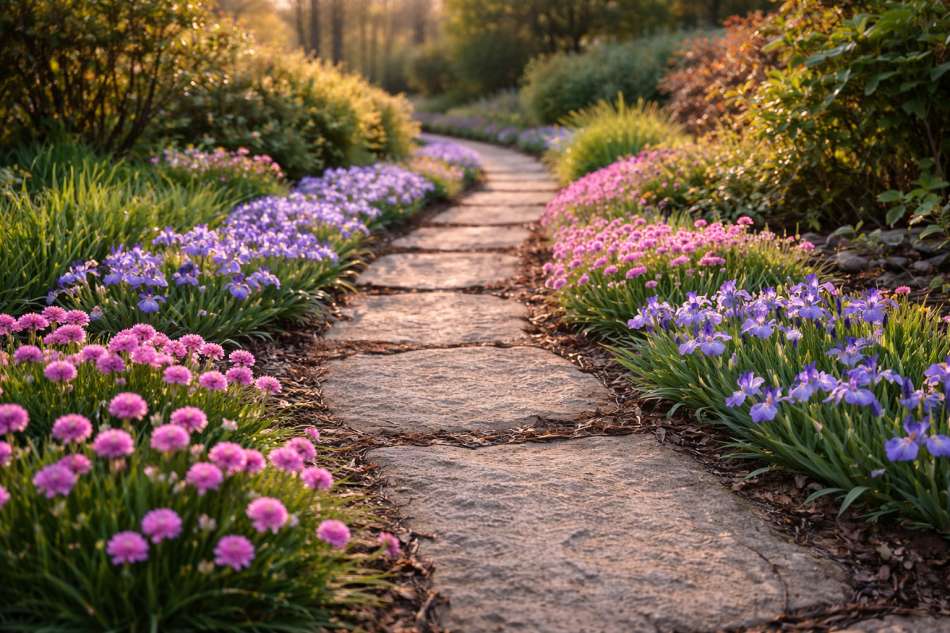
You can border your walkways with Dwarf Crested Irises and Thrift (Armeria) to create a clean, low-profile edge that defines your path with vibrant bursts of purple and pink.
A pathway lining flower bed improves the overall structure of your garden. It clearly defines walking areas while adding fresh spring color.
Choose compact spring flowers that grow evenly and do not spread too wide. This keeps the path neat and easy to maintain.
Spring is the right time to plant because mild temperatures support quick root development. Plants establish before strong summer heat arrives.
Mix early and mid-spring bloomers to maintain color along the path. This design makes your garden look organized and inviting.
24. Mixed Bulb Spring Flower Bed
Try planting Early Snowdrops and Mid-season Daffodils to ensure your garden wakes up the moment the frost thaws and stays vibrant well into the sunnier spring days.
A mixed bulb flower bed provides continuous blooming during spring. By combining different bulb varieties, you can enjoy flowers at different times.
Plant early, mid, and late-spring bulbs together in well-drained soil. This ensures the bed remains colorful for several weeks.
Spring weather supports strong flowering, especially for bulbs planted earlier. Proper spacing allows each plant to grow without crowding.
After blooming, allow the leaves to dry naturally. This helps the bulbs store energy for the next growing season.
25. Ground Cover Spring Flower Bed
You can blanket your garden with Creeping Phlox and Thrift to create a vibrant, “living rug” that smothers weeds while exploding into a sea of pink and white blooms.
They benefit the garden by covering bare soil and reducing weed growth. Ground cover plants spread quickly and protect the soil surface.
In spring, these plants grow actively and fill empty spaces fast. This keeps the flower bed looking full and neat.
Ground covers also help retain soil moisture during warmer days. This reduces the need for frequent watering.
Choose low-growing spring bloomers for color and texture. They create a soft, carpet-like effect across the bed.
26. Mixed Texture Spring Flower Bed
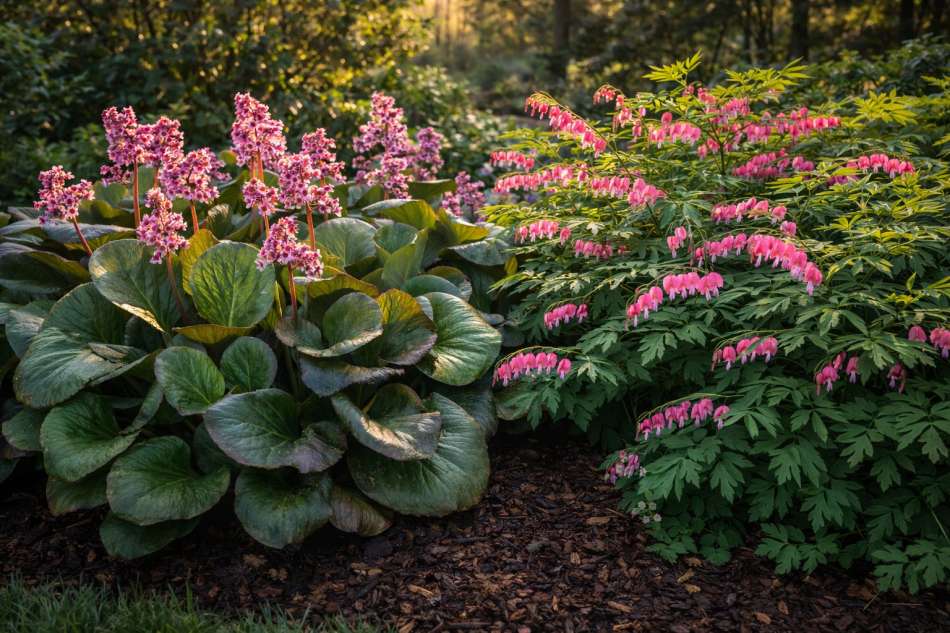
You can pair the bold, dinner-plate leaves of Bergania with the feathery, delicate fronds of Bleeding Hearts to create a striking contrast that makes your spring shadows feel deep and architectural.
They benefit the garden by adding variety in shape and leaf pattern. Mixing different textures makes the flower bed more interesting.
In spring, many plants produce fresh leaves along with blooms. Combining smooth, fine, and bold foliage creates depth.
This design improves visual balance and keeps the bed from looking flat. It works well in both small and large gardens.
Select plants with different leaf sizes and flower forms. The result is a lively and well-structured spring display.
Conclusion
Spring is the perfect season to refresh your garden and try new flower bed ideas. The mild weather, soft soil, and active plant growth make it easier for flowers to establish strong roots and bloom beautifully.
Whether you prefer bold colors, soft pastels, neat borders, or natural wild styles, there is a spring flower bed idea for every space.
With proper planning and a mix of early and long-blooming plants, your garden can stay bright, healthy, and full of life well beyond spring.
Khaja Moinuddin, a computer science graduate, finds joy in gardening and homesteading. Join him on this blog as he shares his experiences in homesteading, gardening, and composting
Price: $9.99 (as of Mar 01, 2026 21:06:12 UTC – Details)
Pilates Flexbands Resistance Bands Specification: Name: Fitness Resistance Band Color: Black-Red, Blue Dimensions: 4*90 cm Thickness: 2.25 mm 2pcs*Fitness Resistance Band Notes: 1. Due to manual measurement, please allow approximately one inch for discrepancies. Please confirm this before placing your order. 2. Due to between monitors, the image may not reflect the actual color of the item. Thank you! 8-Level Adjustable Design: The 8-level adjustable design allows you to adjust the length and resistance according to your needs. Sturdy Resistance Band Construction: Our resistance bands are built to last, featuring handles for arm stretches and reliable performance. Convenient for Training Anytime, Anywhere: As a compact leg stretching strap and versatile stretching band, it allows you to perform stretching exercises anytime, anywhere. Comfortable: Soft, reinforced edges prevent chafing, making durability and comfort with every use. Versatile and Portable: These stretching bands for improving flexibility are lightweight and portable, perfect for use at home, in the gym, or while traveling.
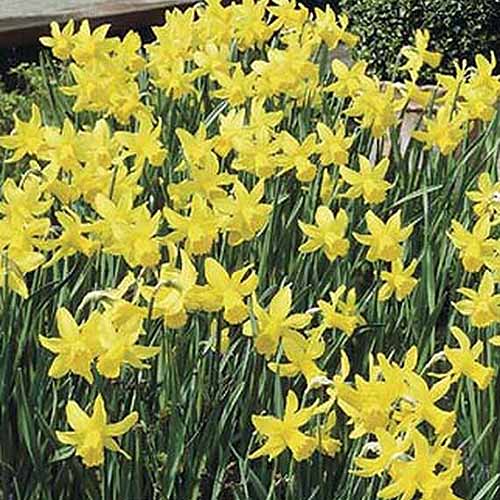
If your garden to-do list includes planting drifts of naturalized daffodils, carefully arranged to look like they popped up and spread of their own accord, it’s important to choose the right varieties.
Cultivars that will work for this purpose might be described as “good multipliers,” “vigorous,” or “suitable for naturalization.”
And since daffodils can keep multiplying for decades, you’ll want to choose types that you love.
I’ve made a list of 15 beautiful varieties sporting flowers of different hues – white, yellow, orange, and even pink!
We link to vendors to help you find relevant products. If you buy from one of our links, we may earn a commission.
All of the following cultivars will work well for naturalizing, and all of them have simple (rather than double) blooms, making them pollinator friendly.
Since you may want to organize your plantings to have a succession of flowers from late winter to early summer, I’ve listed the bloom time of each of these varieties.
To learn how to create a naturalized planting of daffodils, with instructions and tips for selecting an area of the landscape to plant and how to create your layout, as well as determining how many bulbs you’re going to need, read our full guide.
15 of the Best Daffodils for Naturalized Plantings
1. Blushing Lady
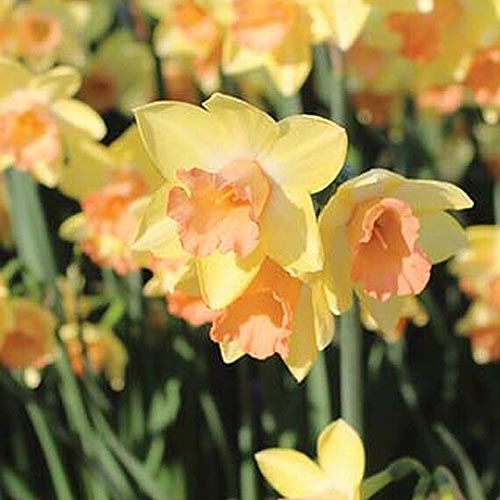
This flower is sure to get a lot of compliments – and perhaps that’s why she’s blushing. Not only does ‘Blushing Lady’ have a unique color combination, she also has an outstanding fragrance.
‘Blushing Lady’ is a jonquil type narcissus with petals that are a soft, pastel yellow, and cups that are a salmon-pink hue.
This cultivar will bear up to three blossoms per 12-inch stem, and will bloom in late spring.
Perhaps the only gamble with this variety would be in betting your friends and family that you can grow daffodils with giant blooms.
The flowers on ‘British Gamble’ are huge, reaching five to six inches across.
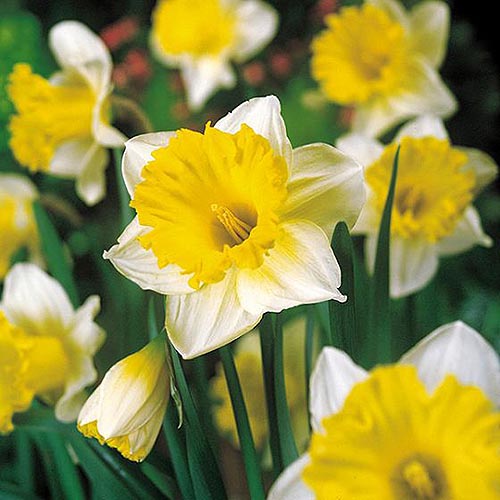
‘British Gamble’ has white petals with a frilly trumpet that is lemon yellow to coral pink. These hybrid plants from the Netherlands will reach 18 to 24 inches in height and have very large, showy flowers.
You can purchase‘British Gamble’ bulbs in a variety of package sizes at Eden Brothers.
3. Chromacolor
‘Chromacolor’ will make a bold statement in your naturalized drifts with its intensely colored corona.
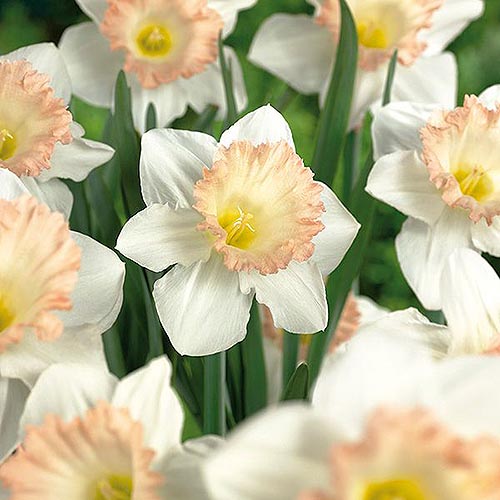
This two-toned hybrid daffodil has overlapping white petals with a large, bright, coral pink colored cup. Blooms are very large, reaching five to six inches across.
‘Chromacolor’ will bloom in mid-spring to early summer. Plants grow 18 to 20 inches tall.
4. Dutch Master
With their renowned reputation for breeding flower bulbs, it’s no surprise that the Dutch have created a master – a ‘Dutch Master,’ that is.
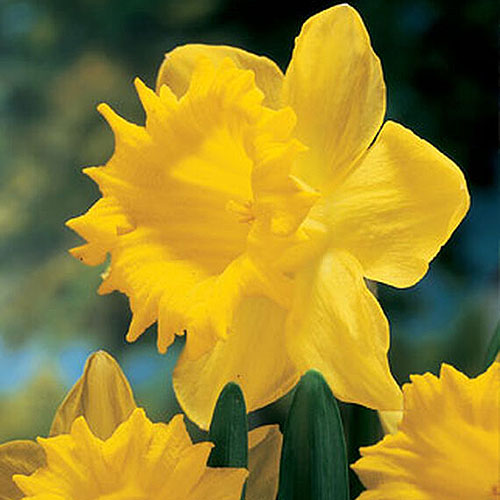
‘Dutch Master’ has yellow petals and a frilly, yellow trumpet. This is a tall plant, growing to 26 inches in height or more.
You may not find gold bars when the winter snow melts, but you may find ‘Fortune,’ which isn’t such a bad recompense.
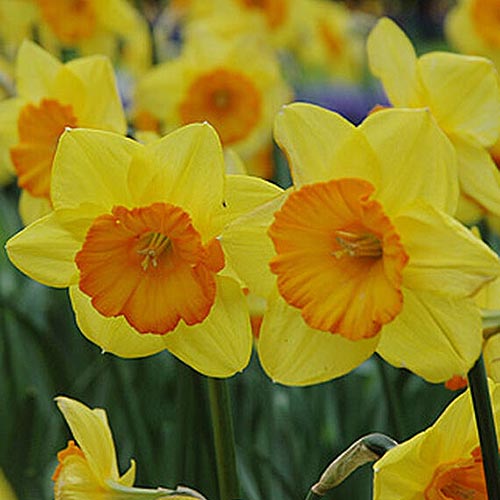
‘Fortune’ is an heirloom large-cupped variety, with rounded yellow petals and a very short, orange, funnel-shaped cup.
Large flowers are four to five inches wide and bloom in early to mid-spring.
This English daffodil hybrid will reach 18 to 20 inches tall, or sometimes more.
7. Geranium
Here’s a ‘Geranium’ that is hardy to -40°F.
Being the same species as the paperwhites you may be familiar with for forcing indoors in winter, Narcissus tazetta, this bunch-flowered daffodil species is more tolerant of mild winters than other members of the Narcissus genus.
‘Geranium’ has white petals with shallow yellow-orange cups. Another beautiful heirloom from the Netherlands, the blooms on this ‘Geranium’ are two to three inches wide.
Do you get the feeling that another Dutch variety is forthcoming? Maybe you picked up on that ‘Holland Sensation.’
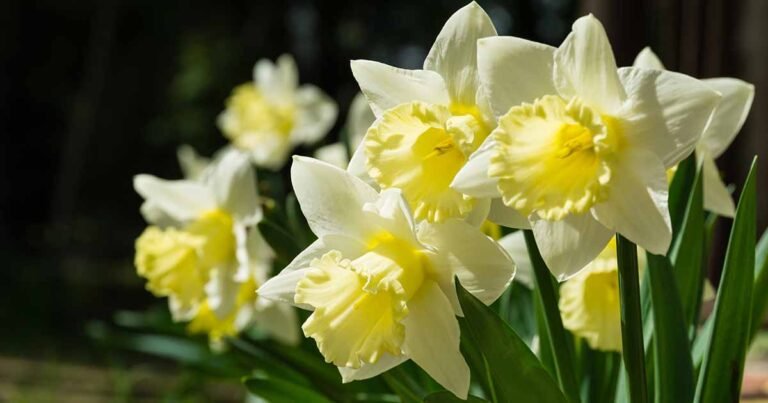
‘Holland Sensation’ has white petals with bright yellow trumpets. Plants can grow to be 20 inches tall or more, and will hold aloft one flower per stem, blooming in mid-spring.
Evoking the snowy peak of the famous volcano in Oregon, ‘Mount Hood’ has overlapping white petals with wavy margins, and cups that are white to cream-colored.
The long-lasting flowers on this heirloom daffodil variety are very large, reaching four to five inches across.
Plants grow to 15 to 17 inches in height and bloom in mid-spring.
You can purchase ‘Mount Hood’ bulbs in a variety of package sizes at Eden Brothers.
11. Pink Parasol
If you’re looking for something unique in your daffodils, you might choose one of the pink varieties, such as this pink-hued trumpet cultivar.
‘Pink Parasol’ has overlapping white petals and salmon-pink trumpets. Plants reach 14 to 16 inches in height and bloom in mid-spring.
This gorgeous two-toned hybrid daffodil originated in the Netherlands.
12. Professor Einstein
Perhaps gazing into the deeply contrasting cup of this spring flower will cause you to ponder the nature of the universe, in honor of its namesake.
‘Professor Einstein’ has overlapping, rounded white petals and a wide, reddish orange, crimped, disk-shaped cup.
These large-cupped heirloom daffodils grow to 12 to 26 inches tall and bloom in late spring.
13. Regeneration
Daffodils provide a sunny burst of color at the end of winter, but ‘Regeneration’ takes this idea rather literally, rising up to greet you in very early spring.
Its trumpet looks like a burst of white spreading onto a background of yellow petals.
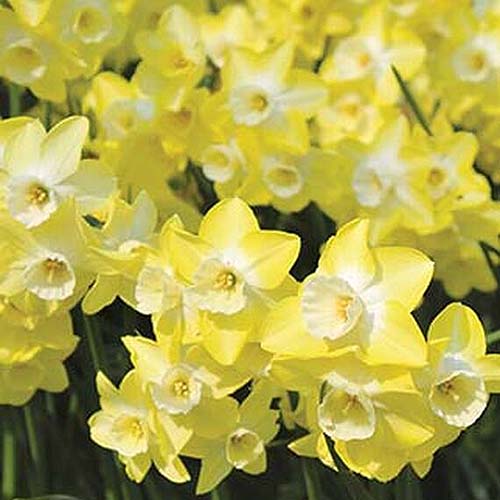
‘Regeneration’ is a jonquil type hybrid that has lemon yellow petals, a creamy center, and a creamy white corona.
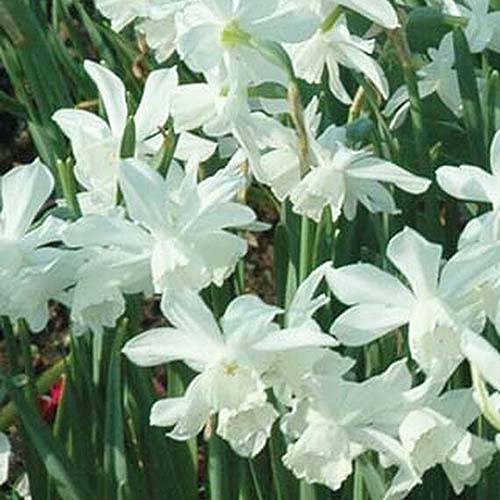
‘Thalia’ is a cultivar of N. triandrus, a species commonly called “Angel’s Tears.” Perhaps the angels are crying with joy because they’re just as happy at the return of spring as we are.
This heirloom variety has bright white petals and bright white cups, with two to four flowers per 14 to 20-inch stem.
You can purchase ‘Thalia’ bulbs from the Garden State Bulb Store available via Walmart.
Daffy for Daffodils
I don’t know about you, but after this deep dive into the eye-catching attributes of these varieties, I’m feeling a bit giddy and want to plant enough drifts to include them all.
I’ll admit, though, I have a particular penchant for those with pink tones, and those are the ones that will find a home in my soil this fall.