52 F
Klamath Falls
Thursday, July 30, 2026
Home Blog Page 60

21 Aggressive Herbs to Cultivate With Care

0

Also, while we refer to the culinary and/or medicinal uses of the following herbs, we do not advocate their use without consulting a qualified healthcare professional, as they may interact with prescribed medications, causing adverse reactions.

1. Caraway

Caraway, Carum carvi, is suited to Zones 4 to 10 cultivation. Its musky, anise-like fruits, called seeds, give rye bread its licorice undertones. The leaves and roots are also edible.

These herbs are biennial, producing a long taproot and foliage in the first year, blooming and setting seed in the second.

A square image of caraway flowers with bees foraging on the umbels pictured on a soft focus background.

Caraway

They prefer full sun and moist, sandy, organically-rich soil. Mature dimensions are 24 to 36 inches tall and 12 inches wide.

Unharvested seeds fall and germinate the following year.

Caraway seeds are available from Eden Brothers.

Learn about growing caraway here.

2. Catnip

Catnip, Nepeta cataria, thrives in Zones 3 to 9. The fuzzy leaves of this herb have a long history of use as a digestive aid, plus they have a euphoric effect on cats.

Perennial catnip is a member of the mint family with similar leggy stems. Plants prefer full sun, average soil, and low to moderate moisture. They reach 36 inches tall with an equal spread.

A square image of the foliage of catnip growing in the garden.A square image of the foliage of catnip growing in the garden.

Catnip

Digging and dividing the rootstock in the spring thins overcrowded patches and can help mitigate the spread.

Catnip seeds and plants are available from Burpee.

See our catnip growing guide for more information.

3. Chamomile

Chamomile is prized for having aromatic flowers and leaves with a calming effect that is said to promote restful sleep and aid in digestion. There are two types: German and English.

German chamomile, Matricaria chamomilla, aka M. recutita, is an annual herb that grows in Zones 2 to 8, thriving in full sun with sandy soil and dry to moderate moisture.

Mature dimensions are 12 to 24 inches tall and nine to 12 inches wide. This species self-sows prolifically.

A close up of a packet of German chamomile seeds with text to the left of the frame and a hand-drawn illustration to the right.A close up of a packet of German chamomile seeds with text to the left of the frame and a hand-drawn illustration to the right.

German Chamomile

The English variety, Chamaemelum nobile, aka Roman or garden chamomile, is a perennial best suited to Zones 4 to 9 with a preference for full sun to part shade and moderately moist, sandy soil.

The species has a low profile of four to six inches tall and six to 12 inches wide, and multiplies via runners.

German chamomile seeds are available from Botanical Interests.

Our guide to growing chamomile has details.

4. Chervil

Chervil, Anthriscus cerefolium, aka winter chervil or French parsley, grows in Zones 3 to 9.

Its sweetly aromatic leaves hint of anise and are one of the “fines herbes” essential to French cooking.

Three types of this herb are available: common flat leaf, mild and curly ‘Crispum,’ and dark, flat leaf ‘Vertissimo.’

A cool-weather spring to summer annual for Zones 3 to 6 and a biennial in Zones 7 to 9, chervil produces a long tap root and a bushy clump of foliage in the first year and blooms and sets seed in the second.

A close up square image of the foliage of chervil pictured on a soft focus background. To the bottom right of the frame is a white circular logo with text.A close up square image of the foliage of chervil pictured on a soft focus background. To the bottom right of the frame is a white circular logo with text.

Winter Chervil

Plants prefer evenly moist, organically rich loam and partial shade achieving mature dimensions of 12 to 24 inches tall and 12 to 18 inches wide, and they spread via robust self-sowing.

Winter chervil seeds are available from True Leaf Market.

Learn more about growing chervil here.

5. Chives

Chives, Allium schoenoprasum, are suited to Zones 3 to 9. Their hollow, grass-like leaves have a mild onion flavor that is best when eaten uncooked.

Cool-weather chives are spring-to-summer blooming perennial bulbs that prefer full sun to partial shade, sandy loam, and even moisture.

A close up of a packet of chives seeds with text to the left of the frame and a hand-drawn illustration to the right.A close up of a packet of chives seeds with text to the left of the frame and a hand-drawn illustration to the right.

Common Chives

Plants mature to heights of 12 to 24 inches with an equal spread, and multiply via the production of bulb offsets that require regular division to contain.

Common chive seeds are available from Botanical Interests.

Check out our guide to growing chives here.

6. Comfrey

Comfrey, Symphytum spp., thrives in Zones 4 to 9. Its fuzzy, minty leaves and tuberous roots have a long history of use to help wound healing.

Perennial comfrey is an adaptable herb, thriving in full sun to full shade with poor to average soil and moderate moisture. Mature dimensions are 36 to 48 inches tall and wide.

A close up square image of comfrey with purple blooms growing in the summer garden.A close up square image of comfrey with purple blooms growing in the summer garden.

Comfrey

The S. x uplandicum hybrid is best for the home garden as it is a sterile variety that does not self-sow.

However, the strong roots alone can readily increase its presence in the landscape.

Comfrey seeds are available from Earthbeat Seeds.

See our guide to growing comfrey for more information.

7. Dill

Dill, Anethum graveolens, is suited to cultivation in Zones 2 to 11.

The aromatic seeds and leaves, aka dill weed, have a somewhat grassy, anise-like flavor, most notably used to prepare dill pickles.

These herbs thrive in full sun with poor to average soil and moderate moisture. Expect heights of eight to 48 inches and a spread of four to 24 inches.

A close up square image of freshly harvested 'Mammoth' dill on a wooden chopping board with potatoes and garlic.A close up square image of freshly harvested 'Mammoth' dill on a wooden chopping board with potatoes and garlic.

‘Mammoth’ Dill

Although dill is an annual, abundant self-sowing often results in a flush of new plants the following year.

‘Mammoth’ is an outstanding cultivar that may achieve a height of six feet.

Seeds are available from True Leaf Market.

Read our guide to growing dill.

8. Epazote

Epazote, Dysphania ambrosioides, grows in Zones 4 to 12. The pungent leaves are used in traditional Central American and Mexican cooking and have an anise-citrus-creosote flavor.

An annual herb in cool regions and perennial in warmer ones, epazote thrives in full sun, tolerates various soils, and requires moderate moisture.

Expect a mature height of about 48 inches and a width of 18 inches.

A close up of a bunch of freshly harvested epazote isolated on a white background. To the bottom right of the frame is a black circular logo with text.A close up of a bunch of freshly harvested epazote isolated on a white background. To the bottom right of the frame is a black circular logo with text.

Epazote

In addition to being a prolific self-sower, epazote foliage contains ascaridole, a naturally occurring chemical compound that suppresses the development of neighboring plants.

Epazote seeds are available from True Leaf Market.

Learn more about growing epazote here.

9. Fennel

Common fennel, Foeniculum vulgare, and the sweeter Florence variety, F. vulgare var. azoricum, grow in Zones 4 to 9.

They have licorice-flavored seeds and vegetable-like bulbs.

F. vulgare is on Washington state’s noxious weed quarantine list, prohibiting its sale and distribution.

Florence fennel and cultivars of this bulbing variety are excluded from the banned list as these plants are less likely to become invasive as harvest time generally comes before flowering.

A square image of Florence fennel growing in the garden.A square image of Florence fennel growing in the garden.

Florence Fennel

A cool-weather crop, fennel is a short-lived perennial or biennial that prefers full sun and moderately moist loam. Mature dimensions are 24 to 72 inches tall and 18 to 36 inches wide.

These herbs have a deep taproot. Those that flower before harvest time may self-sow.

Florence fennel seeds are available from Eden Brothers.

See our fennel growing guide for more information.

10. Feverfew

Feverfew, Tanacetum parthenium, grows in Zones 5 to 10.

It’s a bitter medicinal herb and the flowers and leaves have a history of use as a soothing agent for arthritis, digestive issues, and headaches.

Short-lived perennial feverfew is also cultivated as an annual and prefers full sun, sandy loam, and moderate moisture. Mature dimensions are 8 to 24 inches tall and wide.

A close up of a packet of feverfew seeds with text to the left of the frame and a hand-drawn illustration to the right.A close up of a packet of feverfew seeds with text to the left of the frame and a hand-drawn illustration to the right.

Feverfew

Prolific self-sowing can lead to this herb naturalizing in areas where it’s not welcome.

Feverfew seeds are available from Botanical Interests.

Our feverfew growing guide has details.

11. Horehound

Horehound, Marrubium vulgare, is suited to cultivation in Zones 3 to 9 and has leaves that taste like a cross between licorice and root beer, the classic flavor of the signature hard candy.

This perennial herb prefers full sun to partial shade, sandy loam, and low moisture. Mature heights are up to 30 inches with a spread of 24 to 36 inches.

A square image of horehound herbs growing in the garden pictured on a soft focus background.A square image of horehound herbs growing in the garden pictured on a soft focus background.

Horehound

Like its cousins, mint, motherwort, and oregano, horehound increases its footprint in the landscape via runners and self-seeding.

Horehound seeds are available from Earthbeat Seeds.

You’ll find more information in our guide to growing horehound.

12. Horseradish

Horseradish, Armoracia rusticana, grows in Zones 2 to 9. Historically, the leaves, flowers, and roots were used medicinally.

Today’s consumers enjoy the roots as a hot and spicy condiment.

A close up horizontal image of horseradish foliage growing in the garden.A close up horizontal image of horseradish foliage growing in the garden.

Perennial horseradish thrives in full sun to partial shade. It requires loose, loamy soil to accommodate the thick taproots, and moderate moisture.

Mature dimensions are two to three feet tall and wide. When harvesting, it’s essential to remove all rootstock to inhibit prolific spreading.

See our horseradish growing guide for more information.

13. Lemon Balm

Lemon balm, Melissa officinalis, is a perennial herb in Zones 3 to 7. The lemon-scented leaves have a history of use as a pain remedy and are often brewed into tea and jellied.

Plants prefer full sun to partial shade and do well in average soil with little supplemental water once established. Mature dimensions are one to three feet tall and two to three feet wide.

A close up of a packet of lemon balm seeds with text to the left of the frame and a hand-drawn illustration to the right.A close up of a packet of lemon balm seeds with text to the left of the frame and a hand-drawn illustration to the right.

Lemon Balm

They are dynamic self-sowers.

Lemon balm seeds are available from Botanical Interests.

Our lemon balm growing guide has details.

14. Marjoram

Marjoram, Origanum majorana, aka sweet marjoram, is a perennial in Zones 7 to 9.

A cousin to mint, motherwort, and oregano, marjoram has long been used to treat aches and ailments and has a floral, piney flavor used in various types of cooking.

Plants prefer full sun and sandy loam, and have low water requirements. Mature dimensions are 12 to 24 inches tall and 12 to 18 inches wide.

A square image of sweet marjoram growing in a summer garden. To the bottom right of the frame is a white circular logo with text.A square image of sweet marjoram growing in a summer garden. To the bottom right of the frame is a white circular logo with text.

Sweet Marjoram

The bushy clumps grow slowly but multiply readily via self-sowing and runners.

Sweet marjoram seeds are available from True Leaf Market.

Read our guide to growing marjoram here.

15. Mint

Mint, Mentha spp., thrives in Zones 3 to 11. Spearmint, M. spicata, and peppermint, M. piperita, are two popular species.

Historically used to relieve digestive upset, headache, and a host of disorders, mint is used worldwide to flavor food and products.

The various species of this perennial herb prefer full sun to partial shade and loamy soil. Water needs are high. Mature heights are two to three feet tall with an equal spread.

A square image of spearmint growing in a wooden raised garden bed.A square image of spearmint growing in a wooden raised garden bed.

Spearmint

Mint reproduces rapidly via runners and self-sowing and can quickly take over areas of the garden.

You can find spearmint seeds available from Burpee.

Our guide to growing mint in the garden (without it taking over!) has details.

16. Motherwort

Motherwort, Leonurus cardiaca, grows in Zones 4 to 8 and has a history of use by herbalists to treat female discomfort and heart conditions.

It’s a perennial herb that thrives equally well in full sun or full shade, tolerates various soils, and has low water requirements. Heights soar to five feet with a width of three feet.

A square image of motherwort flowers growing in the garden.A square image of motherwort flowers growing in the garden.

Motherwort

This species is a relative of mint that naturalizes via runners and self-seeding.

Motherwort seeds are available from Earthbeat Seeds.

Our motherwort growing guide has more information.

17. Oregano

Oregano, Origanum vulgare, is suited to cultivation in Zones 5 to 10. The somewhat bitter, camphor-like leaves give pizza sauce its zing.

Cultural requirements include full sun, average soil, and moderate water. Expect a height of 12 to 24 inches and a width of 18 to 24 inches.

A close up square image of Italian oregano growing in the garden.A close up square image of Italian oregano growing in the garden.

Italian Oregano

Like mint, it self-sows and sends out runners.

Italian oregano seeds are available from Burpee.

See our guide to growing oregano for details.

18. Russian Tarragon

Tarragon, Artemisia dracunculus, grows in Zones 4 to 9.

The leaves of the Russian type, A. dracunculoides pursch, aka false tarragon, have a mild licorice flavor when the leaves are young but it fades as they age.

Perennial tarragon thrives in full sun with light afternoon shade in the warmest regions. It prefers loamy soil and moderate moisture.

Mature dimensions are 24 to 36 inches tall and 12 to 15 inches wide.

When shopping for tarragon herbs, if the listing doesn’t say “French,” it’s likely Russian, and unlike the non-invasive French varieties, will send out runners and self-sow.

A square image of a bunch of freshly harvested tarragon bound with string and set on a wooden surface.A square image of a bunch of freshly harvested tarragon bound with string and set on a wooden surface.

Russian Tarragon

If you know you prefer the mild flavor of Russian tarragon, cultivate it with the appropriate constraints.

Otherwise, choose the French variety for a full-bodied taste and a better-behaved herb.

Russian tarragon seeds are available from Eden Brothers.

Our tarragon growing guide has more information.

19. St. John’s Wort

St. John’s wort, Hypericum pyramidatum, grows in Zones 4 to 8. The flowers and fuzzy leaves have long been used in herbal medicine to ease a variety of complaints.

Cultivation of this herb is restricted in multiple western states and is listed as a noxious weed. It is highly toxic to livestock, so check before planting.

A close up square image of yellow St. John's wort flowers in a wooden bowl set on a wooden surface.A close up square image of yellow St. John's wort flowers in a wooden bowl set on a wooden surface.

St. John’s Wort

Perennial St. John’s wort prefers full sun to part shade and any type of moist soil, provided it drains well. Mature dimensions are two to five feet tall and one to three feet wide.

Plants spread via runners, and self-sowing. 

St. John’s wort seeds are available from Eden Brothers. 

20. Shiso

Shiso, Perilla frutescens, is a tropical herb suited to perennial cultivation in Zones 10 to 11 that grows as an annual elsewhere.

The green to purple leaves are sweet-nutty-citrusy and are used whole in various recipes.

A close up of a packet of green and red shiso (Perilla) seeds with text to the left of the frame and a hand-drawn illustration to the right.A close up of a packet of green and red shiso (Perilla) seeds with text to the left of the frame and a hand-drawn illustration to the right.

Shiso

It grows full sun to part shade with organically rich loam. Mature dimensions are 36 inches tall with a spread of 18 inches.

Vigorous self-sowing can lead to this herb becoming somewhat invasive.

Shiso seeds are available from Botanical Interests.

21. Sweet Woodruff

Sweet woodruff, Galium odoratum, is suited to Zones 4 to 8.

The whorls of narrow leaves have an aroma of fresh-mown hay and are used as a drink garnish and an ingredient in a white wine punch called “May wine.” The flowers are also edible.

A close up horizontal image of sweet woodruff growing in the garden with bright green foliage and white flowers.A close up horizontal image of sweet woodruff growing in the garden with bright green foliage and white flowers.

Perennial sweet woodruff thrives in partial to full shade with moderately wet, average soil. It can tolerate drier soil in full-shade locations.

Mature dimensions are six to 12 inches tall and nine to 18 inches wide.

Plants readily naturalize via runners and self-seeding.

Tips for Controlling Sprawl

When the herbs you want to cultivate have aggressive tendencies, there are a variety of methods you can use to keep them from spreading.

Inhibit Seed Setting

Limiting or preventing self-sowing is one way to slow unwanted sprawl. Regularly pinch back the growing tips of the stems to prevent them from budding.

A horizontal image of two hands from the top of the frame using a pair of scissors to snip off a flower stalk from a basil plant.A horizontal image of two hands from the top of the frame using a pair of scissors to snip off a flower stalk from a basil plant.
Deadheading basil prevents seed set. 

This also helps the plants to grow more bushy rather than leggy.

If buds form, pinch the budding stems off before blooming. After blooming, remove the flower stalks before the petals fade.

Learn more about deadheading here.

Plant in Pots

In addition to inhibiting seed setting, you can grow your herbs in pots to contain root sprawl.

Trim stems that creep over the sides of the containers to prevent them from rooting into the ground or a neighboring pot.

A close up vertical image of herbs growing in terra cotta pots on the patio.A close up vertical image of herbs growing in terra cotta pots on the patio.

When growing in containers, remember that the soil tends to dry out faster than ground soil. Use a moisture meter to check them daily and water as needed.

Another strategy for root containment is to use plastic pots with a depth of 24 inches. Cut the bottom out and sink the bottomless pots directly into the garden soil.


Grow Near Pavement

PRISTINE Toilet Paper Spray – As Seen on Shark Tank, More Natural Personal Cleansing Wipes & Flushable Wet Wipes Alternative, Spray Toilet Paper to Create Flushable Wipe, Original, 4 fl oz

0


Price: $14.95
(as of Mar 19, 2026 09:59:53 UTC – Details)

Product description

toilet paper spray toilet paper spray cleaner toilet paper moistening spray toilettoilet paper spray toilet paper spray cleaner toilet paper moistening spray toilet

bathroom toilet paper spray toilet paper enhancer spraybathroom toilet paper spray toilet paper enhancer spray

toilet paper spray toilet wipe spray natural toilet paper spraytoilet paper spray toilet wipe spray natural toilet paper spray

sensitive skin toilet spray hypoallergenic toilet paper spray dermatologist tested toilet spraysensitive skin toilet spray hypoallergenic toilet paper spray dermatologist tested toilet spray

gentle personal hygiene spray aloe vera toilet spray witch hazel toilet spraygentle personal hygiene spray aloe vera toilet spray witch hazel toilet spray

pristine toilet paper spraypristine toilet paper spray

Best Selling PRISTINE Toilet Paper Sprays & Body Cleansing Sprays

Add to Cart

Add to Cart

Add to Cart

Add to Cart

Add to Cart

Add to Cart

Customer Reviews

4.3 out of 5 stars 5,968

4.3 out of 5 stars 5,968

4.3 out of 5 stars 5,968

4.3 out of 5 stars 5,968

4.3 out of 5 stars 5,968

4.2 out of 5 stars 380

Price

$14.95$14.95

$8.95$8.95

$54.95$54.95

$14.95$14.95

$14.95$14.95

$21.99$21.99

Scent

Original/Botanical

Original/Botanical

Original/Botanical

No Added Fragrance

Peppermint

Fresh Waters & Citron

Use

At Home

On The Go / Travel

Refill Bottles / Cost Savings

At Home

At Home

Workout Bags/Suitcases

Made in USA

Reusable / Recyclable Bottle

Sewer/Septic Safe

Type

Toilet Paper Spray

Toilet Paper Spray

Toilet Paper Spray

Toilet Paper Spray

Toilet Paper Spray

Body Cleansing Spray

Is Discontinued By Manufacturer ‏ : ‎ No
Product Dimensions ‏ : ‎ 2 x 2 x 3 inches; 4 ounces
Item model number ‏ : ‎ Pristine-Logo4oz-S
Department ‏ : ‎ unisex-adult
UPC ‏ : ‎ 851576007012
Manufacturer ‏ : ‎ PRISTINE
ASIN ‏ : ‎ B01N9HAKTH
Best Sellers Rank: #11,544 in Health & Household (See Top 100 in Health & Household) #1 in Toilet Paper Sprays
Customer Reviews: 4.3 4.3 out of 5 stars (5,968) var dpAcrHasRegisteredArcLinkClickAction; P.when(‘A’, ‘ready’).execute(function(A) { if (dpAcrHasRegisteredArcLinkClickAction !== true) { dpAcrHasRegisteredArcLinkClickAction = true; A.declarative( ‘acrLink-click-metrics’, ‘click’, { “allowLinkDefault”: true }, function (event) { if (window.ue) { ue.count(“acrLinkClickCount”, (ue.count(“acrLinkClickCount”) || 0) + 1); } } ); } }); P.when(‘A’, ‘cf’).execute(function(A) { A.declarative(‘acrStarsLink-click-metrics’, ‘click’, { “allowLinkDefault” : true }, function(event){ if(window.ue) { ue.count(“acrStarsLinkWithPopoverClickCount”, (ue.count(“acrStarsLinkWithPopoverClickCount”) || 0) + 1); } }); });
ECO-CONSCIOUS WET WIPE ALTERNATIVE: Spray Pristine toilet paper spray onto toilet paper to create the same great feel as a flushable wet wipe. Flushable wet wipes and adult wipes can damage plumbing, septic tanks, and city sewers, and end up in bodies of water and landfills. PRISTINE toilet paper spray instead of wipes helps to reduce your eco impact with a reusable and recyclable bottle that avoids use of single-use plastic wipes for the consumers seeking sustainable hygiene solutions.
GENTLE ON SENSITIVE SKIN: PRISTINE Original offers a fresh botanical scent from Ylang Ylang III essential oil. Dermatologist tested with high quality, more natural ingredients, such as 100% pure coconut oil and apricot oil, soothing aloe, and cleansing witch hazel. Our hypoallergenic formula is perfect for even the most sensitive skin, preventing discomfort and promoting a refreshing, confident clean.
PORTABLE ON-THE-GO CONVENIENCE: Take hygiene into your own hands with portable PRISTINE toilet paper spray. Each ounce of Pristine toilet paper spray is equivalent to 50 flushable wet wipes. Its compact size makes it perfect for travel and daily errands, ensuring confidence and peace of mind wherever you are. Never worry about public restrooms again!
ELEVATE YOUR BATHROOM EXPERIENCE: Transform your toilet routine with PRISTINE “butt spray”. PRISTINE toilet paper spray is good to your pipes and septic system and can be used with all toilet tissue brands, including Angel Soft toilet paper, Charmin toilet paper, Cottonelle toilet paper, Scott toilet paper, and even specialty toilet paper, like bamboo toilet paper, rv toilet paper, and travel toilet paper.
FRESHNESS AT YOUR FINGERTIPS: Say hello to long-lasting freshness with Pristine toilet paper spray. This innovative solution combines the benefits of a bidet and wipes in one convenient spray, providing a thorough and refreshing clean whenever you need it. Choose Pristine toilet paper spray instead of wipes to help in reducing your environmental footprint while ensuring a clean, fresh finish every time you use the bathroom.

The U.S. Healthcare Ecosystem: Payers, Providers, Producers, Second Edition

0


Price: $76.00 - $61.98
(as of Mar 18, 2026 21:58:00 UTC – Details)


An Essential Guide to the Processes and Operational Complexities of the U.S. Healthcare System
The U.S. Healthcare Ecosystem, Second Edition serves as an expert navigator through the complicated and often confusing environment where healthcare payers, healthcare providers, and producers of healthcare technologies all interact. This thorough, updated resource delivers expert analysis of employer-based health insurance, pharmacy benefits, the major professions, healthcare consolidation, drug discovery and development, biotechnology, and much more.
The author, a seasoned professor of management at The Wharton School, provides insight into important themes, including how the goals of healthcare relate to the “the iron triangle” (cost, quality, and access) and “the triple aim” (per capita cost, population health, and patient experience). Chapters include brief but timely cases that inspire you to think more critically about the healthcare industry and make informed assessments.
The U.S. Healthcare Ecosystem, Second Edition features:
Coverage of often neglected topics impacting healthcare delivery such as employer-based health insurance, pharmacy benefits, healthcare consolidation, and biotechnologyThe most current statistics and industry developmentsHelpful diagrams, charts, and tablesChapter ending summaries and Questions to PonderA 160-page Instructor Manual containing answers for the Questions to Ponder, talking points for the critical thinking exercises, as well as ready-to-use PowerPoints of all tables and figures within the textInsights and feedback from 60+ professors
From the brand

Your professional path begins here. Let us help guide your way.Your professional path begins here. Let us help guide your way.

As a leading global education company, our mission is to partner with educators, learners, and professionals to help them access all the value that education can offer, no matter where their starting points may be.

For over 130 years, we have never stopped innovating to meet the ever-changing needs of educators and learners around the world – and will continue to support and celebrate their efforts every step of the way.

Lifelong learnerLifelong learner

Publisher ‏ : ‎ McGraw Hill / Medical
Publication date ‏ : ‎ June 5, 2025
Edition ‏ : ‎ 2nd
Language ‏ : ‎ English
Print length ‏ : ‎ 704 pages
ISBN-10 ‏ : ‎ 1265941467
ISBN-13 ‏ : ‎ 978-1265941468
Item Weight ‏ : ‎ 2.35 pounds
Dimensions ‏ : ‎ 6.8 x 1 x 9.9 inches
Best Sellers Rank: #303,268 in Books (See Top 100 in Books) #47 in Health Care Delivery (Books) #4,598 in Medicine (Books)
Customer Reviews: 4.8 4.8 out of 5 stars (5) var dpAcrHasRegisteredArcLinkClickAction; P.when(‘A’, ‘ready’).execute(function(A) { if (dpAcrHasRegisteredArcLinkClickAction !== true) { dpAcrHasRegisteredArcLinkClickAction = true; A.declarative( ‘acrLink-click-metrics’, ‘click’, { “allowLinkDefault”: true }, function (event) { if (window.ue) { ue.count(“acrLinkClickCount”, (ue.count(“acrLinkClickCount”) || 0) + 1); } } ); } }); P.when(‘A’, ‘cf’).execute(function(A) { A.declarative(‘acrStarsLink-click-metrics’, ‘click’, { “allowLinkDefault” : true }, function(event){ if(window.ue) { ue.count(“acrStarsLinkWithPopoverClickCount”, (ue.count(“acrStarsLinkWithPopoverClickCount”) || 0) + 1); } }); });

Strong Summer Bloomers for the Southeast

0

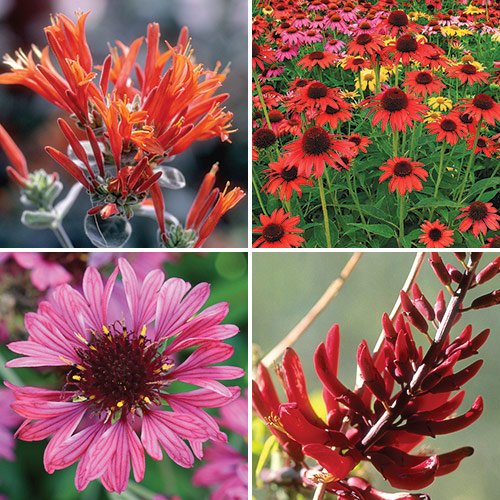
When you invest in a new flowering plant for your garden, you hope to receive a return on your investment: a healthy plant that puts on a beautiful peak-season performance for as many years as possible. However, with seemingly ever-increasing options available at your local garden centers and nurseries, as well as weather conditions that trend toward the volatile and unpredictable, it is becoming more difficult to make smart plant selections. Well-loved varieties are no longer performing as expected and some new additions are not worth the hype they receive, so how do you ensure your garden investment isn’t a complete gamble? If you’re looking to add some more vibrant blooms to your garden this growing season, consider one of the four selections below. These plants will provide a long season of abundant blooms, and will do so without needing a lot of fussing, prodding, or endless watering on your part.

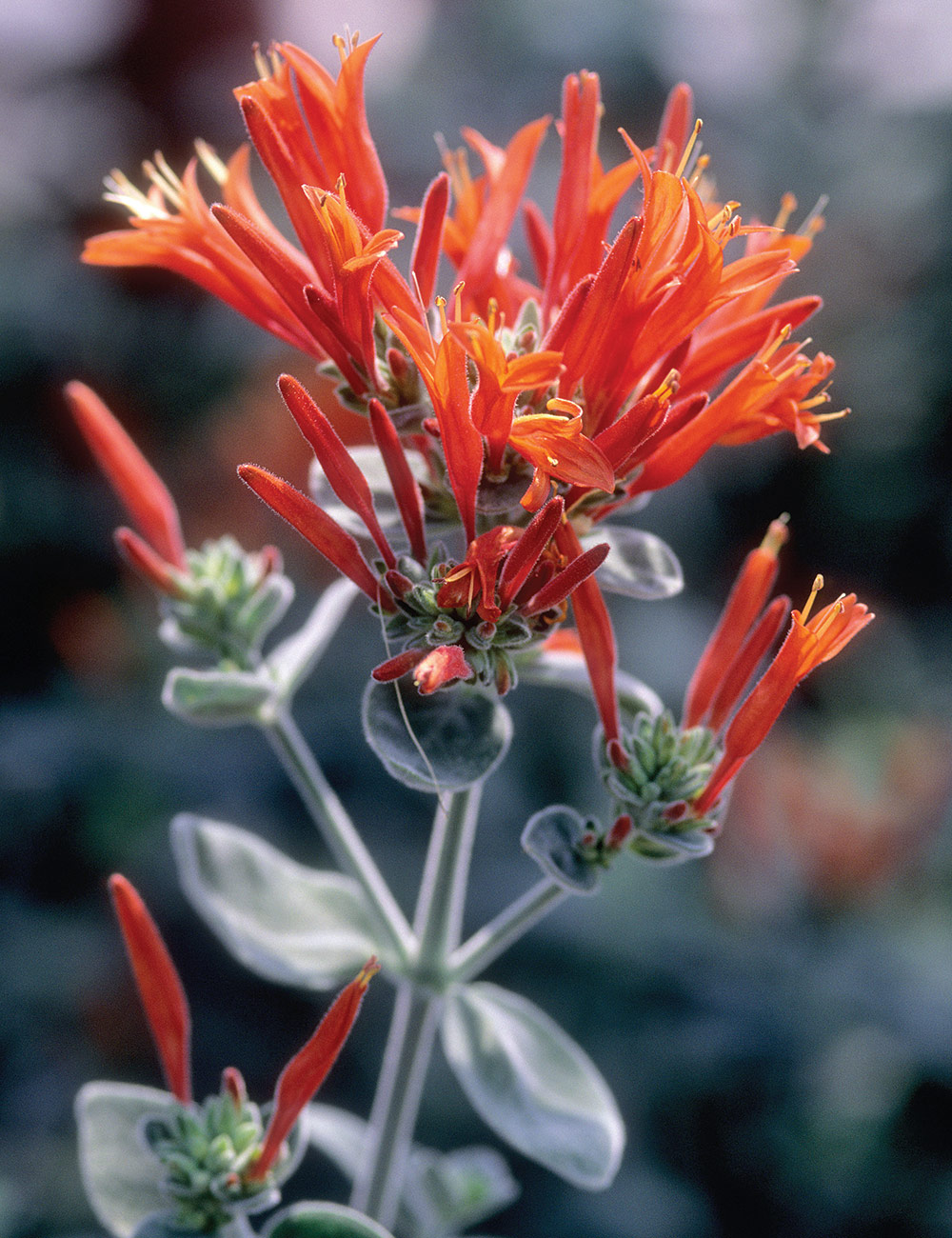
A heat-tolerant perennial, hummingbird plant scores extra points for flashy foliage that contrasts beautifully with its tubular blooms.

1. Hummingbird Plant

Name: Dicliptera suberecta

Zones: 7–10

Size: 2 feet tall and 3 feet wide

Conditions: Full sun to partial shade; well-drained soil

Plants that do it all are in vogue, and hummingbird plant certainly fits the bill. The silvery, elliptical leaves cannot be missed. Caressing them is reminiscent of suede, and I like to mingle this Uruguayan species with short, darker green ornamental grasses. It also attracts pollinators. In early summer the plant erupts into hundreds of tubular vermilion flowers that are the perfect shape and color to attract ruby-throated hummingbirds. It is tolerant of our Southern heat, and once established, it needs little if any irrigation.

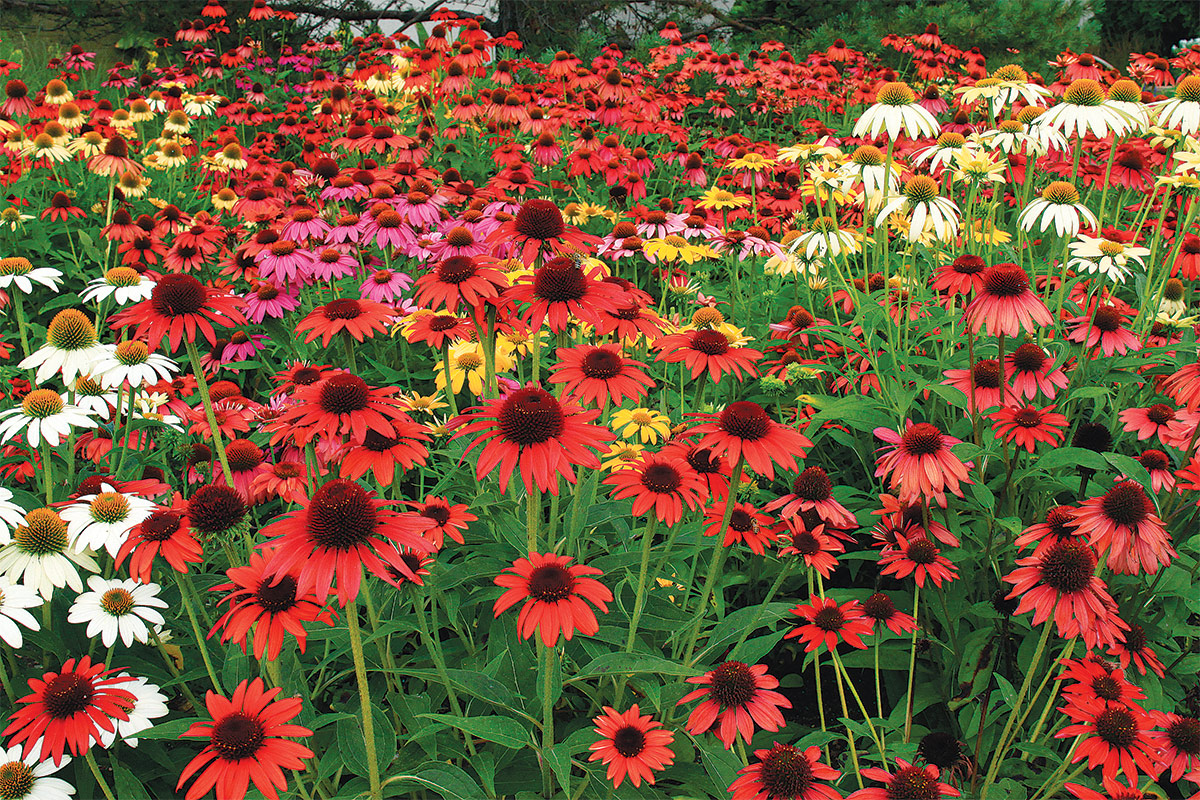
Cheyenne Spirit Coneflower
For a sea of sensational color, ‘Cheyenne Spirit’ coneflower provides a wonderful mix of hues.

2. ‘Cheyenne Spirit’ Coneflower

Name: Echinacea ‘Cheyenne Spirit’

Zones: 4–9

Size: 2 feet tall and wide

Conditions: Full sun to partial shade; average to dry, well-drained soil

If my students can grow this native coneflower, then so can you! Its stellar growth and flowering earned it an All-America Selections award and Europe’s FleuroSelect Gold Medal. Unlike most coneflowers grown from seed, ‘Cheyenne Spirit’ can bloom in its first year. When it does, it electrifies the landscape with a warm-colored rainbow of colors that includes hues like berry pink, tomato red, watermelon coral, papaya orange, lemon yellow, and sweet cream. As is typical of coneflowers, the inflorescence is the perfect perch for passing pollinators.

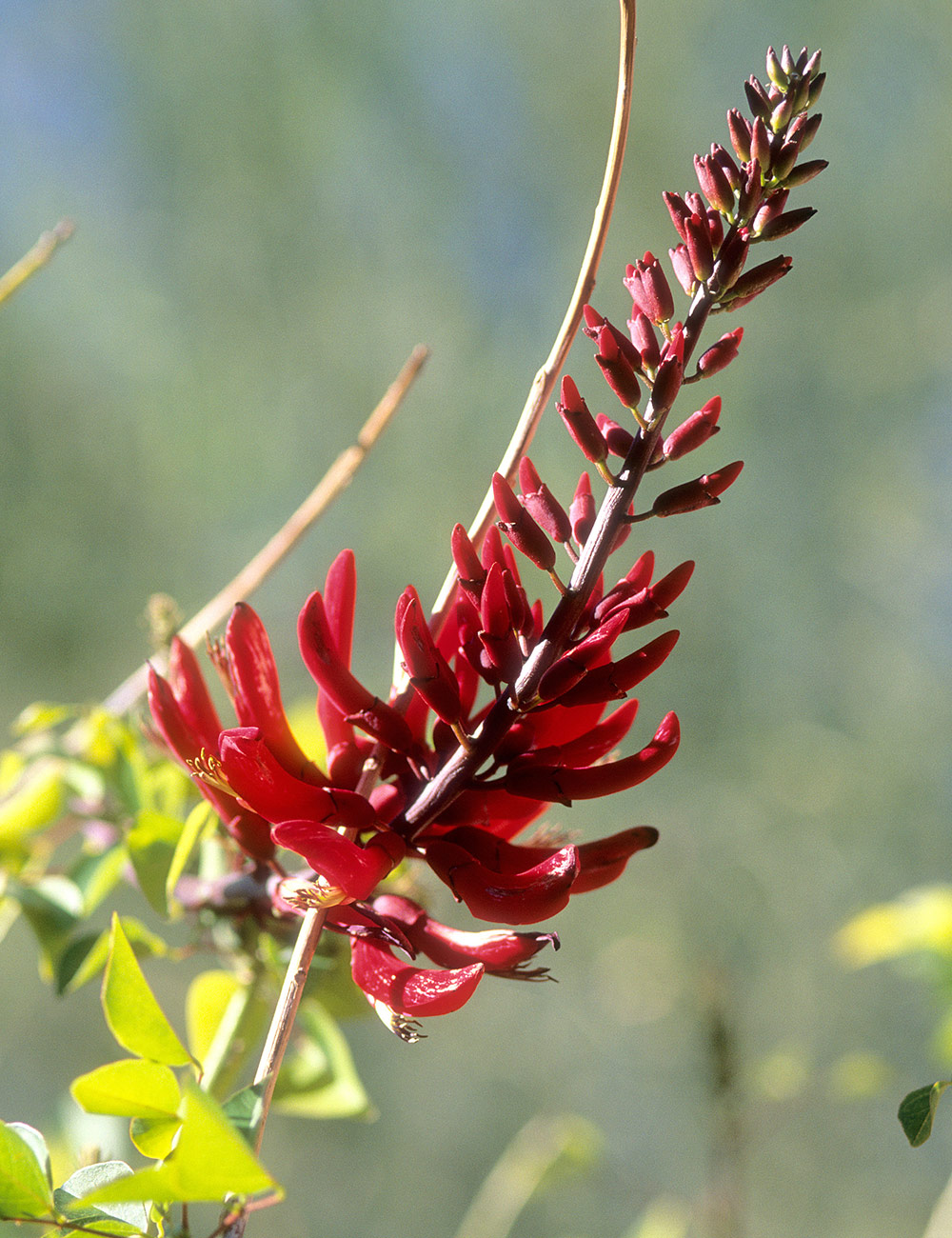
Bidwills Coral Bean
The long inflorescences of Bidwill’s coral bean unravel over the course of several weeks, which makes the bloom period of this shrub lengthy and lively.

3. Bidwill’s Coral Bean

Name: Erythrina × bidwillii

Zones: 7–10

Size: 8 feet tall and wide

Conditions: Full sun to partial shade; well-drained soil

While most plants that breeders cross come and go, Bidwill’s coral bean has stood the test of time for more than 150 years. This mammoth shrub blooms throughout the summer, with numerous long racemes that remind me of ristras of peppers, as the flowers resemble carmine chilis. And an individual inflorescence takes several weeks to fully elongate, which extends the floral spectacle. The medium-sized, trifoliate leaves provide coarse texture in the landscape. I like to cut mine back in late winter, as this species will die to the ground in northern zones but emerges from the base each spring.

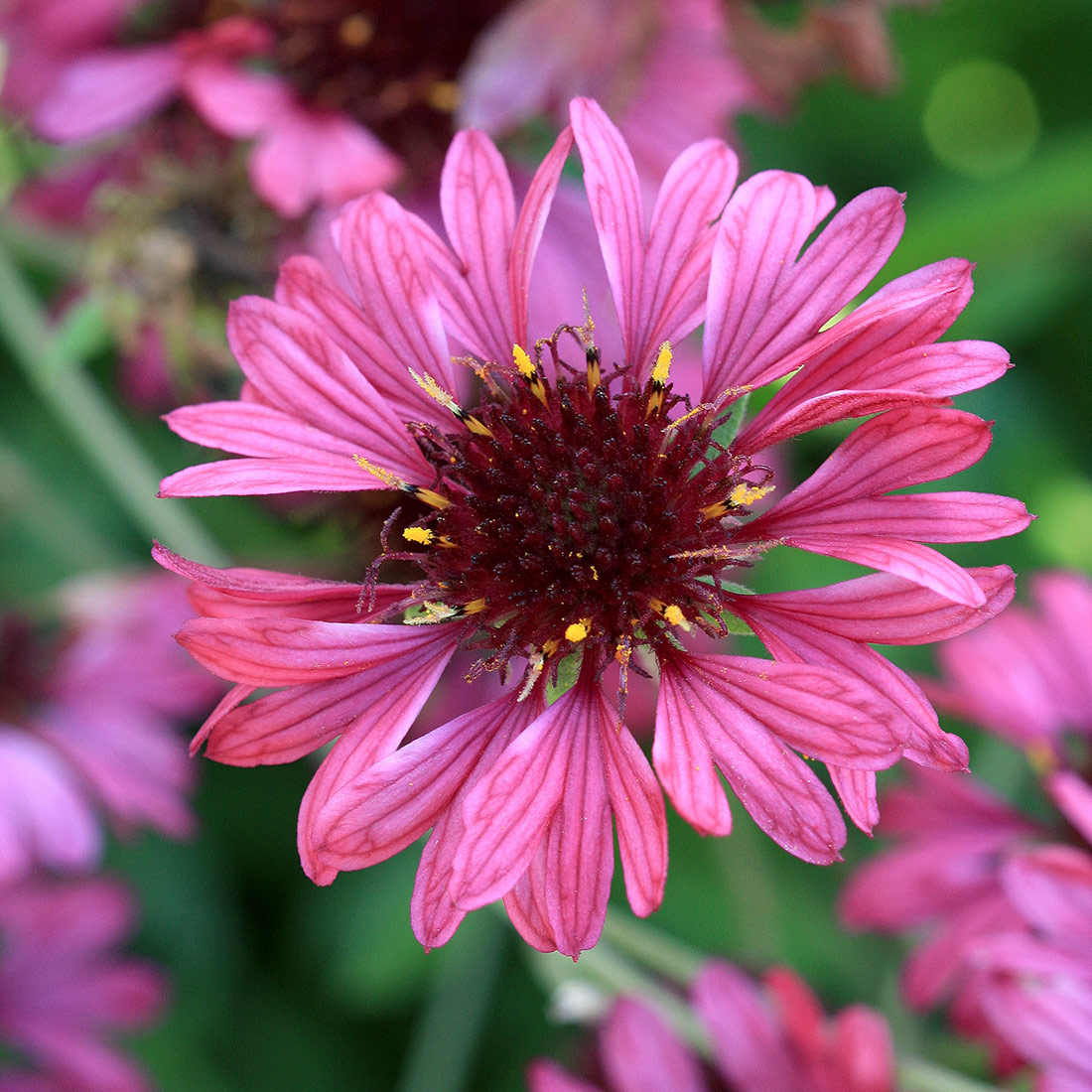
Grape Sensation Texas Firewheel
The purple cultivar of this Texas native is just as resilient to the region’s toughest conditions.

4. ‘Grape Sensation’ Texas Firewheel

Name: Gaillardia aestivalis var. winkleri ‘Grape Sensation’

Zones: 7–9

Size: 15 to 24 inches tall and 24 to 36 inches wide

Conditions: Full sun to partial shade; lean, well-drained soil

This flowering powerhouse is tough enough for parking lot beds. It blooms for most of the summer, and once finished, the individual blossoms morph into a geodesic orb of seeds that will scatter and produce more of this incredible plant. This species is fun to show kids because it has flame-resistant leaves. Hold a leaf up to a flame, and it won’t catch fire. Because it’s endangered and restricted to only a few counties in Texas, search out the purple-flowered form called ‘Grape Sensation’. This cultivar sports purple ray florets instead of the typical white.


Find more fantastic summer flowers:

Discuss this article or ask gardening questions with a regional gardening expert on the Gardening Answers forum.

And for more Southeast regional reports, click here.

Jared Barnes, Ph.D., is an assistant professor of horticulture at Stephen F. Austin State University in Nacogdoches, Texas.

Photo: Bill Johnson

Carrot Cake Cookies

0

Overhead view of carrot cake cookies topped with a cream cheese frosting and sprinkled with walnuts and cinnamon.Enjoy all the flavors of carrot cake in these soft-baked cookies made with fresh carrots and warm spices. Includes a delicious cream cheese frosting.

Pharmacy Calculations: An Introduction for Pharmacy Technicians, 2nd Edition

0


Price: $66.00 - $39.97
(as of Mar 18, 2026 09:55:55 UTC – Details)

Comprehensive Resource for Pharmacy Technician Learners of All Types

Offering a complete review of the basic mathematics concepts and skills, Pharmacy Calculations: An Introduction for Pharmacy Technicians, 2nd Edition provides students with the pharmacy basics necessary for correctly interpreting prescriptions and drug orders, and for performing dosing calculations that technicians face every day.

The second edition has been streamlined to focus on the most important pharmacy calculation concepts—covering the fundamentals related to accuracy and basic math operations, units of measurement and conversions, critical thinking in problem solving, dosing calculations, percentages, concentration calculations, compounding formulas, intravenous infusion calculations, and business math.

Inside the New Edition

The chapters are broken down into four units and organized to complement most pharmacy technician training curricula and to support the ASHP—ACPE model curriculum:Review of MathematicsSystems of MeasurementPreparing for Problem Solving in PharmacyDosing Calculations and other Pharmacy Problems

Key features throughout the book include:

Chapter objectivesKey terms and definitionsExamples of problem scenarios or calculations questions and solutions”Tech Note!” – provides a highlight of key points within the chapters”Numbers at Work” – illustrates why key concepts are important to know and skills are critical to masterPractice problemsAppendices that include the parts of a prescription, a glossary of terms, conversions, and abbreviations tables
Publisher ‏ : ‎ American Society of Health-Systems Pharmacists
Publication date ‏ : ‎ November 28, 2020
Edition ‏ : ‎ 2nd
Language ‏ : ‎ English
Print length ‏ : ‎ 240 pages
ISBN-10 ‏ : ‎ 1585286389
ISBN-13 ‏ : ‎ 978-1585286386
Item Weight ‏ : ‎ 1 pounds
Dimensions ‏ : ‎ 8.25 x 0.5 x 10.75 inches
Best Sellers Rank: #951,764 in Books (See Top 100 in Books) #413 in Pharmacies
Customer Reviews: 3.9 3.9 out of 5 stars (4) var dpAcrHasRegisteredArcLinkClickAction; P.when(‘A’, ‘ready’).execute(function(A) { if (dpAcrHasRegisteredArcLinkClickAction !== true) { dpAcrHasRegisteredArcLinkClickAction = true; A.declarative( ‘acrLink-click-metrics’, ‘click’, { “allowLinkDefault”: true }, function (event) { if (window.ue) { ue.count(“acrLinkClickCount”, (ue.count(“acrLinkClickCount”) || 0) + 1); } } ); } }); P.when(‘A’, ‘cf’).execute(function(A) { A.declarative(‘acrStarsLink-click-metrics’, ‘click’, { “allowLinkDefault” : true }, function(event){ if(window.ue) { ue.count(“acrStarsLinkWithPopoverClickCount”, (ue.count(“acrStarsLinkWithPopoverClickCount”) || 0) + 1); } }); });

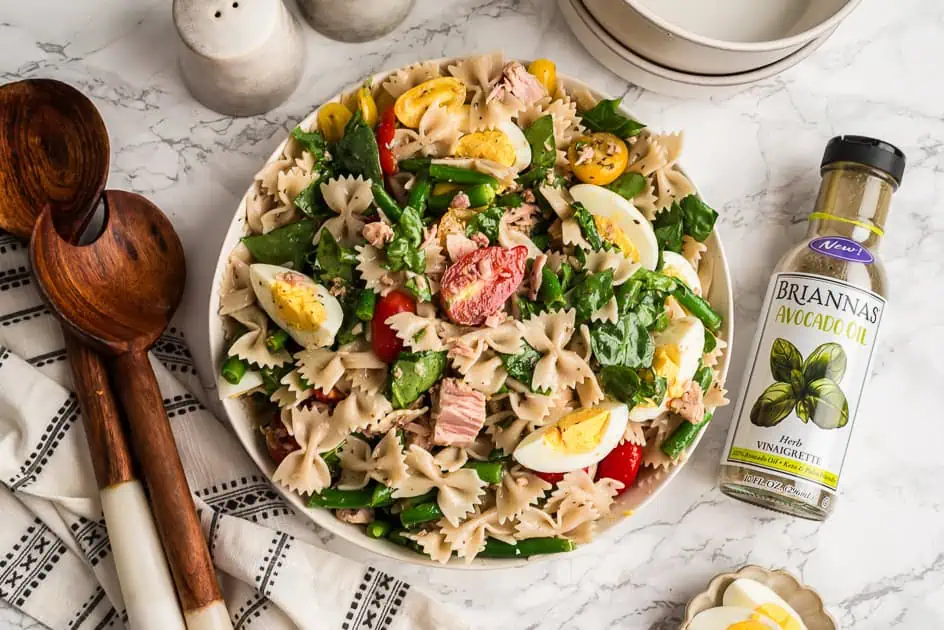
Tuna Pasta Salad (Niçoise Style, Easy 20 Minute Meal)

0

If you want a pasta salad that actually feels like a full meal, this tuna niçoise pasta salad is it. It’s packed with tuna, hard-boiled eggs, green beans, and pasta, all tossed in a simple dressing and ready in about 20 minutes. Minimal ingredients, minimal effort, and something you can actually rely on for lunch or dinner.

This is one of those recipes I make when I want something easy that I can prep ahead and eat for a couple of days without thinking about it. I tested it a few different ways to keep it simple but still balanced, and using pantry staples like tuna and store-bought dressing makes it come together fast. It has all the classic niçoise-inspired flavors, just in a format that’s way more practical for real life.

Niçoise tuna pasta salad in a white bowl, wood spoons on the side. Niçoise tuna pasta salad in a white bowl, wood spoons on the side.

If you’re into easy, make-ahead meals like this, you might also love my Mediterranean tuna salad, Greek white bean salad, or a simple roasted vegetable pasta salad. Same low effort energy, just different flavors to keep things interesting.

This post contains affiliate links. As an amazon associate I earn from qualifying purchases. Click here to read my policy and more about affiliate links.

Ingredient Spotlight

  • Green Beans – I love using haricots verts (French green beans) because they’re usually pre-trimmed and cook quickly. If you’re using regular green beans, just be sure to snip off the tough ends. You can also use frozen green beans here to save time, just steam them as directed.
  • Hard-Boiled Eggs – If you don’t already have hard-boiled eggs on hand, you can use my steamed hard boiled eggs method. They’re ready in about 12 minutes and you can still get this whole meal done in under 20.
  • Tuna (Packed in Oil) – Use tuna packed in oil for the best flavor and texture. It’s a little less intense and blends better into the salad. Just drain the oil before adding it.
  • Italian Dressing – Any Italian dressing you like works here. Store-bought keeps this extra easy, but homemade works great too if you have it.

Step by step instructions

Tips for success

  • Use bow tie pasta (or your favorite) – Farfalle (bow tie pasta) works really well for pasta salad, but any short pasta you like will work here.
  • Add eggs last for presentation – If you want a prettier salad, toss everything first and add the hard-boiled eggs on top at the end.
  • Serve it “composed” for guests – For a more elevated look, arrange the ingredients in sections over the pasta and toss right before serving.

★ Did you make this recipe? Please give it a star rating below!

  • 12 oz pasta
  • ½ cup salad dressing
  • 12 oz snipped green beans
  • 4 large hard boiled eggs
  • 3 cups baby spinachchopped
  • 1 cup tomatoeschopped
  • 2 cans tuna packed in oil
  • ½ teaspoon salt
  • ½ teaspoon garlic powder
  • Fill a large pot with water for the pasta and another pot with about 1 inch of water (with a steamer basket). Put them both over high heat and bring to a boil.

  • Cut the green beans down into bite size pieces.

    12 oz snipped green beans

  • Once the water under the steamer basket is simmering, add the green beans to the steamer basket, cover the pot and cook for 6-7 minutes until green beans are bright green and tender but not mushy.

  • Transfer green beans to an ice bath.

  • When water is boiling in large pot, add pasta and cook according to directions on box. When done, drain the pasta and rinse with cold water to stop cooking.

    12 oz pasta

  • Immediately add the pasta to a large bowl and add 2 tablespoons dressing. This will help ensure the pasta doesn’t stick together.

    ½ cup salad dressing

  • Chop the spinach and tomatoes, cut the eggs.

    3 cups baby spinach, 1 cup tomatoes, 4 large hard boiled eggs

  • Assemble the pasta salad: Top the pasta with blanched green beans, tomatoes, spinach, eggs, tuna, salt and garlic powder. Add the rest of the dressing and toss until everything is well coated.

    2 cans tuna packed in oil, ½ teaspoon salt, ½ teaspoon garlic powder

  • Serve at room temperature or cold.

Top tips

  • Trim and cut the green beans – Make sure to trim the ends and cut the green beans into bite-sized pieces before cooking. It makes the pasta salad much easier to eat.
  • Shock the green beans – After steaming, transfer the green beans to an ice bath or very cold water. This stops the cooking and keeps them bright green.
  • Rinse the pasta and dress it right away – Rinse the cooked pasta with cold water, then toss it with a little dressing while it’s still slightly warm. This prevents sticking, especially important for gluten-free pasta.
  • Toss gently – Once everything is combined, toss lightly so you don’t break up the eggs or mash the ingredients.
  • Serve immediately or store for later. This pasta salad lasts for up to 4 days in the fridge in a well sealed container. 

Nutrition Information

Nutrition Facts

Amount per Serving

Where does nutrition info come from? Nutrition facts are provided as a courtesy, sourced from the USDA Food Database.

Course: Salad

Cuisine: Mediterranean

Keyword: nicoise tuna salad, tuna pasta salad

Let others know by rating and leaving a comment below!

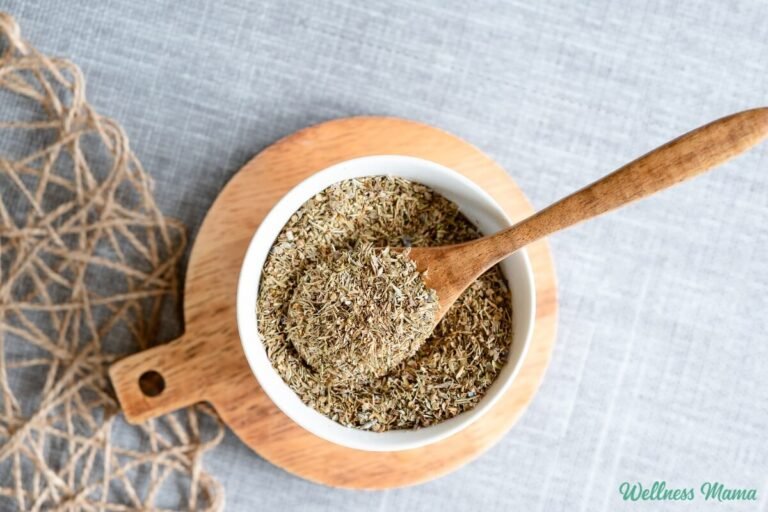
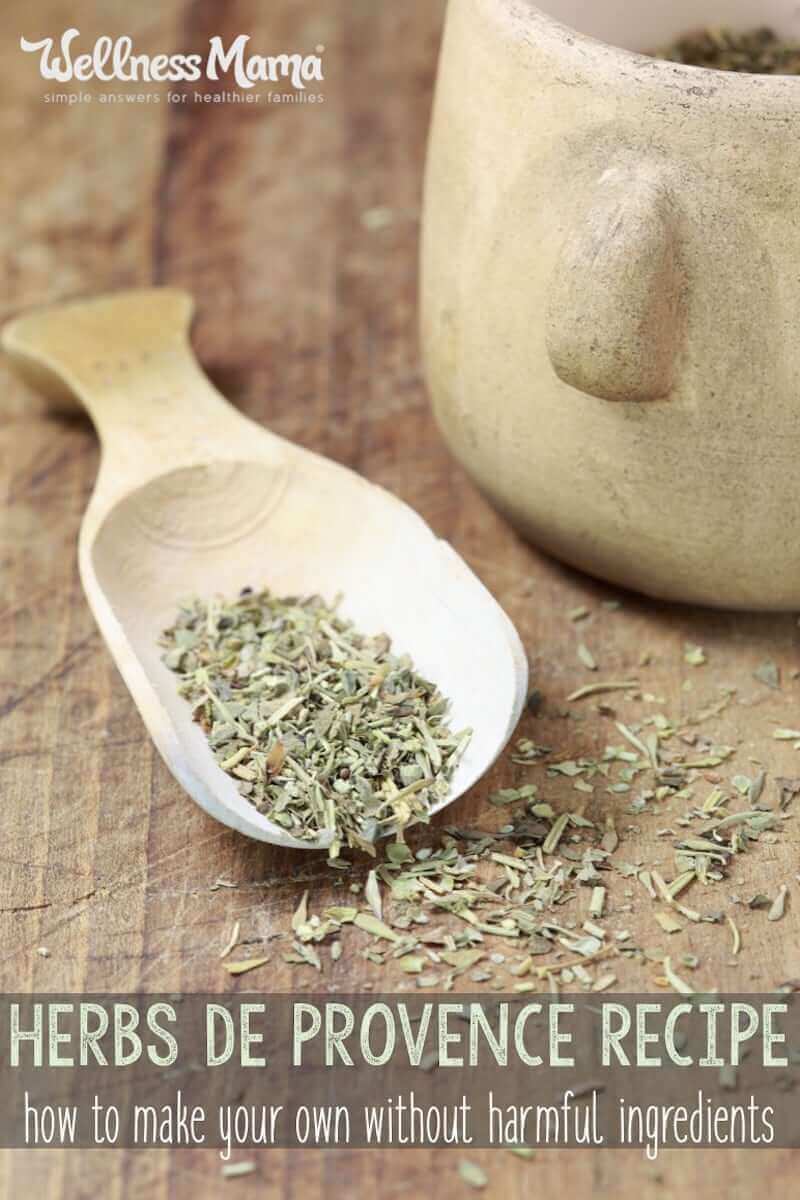
Homemade Herbes de Provence Spice Mix Recipe

0

I’m never without homemade herbes de Provence in our kitchen. Abundant in the south of France, this spice mix really speaks to my love of French cooking. I use it in just about anything I can!

My mom’s French heritage was a big influence growing up, and because of her, I will always have a soft spot for French dishes like boeuf bourguignon and pâté. I’m no Julia Child (or even Martha Stewart for that matter!), but I do try to incorporate French recipes in our meal plan whenever possible.

Many people think French cooking is fussy or difficult, but it doesn’t have to be. 

The French Cure for Picky Eaters

I’ve always been fascinated by French food culture and how even children in France typically like a wide variety of foods. We can learn a lot from the French, especially in how we teach our children to view food. I actually devoted a part of my Wellness Mama Cookbook to this topic!

A big part of raising non-picky eaters is exposing kids to well-rounded, varied flavors—like those in this seasoning blend. 

What is Herbs de Provence?

The blend originated in the south, or Provence region, of France, and is made up of herbs that naturally grow in that area. The original blend of herbs de Provence ingredients contained summer savory, thyme, marjoram, and rosemary. Later on, lavender, fennel, and even orange zest were added to certain versions. Many of the herbs de Provence spice blends at the grocery stores include lavender and other herbs. 

Not only do they taste good, but these herbs have strong antimicrobial properties to help the immune system do its job. Among many other things, rosemary helps with memory, thyme is great for the lungs, and marjoram helps relax nervous tension. Lavender is also good for stress relief, orange zest is uplifting, and fennel helps aid digestion. Together, they make for a powerful and tasty spice blend. 

Herbs de Provence vs Italian Seasoning

While I love both seasonings, they definitely have some differences. Italian seasoning also includes thyme and rosemary, but you’ll often find spicy oregano and basil in there too. And most versions of Italian seasoning don’t include marjoram or summer savory (and certainly not lavender)!

If you need an herbs de Provence substitute, the simplest recipe is summer savory, thyme, marjoram, and rosemary.

How to Make Herbs de Provence

It’s very simple, but it does require an extra step compared to many of my spice blend recipes. Usually I just add all of the herbs to a jar, shake, and voila… done. Since these herbs are often whole, like fennel seeds or lavender buds, I do a quick run through the food processor first. Not only does it make them easier to use in recipes, but freshly ground herbs are more fragrant and flavorful. Blending or chopping herbs releases more of their volatile oils so they taste fresher. 

So what is herbes de Provence for anyway, besides sounding fancy? The answer is a lot!

How to Use This Homemade Seasoning

Herbes de Provence is very versatile. It can be described as bold, woodsy, and a little bit floral. It pairs well with almost any cut of meat (especially pork and chicken recipes) and really complements most fish and seafood. I often add it to homemade soups and broths too.

We love to pre-mix a little into grass-fed butter and keep it at the ready for topping veggies, sourdough bread, or cauliflower rice. It also makes a great addition to breakfast dishes like my favorite sous vide egg bites or homemade breakfast sausage.

Try adding herbs de Provence compound butter to a roast chicken before putting it in the oven. Since the herbs are chunkier, not quite powdered, they work best when added to the beginning of recipes. This gives them a chance to infuse their flavors into the dish. It’s equally delicious on roasted vegetables or potatoes. 

A bonus… not only is it healthy and tastes good, but it fills the kitchen with amazing smells!

You can certainly buy it from the store, but this homemade herbes de Provence spice blend and other homemade spice blends are a great way to save time and money. And this way, you know exactly how long it’s been sitting on the shelf! It’s also a fun and easy kitchen project kids can help make.

Homemade Herbs de Provence Recipe

Homemade herbs de Provence combines herbs like thyme and marjoram with lavender, fennel, and orange zest for a savory and flavorful spice blend.

  • Use a mortar and pestle or a food processor to lightly grind any herbs that are whole, such as the rosemary, lavender flowers, or fennel. The herbs should be coarse, not finely ground.

  • If you are zesting the orange yourself, remove the zest of one organic orange and dry it in an oven on lowest setting or a dehydrator until completely dry.

  • Combine all ingredients in a jar or bowl and mix.

  • Store in an airtight container away from heat and light.

Nutrition Facts

Homemade Herbs de Provence Recipe

Amount Per Serving (1 tsp)

Calories 9
Calories from Fat 2

% Daily Value*

Fat 0.2g0%

Saturated Fat 0.1g1%

Polyunsaturated Fat 0.04g

Monounsaturated Fat 0.01g

Sodium 2mg0%

Potassium 28mg1%

Carbohydrates 2g1%

Fiber 1g4%

Sugar 0.04g0%

Protein 0.3g1%

Vitamin A 131IU3%

Vitamin C 2mg2%

Calcium 60mg6%

Iron 3mg17%

* Percent Daily Values are based on a 2000 calorie diet.

  • Mix a teaspoon or two of this flavorful herb blend into softened butter for topping vegetables, season chicken or seafood, or use it to make your own breakfast sausage
  • The total yield for this recipe is about 1/2 cup plus 2 teaspoons of herbs de Provence. 

Herbs de Provence Alternate Recipe

I’ll often buy my herbs in bulk online, but sometimes savory can be difficult to find at your local store. If you’re looking for a recipe without summer savory or just something new to try, I like this blend too. Simply process, mix, and store like the above recipe. All of the following herbs are dried:

  • 2 TBSP thyme
  • 2 TBSP rosemary
  • 1 TBSP basil
  • 1 TBSP oregano
  • 1 TBSP summer savory (optional but traditional)
  • 1 tsp marjoram (optional)
  • 1 tsp lavender buds (optional)

Have you ever used herbes de Provence? What French flavors do you love?

This homemade herbs de provence recipe combines herbs like thyme, savory, and marjoram with more unusual herbs like savory and lavender.

When to Start Planting Seeds Indoors?

0

Your success in growing plants relies heavily on timing. Planting seeds in proper time ensures good germination rate, avoids frost damage and quality yield.

If you never tried growing vegetables or ornamentals from seeds, it is easy to write off saying it is a labour-intense task. But in reality, it’s one of the most rewarding and cost-effective ways to garden.

While it requires a bit of patience, it’s truly fascinating to watch seeds sprouting indoors.

However, a common mistake most gardeners make is starting seeds too early, which can cause plants to become root-bound or leggy; while planting too late can cause you to miss the ideal growing season.

So, the key to successful gardening is knowing when to start planting seeds indoors. Starting at the right time helps seedlings grow strong and healthy, making them ready to be transplanted outdoors when conditions are ideal.

How to Know When to Start Seeds Indoors?

Knowing when to start seeds indoors mainly depends on your area’s last frost date. The last frost date is the average time in spring when the risk of frost usually passes.

Most seeds are started indoors 4–8 weeks before this date, so the seedlings have enough time to grow strong before being moved outside.

Another helpful guide is the information on seed packets. Many seed packets mention how many weeks before the last frost you should start the seeds indoors. Following these instructions can help you avoid starting too early or too late.

You should also consider the type of plant you are growing. Some plants like tomatoes, peppers, and broccoli need more time indoors, while others grow quickly and can be started later.

Understanding the growth time of each plant helps you plan the right seed-starting schedule.

Most young plants cannot survive freezing temperatures or late spring frost. So, it is essential that you find out the last frost date for your area by checking local gardening websites, weather services, or planting calendars.

Read: 14 Forst Tolerant Vegetables

How to Start Planting Seeds Indoors?

Most seeds are started indoors about 4–8 weeks before the last expected frost date. This gives seedlings enough time to grow strong and healthy before they are transplanted outdoors.

However, the exact timing can vary depending on the plant.

Slow-growing plants like peppers and eggplants need around 8–10 weeks, while faster-growing plants like cucumbers or squash can be started 3–4 weeks before the last frost. Always check the seed packet for the best timing.

Read this: 9 Tips for Growing Vegetables in a Greenhouse

Choose the right containers

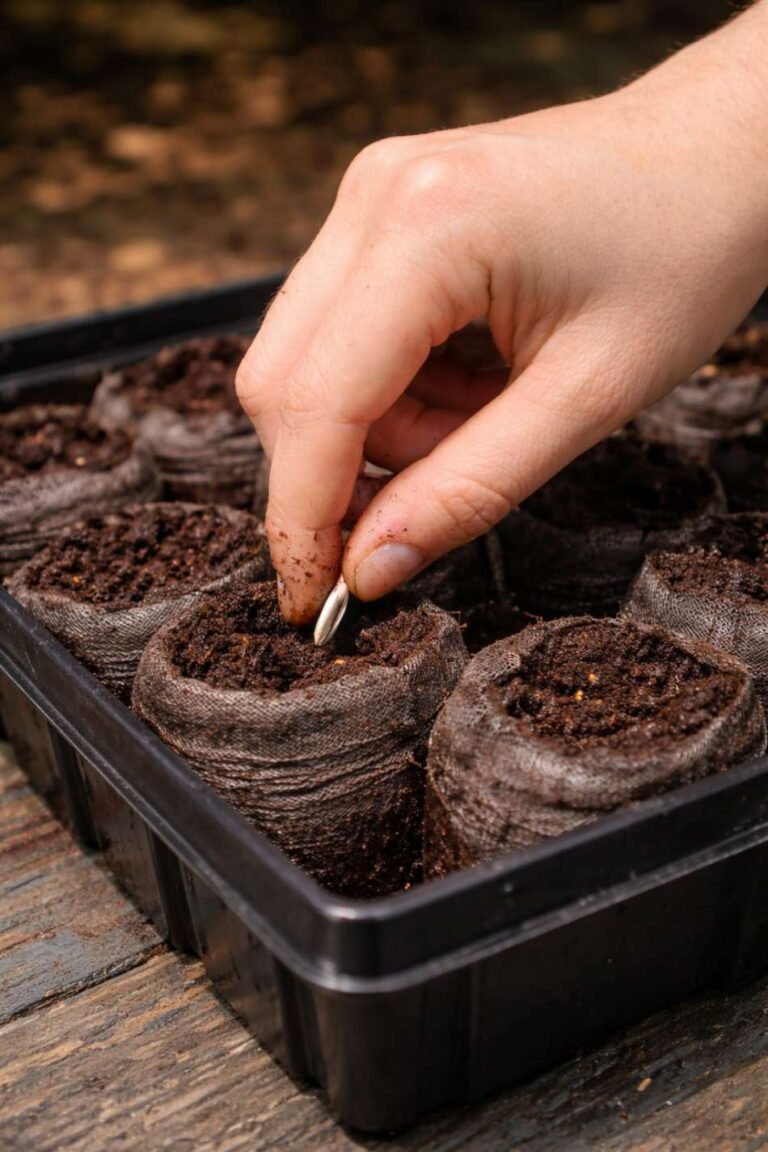
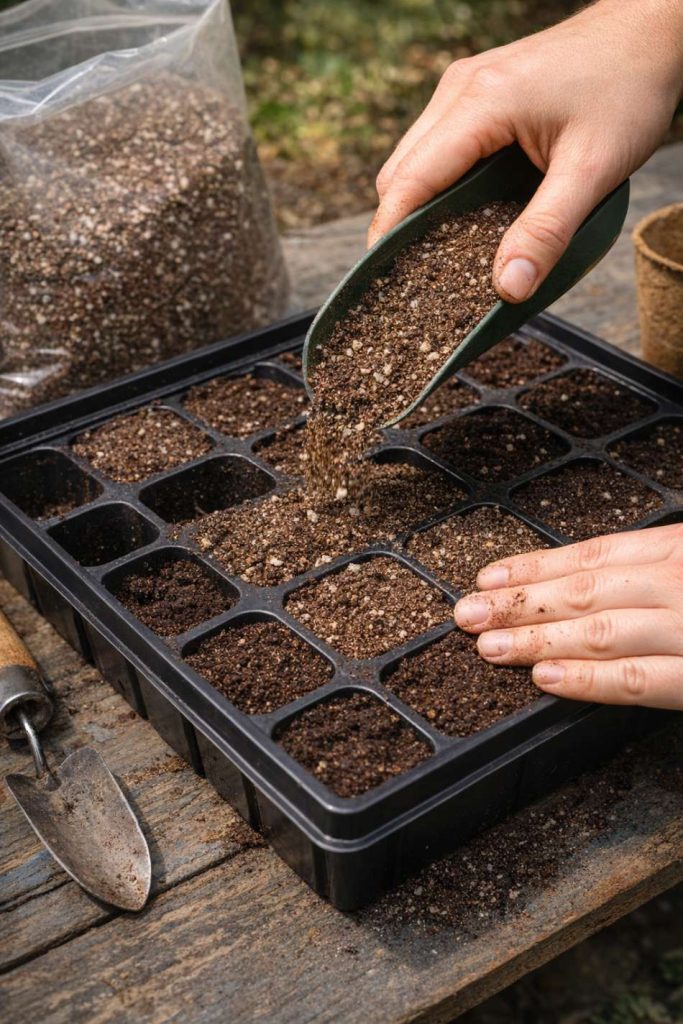
The first step is selecting suitable containers for seed starting. You can use seed trays, small nursery pots, peat pots, or recycled containers such as yogurt cups or plastic food containers.

The most important thing is that the container has drainage holes at the bottom. Good drainage prevents water from collecting in the soil, which can damage young roots. Clean containers also help reduce the risk of plant diseases.

Use a quality seed-starting mix

Seeds grow best in a light and well-draining seed-starting mix rather than regular garden soil. These mixes are specially designed to hold enough moisture while still allowing air to reach the roots.

Garden soil can be too heavy and may contain pests or diseases that harm seedlings.

Fill the container with the mix and gently press it down so the surface is level but not compact.

Plant seeds at the proper depth

Planting depth plays an important role in seed germination. A general rule is to plant seeds at a depth of about two to three times the size of the seed.

Very small seeds usually need only a thin layer of soil or can be lightly pressed onto the surface.

Larger seeds should be covered slightly deeper. Always check the seed packet instructions, as they provide the most accurate guidance.

Provide warmth and moisture

Most seeds germinate best in warm and consistently moist soil. After planting, water the soil gently so the seeds are not disturbed.

The soil should remain slightly moist but never soggy. Covering the tray with a plastic dome or plastic wrap can help retain moisture and warmth until seeds sprout.

Give enough light

Once seedlings emerge, they need plenty of light to grow properly. Place them near a bright sunny window that receives several hours of sunlight each day.

Many gardeners also use grow lights, which provide steady light and prevent seedlings from becoming tall and weak. Adequate light helps seedlings grow compact and strong.

Thin the seedlings if necessary

Sometimes multiple seeds sprout close together in the same container. When this happens, remove the weaker seedlings so the strongest one has enough space to grow.

This process, called thinning, prevents overcrowding and improves air circulation around the plants.

Harden off before transplanting

Before moving seedlings into the garden, they need time to adjust to outdoor conditions. This process is called hardening off.

Gradually place the seedlings outside for a few hours each day, increasing the time over about 7–10 days. This helps them adapt to sunlight, wind, and temperature changes, reducing transplant shock.

Vegetables that Grow Best When Started Indoors

Some vegetables grow much better when they are started indoors before the outdoor growing season begins.

These plants usually need a longer growing season or warmer temperatures to grow properly.

By starting them indoors, gardeners can give the seedlings extra time to develop before planting them outside.

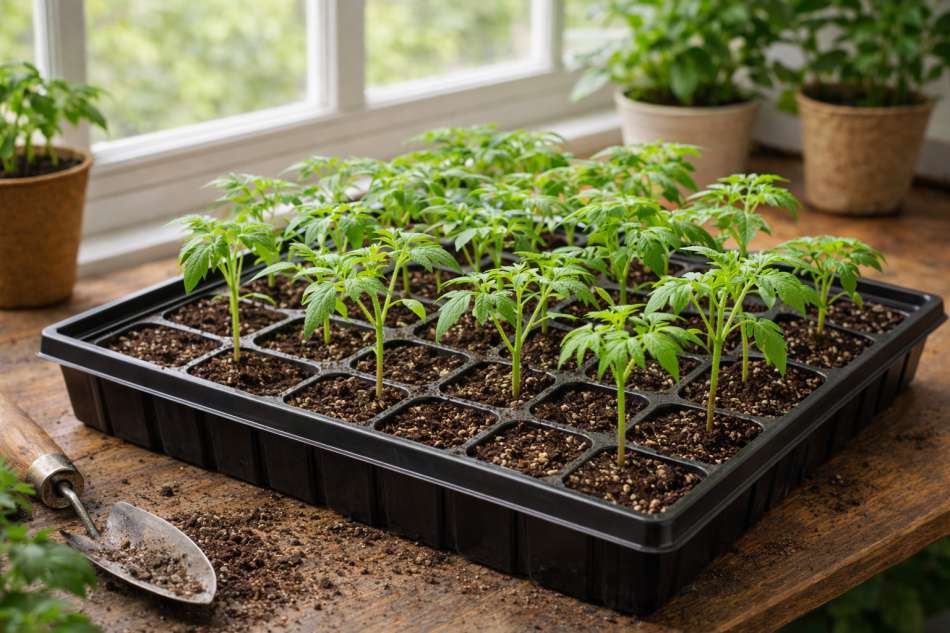
Tomatoes are one of the most common vegetables started indoors. They grow slowly in the early stages and need warm conditions to thrive.

Starting tomato seeds indoors about 6–8 weeks before the last frost date helps them grow strong and ready for transplanting.

Peppers and eggplants also benefit from an early indoor start. These plants need warm soil and a long growing season to produce fruits.

Starting them indoors gives the plants enough time to grow before they are moved into the garden.

Cool-season crops like broccoli, cabbage, and cauliflower can also be started indoors.

Growing them inside allows gardeners to transplant healthy seedlings outdoors early in the season. This helps the plants mature before the weather becomes too warm.

Starting these vegetables indoors not only helps plants grow stronger but also allows gardeners to enjoy earlier harvests and better yields during the growing season.

Also Read: How to Build Tomato Trellis with Bamboo?

Seeds that Should Be Directly Sown Outdoors

While some vegetables grow well indoors, many plants grow better when their seeds are planted directly in the garden soil. These plants usually grow quickly or have sensitive roots that do not respond well to transplanting.

Carrots and radishes are good examples of crops that should be directly sown outdoors.

These vegetables develop their edible roots underground. If they are transplanted, the roots can become damaged or grow in an unusual shape.

Plants like beans, corn, and peas also grow best when planted directly in the garden.

Their seeds germinate quickly in warm soil and the plants establish strong roots when they grow in the same place where they will mature.

Direct sowing is often easier and requires less work because there is no need to transplant seedlings later.

With proper soil preparation and regular watering, these crops can grow quickly and produce a healthy harvest.

Check this: 48 Vegetables You Can Plant in March

Basic Supplies for Starting Seeds Indoors

Starting seeds indoors does not require many tools, but having the right supplies can make the process much easier.

These basic materials help seeds germinate properly and allow young seedlings to grow strong and healthy.

Seed trays or pots

Seed trays, small pots, or recycled containers can be used to plant seeds indoors. The containers should have drainage holes at the bottom so excess water can escape.

Proper drainage helps prevent root problems and keeps the soil from becoming too wet.

Seed-starting mix

A good seed-starting mix is important for successful germination. This type of soil is light, loose, and drains well, allowing tiny roots to grow easily. Regular garden soil is usually too heavy and may contain pests or diseases.

Grow lights or a sunny window

Seedlings need plenty of light to grow strong. A bright sunny window that receives several hours of sunlight each day works well.

Many gardeners also use grow lights to provide consistent light, especially when natural sunlight is limited.

Watering can or spray bottle

Seeds and young seedlings need gentle watering. A spray bottle or small watering can help keep the soil moist without disturbing the seeds. It is best to keep the soil slightly moist but not overly wet.

Plant labels

Plant labels help you remember what you planted and when. Since many seedlings look similar in the early stages, labeling each container can prevent confusion as the plants begin to grow.

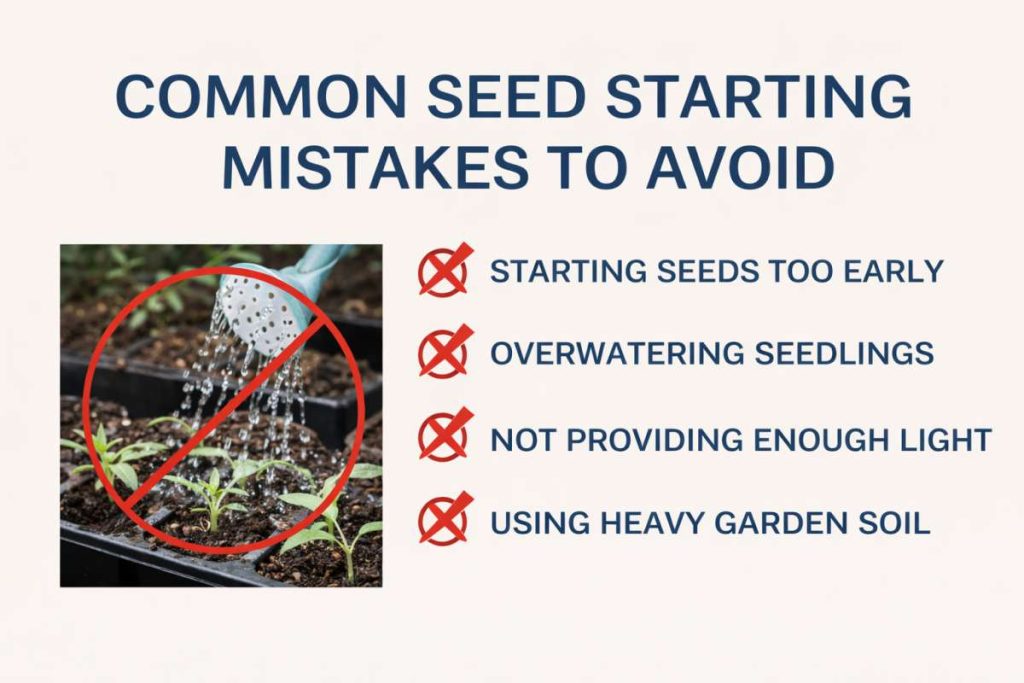
Common Seed Starting Mistakes to Avoid

Starting seeds indoors is fairly simple, but a few common mistakes can affect the health of young plants.

Avoiding these problems will help your seedlings grow stronger and prepare them for a successful transplant into the garden.

Starting seeds too early

Many gardeners start seeds too early, thinking it will give plants a bigger head start. However, seedlings that grow indoors for too long can become leggy or root-bound before it is time to move them outside.

Overwatering seedlings

Too much water can harm young plants. Seedlings need moist soil, but overly wet soil can cause root problems and diseases. It is best to water gently and allow the top layer of soil to dry slightly between watering.

Not providing enough light

Light is very important for healthy seedlings. Without enough light, seedlings grow tall and weak as they stretch toward the light source. Placing them near a bright window or under grow lights helps them grow stronger.

Using heavy garden soil

Regular garden soil is often too heavy for starting seeds. It can compact easily and prevent proper root growth. Using a light seed-starting mix gives seeds better conditions for germination and healthy root development.

Conclusion

Starting seeds indoors at the right time can make a big difference in the success of your garden. When seeds are planted at the proper time and given the right care, seedlings grow strong and healthy before being moved outdoors.

With well-developed plants ready for transplanting, gardeners can enjoy earlier harvests, better plant growth, and a more productive garden throughout the growing season. A little planning and proper timing can go a long way in helping your plants thrive.

Wellness Resources Daily Energy Multiple Vitamin – 90 Capsules – Methylated Daily MTHFR Multivitamin Without Iron – Vitamin B12, Folate, & Bioavailable B Vitamins – Best Supplement for Energy & Mood

0


Price: $29.99
(as of Mar 17, 2026 21:54:42 UTC – Details)

Product description

Wellness Resources Highest Quality Nutritional Supplements Since 1985Wellness Resources Highest Quality Nutritional Supplements Since 1985

Wellness Resources Daily Energy Multiple Vitamin is the ultimate multiple vitamin for energy, stress tolerance, and daily wellness! It contains the highest quality coenzyme B vitamins, methyl folate, and minerals your body can easily absorb and use. Feel energized with a daily vitamin that works!*

Complete vitamin and mineral complex for daily nutrition*Most absorbable forms of B vitamins and methyl folate*Anti-fatigue nutrients for energy and stress relief*All B vitamins in bioavailable, coenzyme formsNaturally supports thyroid health*

Daily Energy Multiple Vitamin contains the most absorbable forms of B vitamins that your body can readily use for energy and stress tolerance. It is specially formulated to maximize energy production. The nutrients in Daily Energy Multiple Vitamin are enhanced for digestive tract absorption and cellular uptake, helping to deliver important energy sustaining nutrients precisely where they need to go. This is a quality difference you can feel!

Coenzyme B Vitamins for Energy

Vitamin B1 (from coenzyme thiamin diphosphate)Vitamin B2 (from coenzyme riboflavin 5′-phosphate)Vitamin B3, Niacin (from inositol hexonicotinate)Vitamin B6 (from coenzyme pyridoxal 5’phosphate)Folate (as Quatrefolic (6S)-5-Methyltetrahydrofolic acid, glucosamine salt)Vitamin B-12 (as 50% coenzyme adenosylcobalamin and 50% coenzyme methylcobalamin)Vitamin B-5 (33% mg coenzyme Pantethine and 67% mg d-calcium pantothenate)

Folate is an essential vitamin that is used for hundreds of functions in the body and must be taken in regularly for good health. Folate is vital for proper brain health and plays key roles in mental and emotional health. Daily Energy Multiple Vitamin contains an activated form of folate, called methylfolate, which is water soluble and 10 times more bioavailable than regular folic acid.

Designed to energize and boost mood, every day.

Brain Health & Mood

Folate is an essential vitamin that is vital for brain health and plays key roles in mental and emotional health. Daily Energy Multiple Vitamin contains an activated methyl folate, which is water soluble and 10 times more bioavailable than regular folic acid.*

Thyroid Support

Thyroid hormone tells the DNA of cells to make energy to sustain basal metabolic rate, setting the pace for energy production in the body. Vitamin B12 and folate are especially important for the enzymes that make thyroid hormone. A lack of B12 (along with poor mood) is commonly found in those struggling with thyroid function.*

Optimized Absorption

Daily Energy Multiple Vitamin contains special minerals that are bound to other nutrients for optimum absorption. For example, we use a chelate of magnesium malate, as malic acid is helpful in preventing muscle fatigue. As malic acid is naturally drawn into a cell to support energy production it has the additional advantage of helping to transport magnesium into the cell.*

Wellness Resources vitamins supplements highest quality natural multivitamin energy methylWellness Resources vitamins supplements highest quality natural multivitamin energy methyl

Wellness Resources – Since 1985

Highest Quality Supplements

Wellness Resources formulates 90+ superior quality supplements that deliver the most absorbable nutrients in optimal amounts to make a true difference in your health.

Family-Owned Since 1985

We care about your health! As a family-owned company founded in 1985, we are committed to formulating the very best nutritional supplements for health results!

Quality You Can Trust Science-based Manufactured in USA Potency & purity tested Most absorbable nutrient forms Formulated by health experts No junk fillers or additives

Manufactured in USAManufactured in USA

Manufactured in the United States

Wellness Resources supplements are manufactured in the USA in labs that follow GMP (good manufacturing practice) guidelines to ensure quality and potency.

Third party testing to verify you are getting exactly what’s on the labelTested for contaminants such as heavy metals and microbesFDA registered labs

You are getting the highest purity supplements on the market!

Daily Energy Multiple VitaminDaily Energy Multiple Vitamin

Transparency in Labeling

Wellness Resources supplements are formulated with the highest purity, most absorbable raw material nutrients. We use the same forms of nutrients used in research – nutrients that are proven to be well absorbed and used by the body. We list the exact nutrient forms and amounts on the label!

Standardized nutrients with active compounds listed on labelNo “proprietary formulas” with hidden nutrient amountsNo hidden ingredients

Wellness Resources selects science-based nutrients standardized for the most beneficial nutritional compounds. Get the most from your nutritional supplements!

Is Discontinued By Manufacturer ‏ : ‎ No
Package Dimensions ‏ : ‎ 5 x 2.48 x 2.48 inches; 4.66 ounces
Date First Available ‏ : ‎ August 1, 2012
Manufacturer ‏ : ‎ Wellness Resources
ASIN ‏ : ‎ B008RGIZLK
Best Sellers Rank: #113,142 in Health & Household (See Top 100 in Health & Household) #1,409 in Multivitamins
Customer Reviews: 4.3 4.3 out of 5 stars (122) var dpAcrHasRegisteredArcLinkClickAction; P.when(‘A’, ‘ready’).execute(function(A) { if (dpAcrHasRegisteredArcLinkClickAction !== true) { dpAcrHasRegisteredArcLinkClickAction = true; A.declarative( ‘acrLink-click-metrics’, ‘click’, { “allowLinkDefault”: true }, function (event) { if (window.ue) { ue.count(“acrLinkClickCount”, (ue.count(“acrLinkClickCount”) || 0) + 1); } } ); } }); P.when(‘A’, ‘cf’).execute(function(A) { A.declarative(‘acrStarsLink-click-metrics’, ‘click’, { “allowLinkDefault” : true }, function(event){ if(window.ue) { ue.count(“acrStarsLinkWithPopoverClickCount”, (ue.count(“acrStarsLinkWithPopoverClickCount”) || 0) + 1); } }); });
DAILY ENERGY MULTIPLE VITAMIN -27 ESSENTIAL NUTRIENTS: Includes beta carotene, methylated b complex vitamins, vitamin C, vitamin D, vitamin E, folate, calcium, magnesium, zinc, selenium & more. Two capsules of this one multivitamin provide foundational nutrition.
SUPPORT ENERGY WITH BIOAVAILABLE COENZYME B VITAMINS: Vitamin B1 as benfotiamine, Vitamin B2, Vitamin B3 as niacin (inositol hexanicotinate), Vitamin B6, Vitamin B12 as methylcobalamin & adenosylcobalamin. No cyanocobalamin ever!
IDEAL MTHFR VITAMIN FOR SUPERIOR METHYLATION : Highly bioavailable folate as 5-methyltetrahydrofolate (5-MTHF)—the methylated form for MTHFR support.
A TOP-RATED SUPPLEMENT FOR ENERGY : Methylated b vitamins and Krebs Cycle nutrients support energy, thyroid function, and stress relief*
PURE DAILY SUPPLEMENT WITH TRANSPARENT LABELING: Wellness Resources Daily Energy Multiple Vitamin is non-GMO, gluten-free, dairy-free, allergen-free, sugar-free, dye-free, preservative-free, and artificial sweetener-free.
TRUSTED SINCE 1985: Wellness Resources formulates advanced daily supplements for energy and longevity. Family-owned and manufactured in the USA in GMP-certified facilities. Third-party tested with no proprietary blends—just clean, potent formulas.