69.4 F
Klamath Falls
Friday, May 8, 2026
Home Blog Page 68

Make a Decorative Winter Arrangement: Step-by-Step Guide

0

And now, without further ado…

Constructing Your Holiday Planter

For this project, you will need a few basic pieces of equipment. I used a small, rectangular planter box for mine.

A close up horizontal image of the gear needed to create a winter arrangement.
Basic tools. Photo by Matt Suwak.

You can use literally anything for your container: an otherwise empty outdoor container, an indoor-only item, an old wooden box you’ve been searching for a use for, or a glass vase.

You’ll need some material to hold the greens in place. This could be simple potting mix.

For this project I used floral foam blocks, available via Amazon, cut to size and placed inside the planter.

Floral Foam Bricks

It is important to note that the foam is very light and your container will likely be top heavy.

Solve this dilemma by placing a few rocks and stones in the bottom of your planter to weigh it down.

Decorative glass marbles, available via Amazon, also give an attractive look in translucent containers.

Flat Clear Marbles for Vase Filler

And remember… your design is supposed to be a display of unity and balance. Nothing should be too overpowering.

The whole shebang should look natural, as if it wasn’t designed and simply fell into place of its own accord. That means it isn’t perfect!

A close up horizontal image of five pine cones set on a wooden table.A close up horizontal image of five pine cones set on a wooden table.
Photo by Matt Suwak.

Collect your supplies and lay them out for easy access. For this project I used the following (in order of quantity, from most to least):

  • Fraser Fir greens collected from a shop’s Christmas tree trimmings
  • Emerald Giant arborvitae cuttings collected from a neighbor’s yard
  • Southern Magnolia leaves and tips pruned from a tree in my backyard
  • Red twig dogwood branches carefully culled from a huge specimen in a local park
  • Berry-producing branches from a Nellie Stevens holly in the front yard of my employer’s home
  • Golden euonymus from a shrub in my backyard
  • Cattails from a pond at a local park
  • Norway Spruce cones from a client’s backyard

Keep in mind that greens and foliage should not be gathered in protected areas such as nature preserves and state parks that have enacted restrictions against taking specimens home, sometimes with a hefty fine attached.

Not sure what types of conifer cones you have? Read my handy guide to conifer identification.

Step 1 – Prepare Florist’s Foam

Cut the foam blocks to size and cram them into your container. If you’re using a potting mix or some other sort of planter filler, disregard this step.

A close up horizontal image of foam blocks set in the bottom of a plastic planter.A close up horizontal image of foam blocks set in the bottom of a plastic planter.
Rough cut blocks will do the trick. Photo by Matt Suwak.

The blocks do not need to fit perfectly. I filled the open space with some potting mix and stones to weigh the container down.

Step 2 – Place Filler

Place your filler greens. For this container I used Fraser fir greens as a base background to the whole affair.

Cut the branches at a 45-degree angle to make it easier to punch through the foam blocks or potting mix.

A close up horizontal image of evergreen branches poked into floral foam in a planter.A close up horizontal image of evergreen branches poked into floral foam in a planter.
The branches should punch through the foam easily if cut at a 45 degree angle. Photo by Matt Suwak.

These initial greens are meant to serve as a background for your container and don’t need to be meticulously selected and arranged.

Place them in unspecific patterns so that your design has a full background of green foliage.

This should be taller than all of the rest of the greens in the container so that it can provide a good backdrop for everything else.

Step 3 – Fill the Middle

Fill in the middle ground with your secondary filler greens.

In this example I utilized a few arborvitae clippings to serve as a bushy filler. I used almost as much arborvitae as I used Fraser fir.

The trick to this step is to add a bit of variety to both the color and texture of the container. After all, these two greens make up the bulk of what’s in the design.

A close up vertical image of arborvitae branches in floral foam in a plastic planter.A close up vertical image of arborvitae branches in floral foam in a plastic planter.
The softer foliage of the arborvitae breaks up the container and adds a new texture. Photo by Matt Suwak.

These should be placed at a middle tier of height in the container. This layer of greens could spill out over the edge of the container to add a flowing, fluid look to the design.

Try to leave a gap of open space in the front and center area of your container (see Step 5).

Step 4 – Colorful Additions

Time to add some color! It’s tempting to go overboard here, but remember that sometimes less is more, and just a little bit is enough.

Most of this container will be evergreen-based, so a little bit of color adds a lot and shouldn’t be abused. I used exactly four sprigs of holly berries to distribute color evenly around the container.

A close up horizontal image of berries added to a winter arrangement.A close up horizontal image of berries added to a winter arrangement.
Just a little bit of color will do the trick. Photo by Matt Suwak.

The branches and leaves continued growing past the berries so I snipped them off, leaving the berries in full effect.

I fully expect these to be picked off and eaten by birds in the next few weeks.

The berries on a Nellie Stevens tend to be a bit more orange than red. If I had a choice, I would have used winterberry instead.

Step 5 – Greens Up Front

Insert and arrange the “front and center” greens that will be featured at the front of your arrangement.

In this project, I used the tips of a Southern magnolia.

They tend to maintain their green luster for a long time and the velvety brown underside of each leaf is a nice complement to the green that dominates the bulk of this design.

A close up horizontal image of Southern magnolia leaves added to a plastic planter with evergreens and berries to create a winter arrangement.A close up horizontal image of Southern magnolia leaves added to a plastic planter with evergreens and berries to create a winter arrangement.
Photo by Matt Suwak.

I stuck these branches in at sharp angles and manipulated the leaves to look as if they were spilling over the sides of the container.

At this point you should be running out of room in your design to add new material. That’s okay, because the final steps require only a few accents.

Step 6 – Add Accents

I’m a sucker for a nice yellow-and-gold hue, so I threw in the new growth from a golden euonymus as an accent to contrast nicely with all of the green going on.

Like in Step 4, the trick here is to add just a bit of color so that it grabs more attention in opposition to the sea of green.

A close up vertical image of golden euonymus growing in the garden.A close up vertical image of golden euonymus growing in the garden.
Photo by Matt Suwak.

I only used four branches, and I removed the bottom leaves from the stems before inserting them into the foam blocks.

This bright, bold punch of color should be front-and-center and shouldn’t reach above the background row of greens.

Other options to use here are a variegated boxwood, a blue-green splash of eucalyptus, or some Gold Thread cypress.

Or, you know, whatever color you like to see – this is your planter, after all!

Step 7 – Focus on Earth Tones

Remember that nice touch of earthy brown provided by the magnolia leaves? We’re going to couple that with a few other shades of brown and add some accents.

First I placed three cattails in the back of the display. I love the color of these things and have always found them incredibly interesting.

As the season wanes I expect to see them shedding seeds in a puffy display.

A close up horizontal image of a winter arrangement with a variety of different plants and berries.A close up horizontal image of a winter arrangement with a variety of different plants and berries.
Photo by Matt Suwak.

The trick here is to complement the subtle brown notes of the magnolia leaves, and throw a new shape and texture into the mix.

Sure, they look like corn dogs to some but that’s alright!

Additionally I added three Norway spruce cones. These break up some of the smooth green elements and complement the shape of the cattails.

I can’t overemphasize the importance of adding a range of colors as well as textures for varied interest, and to really make your arrangements pop.

Step 8 – Finish with Height (or A Frilly Garnish)

Ah, the final stage: adding the red twig dogwood. These branches should be placed in a radial pattern, starting at about 10 o’clock and finishing through to 2 o’clock.

A little bit is enough; these branches should complement the design without overpowering it.

A vertical image of a winter arrangement set on a shelf outdoors.A vertical image of a winter arrangement set on a shelf outdoors.
Nicely on display for the appreciation of guests, neighbors, and my mail carrier. Photo by Matt Suwak.

They add some height and delicate structure to the whole container, bringing your focus in and drawing it towards the other elements.

Think of this step as the frilled edges, that last dash of subtle icing, or the cherry in a cocktail.

Speaking of which, if you’re in the mood for another holiday project and the kitchen is calling to you, head on over to our sister site Foodal to check out their guides to decorating holiday cookies like a pro, and making homemade maraschino cherries.

Now Display That Thing!

I placed my finished product on the porch column of my front steps. If you plan to display your arrangement outdoors, these greens should be protected from the worst of the winter weather.

If you keep your final piece indoors, you’ll have a different set of issues to contend with.

When it’s cold outside and the heat is on, be prepared to witness it wilting in the warm and dry indoor air.

Wilt-Pruf Protective Coating Spray

The cooler air outside should help to preserve your arrangement’s integrity on the front stoop, deck, or patio.

I recommend using a product like Wilf-Pruf protective coating, available via Amazon, to maximize the life of your creation.

These concoctions are called “anti-desiccants” and will lock in the moisture of your greens and preserve them far longer than they might if left to naturally decay.

A Note on Watering

When it comes to keeping your greens looking fresh and vibrant, you might be tempted to water the display. That’s not going to help the greens and oftentimes can be detrimental.

First, understand that the material you’re using is going to brown, wilt, and lose its freshness. It’s a process you can’t prevent, but you can work around it.

To maintain freshness in your greens, lightly mist them every few days during warm or dry weather (and in warm and dry conditions, which you will find indoors in the wintertime).

Additionally, it can be helpful to keep outdoor containers protected from very wet or snowy conditions. These babies just won’t look the same after a night spent out in wind-blown sleet or an ice storm.

Ultimately it’s a losing battle, and your wonderful creation will be more brown and crispy than green and festive after a while.

Some people, myself included, enjoy that look of naturally fading material; others are inclined to replace the crispified (is that a word? It is now!) greens with fresh stuff from whatever sources they have. The choice is up to you.

Remember that if you used foam blocks in your container it will be top-heavy.

When I placed my design, I weighted the container down with rocks and stones and tied the container safely in place with florist’s wire, available from Amazon.

Floral Wire, Dark Green

This stuff is great. I use it to suspend bird feeders, support any outdoor project, and to tie together greens and branches into door swags.

It is available in pre-cut lengths as well as spools.

Other Ideas

Creamy Parmesan Butter Beans

0

If you’re looking for a cozy dinner recipe for the fall/winter months, try this creamy parmesan butter beans recipe. It’s ready in 30 minutes, features a rich and flavorful sauce, and cooks in just one pan. Serve with some sourdough bread for dipping.

creamy parmesan butter beans in a skillet with tall sides

Think beans are boring? They don’t have to be! Fall in love with beans again when you make these creamy parmesan beans (that you would never guess are dairy free.) The broth is creamy and rich thanks to a combination of vegan parmesan, broth, and non-dairy milk. We like serving this one up with some sourdough and a simple salad (or roasted veggie) to round out the meal.

Saucy bean recipes like this one are my favorite type of recipe to cook which is why I love using my Cristel 3.5 quart sauté pan since the tall sides are perfect for this type of recipe. I’m excited to be partnering with them again and they’re offering a 30% discount on their cookware if you use my code DEBBIE30.

Why You’ll Love this Bean Recipe

  • Quick and Easy: use canned butter beans and this recipe is ready in less than 30 minutes. Just serve with some toasted bread and a quick salad and dinner is ready!
  • Good for You: as a dietitian, beans are the one food I wish everyone ate more often! They’re a good source of protein and rich in a variety of nutrients most of us are missing out on like fiber, magnesium, potassium, iron and calcium.
  • Make it Your Own: feel free to play around with this recipe by using a different bean or adding some spinach for color and nutrients.
creamy parmesan beans in bowl garnished with parmesan and parsley.

Ingredients You’ll Need

Here’s a quick rundown of the key ingredients you’ll need for this easy vegan pumpkin lasagna recipe. Be sure to check out the recipe card for the exact measurements.

  • Butter Beans: they’re tender and creamy and work well in dishes like this one! However, in a pinch you could swap with white beans or chickpeas.
  • Onion and Garlic: add flavor to the creamy sauce.
  • Italian Seasoning: adds flavor to the sauce for these beans. Feel free to play around with other spices like oregano, rosemary, or basil.
  • Plant-Based Milk: you want to pick one that is creamy/rich like soy milk, coconut milk or something like Ripple that is a bit thicker. They just cook down better into a creamy sauce than almond or even oat.
  • Vegan Parmesan: I really like the vegan parmesan from VioLife which is what I used for this recipe, but others should work well. If you’re cooking for vegetarians, just use a rennet-free parmesan.
  • Lemon: don’t skip the fresh squeezed lemon juice near the end. It helps brighten up all the flavors in the dish!
creamy parmesan butter bean sin a skillet with fresh bread and lemon on the table.

How to Make Creamy Parmesan Beans

I love that these creamy parmesan beans come together in one pot with plenty of sauce for dipping some bread into. See the recipe card for the full directions. 

Saute the Onion: Heat the olive oil in a 3.5-quart @cristelusa Strate saute pan over medium-high heat. Str in the onion and saute until translucent, about 3-5 minutes. Stir in the minced garlic, Italian seasoning, and salt. Cook for one minute. 

Make the Sauce: Add the broth, coconut milk, and vegan parmesan. Bring to a simmer for 5-8 minutes to thicken. Stir in the butter beans and cook another 2-3 minutes or until the beans are warmed through. 

Garnish and Serve: Turn off the heat and stir in the lemon juice and parsley. Serve with sourdough for dipping or spoon over top of pasta.

Storage

Fridge: any leftover beans can be stored in the fridge in an airtight container for up to 3 days. 
Freezer: you can also store these beans in the freezer in an airtight container for up to 3 months. Just thaw in the fridge overnight and reheat on the stovetop or microwave. 

creamy parmesan butter beans in a skillet with tall sides

Print

Creamy Parmesan Beans

#wprm-recipe-user-rating-0 .wprm-rating-star.wprm-rating-star-full svg * { fill: #343434; }#wprm-recipe-user-rating-0 .wprm-rating-star.wprm-rating-star-33 svg * { fill: url(#wprm-recipe-user-rating-0-33); }#wprm-recipe-user-rating-0 .wprm-rating-star.wprm-rating-star-50 svg * { fill: url(#wprm-recipe-user-rating-0-50); }#wprm-recipe-user-rating-0 .wprm-rating-star.wprm-rating-star-66 svg * { fill: url(#wprm-recipe-user-rating-0-66); }linearGradient#wprm-recipe-user-rating-0-33 stop { stop-color: #343434; }linearGradient#wprm-recipe-user-rating-0-50 stop { stop-color: #343434; }linearGradient#wprm-recipe-user-rating-0-66 stop { stop-color: #343434; }

If you're looking for a cozy dinner recipe for the fall/winter months, try this creamy parmesan butter beans recipe. It's ready in 30 minutes, features a rich and flavorful sauce, and cooks in just one pan. Serve with some sourdough bread for dipping.
Course Main
Cuisine American, Italian-Inspired
Diet Vegan, Vegetarian
Prep Time 5 minutes
Cook Time 15 minutes
Total Time 20 minutes
Servings 4 servings
Calories 382kcal

Ingredients

  • 2 tablespoons olive oil
  • 1 onion, diced
  • 3 cloves garlic
  • 1 teaspoon Italian seasoning
  • 1/2 teaspoon sea salt
  • 1/4 teaspoon red pepper flakes
  • 1 cup vegetable broth
  • 3/4 cup coconut milk
  • 1/2 cup grated vegan parmesan cheese
  • 2 (15 oz) cans butter beans, drained and rinsed
  • 1/2 lemon, juiced
  • 3 tablespoons chopped parsley

Instructions

  • Heat the olive oil in a 3.5-quart saute pan over medium-high heat. Str in the onion and saute until translucent, about 3-5 minutes.
  • Stir in the minced garlic, Italian seasoning, red pepper, flakes, and seas salt.
  • Add the broth, coconut milk, and vegan parmesan. Bring to a simmer for 5-8 minutes to thicken. Stir in the butter beans and cook another 2-3 minutes or until the beans are warmed through.
  • Turn off the heat and stir in the lemon juice and parsley. Serve with sourdough for dipping or spoon over top of pasta.

Nutrition

Serving: 1serving | Calories: 382kcal | Carbohydrates: 37g | Protein: 16g | Fat: 20g | Saturated Fat: 11g | Polyunsaturated Fat: 1g | Monounsaturated Fat: 6g | Cholesterol: 11mg | Sodium: 523mg | Potassium: 911mg | Fiber: 11g | Sugar: 6g | Vitamin A: 407IU | Vitamin C: 9mg | Calcium: 166mg | Iron: 5mg

The post Creamy Parmesan Butter Beans appeared first on Dietitian Debbie Dishes.

Serious Steel Fitness Fabric Mini Loop Non-Slip Resistance Band Set | Warm-Up, Physical Therapy, Glute Training, Speed and Agility Exercise Bands

0


Price: $24.90 - $21.76
(as of Dec 16, 2025 03:43:40 UTC – Details)

Product description

fabric mini loops, mini loops, resistance bands, booty bands, bands, serious steel fitnessfabric mini loops, mini loops, resistance bands, booty bands, bands, serious steel fitness

fabric mini loops, mini loops, resistance bands, booty bands, bands, serious steel fitnessfabric mini loops, mini loops, resistance bands, booty bands, bands, serious steel fitness

5 LEVELS OF RESISTANCE

Color coded for convenience we have 5 levels of resistance, perfect for any fitness level! Easily customize your workout!

X-LIGHT | UP TO 10lbs

LIGHT |10-15lbs

MED | 15-25lbs

HEAVY | 25-35lbs

X-HEAVY | 35-55lbs

fabric mini loops, mini loops, resistance bands, booty bands, bands, serious steel fitnessfabric mini loops, mini loops, resistance bands, booty bands, bands, serious steel fitness

RESISTANCE OR ASSISTANCE

Serious Steel Fabric Mini Loops are PERFECT to either add resistance or assistance to any movement!

fabric mini loops, mini loops, resistance bands, booty bands, bands, serious steel fitnessfabric mini loops, mini loops, resistance bands, booty bands, bands, serious steel fitness

fabric mini loopsfabric mini loops

NON-SLIP & NON-ROLL (ANTI-ROLL)

Our Serious Steel Fabric Mini loops are made with premium material, these bands won’t roll down, snap, tear, or pinch your skin like traditional rubber bands tend to do. With our Fabric Mini Loops, you won’t have to worry about constantly readjusting throughout your workout!

fabric mini loops, mini loops, resistance bands, booty bands, bands, serious steel fitnessfabric mini loops, mini loops, resistance bands, booty bands, bands, serious steel fitness

THE ULTIMATE WORKOUT PARTNER!

fabric mini loopsfabric mini loops

MONSTER WALKS

fabric mini loopsfabric mini loops

BICYCLES

fabric mini loopsfabric mini loops

PUSH-UPS

fabric mini loopsfabric mini loops

LUNGES

A GAME CHANGER: These fabric mini bands are a game changer for everyone. Tired of latex rubber bands breaking, pulling hair, rolling up? These are what you need. Unlike the latex rubber version, these bands are soft on the skin and won’t roll.
VERSATILE – Mini bands have been used for years as a warm-up tool, for physical therapy, for glute buildings and more. These bands are extremely useful in many more applications and should be a staple in everyones gym bag.
PORTABLE: Because these bands are small and light, you can take them anywhere. Easily fits in your bookbag, duffel bag or carry on.
ENDLESS EXERCISES: Use in conjunction with squats, lunges, leg extensions, glute bridges and more.
FIVE LEVELS: Included in your purchase are five (5) fabric anti-slip mini loop resistance bands and a mesh carrying bag. The resistance levels range from Extra Light to Extra Heavy.

Customers say

Customers find these resistance bands better than rubber ones and appreciate their comfort on legs. They like the fabric quality and width, and one customer mentions they’re suitable for senior fitness classes. The motion range receives mixed feedback, with one customer noting they don’t roll or bunch up, while sturdiness also gets mixed reviews.

TRIBE Resistance Bands Set &Weights for Exercises Bands for Men/Women with Workout Bands, Handles, Door Anchor, Ankle Straps, Carry Bag, Exercise eBook I Resistance Training, Fitness Equipment

0


Price: $26.99
(as of Dec 15, 2025 15:42:16 UTC – Details)

Product description

resistance bands weights dumbbells set exercise equipment home gym exercise bands workout bandsresistance bands weights dumbbells set exercise equipment home gym exercise bands workout bands

WITH YOU EVERY STEP OF THE WAY!

At Tribe, our love for fitness defines who we are and our desire to be by your side at every step of your fitness journey defines what we do!

We believe that everybody deserves the opportunity to use the very best equipment, made with extreme care using only the most up to date technologies and the finest materials available and that is why our products are designed, tested and developed right here in the US by our dedicated team of health and fitness experts.

Our passion to innovate and move the fitness industry forwards constantly drives us to be better and make better products. We don’t hide from our customers, we stand boldly and proudly alongside them as we stand boldly and proudly alongside our products, the same products that we use every day and the same products that we love!

Become part of the Tribe and let us accompany you on your Fitness journey!

rowing machine workout equipment ankle weights resistance bands set medicine ball gym bag weight setrowing machine workout equipment ankle weights resistance bands set medicine ball gym bag weight set

EVERYTHING YOU NEED!

Tribe Fitness Premium Resistance Band Sets include everything you need for the workout you want, wherever you want it…All in a handy waterproof nylon carry-bag so you can take the gym with you!

workout equipment for home workouts weights for exercises home gym equipment gym equipment for home workout equipment for home workouts weights for exercises home gym equipment gym equipment for home

A TEAM IS ONLY AS STRONG AS ITS WEAKEST LINK…

…Something that we take very seriously at Tribe Fitness.

When we design a new product, we start with this simple truth and go from there. Sure, we could use smaller carabiners to save a buck, use cheap nylon to make the ankle straps or even make the door anchor smaller, but, while others choose to go down this route, we don’t and we back all of this up with our unique Quality for Life Promise!

With over 10 years of experience in manufacturing the finest silicone products, you know that you can count on your Tribe Fitness Resistance Band Set!

Buying a Tribe Fitness product is an investment, one that we will make sure lasts you for years to come!

deal of the day bands for working out resistance band 15 lb dumbbells set of 2 gym equipment kettle deal of the day bands for working out resistance band 15 lb dumbbells set of 2 gym equipment kettle

ONLY THE FINEST MATERIALS!

All of our fantastic color-coded bands are double-walled with one layer made of premium-quality 100% natural Malaysian latex to ensure that they do not dry-out, snap or stretch and the other made of extra-thick, high-grade silicone to ensure consistent resistance and even more strength!

Each one is individually labelled with their maximum resistance and equipped with large, heavy-duty carabiners for stacking multiple bands. Start light, work up and, when you need more resistance. you have it right there in the bag!

kettle bells weight sets home edit excersize equipment lifting straps ankle weights for womenkettle bells weight sets home edit excersize equipment lifting straps ankle weights for women

POWER…LOTS OF IT!

Combining our unique double-webbed ballistic nylon straps with ultra-strong Velcro and extra-large D-rings was step one of making our incredibly strong and secure ankle straps.

Add in a 0.25″ layer of neoprene plush, and they are as comfortable as they are strong!

Our padded handles feature soft cuffs and strong Velcro to ensure that your glutes do the work, not your hands!

Using high density, premium-grade foam rubber and a fiber-reinforced polymer core cushion, these are built for both comfort and durability!

trx home suspension training kit weights dumbbells set for women dumbell set booty bands dumbbellstrx home suspension training kit weights dumbbells set for women dumbell set booty bands dumbbells

WORKOUTS…ANYTIME, ANYWHERE!

Our super-size door anchor provides the strength and security you demand for your workouts.

Incorporating our unique double-webbing ballistic nylon straps, this is built to last, no matter how intense your workout!

As fitness enthusiasts, we know that this is where the rubber hits the road, and we spared no expense in designing and manufacturing this vital piece of equipment.

Let your Tribe Fitness door anchor take the strain rather than accepting cheaper, weaker and less secure alternatives

booty bands for women pull up bands yoga strap elastic bands for exercise fitness bands rogue booty bands for women pull up bands yoga strap elastic bands for exercise fitness bands rogue

Add to Cart

Add to Cart

Customer Reviews

4.6 out of 5 stars 2,316

4.4 out of 5 stars 5,084

4.3 out of 5 stars 58,044

4.2 out of 5 stars 2,381

Price

$29.99$29.99
— no data
$14.98$14.98
— no data

— no data

— no data

Key Features
Resistance bands, loop bands, premium accessories and a waterproof carry bag…EVERYTHING you need! An all in one single resistance band, complete with handles, a door anchor and our downloadable 50-page eBook! A water-resistant armband with an ultra-plush, adjustable elastic band and even a pocket to keep your gym key! A 100% Japanese Lycra ultra-light sports armband with a pocket for your key and card and a super-bright reflective strip. Incorporating a blend of premium Silicone, Lycra & Neoprene overlaid with a top grade, indestructible leatherette. 360° Rotatable silicone holder featuring our quick-release system. Patented Nano-Sheen reflective coating.

Benefits
Get the workout that you need, wherever you need it, no matter how intense you need it to be! Select from a range of 10 different bands from a light 5lb all the way to a whopping 50 lbs! The now-legendary Tribe Fitness Comrade AB37 sports armband – Need we say more?! Stand out from the crowd with this premium armband. Stunning Strength, Luscious Looks and Cherished Comfort! Luxurious to the touch, ultra lightweight, gentle on the skin and will not tear, wear easily or degrade. Take pictures and calls without removing your armband. Keeps you AND your phone are safe!

Made From Only Premium Materials?
Of Course! What else would you expect from Tribe Fitness?!

Designed & Developed by Fitness Enthusiasts?
At Tribe Fitness we ONLY make products that we love, so that you will love them too!

Backed by our Quality for Life Promise?
Every Tribe Fitness product is covered by our unique Quality for Life Promise!

latex
Made in the USA or Imported
[Premium Exercise Bands] There are many different elastic bands for exercise, but these are resistance bands women will love and resistance bands men will love. Not all resistance bands are the same.
[Gym Bands for Working Out] Assembled in the US, our resistance bands for working out are made from the highest quality materials using the most up to date manufacturing processes for power & control.
[Heavy Duty Resistance Bands] Tribe Fitness bands are durable, so are the premium handles, grips, ankle straps & door anchor that are included in each set. Work out bands ideal for pros and beginners.
[Perfect for On The Road Training] Lightweight enough to pack but strong enough to withstand the toughest workout. Consistent workout bands resistance ensure you get the correct weight that you need.
[Quality Promise for Life] Our workout bands for men, leg bands, bicep bands, resistant bands for exercise are all covered by our Limited Lifetime Warranty and supported by our unrivaled Customer Care

Customers say

Customers find these resistance bands to be well-constructed and durable, with sturdy door anchors and heavy-duty clips. They are easy to set up and combine, offering a versatile range of exercises that can target all muscle groups. Customers appreciate their effectiveness for home workouts and consider them a great value for the price.

Doctors warn that delaying hep B vaccine could bring back deadly cases : Shots

0

A Centers for Disease Control and Prevention vaccine advisory panel appointed by Health and Human Services Secretary Robert F. Kennedy Jr. is scheduled to discuss and vote on the hepatitis B birth dose recommendation during its two-day meeting starting Dec. 4, potentially limiting children’s access.

Eric Harkleroad/KFF Health News


hide caption

toggle caption

Eric Harkleroad/KFF Health News

Working out of a tribal-owned hospital in Anchorage, Alaska, liver specialist Brian McMahon has spent decades treating the long shadow of hepatitis B. Before a vaccine became available in the 1980s, he saw the virus claim young lives in western Alaskan communities with stunning speed.

One of his patients was 17 years old when he first examined her for stomach pain. McMahon discovered she had developed liver cancer caused by hepatitis B, just weeks before she was set to graduate from high school as valedictorian. She died before the ceremony.

McMahon thinks often of an 8-year-old boy who showed no signs of illness until he complained of pain from what turned out to be a rapidly growing tumor on his liver.

McMahon can still hear his voice.

“He was moaning in pain, saying, ‘I know I am going to die soon,'” he recalled. “We were all crying.” The boy died at home a week later.

The hepatitis B virus is transmitted through blood and bodily fluids, even in microscopic amounts, and the virus can survive on surfaces for a week. Like many of his patients, McMahon said, both children contracted hepatitis B at birth or in early childhood.

That outcome is now preventable. A birth dose of the vaccine, recommended for newborns since 1991, is up to 90% effective in preventing infection from the mother if given in the first 24 hours of life. If babies receive all three doses, 98% of them have immunity from the incurable virus, with the protection lasting at least 30 years.

In the communities of western Alaska, years of targeted testing and widespread vaccination efforts led to the number of cases plummeting.

“Liver cancer has disappeared in children,” McMahon said. “We haven’t seen a case since 1995. Nor do we have any children under 30 that have gotten infected that we know of.”

He worries those hard-won gains could soon be rolled back.

Pushing Back the Dose?

A Centers for Disease Control and Prevention vaccine advisory panel appointed by Health and Human Services Secretary Robert F. Kennedy Jr. is scheduled to discuss and vote on the hepatitis B birth dose recommendation during its two-day meeting starting Dec. 4, potentially limiting children’s access.

On Tucker Carlson’s podcast in June, Kennedy falsely claimed that the hepatitis B birth dose is a “likely culprit” of autism.

He also said the hepatitis B virus is not “casually contagious.” But decades of research shows the virus can be transmitted through indirect contact, when traces of infected fluids like blood enter the body when people share personal items like razors or toothbrushes.

The committee’s recommendations carry weight. Most private insurers must cover the vaccines the Advisory Committee on Immunization Practices endorses, and many state vaccination policies are directly linked to its guidelines.

Neither ACIP nor the CDC is regulatory. They cannot mandate immunizations. It’s up to states to do that.

But keeping the recommendation for a hepatitis B vaccine at birth preserves the widest range of options for families. They can choose to vaccinate at birth, wait until later in childhood, or not vaccinate at all, and insurance will continue to cover the cost of the shot as long as it remains approved by the Food and Drug Administration.

Two senior FDA officials — Commissioner Marty Makary and top vaccine regulator Vinay Prasad — suggested at the end of November that changes to the vaccine approval process may be coming. Vaccines must be approved by the FDA to be administered in the United States.

In internal agency emails obtained by PBS NewsHour and The Washington Post, Prasad questioned the routine practice of “giving multiple vaccines at the same time.” It’s not clear whether he was referring to combination vaccines that offer immunity against multiple diseases with a single shot. Three of the nine hepatitis B vaccines currently approved by the FDA are combination vaccines. The birth dose of the hepatitis B vaccine is given only as a stand-alone vaccine.

Contacted for comment, Health and Human Services spokesperson Emily G. Hilliard said in a statement that “ACIP will review the evidence at its meeting this week and issue recommendations based on gold standard, evidence-based science and common sense.”

‘Sowing Distrust’

If private insurers opt to still cover the shot, misinformation from the meeting still could lead families to falsely believe the vaccine could harm their babies, said Sean O’Leary, chair of the Committee on Infectious Diseases for the American Academy of Pediatrics and an assistant professor of pediatrics at the University of Colorado School of Medicine.

“Whatever comes out of this disaster of a meeting in December is going to be mainly designed around sowing distrust and spreading fear,” he said.

President Donald Trump, Kennedy, and some newly appointed ACIP members have mischaracterized how the liver disease spreads, ignoring or downplaying the risk of transmission through indirect contact. The hepatitis B virus is far more infectious than HIV. Unvaccinated people, including children, can get infected from microscopic amounts of blood on a tabletop or toy, even when the infected person is asymptomatic.

McMahon has cared for children who tested negative at birth and later became infected through indirect contact. In a study in the 1970s, nearly a third of such children went on to develop chronic hepatitis B without ever showing symptoms, he said.

“It’s a very infectious virus,” McMahon said. “That’s why giving everybody the birth dose is the best way to prevent it.”

The CDC recommends that all pregnant people be screened for hepatitis B, but it estimates that up to 16% are not tested and fall through the cracks. O’Leary and other experts say testing mothers for the virus shortly before or after delivery is unfeasible, because most hospitals lack the staff and resources.

The three-dose vaccine has a long track record of safety. Numerous studies show it is not associated with an increased risk of infant death, fever or sepsis, multiple sclerosis, or autoimmune conditions, and severe reactions are rare.

“We have an incredible safety profile,” O’Leary said. “No one expects to get in a car wreck, right? And yet we all put our seat belts on. This is similar.”

The CDC estimates that 2.4 million people in the U.S. have hepatitis B and that half do not know they are infected. The disease can range from an acute infection to a chronic one, often with few to no symptoms.

If left untreated, it can lead to serious conditions such as cirrhosis, liver failure, and liver cancer. There is no cure. Treatment can sometimes involve antiviral or immunomodulatory medications, if the benefits outweigh the risk of severe side effects.

Expert’s Advice to Parents: Talk to a Doctor

Some parents may struggle to understand why a healthy newborn needs a vaccine so soon after birth, especially for a virus they feel certain they don’t have and often wrongly associate only with risky behaviors, said William Schaffner, a professor of preventative medicine at the Vanderbilt University School of Medicine and a former voting member of ACIP.

Those perceptions, Schaffner said, mix with declining trust in public health and rising skepticism about vaccines.

His advice to expectant parents who are on the fence is to talk to their doctor about the shots. Even if the pregnant woman has tested negative, he said, it’s still important to give the baby the birth dose, because false negatives are possible and because the virus can spread so easily from surface contact.

Babies who receive the full vaccine series starting from birth have their chance of liver cancer reduced by 84%.

“If you wait a month and if the mom happens to be positive, or the baby picks it up from a caregiver, by that time the infection is established in that baby’s liver,” Schaffner said. “It’s too late to prevent that infection.”

He said that if fewer people get vaccinated, hepatitis B will circulate at higher rates in American communities and the risk of contracting the virus will rise for everyone who doesn’t get the shots.

More hepatitis B cases could mean higher costs for patients and the broader health care system. The CDC estimates treating someone with a less severe form of the disease costs $25,000 to $94,000 per year. For patients who require a liver transplant, annual medical expenses can climb above $320,000, depending on their treatment.

Over the past 30 years, the main adverse events parents have reported from their babies receiving the birth dose have been fussiness and crying, both of which pass quickly. Schaffner said that’s a very strong safety profile — for a newborn vaccine with a track record of protecting babies from an incurable disease.

“The data are so clear about this,” Schaffner said. “A whole array now of other countries have initiated this program. They’ve modeled it on us.”

This story comes from NPR’s health reporting partnership with KFF Health News , a national newsroom that produces in-depth journalism about health issues and is one of the core operating programs at KFF — an independent source of health policy research, polling, and journalism.

Bonnie’s Fall Garden in North Georgia

0

Hi GPODers!

We’re starting this week on a vibrant note thanks to Bonnie Plikaytis in north Georgia. Bonnie has shared her beautiful woodland garden several times over the years (A Spring to Remember in Bonnie’s North Georgia Garden, Garden Stumperies, Winter Beauty in Bonnie’s Garden, A Photo Journey Through the Seasons of 2022, Autumn Colors in North Georgia, and more) and today we get to enjoy highlights of her always radiant fall displays. Despite the challenging conditions she can face in her mountainous woodland landscape, she has crafted an enchanting garden with lots of fascinating plants and a rich palette of color.

Anyone who enjoys gardening accepts that gardening is a journey not a destination. This is certainly the case when dealing with nemesis such as voles and deer. Just when you think you have a spot looking perfect, these critters will show up to put on their unwelcome finishing touches. One must enjoy the process and focus on the beauty even though it may be fleeting.

I can never predict the fall color of the various Japanese maples. This year was a spectacular year for the brilliant yellow color of the coral bark Japanese maple (Acer palmatum ‘Sango Kaku’Zone 5–8).

orange dahliasHappy Single Date dahlia (Dahlia ‘HS Date’Zone 8–11) has a simplistic bloom compared to most Dahlias and was a happy spot in the garden this summer.

bright red Japanese mapleRed Dawn full moon Japanese maple (Acer shirasawanum x palmatum ‘Red Dawn’Zone 5–9) has beautiful color in both spring and fall. This fall it developed an intense red color that was exceptional in the evening sun.

compact bright orange Japanese mapleThis stubby Lion’s Head Japanese maple (Acer palmatum ‘Shishigashira’, Zone 5–9has had a hard life. Not long after it was planted, deer or maybe it was a bear who came during the night and rubbed its branches, breaking them off near the trunk. I dug it out of the ground and put it in a container where it was safe from the wildlife. After several months it showed signs of recovery, so I put it back in the ground with a protective fence around it. After removing the fencing, you can see it grew quite well this summer developing beautiful orange leaves in the fall.

variegated sedge in a containerFeather Falls™ sedge (Carex ‘ET CRX01’, Zone 5–10) is a versatile evergreen carex with a cascading form. It works beautifully in a container accentuating the length and form of the foliage.

yellow Japanese maple‘Jordan’ golden full moon Japanese maple (Acer shirasawanum ‘Jordan’, Zone 5–9) has a bright neon yellow color in the spring then settles into glowing lime green in the summer. This fall it was a brilliant deep yellow but before it could develop the characteristic orange color the temperature dropped to 25 degrees freezing the leaves. At least we got to enjoy the intense yellow as it is visible from our kitchen windows.

bright red flowersCrimson flag lily (Schizostylis coccinea, Zone 7–9) blooms in fall providing a pop of color after most perennials have finished blooming. It is a bit hard to find but I found it from a west coast nursery.

Japanese maple with golden foliageThis is the first year that ‘Garden Glory’ full moon Japanese maple tree (Acer shirasawanum ‘Garden Glory’, Zone 5–9) has developed intense deep yellow/orange fall color. I protect the trunks of all our young trees with a hard plastic tree guard, so the deer do not rub the bark off with their antlers. The ferns beneath the tree are the deciduous bamboo fern (Coniogramme japonica, Zone 7–9).

deep orange Japanese maple‘Osakazuki’ Japanese maple (Acer palmatum ‘Osakazuki’, Zone 5–9) has some of the brightest fall red colors of all Japanese maples. It may be hard to believe but this year the unseasonably cold 25 degree temperature stunted the color development.

dog laying on garden patioOf course, no post is complete without my gardening compadre, Cody. Here he relaxes on the patio while carrying out his duties as guardian of the garden.

Thank you so much for sharing your garden with us again, Bonnie! Your landscape is a feast for the eyes in every season, but your collection of fall foliage is particularly stunning.

Fall color may have come and gone, but we can still celebrate that fabulous flash of color on Garden Photo of the Day. If you have photos of your garden in all its fall glory, please consider sharing them with the blog. Follow the directions below to submit photos via email, or send me a DM on Instagram: @agirlherdogandtheroad.


We want to see YOUR garden!

Have photos to share? We’d love to see your garden, a particular collection of plants you love, or a wonderful garden you had the chance to visit!

To submit, fill out the Garden Photo of the Day Submission Form.

You can also send 5–10 photos to [email protected] along with some information about the plants in the pictures and where you took the photos. We’d love to hear where you are located, how long you’ve been gardening, successes you are proud of, failures you learned from, hopes for the future, favorite plants, or funny stories from your garden.

Do you receive the GPOD by email yet? Sign up here

Immune Boosting Chicken Soup with Orzo

0

Perfect for immune-support, this immune boosting chicken soup is made with garlic, ginger, turmeric, lemon, kale and orzo. Cozy, comforting, and nourishing, no matter the season!

This blog post is sponsored by Terry Naturally®. Thank you for supporting the brands that make this blog possible. As always, opinions are my own.

This recipe is on repeat in our house right now.

As a mama with two little ones in daycare, I fully expect our immune systems to be challenged (IYKYK).

While I can’t pull our kiddos out of daycare, I can help support our immune systems with nourishing soups.

As a registered dietitian, I created this soup to be chockfull of ingredients that contain key nutrients like vitamins A, C, E and zinc for immune support.

I love the cozy flavors in this one pot soup – it’s loaded with lemon, garlic, spicy ginger, and peppery, earthy turmeric (like my vegan turmeric pumpkin soup!). And bonus nutrition points! All three ingredients contain antioxidants, which help protect our cells from damage and oxidative stress.

This healing chicken soup seriously makes my whole body feel good – it’s warm, cozy, and comforting – like a big ol’ hug in a bowl. The protein in the chicken and the fiber in the kale helps me to feel satiated for hours after.

Plus, this recipe is baby led weaning (BLW) friendly! I made modifications and served it to my little guy at 8 months old (more on those below!).

Next time you’re feeling like you need some extra immune support, make this easy chicken orzo soup in less than 40 minutes!

Ingredients You’ll Need

ingredients for chicken orzo soup with turmeric and ginger with text overlay on white marble surfaceingredients for chicken orzo soup with turmeric and ginger with text overlay on white marble surface

Notes on ingredients

onion: provides sharp, pungent flavor

celery: provides herbaceous flavor

carrots: provides subtle sweet and earthy flavors

kale: provides peppery flavor and texture (and fiber!) to the soup

chicken: good source of protein and zinc. I use chicken breast but you could also use chicken thighs for more flavor.

turmeric: provides peppery, earthy flavor

garlic: provides sweet, savory flavor

ginger: provides spicy and warm flavors

orzo: a small pasta that gives the soup a satisfying starch component. I’ve made this with white and brown rice too if you don’t have any orzo on hand! Other small pastas like ditalini would work well too.

lemon: adds brightness and acidity

How this soup supports your immune system

There’s a lot we have yet to learn about the immune system. Because it’s a complex, intricate system, a lot of the research we have on how the diet impacts the immune system is preliminary.

But what we know is that staying well nourished with a varied diet, rich in vitamins and minerals like vitamins A, C, E and zinc can help support your immune system.

As a dietitian, you know I love a nutrient-packed soup for SOUP SZN. Let’s break it down.

When I need a little extra TLC, no matter the time of year, I like taking a supplement that will help support my immune system. Terry Naturally’s ViraPro® delivers key vitamins and minerals and clinically studied Haschberg Austrian Elderberry, which comes from berries rich in anthocyanins, antioxidants that support strong immune function.*

It also contains vitamins A, C, D3, and E as well as zinc and selenium, all of which play a role in supporting a healthy immune system.*

Soup + supplement = covering all my bases.

*These statements have not been evaluated by the Food and Drug Administration. This product is not intended to diagnose, treat, cure, or prevent any disease.

How to Make Immune Boosting Chicken Soup with Orzo

  • Sauté aromatics! In a dutch oven, sauté onion, celery and carrots over medium heat until onion is translucent, about 5-7 minutes.
  • Spice it up. Stir in turmeric and ginger and sauté until fragrant, about 1 minute.
  • Winner, winner, chicken dinner. Add chicken, broth, and salt, and bring to a boil.
  • Simmer. Reduce heat to low and simmer until chicken is fully cooked, about 20-25 minutes.
  • Cook the orzo. Cook the orzo separately according to package instructions if you’re planning on leftovers / don’t want it to absorb extra liquid. Or, for a one pot meal, throw it in with the chicken, and add an extra cup of broth!
  • Shred it. Shred the chicken before adding it back into the pot.
  • Kale, yeah! Stir in the kale until wilted, about 2-3 minutes.
  • Final flavors. Add in lemon juice, and additional salt or pepper to taste.
  • Serve it. If cooking the orzo separately, distribute it among bowls and ladle the soup over top.

Equipment You’ll Need

Dutch Oven

Expert Tips

  1. I like cooking the orzo separately if you’re planning to have leftovers of this soup as the orzo will absorb a lot of the broth.
  2. To make this a one pot meal, add orzo in with the chicken and let simmer. The orzo will be fully cooked once the chicken is done. If adding orzo to the same pot, add another cup of broth as the orzo will absorb more of it while cooking.
  3. To make this recipe baby led weaning friendly
    • For 6 mos+: serve mashed carrots topped with minced cooked kale and orzo. Cut a thin long piece of chicken breast to serve alongside. You can offer small sips of broth from an open cup.
    • For 9 mos+: serve small, bite-sized pieces of cooked (soft) carrots along with orzo, shredded cooked kale, and shredded chicken. You can pour the broth into an open cup or sippy cup for them to drink.
speckled bowl with immmune boosting chicken orzo soup with kale carrots and turmericspeckled bowl with immmune boosting chicken orzo soup with kale carrots and turmeric

Preparation and Storage

This soup can be stored in the refrigerator in an airtight container for 3-4 days. I like to store the orzo separate from the soup to keep it from absorbing the liquid.

For freezer storage, store in an airtight container or bag and freeze for up to 3 months (both the soup and orzo can be frozen separately).

Recipes that Pair Well

Instant Pot Whole Wheat Bread (No Knead!)

Air Fryer Garlic Bread

Kale Salad with Pomegranate

speckled bowl with chicken orzo soup with turmeric, kale, carrots and parsley next to another soup bowlspeckled bowl with chicken orzo soup with turmeric, kale, carrots and parsley next to another soup bowl

For more soup szn inspiration, check out my other recipes below!

Slow Cooker Potato Leek Soup

Creamy Vegan Asparagus Soup with Potatoes

Instant Pot Chicken Stew

Instant Pot 15 Bean Soup

If you like this recipe, please be sure to comment and give it a 5 star rating below. If you make it, share it on Instagram and tag me @karalydonrd and I’ll re-share it with my followers! If you want to save this recipe for later, be sure to pin it on Pinterest!

Don’t ever miss a recipe! Sign up to receive my monthly newsletter with a round-up of recipes from the previous month and get my FREE guide when you sign up: Rediscover the Joy in Eating: 5 Simple Steps to Stop Stressing Over Food + Enjoy Every Bite.


Print

clock clock iconcutlery cutlery iconflag flag iconfolder folder iconinstagram instagram iconpinterest pinterest iconfacebook facebook iconprint print iconsquares squares iconheart heart iconheart solid heart solid icon

Description

Perfect for immune support, this immune boosting chicken soup is made with garlic, ginger, turmeric, kale and orzo. Cozy, comforting, and nourishing, no matter the season!


  • 2 tablespoons olive oil
  • 1 medium yellow onion, diced (about 1 cup)
  • 2 stalks celery, diced (about 1 cup)
  • 2 large carrots, peeled and roughly chopped (about 1 1/4 cups)
  • 4 cloves garlic, minced
  • 1 teaspoon turmeric
  • 1 tablespoon grated ginger (about 1-inch piece)
  • 6 cups chicken broth
  • 1 lb boneless, skinless chicken breast
  • 1 teaspoon salt
  • 1 cup orzo
  • 4 cups roughly chopped kale (with stems removed)
  • 1 tablespoon lemon juice
  • Pepper, to taste


  1. In a dutch oven or large pot, heat olive oil over medium heat.
  2. Add onion, celery, and carrots and sauté until onion is translucent and vegetables are softened, about 5-7 minutes.
  3. Add garlic, turmeric, and ginger and cook until fragrant, about 1 minute. Add chicken broth.
  4. Add chicken, making sure it’s submerged under the broth, and stir in salt. Bring to a boil.
  5. Reduce heat to low and simmer until chicken is fully cooked (165 degrees F), about 20-25 minutes.
  6. Meanwhile, cook the orzo separately according to package’s instructions.
  7. Once chicken is done, remove from the pot and shred it before adding it back in.
  8. Stir in the kale until wilted, about 2 minutes.
  9. Stir in lemon juice and season with additional salt and pepper, to taste.
  10. Distribute cooked orzo evenly among bowls and top with ladles of soup.

Notes

  1. To make this a one pot meal, add orzo in with the chicken and let simmer. The orzo will be fully cooked once the chicken is done. If adding orzo to the same pot, add another cup of broth as the orzo will absorb more of it while cooking.
  2. My preference is to cook the orzo separately if you’re planning to have leftovers of this soup as the orzo will absorb a lot of the broth.
  3. To make this recipe baby led weaning friendly: for 6 mos+ serve mashed carrots topped with minced cooked kale and orzo. Cut a thin long piece of chicken breast to serve alongside. You can offer small sips of broth from an open cup. For 9 mos+, you can serve small, bite-sized pieces of cooked (soft) carrots along with orzo, shredded cooked kale, and shredded chicken. You can pour the broth into an open cup or sippy cup for them to drink.

  • Prep Time: 7 minutes
  • Cook Time: 30 minutes
  • Category: Soup
  • Method: Stovetop
  • Cuisine: American

Fitness Tracker, Smart Watches for Women with 24/7 Heart Rate Monitor, Sleep Tracker, Breathing Training, 1.47″ Fitness Watches for Women with 24 Sports Modes, Activity Tracker as Gift (4 Bands)

0


Price: $49.99 - $5.99
(as of Dec 15, 2025 03:41:17 UTC – Details)

Product description

Great Health & Fitness Tracker for Women. . fitness tracker watchfitness tracker watch

IP68 waterproof activity tracker with steps/calories burned/distance

fitness tracker for women/men with 24 sports modes

fitness tracker watch with 24/7 heart rate, blood oxygen, sleep monior

health fitness tracker

Health fitness tracker watch care for women's health

smart watch for android phones/iphones compatible smart watches for men/women with many daily functions
1 Receive Messages / Calls

2 Convenient Functions

smart watch support change 200+ watch dial and diy the watch dial fitness tracker with 1.47 inch ultra HD screen The package of fitness tracker watch smart watch with long battery life
1 200+ Watch Dial&DIY Dial

2 1.47″ UHD Screen

3 Packaging Includes

4 Long Battery Life

Fitness tracker watch for women/men; Smart watches for women/men;

The fitness tracker is a great gift for him or her.

Will I receive the fitness tracker with 4 straps?

Yes. This fitness watch comes with 4 silicone straps. The colors are: black, navy blue, starlight and burgundy.

Why can’t I reply to a text message with my watch?

The smart watch only supports receiving messages/notifications, not replying to them.

Note: The smart watch support receive calls reminders, but can’t make calls.

Does the fitness watch measure blood pressure?

No. The fitness watch with 24/7 heart rate/blood oxygen monitor and sleep tracker. But can’t monitor the blood pressure and body temp.

Will the smartwatch pair with my Samsung phone?

Yes, The watch is widely compatible with most smartphones (android & ios), if you have any issue when you use it, we will help you.

【4 Colors, 4 Watch Bands】RUXINGX fitness tracker for women comes with 4 bands – A burgundy silicone strap, A black silicone strap, A starlight silicone strap and A pink silicone strap. Wear different colors of the strap to switch between different styles. Lightweight and skin-friendly strap is more suitable for daily and sports wear.
【24/7 Health Fitness Tracker】The fitness watch can measure your heart rate in real time for 24 hours (Can’t Measure Blood Pressure). Accurately track sleep status including: deep sleep/light sleep/awake and generate targeted reports for your review. The smart watch adds a function for women to record their menstrual cycle to help them pay more attention to their health. In addition, the breathing training, drinking reminder, sedentary reminder functions will help you develop good living habits.
【Activity Tracker with Multiple Sports Modes】The fitness tracker watch has 24 sports modes such as walking, running, basketball, football etc., covering almost all daily sports types. The sports watch is able to record the whole process with real-time updates of steps, heart rate, calories burned, and distance. You can choose your favorite exercise mode and set custom exercise goals. When pedometer is connected to your phone, you are able to clearly view your exercise tracks and maps.
【Smart watch for iPhones/Android Phones】The smart watch for women/men are widely adapted with iphones and android phones. Smartwatch is able to receive text messages, notifications, and call reminders without delay, it ensures that you don’t miss any important messages and reminders. Note: The watch supports viewing the full content of messages, but does not support replying to messages and making calls.
【1.47″ UHD Screen and 200+ Watch Dial】The heart rate monitor watch uses an HD screen with increased screen resolution and screen-to-body ratio. Clear data presentation and light body weight provide you with a comfortable wearing feeling. And with more than 200 dial designs built-in APP and constantly updated, you can choose your favorite dial at will. In addition, the watch supports custom dials. You can upload your favorite photo.
【Fitness Watch with 300mAh Battery】Fitness tracker has a built-in high-capacity battery that extends standby time and usage time. Please don’t worry about the rapid depletion of watch power when you are outdoor sports or party. Meanwhile, it only takes 2-3 hours for the watch to be fully charged.
【Ideal Gift and Customer Service】The watch has a beautiful appearance and exquisite packaging, it is the first choice of gift giving for Christmas, Thanksgiving, Father’s Day, Mother’s Day and any anniversary. What’s more, we will provide the most professional pre-sale/after-sale service. If you have any questions please let us know directly, we have a professional customer team will solve the problem for you within 24 hours.

Customers say

Customers find the fitness tracker to be chic, simple to use, and surprisingly accurate, with long-lasting battery life and good value for money. They appreciate its heart rate monitoring capabilities, with one customer noting it provides clear insights into daily activity. The functionality and sync speed receive mixed reviews – while many say it works well and syncs quickly with iPhones, some report connectivity issues.

Tanning bed users are at higher risk for skin cancer : Shots

0

People who regularly use tanning beds are more likely to have DNA damage that can lead to melanoma across nearly the entire surface of their skin.

Getty Images/iStockphoto


hide caption

toggle caption

Getty Images/iStockphoto

Hop onto TikTok and you’ll find lots of videos of young people — mostly women — fake baking under the glowing UV lights of a tanning bed. Seattle dermatologist Heather Rogers says this is an alarming trend that comes after years of decline in indoor tanning in the U.S.

She points to a 2025 survey from the American Academy of Dermatology which found 20% of Gen Z respondents prioritize getting a tan over protecting their skin. And 25% say it’s worth looking great now even if it means looking worse later.

They feel like “it’s better to be tan than it is to worry about skin cancer,” Rogers says.

A new study in the journal Science Advances reinforces just why they should worry.

Researchers found that tanning bed users were nearly three times as likely to develop melanoma — the deadliest form of skin cancer — compared to people who’d never tanned indoors. They also had DNA damage that can lead to melanoma across nearly the entire surface of the skin.

“Even in skin cells that look normal, in tanning bed patients, you can find those precursor mutations” that lead to melanoma, says Dr. Pedram Gerami, one of the study’s authors and the IDP Foundation professor of skin cancer research at Northwestern University.

Gerami and his collaborators compared the medical records of nearly 3,000 patients who used tanning beds to an age-matched control group of patients who didn’t tan indoors. They found that the more people used the tanning beds, the higher their risk of melanoma.

“If they had 10 to 50 tanning bed exposures, their risk was twice as high as the control group,” Gerami says. If they had over 200 tanning bed visits, their risk was more than eight times as high.

“If you think about it, getting 200 tanning bed exposures can happen really quickly. If you go once a week for four years, there you are,” he says.

The researchers also performed genetic sequencing on normal skin cells from tanning bed users. Most were younger women, which makes sense, because studies have shown that young women in their teens and 20s are the heaviest users of indoor tanning, says study co-author Hunter Shain, an associate professor of dermatology at the University of California, San Francisco.

Shain says when the researchers compared these skin samples to normal skin cells from people in the general population who were twice the age of the indoor tanners, they were “stunned” by what they found.

“Women in their 30s and 40s had more mutations than people in their 70s and 80s from the general population,” says Shain, whose research focuses on the biology of skin cancer. “They somehow were able to cram in two lifetimes’ worth of UV damage in 30 years.”

Dr. Heather Rogers, who was not involved in the study, notes that tanning beds can emit ultraviolet radiation that is 10 to 15 times stronger than what you’d get from the sun. She says that tanning beds are often marketed as being safer than the sun, but this study shows how wrong those claims are.

Dr. Pedram Gerami says many of the patients he sees at a high-risk melanoma clinic are women who started indoor tanning as teens wanting to look better for events like homecoming and prom.

“Now, as young adults, they’re having to deal with frequent skin checks, frequent doctor visits, frequent biopsies, lots of anxiety, and the emotional burden of having been diagnosed with cancer at a young age,” Garami says. “So they have a lot of heaviness to deal with.”

He says some of these patients chose to donate skin samples to the study in hopes of helping other young people avoid the same fate.

28 Bee-Friendly Plants to Grow in Your Garden

0

It’s something magical about bees buzzing in the backyard, the soothing sound takes me back to nature away from the hectic work schedule I have on my desk.

Apart from acting as stress busters, these bees unknowingly contribute towards growth of veggies and perennials in the garden.

Gardeners call them pollinators, as they help plants to pollinate and in some cases deter pests.

Excellent things is you don’t have to be an expert to create a bee-friendly paradise.

By planting the right flowers, herbs, and shrubs, you can turn your garden into a pollinator haven. Plus, many of these plants are low-maintenance, colorful, and smell amazing—so it’s a win-win for you and the bees.

From cheerful sunflowers to fragrant lavender, there are tons of options to choose from. Some bloom in spring, others in summer or fall, so you can keep the bees happy all season long. And the best part? Most of these plants are easy to find at your local nursery or even grow from seeds.

But why should you care about attracting bees? Well, bee-friendly plants don’t just help pollinators—they help your entire garden thrive.

28 Bee-Friendly Plants to Attract Butterflies and Bees

When bees visit your plants, they transfer pollen, which leads to better fruit and vegetable yields, healthier plants, and more vibrant blooms.

A garden buzzing with bees is a sign of a balanced, thriving ecosystem where everything works together beautifully.

1. Lavender

Lavender is a classic bee magnet with its gorgeous purple spikes and soothing fragrance. This drought-tolerant perennial thrives in sunny spots and well-drained soil, making it perfect for low-maintenance gardens. Beyond attracting bees, lavender doubles as a culinary herb and aromatherapy ingredient.

Bees absolutely love lavender because of its rich nectar and extended blooming period from late spring through summer. The tubular flowers are perfectly shaped for bees to access pollen and nectar, and the strong scent acts like a beacon, drawing pollinators from far and wide. Honeybees and bumblebees are especially fond of this fragrant beauty.

2. Sunflowers

Maximilian Sunflower

Sunflowers are the showstoppers of any garden with their bright, cheerful faces following the sun across the sky. These towering annuals are incredibly easy to grow from seed and provide tons of pollen and nectar. Plus, once the flowers fade, the seeds feed birds through winter.

The large, open flower heads of sunflowers make it super easy for bees to land and forage. Each sunflower is actually made up of hundreds of tiny flowers packed together, offering an abundant food source. Bees work methodically across the flower head, collecting both pollen and nectar, making sunflowers one of their all-time favorites.

3. Bee Balm (Monarda)

Bee balm lives up to its name as one of the best plants for attracting bees, butterflies, and hummingbirds. This perennial produces shaggy, colorful blooms in shades of red, pink, purple, and white throughout summer. It prefers moist soil and can tolerate partial shade, making it versatile for different garden spots.

The tubular flowers of bee balm are rich in nectar and perfectly designed for pollinators. Bees are particularly drawn to the purple and pink varieties, which bloom for weeks on end. The plant’s minty fragrance and abundant nectar make it irresistible, and you’ll often see multiple bees working a single flower cluster at once.

4. Coneflowers (Echinacea)

Coneflowers are tough, beautiful perennials that come in stunning shades of purple, pink, white, and even orange. These drought-tolerant plants bloom from mid-summer into fall, providing late-season food for pollinators. They also have medicinal properties and make excellent cut flowers.

Bees love the prominent central cone of these flowers, which is loaded with pollen. The petals provide a convenient landing platform, and bees will spend considerable time working each flower head. As coneflowers mature, they continue producing nectar and pollen, making them a reliable food source throughout their long blooming period.

Check this: How to Propagate Coneflower?

5. Borage

Borage

Borage is an annual herb with stunning star-shaped blue flowers that bees find absolutely irresistible. This self-seeding plant is incredibly easy to grow and thrives in full sun with minimal care. The leaves are edible with a cucumber-like flavor, and the flowers make a beautiful garnish.

The bright blue blooms of borage produce copious amounts of nectar that replenishes quickly, even after bees have visited. The flowers hang downward, protecting the nectar from rain, which means there’s always a fresh supply for pollinators. Bees visit borage constantly throughout the day, making it one of the most valuable plants for beekeepers.

6. Salvia

Salvia, or sage, comes in many varieties with spikes of tubular flowers in blue, purple, red, pink, and white. These perennials and annuals bloom prolifically from spring through fall, depending on the variety. They’re drought-tolerant once established and work beautifully in borders and containers.

Bees are attracted to salvia’s nectar-rich tubular flowers, which are perfectly shaped for their tongues. The vertical flower spikes allow multiple bees to forage simultaneously, and different varieties bloom at different times, providing season-long food. Bumblebees are especially fond of salvia, and you’ll often see them clinging to the flower spikes.

7. Cosmos

Cosmos are cheerful, daisy-like annuals that bloom non-stop from summer until frost. They come in pink, white, orange, and burgundy shades and are incredibly easy to grow from seed. These airy plants sway beautifully in the breeze and make excellent cut flowers.

The open, accessible flower structure of cosmos makes them perfect for bees, especially smaller native species. The central disk is packed with pollen and nectar, and bees can easily navigate the simple flower shape. Cosmos bloom so prolifically that they provide a continuous food source, and deadheading encourages even more flowers.

8. Zinnias

Zinnias are vibrant, heat-loving annuals that come in nearly every color imaginable. They’re super easy to grow, bloom all summer long, and make fantastic cut flowers. Zinnias thrive in hot, sunny locations and are perfect for beginning gardeners.

Single and semi-double zinnia varieties are best for bees because the pollen and nectar are easily accessible. Bees love the bright colors and abundant pollen supply, and you’ll often see several bees working a single patch of zinnias. These flowers bloom so heavily that they provide reliable food throughout the hottest months.

9. Russian Sage

Russian sage is a stunning perennial with silvery foliage and airy purple-blue flower spikes that bloom from mid-summer through fall. This drought-tolerant plant thrives in hot, dry conditions and adds a soft, misty texture to garden borders.

Bees flock to Russian sage because it blooms during late summer when many other flowers have faded. The tiny tubular flowers are packed with nectar, and the extended blooming period makes it a crucial food source for bees preparing for winter. Honeybees and native bees both visit Russian sage enthusiastically.

10. Catmint (Nepeta)

Catmint is a hardy perennial with aromatic foliage and masses of lavender-blue flowers that bloom from late spring through fall. It’s drought-tolerant, deer-resistant, and easy to grow in full sun. The mounding habit makes it perfect for edging paths and borders.

Bees absolutely adore catmint, visiting the tubular flowers constantly throughout the day. The plant produces nectar continuously, and even after the first flush of blooms, a quick trim encourages repeat flowering. Bumblebees especially love catmint, and it’s not uncommon to see them covered in pollen while foraging.

11. Asters

Asters are essential fall-blooming perennials that provide critical late-season food for bees. These daisy-like flowers come in purple, pink, white, and blue shades and bloom when many other plants have finished. They’re tough, easy to grow, and attract a wide variety of pollinators.

As one of the last major nectar sources before winter, asters are absolutely vital for bee survival. Bees load up on aster nectar and pollen to build their winter stores, and you’ll see intense foraging activity on sunny fall days. Native bees, honeybees, and bumblebees all depend on asters for late-season nutrition.

12. Black-Eyed Susans

Black-eyed Susans are cheerful, golden-yellow perennials with dark centers that bloom from summer into fall. These native wildflowers are incredibly tough, drought-tolerant, and thrive in almost any soil. They spread easily and create stunning drifts of color.

Bees love the prominent dark center disk of black-eyed Susans, which is loaded with pollen and nectar. The bright yellow petals provide an easy landing pad, and the flowers bloom over an extended period. Native bees particularly favor these flowers, and they’re essential for supporting local pollinator populations.

13. Thyme

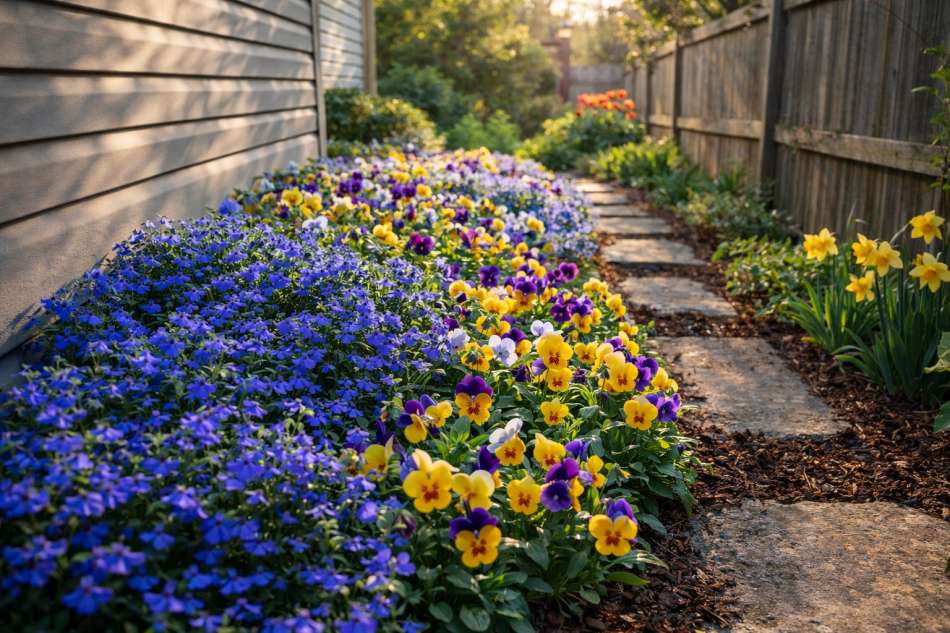
Thyme is a low-growing, aromatic herb that produces masses of tiny flowers in summer. This perennial ground cover thrives in sunny, well-drained spots and works beautifully between pavers or in rock gardens. The foliage is wonderfully fragrant and useful in cooking.

When thyme blooms, it becomes a bee paradise with countless tiny flowers packed with nectar. The low-growing habit allows ground-nesting bees easy access, and the extended bloom period provides weeks of foraging. Honeybees and native bees both visit thyme enthusiastically, and the honey produced from thyme nectar is highly prized.
14. Oregano

Oregano is another culinary herb that doubles as an excellent bee plant. This perennial produces clusters of small pink or white flowers in summer if you let it bloom instead of harvesting all the leaves. It’s drought-tolerant and spreads to form attractive ground cover.

The small, tubular flowers of oregano are rich in nectar and attract a wide variety of bees. When oregano blooms, you’ll see constant bee activity, with different species visiting throughout the day. The flowers bloom over several weeks, providing sustained food, and the strong scent helps guide bees to the blossoms.

Also Read: What To Do With Hellebores When Finished Flowering?

15. Alliums

Allium

Alliums are ornamental onions with dramatic globe-shaped flower heads that bloom in late spring and early summer. These bulbs come in various sizes and colors, from deep purple to soft pink and white. They’re deer-resistant and look stunning planted in groups.

Bees love the hundreds of tiny flowers that make up each allium globe, providing abundant nectar and pollen in one convenient location. The unusual shape allows multiple bees to forage simultaneously, and the flowers last for weeks. Alliums bridge the gap between spring and summer bloomers, providing crucial food during the transition.

Also Read: How to Overwinter Dahlias and Store Bulbs?

16. Heliotrope

Heliotrope

Heliotrope is a fragrant annual or tender perennial with clusters of purple, blue, or white flowers that smell like vanilla. It blooms continuously from summer through fall and works beautifully in containers or garden beds. The sweet scent is noticeable even from a distance.

Bees are drawn to heliotrope’s intense fragrance and abundant nectar supply. The clustered flower heads provide multiple feeding opportunities in one spot, and the tubular flowers are perfectly sized for bee tongues. Bumblebees and honeybees visit heliotrope throughout the day, especially during warm afternoons.

17. Sedum (Stonecrop)

Sedums are succulent perennials with fleshy leaves and flat-topped flower clusters that bloom in late summer and fall. These drought-tolerant plants thrive in poor soil and full sun, making them perfect for tough spots. The flowers transition from pale green to pink to deep red as they mature.

Late-blooming sedums are absolutely crucial for bees preparing for winter, providing nectar and pollen when few other sources remain. The flat flower heads create perfect landing platforms, and you’ll often see dozens of bees working a single sedum patch. Butterflies and beneficial insects also flock to these versatile plants.

18. Hyssop

Hyssop is an aromatic herb with spikes of blue, pink, or white flowers that bloom from mid-summer through fall. This drought-tolerant perennial thrives in sunny locations and attracts numerous pollinators. The foliage has a minty-anise scent and has been used medicinally for centuries.

Bees are particularly drawn to the nectar-rich tubular flowers arranged in dense spikes. The extended blooming period provides consistent food during late summer, and the flowers are perfectly sized for various bee species. Native bees, honeybees, and bumblebees all visit hyssop regularly, making it a top choice for pollinator gardens.

19. Phacelia

Phacelia is a fast-growing annual wildflower with coiled clusters of lavender-blue flowers that unfurl as they bloom. This plant is often used as a cover crop to improve soil but works beautifully in ornamental gardens too. It blooms quickly from seed and reseeds readily.

Phacelia is considered one of the best bee plants in the world, producing copious amounts of nectar and pollen. Bees visit phacelia so intensely that you’ll hear the buzzing from several feet away. The flowers bloom in succession along the coiled stems, providing weeks of continuous food for numerous pollinator species.

20. Verbena

Vervain

Verbena comes in many forms, from low ground covers to tall, airy plants with clusters of small flowers in purple, pink, red, and white. These heat-loving annuals and perennials bloom prolifically from summer through frost and thrive in hot, sunny locations.

The clustered flower heads of verbena provide multiple nectar sources in one location, making them efficient for foraging bees. The flowers are perfectly sized for various bee species, and the continuous blooming ensures a reliable food supply. Butterflies and native bees especially love verbena’s long-lasting flowers.

21. Marigolds

Marigolds are classic garden annuals with cheerful yellow, orange, and red blooms that are super easy to grow from seed. They’re often planted as companion plants to deter pests, but they also provide food for pollinators. French and signet marigolds are particularly bee-friendly.

Single-flowered marigold varieties offer accessible pollen and nectar that bees can easily reach. The bright colors and strong scent attract various pollinators, and marigolds bloom continuously with regular deadheading. While African marigolds are less bee-friendly due to their double flowers, simpler varieties provide excellent food sources.

Also Read: How to Grow Chrysanthemums?

22. Buckwheat

Fagopyrum esculentum

Buckwheat is a fast-growing annual grain crop with clusters of white or pink flowers that bloom within weeks of planting. It’s often grown as a cover crop but works wonderfully in pollinator gardens. The plant grows quickly, blooms prolifically, and improves soil structure.

Bees absolutely love buckwheat, visiting the flowers so intensely that beekeepers often plant it specifically to boost honey production. The flowers produce abundant nectar that’s accessible to various bee species, and since buckwheat blooms for 4-6 weeks, it provides sustained food. The resulting honey has a distinctive, robust flavor.

23. Goldenrod

Goldenrod is a native perennial wildflower with bright yellow plumes that bloom in late summer and fall. Often wrongly blamed for allergies (ragweed is the culprit), goldenrod is actually a critical late-season food source for bees. It thrives in full sun and spreads to create beautiful drifts.

As one of the most important fall nectar sources, goldenrod is essential for bee survival before winter. The dense flower clusters provide abundant pollen and nectar when few other options remain. Native bees, honeybees, and bumblebees visit goldenrod intensely, and you’ll see remarkable foraging activity on warm fall days.

24. Mint

Mint is an aromatic herb that produces spikes of small lavender, pink, or white flowers in summer. This perennial spreads aggressively, so it’s best grown in containers or confined areas. The foliage is wonderfully fragrant and useful for teas, cooking, and cocktails.

When mint blooms, bees visit the tiny tubular flowers constantly throughout the day. The flowers are rich in nectar and perfectly sized for various bee species. Native bees particularly love mint flowers, and the extended blooming period provides weeks of reliable food. The strong scent helps guide pollinators to the blossoms.

25. Poppies

Iceland Poppies

Poppies are stunning annuals or perennials with papery petals in vibrant reds, oranges, pinks, and purples. While they don’t produce nectar, they offer abundant pollen that bees need for protein. Annual poppies like California poppies reseed readily and create stunning displays.

Bees collect pollen from poppies by vibrating their flight muscles, a behavior called “buzz pollination.” The large, open flowers provide easy access to pollen-laden stamens, and bees emerge covered in colorful pollen. Even though poppies lack nectar, they’re still valuable for bees that need protein-rich pollen for raising brood.

26. Geraniums (Hardy Geraniums)

Hardy geraniums, also called cranesbills, are low-growing perennials with delicate flowers in shades of pink, purple, blue, and white. These easy-care plants bloom from spring through fall and work beautifully as ground covers or in borders. They’re deer-resistant and drought-tolerant once established.

Bees visit hardy geraniums for their accessible nectar and pollen, and the simple, open flower structure makes foraging easy. Different varieties bloom at different times, extending the food supply across multiple seasons. Native bees especially appreciate these flowers, and hardy geraniums support diverse pollinator populations.

27. Calendula

Calendula

Calendula, or pot marigold, is a cool-season annual with cheerful orange and yellow flowers that bloom from spring through fall. The petals are edible and often used in salads and herbal preparations. Calendula reseeds readily and tolerates light frost.

Bees appreciate calendula’s accessible pollen and nectar, especially in early spring and late fall when fewer flowers are available. The bright colors and open flower structure make foraging efficient, and calendula blooms continuously with regular deadheading. The flowers close at night and during rain, protecting the pollen and nectar for when bees can forage.

28. Clover

Clover is a nitrogen-fixing ground cover that produces white, pink, or red flower heads. Often found in lawns, clover is incredibly valuable for bees and improves soil quality. Dutch white clover is particularly popular and tolerates mowing, making it perfect for eco-lawns.

Clover flowers are packed with nectar and are one of the most important food sources for honeybees and bumblebees. Each flower head contains dozens of tiny tubular flowers, and bees work methodically across them. Clover honey is mild and delicious, and allowing clover to bloom in your lawn creates an instant pollinator habitat.

Conclusion

There’s something magical about bees buzzing around the garden—their gentle hum instantly pulls me away from the daily rush and back into nature. Beyond being stress relievers, these tiny workers quietly boost the growth of vegetables, flowers, and perennials.

You don’t need to be an expert to create a bee-friendly garden. Planting a mix of vibrant, fragrant, low-maintenance flowers and herbs is all it takes to turn your backyard into a thriving pollinator paradise.