41 F
Klamath Falls
Saturday, March 14, 2026
Home Blog Page 92

Jeanne’s Midsummer Garden in Washington

0

Happy Friday, GPODers!

Amazingly, we started this week in Sammamish, Washington, with Kirk and Martha Painter’s incredible garden transformation (if you missed it, check that post out here: Kirk’s Washington Garden in Panoramas), and we’re ending the week in the very same town but an entirely different garden. We were first introduced to Jeanne’s garden earlier this summer with some fabulous photos of her landscape in spring (Jeanne’s Spring Garden in Washington). Today she is back with a glorious midsummer update.

Here are nine more pictures from my Sammamish, Washington, garden. People think of Washington and they think of rain if they are not from here. What they don’t realize is that we frequently have three months of drought in late summer. At the beginning of August now, we have not had rain for almost two months, which means we are watering with irrigation, sprinklers, and watering cans all over our property. Some plants, like the pulmonaria, which was beautiful this spring, have just dried up. They will come back next spring, however!

Thanks for visiting our garden again! Jeanne Erdahl

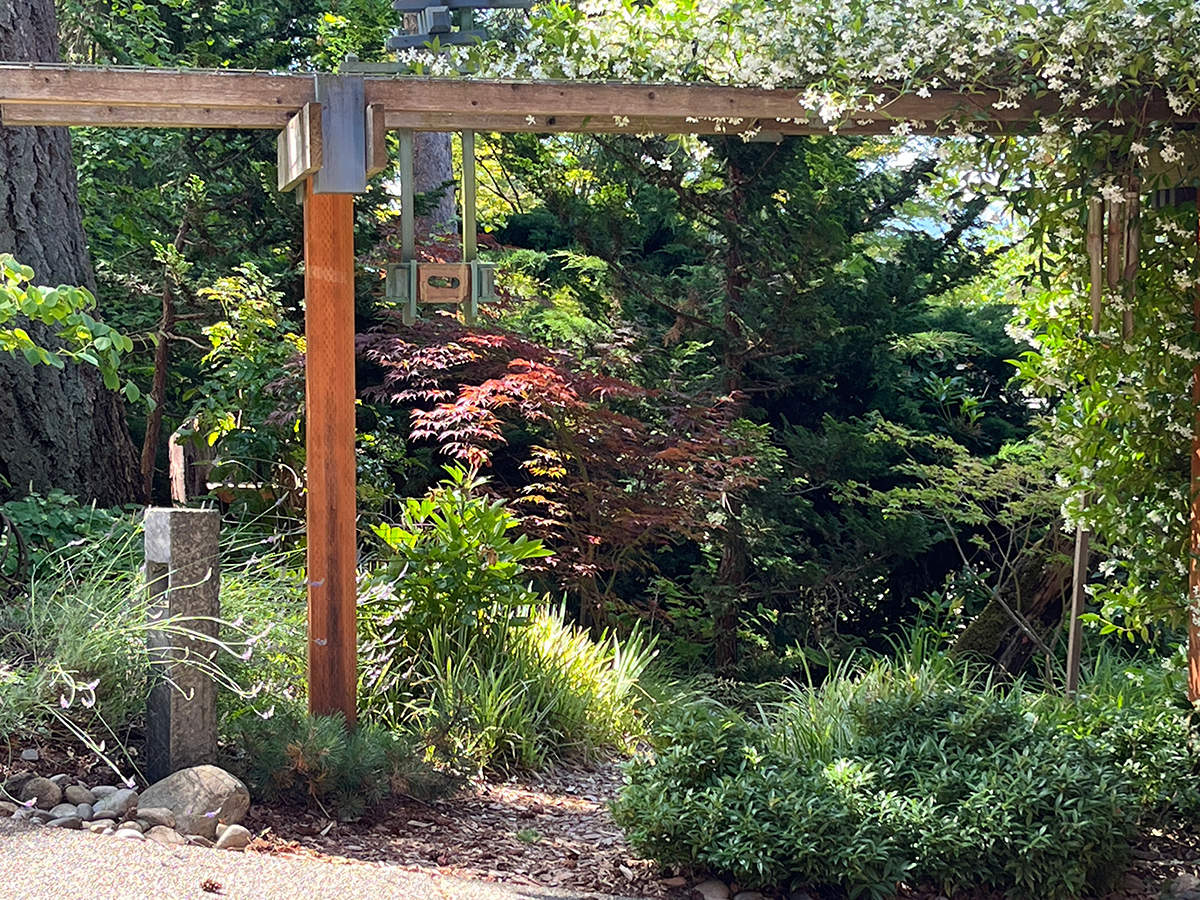
First, the arbor that leads to our backyard, which was covered in star jasmine (Trachelospermum jasminoides, Zones 8–10) this spring: It’s right below our bedroom window, so there were many fragrant nights.

garden evergreensThe evening sun lit up our 20-foot-tall Japanese cedar (Cryptomeria japonica, Zones 5–9), with just a glimpse of Lake Sammamish in the distance.

various clematis plants growing on a metal towerWe made a climbing tower for several clematis out of two 10-foot pieces of rebar and rusty hoops from old whiskey barrels.

paperbark maple in shade gardenThe fourth picture is our paperbark maple (Acer griseum, Zones 4–8) with morning light and All Gold Japanese forest grass (Hakonechloa macra ‘All Gold’, Zones 5–9) at the base.
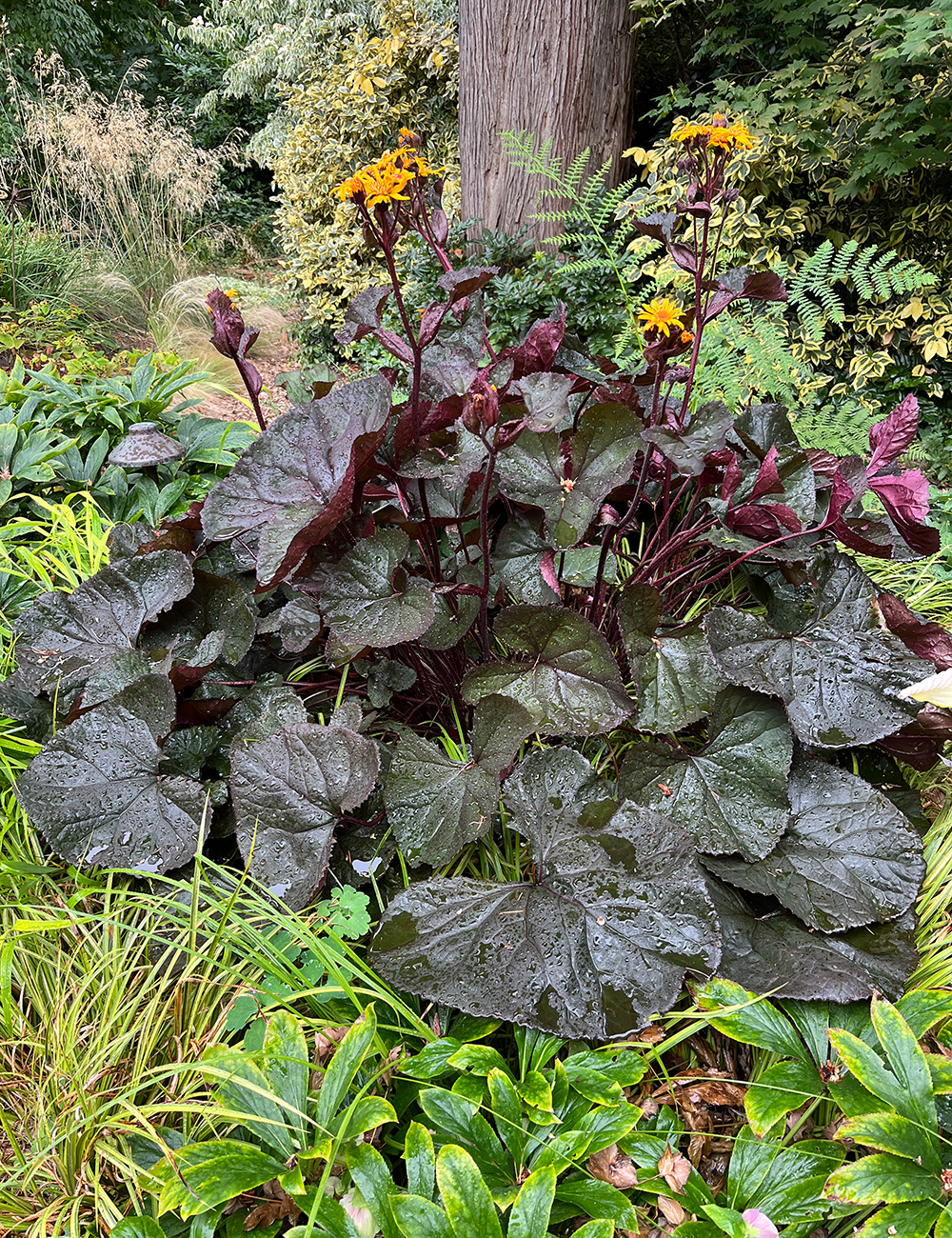
plant with dark burgundy foliage and mustard yellow flowersWe have several ligularia on our drain-field mounds. This one has leaves about a foot in diameter, and the plant itself is about 6 feet wide.
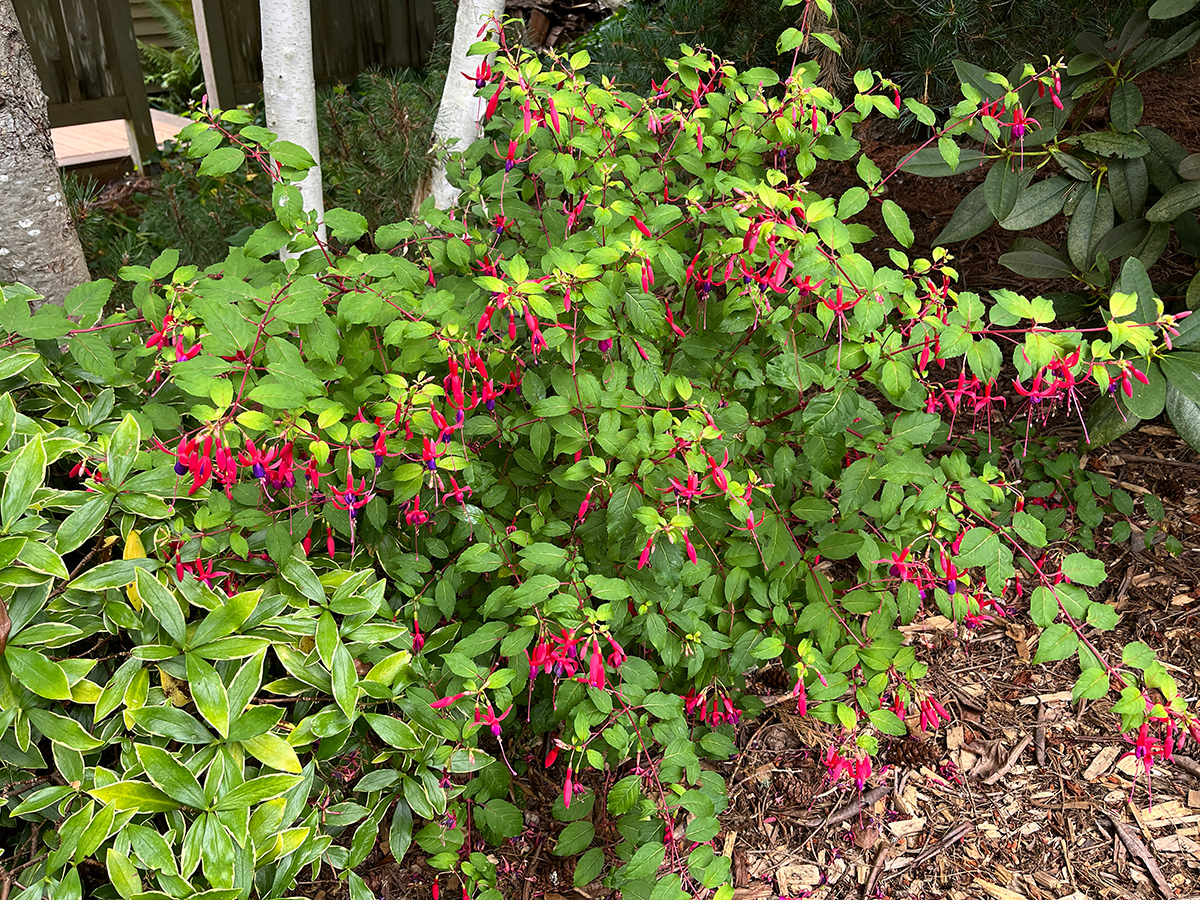
large fuchsia plant with bright pink flowersEven though the deer graze on it frequently, this hardy fuchsia (Fuchsia magellanica, Zones 5–10) is covered with blooms.
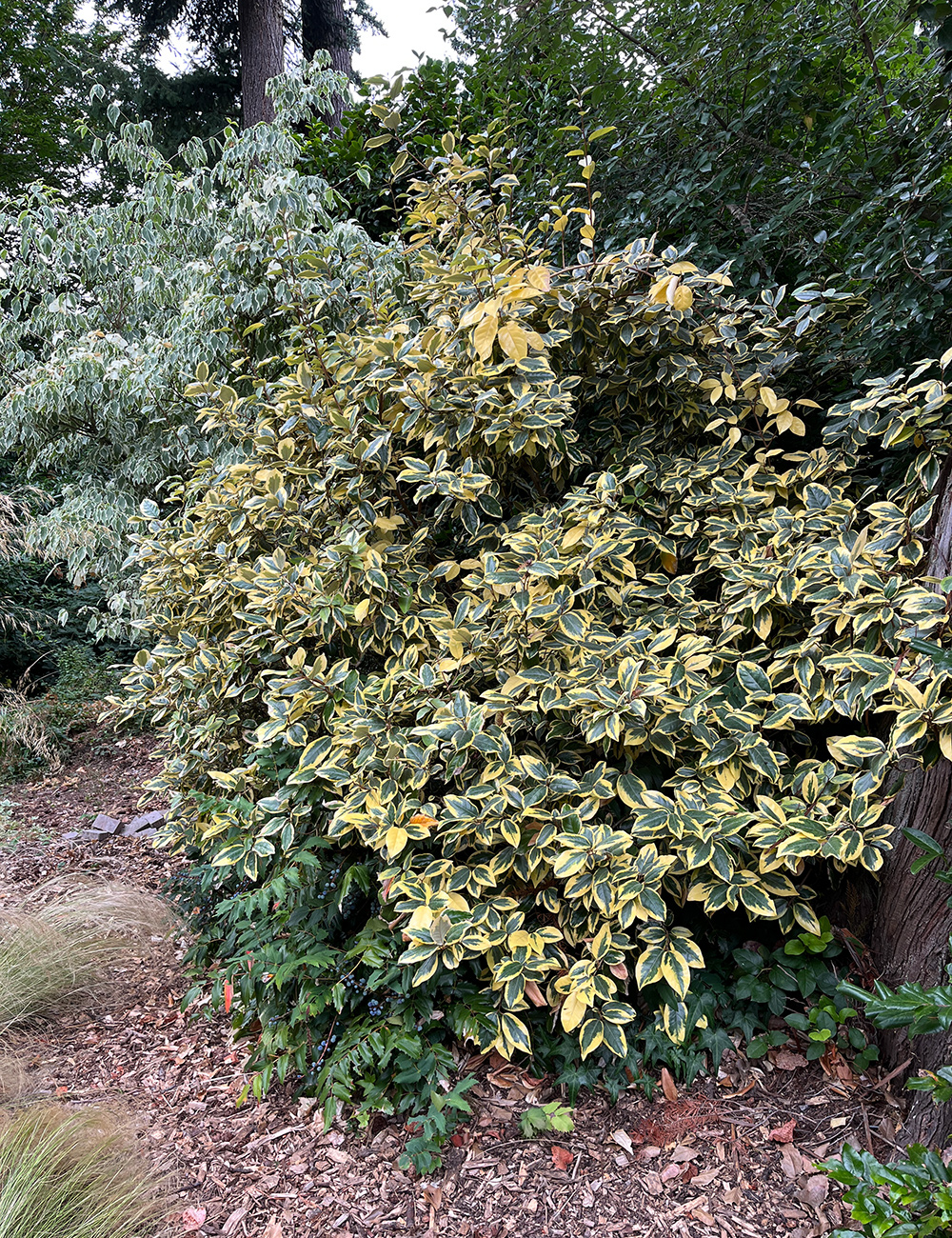
shrub with variegated foliageWe have several of these ‘Gilt Edge’ elaeagnus (Elaeagnus × ebbingei ‘Gilt Edge’, Zones 7–11) around our property. They are wonderful evergreen shrubs that brighten up our rainy winters.

ornamental grass with pink flowers in the backgroundWe love garden phlox (Phlox paniculata, Zones 4–8), which grow well here without getting mildew as they have a habit of doing in some areas. Not only do I love their fragrance, but I’m charmed by the way they wander around the garden. I never know where they will pop up next. This bunch is seen through the seed heads of giant feather grass (Celtica gigantea, Zones 5–8).

lavender garden phlox bloomsThey are not only volunteers in this location, but they also appear to be a natural cross between two of our other colors.

Thank you for this incredible update on your garden, Jeanne! Despite the dry conditions you battle in the summer, your garden is still looking lush and lively.

What does summer look like in your area? This week we enjoyed two different gardens that still look sublime surviving through summer’s worst in Washington state, but summer conditions range as widely as our taste in plants. Be sure to share your summer highlights with Garden Photo of the Day! Follow the directions below to submit photos via email, or send me a DM on Instagram: @agirlherdogandtheroad.


We want to see YOUR garden!

Have photos to share? We’d love to see your garden, a particular collection of plants you love, or a wonderful garden you had the chance to visit!

To submit, send 5–10 photos to [email protected] along with some information about the plants in the pictures and where you took the photos. We’d love to hear where you are located, how long you’ve been gardening, successes you are proud of, failures you learned from, hopes for the future, favorite plants, or funny stories from your garden.

Have a mobile phone? Tag your photos on Facebook, Instagram, or Twitter with #FineGardening!

Do you receive the GPOD by email yet? Sign up here

Our 23 Best Healthy Apple Recipes

0


Our 23 Best Healthy Apple Recipes


Privacy & Cookies Policy

What Every Parent Should Know About PANDAS Syndrome

0

Nope, we’re not talking about cookware and cute black and white bears. PANS and PANDAS syndrome has gotten more attention in recent years. For children with PANDAS parents say it’s like a switch was flipped. All of the sudden their child becomes consumed by anxiety, OCD, tics and compulsions. 

This kind of abrupt transformation can be a sign of PANS or PANDAS. In these conditions the immune system and brain become tangled in ways that most parents (and even many doctors) don’t expect.

Though not widely recognized in conventional medicine, these conditions are increasingly being discussed by parents, functional practitioners, and researchers who see their profound effects. It’s estimated that at least every 1 in 200 children has PANDAS, but many cases are likely misdiagnosed as other disorders. 

What Are PANS and PANDAS?

PANDAS stands for Pediatric Autoimmune Neuropsychiatric Disorders Associated with Streptococcal Infections. It describes a group of sudden-onset symptoms that appear in children after a strep infection. 

PANS, or Pediatric Acute-onset Neuropsychiatric Syndrome, is broader. It refers to the same kind of abrupt symptoms, but triggered by other causes, such as viral or bacterial infections, environmental toxins, or disruptions in the immune system.

Both conditions involve a misdirected immune response. Instead of focusing solely on fighting the infection, the immune system mistakenly affects the brain, especially areas that regulate behavior and mood. Because children’s brains and immune systems are still developing, they are more vulnerable to this kind of misfire.

Causes and Triggers

For PANDAS, the trigger is usually a strep infection. For PANS, it might be another infection such as Lyme disease, Epstein-Barr virus, or even something environmental like mold exposure. In both cases, the root issue is an immune system under stress. The majority of PANDAS families also report a history of family autoimmune disease.

When the immune system is overwhelmed or misdirected, it can spark inflammation that affects the brain. The result is not a gradual shift in personality, but an abrupt and dramatic change. Parents often describe it as their child becoming a completely different person in a matter of days or even hours.

Recognizing the Symptoms

The hallmark of PANS and PANDAS is sudden onset. A child who was calm and focused one week may suddenly develop obsessions, compulsions, or extreme separation anxiety the next. Other symptoms can include irritability, aggression, motor tics, sleep disturbances, food restrictions, or a sharp decline in school performance.

Because these behaviors overlap with conditions like ADHD, OCD, or autism spectrum disorders, children are often misdiagnosed. Many families report years of frustration as they are told the issues are purely psychological or behavioral. In reality though, the symptoms are being driven by brain inflammation.

Understanding that these behaviors can be immune-driven can be very helpful for parents. It opens the door to different kinds of testing and treatment that address the root cause instead of just managing the outward behaviors.

Can Symptoms Be Prevented or Improved?

The good news is that children can improve, and many do. Early recognition and intervention can make a big difference, but even children who have struggled for years often see relief once the root causes are uncovered.

These conditions highlight the deep connection between the immune system and the brain. By calming inflammation, supporting the body’s healing pathways, and giving the nervous system time to reset, symptoms can improve. 

Testing for PANS and PANDAS

One of the most frustrating parts of these conditions is that there’s no single definitive test. Instead, diagnosis usually involves a combination of lab work, medical history, and symptom tracking.

Common Lab Tests for PANDAS

  • Throat culture or rapid strep test: To check for a current or recent strep infection.
  • ASO (antistreptolysin O) and anti-DNase B titers: These blood tests measure antibodies to strep and can indicate if the body is reacting strongly to it.
  • Cunningham Panel: A specialized test that looks at antibodies associated with autoimmune neuropsychiatric disorders.
  • Inflammatory markers: Tests like CRP (C-reactive protein) or ESR (erythrocyte sedimentation rate) can show systemic inflammation.
  • Other infection panels: Depending on the child’s history, a practitioner may test for Lyme, Epstein-Barr virus, mycoplasma, or mold exposure.

Functional medicine testing helps identify nutrient deficiencies, gut imbalances, or toxin exposures. Since the gut and immune system are so closely linked, uncovering food sensitivities or digestive imbalances can shed light on what’s driving inflammation.

The Role of Observation

Parents are often the best historians. Writing down when symptoms started, what infections the child had recently, and any environmental changes can help practitioners connect the dots. Keeping a simple log of sleep, diet, mood changes, and flare-ups can be invaluable in shaping a care plan.

Natural and Holistic Ways to Support PANDAS

While medical testing and professional guidance are important, there’s  a lot families can do at home. Small, steady changes can calm the immune system and help the body heal. 

Nutrition for Calming Inflammation

Food is one of the most powerful tools we parents have. An anti-inflammatory approach often makes a noticeable difference. This doesn’t have to mean a highly restrictive diet, but focusing on whole, nutrient-dense foods helps reduce the burden on the immune system.

  • Prioritize healthy fats like avocados, olive oil, and wild-caught fish
  • Include plenty of colorful vegetables, which provide antioxidants that calm inflammation
  • Aim for protein at every meal to stabilize blood sugar and support neurotransmitters
  • Skip the processed foods, added sugars, unhealthy fats, and artificial dyes, which can all increase inflammation

For some children, addressing food sensitivities, such as gluten or dairy, is key. Some children see improvements after doing an elimination diet so these can also be a helpful tool. 

Supporting the Nervous System

PANS and PANDAS flare-ups often leave children stuck in fight-or-flight mode. Simple practices that regulate the nervous system can be very helpful.

  • Gentle breathing exercises, with slow, deep breaths
  • Short guided meditations or calming bedtime stories
  • Sensory tools such as weighted blankets, swings, or soothing music
  • Time in nature for vitamin D and lower stress hormones. Even better if they play in the dirt!

Even ten minutes a day of intentional relaxation can help shift the nervous system out of constant alarm.

Sleep and Rhythm

Consistent routines matter. A predictable bedtime, avoiding blue light at night, and calming rituals like warm baths or reading can help the body reset. Sleep is when our brain clears inflammation, so prioritizing it is foundational.

Supplements to Consider

We’re all individuals so it’s best to tailor any supplements to your child’s individual needs. That said, these ones are commonly recommended for PANDAS. 

All the supplements in the world won’t fix a bad diet, so it’s important to pair them with healthy, whole foods. 

Reducing Environmental Triggers

Many children with PANS and PANDAS are sensitive to toxins in their environment. Simple steps can help reduce exposure:

  • Use air filters to reduce mold, pollen, and chemical exposure indoors
  • Test the home for mold or other toxins and remediate as needed
  • Choose clean personal care and cleaning products
  • Stay hydrated with plenty of filtered water
  • Spend more time outside in fresh air and natural light

By reducing the body’s overall burden, this allows the immune system to focus on healing instead of always playing defense.

Getting to the Root Cause

Healing from PANS or PANDAS isn’t about finding a quick fix. It’s about peeling back layers to see what’s fueling the immune system’s reaction. For some families, that means addressing hidden strep infections. For others, it’s uncovering mold exposure in the home or resolving gut imbalances.

The process often looks like this:

  1. Test and identify potential triggers
  2. Support detox and digestive health with food and hydration
  3. Calm the nervous system daily with small, consistent practices
  4. Fill in nutrient gaps through food and thoughtful supplementation
  5. Reduce environmental stressors at home.

It’s not about doing everything at once, but taking manageable steps that steadily build resilience. Parents who have walked this path often say the slow, steady approach not only improved symptoms but also made their child stronger overall.

Final Thoughts on PANDAS Syndrome

PANS and PANDAS may sound intimidating, but understanding them can change everything for a struggling child. Mental health and physical health are deeply connected and we can’t address one without the other. A sudden change in behavior or mood can be signs of immune dysregulation and brain inflammation.

As more people become aware of PANDAS and its effect on children, more functional practitioners are stepping up to help. And thankfully, while healing may take time, many children return to themselves once the root causes are addressed. The key is supporting their body by calming inflammation and finding the root cause behind their symptoms.

Has your child ever struggled with PANDAS? What strategies have you found to be helpful? Leave a comment and share below!

How to Can Green Beans with a Pressure Canner?

0

When the plant gets right amount of nutrients and adequate water, it rewards you with loads of harvest that you could ever at once.

Now, the challenge is to figure out how to keep them fresh after harvesting.

One option is to can green beans, this is regarded as the safest and effective way to lock in flavor, nutrition and freshness of your green beans beyond the growing season.

Unlike freezing that takes up precious space, or water bath canning, which isn’t safe for low-acid vegetables, pressure canning ensures the green beans reach the high temperatures needed to destroy harmful bacteria.

With the right equipment and some careful steps, you’ll be able to store jars of crisp, nutritious beans in your pantry for up to 18 months or longer.

Wash and trim the green beans, give them a quick blanch, then cool them off in cold water to keep that fresh color.

After that, pack them hot into jars with a little salt and boiling water before setting them in the canner.

Run the jars at 10 pounds of pressure for 25 minutes, and then seal them perfectly. The beans kept their bright green color, and you’ll end up with 19 quarts plus a pint—plenty to enjoy through the winter.

Benefits of Pressure Canning

Green beans are considered a low-acid food because their pH is above 4.6. Low-acid vegetables can harbor dangerous bacteria that boiling water alone cannot kill.

A standard water bath canner only reaches 212F, which is too low to destroy spores of C. botulinum.

A pressure canner, however, reaches at least 240F under pressure, hot enough to eliminate those risks.

The result is a shelf-stable product you can safely store in your pantry without refrigeration. Properly processed green beans can last 12–18 months while maintaining flavor, nutrition, and safety.

How to Can Green Beans with a Pressure Canner?

Canning green beans at home may sound intimidating, but with a pressure canner it’s actually pretty straightforward. It’s a safe, reliable way to preserve your harvest and enjoy garden-fresh beans any time of year.

With just a little prep and the right equipment, you can turn fresh-picked beans into pantry staples. Pressure canning makes it easy to save your harvest and serve homegrown goodness long after the season ends.

Before diving in, set yourself up for success by gathering all your tools in advance. Canning is smoother (and less stressful) when everything is within reach.

Essential Equipment

  • Pressure canner with gauge and weights
  • Canning jars – pint or quart size, depending on your needs
  • New canning lids
  • Canning rings/bands – reusable if not bent or rusty
  • Jar lifter – makes handling hot jars safe
  • Canning funnel – keeps rims clean while filling
  • Bubble remover tool
  • Large pot – for boiling water used in filling jars
  • Clean towels – to set jars on and wipe rims

Ingredients

  • Fresh green beans (about 1 pound per pint jar or 2 pounds per quart)
  • Canning salt (½ tsp per pint or 1 tsp per quart; optional but improves flavor)
  • Water (for liquid to cover beans and inside the canner)

How to Prepare Green Beans for Canning?

Selecting the Best Beans

Start with young, tender beans that snap crisply in half. Avoid beans that are limp, tough, or have large bulging seeds inside. The fresher the beans, the better the end result—ideally, process them within 24 hours of harvest.

Cleaning and Cutting

  • Wash beans thoroughly under cold water.
  • Snap or trim off both ends.
  • Cut into 1–2 inch pieces for easier packing.
  • Discard any discolored, tough, or insect-damaged beans.

Tip: For French-style beans, you can use a bean frencher to slice them lengthwise into thin strips.

Getting Your Canning Setup Ready

Sterilizing Jars

Even though jars will be processed, it’s best to start with sterile, hot jars to prevent contamination and thermal shock. You can:

  • Run jars through a dishwasher cycle,
  • Heat them in a 350°F oven for 15 minutes, or
  • Boil them in water for 15 minutes.

Keep jars hot until ready to pack.

Setting Up the Pressure Canner

  • Add 2–3 inches of water to the canner (check manufacturer instructions).
  • Place the rack inside.
  • Heat the water to around 140°F for raw pack or simmering for hot pack.
  • Keep a pot of boiling water ready to use as canning liquid.

Packing Methods: Raw Pack vs. Hot Pack

Both methods are safe, but they have slightly different results:

Raw Pack – Simpler & Most Common

With raw pack, you put uncooked beans straight into jars, add salt if you like, and pour in boiling water. It’s quick and easy, though the beans may shrink or float and end up a bit softer.

  • Pack raw beans tightly into jars, leaving 1 inch of headspace.
  • Add salt (optional).
  • Cover with boiling water, maintaining the 1-inch headspace.
  • Remove air bubbles, wipe rims, and apply lids/rings.

Raw pack tends to result in softer beans but is quick and easy.

Hot Pack – Better for Firmer Texture

Hot pack means blanching beans for a few minutes before packing them into jars with hot liquid. It takes longer, but the beans hold their shape better, keep nicer color, and stay fully covered in liquid.

  • Blanch beans in boiling water for 2–3 minutes.
  • Pack hot beans into jars, leaving 1 inch of headspace.
  • Add salt and cover with hot liquid.
  • Remove air bubbles, wipe rims, and apply lids/rings.

Hot pack takes a bit longer but often leads to better texture and less floating beans.

Process: Pressure Canning Green Beans

Loading the Canner

  • Place filled jars on the rack (not directly on the bottom).
  • Ensure jars don’t touch each other.
  • Secure the lid according to the manufacturer’s instructions.

Venting (Critical Step)

  • Heat the canner until steam escapes steadily from the vent.
  • Allow steam to vent for 10 full minutes before adding the weight.

This step drives out trapped air, ensuring accurate processing temperatures.

Pressurizing & Processing

  • Add the pressure weight after venting.
  • Bring to the correct pressure and maintain it steadily.
  • Adjust for altitude (see below).

Altitude Adjustments

  • 0–1,000 ft: 10 lbs pressure
  • 1,001–2,000 ft: 11 lbs
  • 2,001–4,000 ft: 12 lbs
  • 4,001–6,000 ft: 13 lbs
  • 6,001–8,000 ft: 14 lbs

Cooling and Finishing

After Processing

  • Turn off heat and let pressure drop naturally.
  • Never force cool by running water or removing the weight early.
  • Once the gauge reads zero, remove the weight and wait a few minutes.

Removing Jars

  • Open the lid away from your face to avoid steam burns.
  • Lift jars out with a jar lifter, keeping them upright.
  • Place jars on a towel in a draft-free area.
  • Let them sit undisturbed for 12–24 hours.

Checking Seals and Storing

After cooling:

  • Press the center of each lid—if it doesn’t flex, it’s sealed.
  • Remove bands for long-term storage to prevent rust.
  • Label jars with contents and date.
  • Store in a cool, dark place.

Properly sealed jars last 12–18 months at peak quality.

Common Issues While Pressure Canning

One of the most common issues with pressure canning is seal failure. This usually happens if the jar rims weren’t cleaned properly, the headspace was off, or if an old or damaged lid was used. When seals fail, the jar isn’t shelf-stable and needs to be refrigerated or reprocessed right away.

Another frequent problem is liquid loss from the jars. Some is normal, but if too much liquid boils out, it could mean the pressure fluctuated during processing or the canner cooled down too quickly. Keeping steady pressure is the best way to avoid it.

You may also notice beans changing color, usually turning from bright green to a duller olive tone. This is completely normal and safe, but if you see unusual colors like pink or black, it could be a sign of spoilage and the jar should be discarded.

Finally, sometimes beans come out softer than expected. This can be caused by overpacking, overprocessing, or simply starting with beans that weren’t fresh. Using freshly picked beans and choosing hot pack over raw pack can help keep texture firmer.

Tips for Canning Success

For the best results, start with beans that are fresh and crisp, preferably canned within a day of picking. The fresher they are, the better they’ll taste and hold up in the jar after processing.

Pay attention to the little details, like packing jars evenly, leaving the right amount of headspace, and keeping the pressure steady the whole time. Skipping steps, such as venting the canner, can cause problems later.

It also helps to stay organized—label jars with the date, rotate older ones to the front of your pantry, and jot down notes about what worked best. These small habits make canning easier and keep your shelves stocked with reliable, homegrown food.

Conclusion

Pressure canning green beans may feel intimidating at first, but it’s simpler than it looks and very rewarding.

By following tested steps, keeping steady pressure, and letting jars cool properly, you’ll end up with shelves of homegrown beans—safe, tasty, and ready to enjoy all winter. A perfect starting point for any canner.

RFK Jr. faced tough hearing on vaccines, CDC changes : Shots

0

Health and Human Services Secretary Robert F. Kennedy Jr. arrives to testify before the Senate Finance Committee at the Dirksen Senate Office Building on September 4, 2025 in Washington, DC.

Andrew Harnik/Getty Images


hide caption

toggle caption

Andrew Harnik/Getty Images

In a contentious Senate hearing marked by raised voices and heated exchanges, Health and Human Services Secretary Robert F. Kennedy Jr. faced calls to resign from Democrats and unexpected criticism from Republicans.

Several Republican senators brought up the legacy of President Donald Trump’s Operation Warp Speed, which sent a safe COVID vaccine to the public in record time, helping save millions of lives. They pushed Kennedy to explain his current approach to the shots and mRNA technology.

Under his leadership, the health agency cancelled hundreds of millions of dollars in research funding on mRNA technology for future vaccines, and the Food and Drug Administration limited access to the COVID shots, saying only people at high risk of complications from COVID or those over 65.

“President Trump deserves a Nobel Prize for Operation Warp Speed,” said Sen. Bill Cassidy, a Louisiana Republican and physician, whose vote was critical in Kennedy’s confirmation. He demanded Kennedy explain his changing stance on COVID vaccines, and said: “effectively, we’re denying people vaccine” — an assertion echoed by many physicians’ groups including the American Association of Pediatrics and the American Medical Association.

Cassidy had exacted assurances from Kennedy during his confirmation process in February that he would not restrict Americans’ access to vaccines, a promise the senator now accuses Kennedy of violating. Kennedy fired the entire 17-member Advisory Panel on Immunization Practices at the Centers for Disease Control and Prevention, replacing them with members Cassidy argued are largely unscientific vaccine skeptics with vested financial interests in suing vaccine makers.

Another Republican physician on the Senate Finance Committee, Dr. John Barrasso of Wyoming, joined Democrats in criticizing Kennedy for undermining vaccines.

“In your confirmation hearings, you promised to uphold the highest standards for vaccines. Since then, I’ve grown deeply concerned,” Barrasso told Kennedy at the hearing. “I’ve been hearing from many of my medical colleagues, and there are real concerns that safe, proven vaccines like measles, like hepatitis B and others, could be in jeopardy and that would put Americans at risk and reverse decades of progress.”

He expressed concern that Kennedy could politicize vaccines further and undermine public health.

CDC leadership change debated

Kennedy hotly defended his decisions and statements on vaccines and on changes at the CDC, arguing the agencies have historically relied on bad data.

“These changes were absolutely necessary adjustments to restore the agency to its role as the world’s gold standard public health agency,” he said. He claimed he had the backing of “scientists and doctors are supporting me all across the country.”

Senators also repeatedly asked Kennedy about his decision to push out newly confirmed CDC chief Susan Monarez. Though she was his own pick to lead the agency, he said Monarez was lying when she claimed she was fired from that job after only a month for insisting on rigorous scientific review.

In response to questions from Sen. Elizabeth Warren, D-Mass., Kennedy said: “I told her she had to resign because I asked her, ‘Are you a trustworthy person?’ And she said, ‘No.'”

Trump administration allies like Republican Ron Johnson of Wisconsin rushed to his defense, calling the senators’ pointed questions “abuse,” and lauding Kennedy for his attempts to overhaul health agencies.

Vaccine access arguments

Kennedy’s seven-and-a-half month tenure as Health Secretary is roiling the fields of science and health. His early sweeping changes included mass layoffs across the federal health and science agencies, from the FDA to the CDC to the National Institutes of Health.

Democratic senators took issue with these and other changes, as they and Kennedy accused each other of lying and manipulating data to serve political ends.

The committee’s ranking Democratic member Sen. Ron Wyden criticized Kennedy’s approach to vaccines: “I think Secretary Kennedy is dead set on making it harder for children to get vaccines and that kids are going to die because of it,” he said.

Sen. Warren challenged Kennedy to “honor your promise that you made when you were looking to get confirmed” not to take away vaccines from people who want them. She said his recent moves to change the classification of the COVID vaccine do just that.

In response, Kennedy said “everybody can get access to them” for free, including those on Medicare and Medicaid, though the many contradictory statements have left many patients, doctors and insurers confused.

Kennedy said it was unclear the COVID vaccine had saved millions of lives — a data point generally accepted by scientists and doctors. But he also seemed to backtrack on assertions that he is “anti-vaccine,” arguing that there remain some unknown risks, even with long-approved vaccines.

Saying I’m anti-vaccine is like saying I’m anti-medicine,” Kennedy said, arguing he just wants more research to look into possible risks. “It doesn’t mean that I’m, you know, anti-vax. It just means I’m pro-science.”

His argument didn’t appear to sway the Democratic senators in attendance, with several calling for Kennedy to resign throughout the hearing.

15 of the Best Double Hellebore Varieties for Your Garden

0

9. Kingston Cardinal

‘Kingston Cardinal’ was developed by horticulturist Daniel Hinckley, founder of Heronswood Nursery (that was later bought by Burpee) in Kingston, Washington, and Windcliff in Indianola, Washington.

This cultivar produces average size, deep raspberry-red flowers. The single tone creates rich color saturation of both the face and nodding head of each blossom.

A close up of the light red double hellebore flower of the 'Kingston Cardinal' variety, on a green soft focus background.

‘Kingston Cardinal’

Its most unique characteristic is that it is fully sterile, so there will be no self-seeding, and you can’t save the seeds.

This variety tops out at 22 to 26 inches tall and wide.

You can buy ‘Kingston Cardinal’ plants from Burpee.

10. Onyx Odyssey

‘Onyx Odyssey’ features large double blooms in shades of deep purple to near-black.

Flowers measure two to three inches across and rise on sturdy stems above evergreen foliage, appearing in late winter to early spring.

A close up of the deep purple, almost black flower of 'Onyx Odyssey' a double hellebore.A close up of the deep purple, almost black flower of 'Onyx Odyssey' a double hellebore.

‘Onyx Odyssey’

Plants grow 12 to 18 inches tall and spread up to two feet, forming dense clumps over time.

Add dramatic ‘Onyx Odyssey’ to your garden by heading to Burpee to purchase plants.

11. Painted Doubles

Part of the Winter Jewels® series, ‘Painted Doubles’ produces fully double, cup-shaped blooms.

The sepals are creamy white and heavily speckled and brushed with burgundy or plum, giving each flower a hand-painted look.

A close up vertical image of the white petals speckled with burgundy of 'Painted Doubles' hellebore flower, pictured on a soft focus background.A close up vertical image of the white petals speckled with burgundy of 'Painted Doubles' hellebore flower, pictured on a soft focus background.

Winter Jewels® ‘Painted Doubles’

Blossoms appear in late winter to early spring, nodding on 12- to 14-inch stems above evergreen foliage.

Plants form tidy clumps about 14 inches tall and up to two feet wide.

You can find ‘Painted Doubles’ available at Burpee.

12. Peppermint Ice

‘Peppermint Ice’ is a Winter Jewels® series selection from hybridizers Marietta and Ernie O’Byrne.

Soft pink blossoms have fuchsia picotee edging and veining in both the faces and undersides.

This variety is known for retaining its pink hue well into the seed setting stage, when others fade to brown.

A close up of 'Peppermint Ice' flower with light pink petals with dark pink edging and veining running through, fading to soft focus in the background.A close up of 'Peppermint Ice' flower with light pink petals with dark pink edging and veining running through, fading to soft focus in the background.

Winter Jewels® ‘Peppermint Ice’

This is a shorter stature plant with mature heights that range from 12 to 18 inches, and a 20- to 24-inch spread.

Winter Jewels® ‘Peppermint Ice’ plants are available from Burpee.

13. Phoebe

‘Phoebe’ resembles a tissue paper rose. Colors range from blush to bright pink, and the inner petals are especially frilly.

Both petals and sepals are dotted with deep pink speckles for attractive contrast and depth.

A close up of a flower of the 'Phoebe' variety of double hellebore, with light pink petals that have deeper pink spots running through them, on a soft focus background.A close up of a flower of the 'Phoebe' variety of double hellebore, with light pink petals that have deeper pink spots running through them, on a soft focus background.

‘Phoebe’

The gently nodding heads of this cultivar are soft pink when viewed from above. The mature dimensions of the plant are 18 to 24 inches tall and wide.

Find ‘Phoebe’ plants for your garden now from Burpee.

14. Sparkling Diamond

Part of the Winter Jewels® series, ‘Sparkling Diamond’ produces fully double white blooms, often speckled with burgundy and touched with green at the base of the petals.

Flowers measure about three inches across and appear in abundance in late winter to early spring on sturdy stems.

A close up of the bright white, picotee-edged flowers of 'Sparking Diamond' hellebores.A close up of the bright white, picotee-edged flowers of 'Sparking Diamond' hellebores.

Winter Jewels® ‘Sparkling Diamond’

Plants grow 18 inches tall and up to two feet wide, forming tidy evergreen clumps.

Find ‘Sparkling Diamond’ plants available at Burpee.

15. Stained Glass

‘Stained Glass’ has reddish-purple veining and picotee edging, making it one of the darker blossoms.

The overall color lightens during the growing season, further accentuating the dark edging.

A close up of 'Stained Glass' hellebore flower, showing light pink petals with dark purple veins and edging, on a soft focus background.A close up of 'Stained Glass' hellebore flower, showing light pink petals with dark purple veins and edging, on a soft focus background.

‘Stained Glass’

The undersides of the blossoms are a saturated reddish-purple that is especially vibrant in the garden.

At maturity, this plant may reach a height of 18 inches and a width of 22 to 26 inches.

Find ‘Stained Glass’ plants now from Burpee.

Twice as Nice

The Helleborus genus offers so much to the home gardener who wants to liven up the late winter garden.

And thanks to the work of hybridizers, a once random treat of nature – the double hellebore – is now readily available.

With 15 of the best selections to choose from, all you need to do now is decide where to plant your new favorites.

A close up of a flower with light green outer sepals with purple edging, light pink inner petals with darker edges and veining, on a soft focus green background.A close up of a flower with light green outer sepals with purple edging, light pink inner petals with darker edges and veining, on a soft focus green background.

They are the perfect companions for other late winter and early spring flowers, like the crocus, daffodil, grape hyacinth, and snowdrop.

Mix or match as you like to fill in an existing landscape scheme, or design an entirely new one.

Have you made your garden twice as nice with the robust blossoms of double hellebores? Let us know in the comments below.

For more information about growing hellebores in your garden, check out these guides next:

Peach Kefir Ice Cream | Kara Lydon

0

Packed with probiotics, this peach ice cream is made with gut-friendly kefir, cream, fresh peaches, honey and vanilla. Churn it for a soft-serve consistency or send it straight to the freezer it for creamy scoop-able hard ice cream.

This blog post is sponsored by Terry Naturally. Thank you for supporting the brands that make this blog possible. As always, opinions are my own.

Why I love this recipe!

I scream, you scream, we all scream for probiotic ice cream!

Who doesn’t love a decadent, delicious dessert that also happens to have a nutrition benefit? That’s right, this ice cream is made with probiotic-packed kefir. A fermented milk beverage, kefir has a similar tart taste to yogurt but is thinner in consistency.

Creamier than milk, kefir makes a delicious addition to smoothies, salad dressings, pancakes, and you guessed it, ice cream.

As a dietitian who focuses on gut health, I’m all about advocating for including fermented foods in the diet. For one, they taste delicious (IMHO) and two, they contain probiotics, also known as “good gut bacteria”, that have been shown to help support a healthy gut microbiome.

Nutrition benefits aside, this ice cream is the one to make this summer / early fall while peaches are in-season and bursting with flavor.

Churn or no-churn, you decide! I like to churn my ice cream to get that soft-serve consistency and it helps make it creamier with the final freeze. But you could easily just pour the mixture into a bread pan and freeze it right away; it may just have a slightly icier texture.

If you’ve got little ones at home, this can be a really fun recipe to make as a family! My four-year-old loved helping make this and thought it was so cool to see the liquid start to thicken into ice cream in the ice cream maker.

Grab a spoon and dig in!

Ingredients You’ll Need

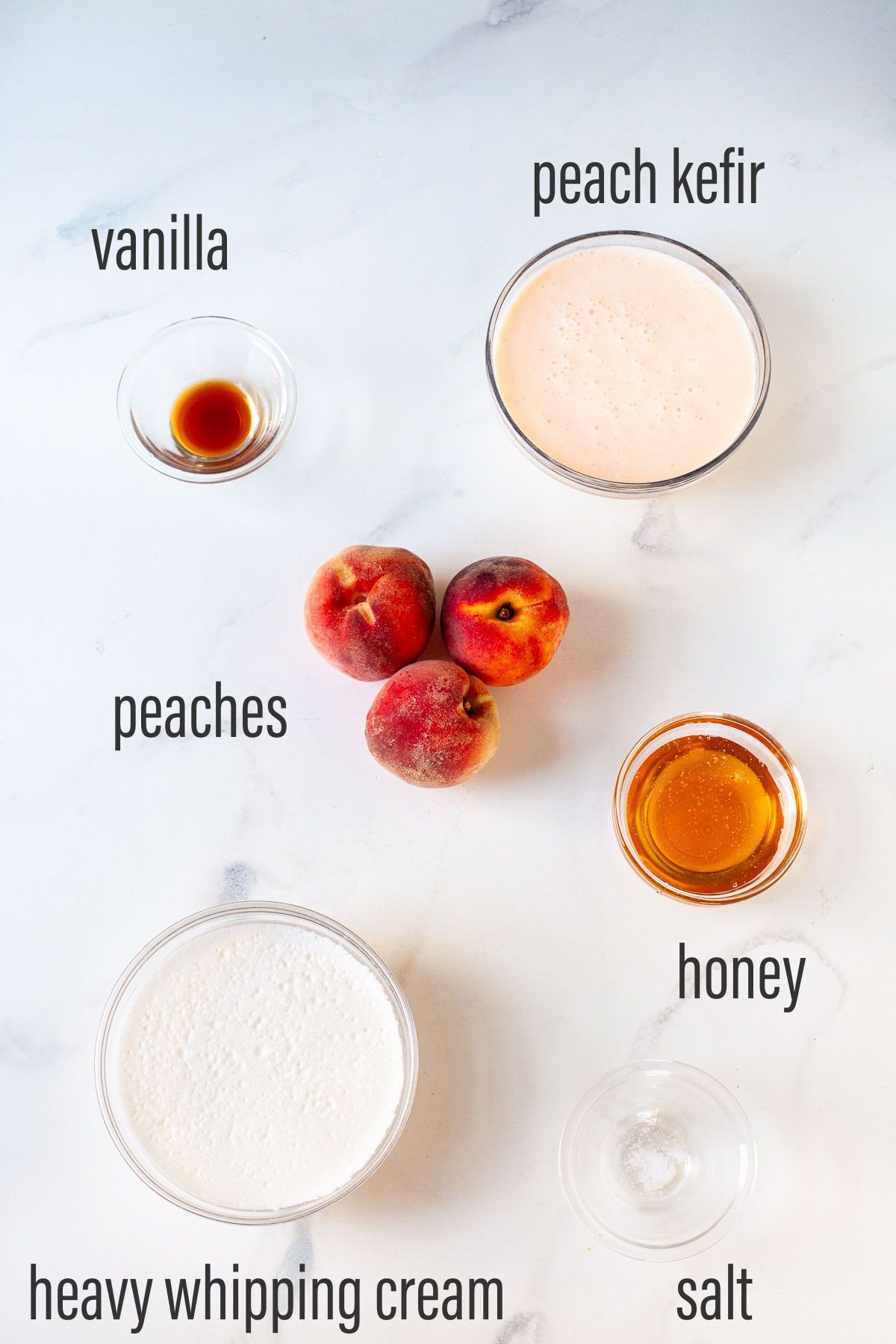
ingredients for peach kefir ice cream in glass bowls on marble surface with text overlayingredients for peach kefir ice cream in glass bowls on marble surface with text overlay

Notes on Ingredients

Peach kefir: I could only find a low-fat peach flavored kefir (which is why I added whipping cream to the recipe) but a whole milk peach kefir would work even better! You could also experiment with a plain whole milk kefir but you might have to add extra peaches or honey for sweetness.

Heavy whipping cream: Adds a necessary fat to make creamy ice cream that will churn well

Peaches: I like to use ripe yellow peaches for their sweetness and color

Honey: adds a little extra sweetness

Vanilla: adds a floral sweetness to the ice cream

Salt: helps enhance all the flavors

Probiotic-Packed Ice Cream!

I’m all for eating regular ol’ ice cream and by no means am I saying you should replace ice cream with this kefir version. But if incorporating more kefir and/or fermented foods into your diet is a goal, this ice cream can be a fun way to do that!

While gut health and probiotic research is still fairly new, there are some promising studies that show a positive beneficial effect on overall digestive health. The effects are dependent on which strains you use, the dosage, and what type of support you’re looking for.

If you’re interested in trying probiotics, fermented foods is a great place to start but it’s hard to know which strains and how many you’re actually getting. Which is why a probiotic supplement can be a more targeted approach. Talking to a dietitian or doctor about your health goals can help guide you to choosing a probiotic strain (or strains).

I like Terry Naturally’s FloraSure® Probiotic because it provides a unique combination of strains (Lactobacillus plantarum, Lactobacillus rhamnosus, and Bifidobacterium bifidum) that may help relieve occasional gas, bloating, cramping, diarrhea, and constipation.* Just one capsule a day delivers 20 billion live and active cultures.

*These statements have not been evaluated by the Food and Drug Administration. This product is not intended to diagnose, treat, cure, or prevent any disease.

two glass sundae bowls with peach ice cream topped with honey, cookie crumbs and peach slicestwo glass sundae bowls with peach ice cream topped with honey, cookie crumbs and peach slices

How to Make Peach Kefir Ice Cream

  1. Blend, baby! Add peaches, kefir, cream, honey, vanilla and salt to a blender and blend until smooth.
  2. Time to churn! Pour kefir mixture into an ice cream maker and churn according to the manufacturer’s instructions until soft-serve consistency is reached.
  3. Freezer-bound. Enjoy ice cream soft-serve or transfer to a freezer-safe container and freeze until hard, about 4 hours.
  4. Soften, then serve. Let ice cream sit out at room temperature for 15 minutes before scooping and serving.

Equipment You’ll Need

Blender
Ice cream maker

Expert Tips

  1. Use ripe peaches when in-season or substitute with frozen peaches to make year-round.
  2. Make sure the freezer bowl of the ice cream maker has been frozen for 15-24 hours before use.
  3. Low-fat kefir alone will result in an icy texture, almost like a sorbet or sherbet. Adding the whipping cream helps to achieve a creamier, ice-cream-like consistency. You could also use a whole milk kefir instead.
two sundae bowls with peach ice cream, sugar cones, peach slices, gold spoons, probiotic supplementtwo sundae bowls with peach ice cream, sugar cones, peach slices, gold spoons, probiotic supplement

Preparation and Storage

Store ice cream in an airtight freezer-safe container or store in loaf pan with plastic wrap or wax paper pressed firmly down onto ice cream to prevent freezer burn. While ice cream is freshest when consumed within a few weeks, this ice cream can be stored for up to three months.

Recipes that Pair Well

Strawberry Rhubarb Galette
Peach Cobbler with Cake Mix
Blueberry Apple Crisp

close up of peach kefir ice cream in glass bowl with drizzled honey, peach slices, and cookie crumblesclose up of peach kefir ice cream in glass bowl with drizzled honey, peach slices, and cookie crumbles

For more ice cream inspiration, check out my other recipes below!

Vietnamese-Inspired Iced Coffee Ice Cream with Coconut Milk
Dairy Free Cherry Chocolate Ice Cream
Coconut Milk Strawberry Ice Cream

If you like this recipe, please be sure to comment and give it a 5 star rating below. If you make it, share it on Instagram and tag me @karalydonrd and I’ll re-share it with my followers! If you want to save this recipe for later, be sure to pin it on Pinterest!

Don’t ever miss a recipe! Sign up to receive my monthly newsletter with a round-up of recipes from the previous month and get my FREE guide when you sign up: Rediscover the Joy in Eating: 5 Simple Steps to Stop Stressing Over Food + Enjoy Every Bite.


Print

clock clock iconcutlery cutlery iconflag flag iconfolder folder iconinstagram instagram iconpinterest pinterest iconfacebook facebook iconprint print iconsquares squares iconheart heart iconheart solid heart solid icon

Description

Packed with probiotics, this peach ice cream is made with gut-friendly kefir, cream, fresh peaches, honey and vanilla. Churn it for a soft-serve consistency or send it straight to the freezer it for creamy scoop-able hard ice cream.


  • 1 lb peaches, peeled and sliced, about 2 cups
  • 2 cups low-fat peach kefir
  • 1 cup heavy cream
  • ¼ cup honey
  • 1 teaspoon vanilla
  • 1/8 teaspoon salt


  1. Store your ice cream freezer bowl in the freezer for at least 15 hours before use.

  2. In a high-speed blender, blend peaches, kefir, cream, honey, vanilla, and salt until combined.

  3. Let mixture sit in the refrigerator for at least 30 minutes to chill.

  4. Transfer mixture to ice cream maker and churn according to manufacturer’s instructions until soft-serve consistency is reached, about 20 minutes.

  5. Enjoy as soft-serve or using a spatula, transfer ice cream mixture to a freezer-safe container (a bread loaf pan works well!).

  6. Store container in the freezer until ice cream hardens, about 4 hours.

  7. Let ice cream soften at room temperature for 15 minutes before serving.

Notes

  1. You can add crumbled shortbread cookies on top for added texture.
  2. You can use all kefir with no cream but low-fat kefir makes a more icy consistency and may have trouble churning to a soft-serve consistency.
  3. Stop churning once you’ve reached a soft-serve consistency so you don’t over-churn.

  • Prep Time: 25 minutes
  • Cook Time: 4 hours
  • Category: Dessert
  • Method: Freezer
  • Cuisine: American

Jody’s Two-Year-Old Garden in Maryland

0

Hi GPODers!

Today we’re getting an introduction to Jody Petersen’s new garden in Chestertown, Maryland. Jody didn’t have much to work with when she moved to the property but has quickly started crafting a landscape that is not only beautiful but greatly beneficial to local wildlife and pollinators that visit her plantings. While two years isn’t quite enough time to have a mature garden of large, flowering plants, a mix of annual blooms have brought a hearty dose of color and nectar sources while native perennials are filling in.

This is my just-two-year garden in Chestertown, Maryland, on the eastern shore of the Chesapeake Bay. This was a completely blank canvas when we moved in except for a Norway maple (Acer platanoides and cvs., Zones 3–7) that we quickly removed and replaced with a red oak (Quercus rubra, Zones 4–8). My point of view with this garden is all toward encouraging wildlife—birds, insects, and amphibians—and having a loose look, letting the space flourish with “editing” by me. We use mainly natives, took out most of the lawn, and added a clover patch. I was the horticulturalist at an upscale country club, and when I retired, I wanted to have a totally different garden. This is the opposite of country club! It went from a frat house with just lawn and broken fences to a lively haven for hummingbirds, frogs, Carolina wrens, (Thryothorus ludovicianus), honeybees, and bumbles. I use lots of found and repurposed things and some art projects of my own as well. Also solar light “art” at night!

Thanks for looking!
Jody Petersen

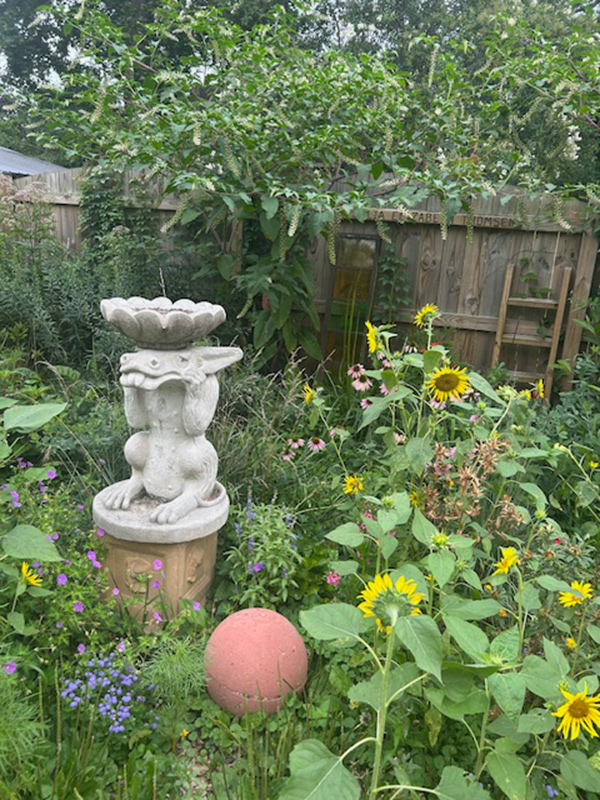
Our gargoyle holds a birdbath. The cement atlas ball is from a gym.

garden pondI love penstemons! This pond has a shallow beach for small birds.

pink red and white poppies along sidewalkI threw a pack of mixed annual poppies down in our front yard in February—they were a glorious hit in the town in May!

front yard gardenCrazy poppy display, plus a paperbark maple (Acer griseum, Zones 4–8), a non-native small tree with beautiful peeling bark and bright fall color. Underneath the poppies are butterfly weed (Asclepias tuberosa, Zones 3–9) that will fill in after I take the poppies out in mid-June.

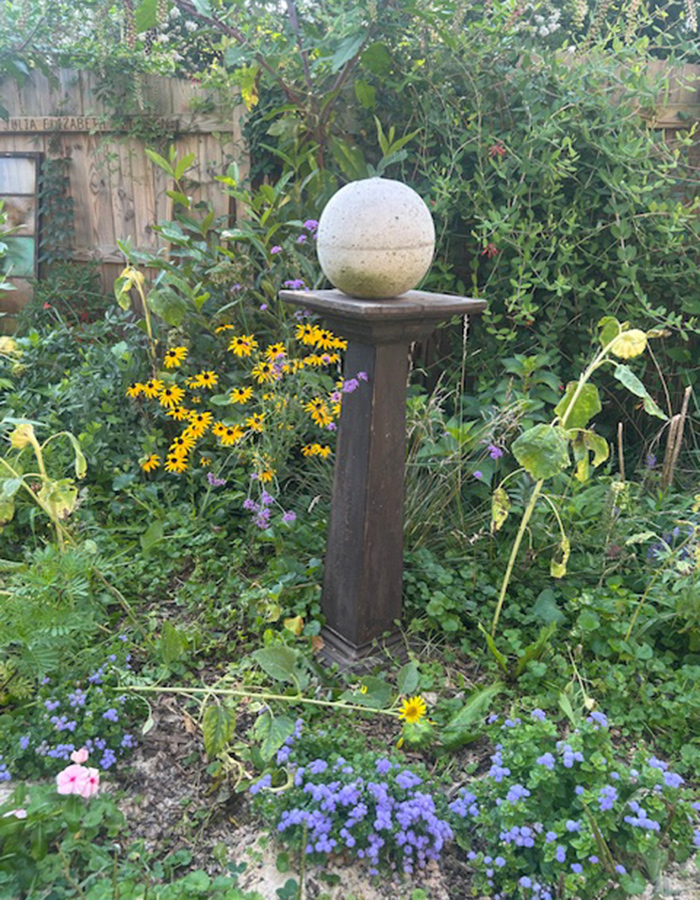
orb on pillar surrounded by flowersI’m not strict about natives—ageratum is so long-lasting and easy.

Clover lawn in front of garden pondClover lawn: never mow, and the pollinators love it.

garden art on wooden fenceVarious non-plant additions

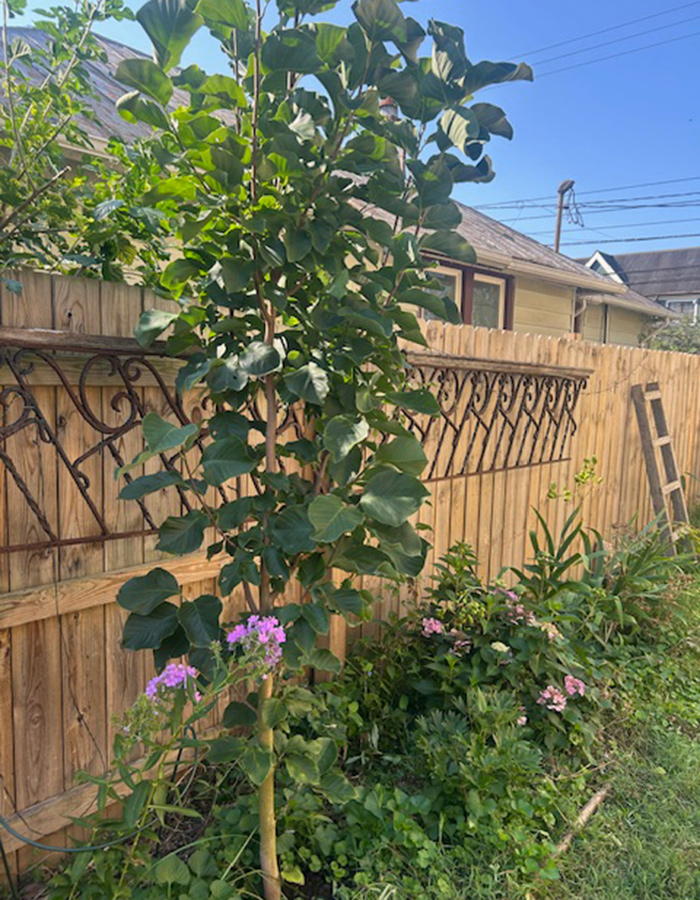
small magnolia treeThis is ‘Judy Zuk’ magnolia (Magnolia ‘Judy Zuk’, Zones 5–9). It gets beautiful pale yellow flowers in early spring and has a narrow habit.

Thank you so much for sharing your new garden with us, Jody! It’s incredible the amount of beauty you’ve been able to build in two short years, and I hope we get more submissions from your garden so we can watch it grow and evolve.

No matter how new or old your garden is, there is always something to celebrate and share! So whether your garden is in its 3rd growing season or it’s 30th, consider contributing your photos to the blog. Follow the directions below to submit photos via email, or send me a DM on Instagram: @agirlherdogandtheroad.


We want to see YOUR garden!

Have photos to share? We’d love to see your garden, a particular collection of plants you love, or a wonderful garden you had the chance to visit!

To submit, send 5–10 photos to [email protected] along with some information about the plants in the pictures and where you took the photos. We’d love to hear where you are located, how long you’ve been gardening, successes you are proud of, failures you learned from, hopes for the future, favorite plants, or funny stories from your garden.

Have a mobile phone? Tag your photos on Facebook, Instagram, or Twitter with #FineGardening!

Do you receive the GPOD by email yet? Sign up here

Meal Prep Breakfast Burritos (Freezer Friendly)

0


Meal Prep Breakfast Burritos (Freezer Friendly)


Privacy & Cookies Policy

Rural hospitals band together instead of selling to big networks : Shots

0

Bowman, N.D., has about 1,400 residents, and they rely on Southwest Healthcare Services. The facility joined with other rural hospitals in the state to form a network that allows it to remain independent while sharing resources in an effort to save money and improve patient care.

Arielle Zionts/KFF Health News


hide caption

toggle caption

Arielle Zionts/KFF Health News

BOWMAN, N.D. — Retta Jacobi stepped onto a metal platform that lifted her to an entrance on the side of a custom-designed semitrailer. Once inside, she lay down on a platform that technicians slid into an MRI machine. Jacobi hoped the scan would help pinpoint the source of the pain in her shoulders.

The mobile MRI unit visits Southwest Healthcare Services, the hospital in Bowman, North Dakota, each Wednesday. Without it, the community’s 1,400 residents would have to drive 40 minutes to get to an MRI machine, an expensive piece of medical equipment the hospital couldn’t afford on its own.

Southwest Healthcare Services and 21 other independent, rural North Dakota hospitals are part of the Rough Rider Network, which used its members’ combined patient rolls to negotiate better prices for the mobile imaging truck.

Patient Retta Jacobi stands on a metal platform that lifted her to the entrance of a mobile MRI unit at Southwest Healthcare Services in Bowman, North Dakota.

Patient Retta Jacobi stands on a metal platform that lifted her to the entrance of a mobile MRI unit at Southwest Healthcare Services in Bowman, North Dakota.

Arielle Zionts/KFF Health News


hide caption

toggle caption

Arielle Zionts/KFF Health News

“Clinically integrated networks”

Independent rural hospitals are increasingly joining what are called clinically integrated networks, collaborative groups that allow them to avoid selling out to larger health systems while sharing resources to save money and improve patient care. Many are motivated by the chance to combine their patient rolls for value-based care contracts, a growing reimbursement model in which insurers pay providers based on the quality of care they provide and the health outcomes of their patients.

Supporters of the networks are exploring whether funding from the $50 billion Rural Health Transformation Program — part of President Donald Trump’s recent tax and spending bill — can be used to help start or expand such organizations.

For independent, rural hospitals, the networks are an alternative to shutting down or reducing services, or to giving up local autonomy and joining a large hospital system.

“Anything that can help our rural hospitals and add services is awesome,” said Jacobi, who provides speech therapy to children in the local school district.

Closing, or courting a big buyer

Since 2010, 153 rural hospitals in the U.S. have shuttered completely or stopped offering inpatient services, according to the Sheps Center for Health Services Research at the University of North Carolina. A far larger number, 441, merged with or were acquired by hospital systems between 2011 and 2021. That’s according to a report commissioned by the Coalition to Strengthen America’s Healthcare, an advocacy group comprising hospitals and health associations.

The Rough Rider Network provides negotiating leverage to its members, which serve about two-thirds of rural North Dakotans, said Dennis Goebel, CEO of the Bowman hospital.

Health care vendors “probably wouldn’t be talking to us if we’re by ourselves,” he said. “They’re not looking for the little, tiny crumbs. They want a big contract, and they’ll give you better pricing.”

Some rural networks share specialists who aren’t needed full time at any one hospital, according to the Commonwealth Fund, a nonprofit focused on improving the health care system. Some networks also invest in broadband, housing, and other community development projects that can help people stay healthy and access care.

A business to create new networks

Hospitals can pool staffers for a network-wide employee health insurance plan, said Nathan White, CEO of Cibolo Health, a company that helps launch and manage networks in rural areas. He said they can also enter shared contracts for telehealth, prescription drug programs, and other services.

Southwest Healthcare Services, based in Bowman in southwestern North Dakota, serves residents in isolated rural regions of the Dakotas and Montana.

Southwest Healthcare Services, based in Bowman in southwestern North Dakota, serves residents in isolated rural regions of the Dakotas and Montana.

Arielle Zionts/KFF Health News


hide caption

toggle caption

Arielle Zionts/KFF Health News

White said he started Cibolo Health after a leader from an independent, rural North Dakota hospital asked him about collaborating with similar facilities. The Rough Rider Network launched in late 2023 with assistance from the company and $3.5 million from the North Dakota Legislature.

Since then, Cibolo Health has helped start networks in Minnesota, Nebraska, Montana, and Ohio. Once a sixth one opens in September, Cibolo-affiliated networks will represent more than 120 hospitals, with service areas covering 4.7 million people, White said.

The networks, which are nonprofits owned by the hospitals, pay an annual fee to Cibolo Health, a for-profit company, for management services. White said leaders from 10 other states are considering joining this model.

Similar networks have been around for more than 30 years but became more popular after the passage of the 2010 Affordable Care Act, according to a report by the Rand Corp., a research nonprofit.

Rural health care providers are increasingly interested in forming such networks, said Marnell Bradfield, executive director of the Community Care Alliance, a network of hospitals and independent primary care offices that launched in 2015 in rural western Colorado. About once a month, she said, she gets a call from health care leaders exploring similar networks and asking about her experience.

The Rand Corp. wrote in its 2020 paper that it didn’t find any academic studies that examined whether these networks do what its supporters claim — save money and improve patient care.
“In theory, quality should improve with the alignment of health care organizations, but there is no evidence,” the report said. The paper also said such networks could end up increasing prices, something that can occur with traditional mergers and acquisitions.

Bradfield and White said they have the evidence, at least for their organizations.

Community Care Alliance members have reduced their insurance costs while improving patient outcomes, such as reducing their need for inpatient and emergency care, Bradfield said.
White said data from a pilot program between Caret Health, a care coordination company, and SMP Health-St. Kateri, one of Rough Rider’s hospitals, showed the program helped a significant number of patients catch up with preventive care.

MRI technician Helen Cryan gets Retta Jacobi ready for her scan inside a mobile imaging semitrailer at Southwest Healthcare Services in Bowman, North Dakota, with the help of the truck’s driver, Kevin Kraft, who also works as a medical assistant.

MRI technician Helen Cryan gets Retta Jacobi ready for her scan inside a mobile imaging semitrailer at Southwest Healthcare Services in Bowman, North Dakota, with the help of the truck’s driver, Kevin Kraft, who also works as a medical assistant.

Arielle Zionts/KFF Health News


hide caption

toggle caption

Arielle Zionts/KFF Health News

Reaching out to patients, bringing in business

Gabby Wilkie, finance director at the St. Kateri hospital, in Rolla, N.D., near the Canadian border, said Caret Health staff called and texted patients who were behind on annual physicals, cancer screenings, vaccinations, and other visits. She said staffers explained to patients why this preventive care is important for their health before setting up a three-way call with St. Kateri staff to schedule an appointment.

White said it took an average of 11 outreach attempts before patients came in for any visits.

“To be honest, we didn’t have the resources to reach out,” Wilkie said.

She said St. Kateri would have spent an estimated $300,000 to do that kind of outreach for 1,000 patients. Meanwhile, she said, the hospital estimates it will earn more than $100,000 when that many patients come in for their preventive care. Cibolo Health and the Rough Rider Network both contribute to the cost of the Caret Health service, which is now rolling out to other network hospitals.

Goebel said joining a network to remain independent is also beneficial for the economy of rural areas, where hospitals are often major employers. He said health systems sometimes cut services and staff at rural hospitals they acquire.

Jacobi is taking medication and doing physical therapy after a doctor examined her MRI results. If that doesn’t work, she may need to make a five-hour round trip to Bismarck to get an ultrasound-guided steroid shot. Jacobi was thankful she could get a diagnosis and treatment advice without having to travel far for the MRI.

“Anytime we can maintain more local control, it’s a good thing for our small towns,” she said.

KFF Health News is a national newsroom that produces in-depth journalism about health issues and is one of the core operating programs at KFF .