41 F
Klamath Falls
Saturday, March 14, 2026
Home Blog Page 94

Biological age tests: Should you get one?

0

If you’ve heard of billionaire Bryan Johnson, you’ve likely encountered the phrase “bio age testing.”

Johnson, the subject of the Netflix documentary Don’t Die, says he’s on a quest to achieve the lowest possible “biological age” (also known as bio age).

He reportedly spends millions each year on anti-aging treatments—dozens of daily supplements, weekly acid peels for his skin, injections to boost collagen production, hyperbaric oxygen therapy, and plasma infusions extracted from his 17-year-old son’s body.

To determine what’s working, Johnson has undergone numerous tests to assess his bio age. Johnson says these tests show his age is now 5.1 years younger than when he embarked on his anti-aging quest.

Apparently, he’s aging in reverse.

Granted, not everyone’s buying it. A New York Times exposé, for example, claims Johnson’s biological age, in reality, has increased by 10 years.1

Still, Johnson’s “don’t die” crusade is gaining traction.

Bio age tests are a frequent topic on popular podcasts by Peter Attia, Joe Rogan, and Andrew Huberman. Google “bio age testing” and you’ll see dozens of ads for mail-order blood or urine testing kits that claim to reveal your biological age, pace of aging, and more. With prices tumbling into affordability, it’s natural to wonder…

Should you or your client sign up for bio age testing?

If so, which test is best? Just as importantly, what should you do with the information?

In this story, you’ll learn:

What is your bio age?

Your biological age (bio age) refers to how your cells function. It’s not necessarily the same as your chronological age, which refers to the number of candles on your birthday cake.

For example, let’s say Chang, a 50-year-old man, works at a desk, spends his free time in front of the TV, lives in the most polluted city in the world, eats a candy bar for lunch, and smokes. On the other hand, Jabari, a different 50-year-old man, hits the gym several times a week, lives in the mountains, doesn’t smoke, relishes his five servings of veggies a day, meditates, and spends most evenings in his garden.

Genetics aside, you’d be wise to wager that Jabari’s bio age is younger than Chang’s.

How do these tests measure bio age?

Bio age testing kits measure one or more biological markers of aging, also known as biomarkers.

For example, some tests focus on the size of your telomeres, the protective caps at the ends of chromosomes. Others measure DNA methylation, a physiological process that chemically alters DNA.

Once a company isolates and measures these markers from your blood or urine, it plugs the bio data into a formula that calculates your bio age.

However, if you see a doctor with any regularity, you’re likely already tracking some biomarkers of aging. For example, biomarkers such as blood pressure, cholesterol levels, and blood glucose can help predict your risk of future cardiovascular disease, a leading cause of premature death.

What’s the point of biomarker testing?

Biomarker testing can help you monitor your wellness proactively rather than waiting for disease symptoms to appear.

For some, it also serves as a motivator. If you learn you have the bones of someone 20 years older, this may give you the nudge you need to start strength training consistently.

In addition, biomarkers provide objective data, allowing you to track and evaluate various health-related actions quantitatively. By monitoring your blood pressure, you might learn that consistent exercise helps, but your late-afternoon energy drink does the opposite.

5 FREE biomarker tests

You don’t have to be a billionaire (or even a millionaire) to track biomarkers of aging.

In this section, we’ll cover several massively underappreciated, scientifically validated tests you can use to gain insight into your bio age—for FREE.

Before scientists developed high-tech blood-based bio age tests, researchers used these free tests to calculate the pace of aging in the people they studied.

FREE biomarker test #1: Get off the floor

People who are fitter and stronger tend to live longer.2

That’s because muscles do more than just move us around. They also secrete anti-inflammatory substances, help to regulate blood sugar, slow cellular aging, protect the lining of the arteries, and more. All this helps reduce the risk of age-related diseases, such as type 2 diabetes, high blood pressure, and heart disease, a phenomenon we explore in our article, The New Science of Muscle.

Related to strength, your ability to balance is also key. If you’re middle-aged or older and can’t stand on one foot for at least 10 seconds, your risk of dying in the next seven years is double that of someone who can stand for longer, according to a study of 1,700 people.3

The Sitting-Rising Test (SRT) is one way to assess both strength and balance at the same time.

People with low scores on this test have a higher risk of dying from cardiovascular disease, according to a 12-year study of 4,200 adults between the ages of 46 and 75.4

▶ How to measure it

Lower yourself to the floor with your legs in a crisscross position. Then, with your legs in the same position, stand back up. As you stand, notice if you must use a part of your body—hand, shin, knee—as leverage.

To score yourself, start with 10 points. Then, for each body part you used to stand, deduct a point. Subtract a half point if you became unsteady or lost your balance.

Keep in mind that this (and other tests) serve as a proxy for your fitness. A low score indicates that your balance and coordination, muscle strength and power, and mobility may all require some attention.

FREE biomarker test #2: Squeeze a ball

Like the SRT test, your grip strength provides insight into your overall fitness. If the muscles in your hands are weak, the muscles throughout your body are more likely to be weak, too.

Poor grip strength can also predict future muscle weakness. In one study, people with a weak grip were more likely to walk slowly and be unable to rise from a chair, complete rigorous housework, or climb a flight of steps 25 years later.5

Low grip strength has also been associated with:6

  • Low bone mineral density
  • Increased risk of falls
  • Poor nutritional status
  • Depression
  • Poor sleep, cognitive function, and/or quality of life
  • Increased risk of heart disease, cancer, and premature mortality

According to one study, grip strength was a better indicator of longevity (or lack thereof) than blood pressure.7

▶ How to measure it

Grab a standard tennis ball, and squeeze as hard as you can, for as long as you can.

If you can manage 15 to 30 seconds before your grip fatigues, you’re doing fine. Ninety seconds puts you well above average—anything over 90 ranks you solidly in the upper-third percentile.

If you’re below 15, keep in mind that this test is also just one indicator of your overall strength. (And squeezing balls to improve grip strength without training the rest of your body is unlikely to make significant improvements in your overall health and fitness.)

A hand-held dynamometer—available for use at most occupational therapists’ and some gyms—can also test grip strength. (If you’re willing to shell out some cash, you can buy your own for somewhere between $100 and $500.)

FREE biomarker test #3: Stand on one foot

An ability to balance on one foot for an extended period can help reduce your risk of falls, one of the leading causes of injury-related death among older adults.

In addition, many different bodily systems—the eyes, inner ear, skeletal muscles, and brain—must work together to help you stay upright.

Conditions like diabetes, heart disease, and cancer can all affect balance. As a result, an inability to stand on one foot can serve as a warning sign for eroding health and fitness.8

▶ How to measure it

Stand near a wall or chair for safety. Keep your eyes open and hands on your hips. Then, lift your dominant leg and start timing yourself. Once you put your foot down, stop the clock. Repeat the test with your non-dominant leg.

Once you have your times, compare them to the following averages, from a study out of Duke University, to see how you did compared to your age-matched peers.9

Age Seconds on one leg (males) Seconds on one leg (females)
30-39 59 56
40-49 56 55
50-59 42 48
60-69 40 38
70-79 27 25
80+ 13 11

FREE biomarker test #4: How you feel

Sometimes you know why you’re tired, such as the morning after binge-watching the last few episodes of a thriller. Once you catch up on your sleep, the weariness lifts.

That’s not the same thing as fatigue, which describes persistent exhaustion that worsens over time and interferes with life. In addition to feeling physically tired, someone who’s fatigued feels mentally dull and emotionally exhausted.

Think of fatigue as an early sign that something’s off, especially if you don’t know the cause.

Let’s say you’ve already ruled out the usual suspects like too much caffeine, dehydration, too much alcohol, medication side effects, chronic stress, or too much or too little exercise. What’s left is likely a sleep disorder or a developing health problem such as anemia, obesity, depression, cancer, or diabetes, to name a few.

If you’re 60 or older, fatiguability—or how worn out you feel after an activity—can also predict longevity.

According to research out of the University of Pittsburgh Medical Center, the higher someone scores in fatiguability, the higher their risk of death in the future.10 Other research has linked high fatiguability with declines in gait speed, walking ability, and other tests of fitness.11

▶ How to measure it

To measure fatigability, use a tool called the Pittsburgh Fatigability Scale. Using a 0 (no fatigue) to 5 (extreme fatigue) scale, rate how fatigued you think you would feel after completing the following activities:

Activity Duration Score (0 to 5)
Leisurely walking 30 minutes
Brisk or fast walking 1 hour
Light household activity 1 hour
Heavy gardening or yard work 1 hour
Watching television 2 hours
Sitting quietly 1 hour
Moderate-to-high intensity strength training 30 minutes
Participating in a social activity 1 hour
Hosting a social event for 60 minutes 1 hour
High intensity activity 30 minutes
Add all scores:

If you score less than 15, you’re doing well. Scores between 15 and 24 are a warning sign. Anything 25 and above is regarded as severe, and worth mentioning to your healthcare professional.12

FREE biomarker test #5: Body composition

Despite popular belief, both too little and too much body fat can influence health for the worse, as we explore in our infographic, Is body fat good or bad for you?

Too much fat raises the risk for: Too little muscle raises risk for:
Heart disease Heart disease
High blood pressure High blood pressure
Cancer Cancer
Fatty liver disease Stroke
Insulin resistance Insulin resistance
Type 2 diabetes Faster cellular aging
Inflammation Inflammation
Joint distress Depression and anxiety
Sleep apnea Falls and loss of balance

Your muscle mass also plays a role, which is why someone’s body composition matters more than their weight.

The gold standard methods that estimate body composition—underwater weighing, air displacement (Bod Pod), and dual-energy X-ray absorptiometry (DEXA)—certainly aren’t free.

However, a recent study determined that a good old-fashioned (and cheap) tape measure can provide a comparably accurate estimate of body composition.13

▶ How to measure it

To use a tape measure to keep track of your body fat percentage, measure:

  • The widest part of your neck
  • The narrowest part of your waist (For some people, this will be at the navel. For others, it might be slightly above the navel)
  • The widest part of your hips

Ensure the tape is snug but not so tight that it cuts into the skin. Once you have your measurements, plug those numbers—along with your age, sex, height, and weight—into our FREE Body Fat Calculator, which will take it from there.

Doctor-approved biomarker tests

Depending on where you live in the world, the following tests may not be free. However, as part of routine preventative care, your insurance might cover them.

Doctor-approved test #1: Blood panel

If your primary care doctor recommends yearly blood work, it’s for good reason.

By keeping tabs on several blood markers, you can see if your health is trending toward type 2 diabetes or heart disease, both leading causes of premature mortality.

Many blood markers can also be influenced relatively quickly (within 6 to 12 weeks) through lifestyle changes, supplement protocols, or medications. This makes them practical tools for monitoring whether various lifestyle or medical modifications are working.

▶ How to measure it

If you’re not already doing so, consider having the following blood markers tested annually. Then, talk to your health care professional about what your numbers mean. They might use the following numbers, along with your blood pressure, to calculate a cardiovascular disease risk score.

Blood marker Optimal range
Total cholesterol < 200 mg/dL*
LDL < 100 mg/dL for those without heart disease
< 70 mg/dL for those with a history of heart attack or stroke
HDL > 60 mg/dL
Triglycerides < 150 mg/dL
Alipoprotein B (Apo B) < 133 mg/dL (males)
< 117 mg/dL (females)
Lipoprotein (a) < 30 mg/dL
C-reactive protein < 2.0 mg/L**
Fasting glucose < 100 mg/dL
Hemoglobin A1C < 5.7%

*Milligrams per deciliter of blood
**Milligrams per liter

Doctor-approved test #2: Bone density

When researchers study healthy super-agers aged 90 and older, strong bones are one of their defining features.14

That may be because, like muscles, bones are live organs that secrete substances that may be beneficial to overall health and longevity.15

For example, bones secrete osteocalcin, a hormone that plays a role in bone remodeling. When osteocalcin circulates in the body, it’s thought to play a role in everything from helping muscles to produce ATP to regulating brain neurotransmitters.

Because of these varied roles, it’s thought that, as bones wear away, osteocalcin levels drop, contributing to many age-related health problems, including diabetes, low muscle mass, and cognitive issues.16 17 (At least, that’s the theory. Most of this research has been done on mice.)

Osteocalcin aside, loss of bone density can, of course, lead to fractures, which can increase your risk of death for up to 10 years after a break.18

It’s especially important to keep tabs on bone health if you’re in any of these high-risk categories:

  • You’re female and went through menopause before age 45.
  • You’ve been sedentary most of your adult life.
  • You take medications such as diuretics or stomach-acid blockers, which are linked with an increased risk of osteoporosis.
  • You have a history of nicotine use or excessive alcohol consumption.
  • You have a medical condition, such as diabetes or thyroid disease, that raises your risk.
  • You have a family history of osteoporosis.

▶ How to measure it

Dual-energy X-ray absorptiometry (DEXA) scans are a type of X-ray that measures the amount of bone mineral content packed into a square centimeter of bone.

Insurance often won’t cover these scans for people younger than 65 unless there’s a documented risk of developing osteoporosis. Out of pocket, the average cost is about $300.

When you receive your DEXA results, you’ll see a T-score that represents how your bone density compares to the average bone density of a young adult with peak bone mass. A T-score of +1.0 to -1.0 means you have normal bone mineral density for someone your age. Anything below -1.0 means you might have osteopenia (low bone mineral density) or osteoporosis (porous bones that are prone to fracture).

Commercial bio age tests

If you have some money to burn, you can learn an awful lot about your body.

Here, you’ll find a quick run-down on some of the more high-tech tests you can get and what they can tell you.

However, before we get into the details, we want to point out a few caveats:

▶ Biological age can vary over time, and by organ. Someone may go through a period of accelerated aging—saying, during a period of intense stress—then their rate of aging may slow as they focus more on recovery. Additionally, organs can age at different rates. For example, someone with heart disease may have a relatively older heart than their kidneys. (Not all tests measure individual organ age, but it’s becoming more common.)

▶ Commercial tests won’t always accurately reflect the changes you’re making. Until more research supports the reliability of these tests, evaluate your behaviors over isolated test results. If you’re eating more fruits and veggies, exercising more consistently, managing stress, and otherwise slaying the healthy lifestyle department, don’t sweat your results. Focus on doing the things we know improve health.

▶ If a company pairs your test results with a hard sell for a proprietary and expensive supplement protocol, be wary. It’s better to share and discuss your results with a trusted health professional than take health advice from a profit-seeking stranger over the internet.

Commercial test #1: DNA methylation

DNA methylation is a biological process that chemically alters DNA. Because the rate of methylation accelerates with aging, it can be used to estimate someone’s biological age and life expectancy, finds research.19 20 21

The Horvath Clock and DunedinPACE both measure specific biomarkers that can be used to better understand someone’s methylation rate. Scientists developed these tests to help other scientists study how various lifestyle factors, environmental exposures, and medicines affect aging. They didn’t develop the tests as a way for the average person to pinpoint their biological age. (Which hasn’t stopped companies from selling DNA methylation testing kits to the public.) They cost about $300.

If you decide to get one of these tests, keep in mind your results won’t give you a complete picture of your health and longevity. Aging typically occurs at varying rates throughout the body. Your liver might age faster than your heart or brain, for example. So if you measure DNA methylation in your blood, that’s all you know about. Put another way, a DNA methylation test isn’t a substitute for your annual wellness checkup or blood work.

Commercial test #2: Telomere analysis

Telomeres—the protective caps on the ends of chromosomes—wear away with age. The length of a telomere can predict how many times a specific cell can divide before dying.

Abnormally short telomeres are associated with several genetic diseases. For this reason, when physicians suspect someone might have inherited a genetic disease, they’ll order a specific type of telomere test—the flow-FISH test—to measure the telomere length in all the cells in a blood sample.22 23

It’s more debatable whether telomere tests can predict aging in healthy people.

Just as importantly, the telomere test marketed to the public, known as the qPCR telomere test, isn’t used in research or medicine. These $100 tests are fine if you’re merely curious—just don’t base health and fitness decisions on your results.

Commercial test #3: VO2 Max

For years, only elite athletes cared about VO2 max, which describes the maximum amount of oxygen that your body can use during exercise.

More recently, however, some experts have suggested that VO2 max can serve as a measure for athletes and non-athletes alike to track the rate at which their bodies are aging.

People with high VO2 max tend not only to be more physically fit but also less likely to develop heart disease, diabetes, cancer, or stroke.24 25 26 27

In an observational study that followed the health outcomes of 5,107 Danish men over 46 years, men with above-average V02 max during middle age lived an average of five years longer than men with below-average V02 max. Each unit increase in VO2 max was associated with a 45-day increase in longevity. The researchers suggested VO2 max may more accurately predict all-cause mortality than high cholesterol, obesity, high blood pressure, and insulin resistance.28

You might think of V02 max as a canary and your aging body as a coal mine.

As you age, your chest wall becomes more rigid, the muscles that surround the lungs weaker, and the oxygen-carrying blood vessels calcified and less elastic. The heart also squeezes with less force, max heart rate drops, muscle mass and strength decline, the mitochondria in cells and muscles lose their effectiveness, among other differences.

In addition to raising your risk for many different diseases, these changes can also affect VO2 max, which tends to decline 10 percent per decade starting around age 30.29 30

In the past, the only way to reliably measure VO2 max was in a fitness lab.

You would wear a metabolic mask and a heart monitor while you ran or cycled to exhaustion. The mask collected your expired carbon dioxide and monitored how much oxygen you sucked into your lungs. This lab-based testing is still the most accurate way to measure V02 max as well as other key fitness metrics such as:

  • Max heart rate, or the highest number of times your heart can beat per minute during exercise
  • Ventilatory threshold 1, or the point during exercise when the body switches from mainly using fat for fuel to using a combination of fat and glucose or glycogen (stored glucose) for fuel.
  • Ventilatory threshold 2, or the point where your body moves away from aerobic metabolism (which uses oxygen) to anaerobic metabolism (which doesn’t use oxygen).
  • Tidal volume is the amount of air inhaled or exhaled during each breath

Depending on where you live, you might be able to get your VO2 max tested for around $150.

However, if you don’t have access to a VO2 max clinic, three somewhat less accurate options exist.

▶ The 1-mile walk test

Wear a heart rate monitor as you walk one mile on a flat surface, such as a treadmill or running track. As soon as you complete the mile, record your heart rate and walk time. Then, plug it into the following formula to calculate your VO2 max:

132.853 — (0.0769 × Weight) — (0.3877 × Age) + (6.315 × Sex) — (3.2649 × Time) — (0.1565 × Heart rate)

If that feels like too much math, you can also use a free online tool.

▶ The smartwatch test

Many smartwatches will estimate your VO2 Max for you based on information the watch gathers from your workouts, sex, and age. Compared to in-office testing, smart watches can over- or underestimate V02 max, especially in people who are very out of shape or extremely fit.31

Because of this, you don’t necessarily want to use your smart watch measurement to determine your current state of health. However, it can help you to see trends. For example, does your VO2 estimate drop after a few weeks of skipping your usual spin class? If so, that’s good information to have.

▶ The PR test

Fitness performance correlates with longevity. If you’re getting faster at running a certain distance or can go a longer distance than before, you’re getting fitter and increasing your chances of living a long, healthy life.

One way to test this: the 12-minute run test, also known as the Cooper test. (This is a validated way to estimate VO2 max—and shows about a 90 percent correlation with lab-based measurements.)

Here’s how it works:

Run as fast as you can on a flat surface, such as a treadmill set at a 1 percent incline or running track, for 12 minutes. After 12 minutes, record your distance. Then, plug it into one of the following formulas to calculate your VO2 max.

Distance in Miles Distance in Kilometers
VO2 Max = (35.97 x distance in miles) – 11.29 (22.351 x distance in kilometers) – 11.288

In lieu of doing math, you can also use a free online calculator.

How to change your biological age

Try to think of the information you gather about your body as just that—information.

It’s not a moral judgment of who you are as a person.

Just as importantly, it’s not a permanent situation.

  • If you’re weaker than other people your age, you can grow stronger.
  • If your cholesterol or blood glucose levels are high, you can take steps to lower them.
  • If your body is aging faster than your birthdays, consider exploring key lifestyle changes that may help turn the situation around.

You have options. However, most people make two big mistakes when it comes to longevity-related lifestyle changes.

Mistake #1: Ignoring evergreen, big-impact strategies

It’s the simple, boring, “I’ve heard this a million times before” health practices that, when done consistently, add up to a long, healthy life.

We’re talking about things like…

  • Eating more minimally processed foods and fewer ultra-processed foods
  • Consuming more brightly colored fruits and veggies
  • Moving your body regularly
  • Getting enough rest and sleep
  • Enjoying community, time in nature, and other activities that make life meaningful
  • Keeping alcohol intake moderate
  • Not using tobacco
  • Wearing sunscreen
  • Flossing

And that’s just a partial list.

According to thousands of studies, people who practice these and other high-impact strategies not only live longer, but also live better. They’re stronger, happier, and less likely to spend their later years disabled or in pain.

(If you’d like to see where you stand when it comes to big impact health and longevity strategies, check out our FREE Longevity Assessment.)

However, when it comes to health, fitness, and longevity, many people pursue options with minimal impact (at best). They reach for the latest, trendy supplement rather than taking steps to quit smoking, as just one example.

Here’s the thing: Big rock strategies require changes in behavior. If daily physical activity were as easy as popping a pill, walkers and cyclists would clog up the streets in your neighborhood.

(It’s precisely this reason why so many people need the support of a certified health coach who has undergone training in the science of behavior change.)

Mistake #2: Not turning data into action

The data gathered from biomarker aging tests can give you a sense of control.

However…

Data, in isolation, doesn’t lead to a longer life.

Gathering data without changing your behavior is like checking your reflection in the mirror, seeing spinach wedged between your incisors, and leaving it there.

You need to remove the spinach for the mirror check to be worthwhile.

Biomarker testing is the same.

If you don’t use your bio data to inform behavior change, you’re wasting your money and time.

Consider your biomarker data as a baseline or starting point.

Then, use it to assess whether various lifestyle changes or medical interventions are moving you closer to your goal of living a longer, healthier life.

References

Click here to view the information sources referenced in this article.

If you’re a health and fitness pro…


When your clients are stressed and exhausted, everything else becomes a
struggle
: going to the gym, choosing healthy foods, and managing cravings.


But with the right tools, you can help your clients overcome
obstacles like chronic stress and poor sleep—leading them toward the
lasting health transformations they’ve always wanted.


PN’s Level 1 Sleep, Stress Management, and Recovery (SSR) Coaching
Certification

will give you these tools. And it’ll give you confidence and credibility as a
specialized coach who can
solve the biggest problems blocking any clients’ progress.
(You can
join the SSR Early Access List for our biggest discount + exclusive perks.)

Deborah’s Mountain Garden on Vancouver Island

0

Happy Friday, GPODers!

We’re closing out the week in Canada, as Deborah Sanders shares the trials and tribulations that led her to creating this luscious garden on Vancouver Island in British Columbia. If gardening on an island with a very unique ecosystem wasn’t enough, her property on a small mountain with lots of towering trees added to the one-of-a-kind conditions. However, some trial and error along the way has given her the vibrant, charming, and unique garden she has today.

Hello,

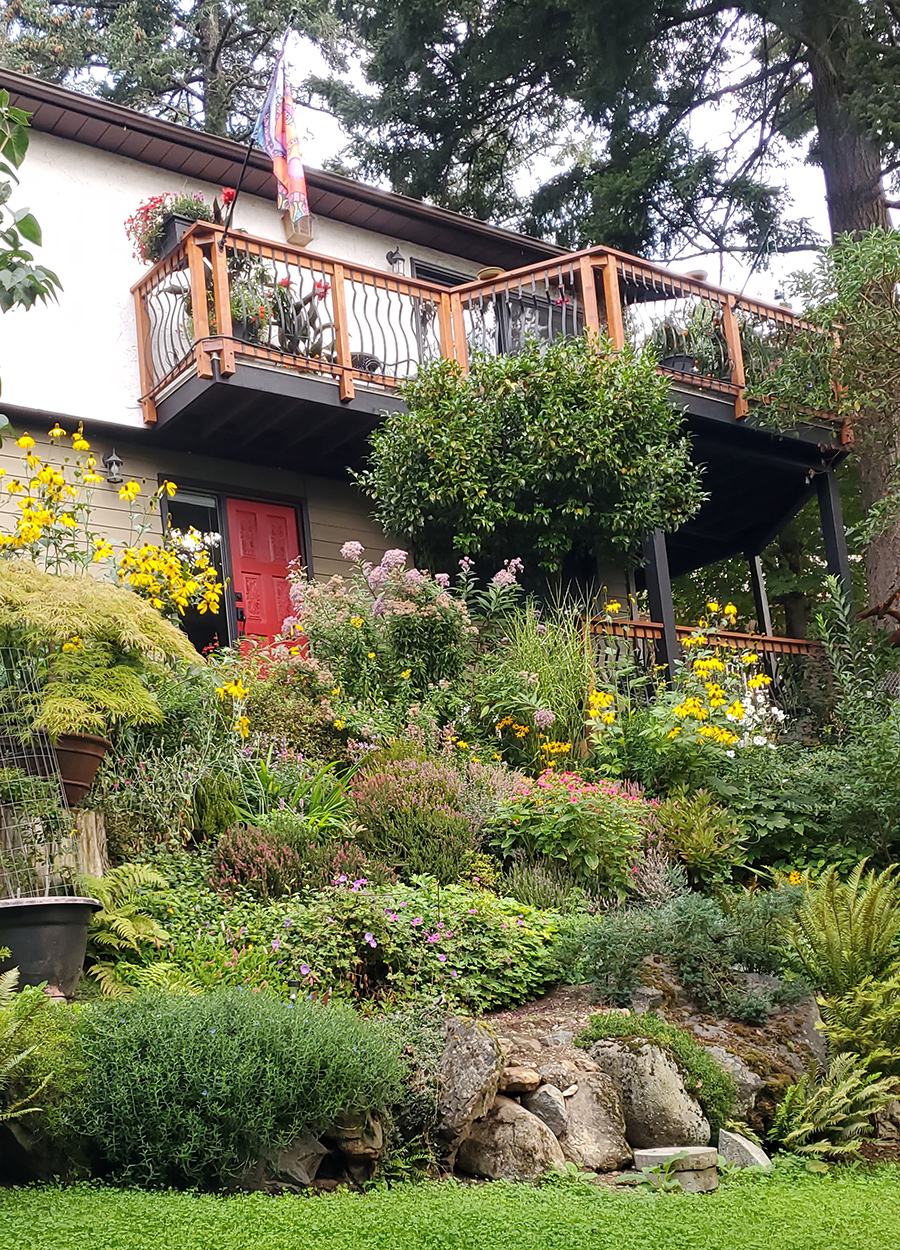
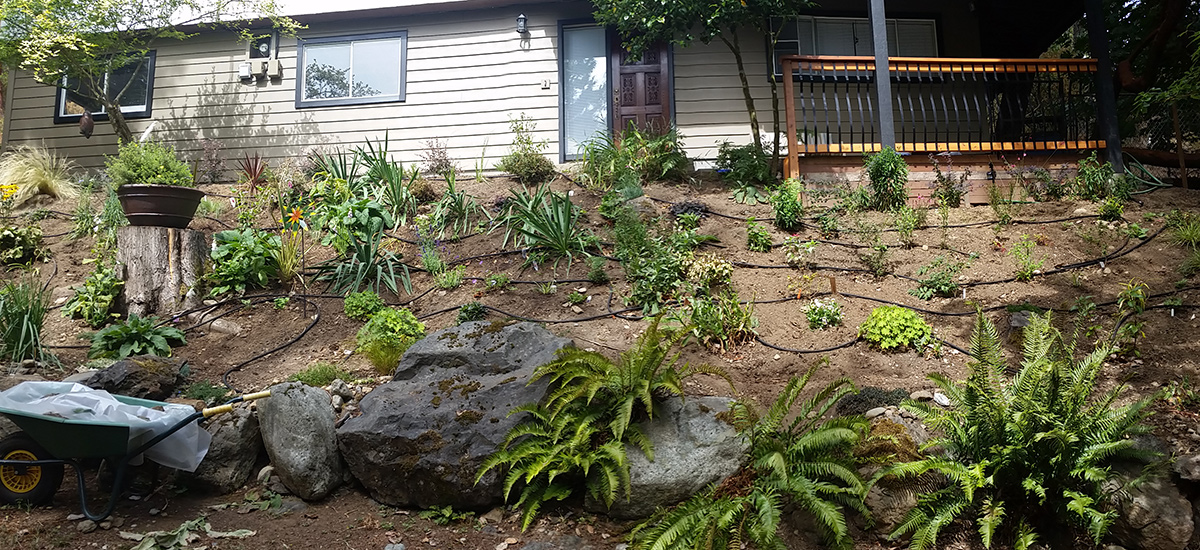
I live on Triangle Mountain, located just outside of Victoria on Vancouver Island, BC, Canada. I often joke that I do yoga in the garden, having made a couple of big mistakes early in planting my garden. When the mountain was developed, they knocked down a few trees, brought in loads of fill, and built the houses in the trees. The front “slope” was in the deep shade of cedars and Douglas fir trees (Pseudotsuga menziesii, Zones 4–6), with only English ivy (Hedera helix and cvs., Zones 5–11) growing. I had a brilliant idea and ripped out all of the ivy and planted seeds. Not a thing grew. We then cut down a cherry, cedar, and two Douglas firs. Yikes—every weed seed saw daylight and grew. While I still had cedars and Douglas firs giving me full shade through part sun, I ran with it.

I bought one of everything and started planting. Going up the slope is challenging, as is coming back down without stepping on anything. Did I say yoga? The first mistake was not terracing; the second is taking the Master Gardeners course after I planted one of everything, only to learn about continuity!

A photo from 2017, when we were using soaker hoses on a sand base, to now with an irrigation system installed with the help of my hubby and friend

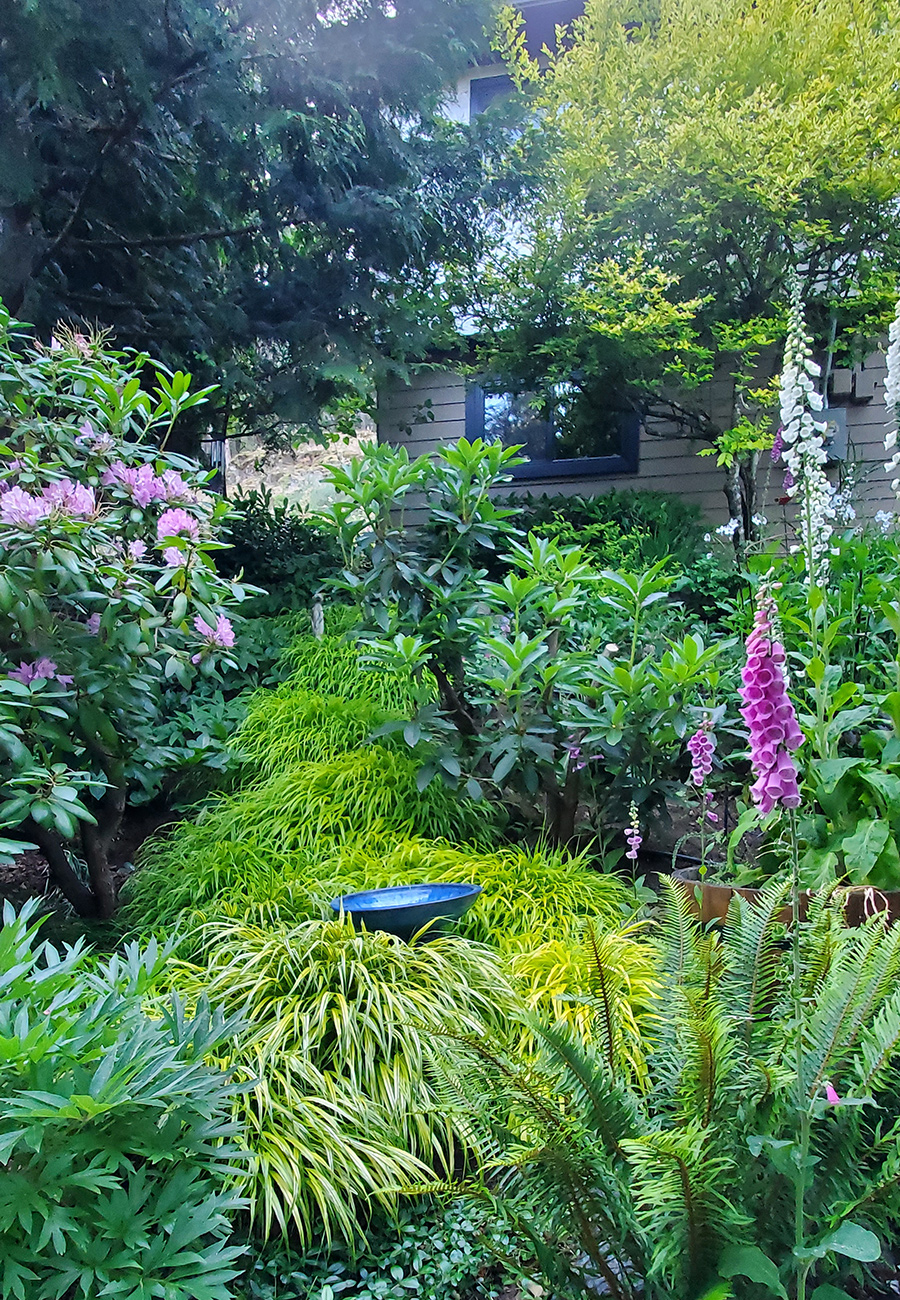
sloped garden with mass planting of ornamental grassThe continuity came along with a waterfall of Japanese forest grass (Hakonechloa macra, Zones 5–9) coming down through the rhododendrons.

bright green Japanese forest grass under large shrubAnother view of the Japanese forest grass waterfall from underneath one of Deborah’s rhododendrons—such a lush scene of greenery.

path leading to small patio in gardenThen I put in microclover (Trifolium repens var.‘Pipolina’ and ‘Pirouette’, Zones 3–10) instead of grass and have since developed the lower garden around a slate patio, where I can sit and watch my garden grow.

sloped garden under raised porchIt’s been a journey of learning, exposures, soils, and falling in love with so many species of plants. Many are now in pots spread around the property. Japanese maples—who knew deer love them, hence the pots on decks—peonies, and rhodos: Can you have too many? I have much more, but this is my start and what has kept me busy and agile.

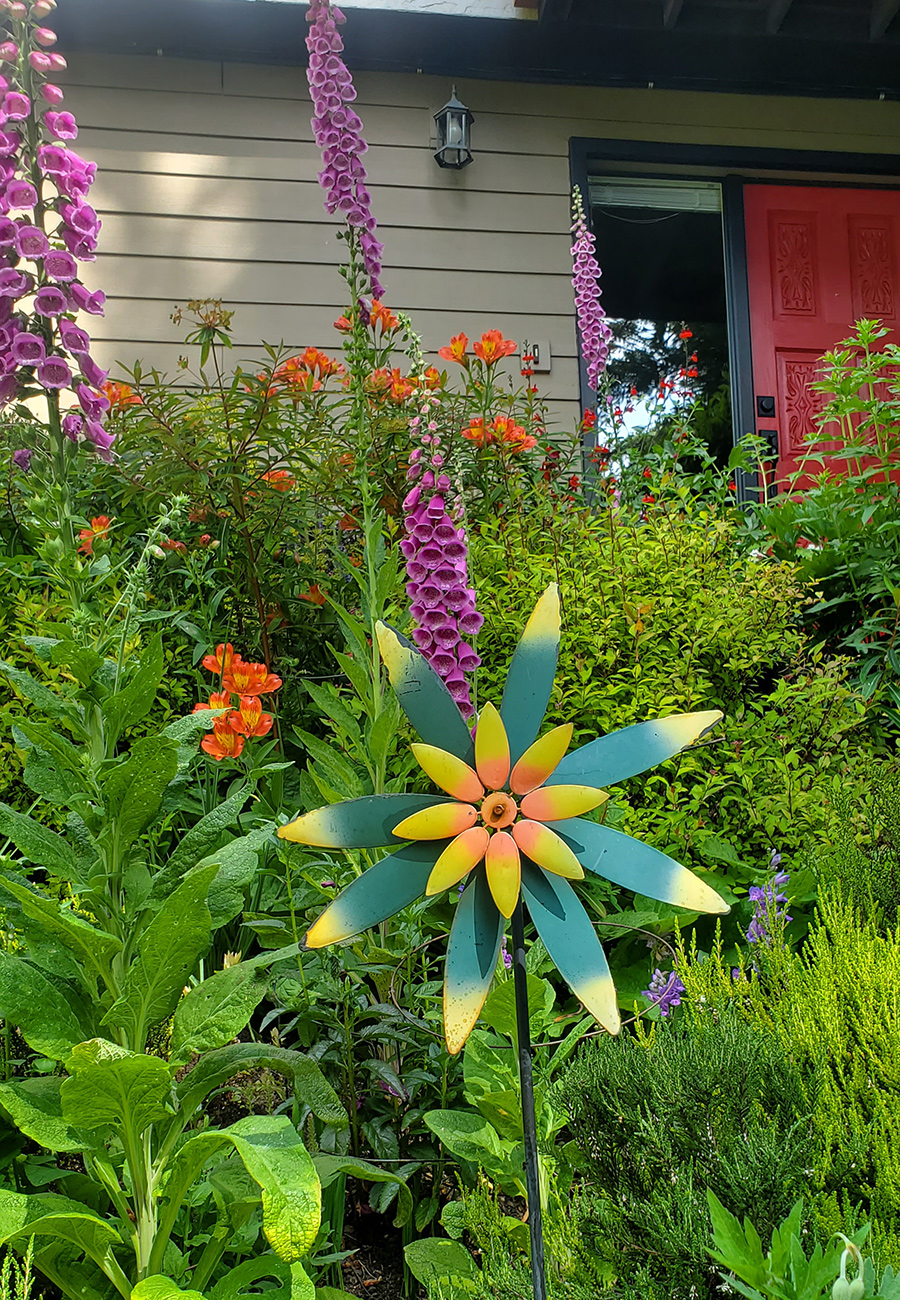
metal flower in front o real flowersIf planting on this extreme slope wasn’t enough, Deborah also made a point to inject extra personality and color with some garden art. A fun metal flower adds even more flair to a colorful section of foxgloves (Digitalis purpurea, Zones 4–9) and orange Peruvian lilies (Alstroemeria aurea, Zones 7–10).

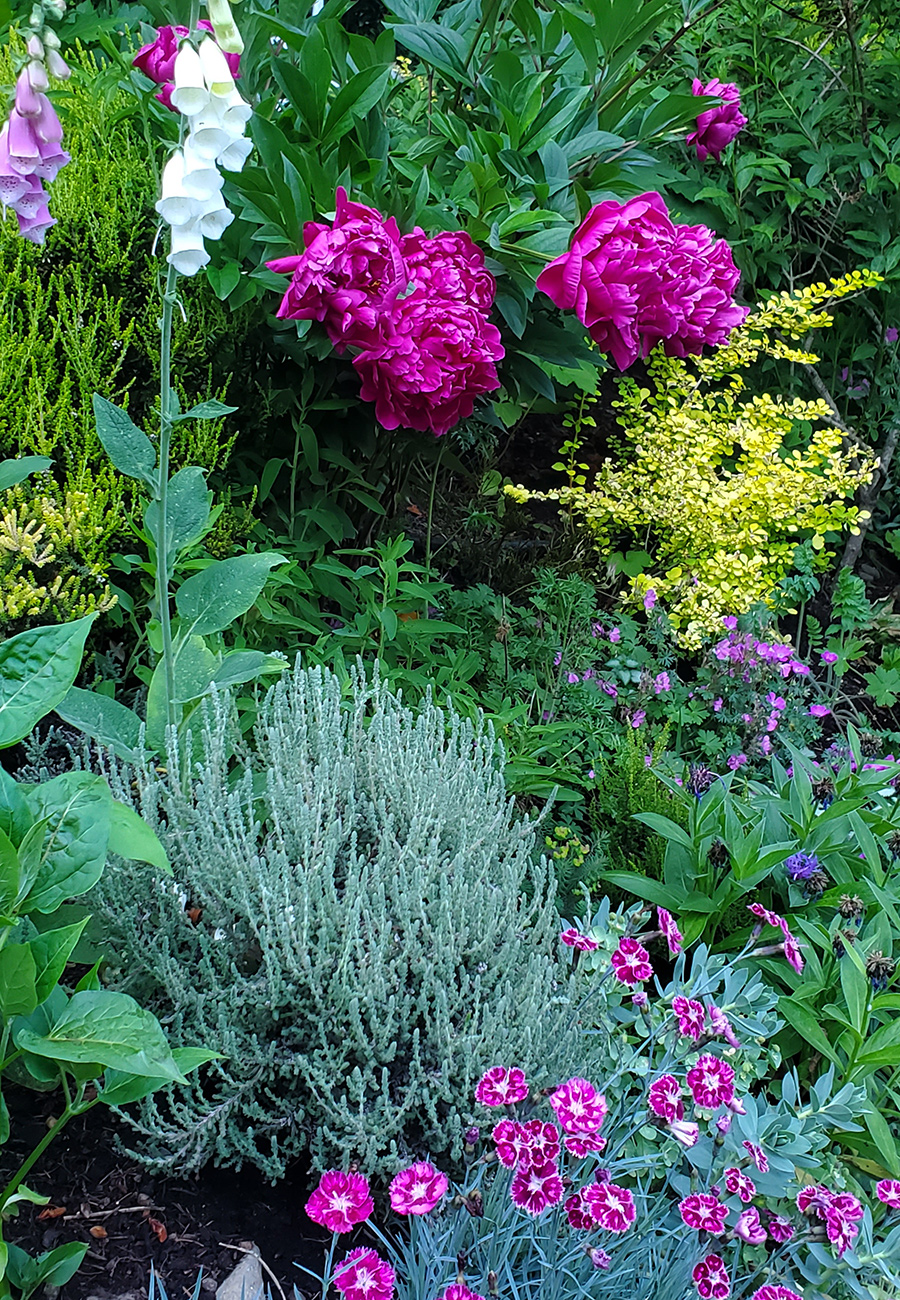
bright pink flowers with blue foliageBright magenta peony and dianthus flowers with silvery blue foliage is a captivating combination in this vignette.

metal bird statue with yellow flowering plantAnother fun piece of metal garden art, a funky blue heron, is the perfect complement to the bright yellow blooms of upright wild ginger (Saruma henryi, Zones 5–8).

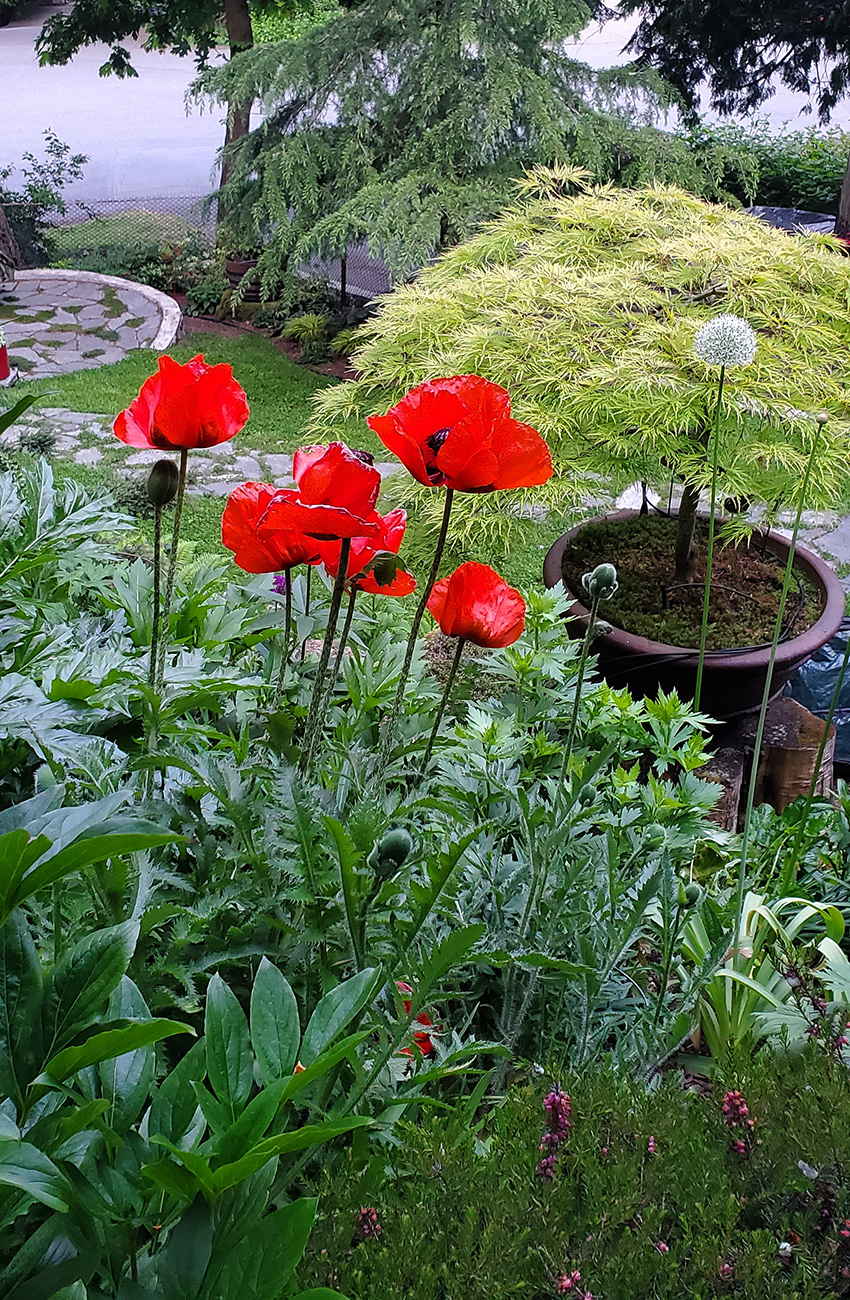
red poppies in gardenOne last photo, looking down from Deborah’s slope on some bright red poppies (Papaver orientale, Zones 3–7) and a chartreuse Japanese maple: A peek of the small circular patio in the top corner shows what an excellent vantage point that seating area is for enjoying great views of the garden.

Thank you so much for sharing your vibrant and lively garden with us, Deborah! Despite your very challenging conditions, you have managed to create a beautiful landscape that has tons of personality and lots of exciting plant combinations.

How do you manage your garden’s conditions? Are you a meticulous planner, writing to-do lists and crafting site plans? Or do you work on a trial and error basis like Deborah has in her garden? Let us know in the comments, or considering sharing your garden journey with the blog. Follow the directions below to submit photos via email, or send me a DM on Instagram: @agirlherdogandtheroad.


We want to see YOUR garden!

Have photos to share? We’d love to see your garden, a particular collection of plants you love, or a wonderful garden you had the chance to visit!

To submit, send 5–10 photos to [email protected] along with some information about the plants in the pictures and where you took the photos. We’d love to hear where you are located, how long you’ve been gardening, successes you are proud of, failures you learned from, hopes for the future, favorite plants, or funny stories from your garden.

Have a mobile phone? Tag your photos on Facebook, Instagram, or Twitter with #FineGardening!

Do you receive the GPOD by email yet? Sign up here

38 High-Protein Dinners

0


38 High-Protein Dinners


Privacy & Cookies Policy

How to Make DIY Makeup You’ll Actually Use

0

I’ve experimented with plenty of DIY projects over the years. Everything from lotion bars to toothpaste to vanilla latte scrub. I get a lot of questions about natural makeup and what I use. So it’s probably no surprise that I’ve learned how to make a lot of my own DIY natural makeup!

Makeup was definitely one of the toughest things for me to find natural alternatives for. In college, I practically collected makeup, and had endless tubes, compacts, and brushes that never even got half used.

Here’s a collection of what I’ve made and had the best results with. 

Natural Makeup

While there are some good natural alternatives that you can buy (see list below), the cheapest and most natural way is to just make your own. You might have all of the ingredients in your kitchen already!

Want to Buy It?

Not into DIYing your own makeup or don’t want to purchase all of the ingredients? Here are my favorite places to buy natural, healthier makeup. You’ll find everything from foundation to blush to lipstick to eye makeup, and more. 

Natural Skin Care

What you do to your skin before you use makeup is just as important as the makeup you use. Thankfully there are some great natural options for skin care. 

I absolutely love the oil cleansing method, which leaves skin soft and smooth by using natural oils to balance the skin. I typically use the oil cleansing method at night and wash my face with raw honey if needed in the morning. 

You can also use sugar scrubs and face masks to keep skin glowing. Find a ton of natural skincare recipes to customize your own skincare routine here. 

With proper skin care, the skin will be naturally healthy and you won’t even need to wear makeup most of the time. Most days, I skip the makeup altogether. When I do wear it, these are the recipes and products I use.

Natural Foundation

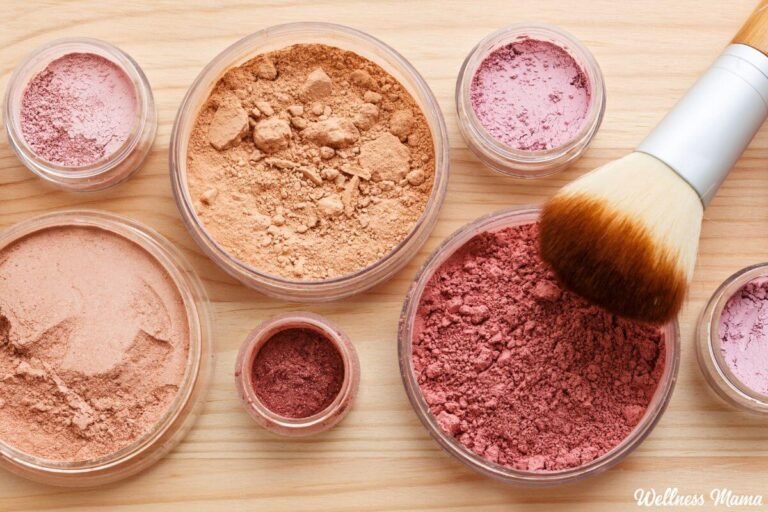
I’ve used cocoa powder for dry shampoo before, so why not try it for makeup too? A friend of mine recommended using cocoa for bronzer, so I experimented with my own natural foundation powder using it. The resulting recipe is similar to mineral makeup 

I start with arrowroot powder and zinc oxide, then slowly add in cocoa powder and finely ground cinnamon. I also add a pinch of white cosmetic clay, Fuller’s Earth Clay, French green clay, and a touch of gold mica powder. Just add a little at a time until you get the shade you want. The zinc offers more coverage, and the mica makes it smoother and my skin looks more radiant. 

Don’t have those ingredients? A simple mix of arrowroot and a small amount of cocoa powder and cinnamon works well. They won’t offer as much coverage (and be careful since cinnamon can irritate skin). 

Here are some more natural foundation options:

Natural Bronzer/Blush

For a simple homemade bronzer, use arrowroot, cocoa powder, and a pinch of cinnamon to get a darker shade. Some finely ground dried beet root or hibiscus flowers can also add a pink tone. They have to be very finely ground though to work! 

You can also add some zinc oxide powder to the base and red or pink mica powder for some extra sparkle. 

Natural Eye Makeup

Always be careful when using any products, even natural ones, near the eyes. Those who wear contact lenses may need to be extra careful to avoid any scratching. That said, here are some of my favorite DIY options for the eye area. 

Some days I’m just feeling lazy and want a quick mascara option. I’ll mix a few drops of natural aloe vera gel, vitamin E oil, and a pinch of activated charcoal. Not very precise… I know. Use a mascara wand to apply. 

For eyeliner, I either use a tiny bit of cocoa powder mixed with coconut oil, or a tiny dab of activated charcoal and whipped shea butter. 

To make a smoother eyeliner, I mix equal parts of coconut oil and shea butter (about 1/2 ounce of each) and add about 1/2 tsp of activated charcoal to make a thicker black eyeliner. You can also do this with cocoa powder for a brown hue.

DIY Natural Lips

You probably don’t expect to find lead in your lipstick, yet there it is in small amounts. Plus other harmful ingredients that we end up absorbing and swallowing throughout the day. Here are some recipes to avoid the toxins and make your own!

Natural Makeup Remover

Skip the need for buying an extra product (probably full of less than ideal ingredients) and try one of these simple, natural makeup removers. You probably already have the ingredients around the house!

Supplements for Skin Care

I’m firmly convinced that what we put in our bodies is just as important, if not more than what we put on it when it comes to skin health. I used to have terrible acne. Since changing my diet (removing dairy), healing my gut, and taking supplements, I don’t break out at all. And… my past scars have healed. The supplements that seemed to have made the biggest difference for me are:

  • Fish Oil– For vitamins A, D, and K, omega-3s, and antioxidants, all of which are great for the skin.
  • Gelatin – A precursor for collagen that’s made my hair, skin, and nails noticeably stronger and smoother (great for cellulite too).
  • Magnesium– An anti-inflammatory (and most of us don’t get enough!). Topical Magnesium Oil seems to be the most effective for skin health.

Ever made your own makeup? What’s the toughest thing to find natural versions of for you? Let me know below!

How to Build a Chicken Coop for 20 Chickens?

0

Building a chicken coop on your own isn’t just affordable, but it is fun and rewarding experience for first time chicken owners.

Though internet is filled with different chicken coop ideas, it’s important that you have a solid plan to build your chicken coop.

Prior planning, which includes assessing available space, choosing the right material and setting boundaries ensures that your chicken stays safe and healthy.

Depending on the weather conditions in your region, you can choose wooden blocks, meta fencing or durable plastic to build chicken coop for 20 chickens.

In this article, am not going to give a overwhelming list of chicken coop design ideas. Instead, I’ll assists you with the planning, preparation and building of a chicken coop.

Based on it, you can labor your creative mind to make a home for flocks.

How to Build a Chicken Coop for 20 Chickens?

Depending on number of chickens your about to raise, start with assessing the space needs.

In short:

Each chicken bird requires about 3–4 sq ft indoors and 8–10 sq ft in an outdoor run, so plan for at least 60–80 sq ft inside and 160–200 sq ft outside.

Choose a well-drained, shaded location, and design the coop with proper ventilation, predator-proofing, nesting boxes (1 per 3–4 hens), and roosting bars.

Use durable materials like treated wood or metal roofing, ensure easy access for cleaning, and include secure fencing around the run to keep the flock safe.

Before proceeding to the construction phase, I’d suggest to plan, prepare and build.

  • Planning: Space assessment & visualize the design
  • Prepare: Gather durable material based on the height and size of chicken coop
  • Build: DIY or take help of a carpenter to build the layout and install the fence

Let’s elaborate each section.

Step:1 Planning Your Chicken Coop

Space Assessment

The first step is determining how much room your 20 chickens will need. Each bird requires at least 3–4 square feet of indoor coop space, meaning your coop should measure around 60–80 square feet.

The outdoor run should provide 8–10 square feet per chicken, so a fenced area of 160–200 square feet is ideal. Adequate space helps prevent stress, disease, and aggressive behavior among your birds.

Check this: 6 Best Ground Cover for Chicken Run

Designing the Layout

When designing, think about the chickens’ daily routine. Include nesting boxes (one for every 3–4 hens), roosting bars at different heights, and an easy-to-clean floor plan.

  • Position windows or vents for proper airflow while ensuring the coop remains draft-free in colder months.
  • Doors should be large enough for easy access—both for chickens and for you during cleaning or feeding.
  • Hangers for feeders and drinkers help keep food and water off the ground, reducing waste and contamination.

Also Read: How to Clean and Disinfect the Chicken Coop?

Height and Size Considerations

A coop should be tall enough for you to enter comfortably. A height of 6–7 feet allows you to move around without bending too much, making maintenance easier.

For the chickens, elevated roosting bars should be placed about 2 feet above the floor with enough spacing to prevent overcrowding.

Remember to allow extra space for storage of feed and supplies if you want a more self-sufficient setup.

How Big of a Coop for 20 Chickens?

When planning a coop for 20 chickens, space is the first thing to get right. Each chicken needs about 3–4 square feet inside the coop, which means you’ll need at least 60–80 square feet of indoor space.

For the outdoor run, allow 8–10 square feet per bird, giving you 160–200 square feet where they can scratch, forage, and roam freely.

A good setup could be a 10×8 ft coop paired with a 16×12 ft run, but going bigger is always better.

More room reduces stress, keeps chickens healthier, and makes cleaning easier for you. Think of it as an investment in both their well-being and your convenience.

Step:2 Preparing for Construction

Choosing Materials

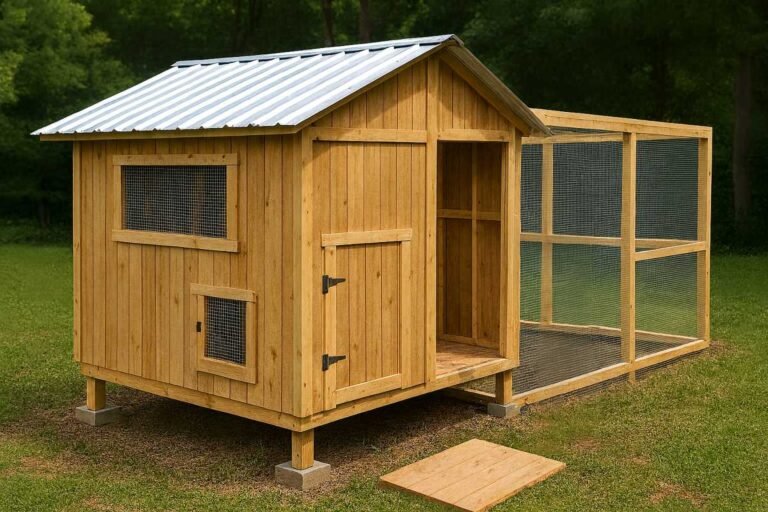
Durability and safety are the top priorities when selecting materials. Treated wood is often the best choice for framing because it resists rot and weather damage.

For the roof, metal sheets or asphalt shingles work well, offering long-lasting protection from rain and heat.

Wire mesh or hardware cloth is crucial for fencing and ventilation—it’s sturdier and more predator-proof than regular chicken wire.

Essential Tools and Supplies

Before starting, gather the necessary tools such as a saw, hammer, drill, tape measure, nails, screws, and hinges.

Stock up on exterior-grade paint or sealant to weatherproof the wood. Having all materials ready beforehand will make the building process smoother and prevent interruptions.

Step:3 Building the Chicken Coop

Constructing the Frame and Walls

Begin with a solid foundation—either concrete blocks, pavers, or a raised wooden base to keep the coop off the ground.

This prevents flooding and deters pests. Build the frame from treated lumber, then add walls, leaving space for doors, windows, and ventilation openings.

Ensure walls are sturdy enough to withstand wind and predators.

Also Read: What Should Be Inside a Chicken Coop?

Adding the Roof and Flooring

Install a sloped roof to allow rainwater runoff, preventing leaks and water damage. A metal or shingle roof ensures durability.

For flooring, use plywood covered with linoleum, or hardware cloth beneath bedding to make cleaning easier and reduce rodent access.

Add a thick layer of bedding such as straw, wood shavings, or hemp for comfort and cleanliness.

Installing Doors and Windows

Every coop needs at least one human-sized access door and one smaller chicken door (pop door).

Fit doors with sturdy locks or latches to keep predators out. Add screened windows or vents on opposite walls for cross-ventilation while ensuring openings are covered with hardware cloth.

Fencing the Run

Chickens need outdoor space to forage, dust-bathe, and exercise. Use strong hardware cloth or welded wire fencing around the run, at least 6 feet high, to keep predators like raccoons, foxes, or stray dogs away.

Bury the wire at least 12 inches underground to stop digging animals. If hawks are common in your area, consider adding netting or wire mesh across the top.

A secure run reduces risks and gives your chickens the freedom to roam safely.

Also Read: How to Build Chicken Coop Out of Pallets?

Important things Every Chicken Coop Must Have

Nesting Boxes

Provide around 6–7 nesting boxes for a flock of 20 chickens. Line them with straw or shavings to keep eggs clean and cushioned.

Place the boxes in darker, quieter corners of the coop to encourage hens to lay.

Roosting Bars

Chickens prefer to sleep off the ground. Install sturdy wooden bars about 2 feet above the floor, spaced so each bird has at least 8–10 inches of roosting space.

Avoid metal pipes, as they can get too cold in winter and cause discomfort.

Ventilation and Light

Proper airflow is essential to prevent ammonia buildup from droppings. Add vents near the roofline to keep fresh air circulating without creating drafts at chicken level.

Natural light through windows supports healthy egg production, but artificial lighting can be added in winter to extend laying hours.

Easy Cleaning Features

Design the coop with maintenance in mind. Removable trays under roosting bars, wide doors, and smooth flooring all make cleaning quicker.

Cleanliness prevents parasites, disease, and bad odors, ensuring a healthy environment for your flock.

Also Read: How to Make Chicken Coop Smell Better?

Common Mistakes to Avoid

Skimping on Space

It’s easy to underestimate how much room chickens really need. A crowded coop doesn’t just look uncomfortable—it causes stress, pecking, and fewer eggs.

When in doubt, go bigger. Your flock will be happier, healthier, and more productive if they aren’t packed in too tightly.

Using Chicken Wire Alone

Chicken wire might look sturdy, but it’s really just good for keeping chickens in—not keeping predators out.

Raccoons, foxes, and even neighborhood dogs can tear through it with ease. Instead, invest in hardware cloth for the run, windows, and vents. It’s tougher, longer-lasting, and gives real protection.

Poor Ventilation

A coop without proper airflow turns into a damp, smelly mess, and that’s bad news for your birds’ lungs.

Good ventilation isn’t the same as drafts—think of it as fresh air moving through the coop without chilling the chickens. Placing vents high up along the roofline usually does the trick.

Difficult-to-Clean Designs

One mistake many first-time builders make is creating a coop that’s tough to clean.

If you can’t easily reach inside to scoop out droppings or change bedding, the coop will quickly become unpleasant for both you and your chickens.

Wide doors, removable trays, and simple layouts save a lot of hassle in the long run.

Also Read: How to Get Rid of Rats from a Chicken Coop?

Conclusion

Building a chicken coop for 20 chickens may take some planning and effort, but it’s worth it for the comfort and safety of your flock.

A well-designed coop makes daily care easier and keeps your chickens happy and healthy.

With enough space, the right materials, and smart features, you’ll create a secure home that lasts for years.

In return, your flock will reward you with fresh eggs and a thriving, lively backyard.

COVID vaccines now approved only for high-risk people : Shots

0

The Food and Drug Administration’s approvals for the latest round of COVID-19 shots restrict the shots to people at higher risk of complications from COVID.

Joe Raedle/Getty Images


hide caption

toggle caption

Joe Raedle/Getty Images

The Food and Drug Administration approved the next round of COVID-19 vaccines Wednesday, but imposed new restrictions on who’s eligible to get them.

The agency is limiting the updated shots to people who are at risk for serious complications because they are 65 or older or have other health problems. Until now, COVID vaccines had been available to anyone 6 months and older regardless of their health.

The decision is expected to make it harder for many people, such as healthy children and healthy younger adults, to get a shot ahead of the expected winter COVID surge. That’s already generating confusion and apprehension that harkens back to the early days of the pandemic, when people often had to frantically search for a shot.

“I’m feeling a little déjà vu,” says Clare Hannan, executive director of the Association of Immunization Managers. “There’s a lot of anxiety about being able to get the vaccine.”

The Centers for Disease Control and Prevention is expected to weigh in soon with influential recommendations on who should get inoculated. But the CDC has already dropped guidelines that call for all healthy children and healthy pregnant women to routinely get vaccinated – a decision many doctors and public health experts say is especially alarming.

Federal health officials say the changes are warranted because most people have so much immunity at this point. They also question the vaccines’ safety and effectiveness – doubts dismissed by most public health experts and contradicted by a large body of scientific evidence.

A sweeping change to COVID vaccine regulation

“The American people demanded science, safety, and common sense. This framework delivers all three,” Health and Human Services Secretary Robert F. Kennedy Jr. said in a post about the regulatory actions on X.

Kennedy said the FDA has approved Moderna’s mRNA vaccine for those ages 6 months and older, the Pfizer-BioNTech mRNA vaccine for those ages 5 and older, and the Novavax vaccine, which uses an older technology, for those ages 12 and older.

“These vaccines are available for all patients who choose them after consulting with their doctors,” Kennedy wrote, adding that the emergency use authorizations for the vaccines that made them available quickly during pandemic had been revoked.

“It’s a welcome but overdue end to a policy,” says David Gortler, a senior research fellow at the Heritage Foundation. “But it is unclear as to why the EUA remained in place at all following full authorization by the FDA and the fact that the COVID emergency officially ended on May 11th 2023 — almost 30 months ago.”

Gortler adds, “Although the CDC very recently stopped publishing how many adults and children are still getting the COVID boosters in 2025, at last count it was around 23 million adults and 9.5 million kids, none of whom should be getting any mRNA covid injections.”

Access to COVID vaccines could be difficult for many

While many people with concerns about the vaccines welcomed the new restrictions, the limitations could limit access and are being denounced by most public health authorities as unwarranted, unscientific and dangerous.

“I’m worried that this puts the entire American population at risk for severe COVID disease and the complications associated with it,” says Dr. Tina Tan of Northwestern University, the president of the Infectious Disease Society of America. “People who are not going to be able to get the vaccine if they want it. And you’re going to see an increase in the number of individuals that are hospitalized or that potentially could die.”

The moves are the latest in a series of steps Kennedy, a long-time and vocal critic of vaccines, has taken to curtail development and availability of vaccines. He’s downplayed the risks of infectious diseases, falsely claimed vaccines are risky, canceled hundreds of millions of dollars of research to develop new mRNA vaccines to protect against future pandemics, replaced a key federal advisory committee with like-minded skeptics, and has threatened to overhaul protections for vaccine makers.

The new restrictions on the updated COVID vaccines, which target the LP.8.1 omicron subvariant, mean insurance may no longer pay for the shots, doctors may balk at stocking and prescribing them, and pharmacists may be unable or unwilling to administer the vaccines.

“The restrictions are not following the science of what these vaccines can and will do,” says Michael Osterholm, director of the Center for Infectious Disease Research and Policy at the University of Minnesota. “This is a disaster waiting to happen.”

Risk factors and worries about protection

The announcement comes after the FDA signaled the new approach in the spring. Kennedy soon after announced plans to drop recommendations for vaccinations for children and pregnant women. The moves prompted outrage among public health experts and fear, confusion and anger among people who still want to get vaccinated.

Still, the list of health problems that would make people eligible for the vaccines is very broad. Qualifying risk factors apparently include weak immune systems, asthma, depression, diabetes, high blood pressure and a sedentary lifestyle.

The new vaccine rules come as a consensus was emerging among government and independent scientists that routine vaccination may no longer be necessary for some people, such as healthy younger adults and older children because so many have built up strong immunity.

Nevertheless, the moves prompted major medical groups like the American Academy of Pediatrics and the American College of Obstetricians and Gynecologists and independent expert groups like the Vaccine Integrity Project, to issue their own scientific assessments and guidelines. Those continue to recommend the shots for all pregnant people and all very young children, who are as likely as older adults to get seriously ill from COVID.

“I’m worried,” says Dr. Sean O’Leary, a pediatric infectious disease expert at the University of Colorado who chairs the pediatric association’s committee on infectious diseases. “It’s clear the youngest kids remain at very high risk. So it’s very important to keep recommending the vaccine to those kids.”

Newborn babies face an especially high risk, O’Leary says, because they have little or no immunity. The best way to protect them is to vaccinate women during their pregnancies so they can pass protective antibodies to their fetuses. Pregnant women are themselves at high risk for serious complications as well.

“It’s heartbreaking,” says Dr. Lakshmi Panagiotakopoulos, a former CDC vaccine expert. “I honestly believe this will do harm to the American public.”

Adding to the confusion is the fact that although the CDC is no longer recommending the vaccines for healthy pregnant women. The agency and the FDA’s new framework both still list pregnancy as a risk factor.

Trade groups representing insurance companies have said their members plan to continue paying for the shots even though they’re no longer required to in all cases because of the current CDC recommendations. It remains unclear, however, how many individual insurers will still broadly cover the vaccines.

Most people have stopped getting vaccinated and most parents don’t inoculate their kids. But many younger, healthy adults still want a shot because they’re worried about getting sick, missing work, developing long COVID or spreading the virus to vulnerable family members.

“And my feeling is those healthy young adults should have the freedom to discuss this option, to consider it with their health care providers, and even if they don’t have health conditions should have the freedom to get vaccinated,” says Dr. Jesse Goodman, a former FDA vaccine regulator now at Georgetown University.

Many parents also want the choice to vaccinate their otherwise healthy children for the same reasons.

People who are not officially eligible for the vaccines may still be able to get the shots for themselves or their children by getting a doctor’s prescription and paying out of pocket. But that may create insurmountable barriers for many people. The COVID shots can cost $200 or more without insurance, getting a doctor’s appointment can be difficult for vaccination can be difficult..

In addition, many doctors may be hesitant to prescribe the shots beyond the FDA approval, also known as off-label use, and many pharmacists may be unable or uneasy about administering the vaccines because of state restrictions and liability concerns. Nineteen states require pharmacists to follow the CDC’s guidelines, according to the American Pharmacists Association. The rules vary in the remaining states.

Even if pregnant women and others can get vaccinated, many public health experts worry the conflicting recommendations and messages could dissuade many people from trying, exacerbating the already low rates of vaccination.

“We know that when people are confused they don’t act and my concern is that a lot of people who would benefit from COVID vaccination are not going to get it because they are just not sure what they should be doing,” says Dr. Kelly Moore, who heads Immunize.org, an advocacy group.

The changes come as the U.S. is in the midst of yet another summer COVID wave, which has caused a surge of children requiring emergency care at hospitals and is claiming more than 100 lives weekly.

How to Grow Broccoli in Containers

0

Cultivars to Select

To get the best results when growing broccoli in pots, you’ll want to select cultivars that are compact and fast maturing.

Here are two of our favorite cultivars for container growing. One is a head-forming broccoli, and the other is a sprouting variety.

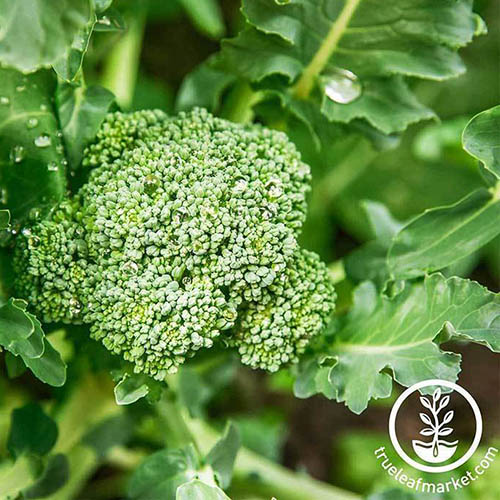
Di Cicco

True Leaf Market’s ‘Di Cicco’ is exactly what’s growing in my container!

This heirloom cultivar forms heads instead of multiple stalks like ‘Royal Tenderette,’ described below, but it’s quick to mature.

In just 48 to 70 days, you’ll be enjoying crisp crowns.

A close up of a 'Di Cicco' Brassica oleracea var italica growing in the garden surrounded by foliage. To the bottom right of the frame is a white circular logo with text.

‘Di Cicco’

Harvest the main head when it’s three to four inches wide for a roasted broccoli soup, like this one from our sister site, Foodal.

And then watch as multiple side shoots grow from the stalk, providing you with even more tasty florets.

You can find seeds in packets of various sizes for ‘Di Cicco’ at True Leaf Market.

Purple Sprouting

Purple sprouting broccoli grows upright and bushy, usually reaching 24 to 36 inches tall and 12 to 18 inches wide.

Instead of one large central head, it produces a steady supply of slender side shoots with small violet-purple florets.

A close up square image of freshly harvested purple sprouting broccoli set on a wooden chopping board.A close up square image of freshly harvested purple sprouting broccoli set on a wooden chopping board.

Purple Sprouting

It is a long-season crop, typically requiring 180 to 220 days from transplant to harvest, or about six to seven months, depending on climate and growing conditions.

You can find seeds for purple sprouting broccoli in a variety of packet sizes available at Eden Brothers.

Royal Tenderette

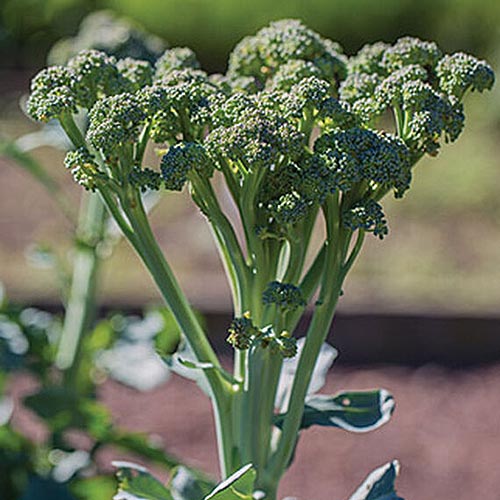
An excellent choice for containers, the green sprouting variety ‘Royal Tenderette’ produces several three- to four-inch stalks that each produce a floret.

A close up of a 'Royal Tenderette' variety of Brassica oleracea var italica growing in the garden on a soft focus background.A close up of a 'Royal Tenderette' variety of Brassica oleracea var italica growing in the garden on a soft focus background.

‘Royal Tenderette’

This fast-growing variety matures in just 50 to 60 days from germination and can produce two to three harvests.

You can simply cut a few sweet-tasting florets off for an easy lunchtime side dish for your family and then watch as more stalks grow in 12 to 14 days.

Find packets of 50 seeds or a set of six plants available at Burpee.

Preparing Your Container

Fill your container with soil and add a bit of fertilizer. You can either use:

  • Potting mix amended with 10-10-10 (NPK) fertilizer, according to the directions on the package.
  • Well-draining garden soil amended half and half with compost or well-rotted manure.

If you decide to use soil from your garden, don’t use soil that has been previously planted with brassicas as it can harbor disease.

Broccoli likes neutral to slightly acidic soil, so you may wish to conduct a soil test to make sure the pH is between 6.0 and 7.0.

Soil should be loose and well-draining to promote healthy root growth.

How to Grow

Broccoli loves cool weather and a full sun location, but hot summer temperatures can cause the plant to bolt.

Because of this, there are two ideal seasons for planting your broccoli: spring and fall.

For a spring planting, you’ll want to start seeds indoors about eight weeks before your average last frost date.

A close up vertical picture of a broccoli floret growing outdoors covered in a light frost, pictured on a soft focus background.A close up vertical picture of a broccoli floret growing outdoors covered in a light frost, pictured on a soft focus background.

You’ll get a head start if you sow them indoors, but you can also sow directly in containers outdoors, two to three weeks before your average last frost date.

For a fall planting, sow seeds about eight to 10 weeks before your average first frost date.

The plus side of growing in containers during cooler fall weather is that you’ll battle fewer bugs.

What Are Coconut Aminos? Health Benefits and How to Use

0


What Are Coconut Aminos? Health Benefits and How to Use


Privacy & Cookies Policy

Jen’s Washington Garden, Filled to Its Brim

0

Hi GPODers!

We’ve watched a lot of gardens evolve over the years, and one that continues to grow and transform beyond the expectations of its limited footprint is that of Jen Titilah in Snoqualmie, Washington (check out her previous two submissions: Jen’s Garden in Washington and A Lot of Garden in a Small Space). Jen’s garden is small, but she sees no limit in its space and manages to squeeze more and more marvelous plants into the landscape—all without making the landscape feel messy or out of control. Today’s update showcases its latest iteration, filled to the brim but layered with style.

I’ve posted here before and am sending the attached photos of my garden taken today. I’ve been gardening in Snoqualmie, Washington, for 20 years on this small property. However, my trees are young and will eventually grow taller. The hydrangeas are in full bloom! We’ve jammed over a thousand plants into this garden. Enjoy!

Regards,

Jen Titilah

Speak of the devil! Yesterday we admired the gorgeous blooms of Gwen’s ‘Samantha’ lilies (check those out here, if you missed it), which I mentioned are the double version of these infamous Stargazer lilies (Lilium ‘Stargazer’, Zones 4–8) that Jen is showcasing today. It’s easy to understand why this vibrant flower is so renowned and why plant breeders would want to expand on it.

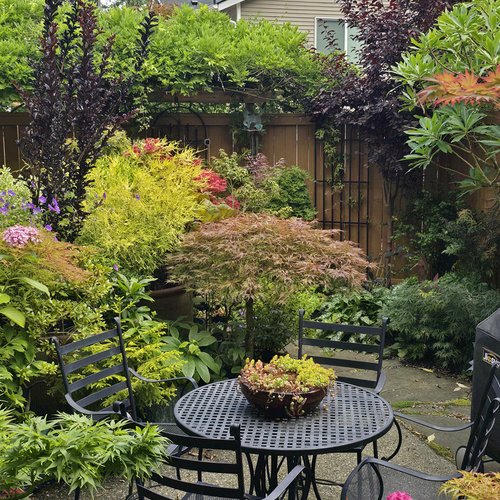
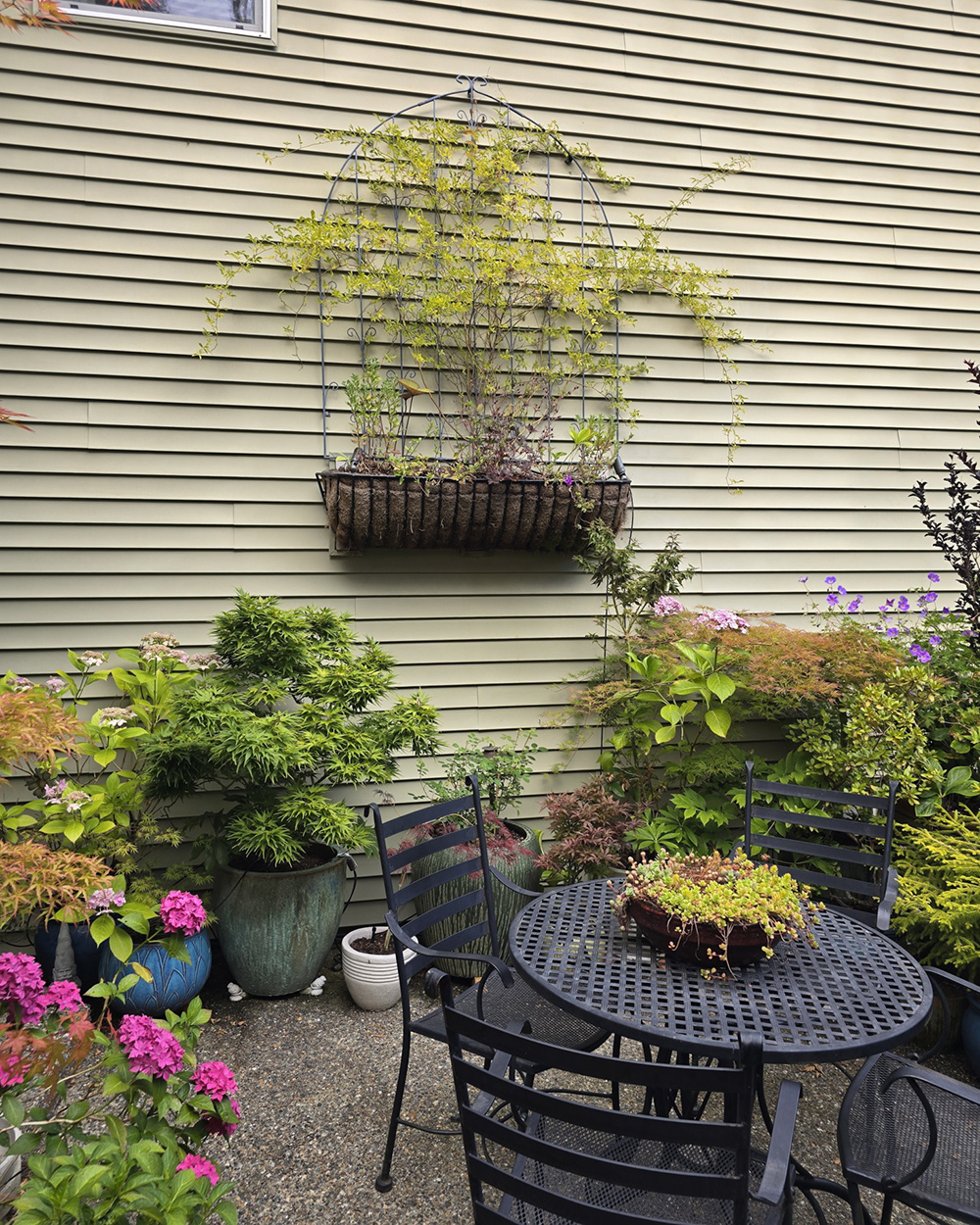
patio garden with container plantingsAs Jen mentioned, she is working with limited space, but she absolutely makes the most of it. This seating area is absolutely surrounded by a gorgeous collection of container plants, and she wisely goes vertical to squeeze in a few more plantings along with a trellis that doubles as garden art.

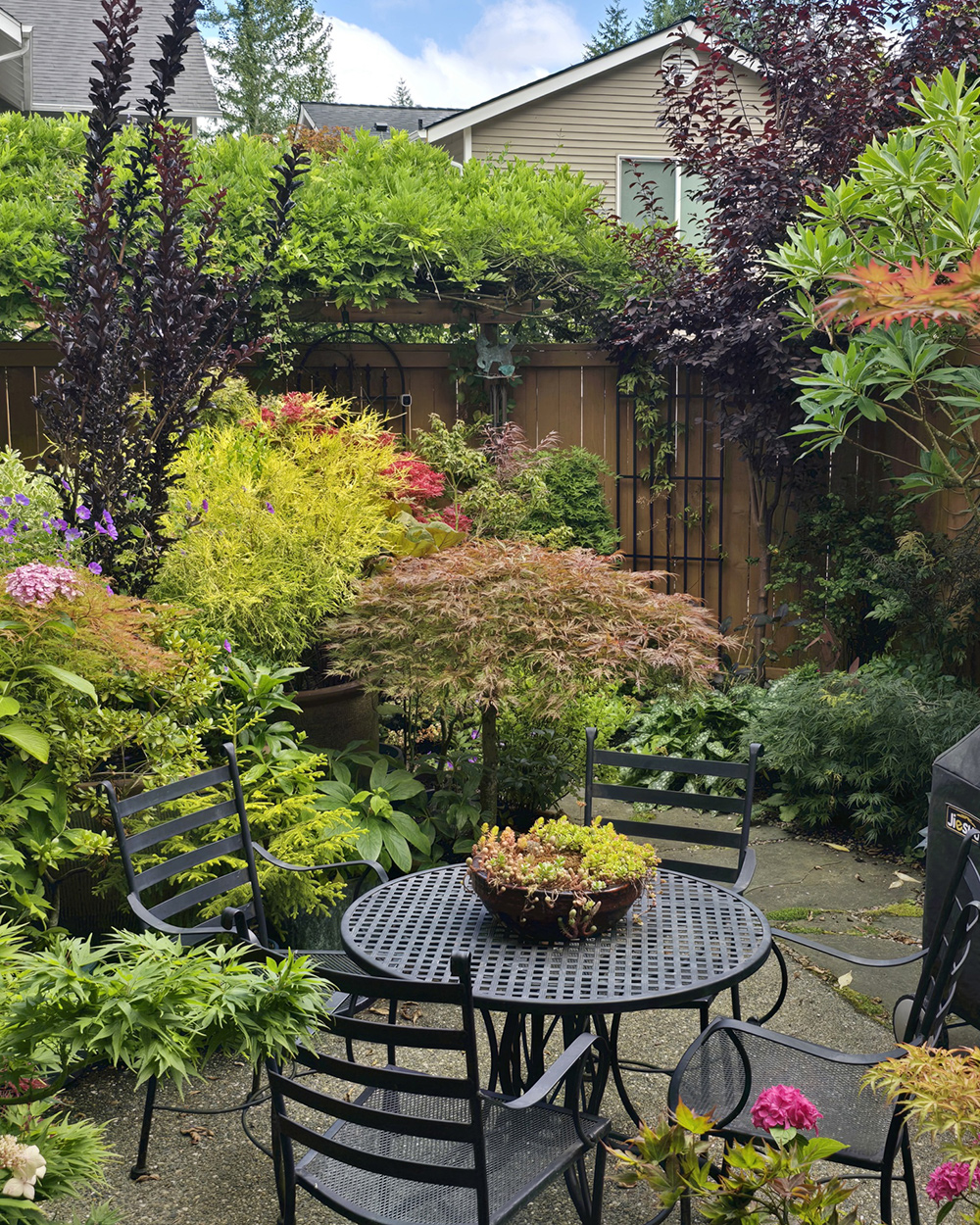
seating area in small backyard gardenA view of the opposite side of this small patio, and a brief look at the layers upon layers of fantastic foliage in this compact landscape: Jen utilizes containers wisely to add height to her designs while her younger trees are still maturing.

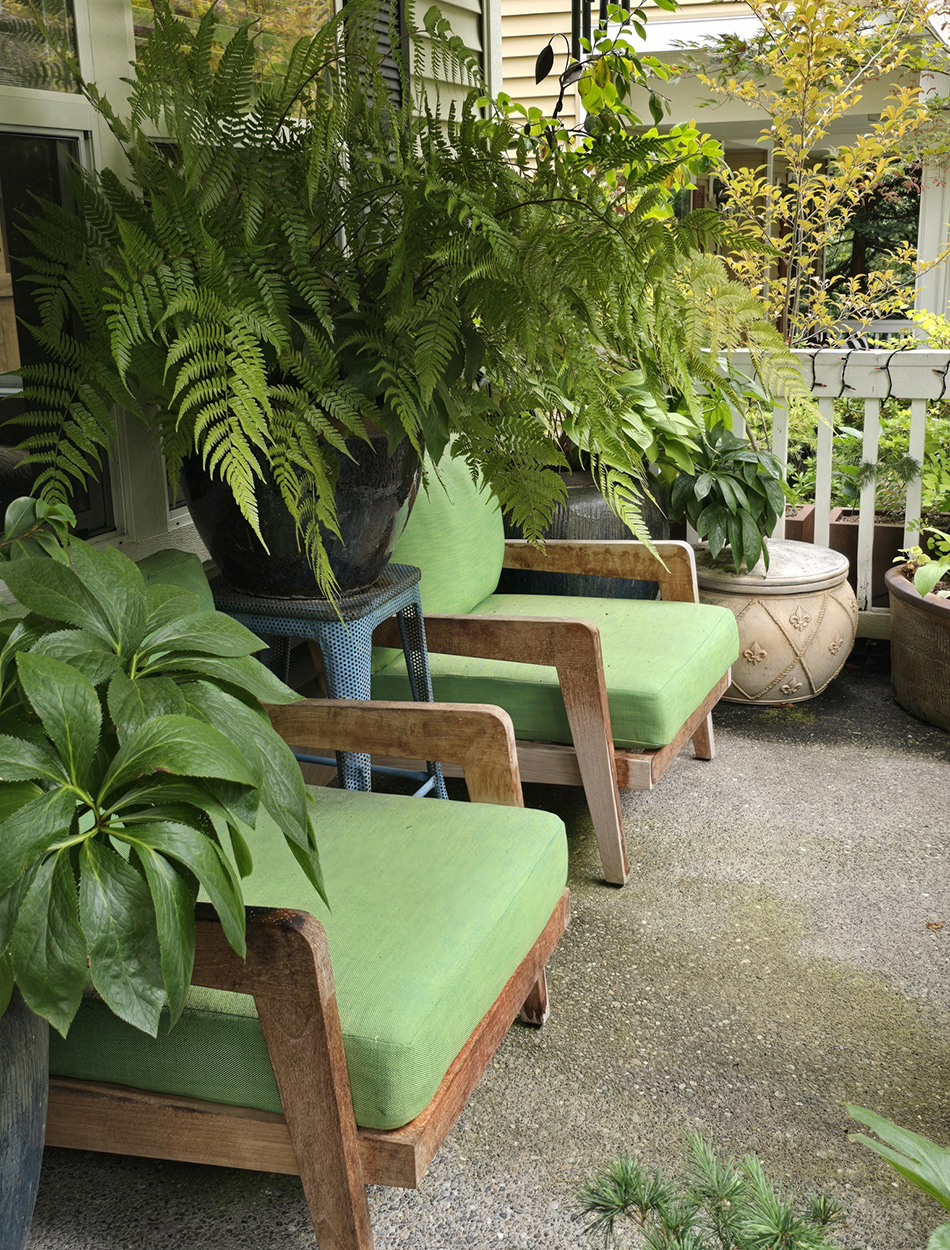
foliage plants on porchEven a covered porch is an opportunity for more plants. Rich, shade-loving greenery adds lots of style to this space, with a glorious fern that leaves a little room for sitting.

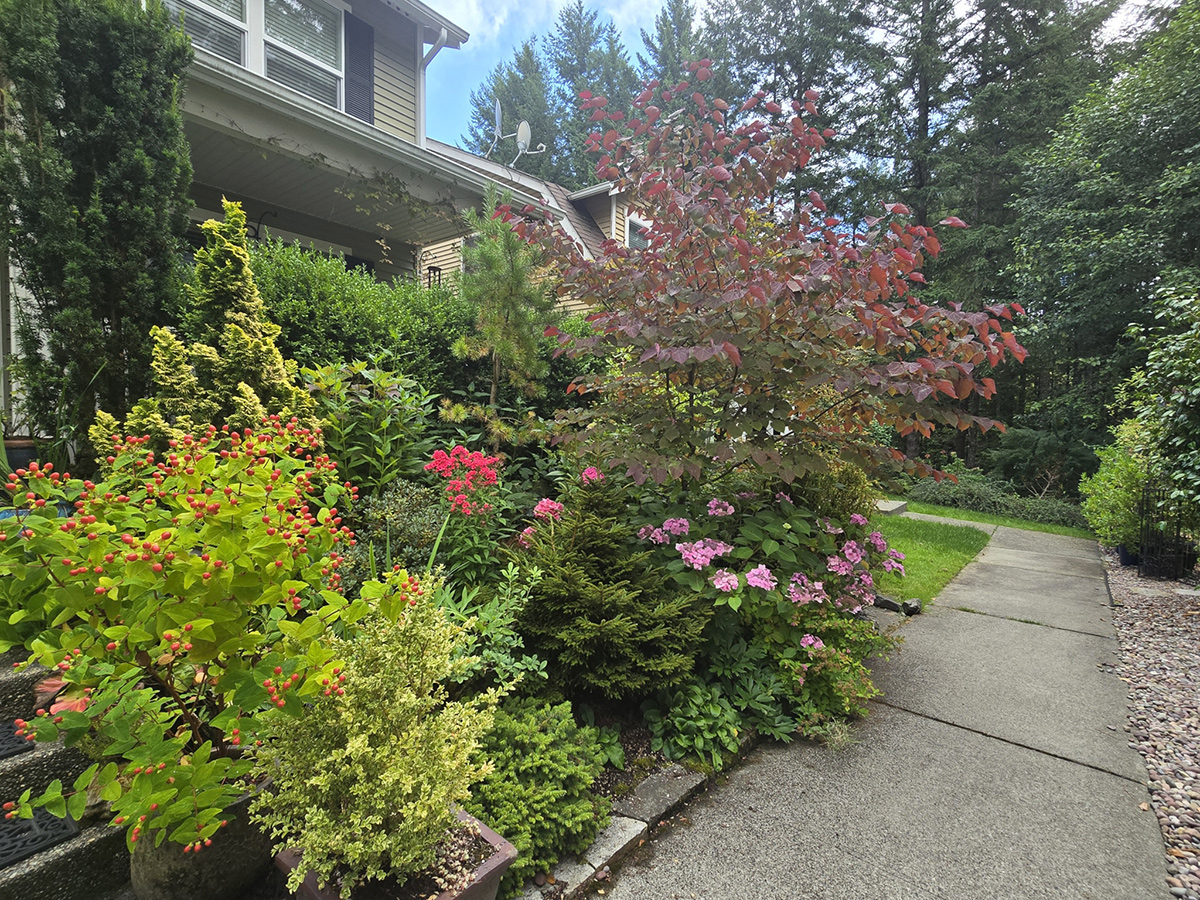
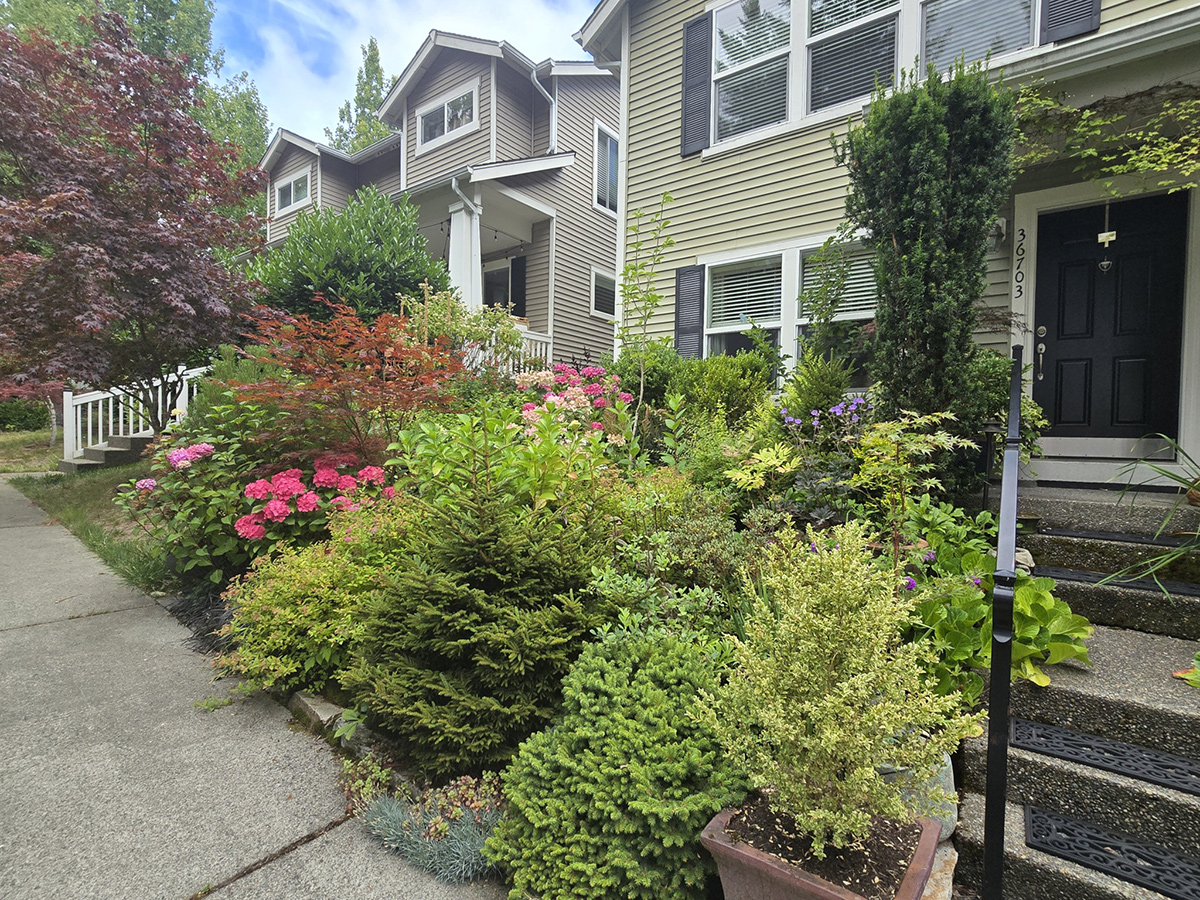
front yard gardenWhen your outdoor space is limited, a front yard is no place for an untouched lawn. Jen again showcases her ability to create layers of beauty, while diverse evergreens and colorful foliage allow for low-maintenance interest.

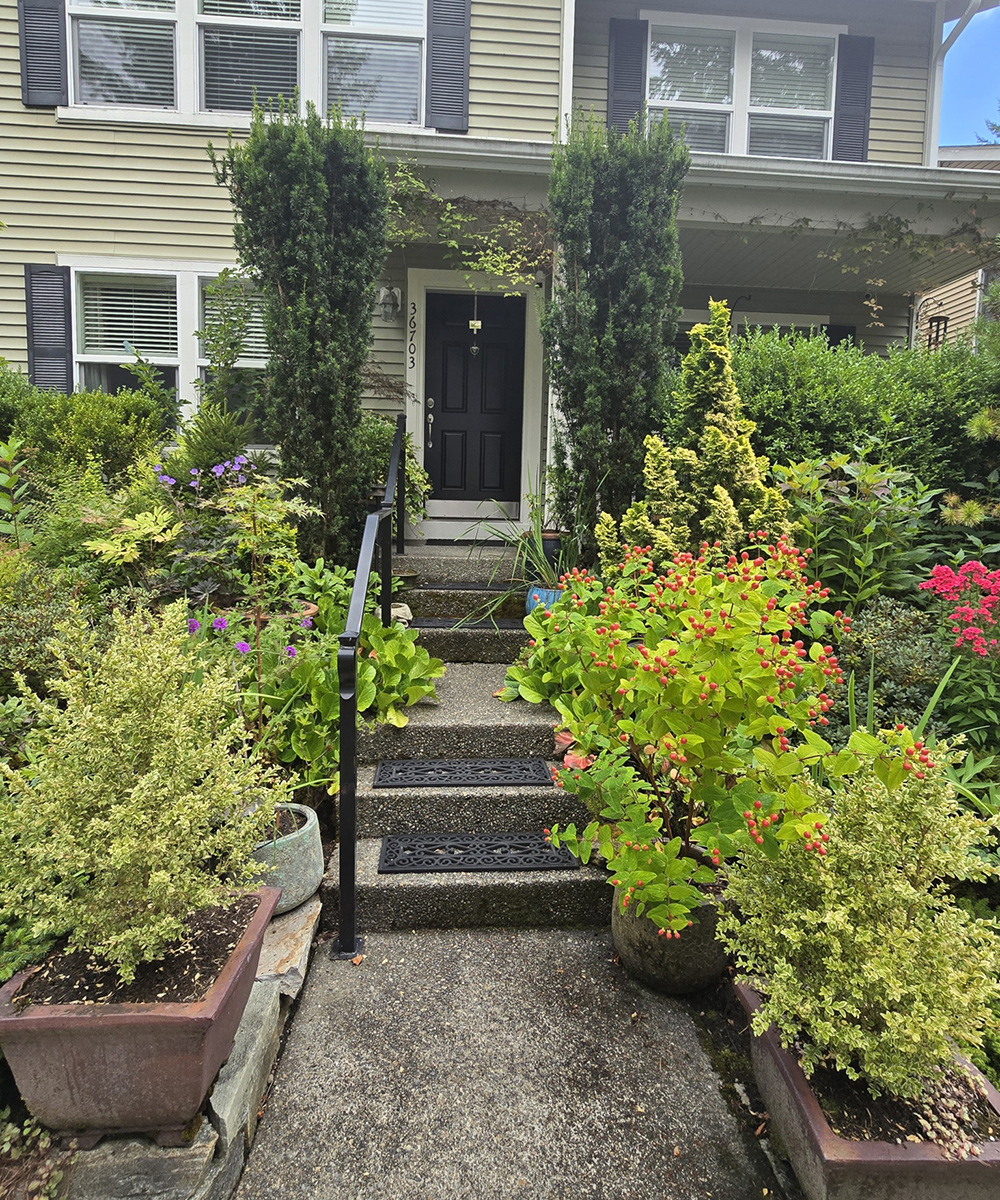
entryway gardenMind the plants on your entrance! Jen’s entryway is spilling with wonderful foliage, flowers, and berries of a beautiful St. John’s wort (Hypericum × inodorum, Zones 6–9). Two stoic Stonehenge® yew (Taxus × media ‘SMNTHDC’, Zones 4–7) added that needed height while remaining nice and compact.

front yard garden packed with plantsOne final view of Jen’s stunning front yard! What a feast for the eyes that everyone in the neighborhood can enjoy.

Thank you so much for sharing your small but oh-so-mighty garden with us, Jen! It is incredible the number of plants that you fit into your space while maintaining a level of cohesion and design appeal that prevents it from looking chaotic. Anyone who thinks they don’t have enough space needs to think again.

No matter the size of your space or the number of plants you tend, we love to share gardens of all kinds on Garden Photo of the Day. This blog is only made possible because of generous contributors like Jen, and you can be the next gardener to be featured. Follow the directions below to submit photos via email, or send me a DM on Instagram: @agirlherdogandtheroad.


We want to see YOUR garden!

Have photos to share? We’d love to see your garden, a particular collection of plants you love, or a wonderful garden you had the chance to visit!

To submit, send 5–10 photos to [email protected] along with some information about the plants in the pictures and where you took the photos. We’d love to hear where you are located, how long you’ve been gardening, successes you are proud of, failures you learned from, hopes for the future, favorite plants, or funny stories from your garden.

Have a mobile phone? Tag your photos on Facebook, Instagram, or Twitter with #FineGardening!

Do you receive the GPOD by email yet? Sign up here

Drowning prevention program comes to a halt at the CDC : Shots

0

Dorgie Productions/Getty Images/The Image Bank RF

For the past few years, a small team of health scientists at the Centers for Disease Control and Prevention had been tasked with answering basic statistical questions like: Who is drowning? Where is it happening — in lakes, rivers, swimming pools? And what works to prevent it?

The team was starting to answer some of those questions when it was put on administrative leave in April, according to two former CDC officials familiar with the program. They requested that NPR not use their names because they fear retaliation from the Trump administration for speaking to the media.

Now, those results may not come to light, since the Trump administration terminated the CDC’s drowning prevention experts this month and has proposed eliminating the program in its fiscal year 2026 budget request.

“If this program saved one life, it would be far more than the total cost of the program,” says Jim Mercy, former director of the Division of Violence Prevention at the CDC, who retired in 2023. “The irony is that these and other programs [at the CDC] were cut under the motivation of creating greater efficiency.”

Drowning kills more than 4,000 people each year in the United States. It’s the leading cause of death among children ages 1 to 4 and is one of the top causes of death among children ages 5 to 14. A single drowning costs millions of dollars in terms of medical costs and societal loss, Mercy says.

The CDC’s drowning prevention program was created in response to a spike in drowning deaths during the COVID-19 pandemic. “After the pandemic, quite a few organizations came together to drive some possibilities of federally focused work on drowning prevention,” says Lindsay Mondick, director of aquatic strategy and quality practices for the YMCA nationally, and a longtime water safety advocate. “CDC was a natural fit — not only do they do data science, but they also look at intervention strategies and programs.”

Drowning is largely preventable and costs the U.S. economy over $50 billion a year. The CDC’s efforts had been focused in two areas: determining the risk factors around drowning and what works to prevent drownings, to reduce the likelihood that children die from drowning.

The drowning prevention team worked with partners like the YMCA, the Red Cross and the National Center for Fatality Review and Prevention to help collect and evaluate data, as well as teach children to swim.

Work with YMCA

The YMCA has a water safety approach it has been using for around a decade. “It’s focused on developing skills for swimming and water competency — skills that keep people safe if they were to have accidents or find themselves in an unpredictable situation,” Mondick says.

Over the past few years, the CDC helped it collect data to figure out what was working. “One of the things we were most excited about with this funding is the YMCA was able to build, I think, what is probably the largest drowning data collection hub,” she says.

As part of the process, the CDC provided funding for free swim lessons for thousands of kids at high risk of drowning. This included children from some minority groups and those on the autism spectrum, who are 160 times more likely than their peers to die from drowning, according to a study from Columbia University.

“For a kid with special sensory needs, not only are their senses being challenged because of just water, but it’s noisy and it’s hot and it’s all the things,” says Jennifer Pewitt, who oversees swim programs for the YMCA in the Dallas metro area.

At one facility, swim instructors received specialized training on connecting with kids on the autism spectrum. When parents heard they were running this program, they came from all over Dallas County. “There is a huge community need,” Pewitt says. “There have been some really awesome stories that have come out of it. And there’s been some misses.”

That’s the learning process, Pewitt says. The whole time, they collected data with guidance from the CDC. “The Y doesn’t employ epidemiologists — that is not a thing,” she says.

The goal was to figure out how to best teach kids at high risk of drowning to swim and reduce their risks around water, and to share those lessons widely. “That’s where the magic happens — if what worked with these kids can be replicated,” Pewitt says. “That was the whole point of it.”

Potential impact

The CDC program employed three health scientists and had a $2 million annual budget, most of which was disbursed to partner organizations.

“It’s a very small program, but very important,” Mercy, formerly with the CDC, says, adding that the program had strong bipartisan support when it started receiving congressional funding a few years ago.

Especially in small towns, cutting off the CDC funding would be a big loss, says Pewitt. “It’s really sad that there isn’t going to be those opportunities for those small Y’s to serve the kids in their communities.”

The Department of Health and Human Services did not respond to a request for comment.