39.1 F
Klamath Falls
Saturday, March 14, 2026
Home Blog Page 96

23 of the Best Basil Varieties for the Home Herb Garden

0

Full of flavor and wonderfully aromatic, basil, Ocimum spp., is one of the easiest herbs to grow. Its pungent, peppery taste with a hint of licorice makes it popular in a variety of cuisines.

This member of the mint, or Lamiaceae family is an annual herb grown for its flavorful leaves.

Like most herbs, the leaves are best enjoyed fresh. But the bright flavors can also be dried or frozen for winter use.

There are over 160 cultivars to choose from, and all are delicious, fragrant, and many add ornamental interest to the garden.

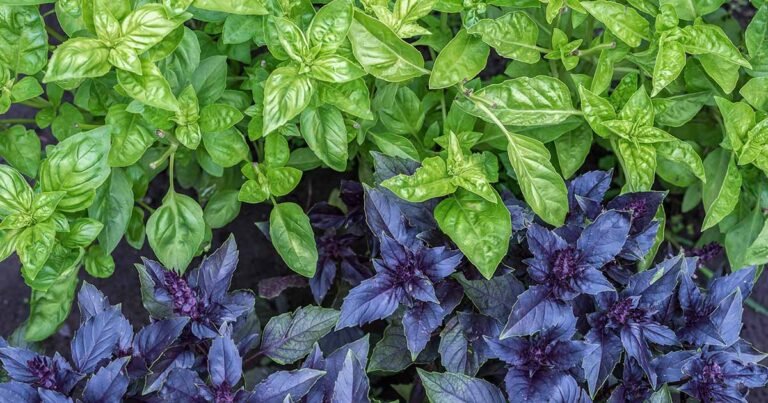
A close up of two different varieties of Ocimum basilicum, the top of the frame shows a green-leaved type, and at the bottom a cultivar with dark purple foliage.

We link to vendors to help you find relevant products. If you buy from one of our links, we may earn a commission.

Flavors range from bold and spicy to mildly sweet – try growing the bold ones for savory dishes, the sweet ones for baked goods, desserts, and ice cream.

The majority are treated as annuals, although in warm, tropical regions a few can be grown as perennials.

This herb is easy to grow and you can propagate basil from seed, by cuttings, or purchase nursery starts.

If you need a refresher, our guide to growing basil has all you need to cultivate this delicious herb at home.

Here are 23 of our favorite cultivars:

23 Favorite Basil Varieties for Your Herb Garden

1. Blue Spice

‘Blue Spice’ is prized for its sweet, vanilla-like fragrance with spicy undertones and showy purple flower spikes that attract pollinators.

This variety grows to about 18 to 24 inches tall and 12 inches wide, and the leaves are excellent for teas, garnishes, or adding a hint of sweetness to summer dishes.

A square image of 'Blue Spice' basil growing in a terra cotta pot outdoors.A square image of 'Blue Spice' basil growing in a terra cotta pot outdoors.

‘Blue Spice’

You can find ‘Blue Spice’ seeds available at Eden Brothers in a variety of packet sizes.

2. Boxwood

‘Boxwood’ features small leaves that keep a perfect, shrub-like form even in the heat of summer – just like a boxwood plant. This variety grows to a mature height of 12 inches, with a 12- to 16-inch spread.
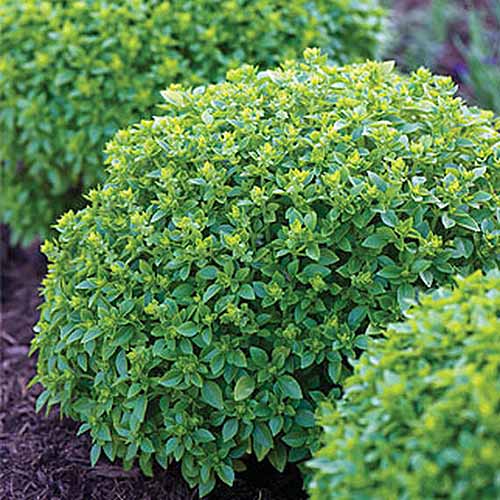
A close up of the mounding shape of Ocimum basilicum 'Boxwood' growing in the garden on a soft focus background.A close up of the mounding shape of Ocimum basilicum 'Boxwood' growing in the garden on a soft focus background.

‘Boxwood’

Wonderful for containers, edging, and knot gardens, the strong flavor is superb in pesto.

You can find packets of 100 seeds or three live plants available at Burpee.

3. Cardinal

With deep red flower clusters rising above green, aromatic foliage, ‘Cardinal’ is as ornamental as it is useful in the kitchen.

‘Cardinal’ reaches 18 to 30 inches tall and about 12 inches wide, and the blossoms are edible as well as eye-catching, making this a dual-purpose basil for herb and flower gardens alike.

A close up of the foliage and deep red flowers of 'Cardinal' Thai basil growing in a sunny garden.A close up of the foliage and deep red flowers of 'Cardinal' Thai basil growing in a sunny garden.

‘Cardinal’

You can find seeds in a variety of packet sizes available at Eden Brothers.

4. Cinnamon

‘Cinnamon’ is a sweet-flavored cultivar with a distinctive cinnamon taste that’s delicious in baked goods, jellies, and vinegars.
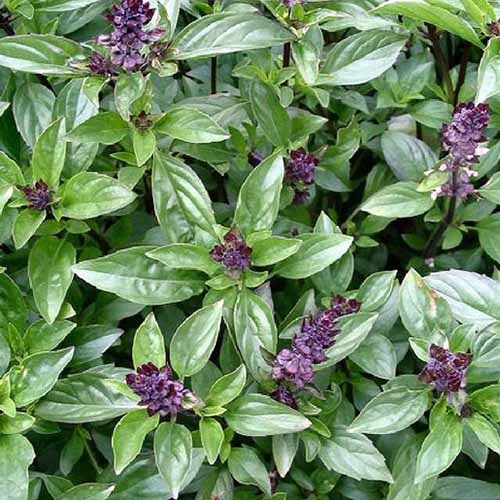
A top down close up picture of Ocimum basilicum 'Cinnamon' with bright green foliage and delicate purple flowers.A top down close up picture of Ocimum basilicum 'Cinnamon' with bright green foliage and delicate purple flowers.

‘Cinnamon’

Also known as Mexican spice basil, this cultivar has narrow leaves, dark colored stems, and pretty purple flowers that add great visual appeal.

Growing to a mature height of 12-18 inches with a similar spread, ‘Cinnamon’ makes a lovely addition to your container garden or flower beds.

Find packets of seeds in a variety of sizes available at Eden Brothers.

5. Dark Opal

‘Dark Opal’ has wonderful deep purple leaves and pinky-lilac flowers that give it great ornamental value. The flavor is anise-based with a hint of ginger and it can be used in savory or sweet dishes.

Brought to market by Ferry-Morse in the 1950s, ‘Dark Opal’ was a winner of the All-America Selections Award in the flower category in 1962.
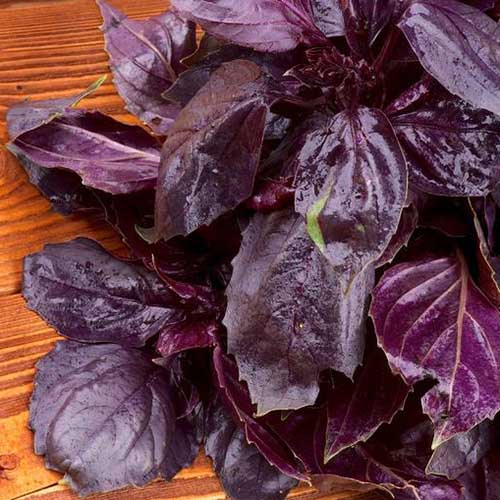
A close up of the freshly harvested leaves of Ocimum basilicum 'Dark Opal' set on a wooden surface.A close up of the freshly harvested leaves of Ocimum basilicum 'Dark Opal' set on a wooden surface.

‘Dark Opal’

Delightful in containers, mixed beds, or anywhere you want to attract pollinators, this variety grows to a mature height of 14 inches in a compact, bushy form.

Find seeds in a variety of packet sizes available at Eden Brothers.

Learn more about growing ‘Dark Opal’.

6. Dolce Fresca

An All-America Selections winner, ‘Dolce Fresca’ maintains a dense, bushy habit that doesn’t sprawl, even after repeated harvests.

Plants reach 12 to 18 inches tall and wide and produce glossy leaves with a classic sweet basil flavor, perfect for container or small-space gardens.

A square image of 'Dolce Fresca' basil growing in a terra cotta pot outdoors on the patio.A square image of 'Dolce Fresca' basil growing in a terra cotta pot outdoors on the patio.

‘Dolce Fresca’

If ‘Dolce Fresca’ sounds appealing, you can find seeds available at Eden Brothers.

7. Emerald Towers

‘Emerald Towers’ is a tall, multi-branched Genovese type with a tidy columnar habit that produces an outstanding harvest. It has a full licorice taste and a scent of spicy cloves.
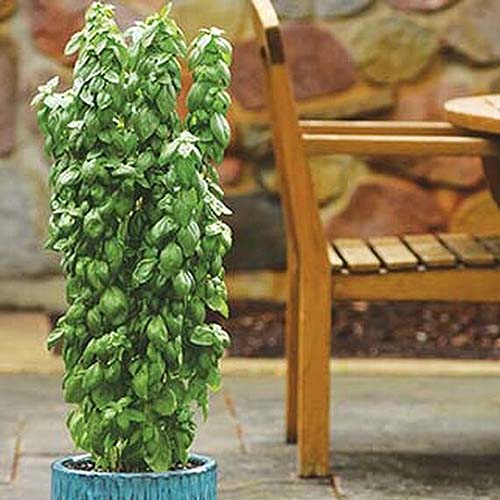
A close up of a blue ceramic pot with Ocimum basilicum 'Emerald Towers.' An upright, columnar plant with bright green foliage. In the background is a wooden chair and stone wall in soft focus.A close up of a blue ceramic pot with Ocimum basilicum 'Emerald Towers.' An upright, columnar plant with bright green foliage. In the background is a wooden chair and stone wall in soft focus.

‘Emerald Towers’

A generous herb in containers or in the ground, give these plants plenty of space to grow into as they can reach a mature height of 24 to 36 inches with a spread of eight to 12 inches.

You can find 100 seeds or a set of three plants available at Burpee.

8. Genovese

Genovese is the traditional heirloom Italian type with a pronounced anise flavor, sweet clove fragrance, and large, lustrous leaves.

This variety grows to a mature height of 16 inches tall, with a spread of 12 inches.
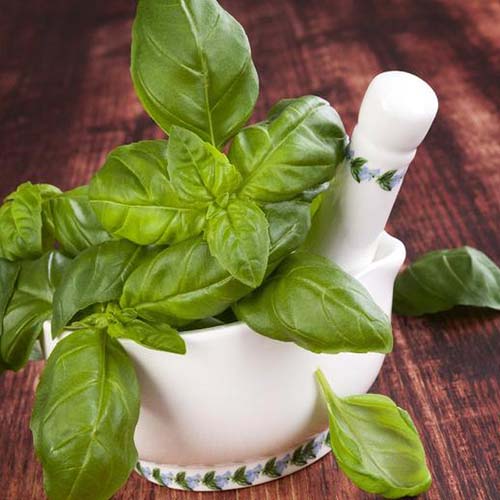
A close up of a white pestle and mortar with freshly harvested Ocimum basilicum 'Genovese,' set on a wooden surface, fading to soft focus in the background.A close up of a white pestle and mortar with freshly harvested Ocimum basilicum 'Genovese,' set on a wooden surface, fading to soft focus in the background.

Genovese

A must-have for the kitchen garden, it is perfect for pesto, fresh salads, and all things savory.

Seeds are available by the packet or in bulk at Eden Brothers.

Or get a jump on the growing season with a set of three plants available at Burpee.

Find more info on growing Genovese basil here.

9. Greek

The Greek type, O. basilicum var. minimum is a compact variety with small leaves, tiny white flowers, and a neat, globular growth habit that makes it attractive in containers, edging, or rockeries.
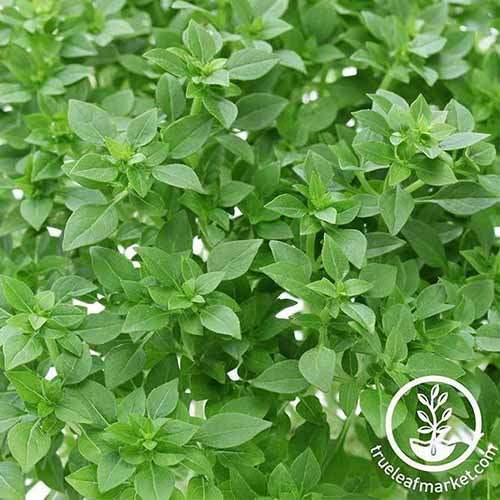
A close up of the small green leaves of Ocimum basilicum var. minimum on a light background. To the bottom right of the frame is a white circular logo with text.A close up of the small green leaves of Ocimum basilicum var. minimum on a light background. To the bottom right of the frame is a white circular logo with text.

O. basilicum var. minimum

It has a deeply spicy fragrance and strong flavor that’s best used in salad dressings, sauces, soups, and stews.

Perfect for container gardens, this dwarf variety grows to a mature height of just eight inches, with a similar spread.

You can find packets of seeds in a variety of sizes at True Leaf Market.

Learn more about planting and growing Greek basil.

10. Italian Large Leaf

This classic cultivar has the largest leaves of all basil plants. With a sweet and mild flavor, this variety is versatile in the kitchen and makes a delicious pesto.
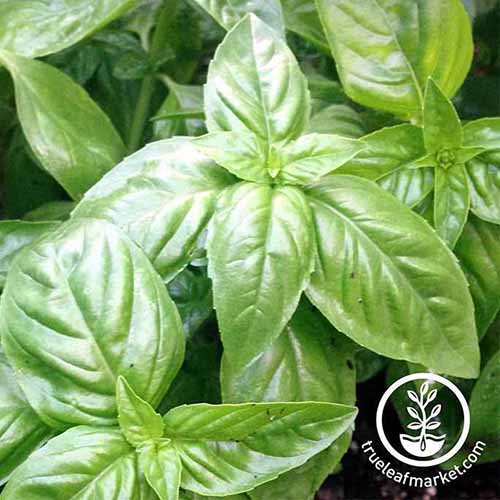
A close up of the large foliage of Ocimum basilicum 'Italian Large Leaf' on a soft focus background. To the bottom right of the frame is a white circular logo with text.A close up of the large foliage of Ocimum basilicum 'Italian Large Leaf' on a soft focus background. To the bottom right of the frame is a white circular logo with text.

Italian Large Leaf

Plants grow to a mature height of 24-30 inches, with a 12-inch spread. Plant in containers, in a sunny spot in your herb garden, or on a windowsill.

Find seeds in a variety of packet sizes at True Leaf Market.

11. Lemon

A key ingredient in Indonesian cuisine, the lemon variety, O. basilicum var. citriodorum, is a hybrid with a fresh lemon scent and sweet-tart flavor. Plants grow to a mature height of 20-24 inches, with a 12-inch spread.
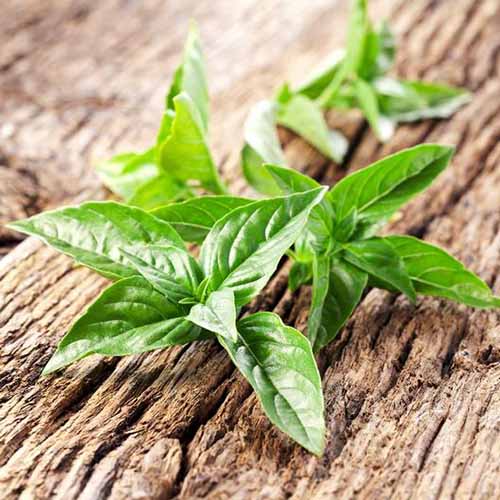
A close up of the leaves of Ocimum basilicum 'Lemon,' freshly harvested and set on a wooden surface, fading to soft focus in the background.A close up of the leaves of Ocimum basilicum 'Lemon,' freshly harvested and set on a wooden surface, fading to soft focus in the background.

Lemon

It’s popular eaten fresh in salads and wraps or incorporated into curries, soups, stews, and stir-fries.

Find packets of seeds in a variety of sizes available at Eden Brothers.

12. Lettuce Leaf

This Italian heirloom (O. basilicum crispum) is easy to spot thanks to its oversized, crinkled leaves that are mild and sweet.

Growing 18 to 24 inches tall and wide, it’s ideal for using in wraps, layering in sandwiches, or adding bulk to pestos without overpowering other flavors.

A close up square image of lettuce leaf basil with crinkly foliage growing in the garden.A close up square image of lettuce leaf basil with crinkly foliage growing in the garden.

Lettuce Leaf

You can find lettuce leaf basil seeds available at Eden Brothers.

13. Lime

Lime plants have a light, floral-citrusy flavor and fragrance – ideal for adding a touch of zest to beverages, salad dressings, sauces, and desserts.
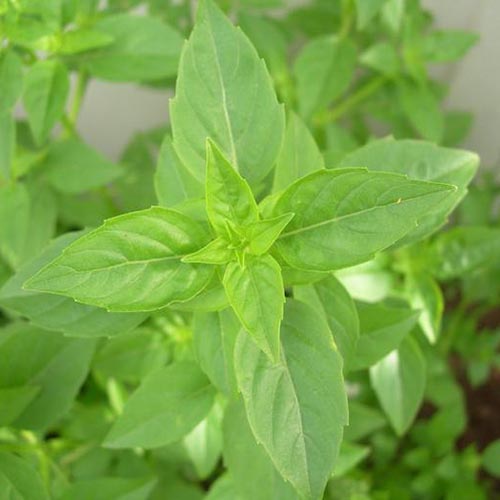
A top down close up of Ocimum basilicum 'Lime' growing in the garden on a soft focus background.A top down close up of Ocimum basilicum 'Lime' growing in the garden on a soft focus background.

Lime

A lovely container plant wherever the tangy fragrance can be enjoyed, this cultivar grows to a mature height of 16 to 24 inches, with a 12-inch spread.

Packets of seeds in a variety of sizes are available at Eden Brothers.

14. Mammoth

O. basilicum crispum ‘Monstruoso,’ aka  ‘Mammoth,’ is a lettuce leaf cultivar that features huge savoyed leaves with ruffled edges and uniform growth.
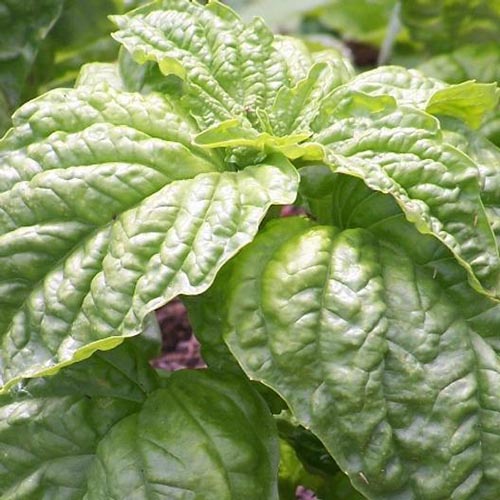
A close up of the large foliage of Ocimum basilicum 'Mammoth' with wrinkled foliage on a soft focus background.A close up of the large foliage of Ocimum basilicum 'Mammoth' with wrinkled foliage on a soft focus background.

‘Mammoth’

It has a spicy clove fragrance and a sweetly pungent flavor similar to Genovese, but stronger.

Perfect for use in Italian recipes or for pesto, ‘Mammoth’ grows to a mature height of 16 inches, with a 12- to 16-inch spread.

You can find packets of seeds in a variety of sizes at Eden Brothers.

15. Minette

Minette is a compact, small-leaved Greek cultivar, O. basilicum var minimum, with a mounding habit that’s adorable as an edging plant, in containers, or in knot gardens.
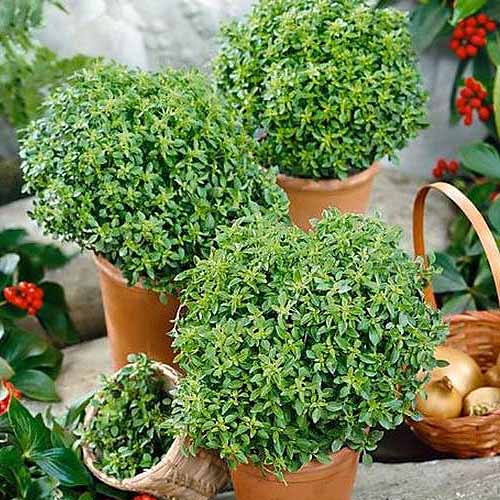
A close up of three terra cotta pots containing Ocimum basilicum 'Minette' set on a concrete surface with a variety of other plantings in the background.A close up of three terra cotta pots containing Ocimum basilicum 'Minette' set on a concrete surface with a variety of other plantings in the background.

Minette

With a sweet anise flavor and scent of cloves, this variety grows to a mature height of just 10 inches with a comparable spread, and it forms a beautiful spherical shape.

You can purchase seeds at Eden Brothers.

16. Nufar

‘Nufar’ was the first fusarium-resistant basil introduced, and it remains a reliable choice for gardeners in humid climates.

This Genovese type grows 18 to 24 inches tall and 12 inches wide, producing large, glossy leaves with the classic flavor cooks expect for pestos and sauces.

A close up square image of 'Nufar' growing in the garden.A close up square image of 'Nufar' growing in the garden.

‘Nufar’

You can find ‘Nufar’ seeds available from High Mowing Organic Seeds.

17. Prospera Red

Prospera® Red is a hybrid that pairs downy mildew resistance with striking deep purple foliage.

Compact but productive, plants grow 20 to 24 inches tall and 12 to 18 inches wide, offering both ornamental appeal and dependable flavor through the season.

A close up square image of Prospera Red basil with deep purple leaves set in a wicker basket.A close up square image of Prospera Red basil with deep purple leaves set in a wicker basket.

Prospera® Red

You can find seeds for Prospera® Red available at High Mowing Organic Seeds.

18. Purple Petra

‘Purple Petra’ produces glossy, deep-purple leaves that bring dramatic color to beds and containers.

Reaching 18 to 24 inches tall and 12 to 16 inches wide, the plants offer a mild, slightly sweet basil flavor that shines in infused oils, vinegars, and garnishes.

A close up of a packet of 'Purple Petra' seeds with text to the left of the frame and a hand-drawn illustration to the right.A close up of a packet of 'Purple Petra' seeds with text to the left of the frame and a hand-drawn illustration to the right.

‘Purple Petra’

You can find ‘Purple Petra’ seeds available at Botanical Interests.

19. Red Rubin

This purple-leafed variety has a stronger, spicier flavor than many other colored basils.

‘Red Rubin’ grows 18 to 24 inches tall and 12 to 16 inches wide, with dark, flat leaves that stand out in the garden and add bold taste to herb butters, vinegars, and sauces.

A close up of a single sprig of 'Red Rubin' basil isolated on a white background.A close up of a single sprig of 'Red Rubin' basil isolated on a white background.

‘Red Rubin’

Seeds are available from True Leaf Market in a variety of packet sizes.

Read more about growing ‘Red Rubin’ basil here.

20. Siam Queen

O. basilicum var. thyrsiflora, ‘Siam Queen’ is a Thai basil variety with a sweet licorice flavor that’s rewarding in the kitchen and as an ornamental.

This heirloom type has lush green leaves and purple stems, and it grows to a mature height of 10-24 inches, with a similar spread.
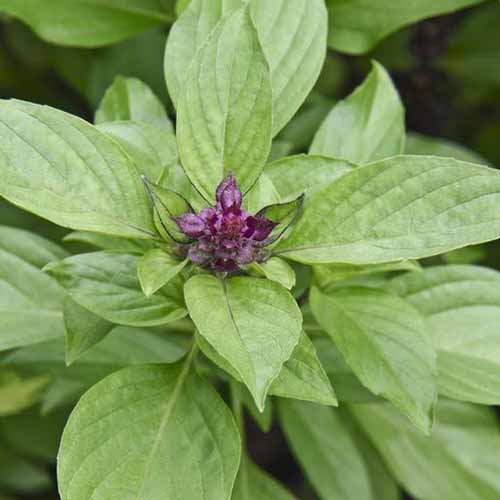
A top down close up picture of Ocimum basilicum 'Siam Queen' with pale green leaves and a small purple flower, on a soft focus background.A top down close up picture of Ocimum basilicum 'Siam Queen' with pale green leaves and a small purple flower, on a soft focus background.

‘Siam Queen’

‘Siam Queen’ was an All-America Selections Winner in the vegetable category in 1997.

Use it to flavor curries, soups, and stir-fries but sow enough to allow some plants to bloom – the purple flower heads and pale pink blooms are gorgeous!

Packets of seeds in a variety of sizes are available at Eden Brothers.

21. Spicy Globe

This compact basil forms a tidy, rounded mound covered in petite leaves that pack plenty of flavor.

Plants grow to about eight to 10 inches tall and wide, making them a natural fit for containers, borders, or even as an edible alternative to boxwood.

A close up square image of 'Spicy Globe' growing in a garden border.A close up square image of 'Spicy Globe' growing in a garden border.

‘Spicy Globe’

You can find ‘Spicy Globe’ seeds available at Eden Brothers.

Learn more about growing ‘Spicy Globe’ here.

22. Sweet

One of the most popular varieties, sweet basil has a full licorice flavor and spicy clove fragrance that’s just as nice when used fresh in salads, sandwiches, and wraps or added to pesto, sauces, and savory dishes.
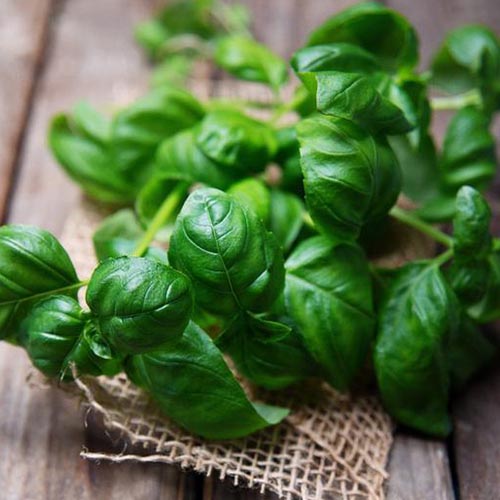
A close up of freshly picked leaves of Ocimum basilicum 'Sweet,' set on a wooden surface, on a soft focus background.A close up of freshly picked leaves of Ocimum basilicum 'Sweet,' set on a wooden surface, on a soft focus background.

Sweet Basil

Often called “common” basil, plants grow up to 24 inches tall and wide. Aromatic and flavorful, it goes fast, so be sure to plant plenty.

You can purchase seeds by the packet or in bulk at Eden Brothers.

23. Sweet Dani

An All-America Selections winner, ‘Sweet Dani’ is a lemon type that combines vigorous growth with a bright lemon fragrance.

Plants average 24 inches tall and 18 inches wide, yielding generous harvests for teas, marinades, and salads while also drawing pollinators to the garden.

A close up square image of 'Sweet Dani' growing in the garden. To the bottom right of the frame is a white circular logo with text.A close up square image of 'Sweet Dani' growing in the garden. To the bottom right of the frame is a white circular logo with text.

‘Sweet Dani’

You can find ‘Sweet Dani’ seeds in a variety of packet sizes available from True Leaf Market.

And check out our guide to growing ‘Sweet Dani’ basil to learn more!

Pesto and Beyond

Delicious, fragrant, and delightfully easy to grow, basil lends its unmistakable flavor to pesto and much more!

If you are new to growing herbs, check out our guide to starting your own herb garden.

A close up horizontal image of colorful basil plants growing in the garden pictured in bright sunshine.A close up horizontal image of colorful basil plants growing in the garden pictured in bright sunshine.

Are you ready to add basil to your herb garden? Let us know in the comments what variety you are planting!

To learn more about growing basil, put these guides on your reading list next:

Mashed Sweet Potatoes Recipe

0


Mashed Sweet Potatoes Recipe


Privacy & Cookies Policy

Wellness Tools and Habits I’m Loving

0

I decided that I wanted to start a new monthly series with you all. These will share some of the highlights, discoveries, and small things I’ve been experimenting with lately. Sometimes these are new tools or products I’m testing, sometimes they’re small habits that are making a difference. Sometimes it’s just little things that are making my life more joyful. 

These are things I’m personally using and finding beneficial right now. However, I hope they spark ideas for you to experiment with in your own life. 

This August, my list includes a helpful tracking app, evening light tools, and a new drink that’s become a part of my daily routine. Plus how I’m releasing tension in my body and mind with some really helpful tools during a tough season. 

Here’s what I’m loving right now!

1. dminder: Sunlight, Vitamin D, & Circadian Support

Vitamin D has been one of the most studied nutrients in the last decade, yet many of us aren’t getting enough. It’s technically a hormone and  plays a role in immune health, bone strength, hormone balance, and even mood. Studies show low vitamin D levels mean higher infection risk, fatigue, and certain chronic illnesses.

The best source of vitamin D for most of us is still the sun. Personally I’ve found that vitamin D supplements do nothing to improve my tested vitamin D levels. Knowing how much sun is adequate (without overdoing it and burning) can be tricky. That’s where I like using the dminder app. You put in your location, skin tone, time of year, and how much skin is exposed. Then it helps estimate how much vitamin D you’re making from sunlight.

I’ve found it to be a helpful tool for dialing in on safe sun exposure. Recent research points towards sunburn as a risk factor for skin cancer, not healthy light exposure. Safe, gradual exposure not only supports vitamin D synthesis but also helps regulate circadian rhythm, serotonin, and melatonin.

These are some of my non-negotiables in my daily routine:

  • Morning sunlight to set my circadian rhythms and help me feel awake and sleep better
  • Midday sunlight to maximize vitamin D and other benefits without burning
  • Evening sunlight to tell my body it’s time to wind down and for free red light

The dminder app makes it easy to track that balance without overthinking it.

2. White Salt Lamp 

I’ve talked a lot before about how light is just as impactful as food or supplements when it comes to health. Our bodies are wired to respond to natural light cues, and modern artificial lighting often disrupts that rhythm. Especially the bright blue light from screens, flickering LEDs, and overhead bulbs after sunset.

We’ve always had Himalayan salt lamps in our house, but lately I picked up a beautiful white salt lamp. It gives off a soft, warm glow and is more neutral without the orange tone. It helps me wind down at night while I’m reading and relaxing. 

When our eyes see blue light at night (like most lightbulbs and screens) it suppresses our melatonin production. This makes it harder to fall asleep and stay asleep. Warm, low-level light (like firelight or a salt lamp) doesn’t have this effect. I’ve been pairing this lamp with blue-light-blocking glasses in my bedroom in the evening. 

It’s a simple habit, but one that’ brought me a lot of joy and helps signal to my brain it’s time to wind down. This is the white salt lamp that I have. 

3. Slacka for Clean Energy

Coffee will always have a special place in my heart, but I’m always looking for healthy alternatives. Too much caffeine can cause jitters and anxiety for many (myself included). My friend David created a new functional health drink and it’s become a favorite. It’s like drinking a healthy soda that gives me an afternoon energy boost in a gentler way without the jitters. 

Instead of caffeine, Slacka uses paraxanthine, a natural caffeine metabolite. When you drink coffee, your body breaks caffeine down into paraxanthine, which is actually what provides many of the focus and energy benefits. By skipping the middle step, Slacka gives you the clean, steady boost without some of the downsides people experience from coffee. Like racing heart, sleep disruption, or that “wired but tired” feeling. 

I love that it also has electrolytes for cellular hydration and 5-HTP to help stabilize mood. It also has natural compounds that support the body’s own GLP production. This translates to reduced cravings and better blood sugar balance

For me, it feels like a smoother, more focused version of caffeine. Plus it doesn’t seem to affect my sleep when I drink it in the afternoon. Paraxanthine is a newer trend, but I wouldn’t be surprised if it becomes the next big thing in functional health.

You can check out Slacka and try it for yourself here.

4. Facial Fascia Release

It seems like more and more people are talking about fascia lately. If you’ve ever had tight shoulders or knots in your back, you’ve experienced tight fascia first hand. Our body’s connective tissue can hold tension, kind of like a bad memory. I’ve recently learned fascia in the face can do the same thing.

There are different strategies available but I’ve found a program that focuses on facial fascia release. It’s been surprisingly transformative and I really feel like Savannah knows her stuff. Using gentle tools and techniques, I’ve been able to release tension I didn’t even realize I was holding in my face. 

Here’s what I’ve noticed so far:

  • Much less tension between my eyebrows (those “11” lines)
  • A subtle lift in my face overall
  • Reduced jaw tightness
  • Better sinus drainage

Fascia is like a web that surrounds and supports our muscles, nerves, and organs. When it gets tight or “stuck,” it restricts movement and blood flow. Releasing it improves circulation, lymphatic flow, and even nerve communication. In the face, that translates into both relaxation and visible changes.

Best of all, it feels so good. Doing this at night with my salt lamp on has become one of my favorite calming rituals. You can check out the program I’ve been using and fascia tools here.

5. Rapid Emotional Rewiring: A Mind Reset 

Ever wish you could just hit the rewind button on life? While time travel still isn’t possible, Rapid Emotional Rewiring may be the next best thing. 

On a deeper and more personal note, the past few months have been some of the hardest of my life. One tool that’s really supported me during this season is something called Rapid Emotional Rewiring.

Unlike traditional therapy, this process is more of a neurological reset. It uses guided techniques to help shift the brain out of old, looping patterns that keep us stuck. Many people describe it as feeling like the weight of months of talk therapy condensed into a single session. Personally I didn’t notice much improvement with traditional talk therapy. 

What I’ve appreciated most is that it’s simple and doesn’t require a lot of mental energy. During my toughest days, I didn’t have bandwidth for journaling or lengthy practices, but I could do this. Even one session left me feeling lighter and less reactive.

Right now, there are a limited number of free 30-minute sessions available (along with a simple five-day at-home program). You can check the program out for yourself here. 

Final Thoughts on August Favorites

This month’s favorites may seem like an eclectic mix but I’ve noticed a common thread. Those simple, consistent shifts can ripple into big changes over time. Each of these additions to my routine has helped me feel more supported and brought more joy into my daily rhythms. I’m discovering more and more that it’s not the big, flashy changes that make the most difference but the simple ones. 

What are some of your favorite things right now? What tools or rituals are making life feel more joyful for you? Leave a comment and let me know!

Episode 184: All-Time Favorite Vegetables

0

Meet Our Favorite Vegetable Varieties to Grow

In this episode we’re digging into our all-time favorite vegetable varieties, the ones we can’t imagine our gardens (or dinner plates) being without: from not one, but two improved ‘Brandywine’-type heirloom tomatoes, to a cucumber that never fails to impress at the summer picnic. Carol even shares her must-have green bean variety (and tries to convince Danielle that it doesn’t taste like wood). We rounded out the hour with personal stories, growing tips, and a few surprising twists on how to combat a couple of dreaded veggie pests. 

Expert: Fionuala Campion is the owner and manager of Cottage Gardens of Petaluma in Petaluma, California. She is also a regional reporter for FineGardening.com. 


Danielle’s Favorite Vegetables

  • ‘Rose’ heirloom tomato (Solanum lycopersicum ‘Rose’, annual) 
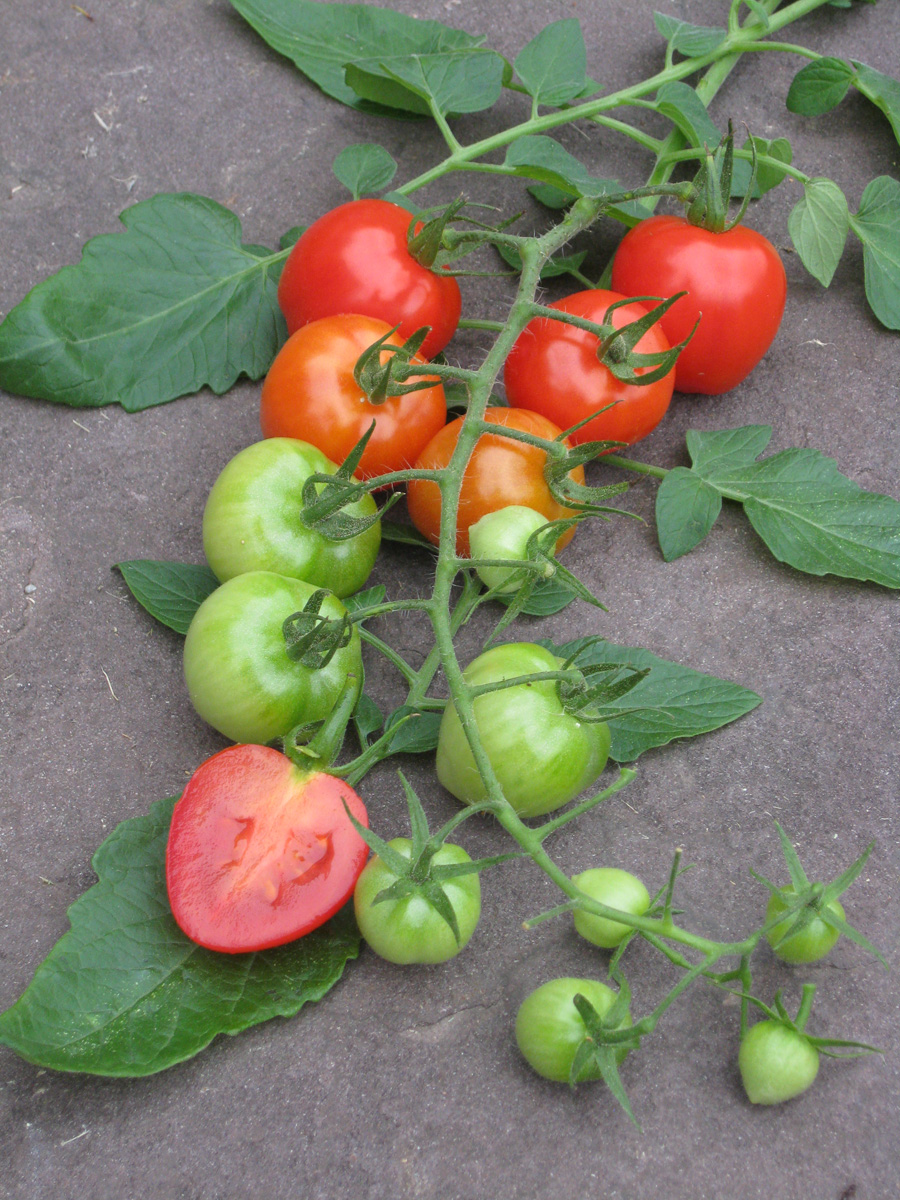
  • ‘Tomatoberry’ cherry tomato (Solanum lycopersicum ‘Tomatoberry’, annual) 
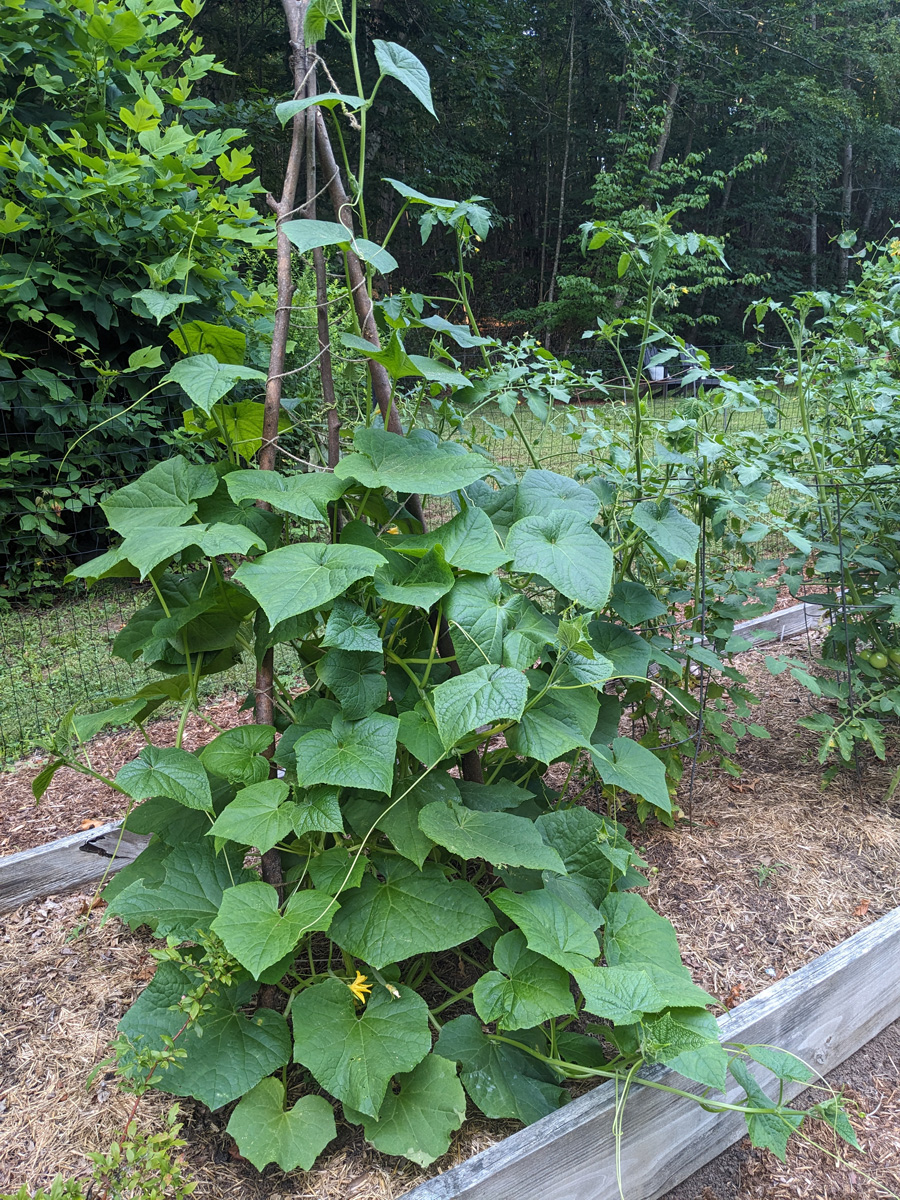
  • ‘Tyria’ English cucumber (Cucumis sativus ‘Tyria’, annual) 
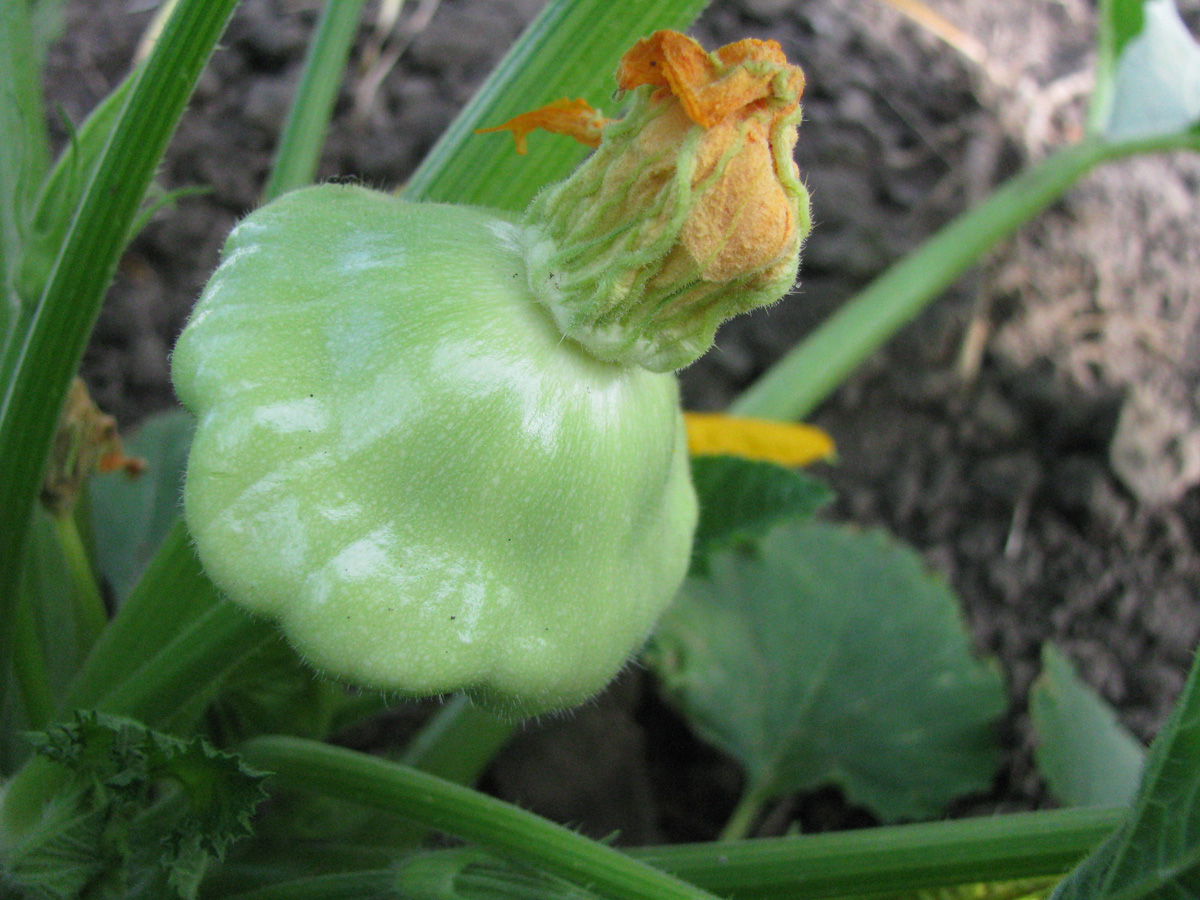
  • ‘Peter Pan’ patty pan squash (Cucurbita pepo ‘Peter Pan’, annual) 
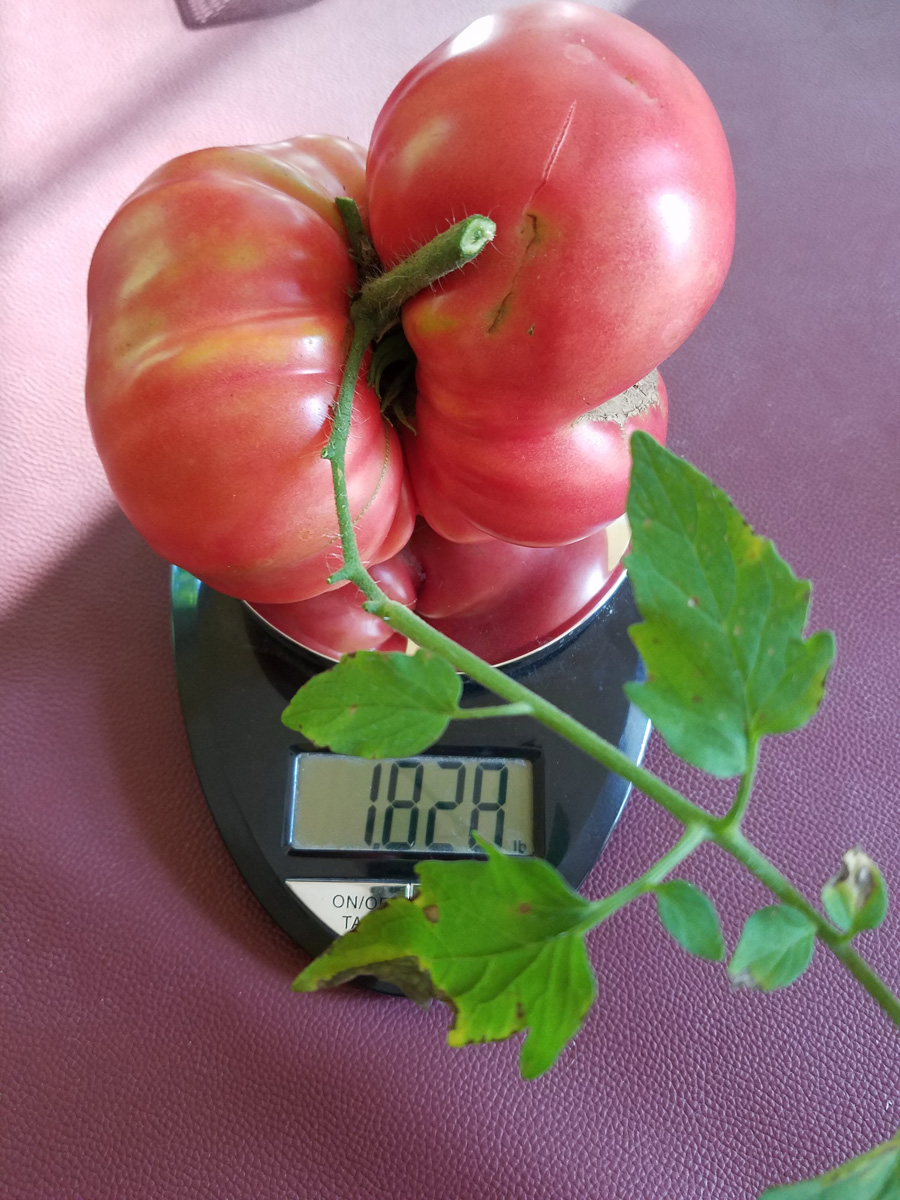
‘Rose’ heirloom tomato (record size)
‘Tomatoberry’ cherry tomato
‘Tyria’ English cucumber
‘Tyria’ English cucumber growing on a teepee
Kermit pattypan fruit
‘Peter Pan’ patty pan squash Photo courtesy of Zenon Sych, Wikimedia Commons

Carols Favorite Vegetables

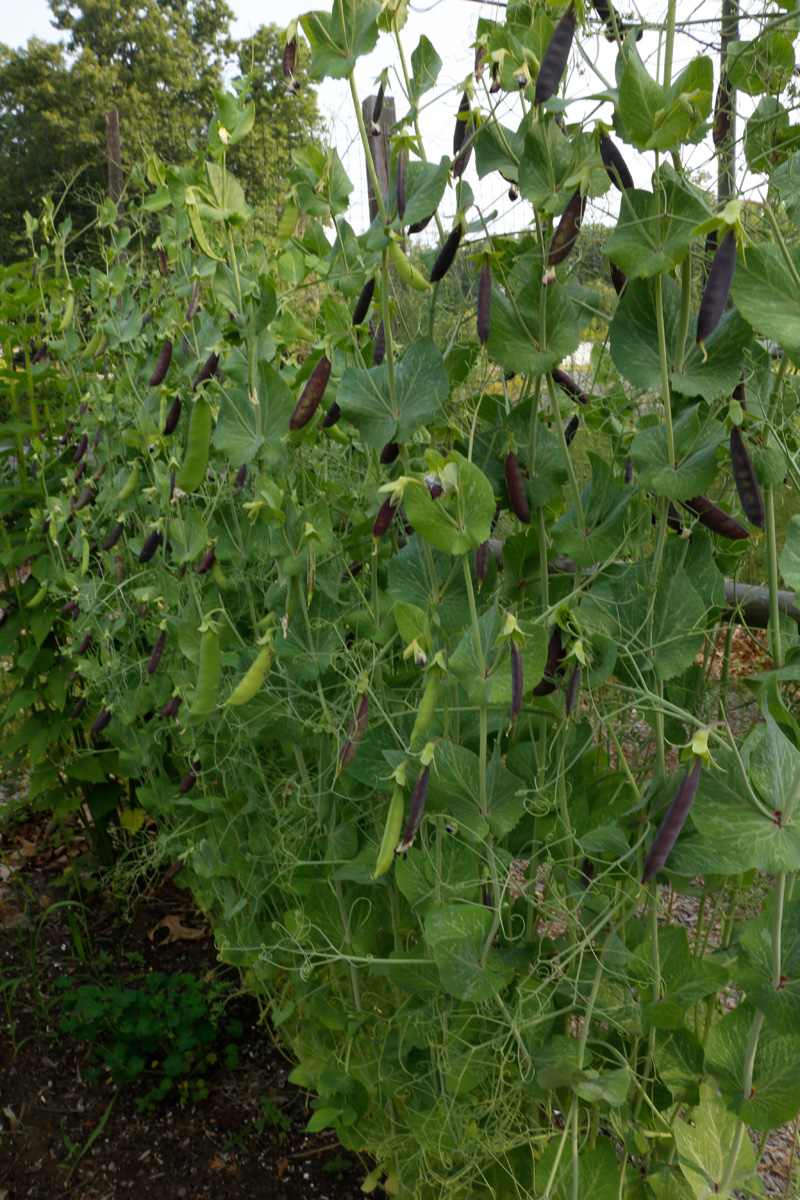
  • ‘Sugar Magnolia’ snap pea (Pisum sativum ‘Sugar Magnolia’, annual) 
  • ‘German Johnson’ tomato (Solanum lycopersicum ‘German Johnson’, annual) 
  • ‘Provider’ green bean (Phaseolus vulgaris ‘Provider’, annual) 
  • ‘Porcelain Doll’ pumpkin (Cucurbita maxima ‘Porcelain Doll’, annual) 
Sugar magnolia snap pea growing on trellis
‘Sugar Magnolia’ snap pea
‘German Johnson’ tomato
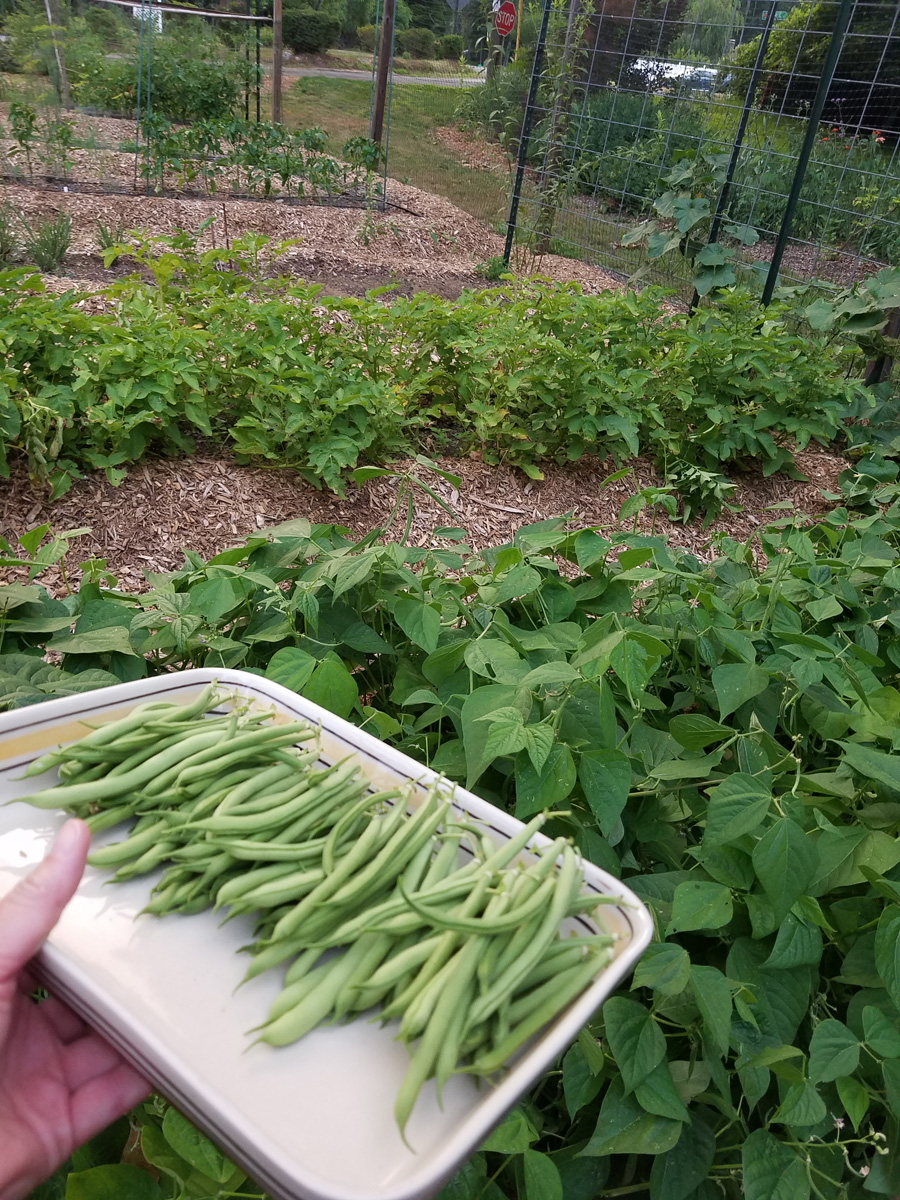
Provider bush bean harvest on a tray
‘Provider’ green bean
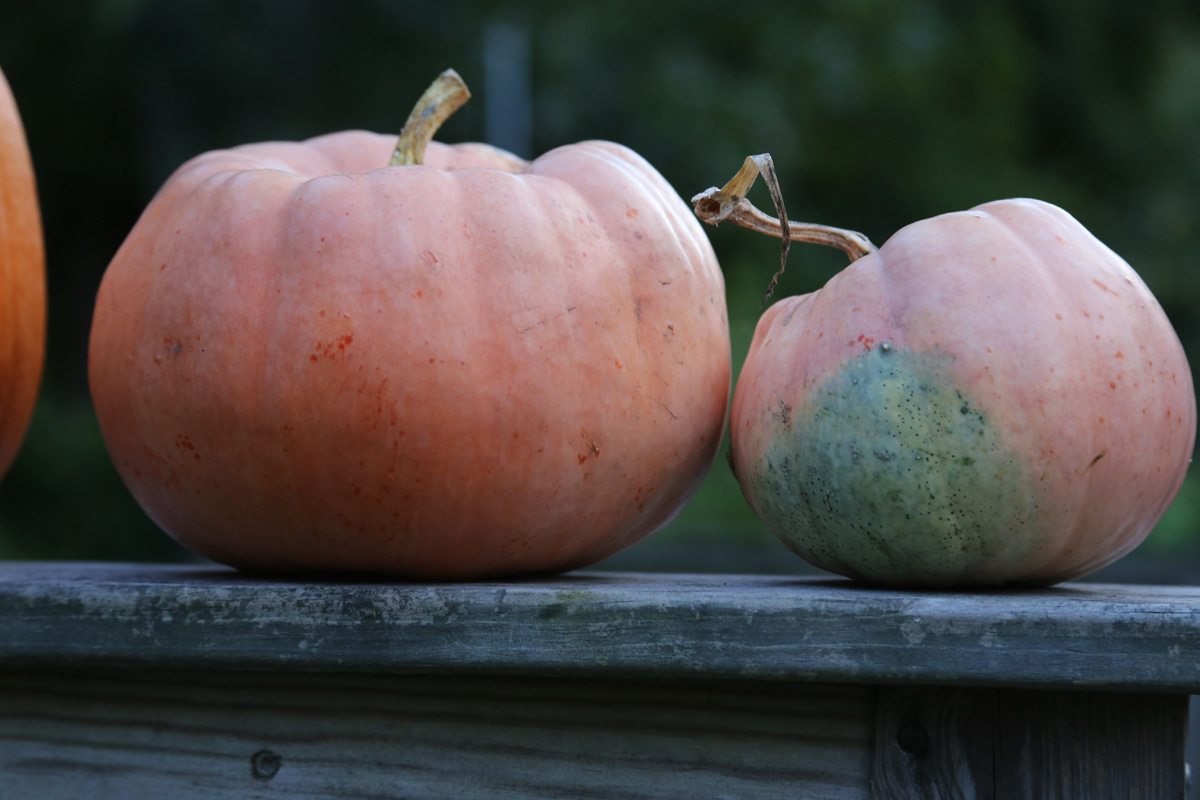
Porcelain Doll pumpkin
‘Porcelain Doll’ pumpkin

Expert Fionuala Campions Favorite Vegetables

  • ‘Zucchetta  Rampicante’ squash—AKA ‘Tromboncino’ squash (Cucurbita moschata ‘Zucchetta  Rampicante’, annual) 
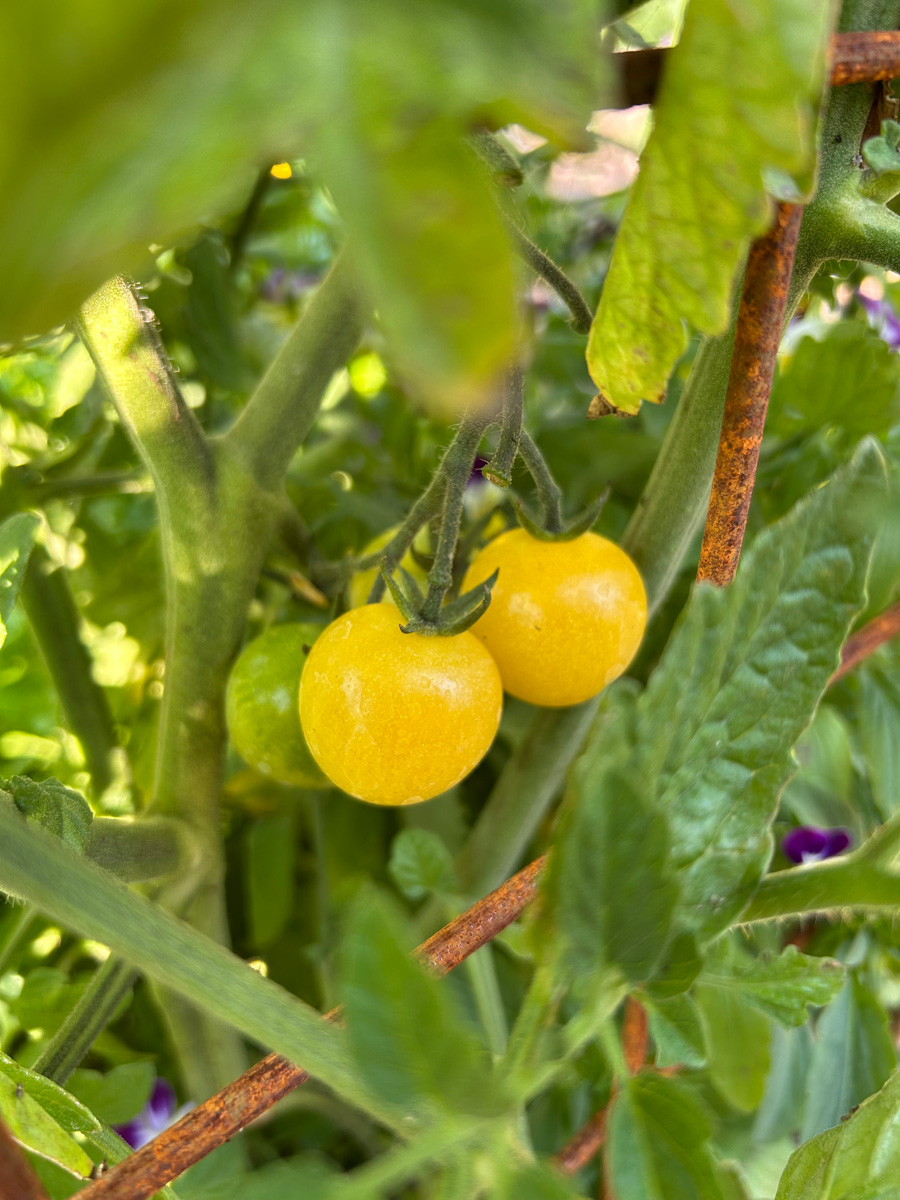
  • ‘Snow White’ cherry tomato (Solanum lycopersicum ‘Snow White’, annual) 
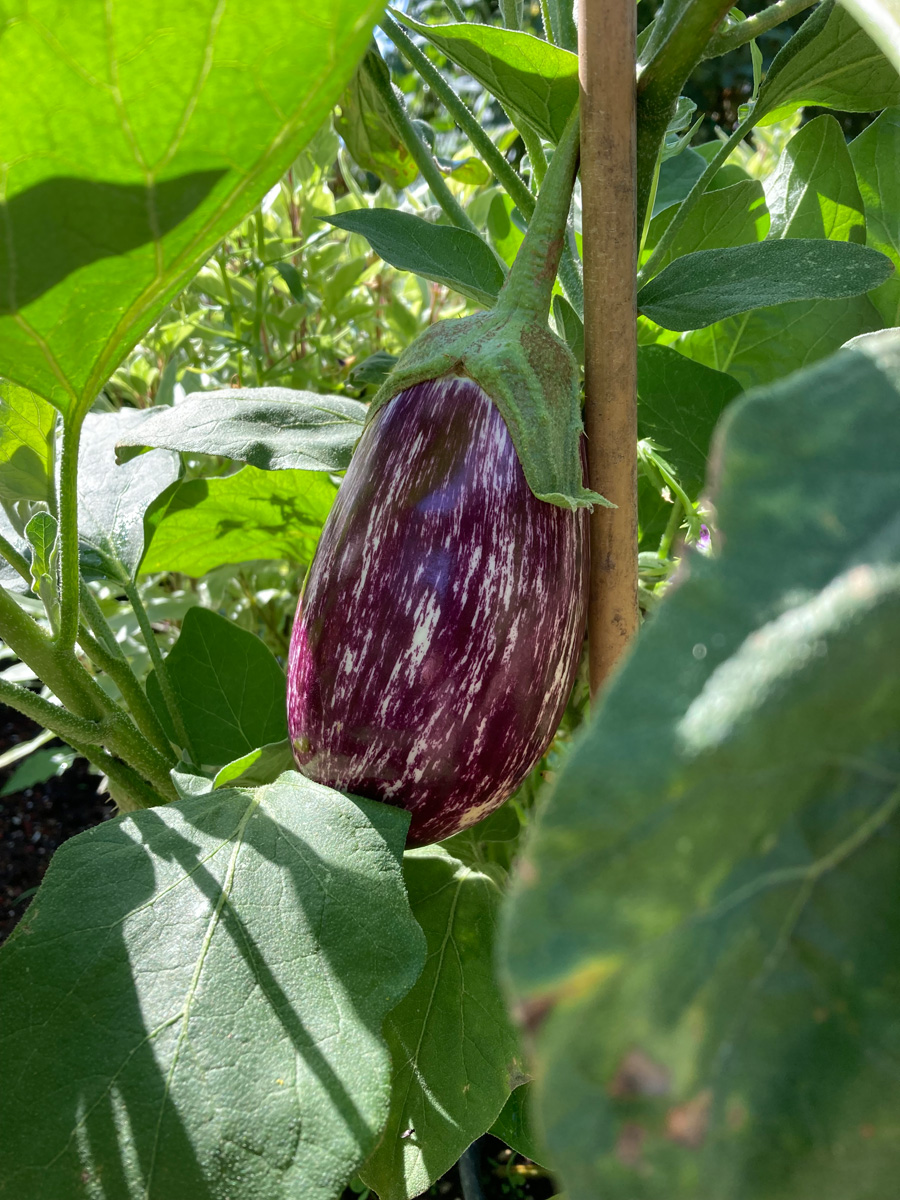
  • ‘Listada de Gandia’ eggplant (Solanum melongena ‘Listada de Gandia’, annual) 
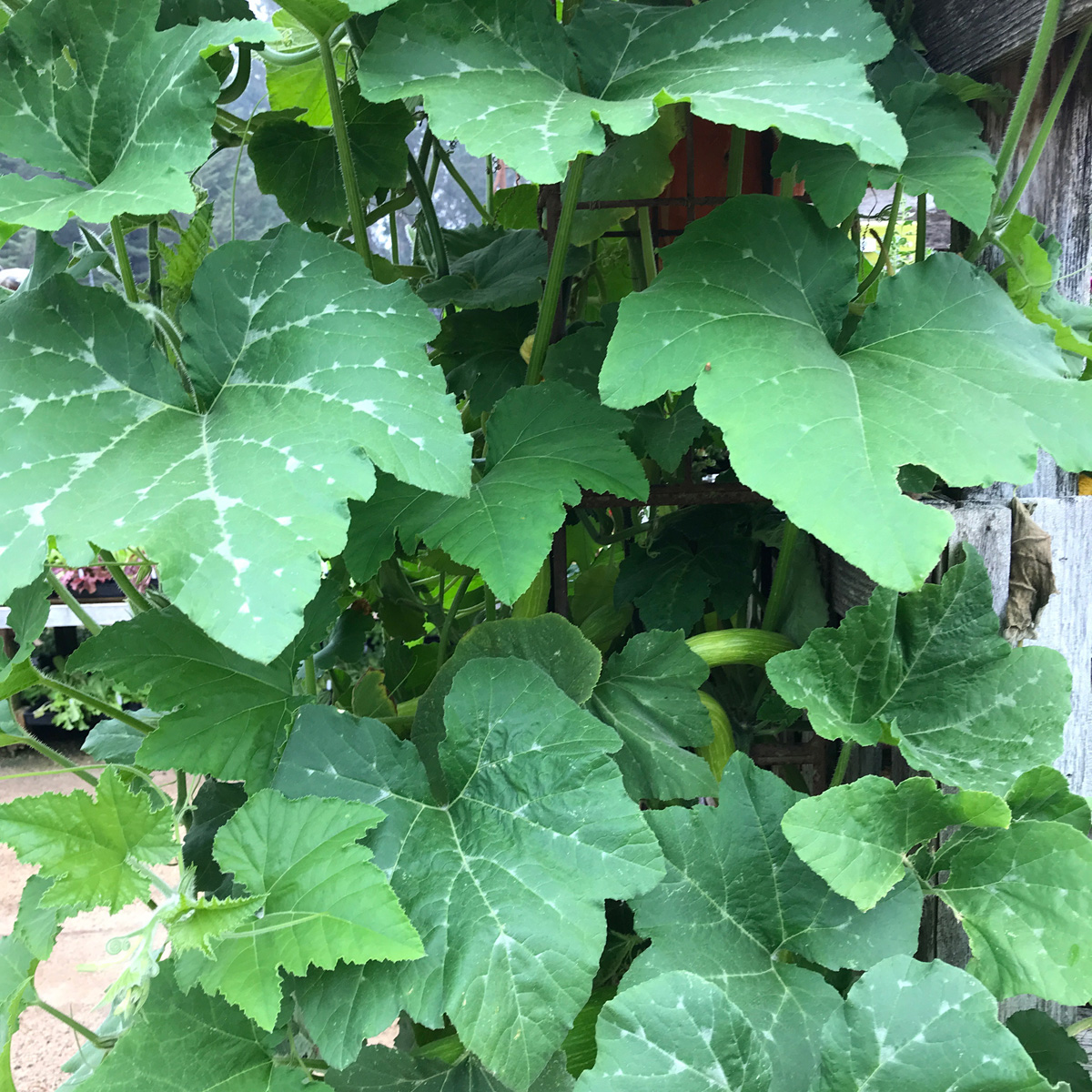
Zuchetta Rampicante vines
‘Zucchetta Rampicante’ squash
‘Snow White’ cherry tomato
‘Listada de Gandia’ eggplant

All photos from the contributors unless noted otherwise. 

$2,800 a month for ACA health insurance? Huge spikes are coming : Shots

0

Ellen Allen, 63, needs health insurance to be able to keep paying for an expensive eye drop medicine that prevents blindness.

Ellen Allen


hide caption

toggle caption

Ellen Allen

Next year, when her health care premium balloons, “it’s gonna be a real hit,” Ellen Allen says. “I’m worried about it.”

Allen lives near Charleston, W.Va., and directs a small nonprofit called West Virginians for Affordable Health Care. She buys her insurance on HealthCare.gov, and right now, the 63-year-old pays $479 a month. “I’ve been really happy with my coverage,” she says.

All of that is changing soon. The federal tax credit that makes the coverage affordable for Allen and millions of other Americans expires at the end of the year. The credit was a pandemic-era relief measure that has contributed to record enrollment in the insurance sold through the Affordable Care Act marketplaces.

Average spike? 75%

The average enrollee will see their premium costs increase 75%, according to an analysis of insurance filings by the nonpartisan health research organization KFF. For many people, those increases will be even higher.

Allen, who’s well-versed in these issues because of her job, used KFF’s online calculator to estimate what her premium will be after the enhanced subsidies expire.

“Next year it’s gonna be like $2,800 a month,” she says, just for her individual plan. Her work organization is too small to provide affordable group coverage. She estimates that she could have $10,000 in out-of-pocket costs on top of her high premium.

She says it’s still worth it to her to have the plan because she has expensive prescriptions. “Like an asthma medication [that] can run $700 a month. There’s an eye drop medication that can be $800 a month,” she says. “And these are the differences in keeping my vision, for example, so I have to do that.”

She has started setting money aside every month and directing it into a separate account to start building up savings for those high premiums next year. “Luckily I can do that, but that’s money I won’t be able to save for investing in my 401(k) for retirement,” she says.

“I wish I were older”

One good thing, she says, is that she’ll turn 65 next year and will be able to enroll in Medicare, so she will be on the hook for the high premiums for only eight or nine months. “It’s the first time in my life I wish I were older,” she laughs.

Rates could change before open enrollment for HealthCare.gov and the state-based marketplaces begins Nov. 1. And Congress could also act before December to blunt the effect on enrollees, although the Republican lawmakers who control Congress have shown little interest in extending the subsidies. An extension of the tax credits was left out of President Trump’s tax and spending law passed in July.

People who can’t afford the higher premiums and are healthy enough will likely go without health insurance. Several enrollees told NPR that’s their plan — to roll the dice, taking the chance that they stay well and don’t have a big health expense.

The Congressional Budget Office estimates that the end of the enhanced tax credits will increase the number of uninsured people in the U.S. by 4.2 million over the next decade. More Americans are also likely to become uninsured because of cuts to the Medicaid program in the law, known as the One Big Beautiful Bill.

A new job, maybe a new wife

Sidney Clifton would really like to keep his HealthCare.gov plan. He says it works for him, and he has chronic health conditions. “Diabetes, I have congestive heart failure — just your normal overweight American, like everybody else,” he says.

Sidney Clifton is photographed driving in his car.

Sidney Clifton likes working for a small business, but he says he might need to look for a more corporate job with health benefits if he can’t afford his health insurance in 2026.

Sidney Clifton


hide caption

toggle caption

Sidney Clifton

Clifton is 54 and lives in Pasco County, in central Florida. “I work for a car dealership — it’s a mom-and-pop store, not very big, like 10 employees,” he says. He likes working for a small business, but it means no health benefits.

Right now, his full premium is about $1,100 per month, but with the enhanced subsidies, “my portion is $298.” He doesn’t know how much more he’ll have to pay every month next year without the subsidies.

“I could probably go up to $800 to $1,000,” he says. “$1,000 would be really, really pushing me hard.”

If it’s higher and he just can’t afford it, he says, he might look for a job at a bigger corporate dealership that has benefits.

Or, he says, “I’ll find me some woman [who has insurance] and get married again.” He says he’d rather not do that.

How & When to Plant Garlic Bulbs for Fall Planting?

0

Most gardeners prefer to plant garlic in fall because those 4-6 months of cold weather help the bulbs develop properly, on top of that the garlic cloves get a chance to grow strong roots before going dormant for winter.

So, if you’re planning to double harvest in summer, then fall is the right time to plant garlic bulbs.

Along with bountiful of yield, growing garlic in fall results in big bulbs.

Before dwelling further, lets now first understand growing conditions of garlic.

Growing Requirements of Garlic

Garlic thrives in moderate climates with cool winters (54-64F) and warm summers (68-100F).

It needs full sun exposure with at least 6-8 hours of direct sunlight daily for proper bulb development.

  • Soil should be well-drained, loose and rich in organic matter with a pH of 6.0-6.5. Avoid heavy clay soils as they can cause bulb diseases and poor formation.
  • Fall garlic planting needs to be in October or November, allowing 4-6 months of cold vernalization for proper bulb formation.
  • Plant cloves 2 inches deep with 4-6 inches spacing between cloves and 6-9 inches between rows.
  • Garlic plant requires consistent moisture during vegetative growth but not waterlogged conditions. Initial irrigation should be frequent (every 3 days), then reduce to weekly, and stop completely before harvest.
  • This herb is a heavy feeder requiring intensive fertilization with nitrogen, phosphorus, and potassium. Apply well-decomposed organic matter at 10-20 tonnes per hectare during soil preparation.

The complete growing cycle takes 130-150 days from planting to harvest. Harvest when leaves turn yellowish and begin to dry and bend over.

Also Read: 19 Vegetables to Plant in Fall

When to Plant Garlic in Fall?

Based on your climatic conditions, start planting large garlic bulbs in September or early October.

The goal is to allow cloves to establish roots before winter without producing excessive green growth above ground.

Soil should be cool enough to prevent premature sprouting but not frozen solid. If planted too early in warm conditions, garlic may produce excessive green growth that can be damaged by winter cold.

General Rule: Plant 4-6 weeks before first hard frost regardless of zone.

How to: Planting Garlic in Fall?

Planting garlic in the fall is one of the most rewarding garden tasks. Garlic is hardy, easy to grow, and requires little maintenance once established.

By starting in autumn, you give garlic the cool period it needs to develop strong roots before winter dormancy, setting the stage for large, flavorful bulbs the following summer. Here’s a detailed step-by-step guide to planting garlic in fall.

Choosing the Right Garlic Type

Garlic comes in two main categories:

  • Hardneck Garlic – Best suited for colder climates. These varieties develop a stiff central stalk (the “scape”) and typically produce larger cloves with a rich, complex flavor. Hardnecks don’t store quite as long as softnecks but thrive in areas with harsh winters.
  • Softneck Garlic – More common in grocery stores, softneck varieties perform well in mild or warm climates. They produce more cloves per bulb, are easier to braid, and have an excellent storage life—often lasting up to a year.

When selecting seed garlic, avoid planting supermarket garlic, as it may be treated with chemicals to prevent sprouting. Instead, purchase certified seed garlic from a nursery or local grower to ensure disease-free, region-appropriate varieties.

Check this: 6 Low Budget Backyard Privacy Ideas for Your Landscape

Preparing the Soil

Garlic thrives in loose, fertile, and well-drained soil. Since it’s a heavy feeder, preparing the soil properly makes a huge difference in bulb size.

  • Test and Amend – Aim for a soil pH between 6.0 and 7.0. If your soil is too acidic, add garden lime; if too alkaline, amend with compost.
  • Add Organic Matter – Mix in well-rotted compost or aged manure before planting. This adds nutrients and improves soil texture.
  • Ensure Drainage – Garlic hates soggy soil. Raised beds or ridged rows are helpful in areas with heavy clay. Loose soil lets the bulbs expand fully without deforming.

Think of this step as laying the foundation—healthy soil equals healthy garlic.

Check this: How to: Planting Broccoli in Fall?

Breaking and Selecting Cloves

When you’re ready to plant, carefully break apart the garlic bulb into individual cloves. Handle them gently to avoid bruising.

  • Choose the biggest cloves – These grow into the largest bulbs.
  • Leave the papery skins on – They act as a natural protective covering.
  • Avoid damaged or undersized cloves – They often result in weak plants and small bulbs.

A single bulb can yield 6–12 cloves, and each clove planted will produce a new bulb at harvest.

Planting Garlic Cloves

Planting depth and spacing are critical for strong growth:

  • Depth – Place each clove 2–3 inches deep in the soil. Too shallow, and they risk frost damage; too deep, and growth slows.
  • Orientation – Always plant with the pointed side facing up and the flat, root end facing down. Planting upside down leads to poor development.
  • Spacing – Space cloves 4–6 inches apart within the row, and keep rows about 10–12 inches apart. This gives each plant enough space for bulb expansion.

Once planted, gently pat down the soil to eliminate air pockets.

Mulching for Protection

Mulching is one of the most important steps in fall garlic planting.

Mulch insulates the cloves during winter, suppresses weeds, prevents soil erosion, and helps retain moisture.

  • Best Materials – Straw, shredded leaves, or grass clippings work well. Avoid thick layers of heavy materials that can mat down and smother shoots.
  • Thickness – Apply 2–4 inches of mulch. In very cold regions, go heavier—up to 6 inches for extra insulation.

As spring arrives, shoots will push through the mulch naturally.

Watering Needs

After planting, water the bed thoroughly to settle the soil around the cloves. Garlic needs consistent moisture for root establishment before winter.

  • Fall – Keep the soil lightly moist until the ground begins to freeze.
  • Winter – In most regions, you won’t need to water while the ground is frozen.
  • Spring – Resume regular watering when new growth emerges. Garlic likes about 1 inch of water per week from rainfall or irrigation.

Avoid waterlogging, as soggy soil promotes rot.

Also Read: 18 Herbs to Plant in Fall: Grow Now

Fertilizing in Early Spring

As soon as garlic begins vigorous growth in spring, it benefits from a boost of nutrients.

  • Nitrogen is the most important at this stage, as it fuels leafy top growth, which in turn supports large bulb development.
  • Apply a side-dressing of compost, fish emulsion, or blood meal around the base of the plants.
  • Fertilize again every 3–4 weeks until bulbs begin swelling in late spring, then reduce feeding to avoid overly leafy growth.

Proper feeding ensures plump, flavorful bulbs at harvest.

How to Care for Garlic in Fall?

After planting your garlic cloves, give them a gentle but thorough watering to help settle the soil around them. Keep the soil consistently moist (but not soggy) until the ground freezes, as this helps the roots get established before winter hits.

Once temperatures start dropping consistently, spread a thick layer of organic mulch like straw or chopped leaves over your garlic bed – about 4-6 inches deep works well.

This acts like a cozy blanket, insulating the soil and preventing those nasty freeze-thaw cycles that can push your cloves right out of the ground.

Keep an eye out for weeds trying to sneak in and steal nutrients from your garlic. Hand pulling is better than hoeing since you don’t want to accidentally damage those developing bulbs just below the surface.

In really cold areas, you might want to pile on some extra leaves or compost for additional winter protection.

The great thing about fall garlic is that it’s pretty low-maintenance once you get it tucked in properly. The roots keep quietly growing underground while everything above ground stays dormant until spring arrives.

Just check occasionally to make sure no critters have been digging around or that water isn’t pooling anywhere, which could cause your bulbs to rot.

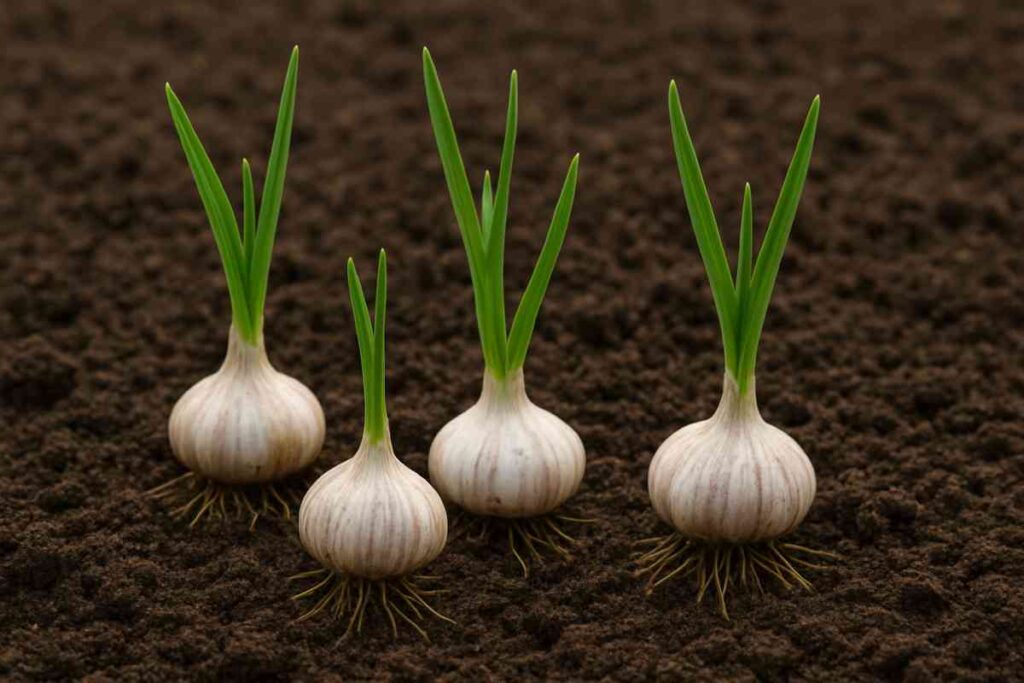
If you planted a bit too early and notice green shoots popping up during a warm spell, don’t panic – just make sure they’re well-mulched before the real cold hits.

Also Read: How to Dry Fresh Basil Naturally?

Conclusion

Planting garlic in fall is simple but so rewarding. With a little prep—good soil, proper spacing, and a cozy blanket of mulch—you’re setting those cloves up to grow strong through winter.

With just a bit of care now, your garlic will reward you with large, aromatic bulbs when it’s time to harvest.

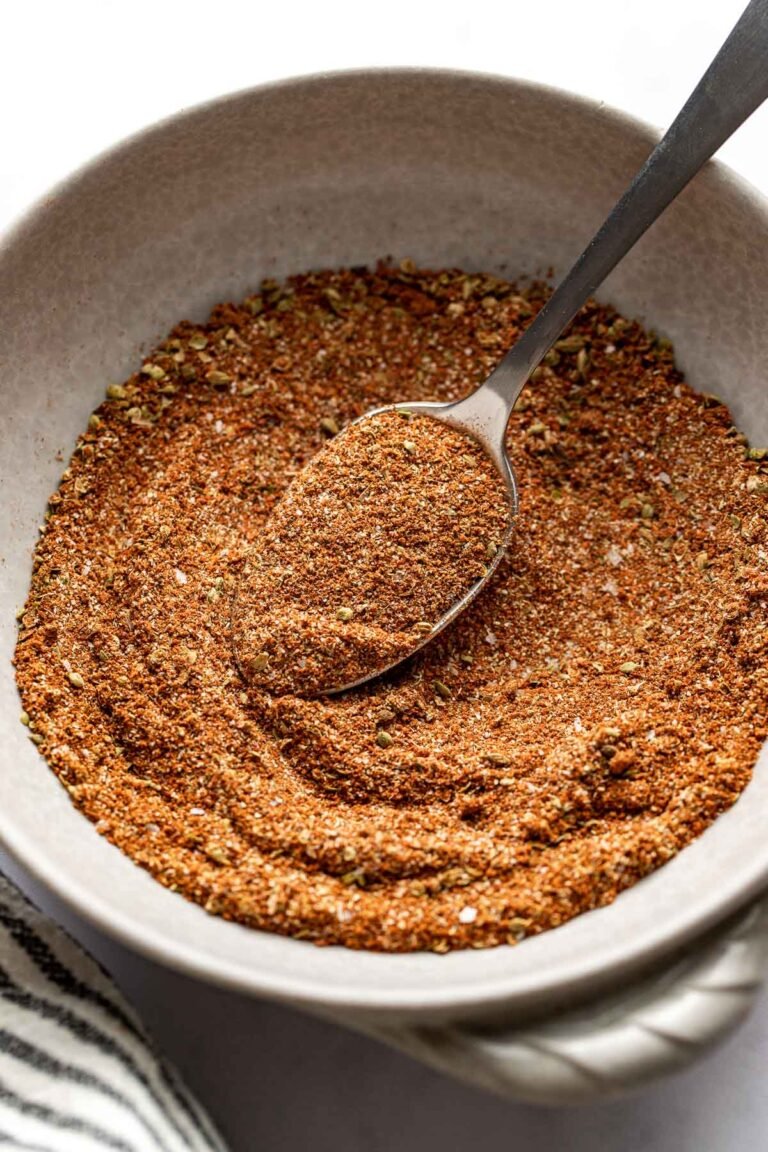
Easy Homemade Taco Seasoning

0


Easy Homemade Taco Seasoning


Privacy & Cookies Policy

DIY Bath Paints For Kids (With Clean Ingredients)

0

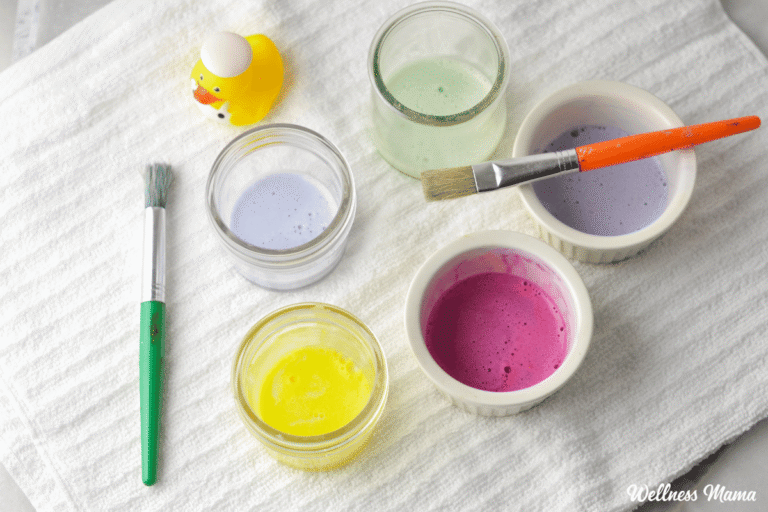
While my older kids are most certainly past the play in the bath tub stage, my kids loved soaking in the bath when they were younger. I love taking Epsom salt baths to relax myself! These fun, DIY bath paints are a non-toxic way for kids to make a mess while they’re getting clean. 

Most kids love painting with paintbrushes and fingers. This is a great way for them to express their creativity without needing a bath afterward… just do them at the same time. 

What are Bath Paints? 

Bath paints are simply paint for the shower or tub surround (tile or fiberglass). They’re fun to use during bath time and then wash off when you’re done. The paints easily wash/wipe off of the tub, but be sure to do a patch test and make sure. You don’t necessarily want your little Picasso to leave a permanent art piece in the bathroom!

While I love the idea of kids being creative, I wasn’t so excited to have certain chemicals floating around the tub with my kids. Popular store-bought bath paints for kids have ingredients that claim to be tested and safe. However, fragrance, artificial dyes, and tongue twisters like Alkyl Acrylate Crosspolymer aren’t chemicals I get excited about. 

How to Make Homemade Bath Paints

Making homemade bath paint for kids really couldn’t be any easier. You simply need a clear, liquid soap for the base, food dye, and something to thicken the liquid. Our family avoids artificial food dyes, but there are so many natural options on the market now. You can find them online, at your local health food store, and even major grocery stores are now stocking them. 

For the soap you have a few different options. Any clear liquid soap, hand soap, shampoo, or even natural dish soap should work. While Bronner’s castile soap is usually my go-to for DIY soap projects, it doesn’t work as well in this recipe. Castile soap can have more of a yellow tinge and I found it just clumped up in this recipe.

In this recipe I tested out a few different soaps and settled on natural dish soap for mine. You can experiment with the natural soaps you have on hand and use what works best for you. Just try to pick something that’s clear. 

Important Note on pH

One big reason why certain soaps work and others don’t for bath paints is the pH level. If you remember from high school chemistry, alkaline pH shows up as a purple color on a color strip. Different soap products have different pH levels for a variety of reasons. However, once they’re mixed with natural food coloring (which is also pH controlled), the result can be that everything just turns purple/blue.

A clear, natural shampoo (which is naturally a pH of about 5) shouldn’t have this problem. If you’re using body soap or dish soap (pH of around 7-9) then the alkaline solution will cause all the food coloring to turn purple. The simplest solution is to add a little acid and bring the pH back down. I used lemon juice, but vinegar will work too.

Tips and Tricks

Some recipes call for cooking the ingredients together, but I didn’t find that to be necessary. Mixing everything together is much faster and simpler. I prefer to keep things simple whenever I can!

You’ll also want to make sure you break up any clumps in the cornstarch or arrowroot powder before mixing it in with the soap. This helps make for a much smoother paint. You can either do this in a bowl with a fork, or use a sifter/sieve. 

Here’s how to make your own kid-friendly DIY bath paints.

DIY Bath Paint

These easy bath paints make bath time more fun! They’re non-toxic and easy to whip up.

Prep Time5 minutes

Total Time5 minutes

Yield: 4 ounces

Author: Katie Wells

  • Make sure there are no clumps in the cornstarch or arrowroot. You can either break them up with a fork in a bowl, or use a sieve.

  • Add the liquid soap and lemon juice and stir until smooth.

  • Separate the mixture into individual cups. A silicone tray works well too. You’ll want to have as many cups as you have colors.

  • Put a few drops of food coloring into each cup and stir well.

  • Use a paintbrush or fingers in the bath tub to paint the tub surround or tile with.

  • Wash off the wall with water to clean it off when done.

If you want to store these to use for later then opt for vinegar instead of fresh lemon juice. Once they’ve been in the bath tub and exposed to water they’ll need used right away. 

How to Use Bath Paints

Once you have your bath paints, put each color in its own separate container. Something like this silicone large cavity ice cube tray works well too. Kids can paint with either their fingers or paint brushes. If you opt for paint brushes, I’ve found they’re easier to clean with lukewarm water. Really hot water can make the corn starch get gummy and stick to the bristles more.

Most importantly have fun! (and P.S. do a patch test to ensure there won’t be staining)

How do you make bath time more fun for your kids? Leave a comment and let us know!

11 of the Best Kohlrabi Varieties to Grow at Home

0

3. Early White Vienna

This round, light green cultivar has globe-shaped bulbs with creamy, sweet, tender flesh inside that has a mild flavor.

Plan to pick this one a bit earlier than some other types, around 55 days after planting, when the bulbs are about two to three inches in diameter.

A 19th-century heirloom, this variety of kohlrabi also produces leaves that are suitable for harvest when they’re young.

A close up square image of 'Early White Vienna' kohlrabi set on a wooden surface. To the bottom right of the frame is a white circular logo with text.

‘Early White Vienna’

This heat-tolerant variety loves full sun, and will continue producing through the summer, with a mature height of six to eight inches, and a spread of 12 inches.

Seeds in various packet sizes are available from True Leaf Market.

4. Kolibri

This vibrant purple hybrid cultivar stands out in the garden, with crisp, tender flesh that’s mild and slightly sweet beneath its colorful skin.

Bulbs are best harvested at three to four inches in diameter, about 45 to 55 days from sowing.

Compact and uniform, with a mature height and spread of 12 to 18 inches, it’s well suited for small spaces and container growing.

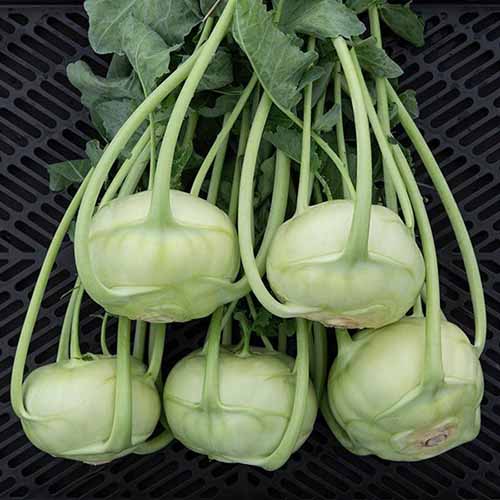
A close up of a bunch of purple 'Kolibri' kohlrabi set on a black draining board.A close up of a bunch of purple 'Kolibri' kohlrabi set on a black draining board.

‘Kolibri’

The leaves are tender and tasty too, making an extra bonus for the kitchen. ‘Kolibri’ is a favorite for both fresh eating and cooking thanks to its reliable yields and excellent flavor.

You can find seeds available at High Mowing Organic Seeds.

5. Konan Hybrid

This pale-green globe-shaped hybrid cultivar is crunchy and sweet, with bulbs that are between four and six inches in diameter at harvest time. And it’s productive early too, ready to pick in about 40 to 45 days after planting.

Pest resistant, with a mature spread of 12 to 18 inches and a height to match, you’ll love the delicious leaves as well. It’s also suited to growing in containers.

‘Konan’

‘Konan’ is a 2016 All-America Selection winner in the vegetable category.

Packets of 100 seeds are available from Burpee.

6. Korist

Another early variety of kohlrabi, ‘Korist’ produces frosted green, somewhat flattened globes that are about four inches in diameter at harvest time.

The sweet, crisp white flesh is mild in flavor, and extra juicy.

Ready to pick in 55 to 65 days, this variety stays tender longer through the season than some, without getting woody.

A close up square image of three 'Korist' kohlrabi set on a black surface.A close up square image of three 'Korist' kohlrabi set on a black surface.

‘Korist’

If you’re out of town for a week or two and you pick your harvest a bit late, you shouldn’t have to worry about the quality declining!

Seeds are available for purchase via High Mowing Organic Seeds.

7. Kossak

Said to be the most attractive green variety with highly uniform globes, this giant type is perfect for long-term storage.

As long as you keep them cold after they’re picked, the bulbs can last for up to four months.

These whoppers reach a mature diameter of up to eight inches across, and they’re ready to harvest in just 45 days.

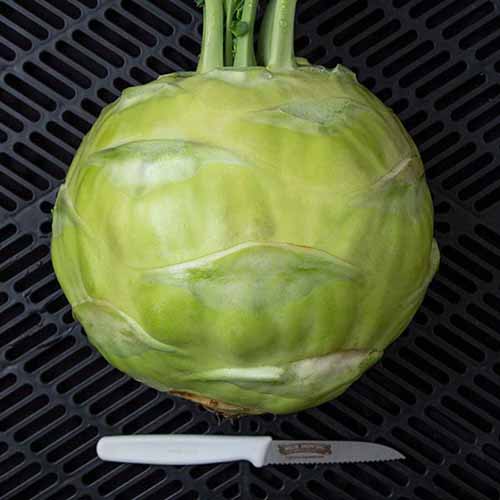
A close up square image of a large 'Kossak' kohlrabi set on a dark surface with a small kitchen knife underneath it.A close up square image of a large 'Kossak' kohlrabi set on a dark surface with a small kitchen knife underneath it.

‘Kossak’

Even at such a large size, the flesh inside is sweet and tender. Just be sure not to wait too long to pick these.

You’ll know you’ve let them go too long when they start to lose their rounded shape and become elongated.

You can find ‘Kossak’ kohlrabi seeds available from High Mowing Organic Seeds.

8. Purple Vienna

Known for its very mild flavor and attractive color, this reddish-purple cultivar has slightly flattened globe-shaped bulbs with tender white flesh inside, and tasty purplish leaves.

A close up horizontal image of freshly harvested 'Purple Vienna' kohlrabi set on the lawn in bright sunshine.A close up horizontal image of freshly harvested 'Purple Vienna' kohlrabi set on the lawn in bright sunshine.

‘Purple Vienna’ plants reach a height of about 12 to 18 inches, with a spread of 12 inches.

The bulbs are ready to enjoy in about 55 to 60 days when they’re two to three inches across, about the size of a tennis ball.

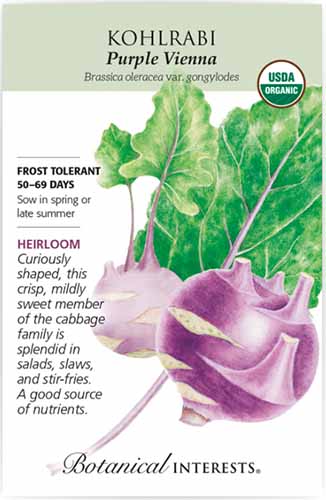
A close up vertical image of a seed packet of 'Purple Vienna' kohlrabi with text to the left of the frame and a hand-drawn illustration on the right.A close up vertical image of a seed packet of 'Purple Vienna' kohlrabi with text to the left of the frame and a hand-drawn illustration on the right.

‘Purple Vienna’

Try growing this variety in containers if you’re short on space.

One-gram packets of seeds are available from Botanical Interests.

9. Superschmelz

Kohlrabi is a new vegetable for many, and for gardeners who are inexperienced when it comes to this particular garden delicacy, it’s understandable that you may be in the market for a smaller, more manageable harvest.

After the CDC shooting, federal workers demand more protections from RFK Jr. : Shots

0

Bullet holes are seen in windows at the Centers For Disease Control and Prevention (CDC) Global Headquarters following an August 8 shooting that killed a DeKalb County Police Department officer.

Elijah Nouvelage/Getty Images


hide caption

toggle caption

Elijah Nouvelage/Getty Images

In the aftermath of an attack on the main campus for the Centers for Disease Control and Prevention in Atlanta on Aug. 8, employees at the CDC, National Institutes of Health, and other health agencies are calling for support and leadership from their boss, Health and Human Services Secretary Robert F. Kennedy, Jr.

A letter signed by hundreds of current and former HHS employees, addressed to Kennedy and members of Congress, says Kennedy is “complicit in dismantling America’s public health infrastructure and endangering the nation’s health” by questioning the integrity of the CDC’s workforce, making false claims that COVID vaccines are not safe or effective, changing vaccine policy based on ideology rather than science, and contributing to “harassment and violence experienced by the CDC staff.”

To the signatories, these factors contributed to an attack on CDC on August 8, when a gunman stood on a street corner in Atlanta and fired more than 500 rounds onto the agency’s main campus. Authorities have said that the shooting was motivated by the gunman’s “discontent” with COVID vaccines, based on written documents found in his home. He thought he had been injured by the vaccine and believed it was harming others, according to interviews with family members by Atlanta News First.

In response to the letter, HHS emailed a statement to NPR on August 20:

“Secretary Kennedy is standing firmly with CDC employees—both on the ground and across every center—ensuring their safety and well-being remain a top priority…Any attempt to conflate widely supported public health reforms with the violence of a suicidal mass shooter is an attempt to politicize a tragedy.”

“This is a major event”

The gunman approached CDC main campus on a Friday afternoon, towards the end of the work day. He struck six buildings in which CDC employees barricaded themselves in offices, hid in closets and crouched under desks. The gunman killed a responding police officer, 33-year-old David Rose, and then killed himself.

“This is a major event,” said Dr. Fiona Havers, a former CDC official and a signatory on the letter who left the agency in June. “It’s critical that the scale of this event is recognized and that people that work in public health, and public health in general, are given much more support than they’re being given right now.”

Days after the shooting, Dr. Elizabeth Soda, an infectious diseases physician with the CDC’s National Center for Emerging and Zoonotic Infectious Diseases, returned to campus to retrieve her laptop. “I never dreamed I’d see CDC in that state, never dreamed I’d see bullet holes,” she says, speaking in her personal capacity, and not on behalf of the agency.

Soda had left campus just 30 minutes before the shooting happened, and was texting frantically with colleagues during the attack. “Initially, I was shocked,” she says, “but now that I’ve sat and thought about it, it’s not surprising.” She says that years of inaccurate health information being spread, along with the politicization of science and health, have created the conditions for violence to be directed at public health workers.

Those factors have ratcheted up in the past few months, Havers says. “The fact that the inflammatory rhetoric and misinformation about COVID vaccines is now coming from the HHS Secretary and from the administration has fueled it and given it legitimacy it may not have had before,” she says.

CDC employees say Secretary Kennedy’s response to the shooting has been lacking. He visited Atlanta to tour the campus in the days after, meeting with the CDC director and security staff, and visiting the wife of the police officer who was killed.

The statement from HHS in response to the letter said, “In the wake of this heartbreaking shooting, [Kennedy] traveled to Atlanta to offer his support and reaffirm his deep respect, calling the CDC ‘a shining star among global health agencies.’ For the first time in its 70-year history, the mission of HHS is truly resonating with the American people—driven by President Trump and Secretary Kennedy’s bold commitment to Make America Healthy Again.”

But noticeably absent, staffers say, has been any mention of the misinformation on COVID vaccines that authorities said motivated the shooter, or a full defense of the CDC’s mission and work. In an interview with Scripps News days after the attack, Kennedy said that government officials were “saying things that were not always true” in an effort to “persuade the public to get vaccinated” during the COVID pandemic. “Public health agencies have not been honest,” he said. Kennedy also said that public health authorities should not be trusted, because “trusting the experts is not a feature of science or democracy, it’s a feature of totalitarianism and of religion.”

The signatories of the letter have asked Kennedy to “stop spreading inaccurate health information,” “affirm CDC’s scientific integrity,” and guarantee the safety of the HHS workforce.

Solidarity

The attack on CDC has rallied support from employees at other HHS agencies, hundreds of whom signed onto the letter as well.

“Even though this attack happened at the CDC in Georgia, this affects all federal workers,” says Ian Morgan, a postdoctoral fellow at National Institutes of Health and a signatory on the letter, speaking for himself and not for the agency. “We’re standing in solidarity with our CDC colleagues, but we know we are also at risk.”

Morgan says that security and police presence has increased at the NIH campus in Maryland, “and that’s great,” he says, “but when you have people from the top who are putting a target on your back, how can you feel safe going to work every day?”

He says a number of changes in the past few months have “put the lives of the American people at risk,” including leadership that spreads inaccurate claims about vaccines, barriers to purchasing supplies and communicating with the public, major reductions to staff and programs. “Our jobs as federal workers are to improve the health of the American people, but we’re being kept from doing that,” Morgan says.

The letter writers have asked for a response from Kennedy by September 2.