
Small Habit Change / Self-Care Sunday
Start Journaling When You Have No Idea What to Write
Start journaling with one ordinary detail, a few prompts, and permission to stop after a sentence, without writing beautifully or forcing a bright side.
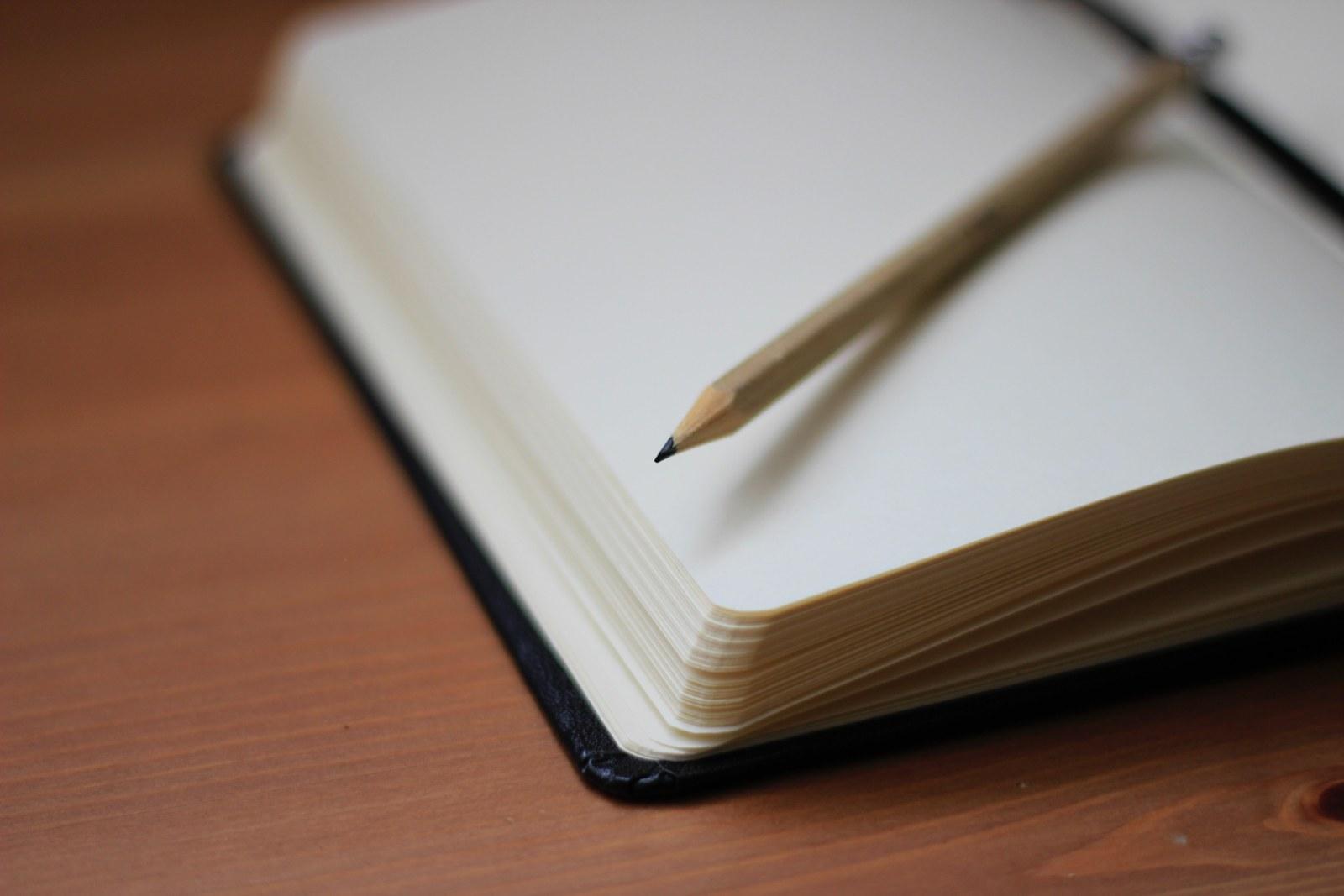
Start journaling by writing one ordinary detail from today, then add a sentence about what you'd like to remember or leave for tomorrow. If that's all you want to write, stop there. A journal entry doesn't need a lesson, a polished voice, or a dramatic event to qualify.
An empty page can look unusually official. You may feel as if the first sentence has to establish who you are and what this notebook will become. It doesn't. You can begin halfway through an ordinary Sunday, with the laundry still waiting and nothing especially profound to report.
Choose a place to write, not a whole new system
Use the format you can reach without much setup: a notebook you already own, a loose sheet of paper, or a note on a device. There's no need to compare apps before trying a sentence.
For gratitude journaling specifically, Cleveland Clinic describes both paper and digital formats, along with free writing and prompts. Our broader beginner exercise borrows the practical choice of format without asking you to turn every entry into a gratitude list.
Think about privacy before choosing where to keep it. If others share your device or storage account, look at the access and notification settings. If a notebook would be read by someone you don't want to share with, choose another place or leave identifying details out. No format in this article comes with a promise of confidentiality.
You can also decide not to save the entry. Writing something and keeping an archive of it are two different choices.
Begin with a detail smaller than your whole day
Instead of "How was my day?", try naming something specific. "I ate lunch at the kitchen counter." "I noticed the neighbor's blue watering can." "The errand took longer than I'd planned."
These are invented examples to show the scale, not a suggestion that your day should look a certain way. Start with an object, a place, or a moment you can describe without searching for its meaning.
Then add one sentence if you want to. "I liked having the window open." "I wish I'd left more time." "I don't know why that stayed with me." You aren't required to explain the detail, and uncertainty is an acceptable thing to record.
If complete sentences feel too formal, make a short list. It can be a list of what you did, what you noticed, or what remains on your mind. Nobody needs to understand the shorthand except you.
Pick a prompt that doesn't demand a revelation
A prompt should give you somewhere to begin, not require you to uncover a hidden truth. Choose one of these, adapt it, or ignore the list entirely:
- What did I spend time waiting for today?
- What did I leave unfinished, and can it wait until tomorrow?
- Which ordinary detail would I otherwise forget?
- What would I like to ask for help with this week?
You don't need to answer all four. One might lead to a sentence; another might not interest you at all. That's a reason to choose differently, not a sign that you're doing journaling incorrectly.
If you want a gratitude entry, name a specific thing you appreciate rather than searching for a grand statement. The National Institute of Mental Health suggests being specific when noting things you're grateful for, and says you can write them down or think them through.
A small example could be, "The library held the book I wanted." It doesn't need to stand for everything that is good in your life.
Let the entry be mixed, unfinished, or very plain
Your writing can contain a pleasant moment and a frustrating one without deciding which cancels the other out. You can appreciate a friend's message and still be tired of the day. The page doesn't need to argue you into a better mood.
Cleveland Clinic's gratitude-journaling guidance cautions against forcing positivity. That's a useful boundary even if you choose a neutral journal instead: don't add a bright side merely because the entry feels incomplete without one.
You can write, "I'm not ready to describe that," and change the subject. You can also close the notebook. This article isn't asking you to revisit painful experiences or turn private writing into a form of self-directed treatment.
If a prompt feels too personal, return to something concrete. Describe the room, list tomorrow's errands, or write the name of the book you're reading. Ordinary writing is still writing.
Give yourself an ending before you begin
Choose a small stopping point: one sentence, a few lines, or the end of a short pause you already have. This is a practical limit for the exercise, not a research-backed dose of journaling.
When you reach that point, ask whether you'd like to continue. If the answer is no, finish. You can end in the middle of a thought and return another day, just as you might close a book before finishing a chapter.
Avoid turning the first entry into a promise to write forever. You don't need a streak, a page count, or a plan for rereading the year. Those may be options later if you actually want them.
For more ideas about keeping a routine manageable, explore small habit change. A writing habit can be small enough that it doesn't take over the rest of your quiet time.
Return without catching up
When you next open the journal, begin with the day you're in. There's no need to summarize the gap unless you want to remember something from it. Blank dates aren't unfinished assignments.
You might discover that writing beside breakfast suits you better than writing at night, or that you prefer a weekly entry to a daily one. Try the arrangement before declaring a schedule you have to maintain.
If you'd rather choose a different kind of break, our self-care section offers other starting points. Journaling is an option you can use, not a requirement for being thoughtful or taking care of yourself.
One small step
Write this beginning wherever you feel comfortable: "One ordinary thing from today was..." Finish it with one detail. Let that sentence be the whole entry if you want.
Sources
Questions readers ask
What should my first journal entry say?
Try one ordinary detail you can name without explaining your whole day. You could describe where you sat, something unfinished, or a small thing you appreciated. The examples here are starting points, not prompts you have to answer.
Do I have to journal every day?
This beginner exercise doesn't require a daily schedule. Choose an opportunity that fits, try a short entry, and decide whether to return. You don't need to fill missed dates or write a summary of everything that happened between entries.
Can I journal on my phone instead of in a notebook?
Yes. Cleveland Clinic describes paper and digital options for gratitude journaling. For the broader exercise here, choose the format you can comfortably use, and check whether notifications, shared access, or storage settings affect the privacy you want.
What if I don't feel grateful today?
You don't have to use a gratitude prompt. Write something neutral, leave the page alone, or stop. Even within gratitude journaling, Cleveland Clinic cautions against forcing positivity. A difficult feeling doesn't need a cheerful ending to be allowed on the page.