Once upon a very terrible time, all my kids got a stomach bug at the same time… while I was gone. We don’t get sick often, but it was terrible and I wasn’t on hand to use all of our natural remedies.
Thankfully, that was the first and last stomach bug they’ve all gotten at once. However, at least one child gets a stuffy nose or cough sometime during the winter. Or I dust my closet and get a cough/congestion/nasal drip for a few days.
In those cases, I like to have this herbal throat spray on hand. It’s great for sore throat, cough or congestion.
Herbal Throat Spray Ingredients
This herbal throat spray is essentially a strong herbal tincture mixed with raw honey. The herbs provide both immediate relief and longer-lasting benefits for beating illness. You can use many different immune boosting and throat soothing herbs, but I prefer the following:
Echinacea root – Naturally antimicrobial and anti-inflammatory. Eases sore throat and cough and supports the immune system. Helps soothe throat pain and is great for strep throat or tonsillitis in a tea or throat spray.
Ginger – Warming and stimulates circulation. Its antimicrobial and helps thin mucus and get it out of the body. Helps ease inflammation, pain, and muscle spasms. Ginger also stimulates white blood cells, helps prevent viruses from attaching to cells, and destroys viruses.
Marshmallow root – A soothing demulcent herb that coats and soothes inflamed, dry, or damaged tissues. Reduces inflammation, supports white blood cells, and is an expectorant.
Elderberry – Traditionally used for throat inflammation and may help reduce swelling in the mouth and throat. It also supports better drainage, less nasal congestion, and is an expectorant. It’s especially great for cough and congestion from viral infections.
Thyme – Not just for Italian food! Thyme herb is excellent at breaking up stuck congestion and mucus in the lungs and getting it out. It’s antimicrobial, anti-inflammatory, and helps with better breathing.
Peppermint – This adds a refreshing flavor and is warming and stimulating when used internally. It’s antimicrobial and helps fight a variety of viral, bacterial, and fungal infections.
Cayenne – Cayenne is warming, stimulating, and boosts circulation to improve healing. It’s been traditionally used for sore throats, coughs, and illness prevention. It does add a spicy kick though, so reduce or skip if preferred.
You don’t need every single herb on this list to make an herbal throat spray. If you don’t have some of them on hand, then just use more of the ones you do. I make an herbal tincture with the herbs and then mix with raw honey for a strong spray. When it’s made this way the herbal throat spray will last for months in the refrigerator.
Premade Herbal Throat Spray
Don’t feel like making it or don’t have the herbs you need? I also like this pre-made herbal throat spray that includes echinacea and propolis. This propolis throat spray is also a family favorite.
Herbal Throat Spray Tincture
To make the tincture, I combine 1 tablespoon each of these dried herbs: Echinacea, Ginger, Marshmallow Root, Elderberry, Thyme and Mint and 1 teaspoon of dried cayenne pepper (optional) in a pint-size mason jar.
Fill the rest of the jar with a strong food-grade liquor like rum or vodka (must be at least 80-proof alcohol). Put on an airtight lid and let it sit for at least two weeks or up to eight weeks (the longer it sits the stronger it will be). Store in a cool dark place. I make this once a year and have enough to last at least the year.
If you get a cough, sore throat or cold this winter, try this herbal throat spray to get some relief and feel better soon! Here’s how to make the standard tincture version.
DIY Herbal Throat Spray Recipe
Prep Time5 minutesmins
Active Time5 minutesmins
Steeping Time14 daysd
Total Time14 daysd10 minutesmins
Author: Katie Wells
Add the herbs to a pint-size Mason jar.
Pour alcohol over the herbs, leaving a ½ inch headspace.
Cap tightly with the lid and let the tincture steep for 2-4 weeks, shaking occasionally.
Once the tincture is done, strain out the herbs and reserve the liquid.
For every 6 Tablespoons of tincture add 2 Tablespoons of raw honey.
Shake well to combine and store in the fridge for up to 6 months.
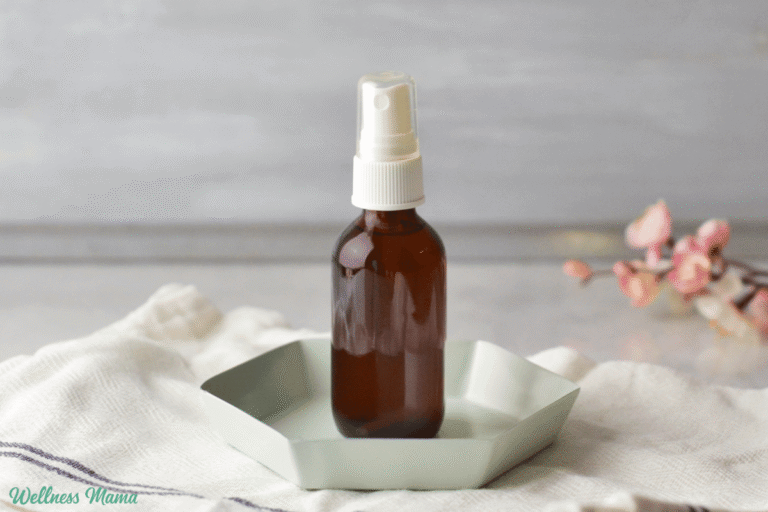
I pour some into a small spray bottle for easy use as needed.
You don’t have to use every single herb on the list. If you want/need to omit some of the herbs, just replace them with more of the others.
Two Hour Herbal Throat Spray Tincture
If you want to use the full herbal mixture and don’t have weeks to sit around waiting for the tincture, you can make a two-hour version with this method:
Combine 1 teaspoon of all of the herbs (2 Tablespoons total) in a pint size glass jar.
Pour enough boiling water on them to just cover the herbs with water.
Let steep for 20 minutes until the water cools.
Strain out the herbs and mix with equal parts of 80-proof or higher liquor. I use rum or vodka.
For every 3 parts of herbal liquid, add 1 part of honey.
This version should last for a few weeks in the fridge.
More Throat Spray Variations
If you prefer not to make a tincture with alcohol, you can make a glycerite with vegetable glycerin instead. Glycerites aren’t as potent and generally don’t extract the herbal properties as well as alcohol. It will still be helpful though and you’ll just need to use a little more of the spray on the throat.
You can also make a strong herbal tea and mix with honey. This won’t last nearly as long and should be used within a week.
Do you ever get a sore throat or cough? What remedies do you use?
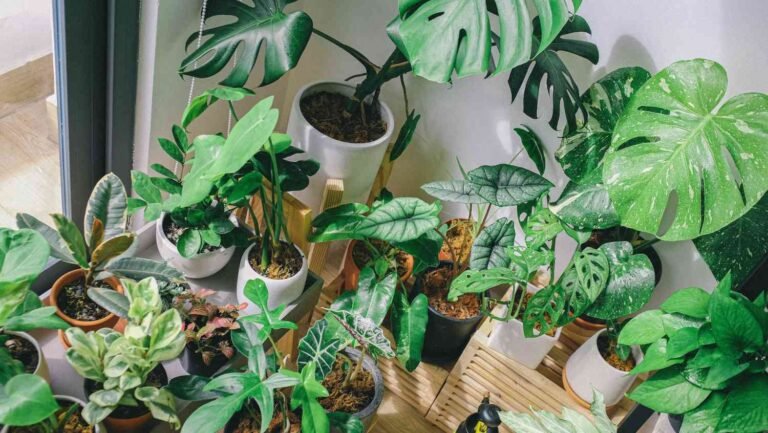
Indoor plants work their magic through photosynthesis. The process of photosynthesis uses sunlight, carbon dioxide, and water to produce energy and releases oxygen into the air. This oxygen makes the air indoors better, making your space feel fresher and healthier.
Bring in these special plants to clean up your indoor air. These plants bring natural beauty and also improve air quality which makes them ideal for any space. Here are some examples of oxygen-producing indoor plants – Snake Plants, Spider Plants, Peace Lilies, and Aloe Vera.
Benefits of Growing Oxygen-Producing Indoor Plants
Ever considered having nature’s helpers right in your home? Oxygen-producing indoor plants do more than just look pretty – they offer you a bunch of perks. These plants freshen up your indoor air and even make your sleep better. Let’s see what more benefits it gives us –
1. Breathing Boost
Indoor plants that produce oxygen are your secret to effortless breathing. As these plants begin their work through photosynthesis, they increase the oxygen levels around them.
These oxygen-producing plants act as natural air purifiers, helping to clear away dust, pollen, and other irritants too. They create a healthier environment where you can breathe with ease.
2. Air Purification
Indoor plants play a vital role in enhancing the quality of the air we breathe by eliminating harmful substances like formaldehyde and benzene. Indoor plants also reduce harmful pollutants like volatile organic compounds (VOC) and carbon dioxide.
This cleaning action is achieved through the process of photosynthesis, where plants take in carbon dioxide and release oxygen.
3. Enhancing Focus
Oxygen-producing indoor plants help you concentrate better too. When they release oxygen, your brain gets a boost of freshness. This can make you think clearer and stay more alert, making work and tasks easier to do. Being around these plants can make you feel better and less tense. It’s like they bring a touch of calmness and happiness into our lives.
4. Stress Relief
Oxygen-producing indoor plants help us feel more relaxed and less stressed. This calming effect is really helpful, especially in places where stress is common like offices or hospitals. It’s like having a little piece of nature that brings us peace.
Top 10 Highest Oxygen-Producing Indoor Plants
If you’re considering adding a greenery touch to your home as well as improving the air quality then check out these 10 highest oxygen-producing indoor plants –
1. Spider plant
Keep your spider plant content with indirect light, well-draining soil, and a comfy spot away from extreme heat.
Guess what? Your spider plant is a natural air fellow. It gives oxygen and tackles harmful stuff like carbon monoxide and formaldehyde. It’s like having a mini-cleaner for your air. So, enjoy its beauty and breathe easy with this simple yet super plant.
2. Snake plant
The snake plant also called mother-in-law’s tongue and an excellent houseplant with tall, bold leaves that stand out. Even before its oxygen-boosting fame, it is already a beloved choice for indoor spaces.
This plant takes in harmful substances like formaldehyde, nitrogen oxide, xylene, benzene, and trichloroethylene, giving you cleaner air to breathe.
Moreover, it’s a daytime photosynthesizer and a nighttime breather. While it releases oxygen by day, it takes it in at night. So, as much as we love it, it’s best to give it a different spot than your bedroom.
The snake plant is easy to handle. Put it in a sunny window or a spot with not too bright sunlight. You don’t need to water it all the time – it’s cool with dry soil. Just be careful not to overwater it.
3. Peace lily
With their stunning white blooms, peace lilies are more than just beautiful – they’re also considered lucky and a sign of good fortune. These captivating plants bring charm and a touch of prosperity. Not only are they beautiful but they can also improve your air indoors.
Peace lilies contribute to cleaner, oxygen-enriched air in your living space. Studies by NASA have shown that peace lilies are particularly effective in removing pollutants like benzene and trichloroethylene, which are common in homes and offices.
4. Aloe Vera
The aloe vera plant is a silent air purifier and oxygen generator. Aloe Vera’s unique ability to eliminate toxins like aldehydes and benzene makes it a standout choice for cleaner air.
What sets Aloe Vera apart is its night time talent – while most plants rest, it’s busy releasing oxygen. That’s why it’s perfect for a bedroom. Having an aloe vera plant also means having a handy natural remedy. A quick snip of a leaf reveals the clear, soothing gel within, a natural balm for soothing burns and minor cuts.
5. Pothos
Pothos is a beautiful and easy-care plant that is also one of the best oxygen-producing plants for indoor spaces. Pothos is a great choice for people who are looking for an oxygen-producing plant as it can produce up to 20% more oxygen than other plants.
So, whether you place it in your living room, bedroom, or office, pothos is there, quietly purifying the air and ensuring you’re breathing in cleaner, purer oxygen.
Weeping fig, also known as ficus – is a fantastic option to clean indoor air. Purify your air by removing trichloroethylene, benzene, and formaldehyde from your home. while it’s not more demanding than other plants, the weeping fig does crave a bit more attention.
Consistent bright light, without being too intense is ideal. It’s not a fan of cool spots or drafty corners, so keep that in mind to ensure its healthy growth.
7. Philodendrons
These plants are your natural air cleaners, helping to remove things like formaldehyde and other air pollutants for better air quality. What’s great is that philodendrons are easy to take care of. They’re not picky about light – whether your spot is sunny or not so bright, they’ll do fine as long as it’s not too hot. Just keep an eye on the soil – when it feels dry then it’s time to water.
8. Arcea palm
Golden palms, butterfly palms, and yellow palms – all of these are names for the same plant that is Areca palms. These tropical trees are like nature’s oxygen generators, giving your home a breath of fresh air.
when you put two big Areca palms close to each other, the oxygen in your home gets a major upgrade. They clear out bad stuff like formaldehyde, xylene, benzene, and toluene from the air, making your space cleaner and healthier. So, having these palms around is like having your natural air-purifying team right at home.
9. ZZ plant
ZZ plant is an indoor air-purifying plant that flourishes in bright light and thrives in medium to high humidity. It’s like the perfect plant companion for a cozy and stylish indoor space.
The ZZ plant is not just about looks. It’s like your air’s natural purifier, working hard to cleanse your indoor environment. This plant gives your space a breath of fresh, clean air.
With their vibrant petals in a variety of hues, chrysanthemums are the ultimate mood lifters. It’s like having a little burst of happiness right on your windowsill or table.
Chrysanthemums are like your air’s personal cleaners. They’re pretty skilled at removing harmful pollutants like ammonia, benzene, and formaldehyde from the air. So while they’re making your place look cheerful, they’re also giving you cleaner and fresher air to breathe.
Indoor Plants for Oxygen Without Sunlight
Who says you need sunlight for a breath of fresh air? These indoor plants are like your personal oxygen suppliers, even in low-light spaces.
1. Boston Fern
Boston fern plant clears the air by reducing small amounts of formaldehyde, xylene, and toluene. When it comes to sunlight, it’s all about finding that perfect balance – not too bright, not too dim. And when the air gets a bit of moisture, this plant feels right at home.
Where should you put it? Well, it’s versatile enough to hang, stand tall, or simply put it on a shelf.
2. Bromeliad
When it comes to sunlight, most Bromeliad species thrive in the embrace of bright, indirect light. However, they prefer a little shade from the direct rays. That’s why you’ll often find these plants flourishing on shelves or adorning tabletops. A bit too much direct sunlight can harm their captivating leaves. So, give them a cozy spot with a gentle, filtered glow to keep them at their vibrant best.
3. Peace lily
Peace lilies are versatile when it comes to light. They do well in spaces with low to medium light levels, and they’re also quite adaptable to artificial lighting. If you offer them a bit more light, you’ll be rewarded with the beautiful white flowers they’re known for.
Moreover, as already mentioned above, peace lily effectively filters out small amounts of benzene, formaldehyde, trichloroethylene, xylene, toluene, and ammonia from the surrounding air.
4. Chinese Evergreen
If you’re new to the world of indoor plants, Chinese Evergreen is your go-to choice. These plants are like the ultimate beginners’ guide – they don’t demand sunlight and need so much care. Plus, they help in clearing away small amounts of benzene and formaldehyde from the air. It’s like they’re here to make your plant-parenting journey a breeze.
5. Dracaena
Dracaena air-purifying plant that effortlessly cleanses your indoor space. This plant helps in getting rid of toxins to give you fresher air.
When it comes to light, they thrive in the gentle glow of bright, indirect light. But don’t worry if your space is a bit dim – these plants are survivors in low light too.
Philodendron is a natural air purifier that effectively eliminates traces of formaldehyde from your surroundings.
Also, this plant thrives in moderate to low indirect light, making it easy to fit into various spaces. With its heart-shaped leaves and rapid growth, the Philodendron brings a touch of natural charm to your indoor environment.
Important Tips While Growing Oxygen-Producing Indoor Plants
When it comes to nurturing indoor plants that boost oxygen levels, a few key points can make all the difference. Let’s see what it is –
Water Wisely – Overwatering or underwatering can hinder their growth. Strike the right balance to keep your plants thriving and contribute to a fresher atmosphere.
Good Drainage – Proper drainage is a must. Use well-draining soil and pots with drainage holes to prevent waterlogging which can further cause problems.
Avoid Overcrowding – Overcrowding can hinder air circulation and growth. Ensure that each plant has ample room to flourish and grow.
Prune and Trim – Prune dead leaves and trim excessive growth to encourage healthy development and maximize their oxygen-producing potential.
Humidity Matters – Some oxygen-producing plants thrive in higher humidity levels. Be mindful of your plant’s preferred humidity range to ensure optimal growth.
Feeding Routine – Provide appropriate fertilization according to the plant’s needs. Balanced nutrients contribute to vigorous growth and increased oxygen.
Pest – Keep an eye out for pests that can hinder growth. Regularly inspect and treat your plants to ensure they remain strong and vibrant.
The right amount of light – Most oxygen-producing plants need bright, indirect light. Nevertheless, certain plants can withstand low-light environments. It is important to find a spot in your home that gets the right amount of light for your plant.
Conclusion
Indoor plants that produce abundant oxygen, it’s clear they offer more than just showing off beauty. These special plants help clean the air and provide us with a fresh supply of oxygen, making our indoor spaces healthier and more vibrant.
Whether it’s the peace lily, spider plant, or snake plant, each one plays a crucial role in enhancing our surroundings.
Khaja Moinuddin, a computer science graduate, finds joy in gardening and homesteading. Join him on this blog as he shares his experiences in homesteading, gardening, and composting
Make this easy Gingerbread Baked Oatmeal featuring warm spices, oats, and pears. It’s a satisfying, make-ahead friendly breakfast perfect for cozy mornings.
Price: $38.95 (as of Dec 19, 2025 04:18:12 UTC – Details)
Pull up Assist bands set. This 5-band set includes Green (50–120 lbs), Purple (40–80 lbs), Black (28–50 lbs), Red (20–35 lbs), and Yellow (5–22 lbs). Whether you’re just getting started or already working on multiple reps, you can scale your support and even combine bands for the perfect level of resistance. Adaptable Support for Real Progress. Pull-ups can feel impossible at first. These bands reduce the load just enough to help you build up the movement, improve form, and stay consistent – even if you’re starting from zero. Step-by-Step Training Included. Comes with a free digital guide featuring clear instructions and exercises. Perfect for those who want structured help and ideas to get the most from their bands. Not Just for Pull-Ups. Your band set isn’t limited to upper body work. With over 50 guided exercises included, you can target your entire body – wherever you train, with just one set of bands. Built to Last – Backed by a Guarantee. Made from layered natural latex for maximum durability and consistent tension over time. And if you’re not satisfied with your set, you’re fully covered with a refund.
Price: $99.99 - $8.99 (as of Dec 18, 2025 16:16:11 UTC – Details)
From the brand
THIN AND LIGHT AS A CREDIT CARD. Arrhythmias don’t wait for the doctor’s office, so we created a portable, durable personal EKG that fits in your wallet and goes anywhere you go. FDA-CLEARED & DOCTOR-RECOMMENDED. KardiaMobile Card is our most advanced single-lead EKG. ACCURATE EKG RESULTS. Record a medical-grade EKG and get an accurate analysis of your heart rhythm in seconds. EASY TO USE: Simply place your thumbs or fingers on the sensors to detect Atrial Fibrillation (AFib), Bradycardia, Tachycardia and Normal Sinus Rhythm. Additional detections and features available with KardiaCare subscription. KardiaCare is not included with this product. BLUETOOTH-ENABLED EKG. No WiFi required, so you can take an electrocardiogram (EKG) anytime, anywhere. KardiaMobile Card uses Bluetooth technology to connect to your phone. Works with most smartphones and tablets. Visit alivecor.com/compatibility to check the list of compatible devices. NO SUBSCRIPTION REQUIRED. Detects Atrial Fibrillation, Bradycardia, Tachycardia, and Normal Sinus Rhythm without a KardiaCare subscription.
Health Secretary Robert F. Kennedy Jr. and Medicare and Medicaid Administrator Dr. Mehmet Oz (right) will announce new restrictions to gender-affirming care for minors Thursday.
Andrew Caballero-Reynolds/AFP via Getty Images
hide caption
toggle caption
Andrew Caballero-Reynolds/AFP via Getty Images
The Trump administration is expected to announce several moves Thursday that will have the effect of essentially banning gender-affirming care for transgender young people, even in states where it is still legal.
Health Secretary Robert F. Kennedy Jr. will be announcing the measures in a press conference at 11 a.m. at the headquarters of the Department of Health and Human Services. Dr. Mehmet Oz, who leads the Centers for Medicare and Medicaid, Dr. Marty Makary, who leads the Food and Drug Administration, and Dr. Jay Bhattacharya, who leads the National Institutes of Health, will all be at the press conference.
In October, NPR exclusively reported on two new proposed rules for hospitals that Oz is expected to announce Thursday. The first would prohibit doctors and hospitals from receiving federal Medicaid reimbursement for medical care provided to transgender patients younger than age 18. The second would block all Medicaid and Medicare funding for any services at hospitals that provide pediatric gender-affirming care. Medicaid provides health care coverage to low-income children and adults in the U.S. Medicare is the health program for Americans over 65 and disabled people. Virtually every hospital in the country takes Medicare and relies on it, so the rule would have a wide-ranging effect.
Makary and Bhattacharya are also expected to make announcements about health care that transgender young people receive.
Legislative action
The pivot to the topic of transgender minors comes one day after Republicans in the House of Representatives passed a package of health care bills that do not extend subsidies for people who buy health insurance in Affordable Care Act plans.
The legislative package included a bill, introduced by Rep. Marjorie Taylor Green, R-Ga., that makes it a crime to provide gender-affirming care to transgender minors, punishable by a fine or prison time of up to 10 years. It passed on Wednesday.
Another bill, introduced by Rep. Dan Crenshaw, R-Texas, would prohibit Medicaid reimbursement for gender-affirming care for youth. It is scheduled for a vote on Thursday. Both bills would also have to pass the Senate to become law.
Supporters and opponents of transgender rights agree that, taken together, the forthcoming hospital rules could make access to pediatric gender-affirming care across the country extremely difficult, if not impossible. The care is already banned in 27 states. The proposed rules will start a comment period after they are entered into the Federal Register; they will not take effect immediately.
This story will be updated later Thursday, following the official announcements.
If you have determined via a test that your pH is low – below 6.5 – you can also choose to add ashes directly to the garden to reduce acidity.
Incorporating ashes can also increase the bioavailability of potassium, phosphorus, and various micronutrients, thereby increasing fertility.
A Note of Caution:
Never mix ashes with nitrogen fertilizer, it can cause a reaction that releases ammonia gas. Always wear eye protection, a face mask, and gloves when handling wood ashes.
Spread on calm days to prevent it from blowing around and scattering to unwanted areas – including all over your clothes.
Apply in moderation, lightly dusting a small amount on the garden surface and working it into the soil several inches deep with a fork.
Soils that are slightly acidic (pH 6.0 to 6.5) should not be harmed by the application of 20 pounds per 100 square feet annually, if the ash is worked into the soil about six inches or so.”
Be sure to test the soil again the following year. You can reapply if the pH is still too low, but if it has reached 6.5, don’t add any more.
If you raise the pH too much, this can deplete the bioavailability of essential nutrients.
Continue to test your soil every few years and amend as necessary.
Ashes to Dust
While it is never wise to dump a whole bucket on your compost or in the garden beds, used in moderation with careful planning and an understanding of your soil, wood ashes can be repurposed as a useful amendment.
Though my wood stove churns out far more than I can safely use each winter, I am still able to recycle much of it back into my compost.
Have you used wood ashes in your garden? Please share your experience in the comments below!
Make this easy sheet pan gnocchi with kielbasa and veggies for a quick, flavorful weeknight dinner. One pan, minimal prep, and ready in just over 30 minutes.
Price: $79.00 - $6.99 (as of Dec 18, 2025 04:15:19 UTC – Details)
Our #1 best-selling personal EKG, now in limited edition Red. KardiaMobile is a smart device that records a medical-grade, single-lead EKG right on your smartphone. KardiaMobile can detect AFib, Bradycardia, Tachycardia, and Normal Sinus Rhythm in just 30 seconds. With this easy-to-use personal EKG, you can check in on your heart from anywhere. EKG ON THE GO: Capture unlimited medical-grade EKGs in 30 seconds and get an instant analysis right on your smartphone. KardiaMobile is small enough to fit in your pocket, so you can take it with you anywhere. EASY TO USE: Simply place your fingers on the sensors to detect Atrial Fibrillation, Bradycardia, Tachycardia and Normal Sinus Rhythm. Additional detections and features available with KardiaCare subscription. KardiaCare is not included with this product. TRUSTED BY PROFESSIONALS: KardiaMobile is FDA-cleared and the #1 doctor-recommended personal EKG with more than 100 million EKGs recorded. EKG HISTORY: With the press of a button, email your EKGs to your doctor or save them on your phone, no subscription required. KardiaMobile is COMPATIBLE WITH MOST POPULAR PHONES and TABLETS. To use your Kardia device, you must download the Kardia app on a compatible device. Visit alivecor.com/compatibility to check the list of compatible devices. NO SUBSCRIPTION REQUIRED. Detects Atrial Fibrillation, Bradycardia, Tachycardia, and Normal Sinus Rhythm without a KardiaCare subscription. Instructions for use, tutorials, troubleshooting, and additional product support is offered through the product’s Kardia app. KardiaMobile is not tested or recommended for use with pacemakers and ICDs. KardiaMobile does not check for heart attack.
Psychologist Cami Winkelspecht decided to familiarize herself with artificial intelligence tools like ChatGPT and Gemini, after patients started asking her for advice about how they could use the technology responsibly.
“One of the interesting questions that kids and teenagers, in particular, brought in is how can you utilize AI to help support ideas or editing process or things like that for papers and assignments and presentations, but also make sure that you’re not utilizing it to write something for you, [so] that you’re not violating your school’s honor code” says Winkelspecht, who is a child and adolescent psychologist with a private practice in Wilmington, Delaware.
“So I have also then started to experiment with it to see what these tools will also do,” she says, so she could feel “confident and comfortable” in her own understanding of these platforms, their advantages and risks.
Winkelspecht is among the 56% of psychologists recently surveyed by the American Psychological Association who are using AI tools in their practices. That’s significantly higher than the 29% who said the same last year. And nearly a third of respondents said they use these tools on a monthly basis — up by more than two fold since last year.
Winkelspecht incorporates AI into some of her office and administrative tasks, like creating templates for letters she has to send to her collaborators — schools and pediatricians. It saves her time, but she can still write and edit the letters each time.
Most psychologists are “using AI to help write emails, to help develop homework assignments, to help maybe with some report writing or using AI scribes to assist with documentation,” says psychologist Vaile Wright, senior director of the Office of Health Care Innovation at the APA.
“Psychologists are seeing potential opportunities to incorporate AI into their practices, by making their work more efficient, which we think could have downstream effects to reducing burnout, reducing those aspects of the workplace that people don’t particularly enjoy,” she adds. “And that would then give them more time to really provide patient care. So I think that that’s really promising.”
As more psychologists adopt AI tools, Wright says there is also growing awareness about artificial intelligence tools, especially with respect to patient safety and data privacy.
A majority of psychologists said they are concerned about potential harms of this technology, with more than 60% saying they are worried about potential data breaches, biased inputs and outputs and social harms. Many also expressed concerns about hallucinations, where the platforms fabricate facts or present inaccurate information.
“What’s clear to us is that we need to help continue to provide both resources to members so that they can and effectively, responsibly incorporate these types of technologies,” says Wright. “And we have to ensure that these technologies are regulated in ways that ensure to the best of their ability, safety and efficacy.”