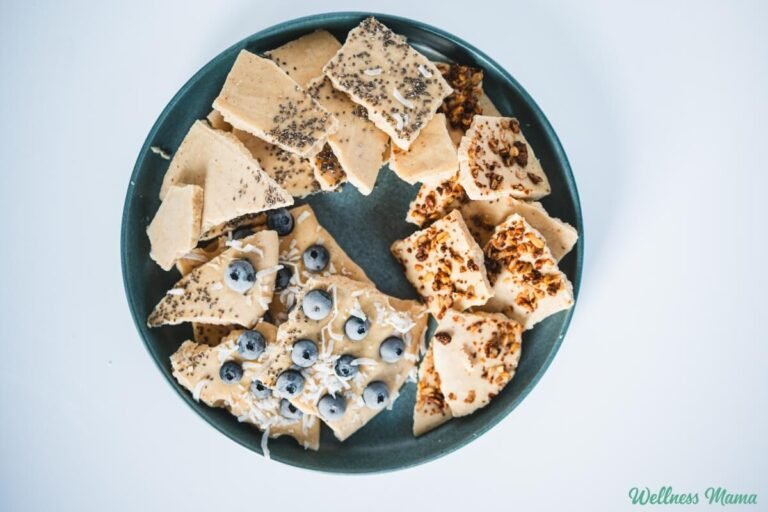
There’s not much better than a cool treat on a hot day. Even if it’s not hot out, this easy frozen yogurt bark is still just as delicious. It’s really quick to throw together for a fast dessert or snack anytime.
This recipe is a little different than some other yogurt bark recipes because it’s higher in protein. With the healthy fats and protein it’s filling and nourishing any time of day.
Homemade Yogurt Bark
Of course, you have to start with yogurt. Either homemade yogurt or store-bought full fat Greek yogurt will work. Low fat yogurt can make the yogurt bark taste too watery. If you’re using homemade yogurt you may want to strain it for a bit first to remove the extra whey. This makes the yogurt bark a little thicker and more flavorful. If you’re in a hurry though, its really not necessary.
I’ve also included cottage cheese in this recipe variation. It adds an extra creaminess and really ups the protein more. If you don’t have cottage cheese though, then feel free to replace it with more yogurt. Our family loves the Good Culture brand since it’s grass-fed and full of probiotics.
Then there’s the added collagen. Not only does collagen supply more protein, but it supports healthier hair, nails, joints, and gut health. You’ll also see colostrum in the ingredients list. While it is optional I like that it adds benefits for the immune system, muscle recovery, metabolism, and more.
Topping Frozen Yogurt Bark
This is where the fun comes in! You can choose from almost any topping that you like. Here are some ideas to get you started.
Fresh berries + granola
Peanut butter drizzle + melted chocolate (add after freezing)
Chocolate chips + coconut flakes
Chopped nuts + cinnamon
Freeze-dried fruit + chia seeds
Even the littlest kids can help sprinkle the toppings on. Change it up depending on what sounds good or what you have on hand.
Ready to get started? Here’s how to make the best, high protein froyo bark!
Easy High-Protein Yogurt Bark
This delicious frozen yogurt bark is high in protein for a filling snack. Customize it with your favorite toppings!
In a blender or food processor, combine the yogurt, cottage cheese, nut butter, vanilla, protein powder, maple syrup, collagen, and colostrum. Blend until smooth and creamy, scraping down the sides as needed.
Line a rimmed 9×13 baking sheet with parchment paper.
Pour the mixture onto the parchment and use a spatula to spread it evenly, about ½ inch thick.
Sprinkle your chosen toppings across the surface. My kids love helping decorate the bark!
Place the baking sheet in the freezer for at least 2–3 hours or until fully frozen.
Add the chocolate drizzle (optional): Once frozen, drizzle with melted chocolate or peanut butter for an extra treat. It’ll set quickly on the cold bark.
Use your hands or a knife to break the bark into pieces.
Nutrition Facts
Easy High-Protein Yogurt Bark
Amount Per Serving (1 serving)
Calories 70 Calories from Fat 18
% Daily Value*
Fat 2g3%
Saturated Fat 1g6%
Trans Fat 0.001g
Polyunsaturated Fat 0.3g
Monounsaturated Fat 1g
Cholesterol 11mg4%
Sodium 69mg3%
Potassium 88mg3%
Carbohydrates 6g2%
Fiber 0.1g0%
Sugar 5g6%
Protein 7g14%
Vitamin A 19IU0%
Calcium 64mg6%
Iron 0.1mg1%
* Percent Daily Values are based on a 2000 calorie diet.
Store in an airtight container in the freezer for up to a week.
Nutrition facts are calculated without the toppings as these will vary.
This high-protein froyo bark is not only the easiest but also one of the most satisfying treats you’ll ever make. It’s creamy, crunchy, and packed with high-quality protein from Greek yogurt, protein powder, and collagen. This makes it perfect for a post-workout snack or just a nutritious snack to keep you fueled throughout the day.
Customize it with your favorite toppings and you’ve got a treat that’s as flexible as it is delicious. The best part? You can make it ahead of time and store it in your freezer for when those snack cravings hit. Plus, you’re getting the added benefits of collagen and colostrum, which support everything from your skin to your gut health to your immune system.
What are some of your favorite homemade frozen treats to make? Leave a comment and let us know!
You may think that working for a gardening magazine is the equivalent of being paid to spend hours in your garden, documenting essential chores and taking endless photos of the beauty you’re cultivating. Unfortunately, this often isn’t the case. While our home gardens are a great place for trailing, experimenting, and chasing personal garden joys, we often spend far more hours in the gardens of others rather than our own (admittedly, not something we can complain too much about). This is exactly the case for Jack Coyier, our in-house garden photographer and videographer.
Jack, based in Des Moines, Iowa, is constantly traveling to gardens across the country (and globe) to capture stunning gardens in the most breathtaking ways. But in-between work trips and the hours he spends behind a computer editing footage, Jack occasionally has the time to explore his own plantings and capture his home garden with the same thoughtfulness and technique that he so masterfully captures others. Below is a sampling of stunning photos from one of those rare occasions last month.
The focus of these photos are the flowers that were filling Jack’s garden last month, but there is also plenty of gorgeous foliage to admire. ‘Burning Hearts’ false sunflower (Heliopsis helianthoides var. scabra ‘Burning Hearts’, Zones 3–9) blooms are made even more vibrant when contrasted with the dark ‘Royal Purple’ smoke tree (Cotinus coggygria ‘Royal Purple’, Zones 4–8) leaves behind.
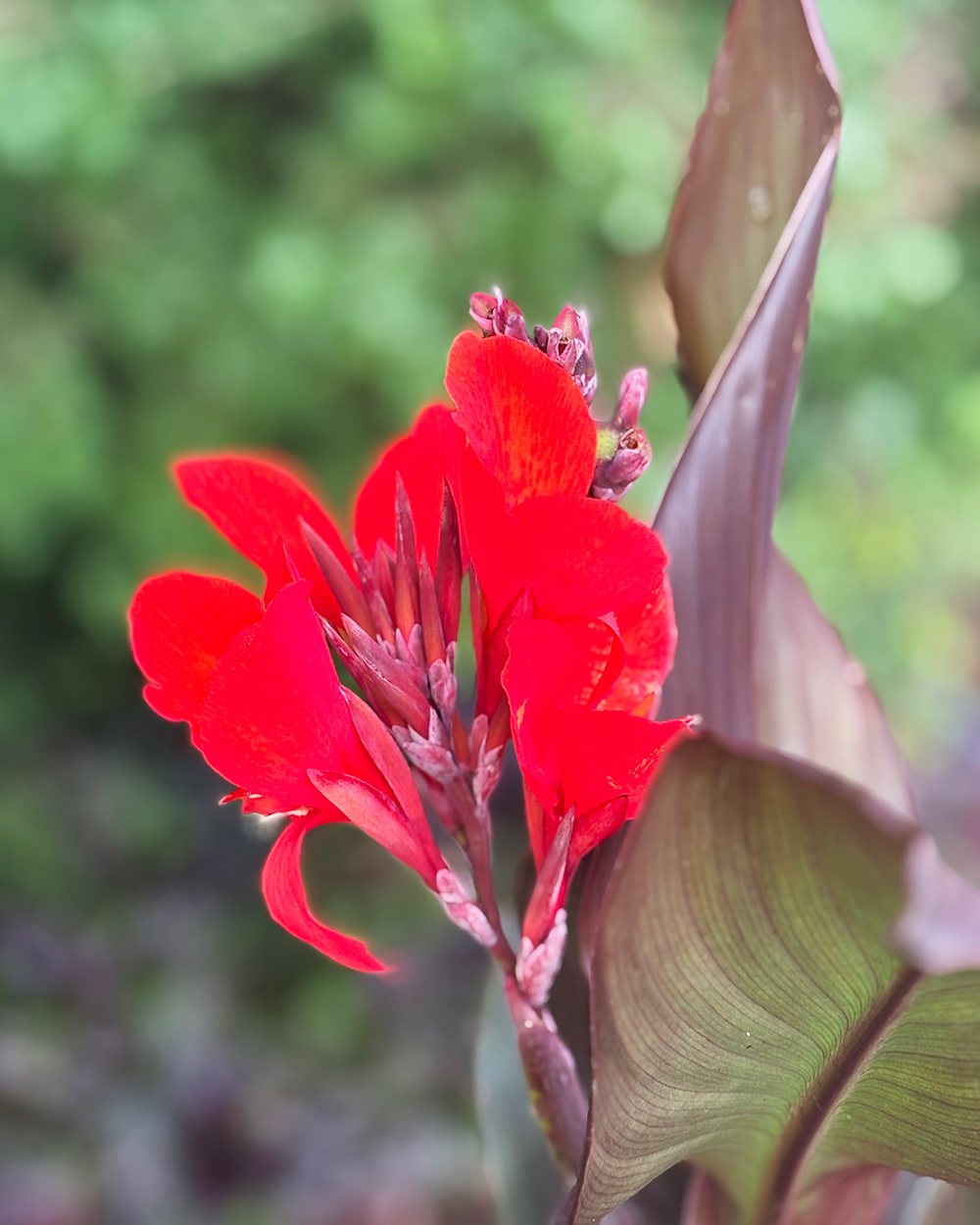
Continuing with this high-contrast color theme, Cannova® Bronze Scarlet canna lily (Canna x generalis ‘Bronze Scarlet’, Zones 7–11) has bright, fire-engine red blooms and tropical foliage in a delectable deep bronze.
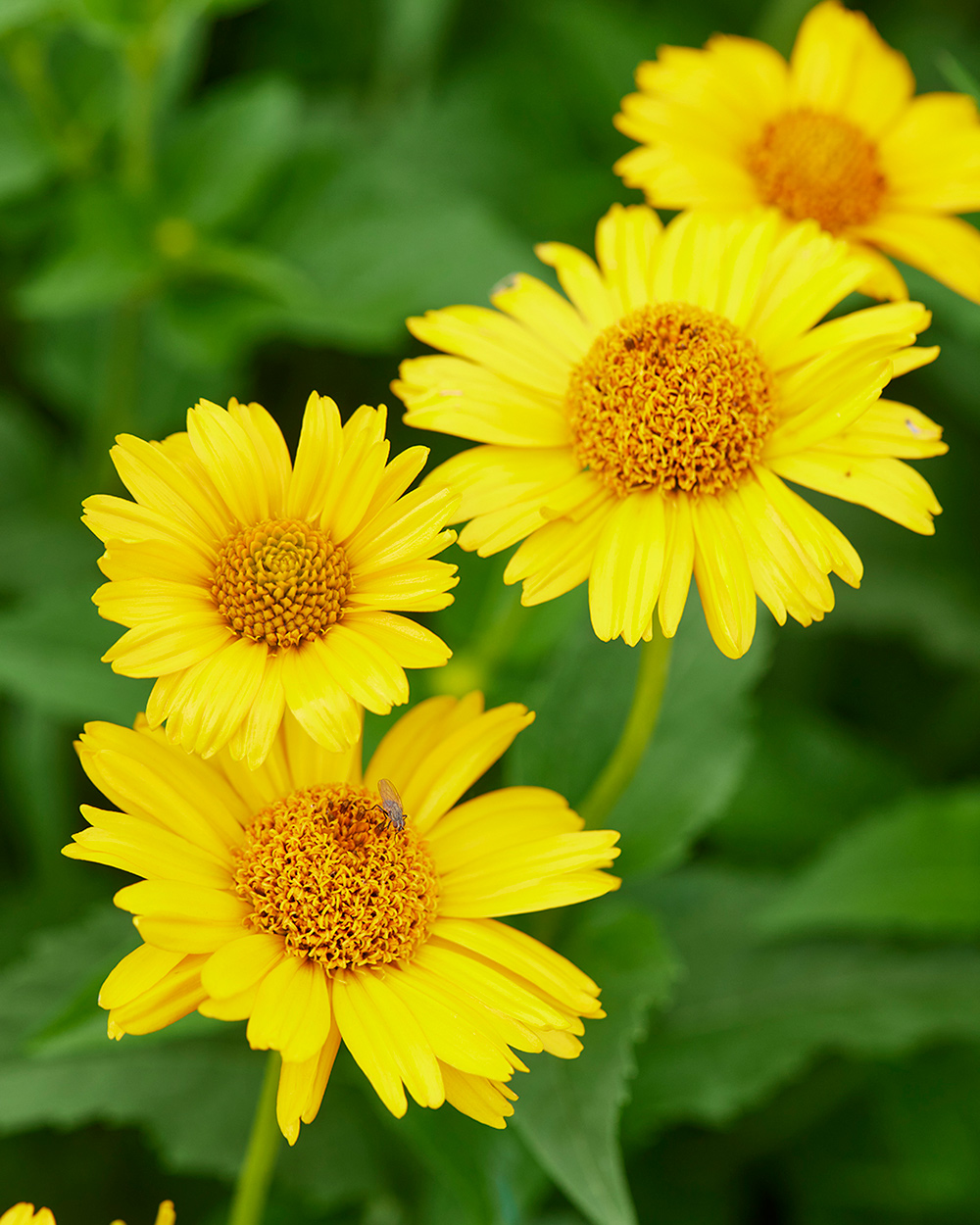
It’s clear that Jack’s garden is full of hot shades as it transitions to summer. More bold blooms come from these ‘Tuscan Sun’ false sunflowers (Heliopsis helianthoides ‘Tuscan Sun’, Zones 3–9).
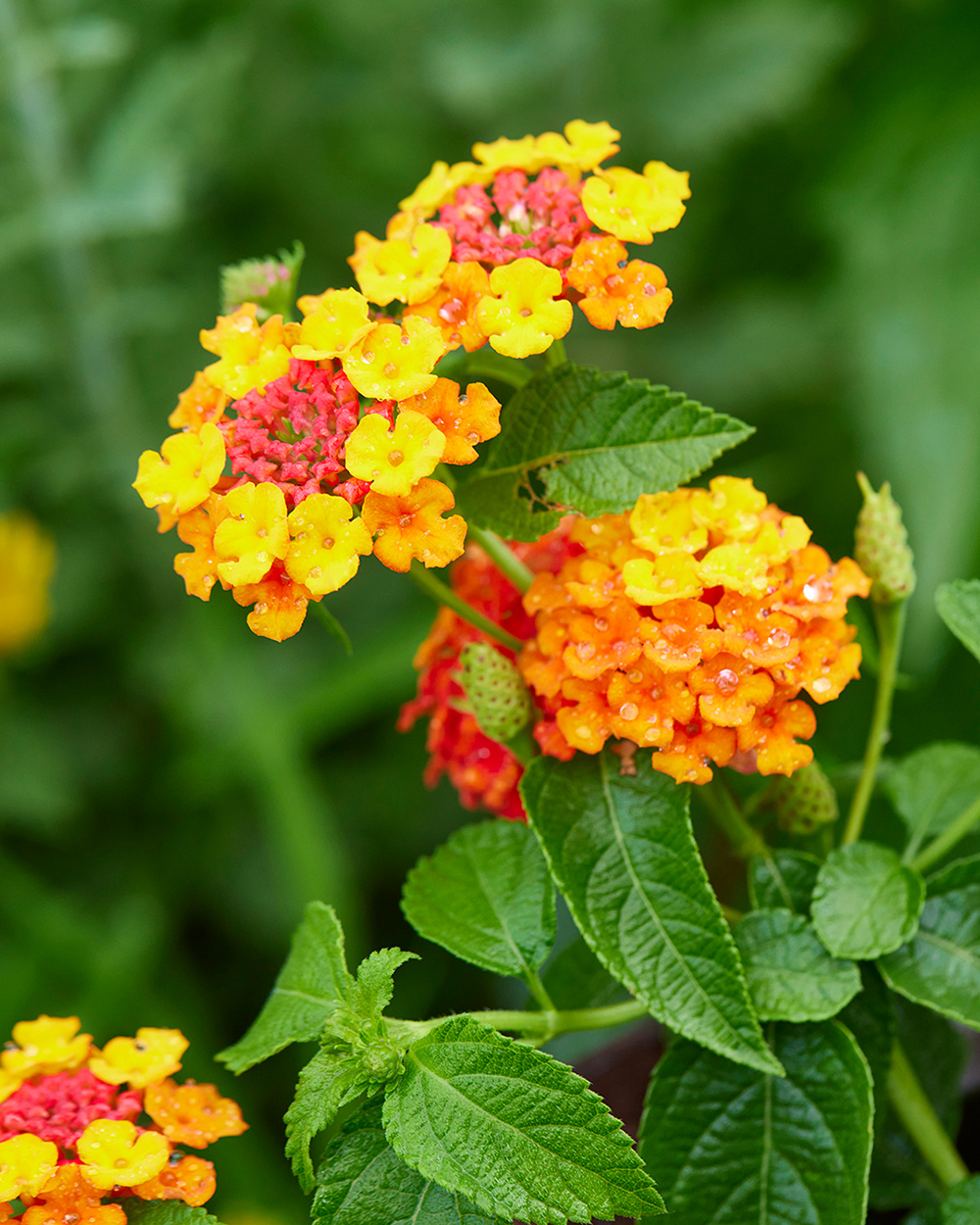
If you’re looking for flowers that will pack a hot, vibrant punch, Luscious® Citrus Blend™ lantana (Lantana camara ‘Balandusbi’, Zones 9–11 or as an annual) will always be an excellent addition. Clusters of bright reds, oranges, and yellows make them great companions for a multitude of other flowers in beds and containers.
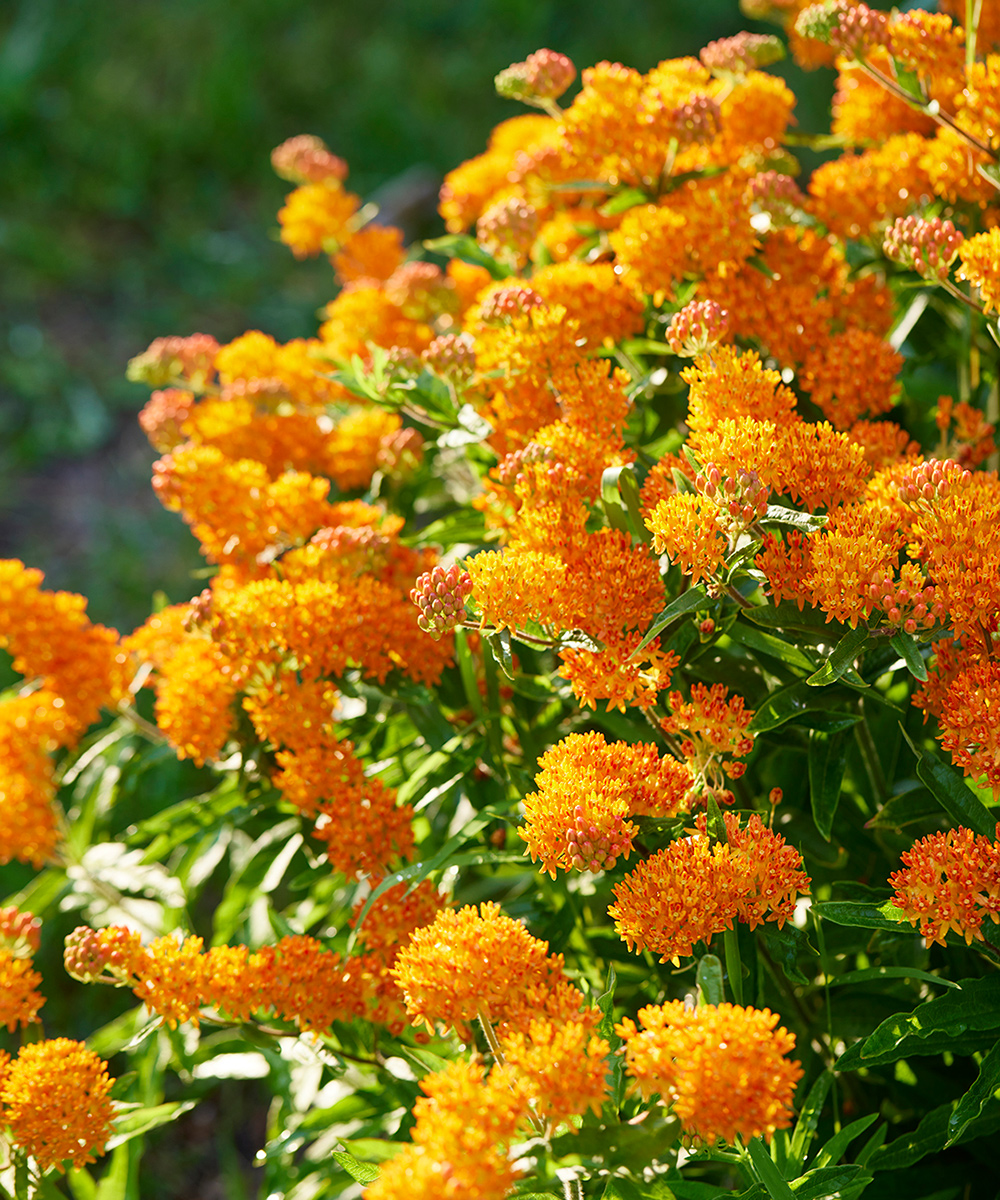
A great example of a plant lantana would pair with wonderfully is the always-amazing butterfly weed (Asclepias tuberosa, Zones 3–9), creating a combination that is both beautiful and beneficial.
Yet another perfect garden moment captured by Jack. Layers of colors and textures are made that much more captivating by the subtle glow of the sun. Light can be your best friend or greatest enemy when planting a garden, and it’s no different when you’re trying to photograph one. With Jack’s years of experience, he knows exactly how to make natural light work for him.
When your plantings are missing a little something, a container is an easy way to bridge those garden gaps. Red, orange, and yellow is the dominate color palette in Jack’s beds, but a trio of annuals helps tie in some of the other pink blooms that are scattered throughout.
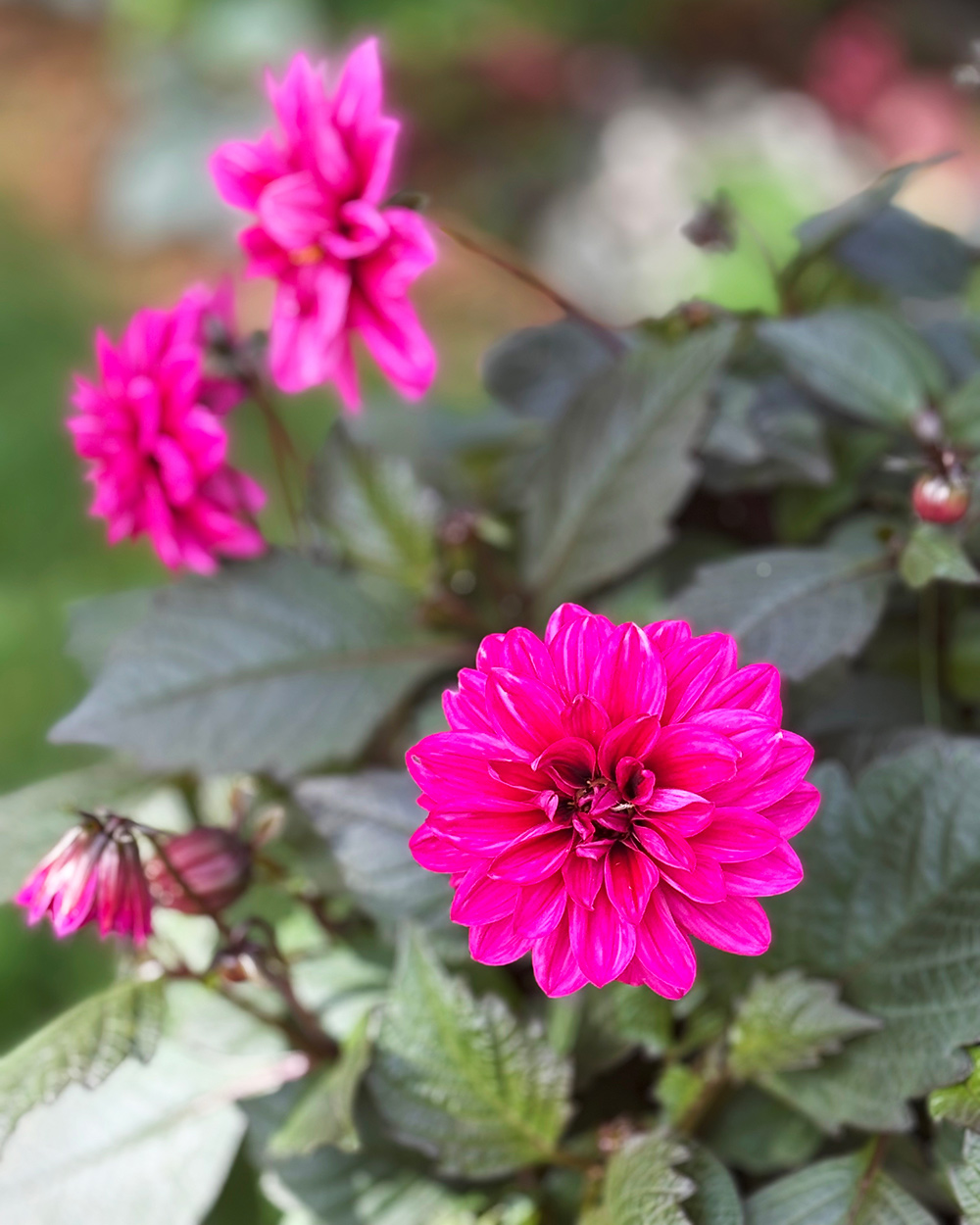
As a garden photographer, it’s no surprise that plants with high contrast are favored in Jack’s garden. The dark foliage on this bright pink dahlia makes it look like the blooms are going to burst right through my screen!
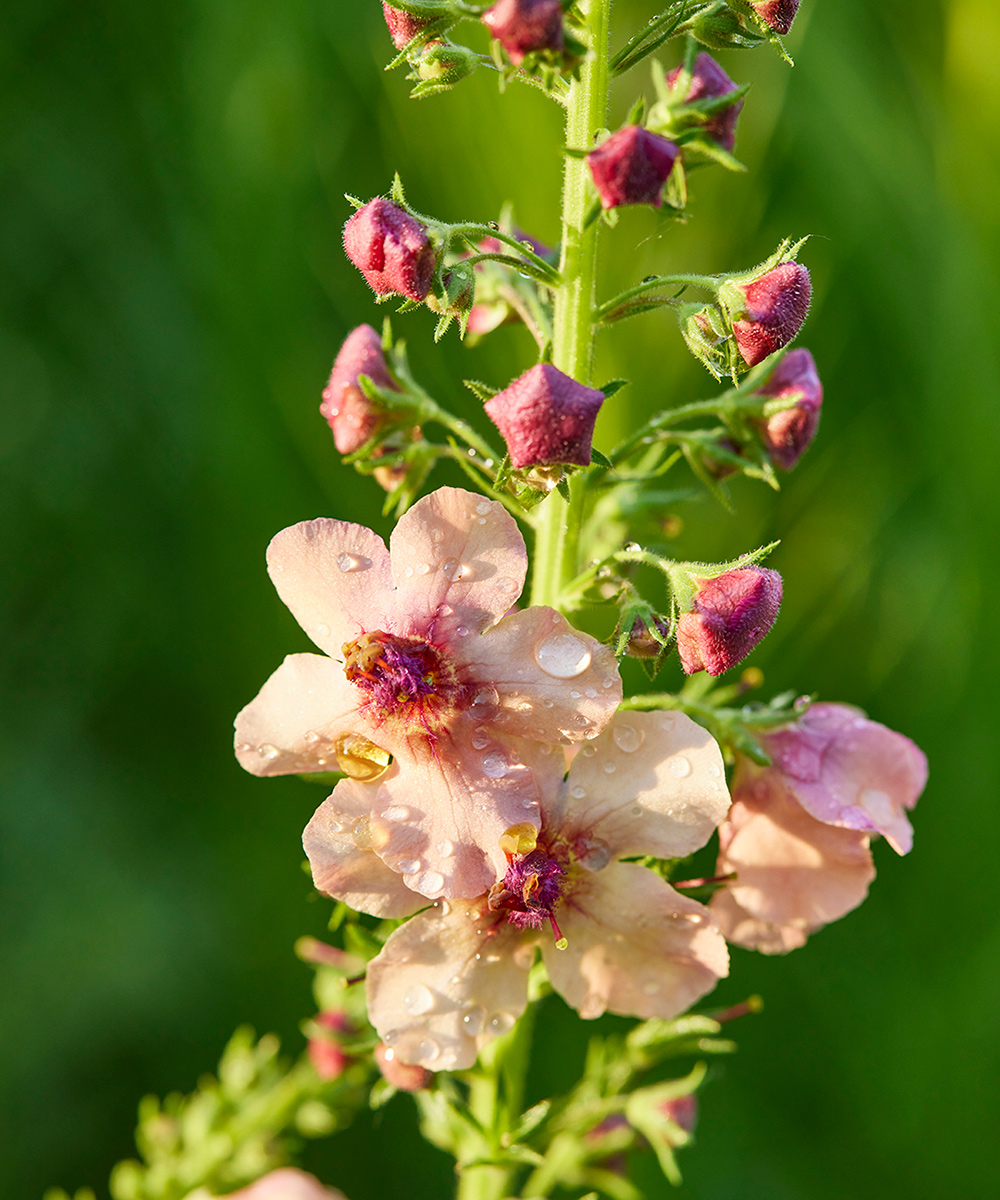
Lastly, this close up of ‘Southern Charm’ verbascum (Verbascum ‘Southern Charm’, Zones 5–9) is absolutely magnificent. With just a few flowers open, I can’t imagine the beauty that awaits as this spire continues to unfurl its peachy-pink blooms.
I hope you all enjoyed this gorgeous collection of flower photos from Jack! I’m always blown away by Jack’s incredible photography, and hope you feel inspired to indulge your inner garden photographer this week. If you have a little extra time in the morning or late afternoon, break out your camera or phone and pretend you’re photographing your garden for a glossy magazine spread. Have fun and experiment—you might get a whole new perspective on your plantings. And when the photoshoot is over, consider sharing your favorite shots with Garden Photo of the Day! Follow the directions below to submit photos via email, or send me a DM on Instagram: @agirlherdogandtheroad.
We want to see YOUR garden!
Have photos to share? We’d love to see your garden, a particular collection of plants you love, or a wonderful garden you had the chance to visit!
To submit, send 5–10 photos to [email protected] along with some information about the plants in the pictures and where you took the photos. We’d love to hear where you are located, how long you’ve been gardening, successes you are proud of, failures you learned from, hopes for the future, favorite plants, or funny stories from your garden.
Fine Gardening receives a commission for items purchased through links on this site, including Amazon Associates and other affiliate advertising programs.
STUNNING BIRDBATH: Quality birdbath is sure to attract feathered friends and create a charismatic ambiance for your garden, patio, deck, yard, or other outdoor space. SHALLOW SHAPE: Shallow and wide bowl assures that multiple small birds can drink and bathe safely at the same time
BEAUTIFUL DESIGN: Luxurious and antique styling adds a touch of elegance to your garden or yard. DURABLE CONSTRUCTION: Polypropylene material resists rust and damage from the elements while the sturdy base prevents the birdbath from tipping over. IDEAL SIZE: Birdbath measures 20″ L x 20″W x 28″H, the perfect size for your yard, and includes a one-year manufacturer’s warranty from date of purchase.
Johnny’s Selected Seeds Connecta® Cultivation Kit
Fine Gardening receives a commission for items purchased through links on this site, including Amazon Associates and other affiliate advertising programs.
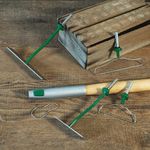
Choose the right tool head for the job and switch out quickly with a simple push-button release. Includes the Connecta receiver, Connecta Collinear 4 head, Connecta Collinear 7 head, Connecta Contour Wire 4 head, Connecta Contour Wire 6 head, a sustainably harvested oiled ashwood handle, and a stainless-steel carrying clip.
In Montana, one man says Medicaid and the drug coverage he gets through it are what allow him to work. But a raise he has gotten could mean he loses Medicaid, so he says he decided to “fudge the numbers.”
Oona Zenda/KFF Health News
hide caption
toggle caption
Oona Zenda/KFF Health News
MISSOULA, Mont. — As congressional Republicans finalized Medicaid work requirements in President Trump’s budget bill, one man who relies on that government-subsidized health coverage was trying to coax his old car to start after an eight-hour shift making sandwiches.
James asked that only his middle name be used to tell his story so that he wouldn’t lose health coverage or be accused of Medicaid fraud. He found his food service gig a few weeks into an addiction treatment program. The man, who is in his late 30s, said his boss “hasn’t been disappointed.”
“I’m a good worker,” he said with a grin.
James can get the prescription drugs that help him stabilize his life and hold down that job through Medicaid, the state-federal insurance program that covers people with low incomes or disabilities. Those drugs curb his desire for alcohol and treat long-standing conditions that exacerbate his addiction, including bipolar and insomnia disorders.
But he hasn’t qualified for the program in months, ever since his work hours increased and he received a raise of about $1 an hour. He exceeds his income eligibility limit of about $21,000 per year by roughly $50 a week.
“Fudge the numbers”
James said that despite his raise, he’s struggling to cover routine expenses, such as keeping his car running and paying his phone bill. He said he can’t afford the care he needs even on the cheapest insurance plan available to him through the Affordable Care Act’s marketplace or through his job’s health insurance plan. Even paying $60 a month for his sleep medications — one of six prescriptions he takes daily — is too expensive.
“I only saw one option,” James said. “Fudge the numbers.”
James hasn’t reported his new income to the state. That puts him at odds with congressional Republicans who justified adding hurdles to Medicaid by claiming the system is rife with waste, fraud and abuse. But James isn’t someone sitting on his couch playing video games, the type of person House Speaker Mike Johnson and others said they would target as they sought to impose work requirements.
A confusing system
Medicaid provides health coverage and long-term care to more than 70 million people in the United States. Those who study safety-net systems say it’s extremely rare for enrollees to commit fraud to tap into that coverage. In fact, research shows that swaths of eligible people aren’t enrolled in Medicaid, likely because the system is so confusing. And nearly two-thirds of people on Medicaid in 2023 had jobs, according to an analysis by KFF, a health information nonprofit that includes KFF Health News.
Those transitioning off Medicaid may qualify for other subsidized or low-priced health plans through the Affordable Care Act’s marketplace. But, as in James’ case, such plans can have gaps in what care is covered, and more comprehensive private plans may be too expensive. So James and an unknown number of other people find themselves caught between working too much to qualify for Medicaid but earning too little to pay for their own health care.
Bleak options
James considers himself to be a patriot and said that people shouldn’t “use government funding to just be lazy.” He agrees with the Republican argument that, if able, people should work if they receive Medicaid.
Hiding his hours on the job from the government bothers him, especially since he feels he must lie to access the medical care that enables him to work.
“I don’t want to be a fraud. I don’t want to die,” James said. “Those shouldn’t be the only two options.”
On July 4, Trump signed into law the major tax and spending bill that makes it harder for low-income workers to get Medicaid. That includes requiring beneficiaries to work or go to school and adding paperwork to prove they meet a minimum number of hours on the job every six months.
“It’s going to hurt people, whether they’re playing by the rules or not,” said Ben Sommers, a health economist at Harvard University. “We see this vilification of mostly very hardworking people who are really struggling and are benefiting from a program that helps them stay alive.”
James said he initially declined his raise because he worried about losing Medicaid. He had previously been kicked off the coverage about a month into his rehab program after finding work. To stay in the sober-living program he otherwise couldn’t afford, James said, he dropped just enough hours at work to requalify for Medicaid and then soon picked up hours again. If he didn’t earn more, he said, he had no chance of saving enough money to find housing after graduating from the treatment program.
“They’ll give you a bone if you stay in the mud,” James said. “But you have to stay there.”
A common dilemma
That problem — becoming just successful enough to suddenly lose Medicaid — is common. It’s called a benefit cliff, said Pamela Herd, who researches government aid at the University of Michigan.
“It just doesn’t make any sense that someone gets a dollar pay raise and all of a sudden they lose all access to their health insurance,” Herd said.
She said a partial fix exists called continuous eligibility, which guarantees an individual’s Medicaid coverage for a specific period, such as a year or longer. The goal is to give people time to adjust when they do earn more money. Continuous eligibility also helps maintain coverage for low-income workers with unpredictable hours and whose pay changes month to month.
But Congress has moved in the other direction. Under the new law, policymakers limited windows of eligibility for able-bodied adults to every six months. That will put more people on the program’s eligibility cliff, Herd said, in which they must decide between losing access to coverage or dropping hours at work.
“It is going to be a nightmare,” Herd said.
Those federal changes will be especially difficult for people with chronic conditions, such as James in Montana.
Not that long ago, James wouldn’t have been breaking the rules to access Medicaid because his state had 12-month continuous eligibility. But in 2023, Montana began requiring enrollees to report any change in their income within 10 days.
James is proud of how far he has come. About a year ago, his body was breaking down. He couldn’t hold a spoon to eat breakfast without whiskey — his hands shook too hard. He had alcohol-induced seizures. He said his memories from his unhealthiest times come in flashes: being put on a stretcher, the face of a worried landlord, ambulance lights in the background.
James recently graduated from his treatment program. He’s staying with a relative to save money as he and his girlfriend try to find an affordable place to rent — though even with Medicaid, finding housing feels like a stretch to him. He’s taking classes part time to become a licensed addiction counselor. His dream is to help others survive addiction, and he also sees that career as a way out of poverty.
To James, all his progress rides on keeping Medicaid a bit longer.
“Every time I get a piece of mail, I am terrified that I’m gonna open it up and it’s gonna say I don’t have Medicaid anymore,” he said. “I’m constantly in fear that it’s gonna go away.”
As of mid-July, officials hadn’t noticed the extra $50 he makes each week.
KFF Health News is a national newsroom that produces in-depth journalism about health issues and is one of the core operating programs at KFF — the independent source for health policy research, polling, and journalism.
Pothos is easy to grow and requires low-maintenance, which makes it perfect choice for gardening beginners.
You just need a small cutting to propagate pothos in water or soil to expand your green collection.
They are easy to grow, but this doesn’t mean that they are not prone to growing problems.
Common pothos problems include yellowing of leaves, brown spots, curling, brown tips, stunted plant growth and spotted leaves. These issues are often caused by overwatering, poor lighting, or low humidity levels.
In this write-up, you’ll learn how to fix these growing issues.
9 Common Pothos Growing Problems and How to Fix them
You can prevent most pothos problems before they even start, if you take proper care.
Simple things like checking soil moisture, placing the plant in bright indirect light, and trimming occasionally can make a big difference.
As a plant parent allot a bit of routine attention to your pothos, it will stay lush, green, and problem-free.
1. Yellowing Leaves
Yellowing of lower or older leaves are common and nothing to worry. But, when you notice new leaves are turning yellow, then it might be a sign of plant stress.
Pothos plants don’t like to sit in soggy soil, and too much moisture can lead to root rot, which then causes the leaves to turn yellow and fall off.
If the yellowing starts from the lower leaves and the soil feels consistently wet, overwatering is likely the culprit.
On the flip side, underwatering can also cause leaves to yellow, though this is typically accompanied by dry, crispy edges.
It’s all about finding the right balance—wait until the top inch or two of the soil is dry before watering again.
Apart from watering issues, insufficient sunlight and nutritional deficiency can cause yellowing of pothos.
To fix the issue, start by checking your watering habits and adjust them accordingly.
Ensure the plant is in a well-lit spot and consider feeding it if it hasn’t been fertilized in months.
Prune off the yellow leaves to redirect energy to new growth—once a leaf turns yellow, it won’t turn green again.
2. Brown Leaf Tips
If the tips of your pothos leaves are turning brown and dry, it’s usually a subtle sign that something is wrong. While it may not be as alarming as yellowing or spotting, it’s still a useful clue that your plant needs some attention.
The most common cause of brown leaf tips is low humidity.
Pothos are native to tropical environments where the air is naturally moist. In dry indoor conditions—especially during winter or in air-conditioned rooms—the lack of humidity can cause the tips of the leaves to dry out and turn brown.
Inconsistent watering and excessive fertilization can also result in brown tips.
Feeding your pothos too frequently or with a strong fertilizer can lead to a buildup of salts in the soil, which then damages the roots and shows up as crispy brown leaf tips.
To fix the issue, start by trimming off the browned tips with clean scissors to keep the plant looking tidy.
Increase humidity by misting the leaves, using a humidifier, or placing a tray of water near the plant. Make sure you’re watering consistently, allowing the top inch of soil to dry out between waterings.
If you’ve been fertilizing often, flush the soil with clean water to remove excess salts and reduce feeding frequency.
Though brown tips won’t return to green, improving conditions will help prevent the problem from getting worse and keep new growth healthy and vibrant.
3. Curling Leaves
When the lush, flat leaves of your pothos start to curl inward or downward, it’s a sign that the plant is stressed and trying to protect itself.
Leaf curl isn’t a disease on its own, but rather a symptom of environmental stress—most commonly related to watering or temperature.
The leading cause of curling leaves is underwatering.
When pothos don’t get enough water, their leaves curl to conserve moisture. This is especially common if the soil is bone-dry or if you’ve missed a few watering sessions. The plant will also appear droopy, and the leaves may feel thin or papery to the touch.
On the other hand, overwatering can also cause curling, though it’s less common. In this case, the soil stays too wet, damaging the roots and limiting their ability to absorb water, which causes the same moisture stress symptoms.
Temperature stress is another major factor. Pothos prefer warm environments and can react poorly to cold drafts, sudden temperature drops, or being placed near AC vents. The leaves may curl and even develop discoloration if the temperature dips too low.
To fix curling leaves, first check the soil moisture. If it’s dry, give your plant a thorough watering and let the excess drain out.
If the soil is too soggy, let it dry before watering again and consider repotting in better-draining soil.
Also, move your plant away from cold windows, vents, or direct blasts of hot or cold air.
Once the plant recovers, new leaves will unfurl normally, and you’ll notice a return to that signature pothos fullness.
4. Black or Brown Spots
Black or dark brown spots on pothos leaves often point to fungal or bacterial infections, usually caused by overly moist conditions or poor air circulation.
This is especially common when leaves stay wet for too long or when the plant is overcrowded with little airflow between leaves.
Overwatering and soggy soil can also invite fungal diseases that show up as dark, spreading patches. In some cases, pests like thrips or spider mites may damage the leaf tissue and cause spotting as well.
To treat the issue, prune off any affected leaves and allow the soil to dry out between waterings.
Improve airflow around the plant and avoid misting directly onto leaves if fungal issues are present.
If the problem persists, use a gentle fungicide or neem oil spray.
5. Wilting or Drooping
Wilting or drooping pothos leaves can look dramatic—but it’s usually a quick fix. The most common cause is underwatering, especially if the soil feels dry and the leaves appear limp or curled. Once watered, the plant usually perks up within hours.
However, overwatering can cause the exact same droopy appearance. In that case, the roots may be damaged and unable to take up water, even though the soil feels wet.
Always check the soil before watering. If it’s dry 1–2 inches down, give your pothos a good drink.
If it’s wet and the plant is still drooping, consider repotting to assess root health and improve drainage.
6. Stunted Growth
If your pothos isn’t growing as fast as it should, or seems to have paused altogether, it may be suffering from nutrient deficiency, poor lighting, or root-bound conditions.
Lack of light is the most common cause—pothos needs bright, indirect light to grow vigorously. If it’s in a dim room, growth can slow to a crawl.
Similarly, not feeding the plant for a long time can deplete nutrients, especially nitrogen, which is vital for leafy growth.
Another possible reason is that your plant has outgrown its pot. If roots are circling the base or coming out of the drainage holes, it’s time to repot.
Move your plant to a brighter spot, feed it with a balanced fertilizer, and check the roots to see if it needs more space.
7. Leggy Vines
Leggy pothos vines—with long gaps between leaves—are a clear sign that the plant is stretching for light. In low-light conditions, pothos vines grow longer in search of better light, but produce fewer and smaller leaves along the way.
While leggy vines won’t hurt the plant, they do make it look sparse and less full. To correct the issue, move your pothos to a brighter location with indirect sunlight.
You can also trim back the long vines to encourage bushier new growth.
Use the cuttings to propagate new plants or fill in the base of the original pot.
8. Root Rot
Root rot is one of the most serious problems a pothos can face—and it’s almost always caused by overwatering or poor drainage.
If the soil stays soggy for too long, the roots begin to rot, turning mushy and black. Above ground, the plant may wilt, yellow, or shed leaves quickly.
To check for root rot, gently remove the plant from its pot and examine the roots. Healthy roots are white or tan and firm, while rotten roots are dark, smelly, and soft.
Trim away any affected roots, repot the plant in fresh, well-draining soil, and reduce watering frequency.
Going forward, always wait until the top inch or two of soil is dry before watering again.
9. Spotted or Patchy Leaves
Spotted or patchy leaves—especially those with yellow or white blotches—are often a result of pest damage or nutrient imbalance.
Spider mites, mealybugs, or thrips can suck sap from the leaves, leaving behind tiny spots or pale patches.
Sometimes, inconsistent feeding or poor soil quality leads to patchy color, especially if the plant lacks micronutrients like magnesium or iron.
Inspect your plant carefully for signs of pests (look on the undersides of leaves).
Wipe them off with insecticidal soap or neem oil. If no pests are present, consider feeding the plant with a complete houseplant fertilizer to correct any deficiencies.
Conclusion
If you’re a beginner, then don’t assume pothos care is complicated.
Most of the issues—like yellowing leaves or drooping vines—are just signs that your plant needs a small adjustment. And once you understand what it’s asking for, keeping it happy becomes second nature.
Think of these problems as part of the learning process.
With the right care and a little consistency, your pothos will bounce back stronger and continue to thrive as one of the easiest, most rewarding houseplants you can grow.
Khaja Moinuddin, a computer science graduate, finds joy in gardening and homesteading. Join him on this blog as he shares his experiences in homesteading, gardening, and composting
Hollow joe-pye weed, Eutrochium fistulosum (syn. Eupatorium fistulosum) is a flowering perennial in the Asteraceae family suited to cultivation in USDA Hardiness Zones 4 through 8.
It is native to eastern regions of North America, thriving in the full sun to partial shade of low-lying wetlands.
This impressive species reaches heights of four to seven feet and is distinguished from other Eutrochium varieties by its whorled arrangement of large leaves and distinctive hollow stems that may show purple coloring but lack spots.
We link to vendors to help you find relevant products. If you buy from one of our links, we may earn a commission.
From midsummer through fall, it produces branching clusters of mauve, vanilla-scented flowers that attract bees, butterflies, and other beneficial pollinators.
The robust seed heads that follow provide valuable late-season food for migratory songbirds, including goldfinches and juncos.
This article zeros in on hollow joe-pye weed, E. fistulosum. Here’s what I’ll cover:
Also known as trumpetweed or purple thoroughwort, E. fistulosum is an easy-care plant that expands its presence annually through rhizomatous spread and self-seeding.
With the first hard freeze, it dies to the ground, returning the following spring with lush mounds of foliage from which its tall flowering stems rise again.
While Native Americans traditionally brewed the leaves for medicinal purposes, today we value hollow joe-pye weed primarily for its ornamental appeal and its contributions to biodiversity and wildlife habitat.
It also serves as an effective erosion control plant in moist soils.
Quick Look
Common name(s): Hollow joe-pye weed, purple thoroughwort, trumpetweed
Plant type: Herbaceous perennial
Hardiness (USDA Zone): 4-8
Native to: Eastern North America
Bloom time / season: Midsummer to fall
Exposure: Full sun to partial shade
Soil type: Moist, organically-rich, well-draining
Soil pH: 6.0-8.0, slightly acidic to slightly alkaline
Time to maturity: 1-2 years
Mature size: 4-7 feet tall by 2-4 feet wide
Best uses:Border, butterfly garden, cutting garden, drift, meadow, naturalize, wetland
Taxonomy
Order: Asterales
Family: Asteraceae
Genus:Eutrochium
Species:Fistulosum
Hollow joe-pye weed is a substantial addition to the home landscape with its upright, clumping growth habit and mature width of two to four feet.
Showcase it in mixed borders and drifts, add it to butterfly gardens to increase pollinator activity, let it naturalize through meadows, and use it to curb erosion in perpetually moist garden areas.
In the cutting garden, position hollow joe-pye weed toward the back where its tall stems can be harvested for striking vase arrangements.
How to Grow
In its native eastern North American habitat, E. fistulosum grows in moist conditions, enduring hot, humid summers and cold, snowy winters.
It has poor drought tolerance, and leaves will scorch when water is insufficient.
Light
Plants perform best in full sun but tolerate partial shade, though stems may become leggy with sparse foliage in shadier conditions.
Soil
The ideal growing medium is moist, fertile loam with a slightly acidic to slightly alkaline pH of between 6.0 and 8.0. Soil should be well-draining and moisture-retentive.
Plants will tolerate lower-quality soil as long as it remains consistently damp and can withstand periods of flooding.
Plants require consistent moisture to thrive and prefer “wet feet,” similar to irises. During dry periods, water weekly to prevent the soil from drying out.
Water when the top two inches of soil is dry.
Fertilizing
When grown in fertile soil that mimics its native habitat, E. fistulosum requires no additional fertilization.
To compensate for poor soil conditions, you can apply a slow-release granular fertilizer in spring.
Choose a product with an NPK ratio of 5-10-10 to promote blooming without excessive foliage growth.
Avoid direct contact between fertilizer and plant stems during application.
Where to Buy
You can generally find the species plant available at nurseries that stock a good range of natives.
There are a few cultivated varieties available, including ‘Alba’ which sports white flowers and ‘JoJo,’ a compact cultivar with mature dimensions of three to four feet tall and two to three feet wide.
‘Jojo’ has bright pink double blooms with twice the number of petals as the species. This cultivar is sterile, so plants do not self-sow.
Maintenance
Native joe-pye weed is a low-maintenance perennial requiring only basic seasonal care.
Tall stems may need staking for support, particularly in windy locations or rich soils that promote vigorous growth.
Some gardeners use the Chelsea chop pruning technique, cutting stems back by one-third in early summer to produce shorter plants with more stable stems at bloom time.
This approach results in smaller but more numerous flower clusters.
Regular maintenance includes removing dead or damaged plant material throughout the season, cutting clumps to ground level after the first hard frost, and clearing away debris to prevent overwintering pests and diseases.
Propagation
To begin, you’ll need seeds, a division of an existing plant, or a potted nursery specimen.
Let’s discuss each method:
From Seed
At the end of the growing season, joe-pye flowers fade and seed pods form. As the pods dry, they split open to reveal fluffy seeds inside.
Collect seeds before the wind disperses them or purchase seeds for fall sowing if needed.
Use a garden rake to loosen the top two to three inches of soil in your desired planting area.
Lightly water the area, then sprinkle seeds generously over the prepared soil since germination rates tend to be low.
Do not cover seeds with soil as they require light to germinate.
Water when the top few inches of soil are dry, continuing until the first frost.
The following spring, after the last average frost date, resume watering the area when the top few inches of soil are dry.
After germination, when the seedlings have two sets of true leaves, thin them to one or two every two to four feet.
Continue watering as needed through the growing season, providing an inch of water per week, including rainfall.
By Division
Dividing mature, overcrowded plants is another effective propagation method.
After seeds disperse in autumn, push a long-handled garden shovel down into the clump to separate a section.
Work the shovel around the division, lifting as you go, until you can lift it freely from the ground.
Prepare the new planting site by working the soil to a depth of 10 to 12 inches until it is crumbly and free from debris.
Set the divided clump at the same depth it was originally growing. The crown, where roots and stems meet, should sit at or slightly above ground level.
Backfill around the division and tamp the soil firmly in place. Water thoroughly around the new plant, avoiding wetting the foliage.
Fill the original hole left by the division with garden soil.
Transplanting
To transplant a potted specimen, water it thoroughly the day before.
Prepare the soil as described above, digging to a depth equal to the pot depth and twice as wide.
Remove the plant from its container and set the entire root ball in the ground at the same depth it was in the original container, ensuring the crown sits at or just above the soil surface.
Backfill around the plant, tamp the soil firmly, and water thoroughly. Continue regular watering at approximately one inch per week, including rainfall.
Pests and Disease
When we meet its cultural requirements, E. fistulosum is not prone to pests or disease.
However, in overly dry conditions, you may encounter a few pests.
Flea Beetles
Flea beetles are small pests in the Chrysomelidae family that vary in color, shape, and size.
Adults chew characteristic “shot holes” in leaves and often carry wilting diseases, while larvae feed on roots underground.
Control measures include handpicking adults and dropping them into soapy water, tilling soil around plants to eliminate burrowing grubs, and applying pyrethrin-based insecticides when necessary.
Young plants are most vulnerable to grasshoppers, medium to large jumping pests of various colors in the Acrididae family that can chew entire plants down to a few ragged stems.
If you can catch them, handpick the pests and drop them into a bucket of soapsuds. Treat plants with a pyrethrin insecticide as above.
Sawflies
Sawflies belong to various insect families within the Hymenoptera order and resemble miniature wasps.
Both adults and their caterpillar-like larvae are aggressive leaf feeders. Remove larvae by hand and dispose of them in soapy water, then treat affected plants with neem oil.
Disease
Powdery mildew is a fungal infection that tends to show up during periods of warm temperatures and high humidity.
It appears as a grayish-white powdery coating on the surface of the foliage. Plants grown in part shade conditions tend to be more susceptible.
If there are just a few leaves showing symptoms, you can clip those off and dispose of them in the trash. You can also use neem oil to treat a more substantial infection.
With full sun, fertile soil, and consistent moisture, hollow joe-pye weed makes a strong vertical statement in the landscape with its tall stems and substantial flower clusters.
As a native species, it adds further value to garden spaces by supporting local wildlife and the ecosystems they inhabit.
Are you ready to welcome hollow joe-pye weed into your landscape? Let us know in the comments section below!
The 988 Suicide and Crisis Lifeline has been up and running for three years. The day after its third anniversary, the Trump administration shut down a specialized option for gay and trans young people.
Smith Collection/Gado via Getty Images
hide caption
toggle caption
Smith Collection/Gado via Getty Images
The nation’s Suicide and Crisis Lifeline, 988, shuttered the specialized services for LGBTQ+ youth this week. The move came a day after the Lifeline marked three years since its launch. During this period, it has fielded more than 16 million calls, texts and chats. Nearly 10% of those contacts have been from gay and transgender young people, according to government data.
“This is a tragic moment,” says Mark Henson, vice president of government affairs and advocacy at The Trevor Project, one of several organizations that had contracts with the federal government to provide counseling services for this vulnerable population. The Trevor Project fields about half the LGBTQ+ contacts.
Data from the Youth Behavior Risk Survey, conducted by the Centers for Disease Control and Prevention, show that LGBTQ+ youth are more likely to experience persistent feelings of sadness and hopelessness compared to their peers, and more likely to attempt suicide.
When these young people contact 988, they have had the option to press 3 to be connected to a counselor specifically trained to support their unique mental health needs, which are associated with discrimination and violence they often face. This service is similar to what 988 offers to veterans, who are also at a higher risk of suicide, and can access support tailored for them by pressing 1 when they contact 988. That service will be retained as 988 enters its fourth year.
“Many LGBTQ+ youth who use these services didn’t know they existed until they called 988 and found out there is someone on the other end of the line that knows what they’ve gone through and cares deeply for them,” says Henson.
The 988 Lifeline, including its services for veterans and LGBTQ+ youth, was started through bipartisan legislation signed into law by President Trump during his first term. In June, the Trump administration announced in a press release that it “will no longer silo LGB+ youth services, also known as the ‘Press 3 option,’ to focus on serving all help seekers.”
“The Press 3 option has run out of congressionally directed funding,” Danielle Bennett, a spokesperson for the Substance Abuse and Mental Health Administration, which is in charge of 988, told NPR in an email.
Congress had allocated more than $33 million for the LGBTQ+ services for 2025 and the money was spent by June 2025, according to Bennett. The amount allocated for all 988 services for this year was nearly $520 million.
“Continued funding of the Press 3 option threatened to put the entire 988 Suicide & Crisis Lifeline in danger ofmassive reductions in service,” Bennett wrote.
Henson, with The Trevor Project, says the congressionally allocated money was surpassed in previous years as well, and the Biden administration reallocated more money to fund the organization based on the work they provided.
“So there was the knowledge and understanding at the beginning of the year that the congressional set aside was likely to be exceeded,” he says.
“I believe the [current] administration has the ability, as past administrations have, to continue funding this program,” Henson added.
“When we created the 988 hotline, we knew it was important that those calls, all of them, be answered promptly,” says Sen. Tammy Baldwin, D-Wis., who wrote the bipartisan legislation that created 988. “Somebody in a mental health crisis, somebody contemplating suicide can’t be put on hold. And so the department always had the leeway to move around resources in a way to make sure that these calls were answered in a timely and responsible way.”
Ending the services for LGBTQ+ youth is a political move, says Baldwin.
“They have had relentless attacks on members of the LGBTQ community, particularly transgender individuals, transgender youth,” she says. “In the face of those relentless political attacks on this very vulnerable community, to then cut off a lifeline is absolutely cruel.”
Other ways to reach help
The Trevor Project, which has been serving the gay and trans youth community through its own lifeline well before 988 will continue to provide that support, says Henson, even though “the loss of this federal funding means that our capacity to do so has been cut in half,” he says.
But, he adds, “we worked with our counselors, we worked internally, we worked with allies to make sure that everyone knows that no matter what happens, the Trevor Project itself will continue to support the mental health of LGBTQ plus youth in crisis.”
“We’ve asked supporters and others to help fortify our crisis services so that someone will be on the line there when the LGBTQ+youth reach out,” he says.
Even though the press 3 option is no longer available, anyone in crisis — including young people — call or text the 988 Suicide and Crisis Lifeline to connect with a counselor.
Yup, it’s 2025—one year older (just entered another “decade of years”) and (hopefully) one year wiser. Speaking of wise, I find it wise to get out there early and get things cleaned up and ready for the sprouts. I find this critically important due to my gardens not having open places for footing, so getting the turf cleared early allows me to just watch things grow.
I have coined myself a “mix-’em-up” and “crowd” gardener because I realize that the plant- and bulb-growers SUGGEST specific plant-spacing. I’ve heard many suggestions in my life, and some I listen to and some I don’t. This specific suggestion—well, I don’t.
As my gardens continue to be dynamic and ever-changing, they all do have one thing in common—all of the plants in every garden have lots of friends. Friends take up space, and friends don’t let weeds sneak in. Many of my perennials spread by themselves, and others I split and place the kids elsewhere.
Once mid-June comes around, any weeds are looking elsewhere for footing and I’m then into official viewing-only mode. Mulch ? Nope—I like the natural turf (where it can be seen, ha). Color schemes? I don’t really focus too much on that—I haven’t found two colors of blooms that I could say, “You girls don’t belong together,” and sometimes those “weird” color combinations make a sort of asymmetrical statement—like someone who is wearing a nice suit but has blue hair. I guess that I’m just a rebel when it comes to conventional, traditional gardening with ultraclean lines and spacing. All of my perimeter plants on the property lines are on their own, with ostrich ferns(Matteuccia struthiopteris, Zones 3–7), wild daylilies, Solomon’s seal (Polygonatum humile, Zones 5–8), bachelor’s buttons (Centaurea cyanus, annual), wild phlox (which blooms well before “domestic phloxes”), wisteria, and the sweet, sweet smelling Hall’s honeysuckle (Lonicera japonica ‘Halliana’, Zones 4–11).
With that said, here’s a sampling of my little world for spring 2025. As always, I wish the best, most enjoyable, and most “successful” gardens for everyone—just don’t focus too much on that “success” part—it’s all in the eyes of the beholder. ONE, and ONLY one will know when their garden is a success.
As always, peace from the Mohawk Valley in central New York State.
First up are Lee’s ostrich ferns with an incredible weigela in full bloom—potentially the cultivar Wine & Roses® (Weigela florida ‘Alexandra’, Zones 3–9), based on the dark burgundy foliage and bright pink flowers.
Around Lee’s pool, some spires of lupine delight
A little earlier in the season, the lupines were just starting to come into bloom. The rest of Lee’s garden is looking lush and inviting in the background.
Speaking of early in the season, Lee included this shot of some of his stellar spring bulbs. We often showcase Lee’s tulips on Garden Photo of the Day (Lee’s Tulips in Mohawk Valley), but these hyacinth (Hyacinthus orientalis, Zones 4–8) are equally enchanting.
Along with the fragrant Hall’s honeysuckle that Lee mentions above, which has lovely yellow-and-white flowers, he also has a stunning orange honeysuckle (Lonicera ciliosa, Zones 4–9) that is covered in their more vibrant blossoms.
If we’re talking fragrance, mock orange always gets top billing. These cascading branches of white blooms are lovely, but you know their sweet, citrusy scent is even more intoxicating.
If you’ve enjoyed Lee’s garden in the past, you’ve likely been waiting patiently for some lily photos to make an appearance in this post. Lee has an incredible collection, and this variety is another standout. This vibrant but tiny variety might be the Lily Looks™ Tiny Orange Sensation Asiatic lily (Lilium ‘Tiny Orange Sensation’, Zones 3–9).
From a smaller, low-growing variety to this flush of pink lilies dancing along with pops of orange rudbeckia blooms, Lee finds room for a diverse array of garden treasures.
Lastly, another incredible lily, potentially the cultivar ‘Forever Susan’ (Lilium ‘Forever Susan’, Zones 4–8); lilies can bring some of the brightest, boldest color combinations to the garden, and somehow they look even more magical covered in water droplets after a fresh rain.
Thank you so much for another peek inside the wonderfully colorful world you have created, Lee! While you consider your approach unconventional, all we can see from your photos is enviable plant beauty.
What is your approach to gardening? Do you embrace the chaos like Lee, or does your mind go wild without a well-laid plan for each season? Let us know in the comments, or submit your garden to Garden Photo of the Day! Follow the directions below to submit photos via email, or send me a DM on Instagram: @agirlherdogandtheroad.
We want to see YOUR garden!
Have photos to share? We’d love to see your garden, a particular collection of plants you love, or a wonderful garden you had the chance to visit!
To submit, send 5–10 photos to [email protected] along with some information about the plants in the pictures and where you took the photos. We’d love to hear where you are located, how long you’ve been gardening, successes you are proud of, failures you learned from, hopes for the future, favorite plants, or funny stories from your garden.
Fine Gardening receives a commission for items purchased through links on this site, including Amazon Associates and other affiliate advertising programs.
STUNNING BIRDBATH: Quality birdbath is sure to attract feathered friends and create a charismatic ambiance for your garden, patio, deck, yard, or other outdoor space. SHALLOW SHAPE: Shallow and wide bowl assures that multiple small birds can drink and bathe safely at the same time
BEAUTIFUL DESIGN: Luxurious and antique styling adds a touch of elegance to your garden or yard. DURABLE CONSTRUCTION: Polypropylene material resists rust and damage from the elements while the sturdy base prevents the birdbath from tipping over. IDEAL SIZE: Birdbath measures 20″ L x 20″W x 28″H, the perfect size for your yard, and includes a one-year manufacturer’s warranty from date of purchase.
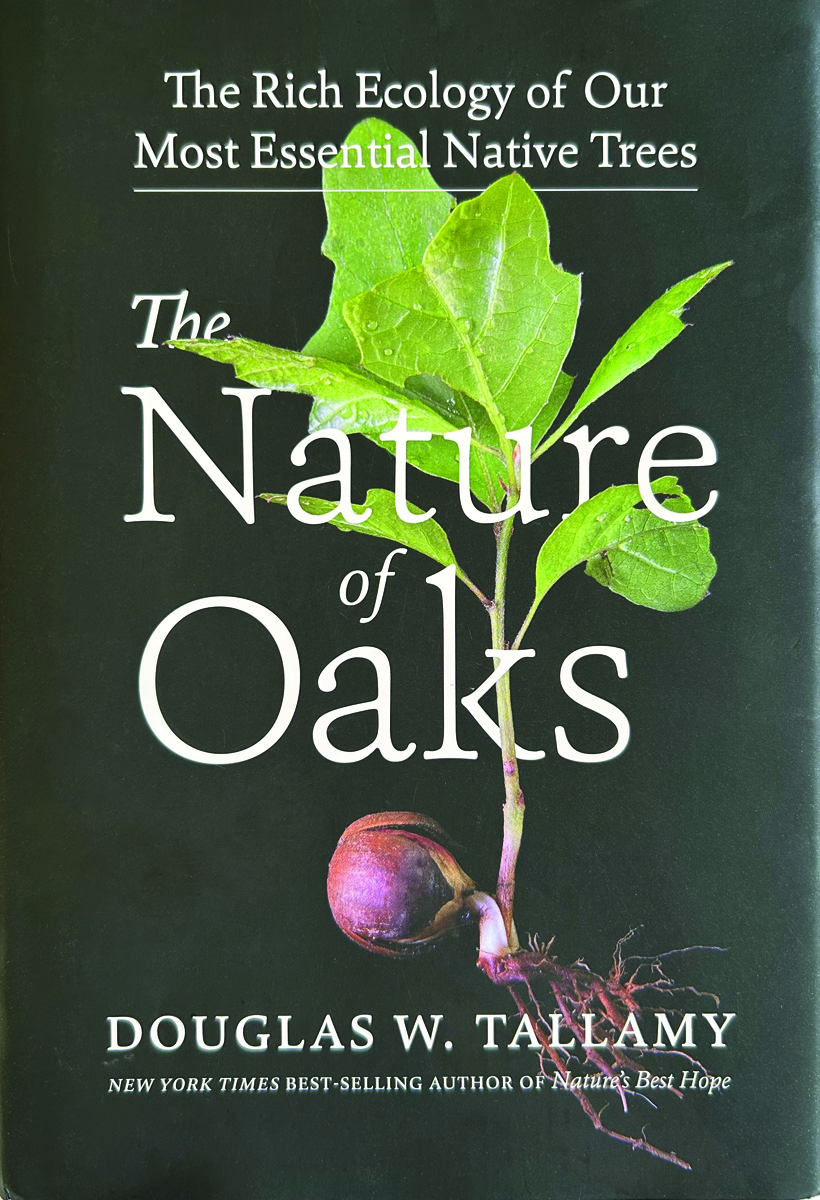
The Nature of Oaks: The Rich Ecology of Our Most Essential Native Trees
Fine Gardening receives a commission for items purchased through links on this site, including Amazon Associates and other affiliate advertising programs.
The Nature of Oaks reveals what is going on in oak trees month by month, highlighting the seasonal cycles of life, death, and renewal. From woodpeckers who collect and store hundreds of acorns for sustenance to the beauty of jewel caterpillars, Doug Tallamy illuminates and celebrates the wonders that occur right in our own backyards. He also shares practical advice about how to plant and care for an oak, along with information about the best oak species for your area.
Lee Valley Mini Garden Shear Set
Fine Gardening receives a commission for items purchased through links on this site, including Amazon Associates and other affiliate advertising programs.
These shears have a distinctive finger rest that not only aids grip but allows greater freedom of movement than a conventional handle design. They have a durable powder-coat finish to resist rust and wear, and a simple clasp that locks the spring-action stainless-steel blades closed. The set includes one pair of round-nose shears measuring 5 1/2″ overall with 1″ blades for cutting stems up to 3/8″ in diameter, and one pair of 6 1/2″ needle-nose shears with 2″ fine-tip blades for precise work.
Under pressure from the federal government to increase organ transplants, hospitals and organ procurement organizations across the country are rushing people toward donation, and some patients have been harmed. Brian M. Rosenthal explains how and where this is happening.
Basil is prominent for its culinary and health benefits. Antioxidant and anti-inflammatory abilities of this versatile herb can thwart free radicals and reduce inflammation.
It’s a warm-season herb that thrives during the late spring and summer. In most regions, basil is planted after the last frost in spring and continues to grow vigorously throughout the summer, often until the first fall frost.
As basil plant can’t tolerate cold and frost, you’ve to preserve the basil leaves to enjoy their aromatic flavour even after the growing season.
You can dry, freeze, or turn the leaves into pesto, to retain the herb’s taste and fragrance. This way, you can continue adding the essence of summer to your dishes even during the colder months when fresh basil isn’t available.
To dry fresh basil naturally, dry the harvested leaves after washing them, then tie the stems into small bundles.
Hang them upside down in a warm, dry, and airy spot out of direct sunlight.
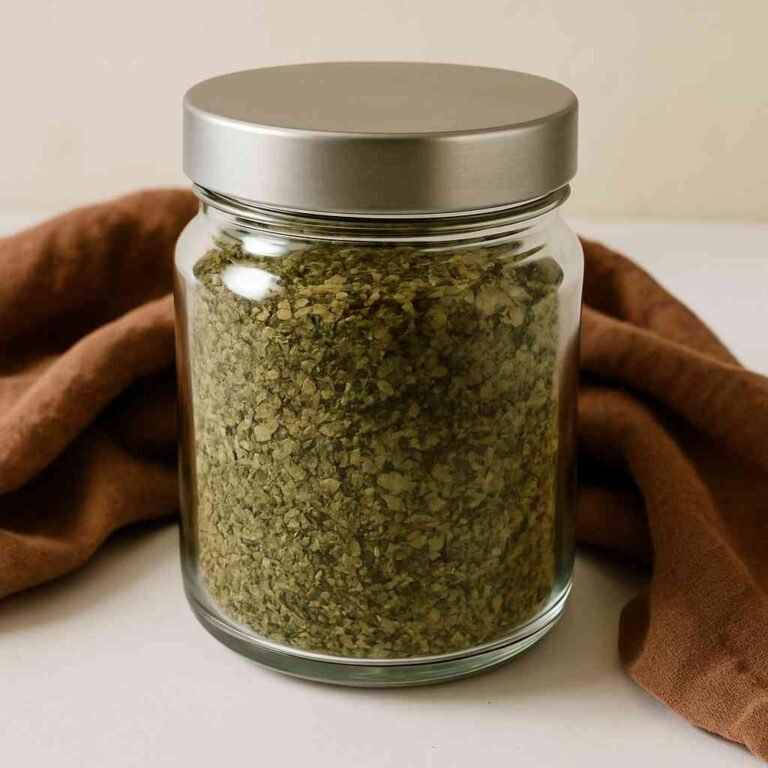
After 1–2 weeks, once the leaves are crisp, remove and store them in an airtight container away from light.
Though it seems simple, it is important that you preserve the obtained dry basil leaves properly. Which I’ll share by end of this article.
How to Harvest Basil for Drying?
To make sure your dried basil actually tastes and smells amazing? You should pick the basil in the right way, because that’s half the game.
Harvesting basil, the right way isn’t just about snagging leaves; it actually helps your plant grow bushier and keeps those dried leaves super flavorful.
When to Harvest?
The best time to harvest basil is before the plant begins to flower, as this is when its oils—and therefore its flavor—are at their peak. Ideally:
Harvest in the morning, once the dew has dried but before the sun is strong.
Select mature stems, about 6–8 inches long, with lush green leaves.
If your basil has already started to flower, pinch off the flowers to redirect energy to the leaves. While still usable, post-flowering leaves tend to be slightly more bitter.
How to Harvest?
Use clean, sharp garden shears or scissors.
Snip just above a leaf node (where two leaves meet the stem). This encourages branching and more growth.
Avoid harvesting more than one-third of the plant at once so it can continue producing.
How to Prepare Basil for Drying?
Rinse the basil stems gently under cool water to remove dirt or bugs.
Shake off excess water and pat dry with a clean kitchen towel or paper towel.
Spread the leaves out and let them air dry completely. Damp leaves can mold during the drying process, so ensure they are fully dry before starting.
Drying basil naturally isn’t just cost-effective, it is simple and environmentally friendly, making it ideal for those who are looking to preserve authentic herb aroma.
By letting basil air-dry at its own pace, you gently retain the herb’s vibrant colour, signature aroma, and concentrated flavour—without any electricity or special equipment.
1.Bundle Hanging Method
In this method is a natural approach to drying basil that relies on air circulation rather than heat.
By tying small bunches of basil stems together and suspending them upside down in a well-ventilated, dry area, you allow the leaves to slowly lose moisture while preserving their essential oils and rich aroma.
Group 4–6 stems together and secure them with string or a rubber band.
Hang the bundles upside down in a warm, well-ventilated area that is shaded and dry (like a pantry, attic, or unused room).
You can place a paper bag with holes around the bundle to keep dust away and speed up drying.
Let them hang for 7–14 days, depending on humidity. The basil is ready when the leaves are crisp and crumble easily.
2. Tray or Screen Drying Method
Compared to the bundle hanging method, the tray or screen drying technique offers faster and more even drying since each basil leaf is spread out in a single layer for optimal airflow and exposure.
Remove leaves from the stems and spread them out in a single layer on a clean, dry surface like a mesh screen, wire rack, baking tray, or paper towel.
Keep the tray in a dry, ventilated spot out of direct sunlight.
Turn the leaves daily to prevent sticking and promote even drying.
Leaves will dry in about 5–10 days. Avoid stacking the leaves to reduce the risk of mold.
Both these methods take longer than using appliances but are gentle and preserve essential oils better.
For anyone aiming for the purest, most aromatic dried basil, patience with natural drying methods pays off in superior quality and flavor.
Other Ways to Dry Basil
Though natural drying methods preserve basil’s essential oils and flavor exceptionally well, sometimes you might need to dry your basil quickly due to weather conditions.
In that case, other drying methods—such as oven drying or using a dehydrator—are great alternatives.
1. Drying Basil in a Dehydrator
While the process is faster and great for processing large batches, some home cooks may notice a slight trade-off in flavor intensity compared to air-dried basil—but it remains an excellent way to preserve herbs for long-term use, especially when outdoor drying isn’t practical
Arrange clean, dry basil leaves in a single layer on the dehydrator trays.
Set the dehydrator to a low temperature: 95F to 115F.
Drying typically takes 4–6 hours, depending on the leaf size and moisture content.
Leaves are done when they are crisp and crumble with a light touch.
2. Drying Basil in an Oven
Drying basil in an oven is a popular and practical method, especially if you need results quickly or live in a humid environment where air drying can be a challenge.
Preheat your oven to the lowest possible setting, ideally below 200F.
Spread basil leaves in a single layer on a parchment-lined baking tray.
Prop open the oven door slightly to let moisture escape.
Check the basil every 15–20 minutes. Drying usually takes 1.5 to 2 hours.
Leaves should be dry and brittle but not brown—overheating causes loss of flavor.
Proper storage keeps dried basil potent and usable for many months.
To maintain the herb’s signature aroma and taste, always seal dried basil in airtight containers and keep them away from heat, moisture, and direct sunlight.
Label each jar with the harvest date, and for best flavor, use within one year—though well-preserved basil may stay fragrant and tasty even longer.
Leave Whole or Crush Later
Whole leaves retain more oils and flavor than crushed ones.
Crush leaves just before using to release their aroma.
Use Airtight Containers
Store basil in glass jars, metal tins, or sealed plastic containers.
Avoid storing in paper or loosely closed bags.
Dark, Cool Storage
Place the containers in a dark, cool, and dry place—a pantry or cabinet is ideal.
Keep away from direct sunlight, stoves, or other sources of heat and moisture.
Label and Date
Basil is most flavorful when used within 6–12 months.
Label the jars with the drying date so you can keep track of freshness.
How to Use Dried Basil?
Dried basil is incredibly versatile and can be used in numerous ways: sprinkle it into pasta sauces, soups, and stews for a burst of herbaceous flavor, or mix it into salad dressings, marinades, and seasoning blends.
Culinary Uses
Add to sauces, soups, stews, marinades, roasted vegetables, pizza, and pasta.
Since dried herbs are more concentrated, use about one-third the amount you would of fresh basil.
Seasoning Blends
Combine dried basil with oregano, thyme, garlic powder, and chili flakes to create Italian or Mediterranean spice mixes.
Great for meat rubs, salad dressings, and bread dips.
Basil Tea
Steep 1 teaspoon of dried basil in a cup of hot water for 5–7 minutes.
Optional: Add honey or lemon. Basil tea may help with digestion and stress relief.
Herbal Infused Oils or Butters
Mix dried basil into olive oil and store in a sealed bottle for 1–2 weeks before using in dressings or drizzles.
Blend into softened butter with garlic for a flavorful spread.
Conclusion
Drying basil is a simple yet rewarding way to preserve one of summer’s most beloved herbs.
By harvesting at the right time and choosing a suitable drying method—whether natural, using a dehydrator, or with your oven—you can retain the essence of basil long after its growing season ends.
Khaja Moinuddin, a computer science graduate, finds joy in gardening and homesteading. Join him on this blog as he shares his experiences in homesteading, gardening, and composting
Over the years I’ve gone from using harsh, conventional skincare products to rubbing mud and avocado on my face! My current skincare routine is a little more in the middle of those two extremes. While I still love a good food mask, there are some really good pre-made skincare options now!
I still have high standards and don’t want anything going on my skin that has sketchy ingredients. Through trial and error I’ve found some skincare brands with clean ingredients that also perform well.
Here are some of my favorite skincare brands that I use and recommend! The moms behind the Wellness Mama team also use many of these products and they meet their approval too.
OneSkin
I had OneSkin’s co-founder Alessandra on the podcast and I’ve been intrigued by their products ever since. While I love a good skincare DIY, there are some products you just can’t replicate at home. OneSkin is unique because of their patented OS-01 peptide that you won’t find anywhere else. OS-01 has been scientifically shown to reverse skin’s biological age at a cellular level.
This means healthier skin with fewer lines, wrinkles, and sagging. I’ve noticed my skin feels more firm and supported when I use their products. I’m not a fan of using SPF everything every day and prefer to use other methods for safe sun exposure. So I don’t use OneSkin’s sunscreen products daily. However, I do love that all of their products are unscented.
You can read my full review on OneSkin’s products here, but for a quick overview, here are some of my favorites.
PREP Facial Cleanser
This facial cleanser helps exfoliate away dead skin cells and soothes even sensitive skin. Unlike a lot of other face washes on the market though, it has several highly effective botanical ingredients. You’ll find things like prickly pear, arnica, and Japanese honeysuckle. I also like that it works well with all skin types, from teenage acne, to dry menopausal skin and isn’t drying or harsh.
OS-01 FACE Lotion
As we age our skin gets thinner, more damaged, and not as smooth. The OS1 FACE moisturizer is lightweight so it doesn’t make my skin feel greasy, but it’s deeply nourishing. It includes their OS-01 peptide that helps our body create healthier skin at a cellular level. It increases skin thickness and stimulates collagen for smoother, firmer skin. OS-01 FACE features ingredients like pracaxi oil, andiroba oil, niacinamide, and hyaluronic acid.
OS-01 BODY Lotion
This is OneSkin’s body lotion and it has many of the same benefits as their face moisturizer. Studies show it improves skin barrier and elasticity by a large amount and helps protect the skin from damage. And with prebiotics, antioxidants, and other botanicals, it feels great on my skin.
I can’t say enough about how much I love all of Annmarie Gianni’s products! You can also buy a trial set and test out their products before buying full size. While I often vary my skincare products, I’ve been using a lot of Annmarie Gianni lately. They’re Made Safe approved, use wildcrafted and organic ingredients, are always non-GMO and made in the USA.
Here are some of my current favorites:
Aloe Herb and Phytonutrient Cleansers
The Aloe Herb cleanser is pH balanced, comes in several different sizes, and is infused with a variety of herbs. It feels great on my skin and not too drying since it’s a cream cleanser. Plus it doesn’t leave a weird, sticky feeling on my skin afterward. Annmarie’s Phytonutrient cleanser has so many active botanicals in it that it would be hard to list them all! You’ll find apple extract, aloe, calendula, chamomile, and many more.
Hydrate Hyaluronic Acid With Peptides
I love this elixir for whenever I have dry skin or the weather is really dry. It’s very concentrated so you just mix a little bit with your face lotion or oil and apply to thirsty skin. Hydrate uses hyaluronic acid and collagen peptides for firmer, more elastic, and more hydrated skin.
Anti-aging Serum
Again, this anti-aging serum is loaded with skin loving botanical ingredients. It’s an aloe-based serum that helps firm and tighten skin as it ages. You don’t need very much to see results. The serum uses ingredients like hyaluronic acid, rose hydrosol, and antioxidant buddleja extract to fight free-radical damage. You’ll also find rosehip, frankincense, myrrh, rhodiola, plantain, and many more!
Learn more about Annmarie Gianni and find all of their products here.
Alitura
I’m friends with Alitura’s founder Andy Hnilo and interviewed him about his amazing story on the podcast. Years ago Andy was in a terrible accident that should have left him with major facial scars. Instead, he created some pretty amazing skin rejuvenating products. I love so many of Alitura’s products and I love their backstory even more.
Clay Mask
This was Alitura’s original signature product and the first one I tried (and fell in love with). It has premium ingredients in a mask you won’t find anywhere else. The freshwater pearl powder restores damaged skin, along with grass-fed colostrum, ginseng, clays, and kelp. My skin feels amazing after I use it and it’s now a part of my regular routine.
Gold Serum and Moisturizer
Alitura’s superfood serum for the face helps skin cells regenerate, improves skin tone and elasticity, plus so much more. It includes antioxidant Co- Q10 and astaxanthin, marine collagen, bee propolis, alfalfa extract, and others. I’ve noticed it really helps soothe my skin, especially if I stay in the sun too long.
Their facial moisturizer also hydrates thirsty skin with ingredients like raw Christmas berry honey, blue chamomile, sea buckthorn, and wildcrafted vanilla to name a few.
Pearl Cleanser
Their pearl cleanser features wildcrafted and organic botanicals to help cleanse and renew skin. I use this one at night because it doesn’t leave any oily residue that can get on my pillow. It has cleansing clay, soothing rosewater, geranium hydrosol, and many more skin loving ingredients.
Learn more about Alitura Naturals and find all of their products here. And use the code wellnessmama for a discount.
Purity Woods
You might have heard me mention Purity Woods Dream Cream before as a natural face moisturizer. Not only does Purity Woods have all organic ingredients, but they feature some pretty unique plant extracts. I like using their moisturizer along with other products in my skincare routine.
They’re most well known for their daytime Dream Cream moisturizer, but I actually like their nighttime cream even better. It’s non-greasy, unscented, and my skin soaks it up with no residue after. It uses ingredients like maple leaf extract to keep elastin healthy for firmer skin, antioxidant Japanese knotweed and rosehip seed, and anti-inflammatory evening primrose oil.
When I use their nighttime moisturizer I feel like I don’t have anything on my face when I’m done.
I like that Made On keeps things simple and only uses natural ingredients. It’s one of the first natural skincare products I tried early on in my natural health journey. I make my own lotion bars sometimes, but Made On also has really good hard lotion. They now also have lip balm, muscle balm, rash cream, and other products.
If you’re not familiar with hard lotion or lotion bars, they’re oil based bars hardened with beeswax and natural butters. They’re a great option for travel or for little ones who want to “do it myself.”
Check out Made On and try their products here. Use the code wellnessmama for 15% off.
Toups & Co Organics
It can be hard to find healthy makeup options. It’s even harder to find healthy makeup options that actually work! That’s why I was so excited to find Toups & Co organic makeup. They partner with regenerative farms to source fair trade ingredients, including their grass-fed and finished tallow.
Toups has a wide variety of skincare products for all ages, including cleansers, serums, masks, deodorant, moisturizers, and soap. They even have a babycare line for the most sensitive skin.
I use their natural makeup the most often though. It has clean ingredients that nourish skin, lips, and eyes, without adding to our toxic burden. Conventional makeup can have lead, heavy metals, and other toxins that get absorbed into our skin and mucous membranes. The lipstick is vibrant and their foundation blends in well to match unique skin tones. Plus they have primer, eyeliner, mascara, blush, and more.
I still love my natural skincare DIY projects, but there are just some things you really can’t recreate outside of a lab. And having access to natural and organic skincare has never been easier or more convenient. There’s such a wide variety with really great ingredients to try now.
These companies have made their way into my skincare routine and onto my bathroom counter. I hope you’ll check them out if you haven’t already!
What does your natural skincare routine look like? Anything you’d like to try or add? Leave a comment and let us know!