Protesters gather outside the Centers for Disease Control and Prevention in Atlanta on Wednesday, during a controversial vaccine advisory committee meeting.
Elijah Nouvelage/Getty Images
hide caption
toggle caption
Elijah Nouvelage/Getty Images
Health departments around the country have noticed there’s something strange happening with funding from the Centers for Disease Control and Prevention: It’s not showing up on schedule and there’s been no communication about why.
The federal public health agency doles out most of the money it receives from Congress to state and local health departments, which then contract with local organizations. That’s how public health work gets funded in the U.S.
According to two CDC staff members with knowledge of the agency’s budget, the CDC has yet to receive its full funding for the 2025 fiscal year. NPR agreed not to name the staff members because they were not authorized to speak to the media.
Both CDC staffers say the funding is now months late, and it will soon be too late to disperse the agency’s grants that local health departments are waiting on. In the interim, the CDC has been operating with just 30-days of funding at a time. The staffers say this amounts to impounding the agency’s funding. One of them called it “rescission by inertia.”
The Department of Health and Human Services did not answer NPR’s questions for this story or respond to a request for comment on that characterization.
“Most state health departments get most of their funding from the feds — in Alabama’s case, we get more than two thirds of our funding from federal grants, predominantly CDC,” says Dr. Scott Harris, who runs Alabama’s health department and is the president of the Association of State and Territorial Health Officials. “Less than 10% of our money comes from state dollars.”
“Nothing really can happen if we don’t know that we’re going to get the money — if there’s no notice of award,” Harris explains.
This year, the CDC’s notices of award are just not arriving on schedule. “For example, one of our cardiovascular grants expires at the end of this month,” he says “We don’t have any notice of award, so it’s really risky for us to incur a bunch of costs over the next several weeks doing work in this program, not knowing if we have the ability to get reimbursed.”
Harris says he’s heard from state health departments across the country who are in the same situation with CDC funding being mysteriously delayed.
Grants related to HIV prevention work in many states expired at the end of May with no information about future funding. In Ohio, that meant the state’s HIV hotline and the delivery of free test-at-home-kits were abruptly halted. The San Antonio AIDS Foundation had to pause its testing services. And in Charlotte, North Carolina, the funding delays led to job losses at the local health department, explains Mecklenburg County Health Commissioner Raynard Washington.
“The majority of those six people that we sent home at the beginning of June were disease investigation specialist staff — contact tracers for HIV, syphilis and other STIs,” Washington says, referring to sexually transmitted infections.
“The result on the ground is that our other staff that we have that do that work have to take on more workload, and then very often we end up getting behind,” he says. Getting behind could mean that people who have potentially been exposed to something don’t know it, he adds. “The ultimate risk is that they are also then exposing other people and then the chain just continues from there to grow.”
Funding for more grants will expire soon, says Dr. Philip Huang, director of Dallas County Health and Human Services in Texas. Huang says the state health department just warned them that if they don’t receive notices of award for some immunization and emergency preparedness grants they would have to pause the activities funded by those grants.
“[That] is extremely distressing to us because we have like 60 staff on those grants and significant funding that are affected,” he says.
Washington adds that North Carolina has not received a new notice of award for the breast and cervical cancer screening program either.
In March, President Trump signed a continuing resolution for fiscal year 2025, which included $9 billion for the CDC.
“Once [a budget] is passed and signed by the president, there is always a lag,” explained one of the CDC staff members who spoke to NPR who is a senior leader at the agency. There’s an “apportionment” process to give each agency its money, which usually takes between 45 and 60 days.
During this period, to be able to make payroll and keep up with regular bills, the CDC is given money in 30-day increments.
This year? “Forty-five days came and went. Sixty days came and went, more and more time came and went — no word, no information,” the CDC senior leader explains. “We keep asking — where’s our money? Where’s the money that’s been approved by Congress?”
Without a pot of money to distribute out to various centers and divisions, the CDC can’t send out the notice of awards that state and local health departments need to be able to continue their work and know they will be reimbursed for it.
Month after month of funding in 30-day increments is like receiving money “with an eyedropper,” the senior leader adds.
HHS did not answer NPR’s questions about the reasons for these funding delays at the CDC by publication time.
The staffers at the CDC say they are running out of time to be able to spend the agency’s 2025 funds before the end of the fiscal year in September because of all the steps involved in getting funding out the door.
“The money just doesn’t flow from one account or the other — people have to actually do the manual work of connecting the funds that are provided to the actual accounts at the appropriate levels,” the other CDC staffer explains.
“If they can delay until the end of September, then that’s it,” the staffer adds. “Those projects are not going to happen. That money goes straight back to Treasury.”
That’s why both CDC staffers who spoke with NPR say this amounts to impounding the agency’s funding.
“At this point, it is absolutely our assumption that it is being done intentionally to grind us to a halt,” the senior leader says.
HHS did not respond to a request for comment on that characterization.
This week, state health departments received word that the End the HIV Epidemic grants that expired at the end of May were finally being awarded.
There was no explanation for the delay, says Washington, the health commissioner in Charlotte, N.C.
“Now I have to go figure out if the staff that we laid off are willing to come back to work,” he says. “If they’re not willing, then we have to start hiring, have to train — we’ve lost months of work because of administrative delays.”
And the delays continue, he says. There’s been no communication about what might happen with the many grants that expire on Monday, as June ends. “Throughout this experience, we’ve just been told, ‘We don’t have any answers,'” he says. “That’s the hard part when you’re trying to plan.”
Harris of Alabama agrees. “We have to get paid to do these things, whether it’s tobacco prevention or diabetes work or public health preparedness or whatever it is,” he says. “We can’t really do it without the funding.”
Happy Friday, GPODers!
It has been a while since we’ve gotten an update from Nina Eadie in Montana, and her latest submission revealed her absence has been due to a recent move to a new property . . . directly across the street from the garden we’re familiar with (check out some of these previous submissions to get a refresher on Nina’s previous garden: Nina’s Garden in Montana, Nina’s Dry Stream Bed, and Inspired Montana Paradise). While the move wasn’t far, and didn’t involve adjusting to a new climate or conditions, there are still plenty of challenges to tackle and a new, low-maintenance approach to execute.
My husband and I have gardened in Corvallis, Montana, (officially Zone 5b, but colder in reality) for the last 20 years. In 2020 we built a house directly across the street from our old house, where we had gardened for the previous 15 years (featured some years ago on GPOD). Even though we knew the area intimately, starting a garden completely from scratch has been challenging. Our goal was to create a garden that was more low-maintenance than our old one but still with a lush, colorful, and interesting feel to it.
This photo shows the south hill, which was the first area we landscaped, both to stabilize the hill and to give our neighbors something besides construction dirt to look at! This was our first attempt at “boulder-scaping,” and so far, it’s done its job of keeping the hill stable. Birch, low-growing ‘Blueberry Delight’ juniper (Juniperus communis var. depressa ‘AmiDak’, Zones 2–6), and ‘Pumilio’ mugo (Pinus mugo var. pumilio, Zones 3–7), ‘Westerstede’ Swiss stone pine (Pinus cembra ‘Westerstede’, Zones 3–7), and ornamental grasses provide year-round interest, with seasonal color from barberry ‘Admiration’ and ‘Crimson Pygmy’ barberry (Berberis thunbergii ‘Admiration’ and ‘Crimson Pygmy’, Zones 4–8), ‘Royal Purple’ smoke tree (Cotinus coggygria ‘Royal Purple’, Zones 4–8), ‘Amber Jubilee’ ninebark (Physocarpus opulifolius ‘Jefam’, Zones 2–8), and spring and summer color from daffodils, ‘South Seas’ and ‘Yellowstone’ daylilies (Hemerocallis ‘South Seas’ and ‘Yellowstone’, Zones 3–9), and ‘Lemon Meringue’ and ‘Cherries Jubilee’ baptisia (Baptisia ‘Lemon Meringue’ and ‘Cherries Jubilee’, Zones 4–9). On the right, you can see the dog yard, which also includes an area they’ve grudgingly relinquished to us for our barbecue!
An overview of the front yard; this was the next area we tackled, since it’s visible from the street.
At one end is what we jokingly call “Wilderness North,” a densely planted area that will provide privacy from the street as it matures. Blue spruce, both upright and sprawling, are mixed with ‘Whitespire’ birch (Betula populifolia ‘Whitespire’, Zones 3–6) and my favorite low-growing evergreen, ‘Hillside Creeper’ scotch pine (Pinus sylvestris ‘Hillside Creeper’, Zones 2–8). Ivory Halo® redtwig dogwood (Cornus alba ‘Bailhalo’, Zones 3–7) provides additional winter interest. Bulbs provide spring color, along with Pinktini™ lilac (Syringa × prestoniae ‘Jeftini’, Zones 2–7), ‘‘Hillary’ Itoh peony (Paeonia ‘Hillary’, Zones 4–8), ‘Hook’ iris (Iris ‘Jefam’, Zones 3–8), and Winecraft Black® smoke tree (Cotinus coggygria ‘NCCO1’, Zones 4–8).
The startlingly yellow new growth of ‘Taylor’s Sunburst’ lodgepole pine (Pinus contorta ‘Taylor’s Sunburst’, Zones 4–8) adds more color.
Arctic Jade® maple (Acer × pseudosieboldianum ‘IsIAJ’, Zones 4–8) is a cross between A. palmatum and A. pseudosieboldianum from Iseli Nursery’s Jack Frost® collection. A. palmatum is not hardy here, but this cross has made it through four pretty brutal winters and is doing well, in part due to its very protected spot in this alcove between the house and garage.
Another section of the front yard with our soon-to-be water feature at the end of one of several dry creek beds made from rocks excavated during planting, while a quail family scampers across the fallen log: More red-twig dogwoods are visible in the background, along with sweet iris (Iris pallida, Zones 4–9) and ‘Blue Shag’ dwarf white pine (Pinus strobus ‘Blue Shag’, Zones 3–8). Tiny ‘Jane’ magnolia (Magnolia ‘Jane’, Zones 4–8) at the far right had a single, beautiful pink bloom this year!
The opposite end of the front yard is planted inside and outside the fence with a mixture of shrubs and perennials but is eventually destined to become “Wilderness South,” with its own mixture of trees and shrubs! The rusty piece in the foreground is locally known as a “tumblebug.” My husband and I found it years ago in the middle of the Bitterroot River, hauled it out, and brought it home. Several locals have told us that their grandfathers used these in the construction of the nearby Painted Rocks Dam. It’s now proudly part of my husband’s “rust collection.” Fortunately, we’re both up-to-date on our tetanus vaccines!
Thank you so much for this update and sharing the progress on your new gardens, Nina! Your previous garden was absolutely delightful, but in the short time you’ve been in your new space you’ve created an inspiring amount of beauty and interest. I hope more updates come as the plantings mature and evolve. 🙂
We’ve featured a lot of garden transformations on the blog this week, and I hope it inspires you to share your garden’s changes! Unlike other art forms, gardens are projects that are always in a state of change. Whether you’ve been tending your gardens for decades or just built your beds last year, we’d love to see how things have evolved. Follow the directions below to submit photos via email, or send me a DM on Instagram: @agirlherdogandtheroad.
Have photos to share? We’d love to see your garden, a particular collection of plants you love, or a wonderful garden you had the chance to visit!
To submit, send 5–10 photos to [email protected] along with some information about the plants in the pictures and where you took the photos. We’d love to hear where you are located, how long you’ve been gardening, successes you are proud of, failures you learned from, hopes for the future, favorite plants, or funny stories from your garden.
Have a mobile phone? Tag your photos on Facebook, Instagram or Twitter with #FineGardening!
Do you receive the GPOD by email yet? Sign up here
Fine Gardening Recommended Products
ARS Telescoping Long Reach Pruner
Fine Gardening receives a commission for items purchased through links on this site, including Amazon Associates and other affiliate advertising programs.
Telescopes from 4 to 7′. Cut and Hold (160) Blades. Drop forged blades for unsurpassed long lasting sharpness. Lightweight, 2.3 lbs., for continued use. Perfectly balanced for easy pruning.
Lee Valley Mini Garden Shear Set
Fine Gardening receives a commission for items purchased through links on this site, including Amazon Associates and other affiliate advertising programs.
These shears have a distinctive finger rest that not only aids grip but allows greater freedom of movement than a conventional handle design. They have a durable powder-coat finish to resist rust and wear, and a simple clasp that locks the spring-action stainless-steel blades closed. The set includes one pair of round-nose shears measuring 5 1/2″ overall with 1″ blades for cutting stems up to 3/8″ in diameter, and one pair of 6 1/2″ needle-nose shears with 2″ fine-tip blades for precise work.
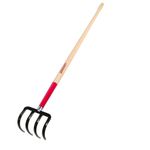
Razor-Back Potato/Refuse Hook
Fine Gardening receives a commission for items purchased through links on this site, including Amazon Associates and other affiliate advertising programs.
Ever wondered if you could turn back time? While we can’t literally stop the clock, there is a way that we can slow down aging. And the good news is that doing everyday, simple habits can make a big positive impact.
I keep track of my health through lab testing with Function Health. One test I recently took with them gave me a fascinating look into something called biological age. As it turns out, it’s very different from your actual age in years. My chronological age is 38, but my biological age came back as 21.7.
And of course, the results piqued my interest! I looked into the different factors this test looks at and what I may be doing that contributes to a lower biological age. The bottom line is that there are things we can do to improve how our cells age as we get older.
In this post, I’ll walk through what biological age really means and how it’s measured (especially in the test I did). I’ll also dive into the lifestyle factors I believe contributed to a lower biological age. Whether or not you ever take a test like this, I truly believe we all have the ability to support cellular health and age with vitality.
Chronological age is just the number of birthdays we’ve had and is a fixed number. Biological age, however, is a measure of how well our body is functioning at a cellular level. It takes into account how fast (or slow) we’re aging on the inside.
The gold standard for measuring biological age is a DNA methylation test. This looks at how your genes are expressing themselves based on chemical markers. While this test is fascinating and considered very accurate, it’s also relatively expensive and not super accessible yet.
The Function Health test I did doesn’t use methylation, but instead analyzes a wide range of biomarkers from a simple blood draw. While it’s not the gold standard, I like that it’s comprehensive, repeatable, and still offers very helpful insights. It also lined up with what I know about my own health journey and how I feel on a day-to-day basis.
The biological age test I did looked at nine different biomarkers that together give a snapshot of how the body is aging. These include markers related to liver and kidney health, inflammation, immune response, nutrient status, and blood sugar regulation.
The first one is albumin, a protein made by the liver that plays a role in transporting nutrients and maintaining fluid balance. It’s something hospitals often monitor in recovering patients, and it turns out it’s also a useful marker for overall cellular health.
I suspect that things like getting enough high-quality protein and staying hydrated with minerals played a big role in my healthy albumin levels. I also do a lot of liver support through things like sauna, castor oil packs, and bitter herbs.
Another key marker was creatinine, which gives insight into kidney function. This one may be influenced by hydration and toxin load. Over the years, I’ve been really mindful of focusing on getting enough minerals, staying hydrated, and reducing environmental toxins. I choose clean household and beauty products, filter our water, and use gentle detox supplements like Zeolite.
I also make it a point to sweat daily, either through exercise or sauna. Plus, I pay close attention to hydration by adding minerals to my water throughout the day.
Glucose was another important factor, since blood sugar regulation plays a major role in aging. I’ve shared before how I prioritize protein at every meal, especially in the morning. I also try to avoid refined sugars and opt for balanced meals. Movement after meals, particularly walking, makes a huge difference for me.
I’ve also noticed that sunlight, especially morning light, supports better blood sugar regulation for me. Sunlight helps set our circadian rhythms, which positively influences insulin sensitivity.
Inflammation is also a big piece of the puzzle, and one of the markers the test looked at was high-sensitivity C-reactive protein (hs-CRP). This is one of those numbers you want to keep low, and this test is more sensitive than a standard CRP test.
For me, regular sauna use has made a noticeable difference. I also use anti-inflammatory foods and supplements, occasionally fast, and rotate in omega-3s and other anti-inflammatory tools like Fatty15. These practices aren’t just about lab numbers, they’re about feeling good and giving my body a break from low-grade inflammation.
There were other markers too, like lymphocyte percentage (an indicator of immune function). I focus on gut health and make sure I’m getting enough fiber and leafy greens to help with this. Just Thrive’s probiotic is my go-to supplement for gut health. Vitamin D from the sun and getting enough zinc also play a big role in supporting a good immune system here.
Another marker the test measures is MCV, which reflects nutrient status, like B12 and folate. I think eating nutrient-dense foods plays a key role in this one. The test also looks at RDW, red blood cell variability that may point to stress or micronutrient issues. Supporting gut health, getting enough sun for natural vitamin D, and including a variety of nutrient-dense foods have all likely helped keep those numbers in a healthy range.
The test also looked at white blood cell count for immune health. Factors like sleep, stress, and detox support are key here. And lastly, they look at ALP, which points to liver, bone, and bile health. I’ve been using bitters lately (also from Just Thrive), which help support the liver and detox. NAC and glutathione may also be helpful for those ALP numbers.
Looking at all the data and thinking back on what I’ve done in recent years, a few key patterns emerge. I didn’t add all of these things at once, far from it. It’s been a slow layering of habits over time, with plenty of trial and error. But a few principles really stand out.
The first is nutrient density. I focus on getting a lot of protein and micronutrients in the morning, ideally within an hour of waking and before caffeine. I’ve found that when I hydrate with minerals, get natural sunlight, and eat a nourishing breakfast early in the day, everything else seems to fall into place more easily—my energy, my blood sugar, even my mood.
Another important piece is blood sugar regulation. Imbalanced glucose levels can indicate inflammation in the body. For me, that means eating plenty of protein and cutting out processed foods and refined sugar as much as possible. I also make movement after meals a regular part of my day.
I’ve experimented with wearing a continuous glucose monitor (CGM) to see what works for me, and it’s been eye-opening. I now know that even small changes, like walking after lunch or not snacking late at night, can have a big impact.
Sunlight might be one of the most underrated tools in our wellness toolbox. I like to joke and say that I’m solar powered! Morning sunlight helps set circadian rhythms and improves energy, mood, and hormone balance. Midday sun supports vitamin D and mitochondrial health.
I try to get outside first thing in the morning and again around midday whenever possible. And no, I don’t overdo it or burn, but I also don’t fear the sun the way we’ve been taught to.
Movement is another huge pillar. I walk daily, sometimes with a weighted vest, and I lift weights a few times per week. Strength training has been a game-changer, not just for how I look but for how I feel. As Dr. Gabrielle Lyon says, “Muscle is the organ of longevity,” and I’ve come to really believe that.
Then there’s recovery. I sauna a few times per week, support my sleep like it’s my job, and make time for joy, relationships, and rest. I’ve also worked hard to learn how to slow down, enjoy life, and not always be in “go” mode. I believe this has had just as big an impact on my biology as anything else.
On the supplement side, I focus on quality supplements and rotate based on what my body needs. Methylated B vitamins, minerals from all sources, broad-spectrum magnesium, omega-3s, glutathione, and collagen are my staples. I also support methylation with choline-rich foods and supplements and sometimes trimethylglycine or zinc, depending on my labs and how I’m feeling.
We’re learning more and more about how our thoughts, emotions, and beliefs affect our biology. Books like The Biology of Belief explore how powerful our minds are when it comes to gene expression and overall health. I’ve seen this in my own life too. When I’m more grounded, grateful, and emotionally balanced, my physical health reflects it.
We can’t always control our circumstances, but we can create habits, routines, and internal stories that support our biology instead of working against it. I really believe that our emotions, relationships, and mindset are part of the health equation. Maybe even one of the most important parts.
Biological age is just a number, and while it’s exciting to see that number go down, what really matters is how we feel and function. For me, tracking things like HRV, glucose, and inflammation has been helpful. However, it’s not about perfection; it’s about tuning into what helps me thrive.
I’ll likely retest every 6 to 12 months to see how my biological age shifts with different habits and seasons and to keep a pulse on things. But no matter the number, I’ll keep focusing on the basics: nutrient-dense food, good sleep, sunlight, joyful movement, real connection, and rest.
If you’re interested in trying a biological age test, you can check out the one I used through Function Health. But you don’t need a test to start supporting your health at a cellular level. Begin with what’s simple and sustainable. Hydrate (with minerals!), eat real food, get sunlight, sleep well, and move your body. The rest can be layered in over time.
Ultimately, age is really just a number and how we live matters more than how many candles are on our birthday cake.
Have you ever tested for your biological age? Leave a comment and let us know!
Daylilies are prominent for their vibrant, trumpet-shaped blooms that come back year after year with minimal care.
Their wide range of colors, sizes, and bloom times make them perfect for borders, beds, or mass plantings, making your garden stay alive with color for weeks
Though propagating Daylilies (genus Hemerocallis) through division is regarded preferred method to grow this perennial, in this write-up we shall discuss on how to plant daylily bulbs.
Daylily bulbs, often sold as bare root fans, are easy to handle and ship well, making them popular among online plant sellers. They also establish quickly when planted in the right conditions, often blooming within their first season.
To plant daylily bulbs, soak the roots briefly, then place them in well-draining soil with the crown set about 1 inch below the surface.
Space them properly, water thoroughly, and mulch to retain moisture—this simple process sets the stage for healthy growth and vibrant blooms.
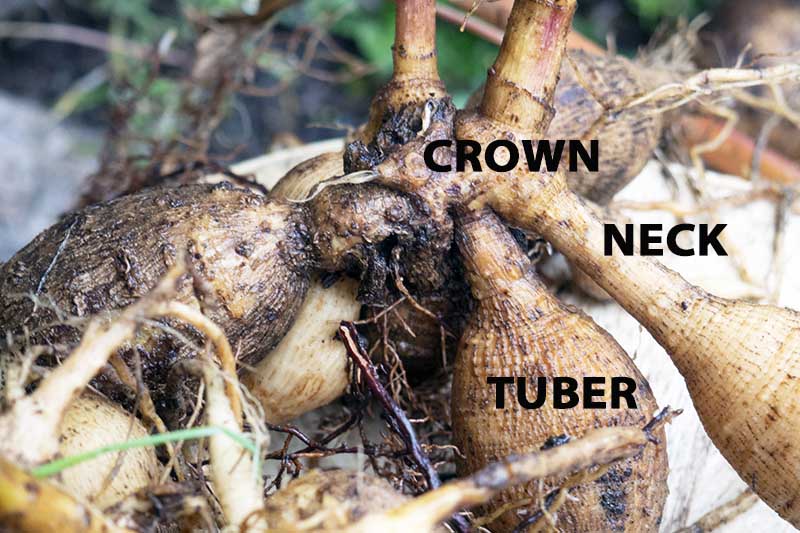
Before planting, it’s helpful to clear up a common mix-up—daylilies are often called “bulbs,” but they’re not true bulbs like tulips or daffodils. Instead, they’re usually sold as bare root plants or divisions, with a fan of leaves attached to thick, fleshy roots.
These roots act like a bulb by storing moisture and nutrients, which is why gardeners often use the term. Understanding this structure is key, especially when deciding how deep to plant, as proper crown placement is essential for healthy growth and blooming.
Check this: How to Propagate Coneflower?

Spring is the most popular time to plant daylilies, especially from March to early May. It gives the roots a full season to establish before winter.
Fall planting, around September to November, also works well in mild climates. The cooler temperatures reduce transplant shock and encourage root growth.
Avoid planting in the peak of summer heat unless you’re in a cooler region. High temperatures can stress new plants and slow their establishment.
If you’re planting in summer, choose cooler parts of the day and provide some temporary shade. This helps reduce transplant shock and supports healthy root development.
Daylilies are hardy, adaptable perennials that thrive with minimal care when given the right growing conditions. To get the most from their vivid blooms and lush foliage, pay attention to these key needs:
Sunlight Requirement
Water
Soil
Temperature
Fertilizer


Before planting, start with quality bare root daylilies. These are often sold as “bulbs,” but they’re actually fleshy roots with a fan of leaves attached.
Look for firm, healthy roots and a clean crown—avoid any with signs of rot, mold, or excessive shriveling.
Soak the bare roots in a bucket of clean water for 1 to 2 hours. This helps rehydrate dry roots, especially if they’ve been stored or shipped.
Hydration gives the plant a head start, encouraging immediate root activity once in the soil. It also softens the roots, making them easier to spread during planting.
Also Read: 10 Reasons Why Tulips Are Not Blooming
Pick a sunny spot with good drainage. Daylilies love sun, and well-worked soil rich in organic matter gives them the best chance to thrive.
Use a garden fork or shovel to loosen the soil 12–15 inches deep. Mix in compost or aged manure to improve structure, retain moisture, and provide nutrients essential for healthy growth.
Create a hole that’s about 12 inches wide and 6 inches deep. In the center, form a cone-shaped mound of soil that the plant will sit on.
This small mound supports the crown and lets the roots naturally drape downward. It helps prevent root bunching, which can delay establishment.
Place the daylily fan on top of the soil mound, spreading the roots evenly around it. Make sure the crown is about 1 inch below the soil surface.
Planting the crown at the right depth is crucial. Too deep, and the plant may rot or bloom poorly; too shallow, and roots may dry out or lift out of the soil.
Gently backfill the hole with the loosened soil, covering the roots and crown evenly. Press the soil lightly around the plant to remove air pockets.
Firm but gentle pressure helps the roots stay in contact with the soil, which promotes quick anchoring and early growth. Avoid packing the soil too tightly, as this can hinder drainage.
Give your newly planted daylily a deep, thorough watering. This settles the soil, eliminates air pockets, and starts the roots on their way to establishing.
Continue to keep the soil moist—but not soggy—for the next 2–3 weeks. Consistent moisture during this period is critical for strong root development.
Spread a 2–3 inch layer of organic mulch (like shredded bark, pine needles, or straw) around the base of the plant.
Mulching helps conserve moisture, suppress weeds, and moderate soil temperature. Just be sure to keep mulch a couple of inches away from the crown to avoid trapping moisture directly against it, which can lead to rot.
Also Read: How to Propagate Black-Eyed Susan?


Once your daylilies are in the ground, giving them the right care during the first few weeks is essential for strong root development and healthy growth. While they are known for being low-maintenance, a little attention early on goes a long way.
Remove faded flowers (deadheading) to keep the plant looking tidy and to encourage more blooms in reblooming varieties. Trim back any yellow or damaged foliage to maintain airflow and plant vigor.
Every 3–5 years, divide overcrowded clumps in spring or fall to rejuvenate the plants and prevent decline in flowering. This also gives you more plants to spread around your garden!
Even though daylilies are tough and low-maintenance, occasional problems can arise. Here are some common issues and how to fix them:
Plant the crown of the daylily about 1 inch below the surface of the soil.
When planting daylilies, the most important rule is to position the crown—the point where the roots meet the foliage—about 1 inch below the soil surface. This allows the plant to establish itself properly without risking rot or poor growth.
Planting too deep can bury the crown and delay blooming, while planting too shallow may expose roots and cause instability.
Start by digging a hole around 12 inches wide and 6 inches deep, then create a small mound of soil in the center. Spread the roots over the mound and settle the crown slightly below the soil line. Gently backfill and firm the soil around the plant without compacting it too much.
If planted too deep, the crown can rot and lead to delayed or poor blooming. Too shallow, and the roots may dry out or fail to anchor the plant properly.
Daylilies are among the easiest perennials to grow, thanks to their toughness, vibrant blooms, and low-maintenance needs. Success starts with the basics—especially planting at the right depth, with the crown about an inch below the soil surface.
With plenty of sun, space, and regular watering, daylilies will reward you with stunning blooms year after year. Once you see how effortlessly they thrive, you’ll likely want to add even more to your garden.


Khaja Moinuddin, a computer science graduate, finds joy in gardening and homesteading. Join him on this blog as he shares his experiences in homesteading, gardening, and composting
New committee members Dr. Robert Malone, left, and Dr. Joseph Hibbeln during the first meeting of the CDC’s Advisory Committee On Immunization Practices at the Centers for Disease Control and Prevention in Atlanta, Ga.
Ben Hendren/Bloomberg/Getty Images
hide caption
toggle caption
Ben Hendren/Bloomberg/Getty Images
An influential committee that shapes U.S. vaccine policy – a flashpoint under the leadership of Secretary of Health Robert F. Kennedy Jr. – has recommended that adults and children no longer receive flu vaccines containing trace amounts of a preservative that’s rarely used anymore.
The discussion of thimerosal, a form of mercury that’s sometimes added to vaccines for sterilization, dominated much of Thursday’s public meeting of the Advisory Committee on Immunization Practices, or ACIP. The committee guides the Centers for Disease Control and Prevention on the vaccine schedule for children and adults.
The two-day meeting at CDC headquarters in Atlanta was unusually high-profile, given Kennedy’s recent decision to boot the entire committee of experts a few weeks ago and replace them with his own hand-picked roster, which included some members with a history of making inaccurate claims about the safety of vaccines.
While ACIP typically includes 17 voting members, Kennedy’s overhauled panel only included seven of them, following a last-minute decision by one of them to step down.
On Thursday, a majority of the panel voted to reaffirm the existing CDC recommendations that anyone over six months receive the annual flu shot. They also voted 5-2 in favor of a monoclonal antibody shot made by Merck that offers protection against respiratory syncytial virus, or RSV, for infants younger than 8 months.
But in three separate votes the committee voted to recommend children, pregnant women and all adults receive single-dose flu immunizations with vaccines that don’t have thimerosal.
Theories that the chemical could cause autism in children have long been disproven. Even so, manufacturers voluntarily removed it from childhood vaccines. While it’s used in some multi-dose vials in several products, there are no vaccines on the pediatric vaccine schedule that contain thimerosal.
The ACIP votes could effectively ban use of the preservative, despite a preponderance of evidence that it is safe.
Dr. Cody Meissner, a professor of pediatrics at Dartmouth College, was the only ACIP member who voted against those recommendations.
“Of all the issues that ACIP needs to focus on, this is not a big issue,” he said. “The risk from influenza is so much greater than the non-existent, as far as we know, risk from thimerosal.”
He added: “There is no scientific evidence that thimerosal has caused a problem.”
Meissner’s comments came in response to a lengthy presentation on the preservative from Lyn Redwood, a nurse and former president of Children’s Health Defense, the anti-vaccine advocacy group that Kennedy founded and led for many years.
“Removing a known neurotoxin from being injected into our most vulnerable population is a good place to start with making America healthy again,” she told the committee.
Much of what Redwood said about thimerosal was undercut by a CDC document that had been originally posted with the meeting materials — and then without explanation removed ahead of the meeting. It detailed peer-reviewed literature showing “no association between prenatal exposure to thimerosal-containing vaccinations and autism spectrum disorder in children.”
In response to a question about why the document had been taken down, Dr. Robert Malone, an ACIP member, said his understanding was that it had not been “authorized by the Office of the Secretary.”
Members of the committee questioned the analyses provided by CDC, and wondered whether they were ignoring data on adverse events that showed up in relation to the studies they presented, even after the staff explained they had parsed the data thoroughly.
Prominent medical groups welcomed the recommendations on flu and RSV, but expressed concern about the overall tone of the meeting.
Dr. Sean O’Leary, who chairs the Committee on Infectious Diseases for the American Academy of Pediatrics, said the ACIP discussion on influenza and RSV “confirmed that this is an orchestrated effort to sow distrust in immunizations and the vaccine approval process.”
While the person serving as CDC director would typically sign off on ACIP recommendations, there is no one in the role currently, so the responsibility for signing off on these recommendations go to Health Secretary Kennedy.
You can learn more about growing zinnias in containers here.
There are quite a few popular cultivars on the market. The flowers can be single, semi-double, or fully double and they come in a rainbow of colors.
The Aztec series consists of some very impressive cultivars like ‘Aztec Burgundy,’ ‘Aztec Orange,’ and ‘Aztec Red,’ which were all awarded the Royal Horticultural Society’s Award of Garden Merit in 2017.

The colorful blossoms are up to two inches in diameter and very long lasting.
There’s quite a bit of variation among the flowers in the series. Some are double, some are single, and the height can vary, as well.
‘Aztec Sunset,’ for example, produces double flowers on stalks that are about six inches tall.
‘Chippendale Daisy’ has single blossoms in sunset-like hues of gold, yellow, and deep orange with a hint of burgundy at the center.
Let it grow and spread for a carpet of color or keep it in containers to add pizzazz to a patio.
You can find ‘Chippendale Daisy’ seeds in a variety of packet sizes available at Eden Brothers.
With large, double, bicolored flowers, ‘Color Crackle’ is an eyeful.
Each petal has a burgundy base with golden yellow or creamy white on the tips, and the entire flower can be up to two inches in diameter, which is huge for this species.
Plant them en masse and you can enjoy a super impressive cut flower display.
You can find seeds in packets of 50 available at Burpee.
‘Old Mexico’ offers remarkable variety on a single plant. The flowers may be single, semi-double, or double, and range in size from less than an inch to about two inches across.
Petal coloration varies as well, some blooms are solid yellow or red, but most display a mix, with red at the base and yellow tips in varying patterns.
This cultivar earned an All-America Selections award in 1962 and received the Royal Horticultural Society’s Award of Garden Merit in 2017.
It blooms reliably from spring through frost, bringing lasting color and vibrancy to the garden.
You can find seeds available for this tried-and-true cultivar in a variety of packet sizes at Eden Brothers.
A mass of two-inch blooms from ‘Persian Carpet’ creates an eye-catching display.
This cultivar produces both single and double flowers in a mix of red, gold, chocolate brown, burgundy, orange, yellow, and cream.
Each plant is highly floriferous, producing heaps and heaps of stems throughout the season.
Bred by Bodger Seeds, ‘Persian Carpet’ received the All-America Selections award in the flower category in 1952, a recognition of its standout garden performance and vibrant color palette.
You can find ‘Persian Carpet’ seeds in a variety of packet sizes available at Botanical Interests.
Like a million little suns sprinkled on the ground, ‘Soleado’ produces a profusion of bright yellow and orange blooms, each accented with a deep burgundy-brown center.
The flowers nod gently on slender stems that can reach up to two feet in height, creating a dynamic, sunlit effect in the garden.
This cultivar was awarded the Royal Horticultural Society’s Award of Garden Merit in 2017.
‘Sombrero’ features tall stems topped with bold, two-inch single blooms in shades of gold, orange, and red.
Petals often show a gradient of color, with rich red near the center fading to golden yellow at the tips.
The height and strong stems make this cultivar an excellent choice for cutting gardens and vase arrangements.
Tip your cap to ‘Sombrero’ and pop over to Eden Brothers to pick up some seeds.
Deadhead spent flowers regularly to encourage continued blooming. Use your fingernails or a small pair of scissors to snip off blooms as the petals begin to fade or discolor.


When the cool weather arrives and the plants die back, cut them off at the soil level and remove the debris to prevent pests from having a place to hide.
If you’d like to save seeds, allow a few flowers to mature fully on the plant.
new video loaded: R.F.K. Jr. Says U.S. Will Stop Funding Global Vaccine Agency
transcript
transcript
There’s much that I admire about Gavi, especially its commitment to making medicine affordable to all the world’s people. Gavi has done that part of its job very well. Unfortunately, in its zeal to promote universal vaccination, it has neglected the key issue of vaccine safety. When the science was inconvenient, Gavi ignored the science. I call on Gavi today to re-earn the public trust and to justify the $8 billion that America has provided in funding since 2001. And I’ll tell you how to start taking vaccine safety seriously. Consider the best science available, even when the science contradicts established paradigms. Until that happens, the United States won’t contribute more to Gavi. Define success, not just in terms of the number of vaccines delivered, but on their rigorously measured overall impacts. Business as usual is over. Unaccountable and opaque policymaking is over.
Recent episodes in Health
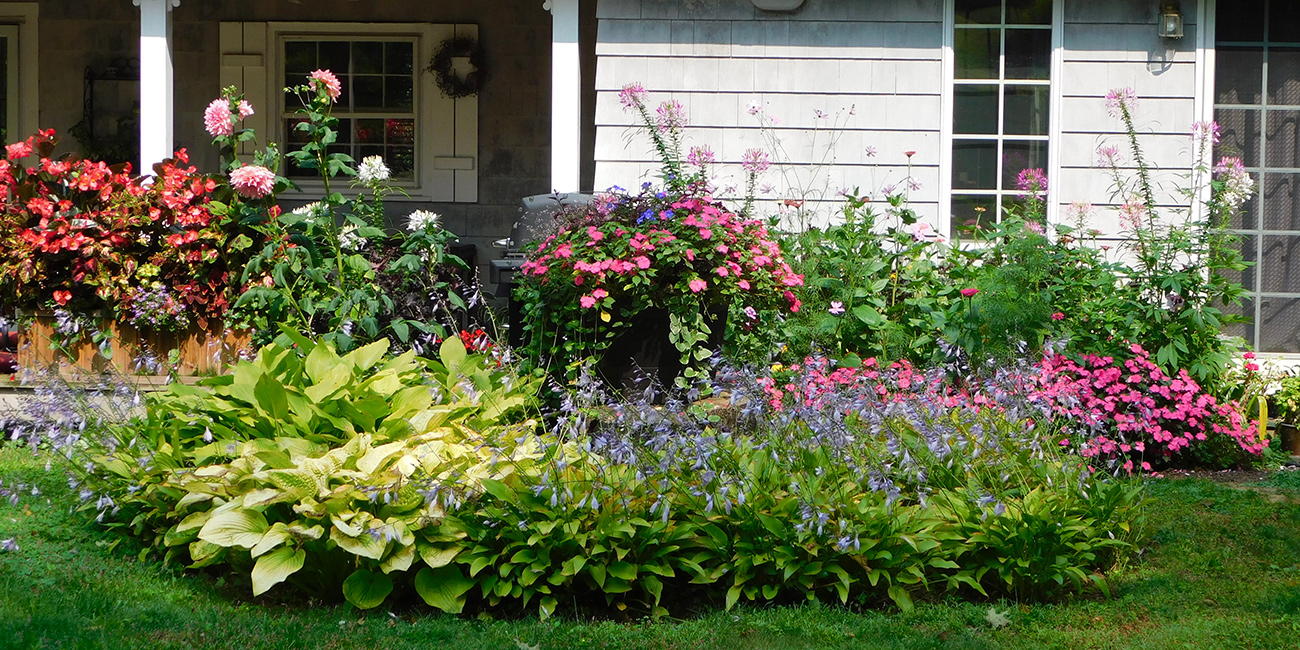
Hi GPODers!
Today we’re getting a master class in color from Lakshmi Chellappah in Alberta, Canada. Lakshmi lives pretty far north, with her garden situated in Zone 2 to 3, but she is still able to create bright and bold designs that feature a range of hues and coordinated color palettes during a short growing season. Even when flowers are limited, Lakshmi has compiled an assortment of colorful foliage to keep her garden lively.
Hi, my name is Lakshmi. I live in Alberta, Canada. It’s a Zone 2 to 3 garden.
Despite Lakshmi’s northern locale, she is able to cultivate a ton of color in her gardens. Here, a beautiful mix of pink, purple, yellow, and green create a diverse tapestry of interest. But as we’ll see in the rest of her photos, Lakshmi is also able to create simpler color palettes that are just as exciting.
Even when she is working with mainly one color, like this vignette of green, she uses interesting shapes and forms to create a stylish scene. A beautiful blue iris in the lower corner adds a bold pop of contrast.
Yesterday we saw how pink was a key element in Fran Watson’s spring garden (Spring Garden on Martha’s Vineyard), and today we get to see how Lakshmi uses the color to a similar effect. Pops of pink flowers are focal points in this bed, which also features mounds of fresh foliage.
A close-up of one of those deep-pink plant pairings: alliums towering over columbine. Barely visible in the background are some deep-red—almost black—tulips.
Pink and red make more appearances in Lakshmi’s perfectly edged border beds, mixing with green, yellow, and blue foliage plants.
Another area of the garden is glowing yellow, with foliage ranging from golden to chartreuse and bright Kelly green.
A fabulous contrast to the golden yellow foliage is this alpine clematis with bright pink blooms, potentially the variety ‘Constance’ (Clematis alpina ‘Constance’, Zones 3–9).
It’s evident that Lakshmi’s plantings have created a lush and colorful garden retreat, but her flowing garden pond takes the oasis to the next level. On top of all these beautiful plant combinations worthy of admiring and sweet scents you’ll encounter, her garden captivates with the relaxing sound of gently falling water.
As I mentioned in the intro, colorful foliage does not need to be a consolation prize for areas where flowers aren’t reliable. This border is sprinkled with some fun blooms, but it is the repeating foliage colors that steal the show.
Thank you so much for sharing this wonderful collection of photos from your garden, Lakshmi! The use of color in your designs is utterly impressive, and some of your scenes look more painted than they do planted. I hope we get to see more colorful scenes from your garden in the future.
What are your favorite colors to use in your garden? Do you mix it up with the seasons like Lakshmi does, or do you have a few favorite hues that you try to incorporate year-round? Let us know in the comments, or consider submitting some photos that highlight the color in your garden! Follow the directions below to submit photos via email, or send me a DM on Instagram: @agirlherdogandtheroad.
Have photos to share? We’d love to see your garden, a particular collection of plants you love, or a wonderful garden you had the chance to visit!
To submit, send 5–10 photos to [email protected] along with some information about the plants in the pictures and where you took the photos. We’d love to hear where you are located, how long you’ve been gardening, successes you are proud of, failures you learned from, hopes for the future, favorite plants, or funny stories from your garden.
Have a mobile phone? Tag your photos on Facebook, Instagram or Twitter with #FineGardening!
Do you receive the GPOD by email yet? Sign up here
Fine Gardening Recommended Products
The Regenerative Landscaper: Design and Build Landscapes That Repair the Environment
Fine Gardening receives a commission for items purchased through links on this site, including Amazon Associates and other affiliate advertising programs.
2024 Nautilus Award Gold Medal Winner! This awe-inspiring guide weaves together permaculture design, food resiliency, climate adaptation, community organizing, and indigenous wisdom that you can implement in your own backyard.
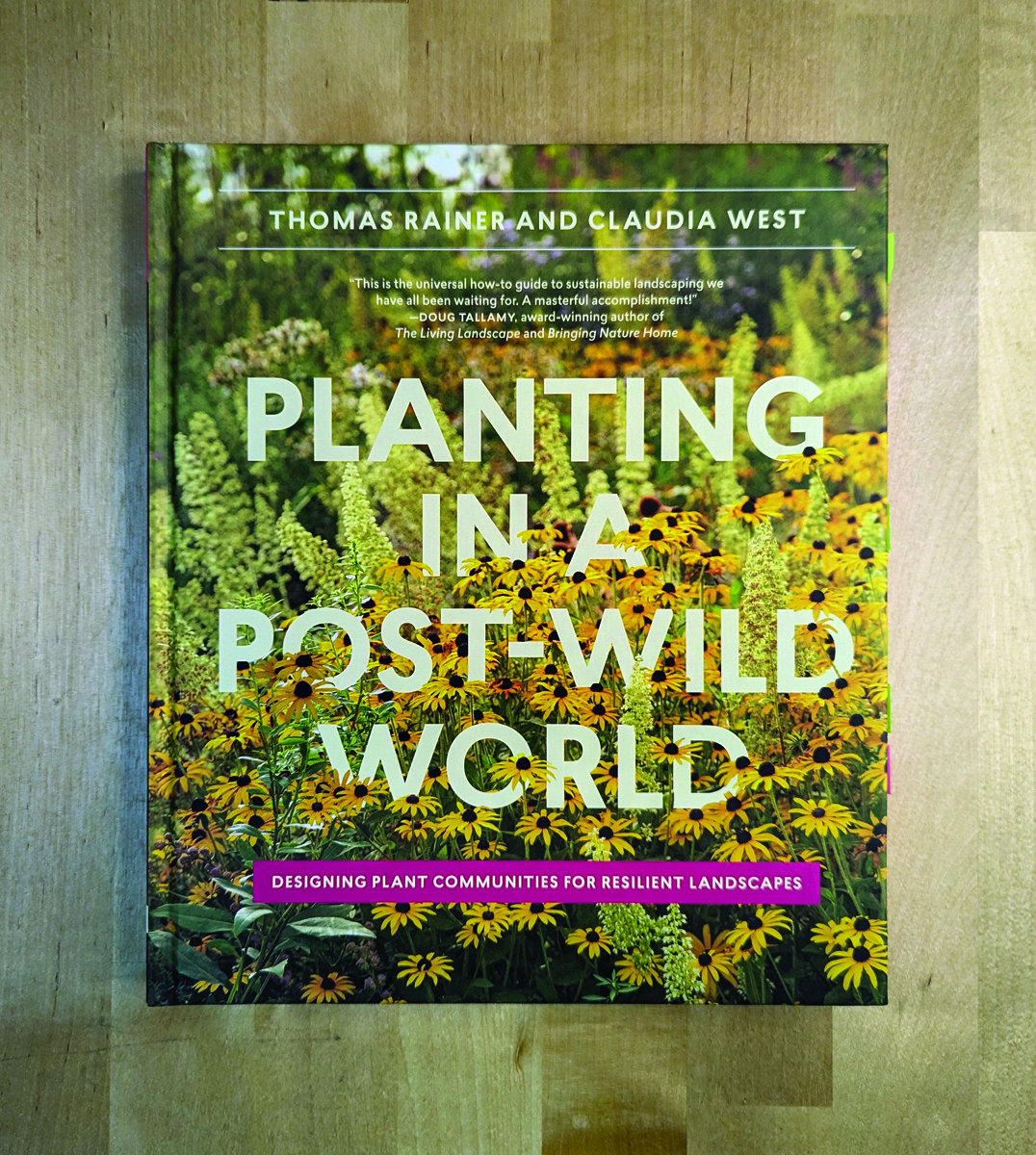
Planting in a Post-Wild World: Designing Plant Communities for Resilient Landscapes
Fine Gardening receives a commission for items purchased through links on this site, including Amazon Associates and other affiliate advertising programs.
Featuring gorgeous photography and advice for landscapers, Planting in a Post-Wild World by Thomas Rainer and Claudia West is dedicated to the idea of a new nature—a hybrid of both the wild and the cultivated—that can nourish in our cities and suburbs.
Ho-Mi Digger – Korean Triangle Blade
Fine Gardening receives a commission for items purchased through links on this site, including Amazon Associates and other affiliate advertising programs.

Versatile Tool: The Easy Digger Korean Triangle Blade Ho Mi Ho-mi is a versatile gardening tool designed for leveling and digging in home and garden settings. Efficient Design: Its unique triangular blade shape allows for easy soil penetration and efficient leveling of garden beds or landscaping areas. Durable Construction: Crafted with sturdy materials, this tool ensures long-lasting performance and reliability.
Ergonomic Handle: The comfortable handle provides a secure grip, reducing hand fatigue during extended use. Compact Size: Its compact design makes it easy to maneuver in tight spaces and store when not in use.