57.1 F
Klamath Falls
Saturday, May 2, 2026
Home Blog Page 157

Trump Budget Cuts Funding for CDC

0

Robert F. Kennedy Jr., the nation’s health secretary, has said that tackling a chronic disease “epidemic” would be a cornerstone of his Make America Healthy Again agenda, often invoking alarming statistics as an urgent reason for reforming public health in this country.

On Friday, President Trump released a proposed budget that called for cutting the funding of the Centers for Disease Control and Prevention by almost half. Its chronic disease center was slated for elimination entirely, a proposal that came as a shock to many state and city health officials.

“Most Americans have some sort of ailment that could be considered chronic,” said Dr. Matifadza Hlatshwayo Davis, health director for the city of St. Louis.

Of the proposed cuts, she said, “How do you reconcile that with trying to make America healthy again?”

The federal health department last month cut 2,400 jobs from the C.D.C., whose National Center for Chronic Disease Prevention and Health Promotion runs on the largest budget within the agency.

Programs on lead poisoning, smoking cessation and reproductive health were jettisoned in a reorganization last month.

Overall, the proposed budget would cut the C.D.C.’s funding to about $4 billion, compared with $9.2 billion in 2024.

The budget blueprint makes no mention of the Prevention and Public Health Fund, a $1.2 billion program. If that figure is taken into account, the cut may be even larger than Mr. Trump’s proposal indicates.

The agency would also lose a center focused on preventing injuries, including those caused by firearms, as well as programs for H.I.V. surveillance and prevention, and grants to help states prepare for public health emergencies.

According to the proposed budget, the cuts are needed to eliminate “duplicative, D.E.I., or simply unnecessary programs.” Congress draws up the federal budget, but given the Republican majority and its fealty to Mr. Trump, it is unclear how much his proposal will change.

C.D.C. officials had been told that the functions of the chronic disease center would be moved to a new organization within the health department called the Administration for a Healthy America.

And the proposal released on Friday appears to allocate $500 million to the health secretary in part “to tackle nutrition, physical activity, healthy lifestyles, overreliance on medication and treatments.”

But at the C.D.C., the chronic disease center’s budget was nearly three times as large. And even if part of the chronic disease center is resuscitated in the A.H.A., it’s unlikely that the new iteration would involve C.D.C. scientists relocated from Atlanta.

“The actual subject-matter experts, who administer the programs, might not be there at C.D.C. anymore,” said Dr. Scott Harris, state health officer at the Alabama Department of Public Health. “We certainly don’t have the same level of expertise in my state.”

The department of Health and Human Services did not respond to a request for comment.

The C.D.C.’s chronic disease center ran programs aimed at preventing cancer, heart disease, diabetes, epilepsy and Alzheimer’s disease. But the center has also seeded initiatives farther afield, ranging from creating rural and urban hiking trails to ensuring that healthy options like salads are offered in airports. It also promoted wellness programs in marginalized communities.

Dr. Davis, the health director in St. Louis, said her department was already reeling from cuts to programs to curb smoking and reduce lead poisoning and health disparities, as well as the rescinding of more than $11 billion that the C.D.C. had been providing to state health departments.

“I would take back Covid-19 in a heartbeat over what’s happening right now,” Dr. Davis said.

In the proposed budget, the administration suggested that the eliminated programs would be better managed by states. But state health departments already manage most chronic disease programs, and three-quarters of the C.D.C. center’s funding goes to support them.

Loss of those funds “would be devastating for us,” said Dr. Harris, the health officer in Alabama.

The state has one of the highest rates of chronic diseases in the country, and about 84 percent of the public health department’s budget comes from the C.D.C., Dr. Harris said. About $6 million goes to chronic disease programs, including blood pressure screening, nutrition education for diabetes and promotion of physical activity.

If those funds were cut, “I am at a loss right now to tell you where that would come from,” he added. “It just seems that no one really knows what to expect, and we’re not really being asked for any input on that.”

Minnesota’s vaunted health department has already laid off 140 employees, and hundreds more may be affected if more C.D.C. funding is lost. Cuts to chronic disease prevention will affect nursing homes, vaccine clinics and public health initiatives for Native Americans in the state.

“The actions of the federal government have left us out on a flimsy limb with no safety net below us,” said Dr. Brooke Cunningham, the state’s health commissioner.

Until recently, “there seemed to be a shared understanding at the local, state and federal level that health was important to invest in,” Dr. Cunningham said.

The C.D.C.’s chronic disease center’s work touches American lives in many unexpected ways.

In Prairie Village, Kan., Stephanie Barr learned about the center 15 years ago when, working as a waitress with no health insurance, she discovered a lump in her breast the size of a lemon.

Through the C.D.C.’s National Breast and Cervical Cancer Early Detection Program, she was able to get a mammogram and an ultrasound, and staff members helped her enroll in Medicaid for treatment after a biopsy determined the lump was malignant, Ms. Barr said.

“It was caught in the nick of time,” said Ms. Barr, now 45 and free of cancer.

Since that program began in 1991, it has provided more than 16.3 million screening exams to more than 6.3 million people with no other affordable access, said Lisa Lacasse, president of the American Cancer Society Cancer Action Network.

The organization is one of 530 health associations that have signed a petition asking lawmakers to reject the proposed H.H.S. budget, which cuts discretionary spending by about one-third. The signatories said the cuts would “effectively devastate” the nation’s research and public health infrastructure.

The budget also proposes dismantling disease registries and surveillance systems.

“If you don’t collect the information or keep these surveillance systems going, you don’t know what’s happening, you don’t know what the trends are,” said Dr. Philip Huang, director of Dallas County Health and Human Services in Texas.

“You’re losing all of that history,” he said.

In a previous position as director of chronic diseases for Texas, Dr. Huang said he worked closely with C.D.C. experts who successfully reduced tobacco use among Americans.

“Eliminating the Office on Smoking and Health is just craziness if you’re still wanting to address chronic diseases,” he said.

Smoking is still the leading cause of preventable death in the United States, causing more than 480,000 deaths each year, according to the C.D.C.

More than one in 10 American adults still smoke cigarettes regularly, but rates vary drastically by region, and C.D.C. surveillance helps target cessation programs to areas where they are needed most.

“Smoking rates have come down, but if the federal government takes its foot off the gas, the tobacco companies are ready to pop back up again,” said Erika Sward, assistant vice president for advocacy at the American Lung Association.

She warned that tobacco companies are constantly developing new products like nicotine pouches, whose use by teenagers doubled last year. “It will take a lot more money to put the genie back in the bottle,” she said.

The C.D.C.’s chronic disease center works with communities and academic centers to promote effective programs, from creating quitting hotlines to reach young Iowans in rural areas to training members of Black churches in Columbia, S.C., to lead exercise and nutrition classes for their congregations.

In rural Missouri, dozens of walking trails have been developed in the “boot heel” in the southeastern part of the state, an area with high rates of obesity and diabetes, said Ross Brownson, a public health researcher at Washington University in St. Louis who directs the Prevention Research Center in collaboration with the C.D.C.

“There’s strong evidence now that if you change the walkability of a community, people will get more physical activity,” Dr. Brownson said. “There aren’t going to be health clubs in rural communities, but there is nature and the ability to have walking trails, and land is relatively cheap.”

With C.D.C. support, in Rochester, N.Y., people who are deaf and hard-of-hearing are being trained to lead exercise and wellness programs for other hearing-impaired people who can’t easily participate in other gym classes.

In San Diego, researchers are testing ways to protect farm workers from exposure to ultraviolet rays and heat-related illnesses.

“Once they are up and started, they are community-driven and don’t depend on the government,” said Allison Bay, who recently lost her job managing such projects at the C.D.C.

The C.D.C.’s reorganization also eliminated lead poisoning programs. Lead poisoning is also “one of our greatest public health threats in the city of Cleveland,” said Dr. David Margolius, director of public health for the city.

The C.D.C. does not directly fund Cleveland’s lead programs — the funding comes from the state. “But just having the federal expertise to call on to help lead us toward a lead-free future, I mean, yeah, that has a big impact on us,” he said.

GPOD on the Road: Daffodils in Connecticut

Happy Friday, GPODers!

As I teased in the Earth Day post last Tuesday, I’m sharing my photos from a recent trip to the annual daffodil display at Laurel Ridge, in Litchfield, Connecticut. This private garden is a hidden spring gem and gift to the area, made open to the public for a few months every year and free for all that respect the rules of “no dogs, no picnics, and no picking flowers.”

These were the only requests of Virginia and Remy Morosani, the founders of Laurel Ridge Farms and the stewards who planted the original 10,000 daffodil bulbs that began this display in 1941. Over the years, more bulbs were added and downtime during the farming season was used to divide and further spread these cheerful bulbs. Though it was an expensive and laborious creation, the eclectic couple did not see this as a moneymaking opportunity but simply as something beautiful that needed to be shared with as many people as possible. To learn more about the founders of the Laurel Ridge daffodils, check out this amazing post on Instagram.

Found on a quiet road in the winding hills of Litchfield, this space has a naturalistic feel unlike that of any other public garden I’ve visited or seen photos of. Rather than perfectly organized rows of daffodils planted in a pattern or in evenly spaced clumps, the flowers pop up and spread in naturalized masses, with some areas denser and others more scattered. While different varieties can be found on the property, most of the daffodils planted were classic trumpet daffodils (Narcissus pseudonarcissus, Zones 5–8).

bright yellow daffodilsOf course, that didn’t stop me from scouring the fields for every new or different variety and cultivar that I could find. One that wasn’t hard to miss was the ‘Dutch Master’ (N. ‘Dutch Master’, Zones 2–9), also a trumpet variety but in an iconic bright yellow.

mass plantings of daffodilsWhile naturalistic in design, the human touch is still evident in low rock walls that are a staple of New England and are utilized to corral the masses of daffodils into different sections. In front of this wall, a lovely massing of large cupped ‘Ice Follies’ (N. ‘Ice Follies’, Zones 3–8) were erupting in blooms.

white daffodil with bright orange and yellow trumpetAnother cultivar that caught my eye was this lone flower with incredible gradients on both the corona (or trumpet) and surrounding petals. Though it is a very new cultivar, it looks most like a ‘Lincoln Eliot’ (N. ‘Lincoln Eliot’, Zones 3–7). If anyone recognizes this beauty as a cultivar they grow in their garden, please let me know!

field of daffodils that haven't bloomedThroughout the fields are various informal paths forged in the grass; you might be able to spot the diagonal path cutting up the hill on the right side of this photo. This added to the feeling of frolicking through naturalized fields rather than being guided through a garden with intention. You can also see that the fields weren’t quite at their peak. Despite the already impressive number of flowers, large sections had yet to come into bloom.

bright yellow daffodil with bright orange trumpetThese daffodils were just unfurling, but their bright petals were hard to miss. Though not yet showing their full size, I’m pretty confident these are large cupped ‘Pride of Lions’ (N. ‘Pride of Lions’, Zones 3–8).

hill covered in daffodilsOne of the many highlights of Laurel Ridge is the steep hill that looks out onto the small lake on the property. Because the hill gets full sun, more of the daffodils in this area had bloomed. Here, many people found a spot to sit and enjoy the scenery for a while.

stone plaque inscribed with a poemAt the top the largest hill is this memorial plaque, inscribed with two stanzas from the William Wordsworth poem “I Wandered Lonely as a Cloud,” which inspired Virginia Morosani to plant these fields. It reads:

I wandered lonely as a cloud
That floats on high o’er vales and hills,
When all at once I saw a crowd,
A host, of golden daffodils;
Beside the lake, beneath the trees,
Fluttering and dancing in the breeze. . .

. . . For oft, when on my couch I lie
In vacant or in pensive mood,
They flash upon that inward eye
Which is the bliss of solitude;
And then my heart with pleasure fills,
And dances with the daffodils.

pond surrounded by daffodilsAt the bottom of the hill, there is a great view of the little island that sits in the middle of the lake—of course, also adorned with plenty of daffodils.

white daffodils with small orange trumpetsMost of the cultivars in bloom were trumpet and large cupped varieties, but this was the one small cupped flower that I spotted. While I originally thought this Barrett Browning (N. ‘Barrett Browning’, Zones 3–8) must have been a relatively new addition, I discovered this cultivar was first introduced in the 1940s and quickly started winning awards. So it could have been some of the earliest bulbs planted by the Morosanis!

shrub with yellow flowers of yellow daffodilsLastly, it’s not spring in Connecticut without some forsythia. While I personally get tired of their splay of yellow blooms that messily invade roadsides in my area each spring, I thought it was actually delightful in this setting. It’s almost hard to distinguish where the daffodils end and the forsythia begin!

As I was conducting my research and gathering assets for this post, I realized that one of my predecessors, Michelle Gervais, featured Laurel Ridge on Garden Photo of the Day back in 2014! If you’re wondering what this exact destination looked like over 10 years ago, check that post out here: Fields of daffodils in Connecticut.

Do you have a local spring display that your community comes out en masse to enjoy? A street lined with the sweetest-smelling cherry blossoms? A park that gets covered in spring bulbs of all sizes and colors? Let us know in the comments, or consider sharing your local spring display with Garden Photo of the Day! Follow the directions below to submit photos via email, or send me a DM on Instagram: @agirlherdogandtheroad.


We want to see YOUR garden!

Have photos to share? We’d love to see your garden, a particular collection of plants you love, or a wonderful garden you had the chance to visit!

To submit, send 5–10 photos to [email protected] along with some information about the plants in the pictures and where you took the photos. We’d love to hear where you are located, how long you’ve been gardening, successes you are proud of, failures you learned from, hopes for the future, favorite plants, or funny stories from your garden.

Have a mobile phone? Tag your photos on Facebook, Instagram or Twitter with #FineGardening!

Do you receive the GPOD by email yet? Sign up here.

We’re Hiring a Dietitian! | Kara Lydon

I’m so excited to write this post today because I’ve got exciting news to share: Kara Lydon Nutrition is hiring a registered dietitian to join its team! If you’re passionate about helping people heal their relationships with food and their bodies, this job is for you! We practice evidence-based nutrition counseling under the paradigms of intuitive eating and Health at Every Size. We see clients who have eating disorders, disordered eating, digestive disorders, and general health and wellness concerns. We also run the food and healthful lifestyle blog, The Foodie Dietitian.

You don’t need to have a ton of experience in these areas but you must have a keen passion and interest and eagerness to learn, grow and evolve. And if you do have experience in these areas, even better! More important than the knowledge base or experience, is your general skillset and attitude. We’re looking for someone who is empathetic, compassionate, and mindful. Someone who is highly motivated and hard-working. Someone who is flexible and adaptable and has attention to detail. And someone with strong verbal and written communication skills. If this is sounding like you, I hope you will apply!

To give you more insight into our private practice, approach and values, please visit our nutrition counseling page and about page. I’m beyond thrilled to grow our practice and to be able to offer nutrition counseling to more people who need support. If you’re not interested in this position but know someone who may be, I would be so grateful if you would pass this along.

And for the full job description and application instructions, see below!

Position Title: Registered Dietitian

Location: Massachusetts

Company: Kara Lydon Nutrition

Status: Part-Time to Full-Time

Job Overview:
Kara Lydon Nutrition is looking to hire a registered dietitian to join its team! You will be providing virtual outpatient nutrition counseling to clients with eating disorders, disordered eating, digestive disorders, and general health and wellness concerns. You will collaborate with clients’ treatment teams to coordinate care, and engage in continuing education and supervision to hone your skills and knowledge. In addition to 1:1 counseling, there are also opportunities to run support groups, assist in group creation, and provide marketing support. This is a part-time position to start that would ideally evolve into full-time.

About the Company:
Kara Lydon Nutrition is a weight-inclusive virtual nutrition private practice specializing in intuitive eating and the treatment of eating disorders and disordered eating. Our clinicians are trauma-informed and social justice-minded. We offer regular clinical supervision, scheduling and billing support, professional memberships, and opportunities for continuing education.

Job Responsibilities:
1. Utilize medical nutrition therapy and evidence-based care to provide effective and ethical nutrition counseling to clients.
2. Coordinate care with other members of treatment teams in professional manner.
3. Engage in regular supervision and continuing education to hone skills and knowledge base.
4. Coordinate with other members of Kara Lydon Nutrition team for administrative logistics.
5. Provide accurate documentation for client visits.
6. Run support groups, assist in group creation, and provide marketing support, if applicable.

Required Work Experience:
Preference given to those who have experience working within the eating disorder field. Preference given to applicants with experience and/or interest in working with adolescents and/or ARFID.

Required Skills:
• Knowledgeable of the principles of Intuitive Eating and their applications
• Familiarity of and alignment with principles of Health At Every Size®
• Experience utilizing motivational interviewing and other counseling techniques (CBT, ACT, IFS, etc.)
• Ability to analyze research studies and communicate findings
• Strong verbal and written communication skills
• Detail-oriented, hard-working, and highly motivated
• Ability to work independently and as part of a team
• Critical thinking and problem solving
• Ability to engage in own self-care practices
• Eagerness to learn and grow
• Empathetic, compassionate, and mindful
• Self-aware
• Adaptable and flexible

Education:
• Registered Dietitian and licensed in state of Massachusetts
• Bachelor of Science or Master of Science in Nutrition

Compensation: Competitive rate based on qualifications and experience

Starting Date: December 2024

To Apply:
1. Submit a cover letter stating why you’d be a good fit for this position as well as a resume/CV (including social media accounts, if applicable).
2. Email applications to kara@karalydon.com by November 19.

Winter Wheat Berry Salad | The Full Helping

This wheat berry salad is festive, textured, and wonderfully hearty, which makes it perfect for the winter months. It features kale, radicchio, warm Medjool dates, candied walnuts, and a tangy apple cider vinaigrette. This is a wholesome dish for holiday gatherings, and it’s also a salad that you can make ahead and store for a few days.

When the weather turns cold, my salads become warmer and more hearty. This wheat berry salad is a perfect example of a dish that’s colorful and refreshing, as salads should be, but well-suited for winter.

Part of the salad’s heartiness is thanks to the wheat berries themselves. Once cooked, wheat berries are a nicely substantial whole grain.

There are also crucifers (kale) and chicories (radicchio) present. These leafy vegetables each has a little more heft than, say, mesclun or butter lettuce.

Finally, for texture, crunch, and sweet notes that offset the bitterness of the vegetables, there are candied walnuts and warm, chopped dates.

I can’t think of too many salad dishes that offer so much variety of texture and temperature, not to mention flavor.

Of course there are no hard and fast rules about when a dish beckons. If you’ve got wheat berries in your pantry and a bunch of kale in the fridge, then you can make this salad at any time of year.

What are wheat berries?

If you’re new to cooking with wheat berries, then you’re in for a treat. They’ve always been one of my favorite grains to work with, and grain salads are my favorite use for them.

Wheat berries are similar to farro, but with a rounder, firmer shape and a slightly longer cooking time. The similarities between these grains is thanks to the fact that they’re both a form of wheat.

Wheat berries are kernels of whole wheat. Technically, this could be any variety of wheat. Most wheat berries sold for cooking in the US are kernels of hard red winter wheat, hard red spring wheat, or soft wheat.

On the other hand, farro refers specifically to kernels of Emmer wheat. Emmer is an ancient wheat variety that’s popular in Mediterranean cuisine, and especially in Italy.

Where to find wheat berries

You can find wheat berries in the bulk sections of many health food stores or natural groceries. It’s also possible to order them online.

Lately, I’ve been cooking with Hayden Mills White Sonora Berries and love them; I also love that they cook a little quicker than other wheat berry varieties.

Wheat berry cooking time

Whereas rice, barley, and farro all cook within 35-45 minutes, wheat berries demand a little more patience.

You can expect to simmer them for 50-90 minutes, or until they’re tender. The cook time will depend on the variety of wheat berry that you’re working with, but you should put aside an hour at least.

Soaking wheat berries overnight before boiling can shorten their cooking time a little, to 45-50 minutes. If you do this, be sure to drain the soaking water and use fresh water for cooking.

A seasonal salad

Kale is available year-round in many places, and I appreciate the brassica’s density and substance for cold weather salads.

I’m a big fan of Tuscan (lacinato) kale, and that’s what I like to use here. However, chopped curly kale is also a fine base for the wheat berry salad.

At some point in the past few years, I fell head over heels for any and all chicories. Since then, most of my winter side salads have been loaded with endive, escarole, frisée, and radicchio.

Radicchio is my favorite type of chicory, so it’s fitting that I use it for the wheat berry salad. Its burgundy color makes the salad look especially festive and fun.

Wheat berries themselves give the salad a lot of texture, but crunchy diced celery, dried fruit, and nuts add to that effect.

A close up, overhead image of vegan candied walnuts, which are served in a small, round white bowl.A close up, overhead image of vegan candied walnuts, which are served in a small, round white bowl.
My vegan candied walnuts are made with aquafaba, resulting in an ultra-crispy texture.

The nuts in question are vegan candied walnuts, which are especially delicious and super crispy.

If you don’t have time to make candied nuts, toasted, chopped walnuts are fine to use instead. And you can swap the walnuts for pecans (candied or regular) as well.

Finally, there are the dates. But let me say a little more about those.

Lightly seared dates = deeper flavor

The instruction to pan-sear Medjool dates might alone come as a surprise, let alone going to that effort for a salad.

But it’s worth it, I promise.

First and least importantly, you’ll sear the dates with a little oil. This makes them easier to chop and prevents them from clumping together when you mix them into the salad.

The real reason to cook your dates like this is to bring out their caramel-like flavor. Just as heating sugar will result in caramelization, so too does heating these wonderfully sweet fruits.

Halved Medjool dates are pictured in a small frying pan.Halved Medjool dates are pictured in a small frying pan.
Lightly searing, or pan-sautéing, Medjool dates results in gentle caramelization and wonderful, burnt sugar flavor.

The cooking method—4-6 minutes in a frying pan over medium high heat—could be called light searing or pan-sautéing.

The dates acquire pleasantly browned edges in the pan. The slight crispiness helps them to hold their own in a sea of other wheat berry salad ingredients with big personalities.

How to prepare a winter wheat berry salad

Step 1: Cook the wheat berries

Before mixing the salad, you’ll need to set aside some time to boil your wheat berries.

Wheat berries can be stored in an airtight container in the fridge for up to four days, and you can also freeze them for up to eight weeks. It’s easy to get a head start on the salad if you make the grains in advance.

When I make wheat berries at home, I always boil them in a large pot of water, just as I’d do for pasta. Increasingly, I prepare most of my grains this way.

It’s a choice that I write about in A Grain, a Green, a Bean. The upshot is that I think it leads to better consistencies—fewer mushy or dry/burned pots of grains—and requires less mental energy than using a precise grain-to-liquid ratio.

A Grain, a Green, a Bean

A simple trinity of plant-based foods—grains, greens, and beans—will set you up to create an array of beautifully balanced and complete meals. Bring the beans and grains in your pantry to life with more than 80 wholesome recipes and a world of possibilities!

The wheat berries will need between 50-90 minutes of simmering on the stovetop. You’ll know that they’re done when they’re tender, yet still chewy.

Step 2: Lightly sear the dates

Begin by halving lengthwise and pitting the dates. Press them gently to flatten them, then add them to a small frying pan with some olive or avocado oil.

Lightly pan-sear the dates for about 3 minutes on each side, or until they’re gently caramelized, glistening, and hot.

Allow them to cool for a few minutes, then chop the dates roughly.

Step 3: Whisk together the vinaigrette

The wheat berry salad dressing is an appropriately bold, punchy apple cider vinaigrette.

An image of a glass bottle, which is filled with a pale-yellow apple cider vinaigrette dressing. It rests on a white surface.An image of a glass bottle, which is filled with a pale-yellow apple cider vinaigrette dressing. It rests on a white surface.
Apple cider vinaigrette offers tangy, garlicky notes to the grain salad.

You can read more about this dressing, which is a favorite of mine, in the original recipe post. Preparing the vinaigrette is as simple as shaking/whisking.

Step 4: Mix

Finally, the fun part: mixing.

This step is self-explanatory, but do be sure to use a large mixing bowl, so that everything can be tossed together without overflowing!

A colorful salad with radicchio, kale, wheat berries and dates is pictured overhead in a round white bowl.A colorful salad with radicchio, kale, wheat berries and dates is pictured overhead in a round white bowl.
The finished salad will be brimming with color and texture. Right before serving, taste and adjust the seasoning to your liking.

As you can see, I add chopped green onion tops to the salad for extra savoriness and a little bite.

Taste the salad right before you serve it. Feel free to adjust salt and pepper to taste, and add as many extra drizzles of the vinaigrette as you like.

Step 5: Serve

Finally, plate and enjoy the salad. A few extra chopped green onion tops can be a nice finishing touch, but this isn’t a salad that needs too many flourishes.

A colorful salad with radicchio, kale, wheat berries and dates is pictured overhead in a round white bowl.A colorful salad with radicchio, kale, wheat berries and dates is pictured overhead in a round white bowl.
Leftover portions of the wheat berry salad can be stored for up to three days in an airtight container in the fridge.

Storing wheat berry salad

One of my favorite features of kale salads is their sturdiness over a few days of fridge storage. This is definitely a salad that can be mixed ahead of time, and it’ll actually acquire more flavor as the ingredients mingle.

My only recommendation, if you choose to make it ahead, is to store the candied walnuts separately and add them right before serving, so that they retain their crispiness.

A few possible variations

If you don’t have kale around, you can try arugula, roughly chopped baby spinach, thinly sliced collard ribbons, or chopped escarole in its place.

There’s also room to substitute the radicchio: I think that any member of the chicory family (red or white endive, frisée, etc.) would be fine to use. The addition of thinly sliced raw fennel would add nice crunch and some new flavor notes.

While wheat berries should technically be the star of a wheat berry salad, they aren’t the only grain that will work in this recipe.

Cooked farro, short-grain brown rice (a gluten-free option), barley, and spelt berries are all good substitutes for the wheat berries.

From a nutrition perspective, the offer similar benefits of dietary fiber, and the other forms of wheat will be similarly rich in protein.

A colorful salad with radicchio, kale, wheat berries and dates is pictured overhead in a round white bowl.

Winter Wheat Berry Salad with Warm Dates and Apple Cider Vinaigrette

Author – Gena Hamshaw

Prep Time: 20 minutes

Cook Time: 1 hour

Total Time: 1 hour 20 minutes

Yields: 6 servings

  • 1 1/2 cups wheat berries (240g)
  • 2 teaspoons olive or avocado oil
  • 6 large Medjool dates
  • 2 packed cups radicchio, cut into 1/2-inch / 1.3cm ribbons (1 small head radicchio)
  • 2 packed cups Tuscan kale, stemmed and cut into 1/2-inch / 1.3cm ribbons (1 small bunch; substitute 2 cups/30g chopped curly kale)
  • 3/4 cup finely diced celery (80g)
  • 2/3 cup crispy baked vegan candied walnuts (substitute 2/3 cup / 70g walnut halves and pieces)
  • 1/2 cup chopped green onion tops (40g)
  • 1/2 cup tangy apple cider vinaigrette dressing (120ml, plus more as needed; substitute another favorite vinaigrette)
  • Bring a large pot of salted water to a boil in a large, heavy-bottomed pot. Add the wheat berries. Boil the wheat berries, like pasta, for an hour, or until they’re fully tender, yet still pleasantly chewy; the cooking time will depend on the wheat berries that you use. Drain the wheat berries thoroughly and allow them to cool enough to be room temperature. If you like, you can cook them up to 3 days before mixing the salad and store them in an airtight container in the fridge.

  • Heat the avocado oil in a frying pan over medium high heat. Open the pitted dates so that the fruit appears to be in one large, flattened layer. Add the flattened dates to the frying pan. Simmer them in the oil for 4-6 minutes, flipping them once during cooking, so that both sides are lightly caramelized. Transfer them to a plate or cutting board and allow them to cool until they can be handled, then chop them roughly.

  • Transfer the wheat berries, dates, radicchio, kale, celery, walnuts, and green onions to a large mixing bowl. Dress them with the vinaigrette. Taste the salad and adjust salt and pepper as needed; you can also add a little extra vinaigrette, if you like. Serve or store the salad in an airtight container in the fridge for up to 4 days.

For me, the challenge and joy of winter cooking is to create color and brightness within a leaner, darker season.

This salad is so wonderfully celebratory and special. I hope that it’ll bring joy to your table and your plate!

xo

How to Stop Tracking Macros

0

“I worried that if I stopped tracking macros, I would lose my physique.”

After years of careful macro tracking, Dr. Fundaro finally admitted to herself that the method no longer worked for her. Yet she was afraid to give it up.

If anyone should feel confident in their food choices, it would be Dr. Gabrielle Fundaro. After all, Dr. Fundaro has a PhD in Human Nutrition, a decade-plus of nutrition coaching experience, and six powerlifting competitions under her belt.

Yet, when she was really honest with herself, Dr. Fundaro realized that she felt far from confident around food. For years, she’d used macro counting as a way to stay “on track” with her eating.

And it worked… until it didn’t.

After years of macro tracking, Dr. Fundaro was tired of the whole thing. She was tired of making sure her macros were perfectly in balance. She was sick of not being able to just pick whatever she wanted off a menu and enjoy the meal, trusting that her health and physique wouldn’t go sideways as a result.

Yet the idea of not tracking freaked her out. Every time she quit tracking, she worried:

“What if I don’t eat enough protein, and lose all my muscle?”

“What if I overeat and gain fat?”

“What if I have no idea how to fuel myself without tracking macros? And what does that say about me as an expert in the field of nutrition?”

The more Dr. Fundaro wrestled with macro tracking, the more she wanted to find an alternative.

Something that would support her nutritional goals while also giving her a sense of freedom and peace around food.

Calorie counting wouldn’t do it. That was just as restrictive as counting macros—maybe more.

Intuitive eating didn’t seem like a good fit either. Intuitive eating relies heavily on a person’s ability to tune into internal hunger and fullness cues to guide food choices and amounts. After years of relying on external cues (like her macro targets), Dr. Fundaro didn’t feel trusting enough of her own instincts; she wanted more structure.

Meanwhile, at the gym, Dr. Fundaro began lifting based on the Rate of Perceived Exertion (RPE) scale—a framework that helps individuals quantify the amount of effort they’re putting into a given movement or activity. It’s considered a valuable tool to help people train safely and effectively according to their ability and goals. (More on that soon.)

While using the RPE scale in her training, Dr. Fundaro found she was both getting stronger and recovering better. There was something to this combination of structure and intuition that just worked.

And then, it dawned on Dr. Fundaro like the apple hit Sir Isaac Newton on the head:

If Rate of Perceived Exertion could help her train better, couldn’t a similar framework help her eat better?

With that, the RPE-Eating Scale was born.

Dr. Fundaro has since used this alternative method to help herself and her clients regain confidence and self-trust around food; improve nutritional awareness and competence; and free themselves from food tracking.

(Yup, Dr. Fundaro finally trusts her eating choices—no macro tracker in sight.)

In this article, you’ll learn how she did it, plus:

  • What the RPE-Eating scale is
  • How to practice RPE-Eating
  • How to use RPE-Eating for weight loss or gain
  • Whether RPE-Eating is right for you or your clients
  • What to keep in mind if you’re skeptical of the concept

What is RPE-Eating?

Invented by Gunnar Borg in the 1960’s, Rate of Perceived Exertion (RPE) is a scale that’s used to measure an individual’s perceived level of effort or exertion during exercise.

Though Borg’s RPE uses a scale that goes from 6 to 20, many modern scales use a 0 to 10 range (which is the range that Dr. Fundaro adapted for her RPE-Eating scale).

Here’s the RPE scale used in fitness.

Rating Perceived Exertion Level
0 No exertion, at rest
1 Very light
2-3 Light
4-5 Moderate, somewhat hard
6-7 High, vigorous
8-9 Very hard
10 Maximum effort, highest possible

Originally used in physiotherapy settings, the scale is now frequently used in fitness training.

For example, powerlifters might use it to choose how heavy they want to go during a training session. Or, pregnant women might use it to ensure they aren’t over-exerting themselves during a fitness class or strength training session.

Because human experience is highly subjective and individual, the scale allows the exerciser to judge how hard they’re working for themselves. A coach can provide a general guideline, such as “aim for a 7/10 this set,” but it’s up to the client to determine exactly what that means for them.

Dr. Fundaro had used the scale many times with herself, and clients. She always appreciated the sense of autonomy it gave her clients, while still providing some structure.

So, she decided to take the same 1-10 scale and its principles, and apply it to eating.

Here’s what the RPE-Eating Scale looks like:

The goal with RPE-Eating is similar to RPE when training: Develop the skills to determine what is sufficient for you, without having to rely on other external metrics (such as apps or trackers).

How to practice RPE-Eating

If you’ve ever practiced RPE-training, you’ll know it takes some time to get used to. RPE-Eating is the same.

Don’t expect to be in lockstep with all of your body’s internal cues at first, especially if you’ve been ignoring them for a long time.

With this in mind, apply the steps below to practice the RPE-Eating process.

Step #1: Get clear on your goals.

RPE-Eating is not just another diet.

“It’s not about aiming to change your body,” Dr. Fundaro explains. “It’s not about feeling more control over your diet. Nor is it about feeling like you’re eating the ‘optimal’ diet.”

If your priority is maintaining a specific physique (such as staying ultra lean) or changing your body (building muscle or losing fat), this method can be adapted for that, though it isn’t the most efficient one to use.

Instead, RPE-Eating is about sensing into what your body needs and giving yourself appropriate nourishment—while building inner trust and confidence along the way.

“You have to trust that you’ll be able to nourish your body, and that you’ll be okay even though things may change in your body,” says Dr. Fundaro.

Admittedly, this can be challenging to do. It can also be difficult to let go of the expectation that you’ll hit the “right” macros at every meal—which RPE-Eating isn’t specifically designed to do.

However, if your goal is to build more self-trust, RPE-Eating can be a great tool to help you do that.

Step #2: Practice identifying your hunger cues

Before we explore this step, let’s distinguish between two motivators for eating.

First, there’s hunger. Hunger occurs when physical cues in your body (like a general sense of emptiness or rumbling in your stomach, or lightheadedness) tells you that you require energy—known to us mortals as food.

Then, there’s appetite. Appetite is our desire or interest in eating. It can stay peaked even after hunger is quelled, especially if something looks or tastes especially delicious—like a warm, gooey cookie offered after dinner that you feel you have to try, even though you’re technically full.

While it’s normal to eat for both hunger and appetite drives, the two can become mixed up. Especially if we have a history of dieting and tracking food.

The RPE-Eating scale helps you tap back into those true physical hunger cues, and learn the difference between hunger and appetite.

To put this in practice, try this before your next meal:

▶ Using the RPE-Eating scale mentioned above, identify your current level of hunger. Record the number on paper or the notes app on your phone.

▶ Then, eat your meal with as much presence as possible. (Note: This in itself takes practice. It can help to limit distractions, such as eating at the table rather than in front of the TV, and focusing on the flavors and textures of the food you’re eating, and how you feel eating it.)

▶ About halfway through the meal, check in again. Based on the scale, how hungry are you now? As before, record the number.

▶ If you’re still hungry, finish your meal. When you’re finished, repeat the same process, writing down where you are on the scale.

▶ Once you’re done, take a minute and tune into what your body feels like. What does it feel like to be full? “Download” that feeling into your mind and internalize it in your body, as if you’re updating your phone with the latest software.

Repeat this for as many meals as you can. Aim to do it for one meal a day for a week or so, or for as long as feels good to you. Don’t worry if you forget: simply repeat the practice when you can.

The more you practice this, the better you’ll become at being attuned with your actual hunger cues. With time, you’ll likely find you develop more trust in your internal compass than what the latest diet tracker says for your needs.

(For more on fully-tuned-in, mindful eating, read: The benefits of slow eating.)

Step #3: Get to know your non-hunger triggers

Have you ever come home after a super stressful day and you’ve basically thrown yourself onto a bag of chips or a carton of ice cream?

We might like to imagine ourselves eating every meal mindfully, using the RPE- Eating system to a tee, but life rarely works like that.

Chances are, there are certain situations that trigger you to eat more quickly, mindlessly, and beyond the point of hunger.

That’s okay.

Dr. Fundaro’s suggestion? Aim to become more aware of the situations that cause you to overeat in the first place.

To do this, you can practice something we use in PN Coaching: Notice and name.

When you find yourself scarfing down food faster than you can blink, simply try to notice what’s going on.

Can you name a feeling—such as anxiety, or sadness?

Can you identify a situation or moment that happened before you started eating—say, an argument with your teenager, or a nasty email from your boss?

Once you’ve identified the feeling, event, or person that’s triggered you to eat compulsively, see if you can also identify what you might really be needing or desiring.

Eating for comfort is normal. However, if it’s the only coping method we have, it can cause more problems than it solves in the long run.

When you find yourself with an urge to eat mindlessly, consider what non-food coping mechanisms might help you feel better. That could be 10 minutes away from your computer to close your eyes and breathe, a walk outside, or a quick call to a friend to rant—or just talk about something completely unrelated.

Getting to know your non-hunger eating triggers—plus widening your repertoire of self-soothing methods—is just as valuable as getting to know your hunger cues. Over time, this awareness will allow you to eat with more intention.

Step #4: Eat for satiety AND satisfaction

Even when you’re “adequately fueled” from a physical perspective, you might still feel unsatisfied from an emotional perspective.

That’s because, according to the RPE-Eating framework, eating should fulfill two criteria:

▶ Satiety describes the physical sensation of being full; your calorie or fuel needs are met.

▶ Satisfaction describes a more holistic feeling of being nourished; your calorie needs are met, but your meal also felt pleasurable.

If you ate to satiety only, your calorie needs might be met and your physical hunger quelled, but you might still feel unsatisfied—maybe because chocolate is on your “don’t” list, and even though you’ve eaten everything else in your kitchen that isn’t chocolate, nothing quite “hit the spot.”

In other words, you can eat to satiety at every meal, yet still be “restricting” foods.

You may not be restricting calories per se, but you may have banned entire food groups—baked goods, pizza, or whatever else curls your toes. This can lead to a feeling of constantly needing to police yourself, and doesn’t leave much room for the flexibility and spontaneity that real-life (enjoyable) eating requires.

(Plus, avoiding particular foods tends to work like a pendulum: restrict now; binge later. If you want to learn how to stop those wild swings, read: How to eat junk food: A guide for conflicted humans)

Satisfaction is a key part of eating.

After all, humans don’t just eat for adequate nutrients and energy. We eat for other reasons too: pleasure, novelty, tradition, community, enjoyment.

So, to take your RPE-Eating to the next level, Dr. Fundaro recommends trying it with meals and foods you genuinely enjoy.

If any foods or meals have been “off-limits,” try eating them using the RPE technique. (Macaroni and cheese, anyone?)

Practice using the scale with a variety of meals (including those you may have restricted previously), and notice how you feel over time.

With experience, you’ll get to know what it feels like to adequately fuel yourself with a variety of foods—including those you genuinely enjoy.

How do I know if RPE-Eating is right for me or my clients?

RPE-Eating isn’t for everyone, but might be a good fit for you (or your clients) if:

✅ You feel dependent on food tracking, but you don’t want to be.

✅ Every time you stop tracking, the loss of perceived control freaks you out and drives you right back to tracking.

✅ You want to stop tracking, but you want to have some type of system or guidance in place.

✅ You’re currently tracking (or considering tracking) your food intake, and you have elevated risk factors for developing an eating disorder such as high body dissatisfaction; a history of yo-yo dieting; a history of disordered eating patterns; and/or participation in weight class sports.

If you’re a coach looking to use this tool with a client, check out Dr. Fundaro’s resources. Remember this tool may not be for everyone, and how you apply it needs to be flexible.

Note: If you or your client struggles with disordered eating, this tool does not replace working with a health professional who specializes in eating disorders, such as a therapist, doctor, or registered dietician.

How to use RPE- Eating for weight loss or weight gain

According to Dr. Fundaro, the best way to use RPE-Eating is in a weight-neutral setting.

While it could be used for weight modification, she doesn’t recommend treating it as another way to hit your macros or “goal weight.”

“I’m not anti-weight modification,” Dr. Fundaro explains. “I’m pro safe weight modification. I compare weight loss to contact sports. There are inherent risks but they can be mitigated through best practices.”

Dr. Fundaro elaborates: “Since RPE-Eating removes macro-tracking, which can increase risk of disordered eating in some people, and relies on biofeedback and non-hunger triggers, RPE-Eating provides a safety net that macro-tracking alone doesn’t provide.”

But if you do want to use RPE-Eating for intentional weight change, what should you do?

Dr. Fundaro recommends aiming to hover around the ranges that support your goal.

(As a reminder, a 1 to 3 on the RPE-Eating scale is categorized as “inadequate fuel; a 4 to 7 is categorized as “adequate fuel”; and a 8 to 10 is categorized as “excess fuel.”)

▶ If the goal is weight gain, you’ll likely aim to eat within the 7 to 8 range for most of your meals.

▶ If the goal is weight loss, you’ll likely aim to eat within the 4 to 5 range for most of your meals.

A key thing to remember is that you would never use RPE-Eating for extreme weight-modification such as for a bodybuilding competition. “That would be like using physio exercises to prepare for a powerlifting competition.” In other words, it’s not the right tool for the job.

Hold up, bro: Isn’t this just feelings over facts?

If you’re skeptical and think this is just eating “based on your feelings,” keep in mind that RPE was once laughed at by lifters, too.

These days, RPE and autoregulation are widely accepted in gym culture and have been studied as a valid method for managing and guiding your training. 1

RPE isn’t perfect, but it’s pretty accurate and incredibly convenient. A lot more convenient than, say, using a velocity loss tracker for every set. 2 3

And while it might seem like it’s all feelings-based, the RPE scale is actually built around practicing the skill of interoceptive awareness—the awareness of internal sensations in your body.

The better you get at the skill of interoceptive awareness, the more you’ll be able to use that awareness to make informed decisions about your training.

RPE-Eating is similar: It builds the skill of sensing into your own body, and lets your internal sensations guide your decisions.

Similar to how the bar slowing down on a squat would indicate you’re getting closer to failure, experiencing the absence of hunger at the end of your meal would indicate you’re closer to being full.

Instead of tracking your glucose levels to validate your perceived hunger, you use internal cues that correlate with lowered blood sugar and coincide with hunger.

And, let’s be real: Being mindful of stomach grumbling or general hunger pangs is much more convenient and accessible than tracking glucose readings.

This process will not be perfect. You may undereat or overeat at first. But over time, with practice, you’ll build the core skills of RPE-Eating.

Are there downsides to RPE-Eating?

While this tool can be helpful, it’s just a tool. A screwdriver is great, but it isn’t useful when you need a hammer.

RPE-Eating can be great for helping you become more aware of your internal hunger cues and build a better relationship with food along the way.

It can also be more laborious. It requires paying real attention to your feelings (physical and emotional), and reflecting on them.

This can be difficult for anyone—but especially people who aren’t able to sit at the table and have a leisurely meal, like parents with small kids, or people with work schedules that require eating on-the-go.

If this is you, just use RPE-Eating when it does work for you—or simply pick and choose specific steps to use in isolation. For example, maybe you try RPE-Eating on the occasional quiet lunch break. Or, maybe you focus solely on developing your awareness of hunger and fullness cues, without trying to change anything else.

If you’ve been tracking macros for a long time, it can be hard to stop.

Tracking macros isn’t inherently bad. It can actually be a helpful tool to teach you more about nutrition. But it’s also not something most people want to do for the rest of their lives.

The problem is, if you’ve depended on tracking your food intake, stopping can feel scary.

In these cases, RPE-Eating can be used as a kind of off-ramp to help transition away from rigid and restrictive macro tracking.

(It can also help loosen the compulsion to “always finish your plate.” Though macros tracking and habitual plate-cleaning may sound different, they’re actually similar: both rely on external cues—such as macro targets or what’s served on your plate—to determine when you’re “done.”)

RPE-Eating won’t take away all the scary feelings that may come with changing ingrained ways of eating.

However, it can provide some structure and language to help you, or your clients, eat with less fear, less stress, and a bit more confidence.

“The goal,” says Dr. Fundaro, “is to know that you’re nourishing yourself—and you don’t need a food tracker to do that.”

References

Click here to view the information sources referenced in this article.

12 Plants that Deter Spider Mites

Spider mites might be tiny, but they can seriously mess up your indoor and outdoor garden. These microscopic pests suck the sap out of plant leaves, leaving behind speckled, yellowing foliage that eventually drops off.

If that wasn’t bad enough, they also spin fine webs all over your plants, making everything look dusty and sick. Since they reproduce super fast—especially in hot, dry weather—it’s important to catch them early before they get out of control.

Chemical sprays can fight spider mites, but they often harm helpful insects and lose effectiveness over time.

A natural, eco-friendly solution is planting certain herbs and flowers that repel mites with their scents or oils.

These plants act as living defenses, keeping your garden healthier, more balanced, and chemical-free.

Though below listed plants may not deter spider mites to 100 percent (as these tiny pests are adaptive in nature), but they have shown positive impact when interspersed among other plants.

Choose plants that attract spider mites—not to invite pests, but to divert them from your precious plants, acting as decoys and protecting the rest of your garden during infestations.

As a gardener, it’s not just about planning—plant strategically to invite beneficial bugs and keep pests like spider mites at bay.

Apart from growing plants, you can use homemade natural pesticides like neem oil, garlic spray and rosemary oil to get rid of pests.

12 Plants that Deter and Repel Spider Mites

If you’ve ever had a spider mite infestation in your garden, you know how quickly these tiny pests can wreak havoc on your garden.

Luckily, nature has provided us with some powerful allies in the form of plants that repel or deter spider mites.

These green guardians not only protect your garden from unwanted guests but also add beauty, fragrance, and flavor to your space

1. Chives

Chives (Allium schoenoprasum) give off a strong oniony scent that naturally repels spider mites and a handful of other soft-bodied pests. Plant them near vegetables that are more vulnerable—like tomatoes or peppers—and they’ll act as a subtle bodyguard. You might not smell it much, but the bugs sure do.

They grow best in spring and fall, thriving in cooler weather and full sun, though they’ll tolerate some shade. These perennials die back in winter but return year after year with just a little care. Once they’re established, you’ll have fresh, mild-onion flavor on hand from early spring until the heat of summer kicks in.

Chives are about as low-maintenance as herbs get. They don’t need fancy soil, they’re drought-tolerant once mature, and they can handle a bit of neglect. Just give them decent drainage and snip them regularly to keep them from flowering too early. (Though when they do bloom, those purple pom-pom flowers are great for pollinators.)

Chives don’t just deter pests—they also boost the health of neighboring plants. Tuck them into the corners of raised beds, borders, or containers. They’re compact, pretty, and incredibly useful in both the kitchen and the garden.

2. European Dill

DillDill

The feathery leaves of European dill (Anethum graveolens) release a pungent scent that naturally deters spider mites, aphids, and even cabbage loopers. It’s not foolproof, but interplanting dill near vulnerable crops can reduce pest activity without needing harsh sprays.

European dill prefers cooler seasons—early spring and fall are ideal. It bolts quickly in the heat, so plant it in succession if you want a steady harvest. It enjoys full sun and well-drained soil, and it’s quick to germinate, making it a great early-season herb.

Dill might seem fragile with its fine leaves, but it’s relatively easy to grow. It doesn’t like being transplanted, so direct sowing is best. Once established, it doesn’t need much attention besides occasional watering and some support if it gets tall and floppy.

Dill plays well with cabbage family crops, lettuce, and onions. It attracts beneficial insects like ladybugs and parasitic wasps, which help keep pests in check naturally. Plus, both the leaves and seeds are versatile in the kitchen.

Also Read: 10 Big Leaf Houseplants for Your Indoor Jungle

3. Chinese Parsley (Cilantro)

Chinese parsley, better known as cilantro (Coriandrum sativum), emits a bold, citrusy smell that’s a natural repellent for spider mites and aphids. While it’s not as strong as chives or garlic, it’s still a helpful companion plant in any veggie bed.

Cilantro prefers cooler temperatures and can be sown in early spring or fall. It bolts quickly in heat, so plant in succession every few weeks if you want fresh leaves over a longer period. Well-drained soil and a bit of afternoon shade help extend its life.

Both the leaves (cilantro) and seeds (coriander) are edible, making it a two-in-one crop. Once it flowers and sets seed, it’s done—but you can let it self-seed for a future patch. Keep harvesting the outer leaves to delay bolting.

Cilantro grows well alongside spinach, kale, and carrots. Avoid pairing it with fennel, though, as the two can stunt each other’s growth. And let some of those umbrella-like flowers bloom—they’ll attract pollinators and predatory insects alike.

4. Onion

Like other alliums, onions produce sulfur-rich compounds that repel spider mites, aphids, and even some fungi. The strong smell makes them an effective border plant to shield more delicate crops from pests.

Onions need a bit of patience—they take a while to mature. Start them in early spring from seeds, sets, or transplants, depending on your climate. They prefer full sun and fertile, well-drained soil with consistent moisture.

Harvest young onions as scallions or wait for full bulbs to form. Even the flowers attract beneficial insects, so don’t be too quick to chop them down. Just don’t let weeds compete—onions don’t like a crowd.

Plant onions near carrots, lettuce, and beets to deter pests and improve flavor. Avoid beans and peas, which don’t pair well. They also play well in small-space or container gardens thanks to their vertical growth.

5. Chrysanthemums

Chrysanthemums (Chrysanthemum spp.) naturally produce pyrethrin, a compound that acts as a broad-spectrum insect repellent. Spider mites, aphids, and other soft-bodied bugs don’t stand a chance when chrysanthemums are nearby.

While often planted for their blooms, chrysanthemums are surprisingly functional. They thrive in full sun and well-draining soil and bloom best in cooler temperatures, especially in late summer and fall.

Regular pinching back encourages bushy growth and more flowers. Deadhead often to extend blooming, and divide clumps every few years to keep them vigorous. They’re perennials in warmer zones and annuals in colder ones.

Use chrysanthemums as decorative but functional borders around vegetable beds. Not only do they repel pests, but their late-season blooms feed pollinators when other flowers have faded.

6. Rhubarb

Rhubarb (Rheum rhabarbarum) contains oxalic acid, especially in its leaves, which makes it naturally unappealing to many garden pests—including spider mites. While the leaves are toxic to humans, they serve as a solid deterrent in the garden.

Rhubarb grows best in cooler climates and needs a cold dormancy period to thrive. Plant it in early spring or fall, and give it space—these plants get big. It prefers full sun and rich, well-drained soil, and once it’s established, it’ll return year after year.

Only the stalks are edible—those bright red or green stems are perfect for pies and preserves. Never eat the leaves, and don’t harvest in the first year. Rhubarb is a slow starter but a long-term garden investment.

Though not a companion plant in the traditional sense, rhubarb’s large toxic leaves can act as a barrier between more delicate crops and hungry insects. It’s a great anchor plant for the edge of your garden.

7. Shasta Daisy

These cheerful perennials (Leucanthemum × superbum) don’t directly kill pests, but their strong scent and dense foliage often deter spider mites and other unwanted visitors. They also attract beneficial bugs, which helps with natural pest control.

Shasta daisies thrive in full sun and well-drained soil. Once established, they’re drought-tolerant and bloom prolifically from early summer into fall. They’re easy to grow from divisions or nursery plants.

Deadheading spent flowers keeps the blooms coming and prevents the plant from getting leggy. Divide clumps every 2–3 years to prevent overcrowding and to reinvigorate older plants.

Plant Shasta daisies near herbs and vegetables to create a multi-layered pest management system. Their white flowers also make a lovely visual contrast in garden borders while quietly supporting your pest-repelling efforts.

Check this: 18 Houseplants with Red and Green Leaves

8. Rosemary

Rosemary produces potent essential oils that naturally repel spider mites, cabbage moths, and a variety of soft-bodied pests. A rosemary plant near your vegetable patch can act like a living bug repellent.

Rosemary loves dry heat and lots of sun. It thrives in containers or directly in the ground and requires well-draining soil. Once established, it’s drought-resistant and can live for years with very little fuss.

Regular pruning keeps rosemary from getting woody and encourages fresh, fragrant growth. You can also shape it into topiaries or let it sprawl, depending on your space and style.

Rosemary is perfect next to carrots, cabbage, and beans. It’s aromatic, flavorful, and pest-repellent—a triple threat in the herb garden.

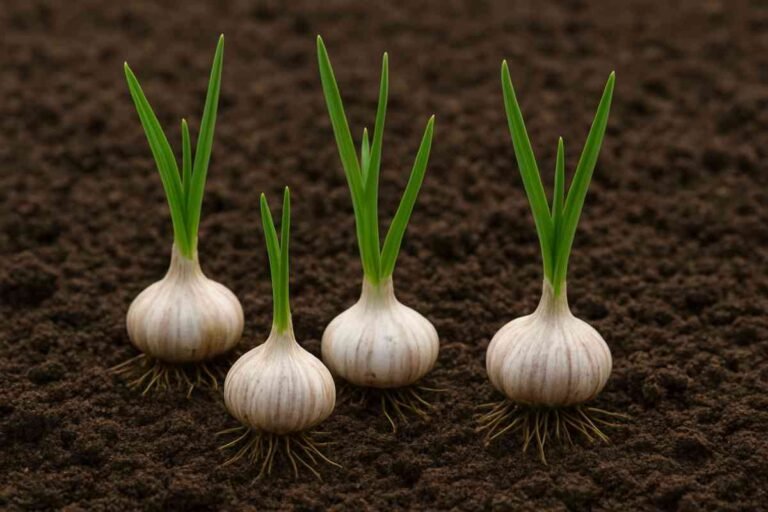
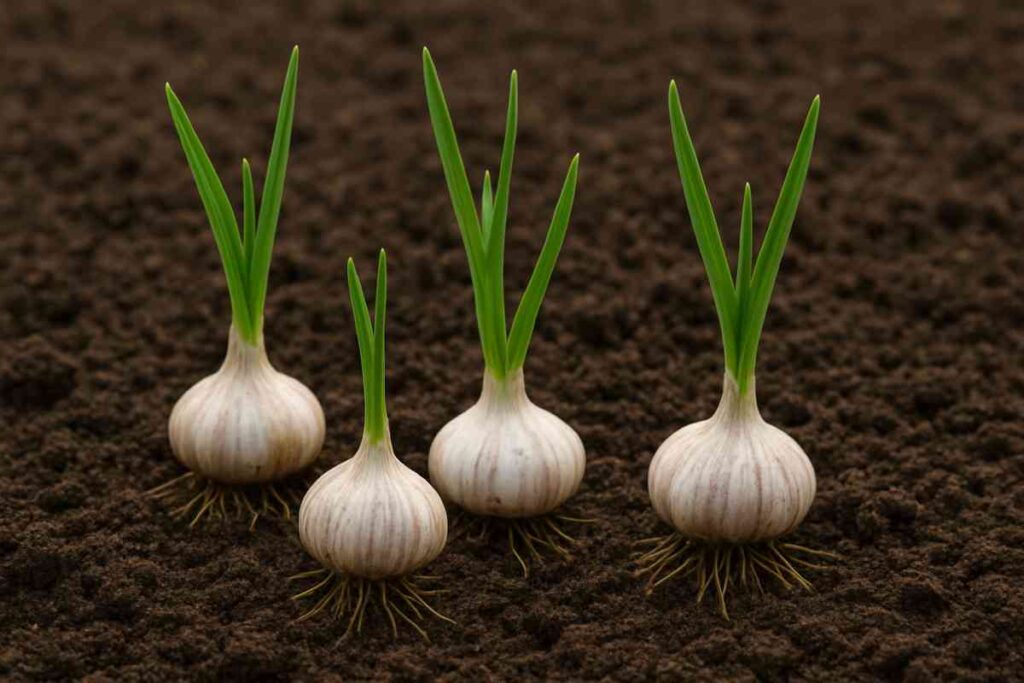
9. Garlic

Packed with sulfur compounds, garlic (Allium sativum) is a natural pest repellent, including for spider mites, aphids, and fungal issues. Crushed garlic sprays are even used as organic pest control—so the plant itself is a powerful deterrent.

Garlic is typically planted in the fall and harvested the following summer. It needs well-drained soil, plenty of sun, and mulch to help overwinter. Hardneck varieties are best for colder climates, while softneck thrives in milder areas.

In late spring, garlic produces curly scapes (flower stems) that can be harvested for stir-fries or pesto. Removing the scapes helps the bulb grow larger and is a bonus harvest before the big one.

Garlic is a great companion for tomatoes, peppers, and carrots. Just avoid planting it near beans and peas, as it can stunt their growth. In small gardens, its upright shape makes it easy to tuck into almost any bed.

10. Peppermint

PeppermintPeppermint

Peppermint is rich in aromatic oils that overwhelm and deter spider mites, aphids, and even ants. The scent is refreshing to us but overpowering to bugs—making it an ideal plant to tuck near pest-prone veggies.

Peppermint loves moist soil and partial to full sun. But a word of warning: it spreads fast. Unless you want a mint takeover, grow it in containers or sink a pot into the ground to keep its roots in check.

Regular harvesting keeps the plant lush and prevents flowering, which can reduce leaf flavor. It’s super forgiving and bounces back quickly even after a hard prune.

Peppermint repels pests, attracts pollinators when it blooms, and makes great tea or garnishes. Pair it with brassicas or lettuce, but give it room—or a container—to do its thing.

11. Bok Choy

Bok choy (Brassica rapa subsp. chinensis) doesn’t repel spider mites directly, but it’s not their top target. Its thicker, waxy leaves are less attractive than those of softer greens, though it can still suffer under heavy infestations in hot, dry conditions.

This leafy green thrives in cool weather, making it ideal for spring and fall planting. It matures in as little as 30–45 days, and prefers rich, moist soil with steady watering. It’s best grown in partial shade in hotter regions.

You can harvest baby bok choy early or let it mature fully. Either way, cut at the base and it may regrow for a second harvest. Keep it well-watered to avoid bolting in warmer weather.

Bok choy does well with herbs like dill and cilantro, which can help deter pests. Use row covers early on to protect from flea beetles and cabbage worms, and you’ll enjoy a crisp, clean crop in no time.

12. Okra

Okra isn’t bothered by most garden pests—including spider mites. Its thick, fuzzy leaves and sturdy stalks aren’t appealing to these tiny invaders, making it a great companion for more vulnerable plants that need a break from pest pressure.

Okra thrives in hot weather where other crops might wilt or struggle. It loves full sun and well-draining soil, and once it gets going, it grows fast—often reaching 5 to 10 feet tall. Start it from seed after the last frost, and you’ll be harvesting in as little as 50 to 60 days.

Once established, okra needs very little help. Just keep it watered during dry spells and pick pods frequently to keep the plant producing. Harvest when pods are young and tender—if they get too big, they’ll turn tough and woody.

Okra’s strong vertical growth makes it a great living support for vining crops like beans or Malabar spinach. It’s the kind of plant that holds its own while helping others grow, both as a pest-resistant powerhouse and a garden multitasker.

Conclusion

By incorporating plants that naturally repel spider mites, you can create a healthier, more resilient garden without relying on harsh chemicals.

These plants not only protect your crops and flowers but also promote biodiversity and attract beneficial insects, turning your garden into a thriving ecosystem.

Whether you’re looking for aromatic herbs, vibrant flowers, or hardy vegetables, there’s a plant suited for every garden need. With a little planning and the right selection of pest-resistant plants, you can keep spider mites at bay and enjoy a flourishing, pest-free garden season after season.

Post Workout Smoothie (To Support Recovery)


Post Workout Smoothie (To Support Recovery) – The Real Food Dietitians


Privacy & Cookies Policy

Salsa Verde Shrimp & Rice – Easy 15 Minute Meal

Salsa verde shrimp and rice is incredibly flavorful, easy to make (ready in just 15 minutes) and the perfect busy weeknight dinner recipe. This recipe uses simple ingredients like frozen veggies and store-bought salsa verde, helping you make an incredibly delicious meal without much effort.

If you love weeknight meals that take less than 20 minutes to make, you should try Blackened Shrimp Rice Bowls or BBQ Salmon Tacos.

Fork lifting a shrimp out of a bowl of salsa verde shrimp.Fork lifting a shrimp out of a bowl of salsa verde shrimp.

Bites of Wellness was created to help you get a flavorful meal on the table with little effort. Owning my own meal prep business helped me understand how to make flavorful food in the least amount of time. Seafood, specifically shrimp, is such a quick cooking protein. Be sure to check out a few more seafood recipes.

This post contains affiliate links. As an amazon associate I earn from qualifying purchases. Click here to read my policy and more about affiliate links.

Recipe highlights

  • 15 minutes with tips on how to make it even quicker!
  • 8 ingredients
  • Uses pantry staples – like store bought salsa verde, frozen veggies and frozen shrimp
  • Easy to make – the shrimp and veggies cook together in on pan while the rice cooks in the instant pot
ingredients to make salsa verde shrimp and rice on a marble countertop.ingredients to make salsa verde shrimp and rice on a marble countertop.

Ingredients

  • Shrimp – I always use defrosted frozen shrimp that was already peeled and deveined to make minimal prep work.
  • Frozen peppers and onions – I highly recommend grabbing the fire-roasted frozen peppers and onions at Trader Joe’s if possible.
  • Salsa verde – use your favorite jarred salsa verde or make your own.
  • Rice – use whatever your favorite rice is. I highly recommend jasmine rice, as it cooks quickly in the instant pot and pairs perfectly with the slightly spicy shrimp.

How to make salsa verde shrimp bowls

Start by cooking the rice in the instant pot (rinse rice well, add rice and water to instant pot and cook 3 minutes high pressure).

While rice is cooking, heat a large skillet over medium heat and cook the frozen peppers and onions with salt, garlic powder and cumin. Cook 5-6 minutes until defrosted and most of the water is starting to cook off the veggies.

Stainless steel pan filled with frozen bell peppers and onions.Stainless steel pan filled with frozen bell peppers and onions.

Push peppers and onions to the sides of the pan and add the defrosted shrimp. Cover shrimp with salt, garlic powder and cumin and cook 2-3 minutes on the first side and 1-2 minutes on the next side. Turn off heat.

Shrimp added to a pan with peppers and onions.Shrimp added to a pan with peppers and onions.

Stir in the jarred salsa verde sauce and stir well, combining the shrimp, veggies and salsa.

Cooked shrimp and veggies with salsa verde over top in a pan.Cooked shrimp and veggies with salsa verde over top in a pan.

Serve over rice and add your favorite toppings like avocado, cilantro, jalapeno, tomatoes, etc.

Salsa verde shrimp and rice on a plate with a grey napkin on the side.Salsa verde shrimp and rice on a plate with a grey napkin on the side.

Recipe variations

  • Make it spicier: Add some sriracha, crushed red pepper or jalapenos
  • Use a different grain: Serve with brown rice, quinoa or even cauliflower rice depending on your preferences
Salsa verde shrimp and veggies in a stainless steel pan with jar of salsa on the sidse.Salsa verde shrimp and veggies in a stainless steel pan with jar of salsa on the sidse.

How to serve salsa verde with shrimp

  • In a bowl over rice with avocado and cilantro on top
  • In tortillas to make salsa verde shrimp tacos
  • Over tortilla chips to make a fun spin on nachos

Common questions

Can you use frozen shrimp?

I don’t recommend cooking frozen shrimp in a skillet, however you can easily defrost shrimp very quickly. If you don’t have time to defrost the shrimp, you can cook frozen shrimp in the air fryer.

Can you make this with another protein?

Yes, you could also use chicken, tofu or even cubed salmon (I recommend making air fryer salmon cubes if you choose this protein). The cooking time may vary for these other proteins.

Can you make this in advance?

As you may know, shrimp can get very rubbery if overcooked, so I don’t recommend making this in advance and later heating it up. You could make the rice in advance to save time though. If you have pre-cooked rice, the recipe will be ready in 10 minutes.

Salsa verde shrimp and rice on a forkSalsa verde shrimp and rice on a fork

Storing leftovers

  • Fridge: If you happen to have leftovers, store them in the fridge in a well sealed container for up to 3 days. Reheat in the microwave over in a small skillet over medium low heat, covered.
  • Freezer: I don’t recommend freezing this, the shrimp and veggies will not reheat well after defrosting.  

More delicious shrimp recipes

★ Did you make this recipe? Please give it a star rating below!

  • 1.5 cups jasmine rice
  • 2.25 cups water
  • 1 bag frozen roasted bell peppers and onions
  • 1 pound frozen shrimp, defrostedpeeled and deveined
  • 1 teaspoon saltdivided
  • 1 teaspoon garlic powderdivided
  • 1 teaspoon cumindivided
  • 1/2 cup salsa verde
  • Rinse the rice well then add it to the instant pot. Pour water over the rice and cook on high pressure for 3 minutes.

  • Add the peppers and onions to a large skillet over medium heat. Sprinkle with 1/2 teaspoon salt, 1/2 teaspoon garlic powder, and 1/2 teaspoon cumin. Stir well and cook 5-6 minutes.

  • After 5-6 minutes, push the bell peppers and onions to the sides of the skillet and add the shrimp. Sprinkle the shrimp with 1/2 teaspoon salt, 1/2 teaspoon garlic powder, and 1/2 teaspoon cumin. Cook the shrimp 2-3 minutes, flip the shrimp and cook 1-2 more minutes.

  • Turn off the heat, add the 1/2 cup of salsa verde and stir well.

  • Serve the salsa verde shrimp and vegetables over the rice and enjoy.

Top tips

  • To quickly defrost shrimp, add the bag to a bowl of cold water and swap out the water every 20-30 minutes. Shrimp should be defrosted in an hour or less.
  • To save time, you can use precooked rice (either frozen or ready in 90 seconds microwavable pouches). If you have pre-cooked rice, this recipe will be ready in about 10 minutes.
  • Buy peeled and deveined shrimp. This will save you so much time and is the only kind of shrimp I buy.

Recipe variations

  • Make it spicier: Add some sriracha, crushed red pepper or jalapenos
  • Use a different grain: Serve with brown rice, quinoa or even cauliflower rice depending on your preferences

Nutrition Information

Nutrition Facts

Amount per Serving

Where does nutrition info come from? Nutrition facts are provided as a courtesy, sourced from the USDA Food Database.

Let others know by rating and leaving a comment below!

Homemade Sriracha Recipe (Optional Lacto-fermentation)

0

By now you’ve probably heard of (or even tried) sriracha sauce. This famous chili sauce has popped up in stores and even restaurants all over. It’s surprisingly easy to make, adds a nice kick to foods, and you can even ferment it for added probiotics!

The original sauce was made with red chillies in Si Racha, Thailand. A Vietnamese immigrant, David Tran, crafted his own version and launched Huy Fong Sriracha, named after the ship that brought him to America. Made with Thai chili peppers it’s been a growing trend since the 80’s, but really came into vogue in the past few decades.

What is Sriracha?

This once-obscure condiment (at least in the U.S.) has enjoyed a meteoric rise in popularity in the last few decades. In 2010 it was named “Ingredient of the Year” and is a popular condiment popping up on restaurant menus and in snack foods everywhere.

Huy Fong is considered the original sriracha sauce (nicknamed “Rooster Sauce”), though many other brands have popped up since. There are entire websites, cookbooks, and fan clubs devoted to this condiment. While they debate the best brands and recipes, I prefer to make my own!

One advantage of pre-made Sriracha sauce is that it practically never goes bad. And like ketchup, it’s very versatile. Unfortunately, also like ketchup, sriracha contains quite a bit of refined sugar and a few preservatives that allow its long shelf life.

Homemade Sriracha Sauce Recipe

Like most things, homemade hot sauce is healthier than store bought. The process of making sriracha is much easier than you might think!

This recipe is inspired by the famous Rooster sauce, but you can optionally ferment it, which extends the shelf life. Fermentation also increases the vitamins naturally preserves the food. You’ll often find other veggies fermenting on my countertop too.

Sriracha Recipe Secret Ingredient: Fish Sauce

The only ingredient you may not have is fish sauce, but I’d encourage you to grab a bottle before making this. This unusual sauce gives sriracha a depth of flavor and is a wonderful addition to many other recipes.

My favorite brand is Red Boat Fish Sauce. It also tastes great with lots of recipes, especially any with an Asian theme. If you can’t have or really don’t like fish sauce, you can use equal parts bone broth and coconut aminos to substitute.

Here’s how to make your own sriracha sauce recipe!

Lacto-fermented Sriracha Recipe

A delicious spicy sriracha recipe without the refined sweeteners (and a sweetener-free option) and an added optional ferment that extends shelf life and improves the nutritional profile.

  • Cut the tops off the peppers, and peel out the seeds and membranes.

  • Finely dice the peppers and fresh garlic.

  • Put the peppers, garlic, salt, vinegar, fish sauce, and coconut aminos into a large food processor.

  • Add the tomato paste and raw honey and puree the solids.

  • Transfer to a small saucepan and bring to a simmer.

  • Simmer for 10-15 minutes until slightly reduced and thicker. Taste and add more vinegar, sweetener, or coconut aminos if needed.

  • Transfer to a quart size mason jar and store in the refrigerator, using as needed.

Fermented Sriracha Sauce

  • For fermented sriracha: Stir the whey into the glass jar with the sriracha sauce.

  • Let the jar sit at room temperature for 3 days, and then move to the fridge. If your house is very warm the fermentation time may be a little shorter. This fermentation process extends the shelf life by about a month and provides a deeper flavor.

Nutrition Facts

Lacto-fermented Sriracha Recipe

Amount Per Serving (1 tsp)

Calories 7
Calories from Fat 1

% Daily Value*

Fat 0.1g0%

Saturated Fat 0.01g0%

Polyunsaturated Fat 0.02g

Monounsaturated Fat 0.002g

Cholesterol 0.5mg0%

Sodium 73mg3%

Potassium 30mg1%

Carbohydrates 1g0%

Fiber 0.1g0%

Sugar 1g1%

Protein 0.4g1%

Vitamin A 73IU1%

Vitamin C 10mg12%

Calcium 3mg0%

Iron 0.1mg1%

* Percent Daily Values are based on a 2000 calorie diet.

  • Use pineapple juice instead of vinegar for a sweeter sauce and omit the sweetener
  • Store in an airtight container in the fridge. A Mason jar works well for this.
  • This recipe yields about 2 cups of sriracha sauce.

Choosing Your Peppers

Important note: Like any hot sauce, this sriracha recipe is spicy! Use small amounts in recipes or as a condiment at first until you know how spicy it is. Also, I’d recommend using gloves when making this (or any) hot sauce.

While sriracha is naturally very spicy, you can really use whatever peppers you’d like. Choose other hot chili peppers for a slightly different flavor like habanero or serrano peppers. Tone down the spice with some green jalapenos, red jalapeno peppers, or even bell pepper. The nice thing is you can control the heat level!

Try sweet red peppers (omit the sweetener) for a non-spicy version with great flavor. You can use this as a dipping sauce, add it to recipes, or make sriracha mayo.

Are you a fan of this spicy and sweet condiment? How do you use it?

Learn How to Grow Spinach in Containers

Apply granular fertilizer every two to three weeks by working the recommended amount as outlined on the package into the top inch of soil surrounding the plant.

If you live in a warm growing zone, keep an eye on the heat outdoors. Once temperatures in your area creep up toward 75°F or higher, your spinach is at risk of bolting.

You can bring your plant inside, or move the container into a cooler, shadier area of your yard: under a shady tree, for example, or against your house but in an area that doesn’t get as much sun. Alternatively, use some shade cloth to shelter the plants from the sun during the warmest parts of the day.

Cold-weather growers can extend the growing season a little bit by bringing pots indoors once the local temperatures drop to 35°F. Place the container in a sunny windowsill, or in a cold frame or greenhouse.

Cultivars to Select

Here are a few of our favorite cultivars for you to enjoy growing in containers:

America

If you’re searching for a heat-tolerant variety that will grow happily in containers even when temperatures rise above 75°F, try growing ‘America.’

Suited to Zones 3 through 11, this heirloom grows up to eight inches tall and four inches wide, making it the perfect size for container growing.

A close up square image of a row of 'America' spinach pictured in light sunshine. To the bottom right of the frame is a white circular logo with text.

‘America’

Also called ‘American’ and ‘American Long Standing,’ this bolt-resistant green is a 1952 cross between ‘Bloomsdale Dark Green’ and ‘Viking.’

Packets of these seeds, which mature in just 43 to 55 days, are available from True Leaf Market.

Double Choice

Some people like tender baby spinach. Others like it full grown. Whichever camp you fall into – maybe a bit of both? – ‘Double Choice’ gives you options, as the name suggests.

The plant grows 10 to 12 inches high, but you can harvest baby leaves when they’re just four to six inches tall. Or, wait the full 35 to 40 days for full-grown leaves.

If you’re growing spinach in containers in a cold growing zone, you’ll appreciate how quickly ‘Double Choice’ grows!

A close up square image of a wicker basket filled with freshly harvested 'Double Choice' spinach leaves.A close up square image of a wicker basket filled with freshly harvested 'Double Choice' spinach leaves.

‘Double Choice’

‘Double Choice’ spreads four to six inches, and the semi-savoy leaves are perfect for salads. This hybrid thrives in Zones 3 through 9. Find packets of 350 seeds available from Burpee.

Viroflay

Do you dream of enormous leaves that make perfect pizza toppings and look amazing growing in a container? Then you’ll love ‘Viroflay,’ a French heirloom dating back to the mid-1800s.

The giant, arrowhead-shaped, semi-savoy leaves can grow up to 10 inches long!

You can see why this variety bears the nickname “Monster of Viroflay.” It’s monstrous spinach, indeed.

A close up square image of freshly harvested leaves of 'Viroflay' spinach on a wooden surface.A close up square image of freshly harvested leaves of 'Viroflay' spinach on a wooden surface.

‘Viroflay’

‘Viroflay’ matures in 30 to 60 days and grows 18 to 24 inches tall.

Suited to Zones 3 through 10, you can find packets of seeds available from Eden Brothers.

Pests and Disease

There’s a lot to love about spinach, including its general resistance to pests and disease.

Even better, if you’re growing your greens in a container, it’s not going to be brushing its leaves with those of other plants, so there’s even less of a chance that it’ll be plagued by any ailments.