40.8 F
Klamath Falls
Saturday, March 14, 2026
Home Blog Page 88

How to Make Flu-Busting Elderberry Gummies

0

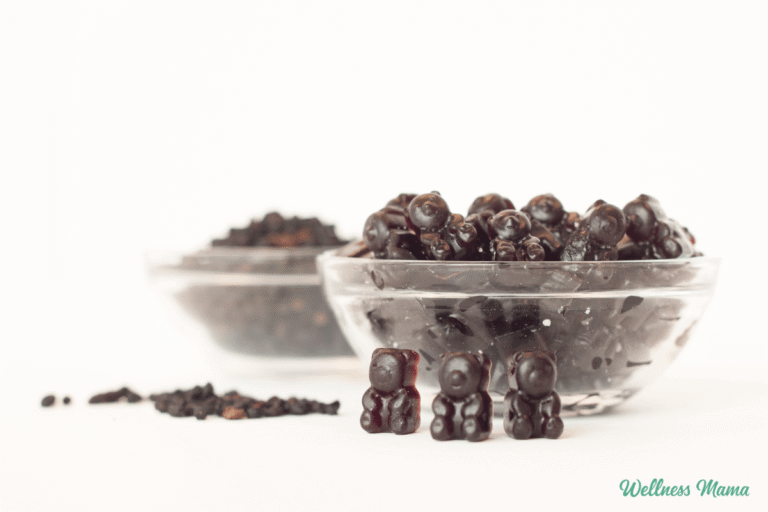
What kid doesn’t love gummy snacks? This version features health boosting elderberry syrup, perfect for cold and flu season. Elderberry syrup is a staple in our home this time of year. Turning it into gummies is a fun (and less messy!) way for kids to enjoy elderberry. 
These combine the immune boosting benefits of elderberry syrup with the gut benefits of gelatin. It’s a healthy and delicious way to beat the flu.
Elderberry Gummies Recipe

My kids love these! I had a hard time getting a nice picture at first since little hands kept touching them. While my kids love snacking on fruit gummies by the handful, keep in mind that these are more concentrated. Little ones only need a few at a time. 

To make the recipe you’ll first need elderberry syrup. You can make your own or use store-bought. Some farmer’s markets now sell elderberry syrup too. My homemade version is different than most others and thinner because it uses raw honey instead of sugar.  If you’re using store-bought that’s thick and syrupy you might want to dilute it 50/50 first with juice.  

Health Benefits of Elderberry

Elderberry has recently become more of a household name and even celebrities have started mentioning it. However, elderberry has long been used to help ward off illness. More recently science has confirmed what traditional healers have known for thousands of years. 

Most people use elderberry as a preventative, but it can help once you have a cold or flu too. Several meta-analyses have concluded elderberry can significantly reduce upper respiratory symptoms. Researchers also noted elderberry shows some anti-inflammatory effects. Plus, it can help shorten the duration and severity of colds and flus. 

Here’s how to make homemade elderberry gummies that kids (and adults!) will love.

Elderberry Gummies Recipe

Use elderberry syrup to make homemade gummy bears to support the immune system. A tasty way to beat colds and flus.

  • Grease molds or glass pan with coconut oil to prevent sticking.

  • Place ¼ cup of cooled elderberry syrup in a 2 cup measuring cup and quickly whisk in the gelatin powder.

  • Add the ½ cup of hot (not boiling) water and stir quickly until smooth.

  • Add the rest of the elderberry syrup and stir or whisk until completely smooth.

  • Pour into molds and refrigerate for 2 hours or until completely firm.

  • Pop out of the molds and store in an airtight container with parchment paper between layers.

Nutrition Facts

Elderberry Gummies Recipe

Amount Per Serving (2 gummies)

Calories 7

% Daily Value*

Fat 0.04g0%

Saturated Fat 0.03g0%

Polyunsaturated Fat 0.001g

Monounsaturated Fat 0.003g

Sodium 1mg0%

Potassium 1mg0%

Carbohydrates 1g0%

Fiber 0.003g0%

Sugar 1g1%

Protein 1g2%

Vitamin C 0.01mg0%

Calcium 0.5mg0%

Iron 0.01mg0%

* Percent Daily Values are based on a 2000 calorie diet.

  • Take daily as needed to potentially avoid viral illness. Take every few hours to help beat viral illness faster.
  • These will last up to a week in the fridge in an airtight container. They could last longer, but I haven’t tried it since they never last that long at my house!

Serving Size and Dosage

How much you take really depends on which size molds you use. And since this is a food based remedy there’s much more margin for error with dosing (compared to OTC and prescription meds).

Every 1 Tablespoon and 2 and ¼ teaspoons of gummy liquid is equal to 1 Tablespoon of elderberry syrup. If you use gummy bear molds where each gummy bear is 4ml, that translates to roughly 6-7 gummy bears. 

  • Kids could take 1-2 gummy bears as needed
  • Adults could take 3-6 gummy bears as needed

This is just an example though. If your molds are significantly larger, then eat less per serving. If they’re smaller, then eat a few more. Either way, they’re delicious!

What are some of your favorite ways to use elderberry? Leave a comment and let us know!

This Flu Busting gummy bears recipe is made with homemade elderberry syrup and gelatin for an immune boosting, gut healthy treat for kids of all ages!

Planting Onion Bulbs in Fall – 5 Reasons to Grow

0

More than 80 percent of Americans use Onions as staple food. So, relying just on Spring harvest isn’t a good option.

Apart from spring, you can plant onion bulbs in the fall to keep your backyard productive throughout the year.

Depending on climatic conditions in your region, it is easy to grow onions from seeds or sets.

Fall is regarded as an ideal time to plant onion bulbs because the soil holds the warmth of summer, which allows the bulbs to establish roots.

And days are shorter with mild temperature that reduce bolting and pests.

Planting onions in fall allows extended growing season, resulting in larger and healthier bulbs in spring or early summer.

Before starting it is essential to choose the best onion variety, know growing requirements of the plant and prepare the soil for planting.

Know the Basics of Growing Onions

Growing onions is quite straightforward, but choosing the right variety and following some basics can make your harvest much better.

Onions prefers full sun and loose, fertile soil enriched with organic matter, ideally with a pH between 6.0 and 7.0.

They need steady watering, but the soil should drain well to prevent rot and disease. Avoid planting in heavy clay soils, as they restrict bulb growth and make it harder for onions to thrive.

Day length is the key factor when it comes to onion success.

Onions are classified into short-day, intermediate-day (day-neutral), and long-day types.

Southern states, like Texas and Georgia, are best suited for short-day onions such as Texas Early Grano or Yellow Granex (the famous Vidalia onion).

In central regions, day-neutral varieties like Candy and Red Burgundy perform well, while northern states do best with long-day onions like Walla Walla, Yellow Sweet Spanish, and Copra.

Planting time varies by region, but generally, onions go into the ground in early spring as soon as the soil can be worked, or in fall in milder southern areas. Starting with sets, transplants, or seeds all work, but preparing beds with compost or aged manure before planting gives the best results.

Also Read: 19 Vegetables to Plant in Fall

5 Reasons Why You Should Plant Onions in Fall

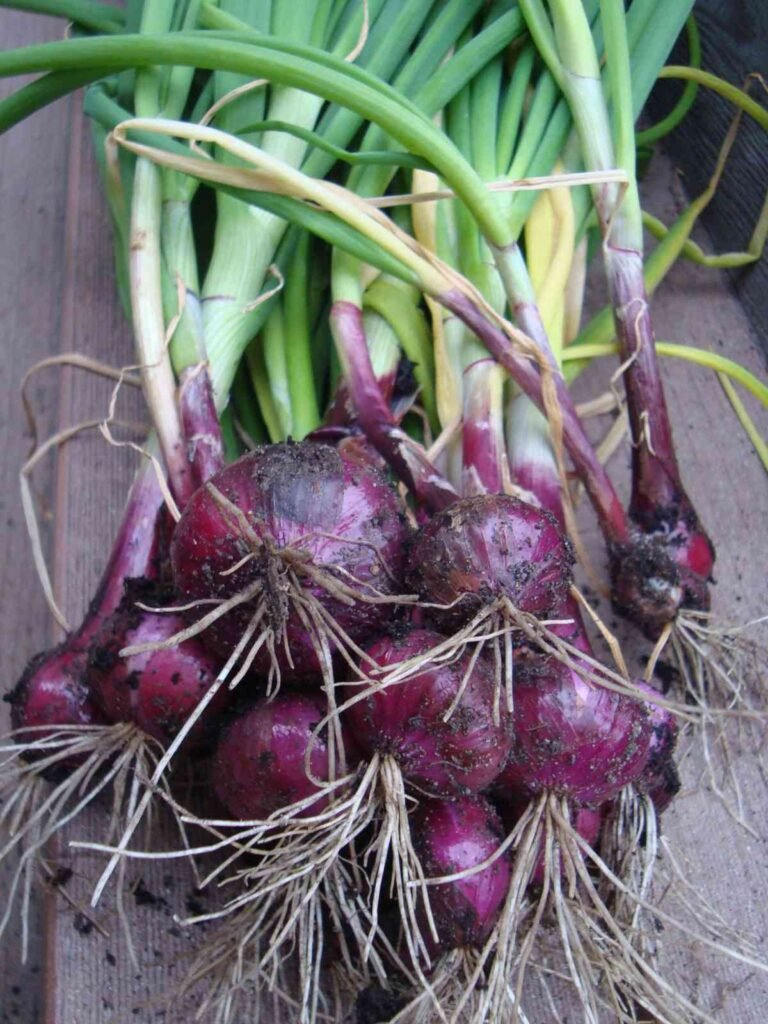
onion bulbs

Starting early in the fall will extend the growing period and you can expect the harvest in spring. Else, you may have to wait until later summer for onion planted in spring.

This way you can keep your garden active year-round.

1. Strong Root Development Before Winter

Fall planting takes advantage of lingering soil warmth after summer. Even though the air is cooler, the soil stays warmer for longer, which is ideal for onions to grow strong roots. These roots anchor the plants and allow them to absorb nutrients and moisture over winter.

When onions go into dormancy during the coldest months, their well-established roots keep them stable and ready to grow vigorously once spring warmth returns.

Think of fall planting as giving your onions a head start that spring-planted onions simply don’t get.

2. Earlier Harvest in Spring or Summer

One of the biggest perks of fall planting is that onions wake up as soon as temperatures rise in spring.

Since they already have established roots, they start growing right away, unlike spring-planted onions that need time to get established first. This means you can harvest your onions earlier—sometimes up to a month sooner than usual.

Early harvests are especially handy if you want fresh onions before summer crops start filling your kitchen, or if you like to rotate crops and free up garden space for tomatoes, beans, or squash.

3. Bigger, Healthier Bulbs with Better Storage

Fall-planted onions usually grow larger bulbs because they enjoy a longer growing season overall.

Instead of being rushed to mature during late spring and summer heat, they have months of cool-season growth to slowly build size and strength. This gradual growth often leads to firmer, denser bulbs with excellent flavor and long storage life.

Many gardeners notice that fall-grown onions store better through the year compared to those planted in spring, which can sprout or spoil sooner.

4. Lower Risk of Bolting (Flowering Too Soon)

Bolting—when onions send up flower stalks—is a common frustration for gardeners. It usually happens when onions experience stress, like sudden swings between cold and warm weather in spring.

Once an onion bolts, bulb development stops, and the harvest becomes less usable. Planting in fall reduces this risk.

Since the plants establish themselves before the harsh shifts of spring weather, they’re less stressed and more focused on forming bulbs rather than flowering. This results in healthier onions and fewer disappointments.

5. Better Use of Garden Space Year-Round

Onions planted in fall are low-maintenance through winter. They grow slowly during the colder months, needing little attention, and by late spring or early summer, they’re ready to harvest. This timing is perfect because it frees up valuable garden space just when you need it for warm-season crops.

By planting onions in fall, you essentially stagger your garden’s productivity, ensuring you’re always harvesting something and keeping your beds in continuous use.

It’s a smart way to maximize both time and space in your garden.

Planting Onion Bulbs in Fall – Ultimate Guide

As mentioned earlier, planting onion bulbs in the fall allows to establish strong roots, survive the winter, and grow bigger, sweeter bulbs for an earlier harvest.

Choose the right variety for your region, plant 4–6 weeks before frost, and you’ll be rewarded with fresh green onions in spring and full-sized bulbs by early summer.

You can grow onions from sets or bulbs or start from seeds.

But, in later you must start germinating seeds indoors 8 weeks prior to planting outdoors.

1. Best Onions for Fall Planting

Not all onions are suited for fall planting. The success of your crop depends heavily on day length and climate.

  • Short-Day Onions (Best for the South): These start bulbing with only 10–12 hours of daylight, making them ideal for regions like Texas, Georgia, Florida, and Southern California. Popular choices: Texas Early Grano, Yellow Granex (Vidalia type), and Red Creole.
  • Intermediate or Day-Neutral Onions (Great for Central States): These need 12–14 hours of daylight and perform well in much of the middle U.S. Varieties like Candy, Red Burgundy, and Super Star are widely grown.
  • Long-Day Onions (For Northern States): These require 14–16 hours of daylight and don’t do well with fall planting because of harsh winters. Northern gardeners should wait until spring to plant varieties like Walla Walla, Yellow Sweet Spanish, and Copra.

Check this: 19 Vegetables for Your Winter Garden

2. Preparing the Soil

Onions thrive in full sun and loose, well-drained soil. Preparing your soil well in fall ensures strong, healthy growth later.

  • Soil type: Aim for sandy loam or raised beds for good drainage. Avoid heavy clay, which can suffocate bulbs and cause rot.
  • Fertility: Mix in compost or well-rotted manure before planting. Onions are heavy feeders and appreciate nutrient-rich soil.
  • pH range: Keep it slightly acidic to neutral (6.0–7.0).
  • Weed-free start: Onions don’t compete well with weeds, so clear the bed thoroughly before planting.

3. How to Plant Onion Bulbs?

Planting onion sets is the most straightforward method for beginners. These are small, immature onion bulbs that regrow when replanted.

  • Timing: Plant onion sets 4–6 weeks before your first expected hard frost. In most southern states, this means late September through November.
  • Depth: Place each bulb about 1 inch deep with the pointed end facing upward.
  • Spacing: Set them 4–6 inches apart in rows 12–18 inches apart. Closer spacing produces smaller onions (great for green onions), while wider spacing grows large storage bulbs.
  • Watering: After planting, water well to settle the soil. Keep the soil evenly moist but not soggy.
  • Mulching: Add a thin mulch layer of straw or shredded leaves to protect bulbs through winter.

4. Caring for Onions Through Winter

Onions are hardy and require little attention once planted. During winter, they grow slowly above ground while roots continue to develop.

  • In mild climates, onions survive unprotected.
  • In colder areas, add a heavier mulch to insulate against freezes. Remove it in early spring so sunlight warms the soil.
  • Keep beds free of weeds, as onions can be easily crowded out.

5. Spring Growth and Harvest

When days lengthen and temperatures rise in early spring, onions shift into active growth.

  • Watering: Keep the soil consistently moist during this stage to support bulb formation.
  • Fertilizing: Side-dress with a nitrogen-rich fertilizer (like fish emulsion or compost tea) every few weeks until bulbs begin to swell.
  • Harvesting green onions: You can start pulling young onions (scallions) as early as March in many southern regions.
  • Harvesting mature bulbs: Most fall-planted onions are ready by late spring to early summer. They’re mature when the tops yellow and fall over naturally. Pull the bulbs and cure them in a dry, airy place before storage.

6. Growing Onions from Seeds

If you prefer to start from scratch, onions can also be grown from seeds. While slower, seeds offer a wider choice of varieties and often healthier plants.

  • When to start seeds indoors: Sow seeds 8–10 weeks before your outdoor planting date. For fall planting in southern states, this means starting seeds indoors in July or August.
  • Transplanting: Once seedlings are pencil-thin (about 6–8 inches tall), harden them off and plant them outdoors in fall.
  • Direct sowing outdoors: In very mild climates, you can sow seeds directly in September for a spring harvest. Thin seedlings so they stand 4–6 inches apart.

7. When to Expect Your Harvest

Fall-planted onions give you a head start on spring harvests:

  • Green onions (scallions): Ready in early spring.
  • Full bulbs: Usually ready by late spring to early summer, depending on your region and variety. For example, onions planted in October in Texas or Georgia can often be harvested by May or June.

Also Read: 30 Best Vegetables to Grow in Containers

Conclusion

Fall is the second season for gardening.

You can plant onion bulbs or grow them from seeds. Fall planting allows extended growing period and healthy yield.

Choose the right variety and provide suitable growing conditions to successfully grow onions in your backyard.

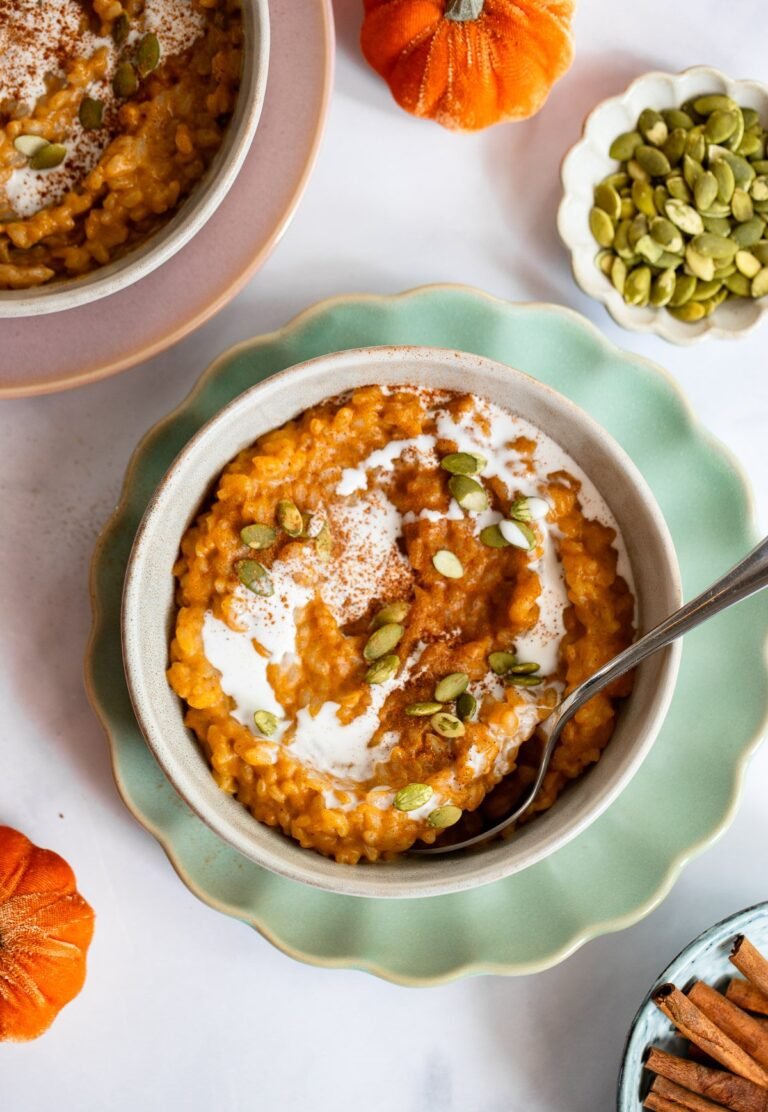
Easy Pumpkin Rice Pudding | Dietitian Debbie Dishes

0


Easy Pumpkin Rice Pudding | Dietitian Debbie Dishes


CDC’s vaccine advisers meet this week. Here’s how they could affect policy : Shots

0

Members of the Advisory Committee on Immunization Practices meet at the Centers for Disease Control and Prevention headquarters in Atlanta, Ga. in June.

Ben Hendren/Bloomberg/Getty Images


hide caption

toggle caption

Ben Hendren/Bloomberg/Getty Images

Who should get COVID shots this fall? And should all babies get vaccinated against hepatitis B at birth?

These are two of the questions that an influential federal vaccine advisory group, the Advisory Committee on Immunization Practices, is set to address in a meeting Thursday and Friday at the Centers for Disease Control and Prevention in Atlanta. The panel provides guidance to the CDC director on how vaccines should be used to prevent disease in the U.S. population.

Their recommendations determine which vaccines are offered for free through the Vaccines for Children program, and what many health insurers must cover. They also influence state and local laws on vaccine requirements.

Many health and medical experts are watching closely — and with concern — given that Health Secretary Robert F. Kennedy Jr. has stacked the panel with members who question the safety of long-established vaccines and has made statements critical of current vaccine policy, saying it has eroded public trust.

Ousted CDC director Susan Monarez who served in the position for 29 days before being fired by Kennedy in late August testified at a congressional hearing Wednesday that Kennedy had pressured her to agree in advance to the committee’s recommendations. She said he told her the childhood vaccine schedule “would be changing starting in September, and I needed to be on board with it.”

She also stated there’s “real risk that recommendations could be made restricting access to vaccines for children and others in need without rigorous scientific review.”

Kennedy has also removed or pushed out many of the career CDC staff that support the committee and barred professional medical groups such as the American Academy of Pediatrics and the American Medical Association from serving in their traditional roles as expert liaisons to the advisory committee.

Here are three things to watch for:

1. COVID vaccine access could be cleared up, or narrowed

The committee is coming late to COVID vaccines this year. The Food and Drug Administration approved the fall boosters two weeks ago – saying those who are 65 and up, or have high risk medical conditions are eligible. Shots have already arrived in some drugstores and doctor’s offices.

Given the lag between the FDA approval and a CDC recommendation, there’s been uncertainty about who should get the vaccines and access differs from state to state.

But health experts worry that when the group votes, they could recommend limits that would make it harder for people to get COVID shots this fall.

“People are still being hospitalized. People are still dying. The numbers are smaller, thankfully, but that doesn’t mean that they’re gone,” says Dr. Yvonne Maldonado, a professor of pediatrics at Stanford Medicine Children’s Health and one of the previous ACIP members Kennedy fired, “If we can prevent a hospitalization or death, we should allow people to make that choice and do that.”

The panel includes people who say that COVID vaccines have harmed or killed many, even if that doesn’t square with the evidence.

“The idea that there have been dozens of deaths or other unacknowledged harms that were swept under the rug doesn’t align with what we saw during the COVID pandemic, regarding the careful ongoing scrutiny of the vaccines throughout their introduction,” says Jason Schwartz, associate professor of health policy at the Yale School of Public Health.

2. Hepatitis B vaccine may no longer be recommended for infants 

Hepatitis B, a viral infection that attacks the liver, cannot be cured. And the hepatitis B virus – more transmissible than HIV and capable of cloaking itself from the immune system – can stay hidden in the body for years. A series of shots starting just after birth can prevent the viral infection that causes liver disease and cancer down the line.

But at the ACIP meeting in June, committee chair Martin Kulldorff questioned the need for all babies to receive the vaccine. “Unless the mother is hepatitis B positive, an argument could be made to delay the vaccine for this infection, which is primarily spread by sexual activity and intravenous drug use,” he said.

Screening expectant mothers for hepatitis B has long been recommended, Dr. Rochelle Walensky, former CDC director in the Biden administration, said at a gathering of health journalists this month. But history shows “that was not foolproof,” she said. “That failed our children.” Before the universal vaccine recommendation in 1991, thousands of children were being infected every year.

Since then, cases of acute hepatitis B have plummeted – from over 20,000 cases a year, to fewer than 1,000. “We saw this blanket protection that protected an entire generation of kids, so that as they got older and they had exposures and risks, they didn’t get hepatitis B,” says Dr. Su Wang, an internist and researcher specializing in hepatitis at Cooperman Barnabas Medical Center in New Jersey.

Advocates had expected that vaccines would continue to protect younger generations, and turned their efforts to gaps in diagnosis and treatment in older people, in an effort to eliminate hepatitis B by 2030. “This is a goal that is doable, because we have all the tools,” Wang says.

At Wednesday’s hearing with Monarez, Sen. Bill Cassidy, R-La., made a strong plea for keeping the recommendation that infants get the shots. Cassidy, who was a practicing hepatologist for more than 20 years before entering politics, noted that the current recommendation “is not a mandate” but gives parents the choice to get the vaccine for their infant and have it paid for.

“There are people who would otherwise be dead if those parents weren’t given the option to have their child vaccinated,” he said.

3. Age limit for childhood MMRV vaccine could change

In the June ACIP meeting, chair Martin Kulldorff gave a presentation suggesting that the combination vaccine for measles, mumps, rubella and varicella (or chickenpox) should not be given to children under 4 years old.

The combination vaccine has a slightly higher risk of causing fevers that can lead to seizures in children under two years old, compared with the MMR and varicella vaccines separately.

These febrile seizures are temporary, says Dr. Lakshmi Panagiotakopoulos, a pediatrician and former co-lead of ACIP’s COVID-19 vaccine workgroup. “They’re not life threatening. Most don’t go on to have any other complications,” she says.

Data from the CDC’s vaccine safety surveillance system shows that no such problems were found in children over age 4.

In fact, the CDC in 2009 recommended giving the first doses of the measles and chickenpox vaccines separately to young children, though parents can choose to get the combination vaccine if they want. Some parents may find this more convenient than having to come back again for a separate shot.

Recommending against the vaccine for children under age 4 would limit access to a safe way to prevent serious illness in kids, says Panagiotakopoulos. “We’ve studied all this, so much and so in-depth,” she says of the CDC’s vaccine staff.

When this committee stops recommending a vaccine, insurers are no longer required by federal law to cover it. That could make a vaccine much more expensive and less available.

And while Kennedy has charged the panel with restoring public trust, public health experts worry that relitigating past vaccine policies, in the absence of new science or safety concerns, has the opposite effect. “It’s decreasing vaccine coverage, decreasing vaccine confidence, decreasing confidence in medical professionals and in science in general,” Panagiotakopoulos says.

It could lead to less healthy communities and more people dying from preventable diseases. “It will not happen overnight, but it will start to erode the ability that we have to prevent completely preventable diseases in our young children,” says Maldonado, “That is going to be a tragedy and will be very hard to reverse.”

When and How to Plant Roses in the Fall

0

Planting perennials like roses in the fall is my secret weapon.

Okay, so it’s not exactly a secret, but even though it’s finally getting more recognition as a smart gardening practice, I’m surprised at how many people avoid it.

Every time I sweep up piles of discounted plants during the autumn when nurseries are clearing out their inventory, gardeners ask me if it’s really a good time to plant.

The answer is: yes!

Roses are particularly well suited to fall planting. They tend to benefit immensely, and you can pay a quarter of the price for plants that you might be charged during the spring.

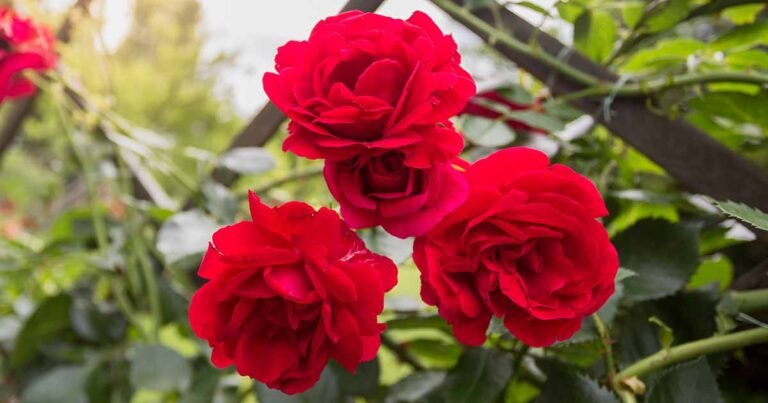
A close up horizontal image of bright red roses growing in the garden.A close up horizontal image of bright red roses growing in the garden.

We link to vendors to help you find relevant products. If you buy from one of our links, we may earn a commission.

You’ve no doubt noticed that nurseries put many plants on clearance in the autumn.

A lot of gardeners may assume that means that it’s not a good time of year to plant, so that’s why the stores are trying to get rid of their inventory.

But that’s not true! For many perennials, fall is actually a perfect time to plant.

The weather is mild, the plants get a head-start before the next growing season, and there’s usually more rain in the forecast.

Are you convinced? Here’s what we’ll cover to help you make the most of the autumn rose-planting season:

One quick note: because most roses sold in the fall are actively growing potted specimens rather than bare root plants, we’ll focus on planting container roses here.

But you can use the following steps for bare roots, as well.

If you’re ready to take advantage of those bargains and the lovely, mild weather, then let’s not wait any longer. Here we go!

Pros and Cons of Fall Planting

Planting in the spring can be a bit of a challenge.

The soil might be soggy from all those spring showers, or you might have to wait until later in the season than is ideal because the earth is still frozen for a time after the winter season has passed.

In the autumn, the soil is usually drier and warmer, so it’s easy to work.

A close up horizontal image of a rose shrub in autumn, pictured on a soft focus background.A close up horizontal image of a rose shrub in autumn, pictured on a soft focus background.

The weather is also milder, you typically see more rain than you would during the summer in many regions, and you (usually) don’t have to worry about a surprise heatwave toasting your rose bush.

Another benefit is that you can often find certain varieties of plants at a lower price. The majority of people aren’t doing their garden shopping in the fall, and most nurseries offer an end-of-season discount.

Roses that are put in the ground in the autumn will usually bloom earlier than those planted in the spring.

When you put a rose in the ground in the spring, it takes a few months to become established and send out blossoms, whereas those planted in October or November have already had time to get settled and are ready to grow when spring arrives.

On the negative side, if you have an unusually wet autumn or an early unexpected freeze, you might lose your plants. You will also typically find a smaller selection of plants to choose from.

As a quick side note, you might opt to prep your garden bed in the fall and wait to plant in the spring if you can’t find the plant you want, or if you end up not being able to get your plants into the ground in time.

That way, you still get some of the benefits of planting in the autumn.

When to Plant in the Fall

Don’t stick your plants in the ground mere days before the first expected frost. Your roses won’t have time to get settled in and become established before the harsh winter weather hits.

A close up horizontal image of rose hips growing on the shrub covered with a light frost.A close up horizontal image of rose hips growing on the shrub covered with a light frost.

The right time to plant is about six weeks before the first predicted frost date in the fall.

This gives them time to establish roots so they have the best chance of surviving the winter and emerging in spring.

Don’t plant too early, though. While there’s a good chance your rose will survive, you do run the risk of killing it if you plant in the heat of late summer.

Steps to Take for Fall Planting

You can absolutely plant a live rose in the fall, but keep in mind that dormant bare root plants are a safer bet. They’re less shocked by the transition. That said, they can be difficult to find in the fall.

With that in mind, here’s how to get the garden ready for your new rose:

Prep the planting hole as you would in the spring. That means selecting the right spot before you do anything else.

Keep in mind that the current light exposure in the spot you select might be different in the spring and summer than it is in the fall.

For tips on picking the right spot, we have a helpful guide.

Then, figure out if you need to do any work on your soil. If you have heavy clay or sandy soil, you’ll need to work in plenty of well-rotted compost to improve drainage or water retention.

A close up horizontal image of a shovel digging a hole in the garden for planting.A close up horizontal image of a shovel digging a hole in the garden for planting.
Photo by Kristine Lofgren.

Once you’ve got the spot picked out and the soil amended, dig your hole about twice as wide and just a touch deeper than the container that your rose came in.

Mix a bunch of well-rotted compost into the removed soil.

Fill the hole with water and wait for it to drain. This should take about an hour or less.

If there is still water in the hole, this means you have poorly draining soil. To fix it, either dig several feet down and work in even more well-rotted compost, or consider creating a raised bed.

Place a little bit of the removed soil and compost mixture in the bottom of the hole so your plant will sit at the right height.

In USDA Hardiness Zones 7 and up, that means placing the bud union or crown just above the soil level.

In Zones 6 and below, position the crown or bud union an inch or two below the soil surface.

A close up horizontal image of two hands from the right of the frame planting a rose bush into the garden.A close up horizontal image of two hands from the right of the frame planting a rose bush into the garden.
Photo by Kristine Lofgren.

Create a little cone at the bottom of the hole so that the roots have something to sit over, and to help guide root growth in the right direction.

Spread the roots out gently and place the plant in the hole. Take care to spread the roots over the cone that you made so they will grow down rather than out.

A close up horizontal image of a shovel from the right of the frame backfilling soil around a newly planted rose shrub.A close up horizontal image of a shovel from the right of the frame backfilling soil around a newly planted rose shrub.
Photo by Kristine Lofgren.

Fill in around the roots with the soil and compost mixture. Water to settle the soil, and add more soil if needed to level out the hole.

Care Tips

Prune the plant back by a third after you put it in the ground. You don’t want any flowers or hips taking up your plant’s energy. You should also prune away any dead or yellow foliage or stems.

A close up horizontal image of a hand from the right of the frame holding a pair of secateurs pruning a rose shrub in fall, pictured on a soft focus background.A close up horizontal image of a hand from the right of the frame holding a pair of secateurs pruning a rose shrub in fall, pictured on a soft focus background.
Photo by Kristine Lofgren.

Plants that have been hanging out at a garden center all summer might have a few dead bits, but as long as the overall plant looks healthy, you don’t need to worry.

While the fall is typically rainier than the summer in most regions, you still want to keep an eye on the moisture level of the soil.

You don’t need to give them as much as you would in the summer, but you still don’t want your plants to dry out. That’s not a good way to set them up for success.

If nature doesn’t step up, give your roses water whenever the top inch of the soil feels dry.

Don’t fertilize your new plant. You don’t want to encourage it to start growing. Instead, you want it to hunker down, become established, and get ready to go dormant.

Put a ton of mulch around your rose. This will help to protect it throughout the cold season ahead.

A close up horizontal image of a gardener tying up a rose shrub with wire to prepare the plant for winter.A close up horizontal image of a gardener tying up a rose shrub with wire to prepare the plant for winter.

Use several inches of a natural mulch such as straw, bark, or well-rotted manure, and heap it a third of the way up the canes. Remove it in the spring when the ground has warmed up.

If the shrub you planted is particularly large or the canes are spaced far apart, you might want to tie some twine around the canes for support.

Don’t Forget Fall for Planting Roses

In some ways, fall planting is easier than planting in the spring. That alone makes it worth your while.

A close up horizontal image of a rose shrub with bright red flowers growing in the fall garden.A close up horizontal image of a rose shrub with bright red flowers growing in the fall garden.

Add to that the money you’ll be able to save, and why wouldn’t you take advantage of the autumn planting season?

Be sure to come back and let us know in the comments section below how it all went. Pictures of your spring blossoms are especially welcome!

And now that you’ve gotten your plants in the ground, read some of our other articles about growing roses to help you get a head start on the next growing season:

Does AGZ Improve Sleep? A Dietitian’s Review

0


Does AGZ Improve Sleep? A Dietitian’s Review


Privacy & Cookies Policy

Who Makes Vaccine Policy Decisions in RFK Jr.’s Health Department?

0

For decades, as an activist, Robert F. Kennedy Jr. resisted the scientific consensus that vaccines are safe and necessary to prevent serious disease. Now at the helm of the nation’s health department, he has begun to put his extreme views into practice, ousting veteran scientists and installing allies across the nation’s health agencies to enact major shifts in vaccine policy.

Some of Mr. Kennedy’s hires are activists who have worked for years alongside him. Others are scientists who say they broadly support vaccines but publicly criticized Covid shots or mandates during the pandemic. Many of these scientists have begun to question the safety or value of other shots, reflecting the views of Mr. Kennedy. The following account is based on previous statements made by these officials and on interviews with current and former health agency leaders.

  • Dr. Vinay Prasad

    F.D.A. chief medical and scientific officer

    Critical of Covid boosters and shots for healthy kids

  • Dr. Marty Makary

    F.D.A. commissioner

    Skeptical of certain vaccines

The agency’s new vaccine lead and chief medical officer, Dr. Vinay Prasad, has called himself an “extreme pro-vaccine person,” and Dr. Marty Makary, the agency’s commissioner, said last week that “we believe in vaccines.”

But the two officials, who sharply criticized vaccine mandates as academic researchers during the pandemic, have expressed doubts about the safety and necessity of Covid boosters for healthy children and adults. This summer, Dr. Prasad overrode some agency scientists who favored widespread access to Covid shots, narrowing the vaccine’s eligibility to those 65 and older and to younger people with underlying medical conditions.

Last week, Dr. Makary echoed the views of Mr. Kennedy when he publicly questioned the longstanding recommendation to give the hepatitis B vaccine at birth. That shot is credited with nearly eliminating the transmission of the disease from mother to infant.

Dr. Prasad replaced a veteran at the agency, Dr. Peter Marks, who resigned in March and said that Mr. Kennedy’s aggressive stance on vaccines posed a danger to the public.

In June, Mr. Kennedy fired all 17 members of a powerful C.D.C. expert panel, the Advisory Committee on Immunization Practices. Insurance companies and government programs like Medicaid are required to cover the vaccinations that the panel recommends.

Mr. Kennedy handpicked eight new members that month, half of whom had expressed skepticism of vaccines at some point. (One has since stepped down.) Others have little expertise in immunology or vaccines.

On Monday, Mr. Kennedy appointed five more members, just days before the group meets to review recommendations for multiple vaccines. Some of the newly selected members have been critical of Covid vaccines or vaccine mandates.

Dr. Robert Malone is a controversial figure. He performed early experiments using mRNA in the 1980s but gained notoriety during the pandemic for claiming that Covid vaccines were unsafe, contradicting volumes of studies.

Martin Kulldorff, a biostatistician, has been generally supportive of vaccines but opposed Covid vaccination for children and vaccine mandates. Vicky Pebsworth, a nurse with a doctorate in public health, serves on the board of the National Vaccine Information Center, a nonprofit that disseminates misinformation about the risks of vaccination.

Dr. Malone and Dr. Kulldorff have served as paid expert witnesses in legal cases against vaccine makers. Dr. Pebsworth claimed in a lawsuit that a survey of families of unvaccinated children supported a hypothesis that a rise in the number of recommended childhood vaccines explained an epidemic of chronic disease.

Another panel member, Retsef Levi, is a management and health analytics expert at the Massachusetts Institute of Technology. He has been critical of a variety of vaccines and has called for Covid vaccines to be pulled from the market.

Dr. Evelyn Griffin, an obstetrician and gynecologist, questioned the safety and effectiveness of Covid vaccines in a hearing in the Louisiana House of Representatives in 2021. Dr. Kirk Milhoan, a pediatric cardiologist, questioned the safety and effectiveness of Covid vaccines at a 2024 event led by Representative Marjorie Taylor Greene, Republican of Georgia. Catherine M. Stein is an epidemiology professor who in 2022 called for an end to Covid vaccine mandates at universities.

Dr. Cody Meissner is a professor of pediatrics who opposed vaccine mandates and has questioned the ongoing need for Covid vaccines for children and pregnant women. He previously served on the advisory committee and is widely considered to be the most qualified member.

The others are not known to have spoken out against vaccines. They are Dr. Joseph R. Hibbeln, a nutritional neuroscientist; Dr. James Pagano, an emergency medicine physician; Hillary Blackburn, a pharmacist; and Dr. Raymond Pollak, a surgeon and transplant specialist.

The C.D.C. director has the power to accept or reject the immunization committee’s recommendations. The current acting director is Mr. Kennedy’s deputy at the Department of Health and Human Services, Jim O’Neill, a former biotechnology executive. The previous director, Susan Monarez, said she was forced out because she would not agree to accept the newly re-formed committee’s recommendations.

A special adviser to the C.D.C. director, Stuart Burns, is a critical player driving the health secretary’s agenda at the agency. Mr. Burns has been quietly working to remake the immunization committee and its agenda.

Mr. Burns is not a scientist but he worked for decades as a staff member for Republican congressmen known for their vaccine skepticism. One is Dr. Dave Weldon, a former representative from Florida who was also Mr. Kennedy’s original choice for C.D.C. director. The White House withdrew Dr. Weldon’s nomination just hours before his confirmation hearing because some Senate Republicans were concerned about his stance on vaccines.

Mr. Burns works closely with three other Kennedy hires who serve H.H.S. but also work closely with the C.D.C. Dr. Reyn Archer is a former Texas health commissioner who has questioned the safety and value of the Covid vaccine on social media. He serves as a liaison between the health secretary’s office and the C.D.C., and has been helping Mr. Burns to develop and guide the immunization committee.

David Geier is a steadfast figure in the anti-vaccine movement who has spent more than 20 years trying to establish a link between vaccines and autism, despite scientific consensus that there is none. Mr. Geier, who is listed as a senior data analyst in the H.H.S. directory, was given access to federal data on post-vaccination side effects and is using it to continue his studies on autism.

Lyn Redwood is a nurse practitioner and the former head of Children’s Health Defense, the anti-vaccine group founded by Mr. Kennedy. Since the early 2000s, Ms. Redwood has criticized the use of mercury as a preservative in vaccines. She has said she believes the ingredient is linked to her son’s autism.

Now listed as an expert at H.H.S., Ms. Redwood gave a presentation in June to the immunization committee, a role usually reserved for C.D.C. scientists. She said that the mercury preservative in vaccines, known as thimerosal, was toxic to children, even though dozens of studies have shown it is harmless in this form. The panel later voted to stop recommending the already limited number of flu vaccines that contained the preservative.

  • Dr. Matthew Memoli

    Principal deputy director of the N.I.H.

    Skeptical of certain vaccines

  • Dr. Jay Bhattacharya

    N.I.H. director

    Critical of Covid vaccine mandates

Dr. Matthew Memoli is a veteran infectious disease scientist at the National Institutes of Health who now serves as its principal deputy director. As a senior researcher under Dr. Anthony Fauci during the pandemic, Dr. Memoli opposed Covid vaccine mandates and declined to get a shot himself.

Since becoming a leader of the research agency, Dr. Memoli has downplayed the value of vaccines for certain respiratory diseases, according to the whistle-blower complaints of two prominent scientists.

Dr. Jay Bhattacharya, the N.I.H director, sharply criticized vaccine mandates as an academic researcher during the pandemic. He co-wrote an anti-lockdown treatise in 2020 with Dr. Kulldorff, one of Mr. Kennedy’s selections for the C.D.C. immunization committee.

During his confirmation hearing in March, Dr. Bhattacharya reiterated his support for childhood vaccinations for diseases like measles. He also said he was “convinced” vaccines did not cause autism, even as he urged more research on the question, which scientists say has long been settled.

August in Carla’s Pennsylvania Garden, Part 2

0

Hi GPODers!

Welcome back to Malvern, Pennsylvania, for day 2 in Carla Zambelli Mudry’s incredible August garden. If you missed Garden Photo of the Day yesterday, be sure to check out Part 1. Otherwise, scroll on to see even more vibrant and lively scenes from this frequent contributor’s summer garden.

Well, it’s August. And that means late summer is here, because I think, aren’t we forever a little bit of a kid in our heads, realizing this is the last gasp before we go back to school in the fall? It certainly has been a different summer from last summer. We’ve had a lot of blasting heat but also a lot of rain. Everything has grown exponentially. I have been pruning things more than once in a couple of cases.

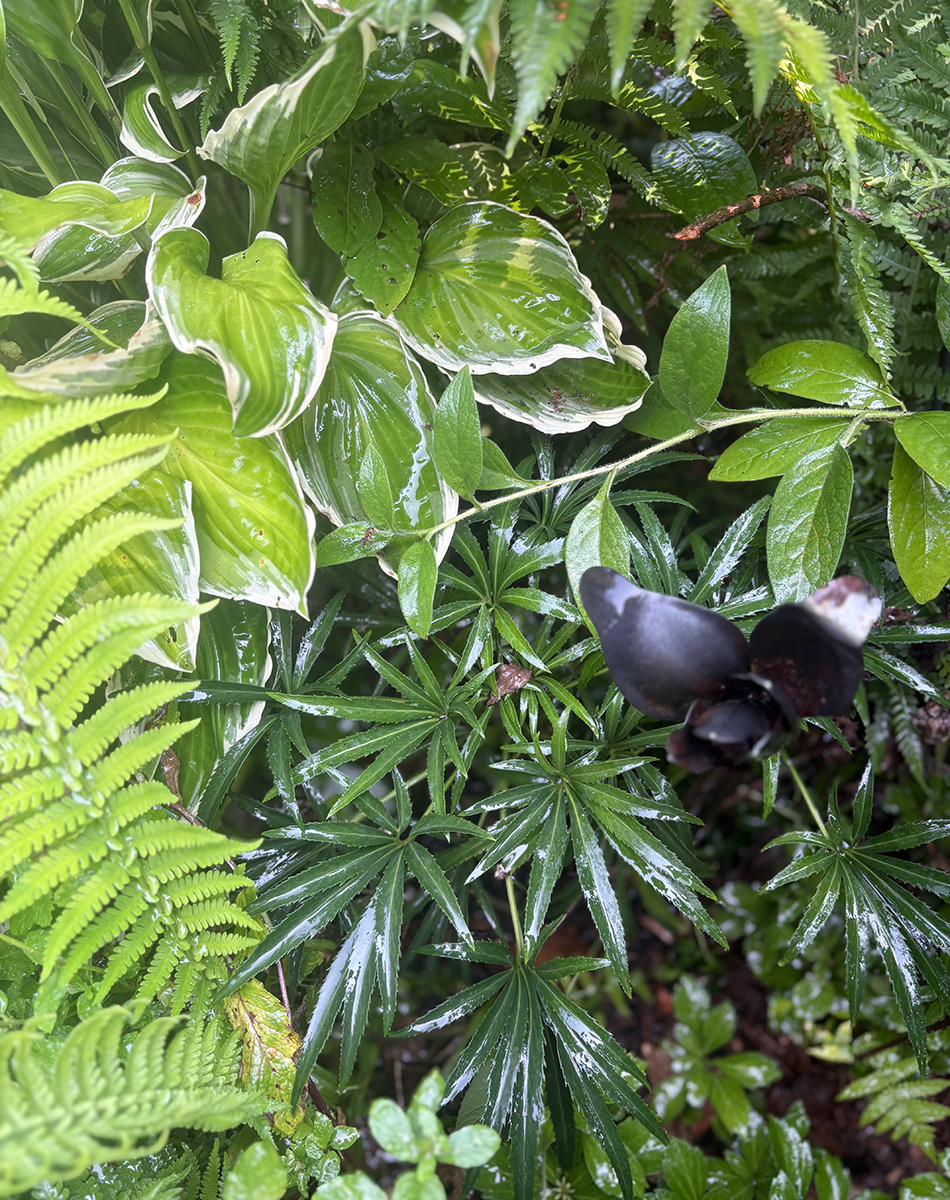
With all of that gloss, I’m assuming this photo was taken after one of the many heavy rains that Carla’s garden got in August. In her woodland garden, a tapestry of foliage comes together to create wonderful patterns and designs.

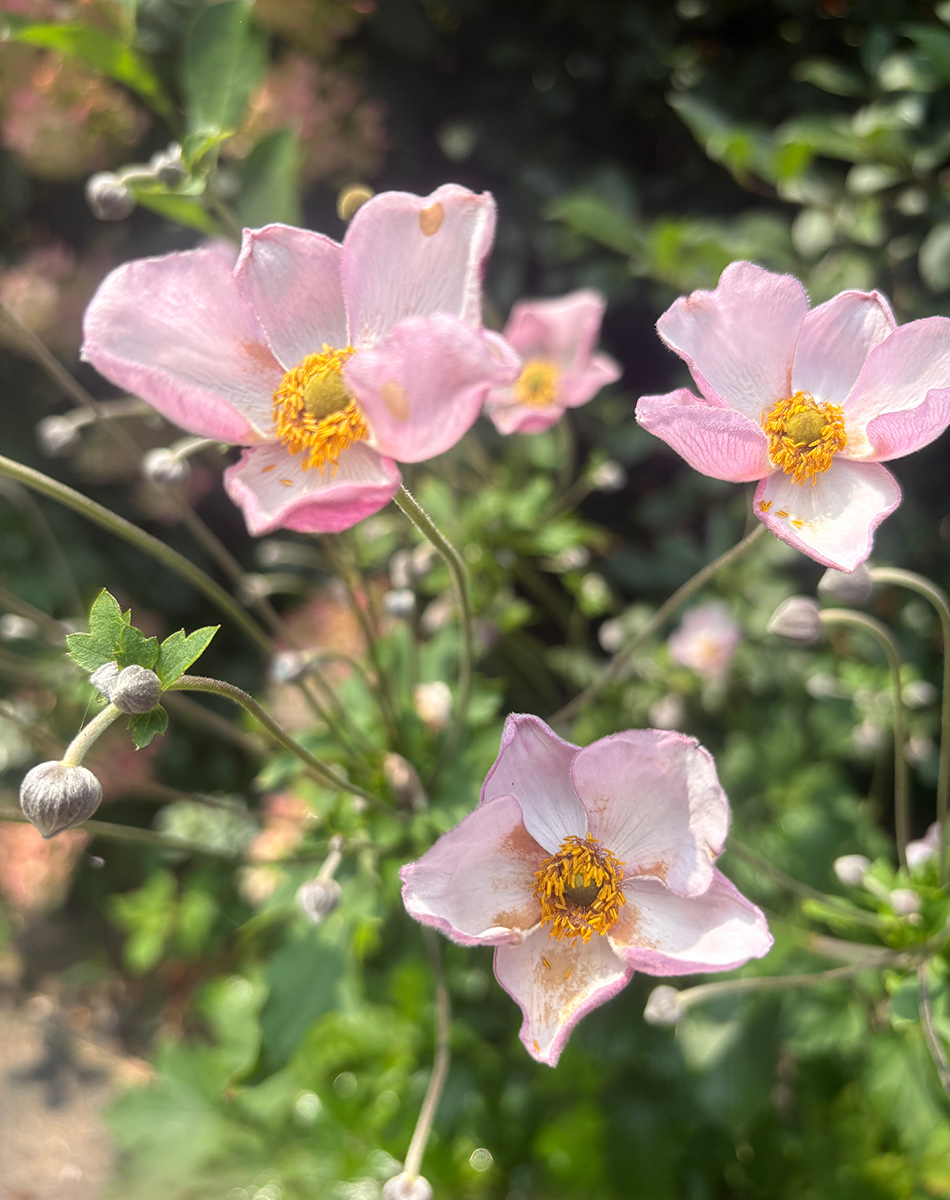
light pink flowersWhile the late season is often associated with fiery reds, oranges, and yellows, there are a surprising number of pink plants that put on a late show and add some softer tones to the landscape. Light pink Japanese anemone (Anemone hupehensis, Zones 4–8) are one of many great options to add something delicate to the end of the season.

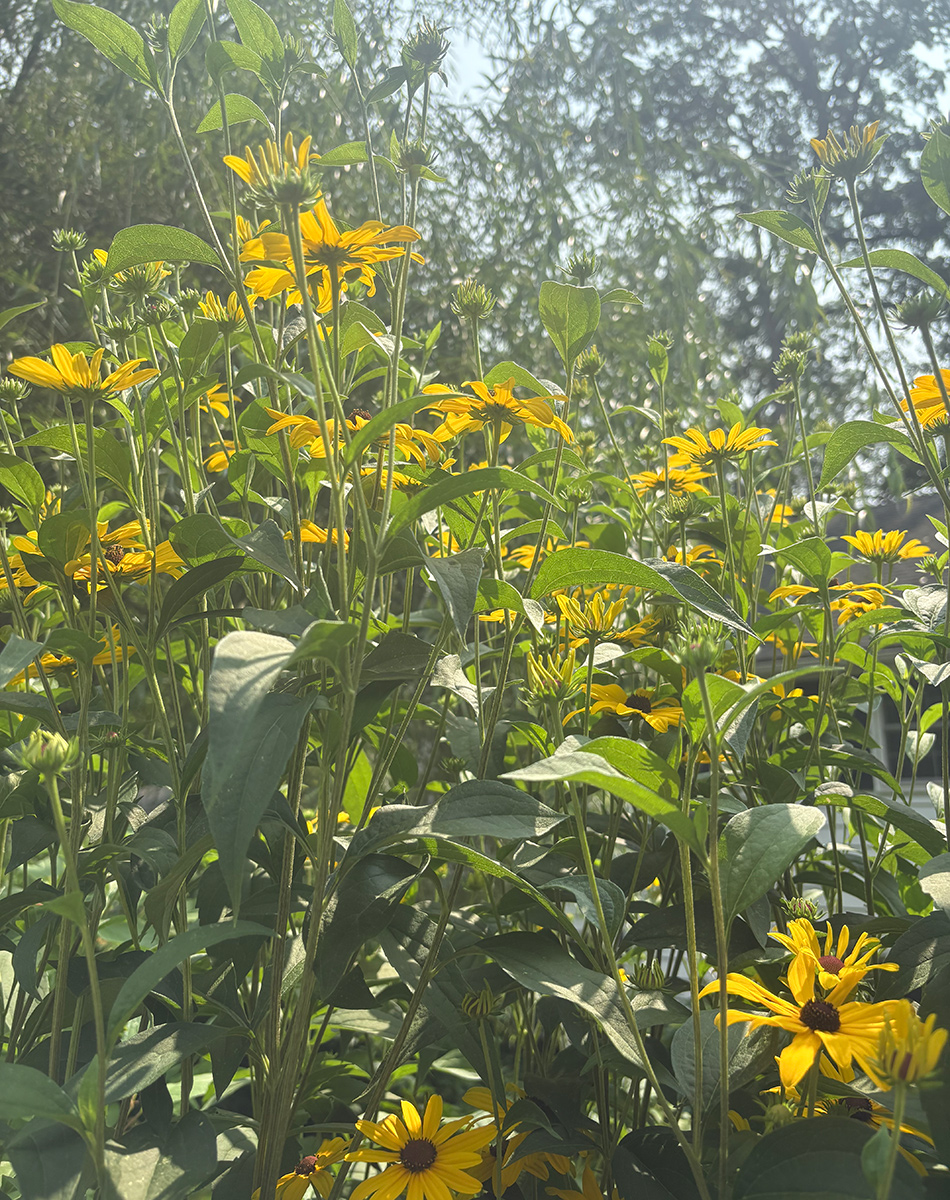
tall yellow flowersSome towering rudbeckia reaching up to the sunshine just screams summer.

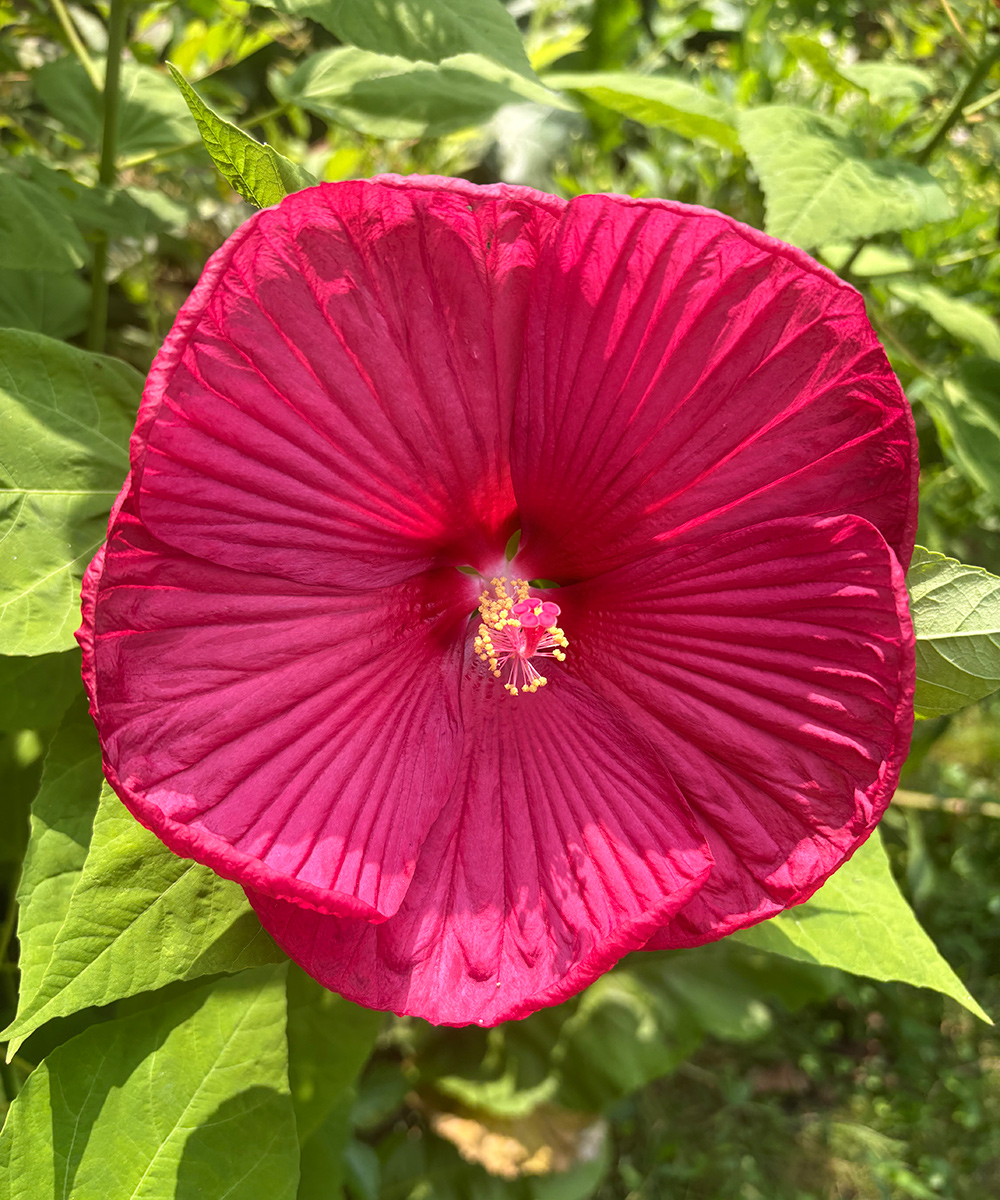
red dinner plate hibiscusCarla’s hardy hibiscus plants are still putting on a sensational show. This appears to be a Luna Red hibiscus (Hibiscus moscheutos ‘Luna Red’, Zones 5–9) because of its huge, nearly perfectly round bloom . . .

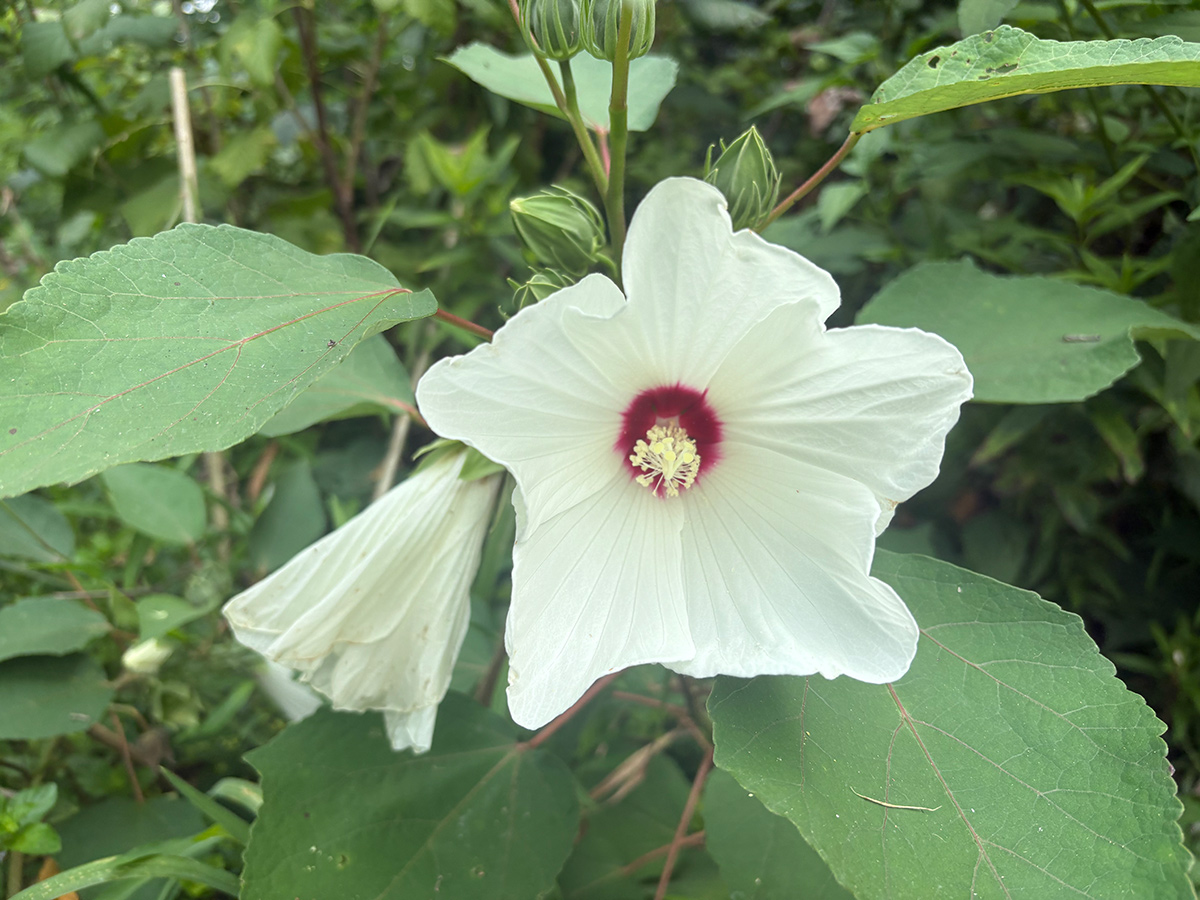
white hibiscus. . . which could mean these are the white cultivar in the Luna series (H. moscheutos ‘Luna White’, Zones 5–9). I love the contrast of the bright white petals and deep red-pink centers.

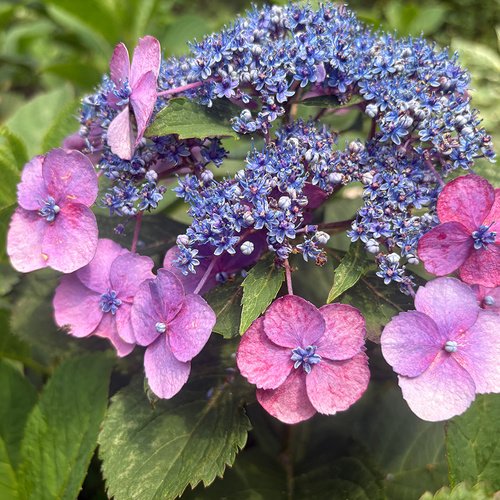
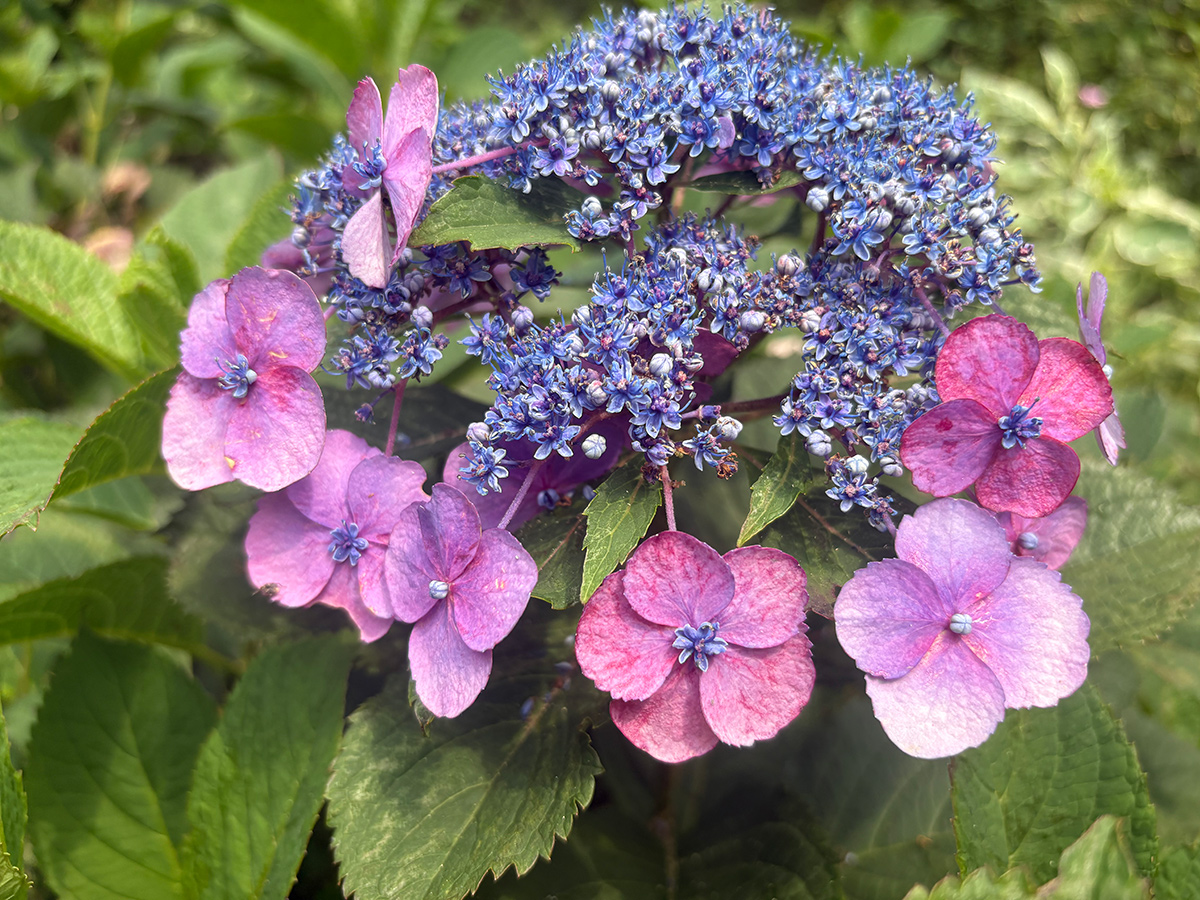
purple and blue lacecap hydrangeaAnother plant with incredible August color in Carla’s garden is a Tuff Stuff™ mountain hydrangea (Hydrangea serrata ‘MAK20’, Zones 5–9). If you’ve had issues with hydrangeas in the past, mountain hydrangeas are a hardier option that might give you better results, and Tuff Stuff™ didn’t get that cultivar name for no reason!

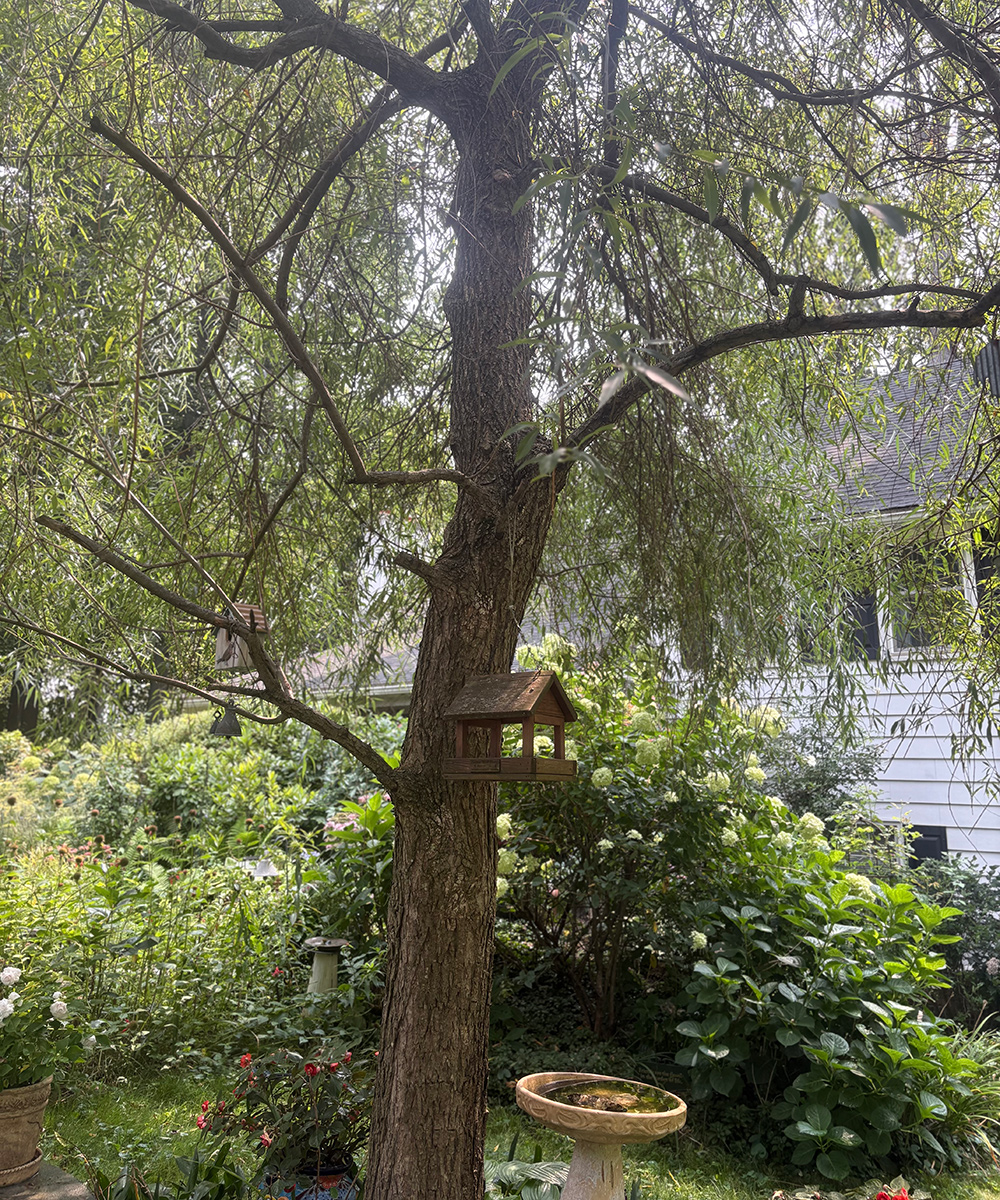
garden beds under One final look at Carla’s late-season abundance, along with the birdhouses and birdbaths that allow feathered friends to enjoy her garden as much as she does

Thank you so much for another fantastic update of your garden, Carla! Through every season and each month there is so much beauty to find in your garden, and we’re very lucky to get to enjoy your photos regularly.

How is your garden looking at the tail end of the summer season? Before fall firmly sets in all of our beds and borders, we want to see those last moments of summer in your garden. Follow the directions below to submit photos via email, or send me a DM on Instagram: @agirlherdogandtheroad.


We want to see YOUR garden!

Have photos to share? We’d love to see your garden, a particular collection of plants you love, or a wonderful garden you had the chance to visit!

To submit, send 5–10 photos to [email protected] along with some information about the plants in the pictures and where you took the photos. We’d love to hear where you are located, how long you’ve been gardening, successes you are proud of, failures you learned from, hopes for the future, favorite plants, or funny stories from your garden.

Have a mobile phone? Tag your photos on Facebook, Instagram, or Twitter with #FineGardening!

Do you receive the GPOD by email yet? Sign up here

Homemade Pumpkin Spice Latte Recipe

0

It’s no secret that I love coffee, and nothing says fall like a pumpkin spice latte! Seeing Starbucks PSL on their signs every fall makes my mouth water. But I can’t justify consuming that much sugar (50 grams in a grande size) plus all the additives. Not to mention it costs about $6+ per cup to consume said sugar!

I wanted to find a way to get that pumpkin flavor without the barista. With my love for pumpkin coffee, I knew I had to find a way to make it at home for less.

A Pumpkin Spice Latte Recipe With Real Pumpkin

I’ve fine-tuned this easy pumpkin spice latte recipe over the years and now I can’t drink anything else! It’s easy to make for yourself or for a crowd with just a blender and a stovetop (or Crock-Pot).

This pumpkin spice latte tastes very similar to the coffee shop PSL versions without artificial colors, flavors, and sweeteners. Oh, and it actually contains pumpkin puree… because it’s not a REAL pumpkin spice latte without it!

If you’re using store-bought canned pumpkin and won’t use the whole can, freeze the rest in ice cube trays and keep them in a bag for future batches. Or use it up in something like this warm pumpkin bread recipe. Check out the end of this post for more pumpkin recipe ideas.

Ingredients For a Real Food Pumpkin Spice Latte

I like using raw, grass-fed milk, but not everyone can have dairy. This coffee recipe is naturally gluten-free, but you can also make it dairy-free. Sub coconut milk, almond milk, oat milk, or macadamia milk. (Macadamia is my favorite!) These are easy to find in the store, but homemade nut milk is cheaper and less watered down.

I use a half-teaspoon of pumpkin pie spice, but you can use your own blend of cinnamon, cloves, and nutmeg if you don’t have pie spice on hand. It tastes similar to chai, but without the cardamom or black pepper. These spices are naturally antioxidant and antimicrobial. Perfect for the time of year when colds and flus like to make their rounds. And the pure vanilla extract rounds out the warming spices in this coffee drink.

Topping it Off

A dollop of whipped heavy cream or coconut cream finishes off this recipe and makes it extra decadent. Try a whipped cream dispenser for homemade (and low sugar) whipped cream on demand.

If you want to avoid sugar, then feel free to omit it. I use these pumpkin spice stevia drops, and don’t miss the sugar one bit! I also like to add a tiny bit of vanilla to my homemade whipped cream. If you need to skip the dairy, no worries. You can easily make this coconut whipped cream.

Homemade Pumpkin Spice Latte

This delicious pumpkin spice latte is easy to make and made with real food ingredients. All of the coffee shop flavor without any of the additives!

  • Brew the espresso (or coffee) directly into a large mug with the honey or maple syrup so it dissolves in the heat.

  • In a small saucepan, whisk together and gently warm the milk, pumpkin puree, and pumpkin pie spice over medium-low heat until steaming, but not boiling. Remove from heat and stir in the vanilla.

  • Froth the warmed pumpkin milk mixture until foamy. Use a blender, frother, or immersion blender (see tips below).

  • Pour the frothed pumpkin milk mixture into the mug with the sweetened espresso.

Nutrition Facts

Homemade Pumpkin Spice Latte

Amount Per Serving (1.5 cups)

Calories 199
Calories from Fat 72

% Daily Value*

Fat 8g12%

Saturated Fat 5g31%

Polyunsaturated Fat 0.3g

Monounsaturated Fat 2g

Cholesterol 29mg10%

Sodium 96mg4%

Potassium 467mg13%

Carbohydrates 20g7%

Fiber 0.2g1%

Sugar 19g21%

Protein 8g16%

Vitamin A 1657IU33%

Vitamin C 2mg2%

Calcium 313mg31%

Iron 0.4mg2%

* Percent Daily Values are based on a 2000 calorie diet.

Top with whipped cream or whipped coconut cream, if desired, and finish with a sprinkle of pumpkin pie spice or cinnamon.

How to Froth the Milk

  • Blender method: Carefully transfer to a blender and blend on high for 20–30 seconds until frothy.
  • Immersion blender method: Use directly in the saucepan or a heat-safe jar and blend until foamy.
  • Frother method: A handheld frother also works, but warming first helps deepen the flavor. This stainless steel, electric frother warms and froths at the same time. 

Tips For Making a Homemade Pumpkin Spice Latte

  • Best milk for frothing: Whole milk creates the creamiest foam (raw, grass-fed milk is my favorite). However, homemade or barista-style almond or cashew milk also works well. Avoid thin nut milks, which don’t froth as easily. Macadamia nut milk is especially delicious here!
  • Shortcut tip: Many electric milk frothers can heat and froth at the same time. So you can warm the milk, pumpkin, and spices together right in the frother before pouring into your mug.

If you want more you can easily double, triple (or quadruple!) the recipe for more people. I’ve even increased the ingredients by 10X before and keep it warm in a slow cooker or carafe. For an iced version use a strong cold brew. Or cool the coffee first and blend all ingredients in a blender with 1/2 cup of ice. 

For an extra protein boost sometimes I’ll add a tablespoon of grass-fed collagen or a scoop of healthy protein powder for more protein. 

More Pumpkin Recipes

Here are some recipes to use up the rest of the pumpkin puree after making your pumpkin spice latte. 

What are your favorite fall seasonal flavors? Leave a comment and let us know!

27 Herbs to Feed Chickens to Keep them Healthy

0

Raising chickens is rewarding, whether for eggs, meat, or simply the joy of watching their daily antics. But keeping your flock healthy goes beyond just providing grain and water.

Herbs are a natural way to support their health, improve egg production, repel pests, and even keep your coop smelling fresh.

People have been using herbs in animal care for centuries, and modern chicken keepers are rediscovering their many benefits.

Some herbs act as natural antibiotics, while others calm stressed hens or make egg yolks a richer color. Better yet, most of them can be grown in your own backyard or containers.

Why Feed Herbs to Chickens?

Feeding dried herbs for chickens goes beyond just offering a treat—it’s about boosting their overall health. Herbs are rich in vitamins, minerals, and antioxidants that strengthen the immune system, helping your flock stay resilient against common illnesses. Stronger immunity means healthier, happier birds with less need for intervention.

Certain herbs also support digestion and reduce stress. Calming varieties like chamomile or lavender help keep chickens relaxed, while mint and oregano aid gut health. A strong digestive system improves nutrient absorption, which benefits growth and egg production.

Herbs also serve as natural coop fresheners and pest control. Sprinkling dried rosemary or thyme in nesting boxes helps repel mites and parasites while keeping the coop smelling fresh. This natural method makes their environment healthier and reduces reliance on chemical treatments.

27 Best Herbs for Chickens

1. Oregano

Oregano is often hailed as one of the best herbs for poultry because of its strong antimicrobial properties. It acts as a natural antibiotic, helping protect chickens from common illnesses such as coccidiosis and respiratory infections.

Fresh oregano can be chopped and mixed into feed, or you can brew it into a weak tea and add it to drinking water. Many chicken keepers swear by oregano as a health booster, especially during times of stress or illness.

If you’re growing oregano in your garden, you can even let chickens forage on it directly. It’s hardy, grows back quickly, and requires little maintenance.

2. Basil

Basil is not only delicious for us but also a fantastic immune booster for chickens. It contains antioxidants and essential oils that protect against infection and support respiratory health.

You can feed it fresh by tossing a few sprigs into the coop or drying the leaves to sprinkle into their feed. Dried basil retains much of its flavor and medicinal qualities.

Planting basil near the coop is also beneficial—its strong scent helps deter flies and mosquitoes. Plus, chickens love pecking at the tender leaves.

3. Parsley

Parsley is packed with vitamins A, B, C, and K, making it one of the most nutritious herbs you can offer your flock. It’s particularly valuable for laying hens because it supports healthy blood vessels and egg production.

Chickens enjoy nibbling on fresh parsley, whether you chop it into their feed or toss in whole sprigs. It’s also a great way to encourage foraging behavior.

This herb grows easily in containers or garden beds, so you can keep a steady supply all year round.

4. Mint

Mint is refreshing for chickens and highly useful during hot summer days. It has cooling properties that help birds regulate their body temperature.

It also repels pests—flies, mice, and even snakes dislike the strong scent of mint. Hanging bunches in the coop or scattering leaves in nesting boxes is an easy way to make use of this herb.

Fresh mint can also be fed directly, and chickens enjoy tearing into the fragrant leaves. It grows aggressively, so planting it in containers is often best.

5. Thyme

Thyme is well-known for its antibacterial and respiratory-supporting qualities. It’s especially useful during cold weather, when chickens are prone to sniffles or respiratory stress.

You can dry thyme and mix it into feed, or scatter sprigs in nesting boxes for a fresh scent. It’s safe to use regularly and helps prevent illness naturally.

Since thyme is hardy and low-maintenance, it’s an excellent choice for chicken keepers who want a long-lasting herb in the garden.

6. Dill

Dill is rich in vitamins and minerals, and its feathery leaves are a favorite snack for chickens. It improves digestion, making it useful if your flock struggles with upset stomachs.

It’s also believed to enhance the flavor of eggs and support consistent laying. You can toss whole stems into the run or chop the leaves into feed.

Because it self-seeds easily, dill is a great herb to grow around your coop—it will return year after year.

7. Rosemary

Rosemary is a natural insect repellent and also helps improve circulation in chickens. Its strong scent makes it a good addition to nesting boxes, where it discourages mites and lice.

In addition, rosemary acts as a natural decongestant, which is helpful in keeping your flock’s respiratory systems clear.

Chickens usually don’t eat rosemary leaves directly because of their toughness, but they benefit from it when it’s hung around the coop or dried and crushed into feed.

8. Lavender

Lavender is one of the best calming herbs for chickens. It helps reduce stress and anxiety, which is especially useful when introducing new birds to the flock or during heat waves.

The scent of lavender also freshens the coop and discourages flies. You can hang dried bundles or sprinkle petals in nesting boxes to promote relaxation.

Chickens may not eat large amounts of lavender, but its presence in the coop environment is very beneficial.

9. Cilantro (Coriander)

Cilantro is excellent for detoxifying the body and is rich in vitamins A and K. It also supports bone development, making it useful for young chicks and growing pullets.

You can chop fresh leaves into their feed or let them forage on it directly in the garden. Chickens usually enjoy the strong flavor.

Even the seeds, known as coriander, can be offered in small amounts for added nutrition.

10. Sage

Sage is a powerful herb that repels parasites and supports liver function in chickens. It’s particularly helpful for flocks that free-range, since they may be exposed to worms.

You can use dried sage in nesting boxes to deter mites and lice or add it to feed in small amounts. Fresh sage leaves can also be offered, though chickens may peck at them less eagerly.

As a hardy perennial, sage is a low-maintenance plant to grow near your chicken area.

11. Lemon Balm

Lemon balm is known for its calming qualities, similar to lavender. It helps reduce flock stress and promotes a peaceful coop environment.

It also has insect-repelling properties, especially against mosquitoes. Adding it to nesting boxes or scattering leaves around the coop is a natural pest solution.

You can also make a lemon balm tea to mix into drinking water for a soothing health boost.

12. Fennel

Fennel improves digestion and supports egg laying. Its seeds and leaves are rich in nutrients and help enhance yolk color.

Chickens often enjoy nibbling on fennel directly in the garden, so planting a patch near the run is a great idea.

You can also dry fennel seeds and mix them into feed as a long-lasting supplement.

13. Comfrey

Comfrey is a highly nutritious herb, rich in protein and calcium—two key nutrients for laying hens. It supports bone strength and feather development.

However, comfrey should be fed in moderation since it’s very strong. Small amounts, whether fresh or dried, go a long way.

It’s also a fantastic compost plant, so growing comfrey benefits both your chickens and your garden.

14. Chamomile

Chamomile has calming effects that help reduce stress in flocks, particularly during heat stress or noisy conditions.

You can sprinkle dried chamomile flowers in nesting boxes to promote relaxation and repel pests. Chickens may also peck at the flowers directly.

Another option is to brew a chamomile tea and add it to drinking water for a mild health tonic.

15. Marjoram

Marjoram is a close relative of oregano and shares many of its antimicrobial properties. It helps support the immune system and overall digestion.

Chickens benefit from marjoram when it’s mixed into feed or grown in the garden as a foraging plant.

It’s also believed to encourage better egg laying, making it a great choice for backyard flocks.

16. Tarragon

Tarragon stimulates appetite and aids digestion, which is especially useful for sick or recovering chickens.

Fresh leaves can be offered in moderation, or you can dry them and add small amounts to feed.

Since it grows well in most gardens, tarragon is an easy herb to keep near your chicken area.

17. Bay Leaves

Bay leaves are highly aromatic and excellent for repelling pests like insects and rodents. Dried leaves placed in nesting boxes keep the area fresher and cleaner.

They’re not usually eaten in large amounts, but chickens may nibble occasionally. The main benefit comes from their pest-repelling qualities.

You can grow bay trees in pots or small garden spaces and harvest leaves year-round.

18. Catnip

Catnip is more than just a treat for cats—it has insect-repelling and mild calming effects for chickens too.

It helps deter fleas and mites when dried and scattered in bedding. Chickens may also eat small amounts of fresh catnip.

This herb grows quickly and can even be invasive, so planting it in containers works best.

19. Stinging Nettle

Nettle is one of the most nutrient-dense herbs you can feed your flock. It’s high in calcium, iron, and protein, which supports strong eggs and healthy feathers.

When dried or cooked, nettles lose their sting and can be safely added to feed. Many chicken keepers dry nettle leaves in summer for use throughout the year.

It’s also an excellent tonic for molting season, helping hens grow new feathers faster.

20. Yarrow

Yarrow is known for its healing properties. It supports blood circulation and helps fight infections, making it a good choice for overall flock health.

You can scatter fresh or dried yarrow leaves in the coop or nesting boxes to repel insects.

It also has wound-healing properties, so you can use crushed yarrow leaves on minor injuries.

21. Calendula (Marigold)

Calendula is famous for giving egg yolks a bright, golden color when fed regularly. It’s also good for skin health and healing.

Fresh petals can be added to feed, or you can dry them for long-term use.

Calendula also repels insects and looks beautiful in the garden, making it a dual-purpose plant for chicken keepers.

22. Garlic

Garlic acts as a natural antibiotic and immune booster. It helps chickens resist infections and keeps parasites at bay.

Crushed garlic cloves can be added to drinking water in small amounts. Some keepers also mix garlic powder into feed.

Because of its strong taste, moderation is important—but used correctly, it’s one of the best natural remedies for chickens.

23. Peppermint

Peppermint supports digestion and has cooling properties, making it a good herb for summer care.

It also repels rodents, ants, and flies, keeping the coop cleaner and safer.

You can feed it fresh or dry, or simply let chickens peck at peppermint plants in the garden.

24. Hyssop

Hyssop is a lesser-known herb but excellent for respiratory health. It works as a natural antiseptic and helps clear airways.

Offering it fresh or dried during cold months can reduce the risk of respiratory illness in flocks.

It’s also useful in nesting boxes, where its scent discourages insects.

25. Lemon Verbena

Lemon verbena has a refreshing citrus scent that reduces stress and freshens the coop.

It supports digestion and can be fed fresh or dried in small amounts.

Scattering leaves in nesting boxes not only calms hens but also keeps pests away.

26. Chicory

Chicory improves digestion and nutrient absorption, making it a great herb for gut health.

Its leaves and roots can be fed fresh, or you can dry the roots and grind them into feed.

Chickens also enjoy pecking at chicory plants in the garden, which makes it a fun forage option.

27. Echinacea

Echinacea is best known for boosting the immune system. It helps chickens fight off colds, infections, and seasonal stress.

You can feed the leaves and flowers fresh, or dry them for winter use.

This herb is particularly helpful when flocks are under stress or during molting season.

How to Feed Herbs to Chickens?

The easiest way to feed herbs to chickens is by mixing them with their regular diet. Fresh or dried herbs like oregano, parsley, or basil can be sprinkled over feed, while fresh bundles of mint, dill, or thyme can be hung in the run for them to peck at. This not only gives them a healthy boost but also keeps them entertained and reduces boredom-related habits.

You can also use herbs to improve their environment. Adding lavender, rosemary, or calendula to nesting boxes helps repel pests, keeps the coop smelling fresh, and creates a calming space for hens.

For extra nutrition, drop sprigs of mint or oregano into their drinking water—especially refreshing during hot summer days.

Conclusion

Adding herbs to your chickens’ routine is one of the easiest and most natural ways to improve their health and happiness. From oregano’s infection-fighting power to calendula’s golden-yolk magic, these plants bring countless benefits.

Start with just a few herbs and see how your flock responds. Over time, you’ll find that these natural supplements create healthier birds, better egg quality, and even a fresher-smelling coop.