39.1 F
Klamath Falls
Saturday, March 14, 2026
Home Blog Page 90

GPOD on the Road: Susan’s Sampling of Sensational Front Gardens

0

Happy Friday, GPODers!

It has been a little while since GPOD has hit the road, and Susan Warde in St. Paul, Minnesota, has come through with a reminder that you don’t have to travel far to experience garden inspiration. Susan has shared her incredible garden designs many times over the years (Color Coordinating in Susan’s Front Garden, Last Year’s Gardening Season at the 45th Parallel, Season’s End in Susan’s Garden, and more), but today she’s giving some attention and love to the front-yard gardens in her area that offer free beauty for the whole neighborhood. Here’s Susan’s close-to-home edition of GPOD on the Road.

“Putting on a good front!” I’m a fan of front-yard gardens. It’s such a pleasure to view them on walks and, if one is lucky, get to chat with the gardener. (My own gardening experience began in the front yard more than 40 years ago, and I’ve shared some photos of it on GPOD.) I live in a neighborhood where many gardens are visible from the sidewalk. The following photos are of gardens within walking distance of my house or, in a couple of cases, only a short drive away. The second one was taken at the end of October last year; the others are all from this July.

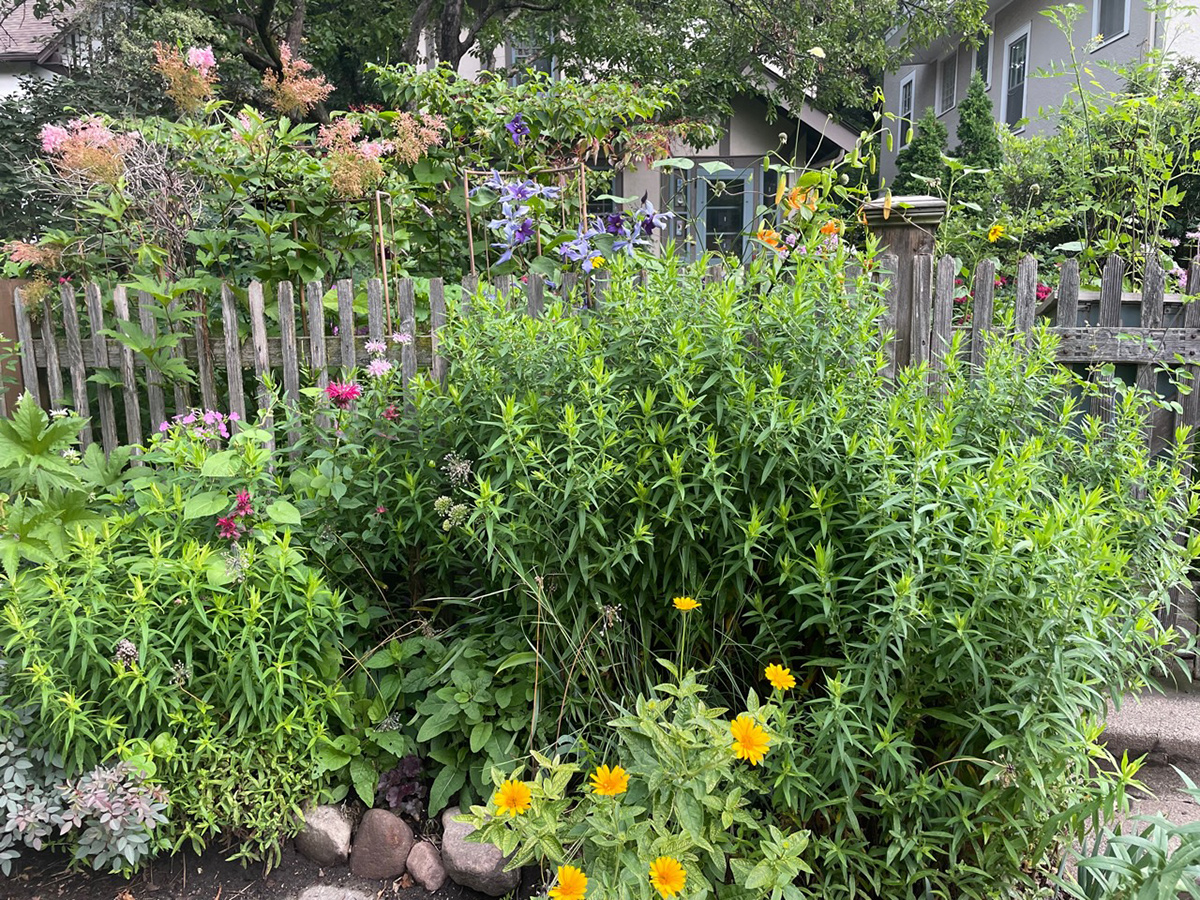
One of my favorites is this cottage garden. Walking up to the front door is an adventure, with the abundance of interesting plants trying to escape their confines.
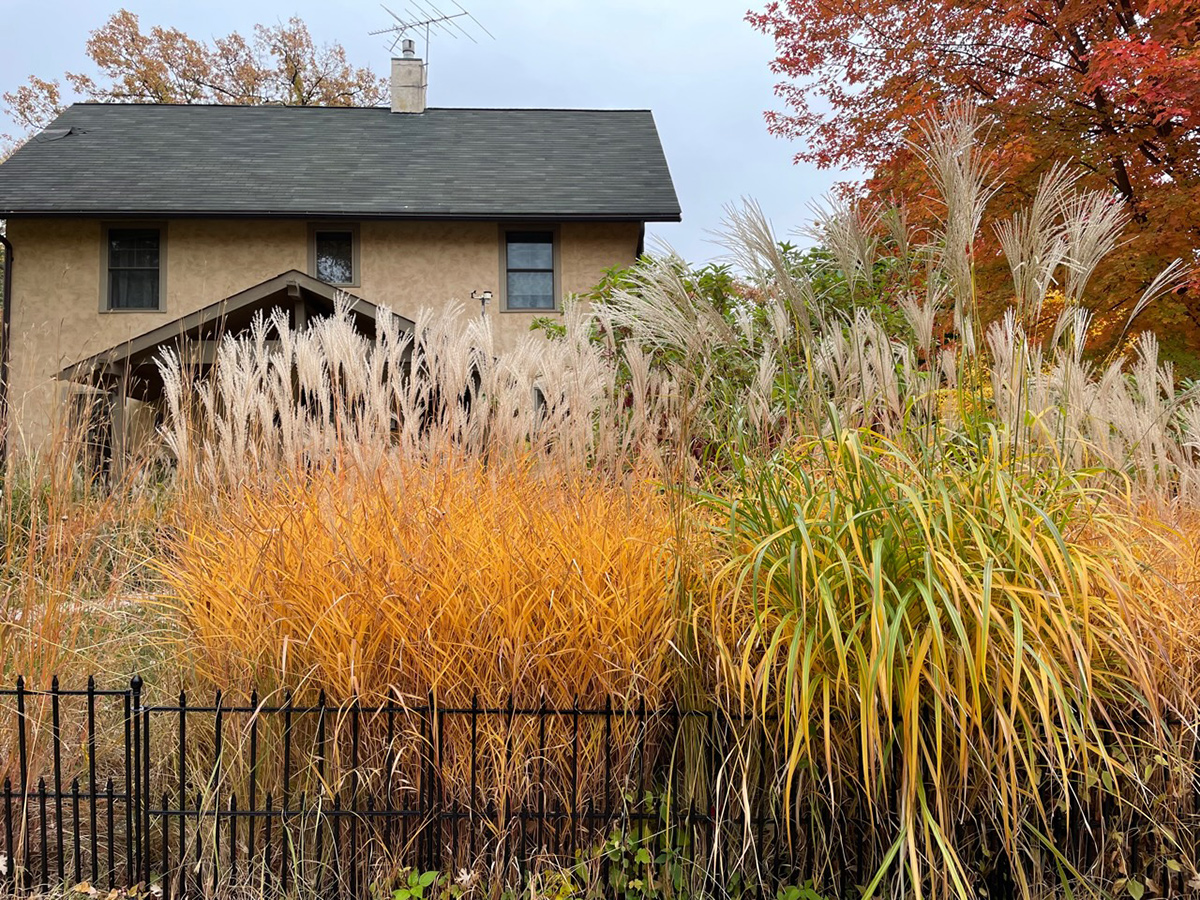
ornamental grasses in front garden during fallNearby is a corner house with this striking fall display of grasses and a maple in full autumn color.
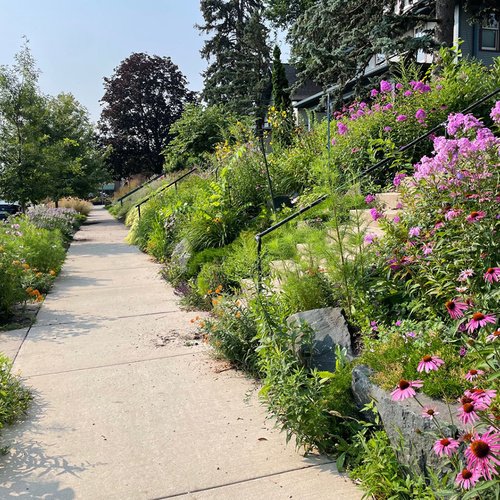
sloped front gardenA garden is a great way to deal with a slope. On the main street that runs through our neighborhood, there are three houses in a row where the owners have turned not only their front yard but also the narrow boulevard into a botanical wonderland.
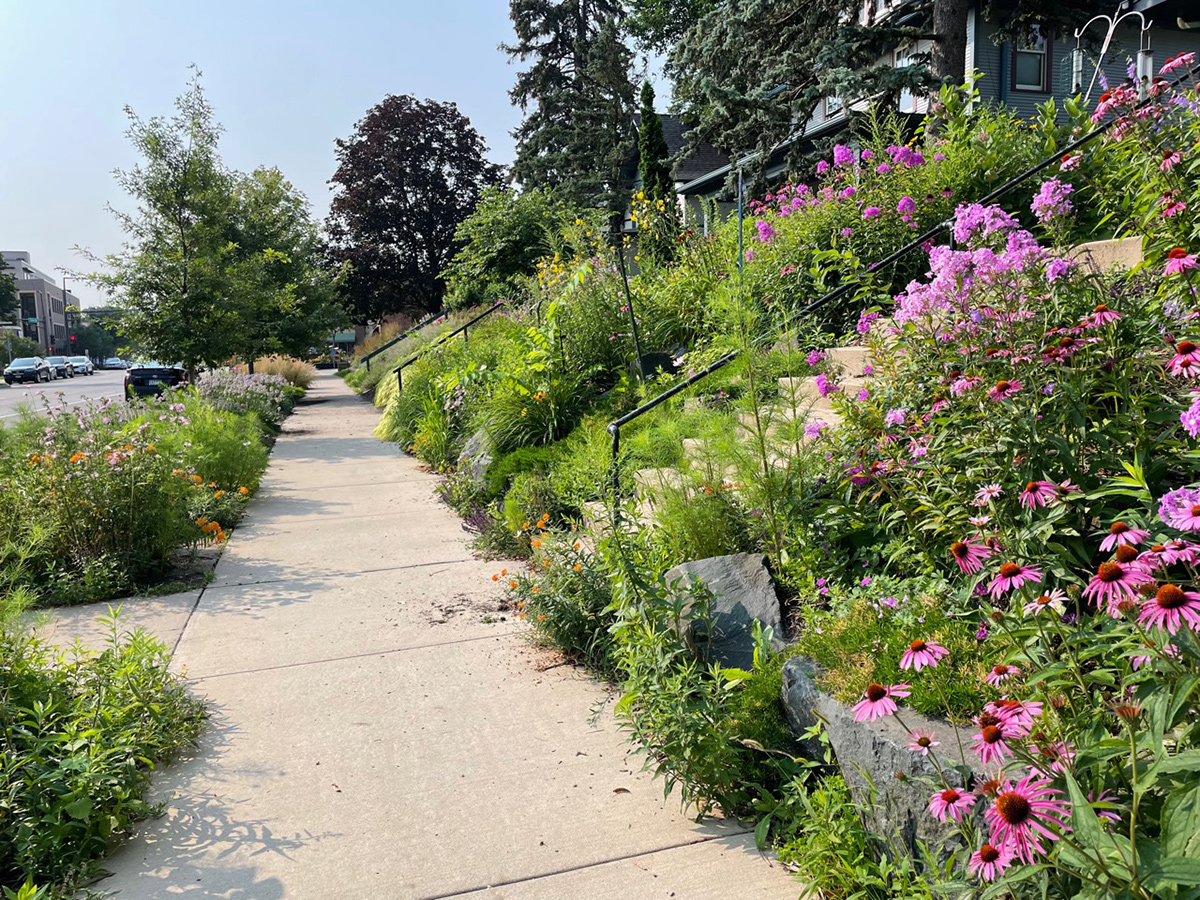
sloped front yard gardens with lots of flowersA view of the same three gardens taken from the other direction
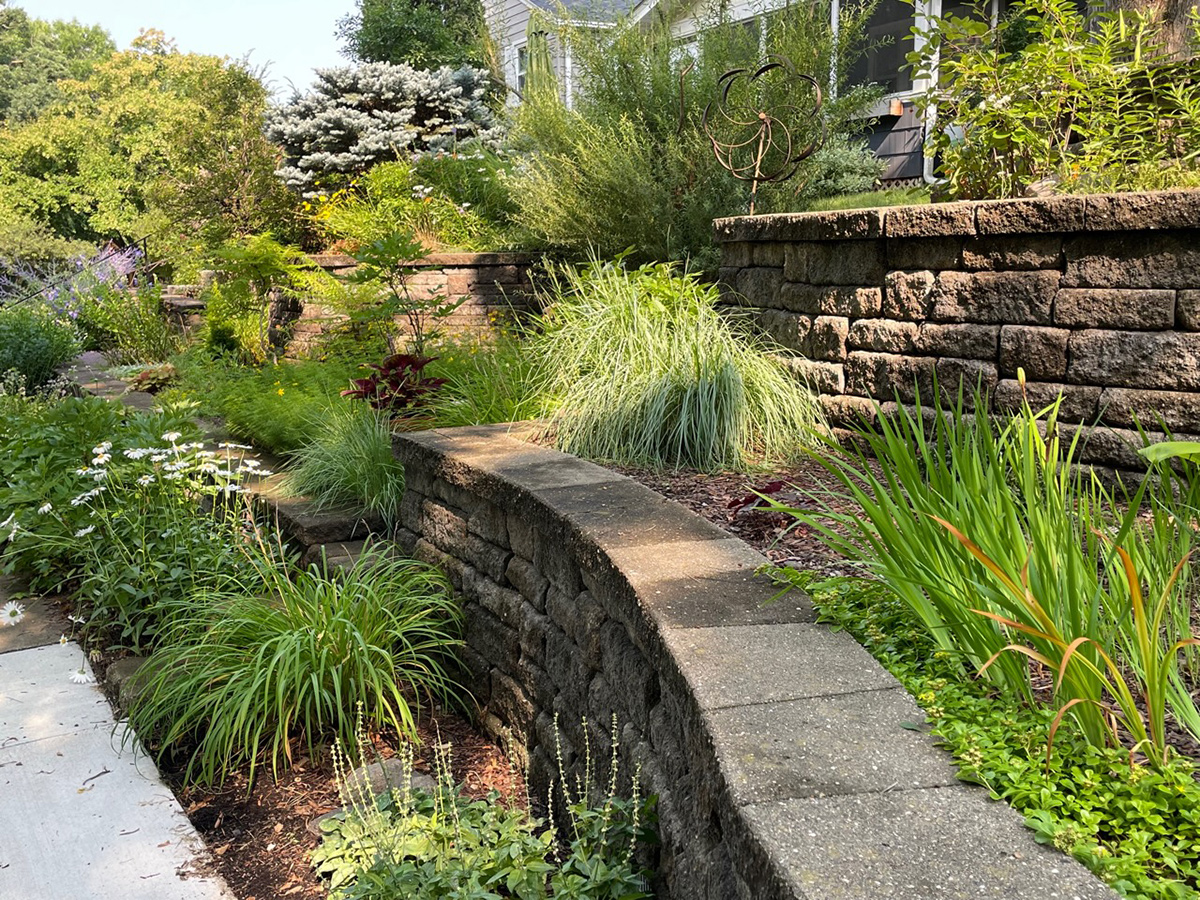
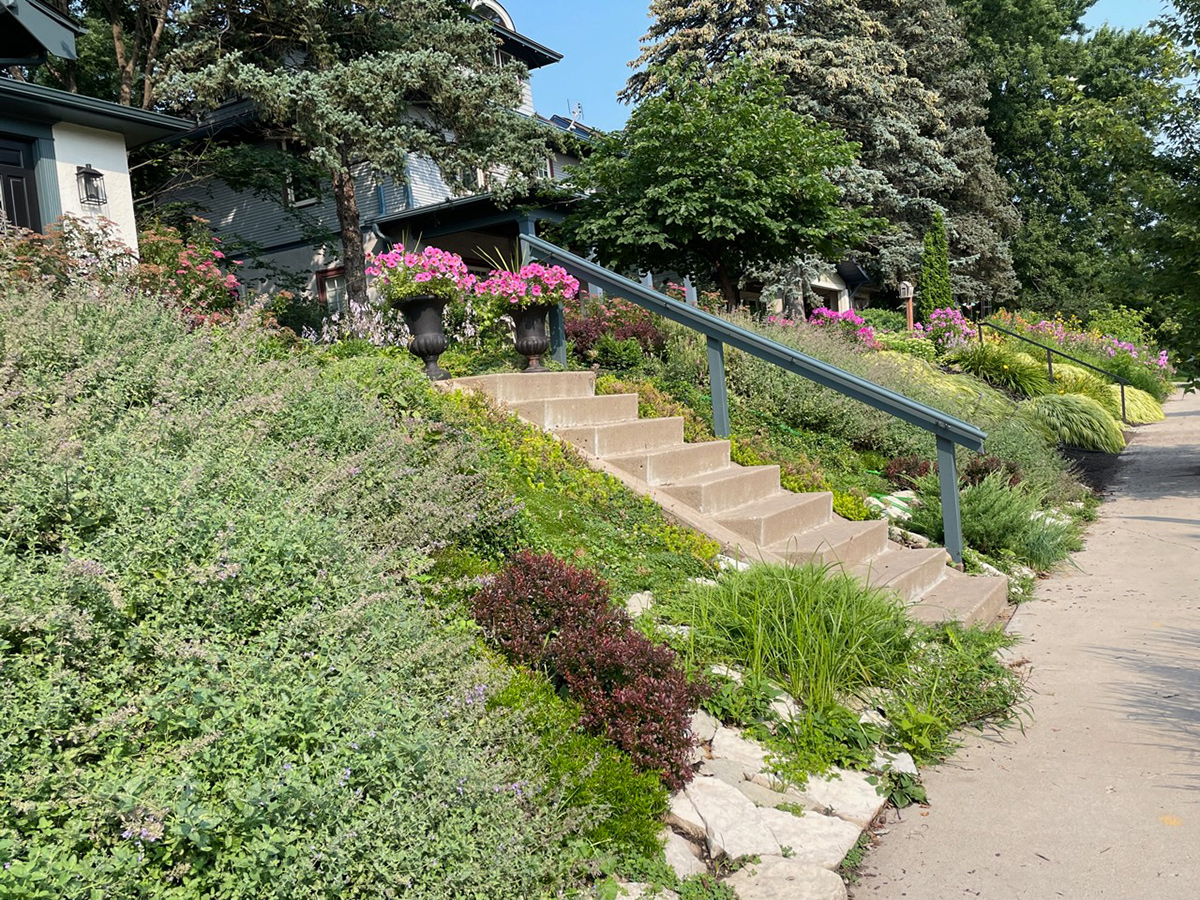
terraced front yard gardenTerracing the slope is visually appealing and gives the gardener easier access.
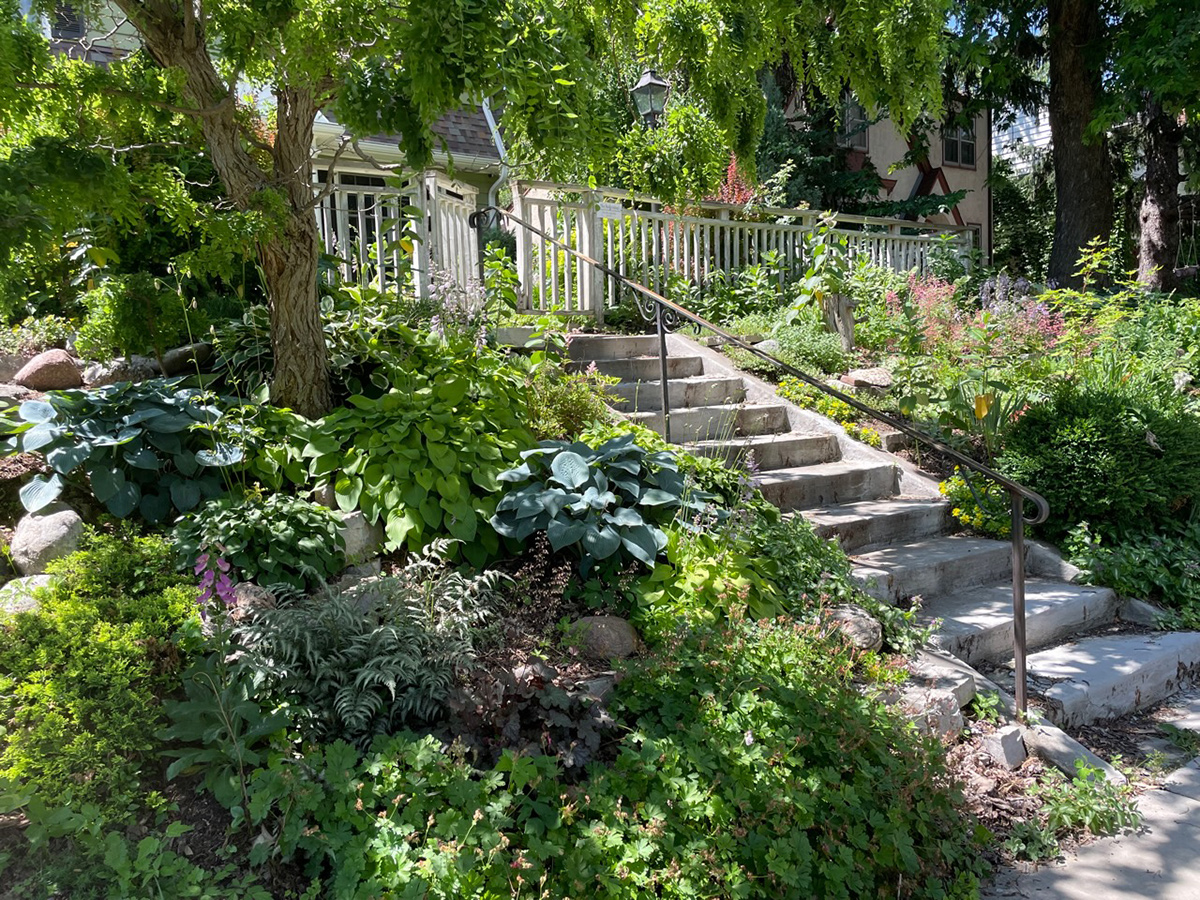
sloped front yard garden in the shadeAnother sloping front yard with numerous plants that are placed strategically according to their light requirements: The garden actually begins on the boulevard and continues behind the fence.
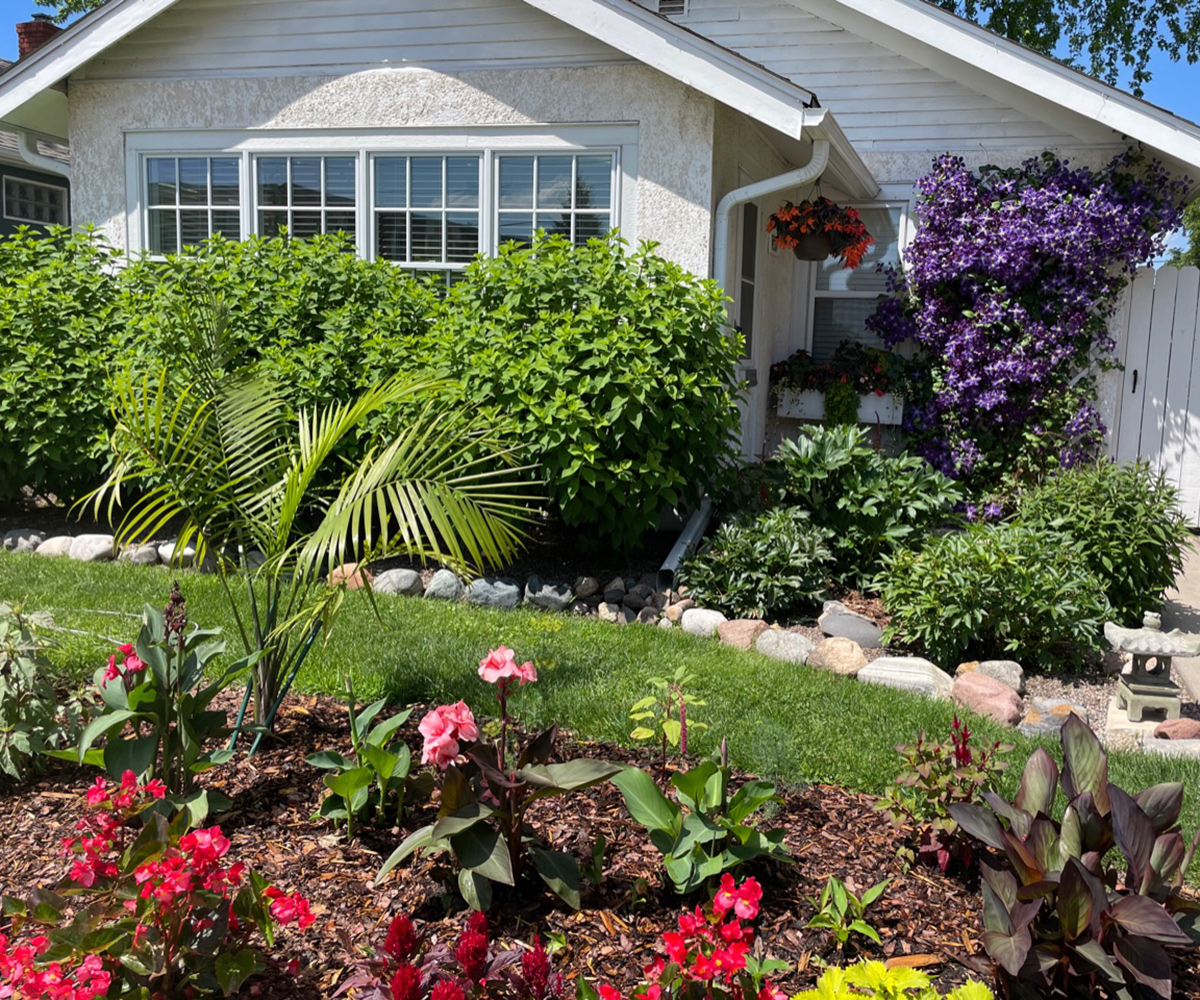
front yard garden with vibrant flowersThis tiny front yard is bright with colorful blooms and an exuberant ‘Jackmanii’ clematis (Clematis ‘Jackmanii’, Zones 4–8).
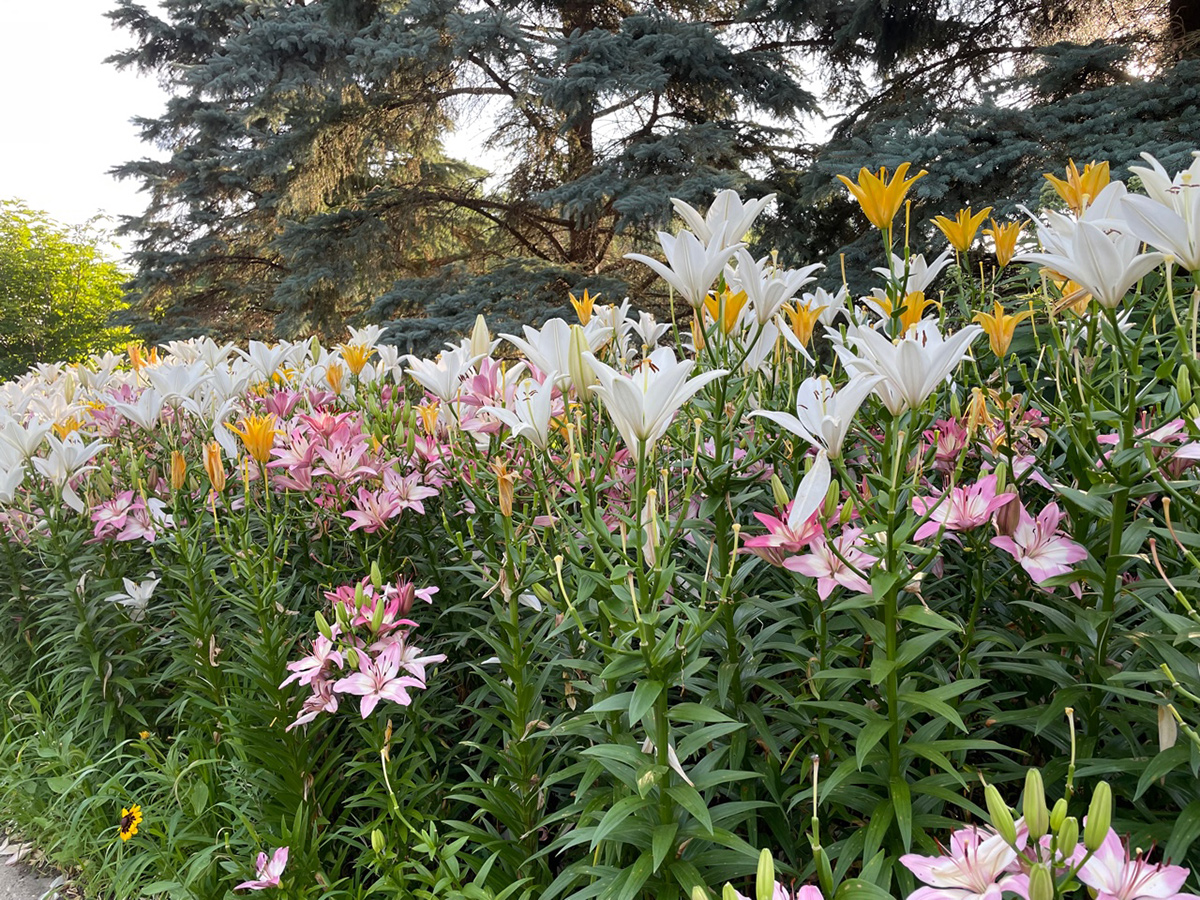
various lilies planted in massHuge! This suburban garden is on a corner lot. In the spring it’s filled with old-fashioned tulips that come back year after year. As their foliage dies back, Asiatic lilies (Lilium spp. and cvs., Zones 4–8) replace them along one side of the garden.
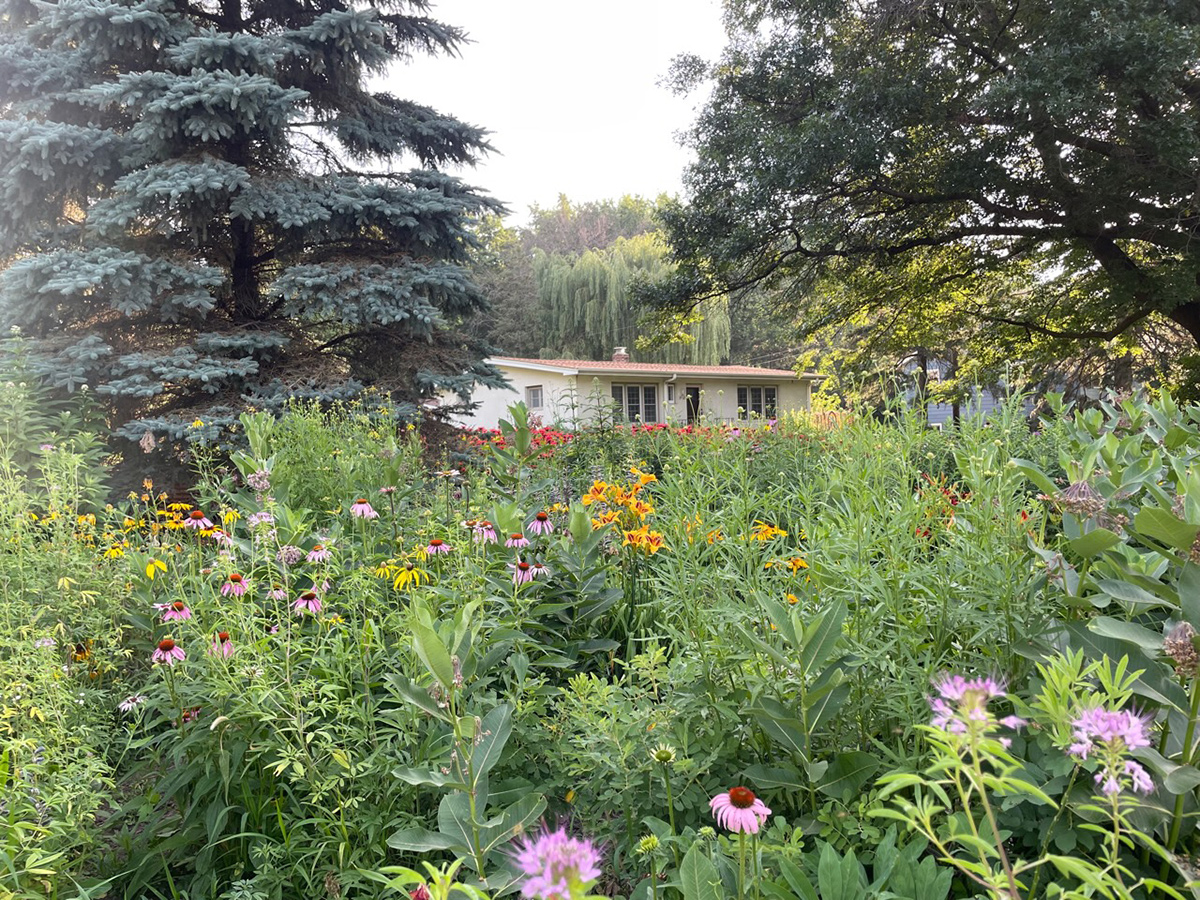
front yard pollinator gardenThe rest is a pollinator’s dream, with echinacea and other composite flowers, common milkweed (Asclepias syriaca, Zones 3–9), cleome, and red monarda in the background.
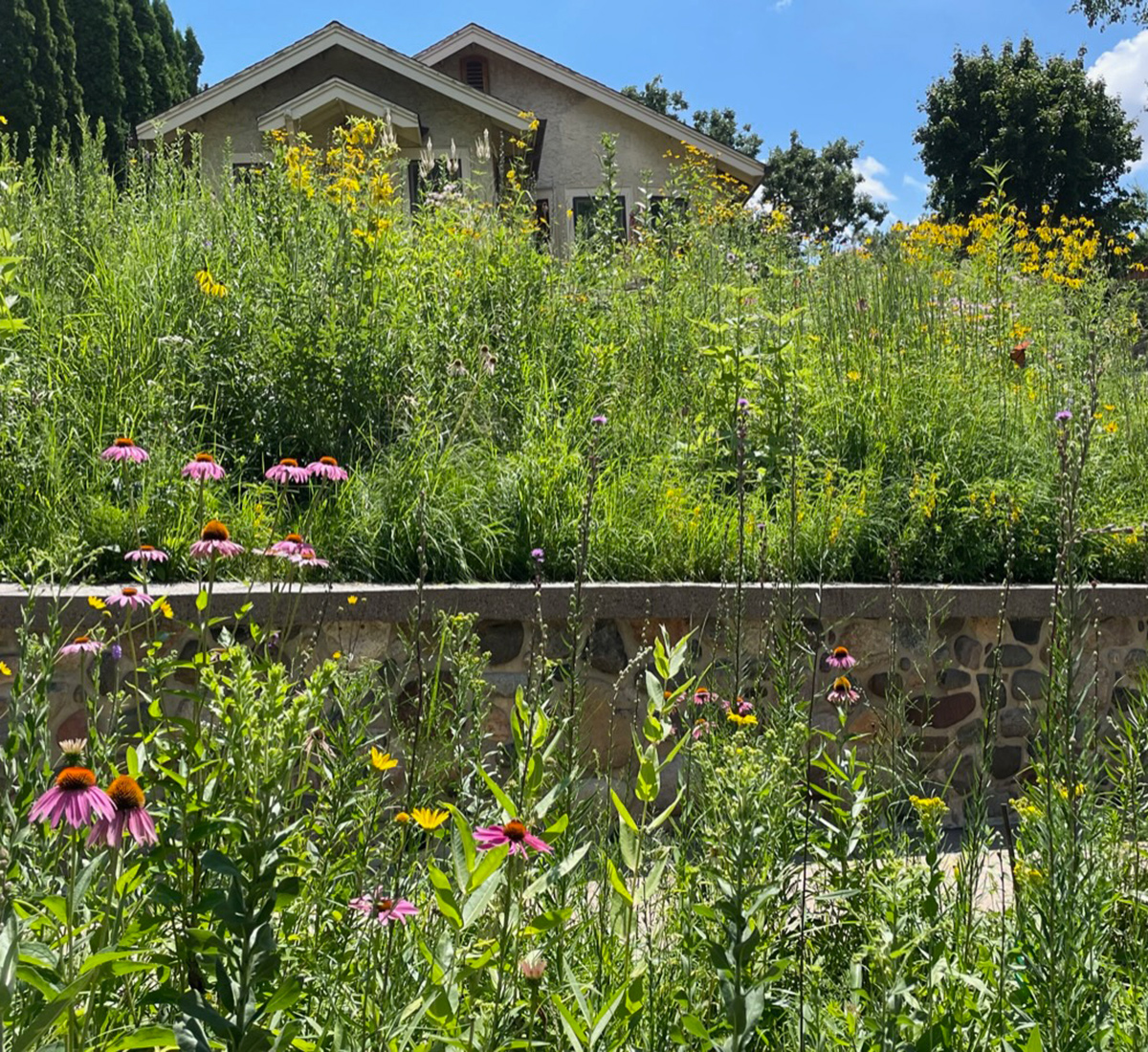
front yard prairie gardenThis prairie garden was developed decades ago, long before the concept became so popular, and it’s my absolute favorite. At the bottom of the photo is the boulevard garden. A really handsome stone wall beyond the sidewalk borders the bottom of the slope up to the house. The garden is always abuzz and aflutter with visiting insects.

Thank you so much for this front-yard-garden tour of St. Paul, Susan! It’s incredible to see the number of gardeners who, like you,  are sharing the joy and beauty of plants with their neighbors. It certainly makes me want to plan a walking tour around St. Paul one day.

Do you admire any front-yard gardens in your area? I hope Susan’s submission encourages you to walk around your neighborhood and enjoy the garden displays your neighbors create. If a design, or a few designs, really strike your fancy, consider sharing some photos with Garden Photo of the Day! Follow the directions below to submit photos via email, or send me a DM on Instagram: @agirlherdogandtheroad.


We want to see YOUR garden!

Have photos to share? We’d love to see your garden, a particular collection of plants you love, or a wonderful garden you had the chance to visit!

To submit, send 5–10 photos to [email protected] along with some information about the plants in the pictures and where you took the photos. We’d love to hear where you are located, how long you’ve been gardening, successes you are proud of, failures you learned from, hopes for the future, favorite plants, or funny stories from your garden.

Have a mobile phone? Tag your photos on Facebook, Instagram, or Twitter with #FineGardening!

Do you receive the GPOD by email yet? Sign up here

Fall Essential Oil Blends For Your Diffuser

0

There’s something about fall that makes me want to sip something warm, and fill the house with cozy scents. This season brings crisp mornings, crunchy leaves, and just has a feeling of nostalgia. I diffuse essential oils in my home often and I like to pull out the warming, seasonal oils this time of year. 

Not only do they make the home smell inviting, but many of them have potent mood and immune supporting benefits. 

Why Diffuse Essential Oils in the Fall?

Aromatherapy isn’t just about making the house smell nice (though that’s a big perk!). Breathing in essential oils helps support mood, energy, and even the immune system. Certain oils, like cinnamon and clove, bring a cozy, grounding feeling while also offering antimicrobial properties. Citrus oils such as orange or bergamot add brightness to darker days. While woodsy oils like cedarwood or sandalwood are grounding and calming to the emotions. 

Diffusing is also a safer option than air fresheners and some candles, which often contain synthetic fragrances. However, I finally found some amazing smelling beeswax candles I love! Diffusing is an easy way to freshen the air and get the health benefits of essential oils while gaining some of the benefits of the oils themselves.

That said, safety is important. Essential oils are powerful, and not all blends are right for every situation. Avoid placing a diffuser directly next to children or pets in a small, enclosed room, and don’t keep it running all day long. It’s also important to ensure diffusers are out of reach of little hands (or curious paws) that could knock them over.

Different Ways to Diffuse

There are several ways to enjoy diffuser blends, and you can choose what works best for your space.

  • Electric Diffusers: My favorite diffusers use water and ultrasonic vibrations to disperse a fine mist of essential oils. I also use nebulizing diffusers sometimes when I want something more potent. You can read about different diffuser types and my top picks here.
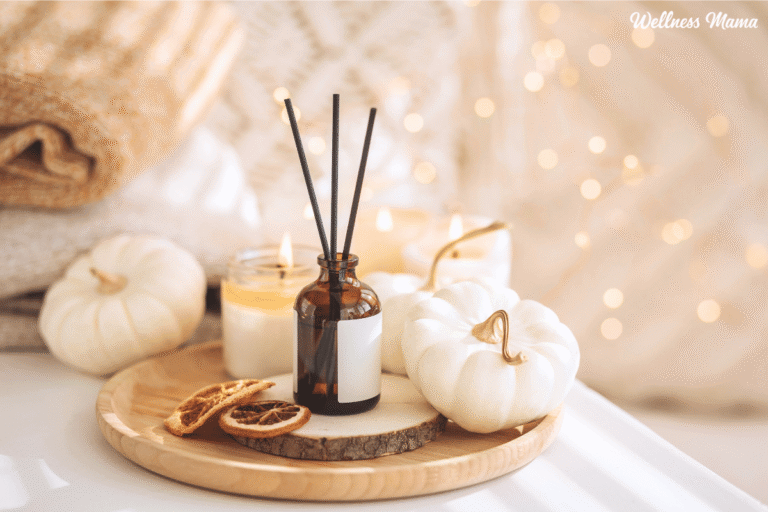
  • DIY Reed Diffuser: If you want something simple and decorative, a reed diffuser is a great option. The scent is more subtle than a misting diffuser, but it adds a touch of beauty to a room. I like keeping one on my desk for a gentle aroma that’s not  overpowering.
  • Room Sprays: Another easy way to enjoy fall blends is in a homemade spray. A few drops of essential oils in water (with a splash of alcohol or witch hazel to help disperse) makes a refreshing natural air freshener. Perfect for bathrooms, guest rooms, or even as a linen spray.

An Even Faster Way

Want something yummy smelling in your diffuser but don’t feel like blending it yourself? One of my favorite essential oil companies has delicious blends for Fall, including Apple Cider, Pumpkin Spice, and Maple Bar. Check out Plant Therapy’s seasonal blends here and here.

And you can find all the quality essential oils you need to create these Fall blends (and others) here.

Fall Diffuser Recipes

These essential oil blends lean towards warming, earthy essential oils that are perfect for cooler weather. They remind me of baking apple crisp with the kids, heading out to the pumpkin patch, and cozying up with a warm cup of tea. Plus, they’re great for both body and mind!

Walk Through the Leaves

This simple blend has an earthy, woodsy scent that makes me think of kicking up fallen leaves on a walk through the woods. Fir essential oil is calming and soothing to the emotions and helps support the respiratory system. Sandalwood is similarly calming, helps soothe agitation, and helps with various complaints like dry coughs and headaches.

  • 2 drops sandalwood essential oil
  • 2 drops fir essential oil

Autumn Coffee Shop

I’m blessed to have an organic coffee shop not far from my house that I like to visit on occasion. This blend reminds me of the sweet, fragrant, and slightly earthy aromas of lattes. Sandalwood is grounding, cinnamon lends a sweet note, and vanilla completes the trio. Cinnamon is also a potent immune system support when it comes to fighting harmful microbes. 

  • 2 drops cinnamon essential oil
  • 2 drops sandalwood essential oil
  • 2 drops vanilla oleoresin

Cabin Porch

Sitting on a porch cabin in the woods, hearing the orange leaves rustle, and cozying up under a warm throw blanket. Enough said. Sweet orange uplifts the mood and cinnamon and clove are warming and antimicrobial.

  • 2 drops sweet orange essential oil
  • 2 drops cinnamon essential oil
  • 2 drops clove essential oil

Trick or Treat

While the kids didn’t always go trick or treating, it’s since become a familiar tradition we’ve put our own healthy spin on. This blend reminds me of a cool October evening. Earthy patchouli and fir complement each other to add a grounding anchor. Neroli adds a floral note that’s perfect for uplifting the spirit. 

  • 2 drops patchouli essential oil
  • 2 drops fir essential oil
  • 1 drop neroli essential oil

Falling Leaves

This blend is woodsy and warm, like walking through a forest with fall colors all around. Sandalwood calms the mind, fir clears the air, and cinnamon adds a hint of sweet spice.

  • 3 drops sandalwood essential oil
  • 2 drops fir essential oil
  • 1 drop cinnamon essential oil

Sweater Weather

Sweet, spicy, and earthy. Ginger is warming, uplifting, and great for stomach complaints. Patchouli adds a grounding note that ties it all together. Almost like slipping on a warm sweater in chilly weather.

  • 3 drops cinnamon essential oil
  • 2 drops ginger essential oil
  • 1 drop patchouli essential oil

Apple Cider

A cozy blend that reminds me of mulled cider simmering on the stove. Cinnamon and ginger are warming and invigorating while orange uplifts the mood. This bright, spicy blend is energizing and cheerful.

  • 4 drops orange essential oil
  • 2 drops ginger essential oil
  • 2 drops cinnamon bark essential oil

Autumn Breeze

I normally like to blend floral and citrus notes with earthier ones. However all of the grounding scents really shine together in this blend. Frankincense supports relaxation and focus while patchouli and cedarwood’s earthy tones calm the mood. Cedarwood is also great for respiratory health. You’ll almost feel like you’re on a peaceful forest walk.

  • 1 drop frankincense essential oil
  • 2 drops patchouli essential oil
  • 2 drops vetiver essential oil

Autumn Rainstorm

This fresh, calming blend is reminiscent of fall rainy days. Lavender soothes, bergamot uplifts, cedarwood grounds, and clary sage balances emotions.

  • 3 drops lavender essential oil
  • 3 drops bergamot essential oil
  • 3 drops cedarwood essential oil
  • 2 drops clary sage essential oil

Hayride 

Earthy and woodsy with an uplifting citrus note from the orange. You’ll feel like you’re on the hayride at the pumpkin patch smelling the crisp, fall air.

  • 3 drops orange essential oil
  • 2 drops cedarwood essential oil
  • 3 drops frankincense essential oil

Pumpkin Pie

Who doesn’t love the smell of pumpkin pie in the oven! It’s like having dessert in a diffuser. This blend also packs a powerful antimicrobial punch when it comes to unwanted germs. 

  • 1 drop cinnamon bark essential oil
  • 2 drops sweet orange
  • 1 drop clove essential oil
  • 1 drop nutmeg essential oil

Warm Apple Crisp

Similar to the pumpkin pie blend, this diffuser blend has all the scents of a warm apple crisp. It’s spicy, warming, and smells like you’ve spent all day baking!

  • 2 drops clove essential oil
  • 2 drops cinnamon bark essential oil
  • 2 drops ginger essential oil
  • 1 drop nutmeg essential oil

Cozy Chai

This version captures all the classic fall spices in a swirling cup of chai. Clove and cinnamon warm the air, while cardamom helps fight stress and fatigue.

  • 1 drop clove bud essential oil
  • 1 drop cinnamon essential oil
  • 2 drops cardamom essential oil
  • 1 drop ginger essential oil

Bringing It All Together

Diffusing essential oils in the fall is such a simple way to set the mood at home. Whether you’re winding down in the evening, trying to energize through the afternoon slump, or just want to make your space feel warm and inviting, these blends can help. Plus, with a little creativity, you can use them in reed diffusers or room sprays

Fall is a favorite for many of us and these diffuser blends make the season (and home!) even more inviting. 

What are your favorite scents for fall? Leave a comment and let us know!

17 Best Fall Flowers for Containers and Pots

0

With the end of hot summer days, most gardens start to look dull. But, with smart gardening you can continue to have splashing blooms in your space.

By planting fall flowers in containers, you can keep the color alive, bringing that seasonal pop to patios, porches, or even a small balcony.

These blooms actually thrive in cooler temps, and their warm tones—think golds, reds, and deep purples—fit right in with the falling leaves. It’s like bringing a little piece of autumn right into your outdoor space.

The best part about using containers is how easy it is to switch things up. You can move plants around, tuck them into sheltered spots when the weather gets rough, or try out new combos until you find one you love.

So, whether you want to stretch your garden’s life a little longer or just enjoy the cozy colors of fall, these flowers will keep your space looking bright, festive, and welcoming well into the season.

17 Best Fall Flowers for Containers

From cheerful blooms to bold foliage, each plant on this list is tough enough to handle chilly nights while keeping your pots looking fresh and festive.

Whether you’re dressing up a front porch, balcony, or backyard corner, these 17 container-friendly flowers will carry your garden’s beauty well into autumn.

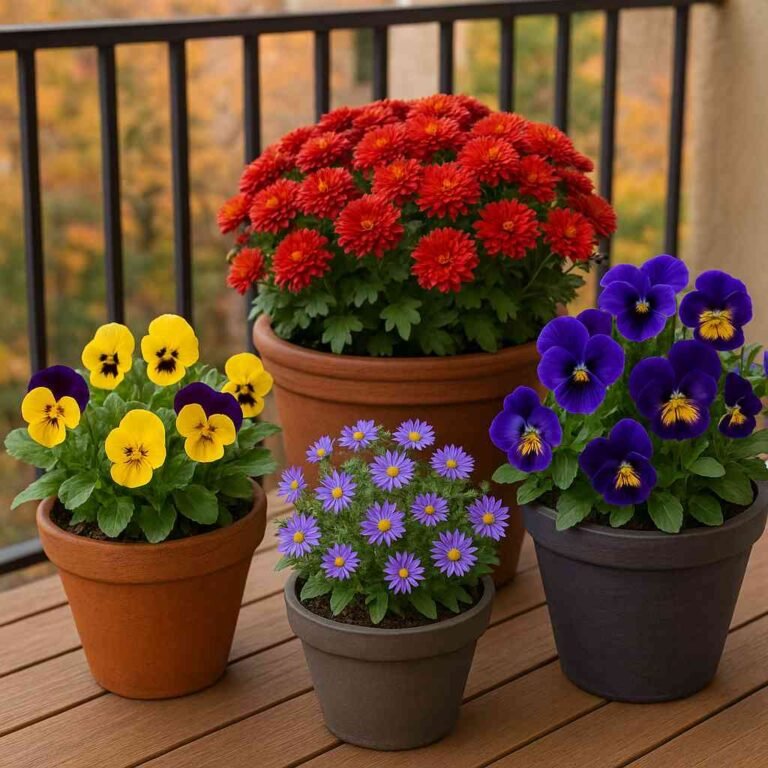
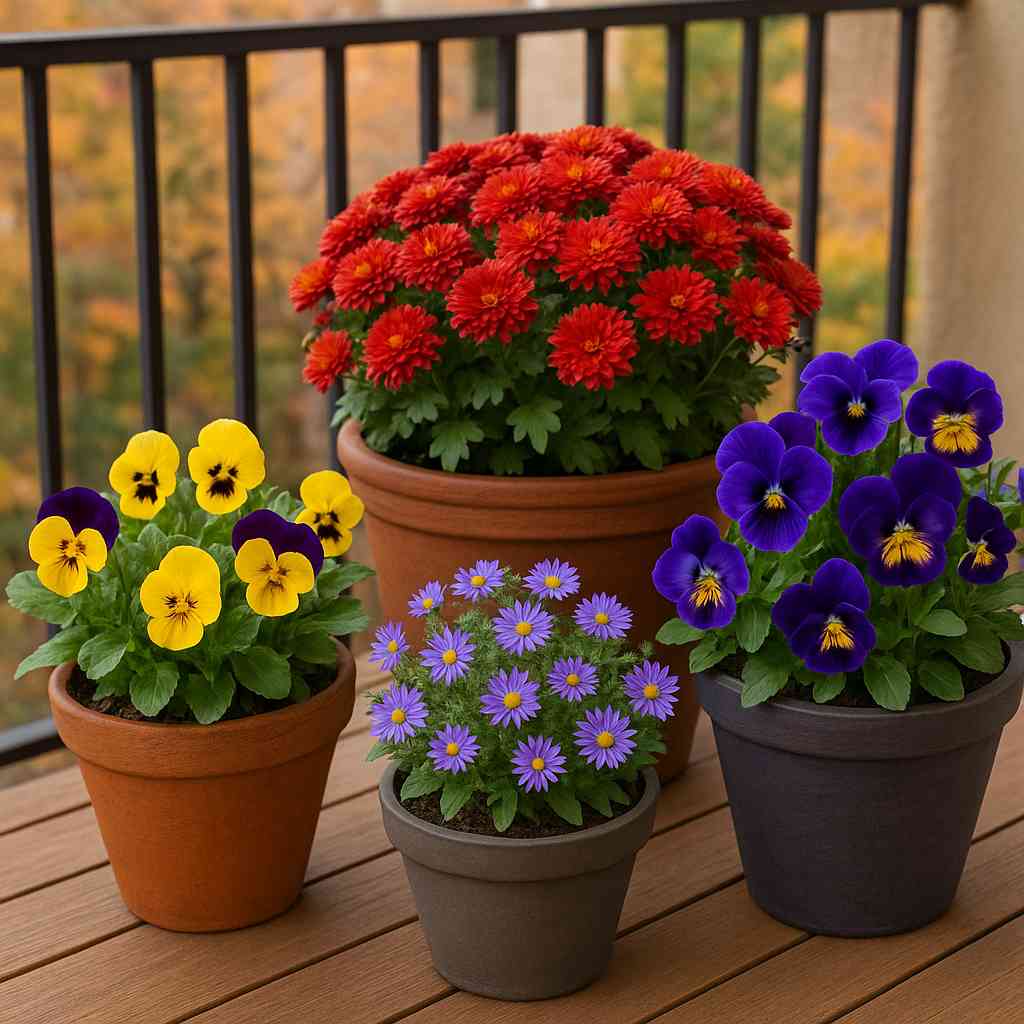
1. Chrysanthemums (Mums)

Chrysanthemums are the quintessential fall flower, offering an incredible variety of colors from deep burgundy and golden yellow to rich orange and pristine white. These hardy perennials are perfect for containers because they form compact, bushy plants that produce abundant blooms throughout the fall season.

Mums thrive in well-draining soil and prefer full sun to partial shade, making them ideal for container placement on patios or porches. They require regular watering but are relatively low-maintenance, and their long-lasting blooms can provide color for weeks when temperatures remain cool.

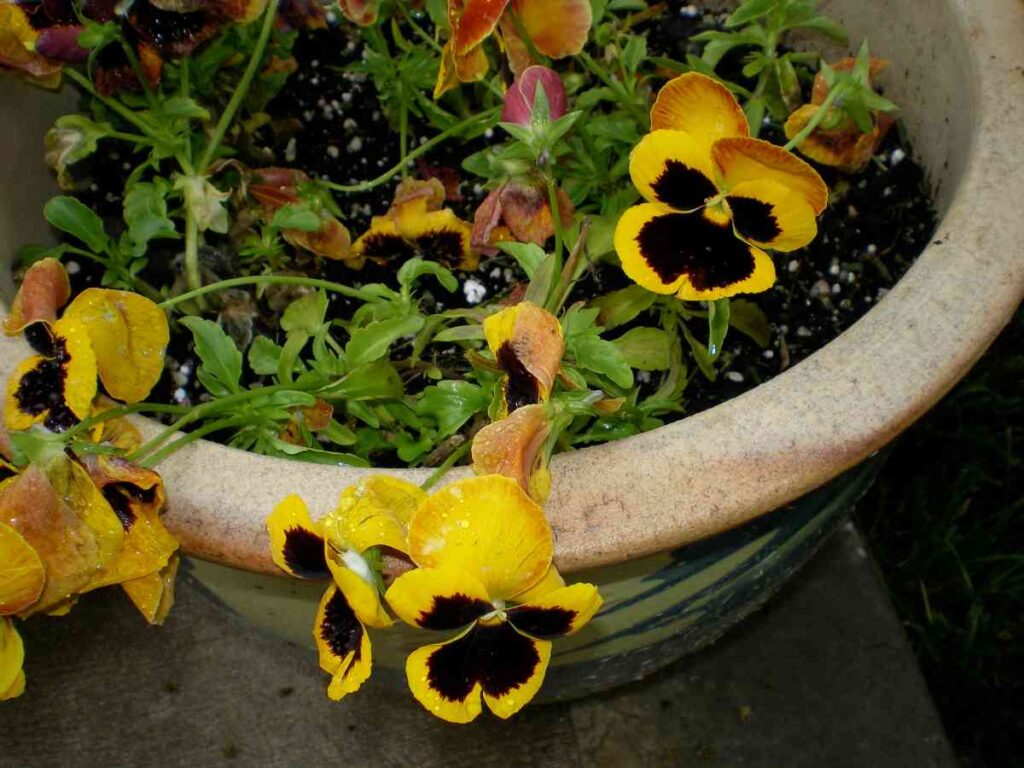
2. Pansies

potted pansiespotted pansies

These cheerful flowers are excellent fall performers, capable of withstanding light frosts and continuing to bloom even when temperatures drop. Pansies come in a wonderful array of colors including purple, yellow, orange, and multi-coloured varieties that add instant charm to any container arrangement.

Container-grown pansies prefer cool weather and partial shade, making them perfect for fall planting. They benefit from regular watering and deadheading to encourage continuous blooms, and their compact size makes them excellent for mixed container plantings or as standalone displays.

Also Read: How to Grow Pansies in the Fall?

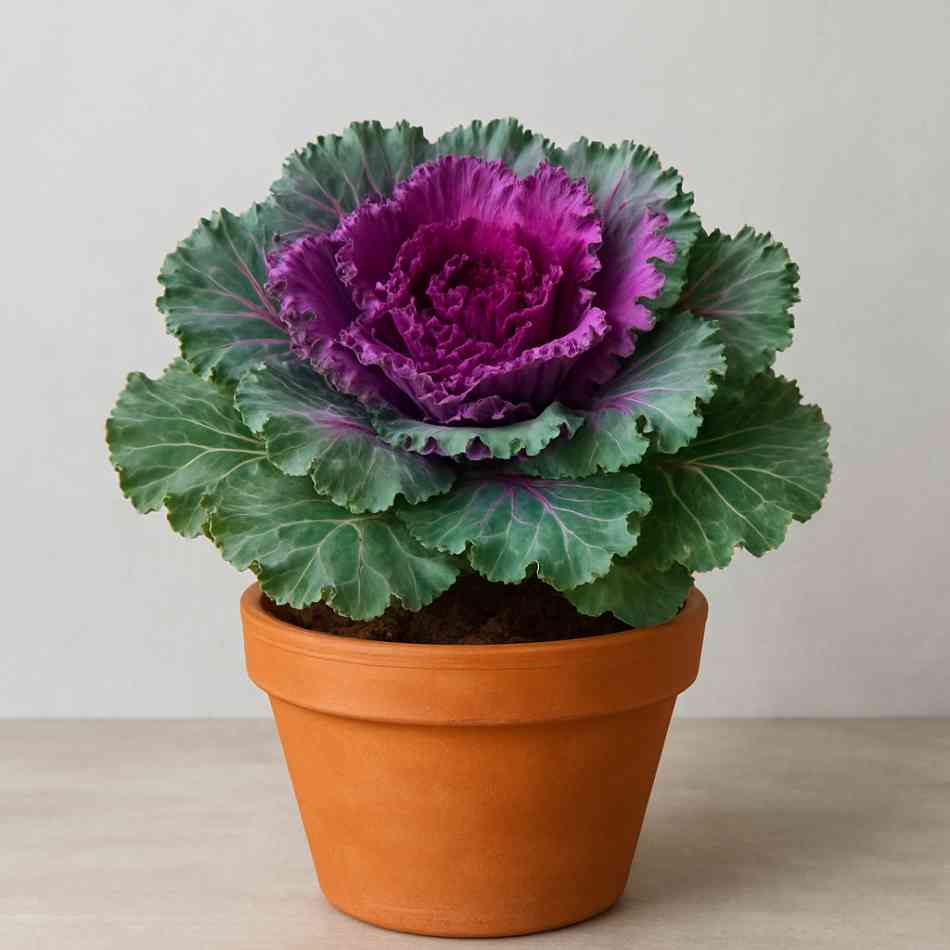
3. Ornamental Cabbage and Kale

These striking foliage plants provide incredible texture and color variation with their ruffled leaves in shades of purple, pink, white, and green. While technically vegetables, ornamental cabbage and kale are grown primarily for their decorative appeal and perform exceptionally well in fall containers.

These cool-season plants actually become more colorful as temperatures drop, with their centers developing more intense hues. They prefer full sun and well-draining soil, and their compact rosette growth habit makes them perfect for container gardens where they can serve as stunning focal points.

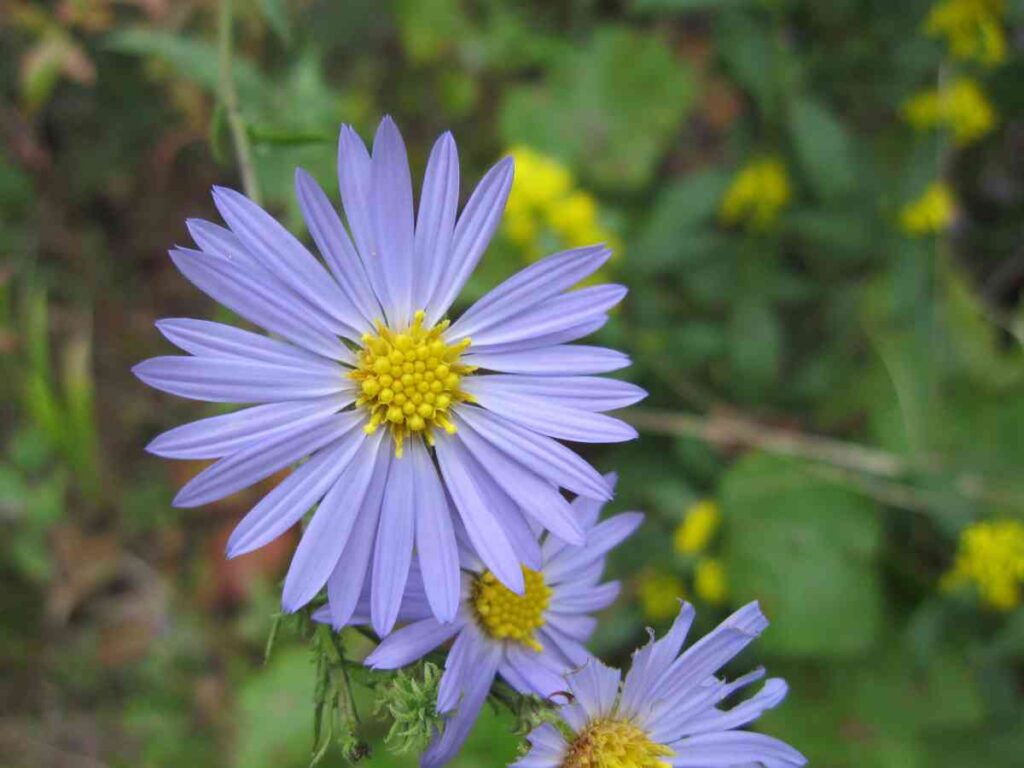
4. Asters

Fall-blooming asters bring delicate, daisy-like flowers in shades of purple, pink, and white to container gardens. These hardy perennials are native to North America and are particularly valuable for their late-season blooms when many other flowers are fading.

Asters work wonderfully in containers because they attract beneficial insects like butterflies while providing weeks of continuous color. They prefer full sun and well-draining soil, and their varying heights make them excellent for creating layered container arrangements with taller varieties in the back.

Check this: 27 Fall Garden Ideas to Refresh Your Outdoor Space

5. Celosia

With their unique flame-like or brain-shaped flower heads, celosia adds dramatic texture and vibrant color to fall containers. Available in brilliant shades of red, orange, yellow, and pink, these heat-tolerant annuals continue blooming well into fall until the first hard frost.

Celosia thrives in containers with good drainage and full sun exposure. Their long-lasting blooms make excellent cut flowers, and the plants maintain their color and form throughout the fall season with minimal care beyond regular watering.

6. Sedum (Stonecrop)

These succulent perennials offer both attractive foliage and late-season flowers, making them perfect for fall containers. Popular varieties like ‘Autumn Joy’ produce clusters of star-shaped flowers that transition from green to pink to deep red as the season progresses.

Sedum is incredibly low-maintenance in containers, requiring minimal water and tolerating various light conditions. Their fleshy leaves and sturdy stems provide year-round interest, while their fall blooms attract pollinators and add subtle color to autumn arrangements.

7. Marigolds

These reliable annuals continue blooming prolifically in fall containers, offering bright orange, yellow, and red flowers that complement autumn’s natural color palette. French marigolds and signet marigolds are particularly well-suited for container growing due to their compact size.

Marigolds are virtually foolproof in containers, thriving in full sun with regular watering. They’re also known for their pest-repelling properties, making them excellent companion plants in mixed container gardens while providing continuous color until frost.

Also Read: How to Plant Tulips in the Fall?

8. Violas

Similar to their pansy cousins but with smaller flowers, violas are incredibly cold-tolerant and provide delicate color throughout the fall season. These charming flowers come in solid colors and bicolors, including purple, yellow, white, and blue combinations.

Violas excel in containers because they prefer cool weather and can tolerate light frosts that would damage other flowers. They work beautifully in mixed plantings or as ground cover in larger containers, spreading gently to create colorful carpets of blooms.

9. Cyclamen

These elegant flowers with their upswept petals and heart-shaped leaves bring sophistication to fall container displays. Hardy cyclamen varieties can tolerate cool temperatures and provide blooms in shades of pink, white, purple, and red throughout the autumn months.

Container-grown cyclamen prefer partial shade and well-draining soil, making them perfect for covered porches or areas with filtered light. Their unique flower shape and attractive foliage make them excellent specimen plants or components in mixed fall arrangements.

10. Dianthus

Also known as pinks, dianthus produces fragrant, fringed flowers in shades of pink, white, and red that continue blooming well into fall. These hardy perennials are perfect for containers because of their compact growth habit and long flowering period.

Dianthus thrives in containers with good drainage and full sun to partial shade. Their spicy fragrance adds another dimension to container gardens, and their grass-like foliage provides texture even when not in bloom, making them valuable four-season container plants.

11. Snapdragons

These classic flowers with their distinctive dragon-mouth blooms come in a wide range of colors and heights, making them versatile choices for fall containers. Cool weather actually encourages better blooming, and they can withstand light frosts.

Snapdragons work well in containers because you can choose dwarf varieties for small pots or tall varieties for dramatic vertical displays. They prefer full sun and regular watering, and their upright growth habit makes them excellent backdrop plants in mixed container arrangements.

12. Calendula

These cheerful, daisy-like flowers in shades of orange and yellow are not only beautiful but also edible, making them dual-purpose additions to fall containers. Calendula actually prefers cool weather and will bloom more prolifically as temperatures drop.

Container-grown calendula is easy to care for, requiring full sun and well-draining soil. The flowers are long-lasting and self-seeding, so they may provide surprise blooms the following season. Their bright colors perfectly capture the essence of autumn in container displays.

13. Heuchera (Coral Bells)

While primarily grown for their colorful foliage, many heuchera varieties also produce delicate flower spikes that add vertical interest to fall containers. The leaves come in stunning shades of purple, burgundy, lime green, and silver that intensify in cool weather.

Heuchera is excellent for containers because it provides year-round interest with its evergreen foliage. These plants tolerate various light conditions and require minimal care, making them perfect foundation plants for fall container combinations that need reliable structure and color.

Check this: 18 Herbs to Plant in Fall

14. Toadflax

These delicate flowers resemble tiny snapdragons and come in soft colors including purple, pink, white, and yellow. Toadflax is particularly cold-tolerant and continues blooming well into fall, often surviving light frosts to provide extended color.

In containers, toadflax creates a cottage garden feel with its informal growth habit and abundant small blooms. The plants self-seed readily and prefer cool weather, making them ideal for fall planting when they can establish themselves for peak autumn performance.

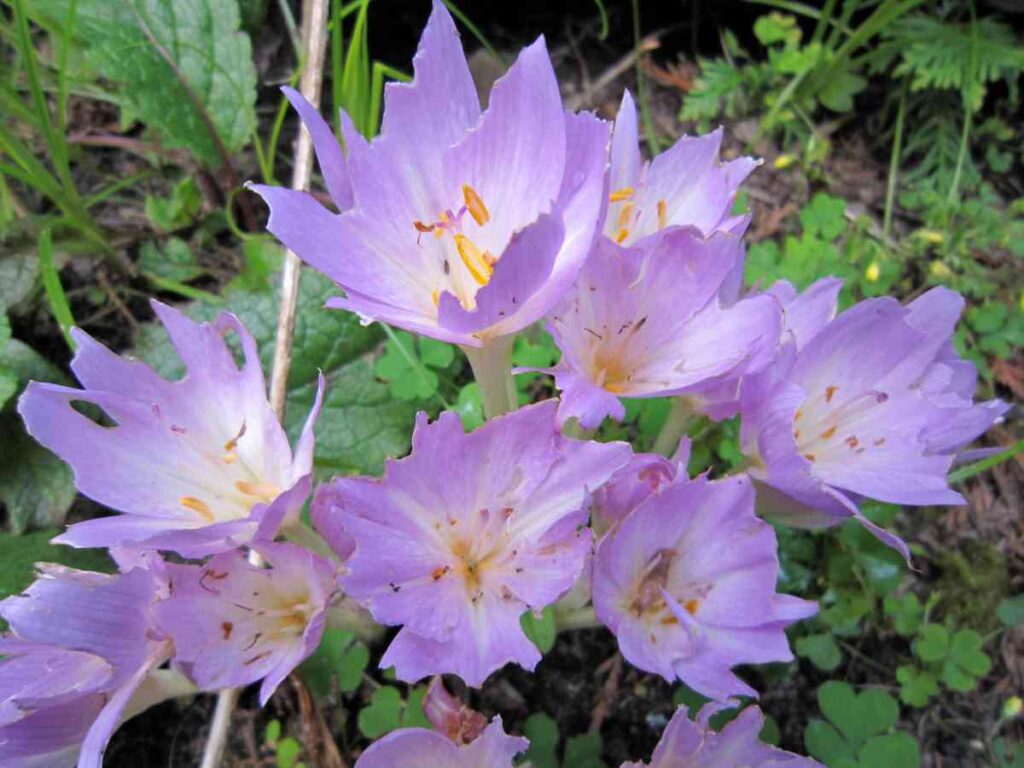
15. Fall-Blooming Crocus

While most people associate crocuses with spring, several species bloom in fall, providing unexpected bursts of purple, white, or yellow color. These bulbs are perfect for containers because they naturalize easily and require minimal care.

Fall crocus should be planted in late summer to bloom in autumn, and their grasslike foliage appears after the flowers fade. They work well in containers combined with other fall plants, providing surprise color that emerges seemingly from nowhere in the autumn garden.

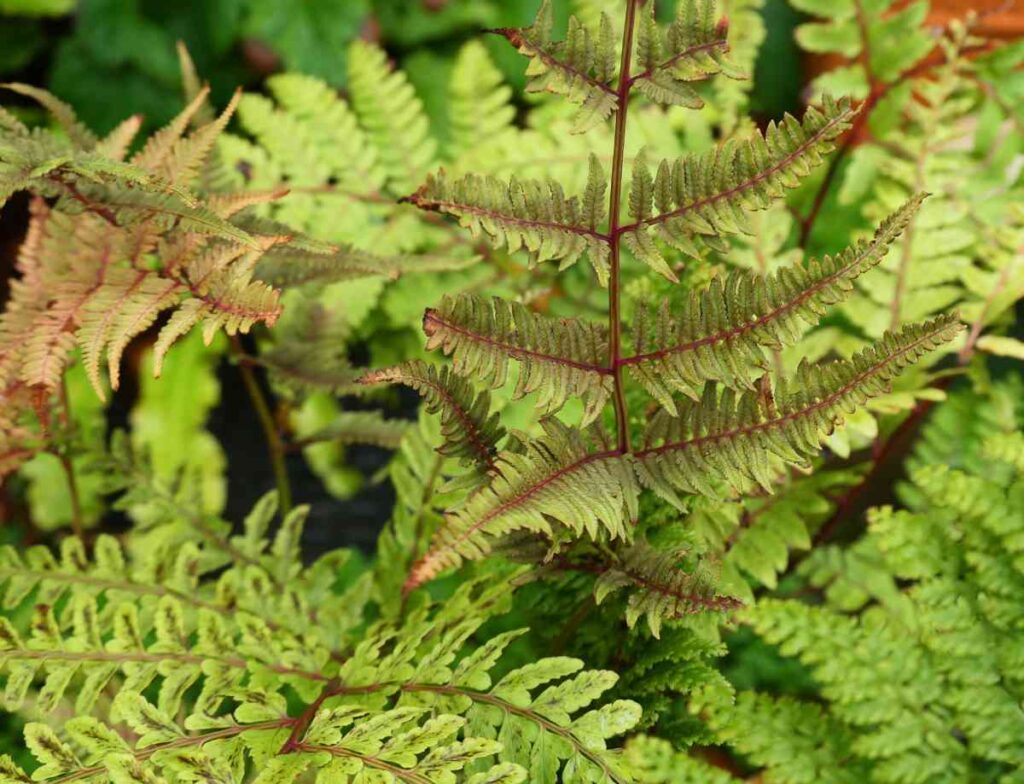
16. Japanese Painted Fern

Though technically a fern rather than a flowering plant, Japanese painted fern deserves inclusion for its stunning silver, green, and purple foliage that provides exceptional color in fall containers. The metallic sheen of the fronds creates beautiful contrast with flowering plants.

This shade-loving plant is perfect for containers in areas with limited sunlight, where many flowering plants struggle. Japanese painted fern maintains its color well into fall and provides elegant texture that complements bold autumn flowers in mixed container plantings.

17. Flowering Kale

Similar to ornamental kale but with more pronounced leaf serration, flowering kale produces rosettes of deeply cut leaves in shades of pink, purple, white, and green. These plants become more colorful as temperatures cool, reaching peak beauty in fall.

Flowering kale thrives in containers with full sun and cool temperatures, making it ideal for autumn displays. The plants have excellent cold tolerance and maintain their color well into winter in mild climates, providing extended seasons of interest in container gardens.

Conclusion

Creating fall container displays is one of the easiest and most rewarding ways to keep your garden looking lively as summer winds down and winter creeps in.

With these fall flowers and foliage plants, you’ll have endless options to mix and match colors, textures, and shapes for a look that feels totally your own. The best part about container gardening?

It’s super flexible—you can shuffle plants around, move pots to sheltered spots when the weather turns rough, and play with different combos until you find the perfect setup.

With just a little care and the right spot, these hardy plants will keep your outdoor spaces full of autumn color, making them cozy and welcoming all season long.

2 Week Healthy Meal Plan #12 With Grocery List

0


2 Week Healthy Meal Plan #12 With Grocery List – The Real Food Dietitians


Privacy & Cookies Policy

Patients turn to AI to interpret lab tests, with mixed results : Shots

0

People are turning to Chatbots like Claude to get help interpreting their lab test results.

Smith Collection/Gado/Archive Photos/Getty Images


hide caption

toggle caption

Smith Collection/Gado/Archive Photos/Getty Images

When Judith Miller had routine blood work done in July, she got a phone alert the same day that her lab results were posted online. So, when her doctor messaged her the next day that overall her tests were fine, Miller wrote back to ask about the elevated carbon dioxide and something called “low anion gap” listed in the report.

While the 76-year-old Milwaukee resident waited to hear back, Miller did something patients increasingly do when they can’t reach their health care team. She put her test results into Claude and asked the AI assistant to evaluate the data.

“Claude helped give me a clear understanding of the abnormalities,” Miller said. The generative AI model didn’t report anything alarming, so she wasn’t anxious while waiting to hear back from her doctor, she said.

Patients have unprecedented access to their medical records, often through online patient portals such as MyChart, because federal law requires health organizations to immediately release electronic health information, such as notes on doctor visits and test results.

And many patients are using large language models, or LLMs, like OpenAI’s ChatGPT, Anthropic’s Claude, and Google’s Gemini, to interpret their records. That help comes with some risk, though. Physicians and patient advocates warn that AI chatbots can produce wrong answers and that sensitive medical information might not remain private.

But does AI know what it’s talking about?

Yet, most adults are cautious about AI and health. Fifty-six percent of those who use or interact with AI are not confident that information provided by AI chatbots is accurate, according to a 2024 KFF poll. (KFF is a health information nonprofit that includes KFF Health News.)

That instinct is born out in research.

“LLMs are theoretically very powerful and they can give great advice, but they can also give truly terrible advice depending on how they’re prompted,” said Adam Rodman, an internist at Beth Israel Deaconess Medical Center in Massachusetts and chair of a steering group on generative AI at Harvard Medical School.

Justin Honce, a neuroradiologist at UCHealth in Colorado, said it can be very difficult for patients who are not medically trained to know whether AI chatbots make mistakes.

“Ultimately, it’s just the need for caution overall with LLMs. With the latest models, these concerns are continuing to get less and less of an issue but have not been entirely resolved,” Honce said.

Rodman has seen a surge in AI use among his patients in the past six months. In one case, a patient took a screenshot of his hospital lab results on MyChart then uploaded them to ChatGPT to prepare questions ahead of his appointment. Rodman said he welcomes patients’ showing him how they use AI, and that their research creates an opportunity for discussion.

Roughly 1 in 7 adults over 50 use AI to receive health information, according to a recent poll from the University of Michigan, while 1 in 4 adults under age 30 do so, according to the KFF poll.

Using the internet to advocate for better care for oneself isn’t new. Patients have traditionally used websites such as WebMD, PubMed, or Google to search for the latest research and have sought advice from other patients on social media platforms like Facebook or Reddit. But AI chatbots’ ability to generate personalized recommendations or second opinions in seconds is novel.

What to know: Watch out for “hallucinations” and privacy issues

Liz Salmi, communications and patient initiatives director at OpenNotes, an academic lab at Beth Israel Deaconess that advocates for transparency in health care, had wondered how good AI is at interpretation, specifically for patients.

In a proof-of-concept study published this year, Salmi and colleagues analyzed the accuracy of ChatGPT, Claude, and Gemini responses to patients’ questions about a clinical note. All three AI models performed well, but how patients framed their questions mattered, Salmi said. For example, telling the AI chatbot to take on the persona of a clinician and asking it one question at a time improved the accuracy of its responses.

Privacy is a concern, Salmi said, so it’s critical to remove personal information like your name or Social Security number from prompts. Data goes directly to tech companies that have developed AI models, Rodman said, adding that he is not aware of any that comply with federal privacy law or consider patient safety. Sam Altman, CEO of OpenAI, warned on a podcast last month about putting personal information into ChatGPT.

“Many people who are new to using large language models might not know about hallucinations,” Salmi said, referring to a response that may appear sensible but is inaccurate. For example, OpenAI’s Whisper, an AI-assisted transcription tool used in hospitals, introduced an imaginary medical treatment into a transcript, according to a report by The Associated Press.

Using generative AI demands a new type of digital health literacy that includes asking questions in a particular way, verifying responses with other AI models, talking to your health care team, and protecting your privacy online, said Salmi and Dave deBronkart, a cancer survivor and patient advocate who writes a blog devoted to patients’ use of AI.

Physicians must be cautious with AI too

Patients aren’t the only ones using AI to explain test results. Stanford Health Care has launched an AI assistant that helps its physicians draft interpretations of clinical tests and lab results to send to patients.

Colorado researchers studied the accuracy of ChatGPT-generated summaries of 30 radiology reports, along with four patients’ satisfaction with them. Of the 118 valid responses from patients, 108 indicated the ChatGPT summaries clarified details about the original report.

But ChatGPT sometimes overemphasized or underemphasized findings, and a small but significant number of responses indicated patients were more confused after reading the summaries, said Honce, who participated in the preprint study.

Meanwhile, after four weeks and a couple of follow-up messages from Miller in MyChart, Miller’s doctor ordered a repeat of her blood work and an additional test that Miller suggested. The results came back normal. Miller was relieved and said she was better informed because of her AI inquiries.

“It’s a very important tool in that regard,” Miller said. “It helps me organize my questions and do my research and level the playing field.”

KFF Health News is a national newsroom that produces in-depth journalism about health issues and is one of the core operating programs at KFF .

How to Grow and Care for Showy Garden Croton

0

Cultivars to Select

There are so many different cultivars to choose from, it’s going to be tough to pick just one!

Here are a few of my favorites:

Banana

‘Banana’ sports elongated, twisting leaves are speckled and veined with yellow.

Dreadlocks

‘Dreadlocks’ has multi-colored, twisting, elongated leaves are accented with red and yellow.

‘Dreadlocks’ is available via Amazon in a six-inch pot.

Petra

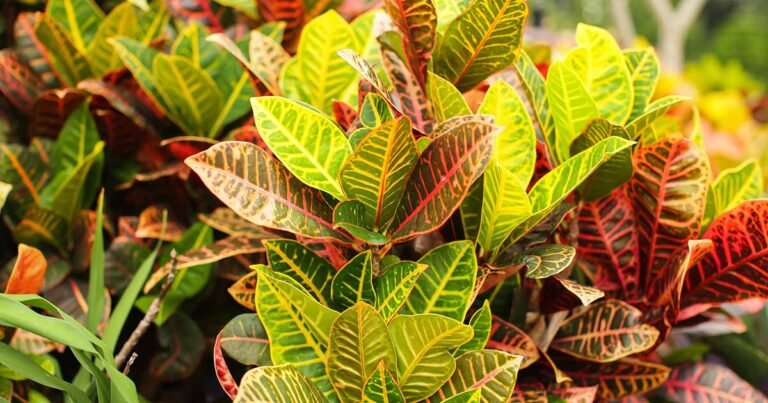
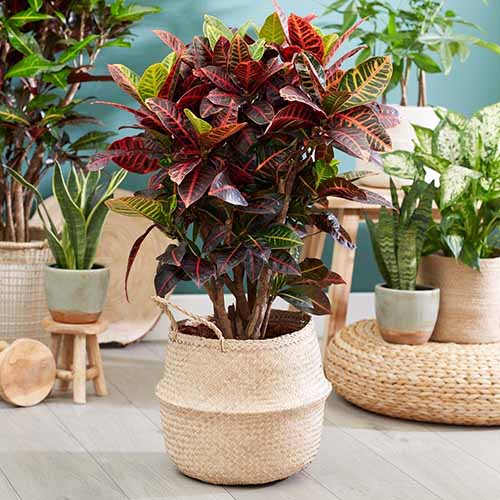
This is the most common croton cultivar that you will find in many nurseries and garden centers. Elliptical green leaves are lavishly veined in yellow and red.

A close up square image of a 'Petra' croton plant in a wicker basket indoors.A close up square image of a 'Petra' croton plant in a wicker basket indoors.

‘Petra’

‘Petra’ is available from Fast Growing Trees in a six-inch or a three-gallon pot.

Grower’s Choice

If you can’t pick just one, maybe try a Grower’s Choice assortment instead!

Costa Farms Croton Grower’s Choice Assortment, 4-Pack

Four assorted C. variegatum are available via Amazon, in four-inch pots.

Maintenance

Crotons grow slowly. Over time, you may notice that you need to water more frequently or that your croton isn’t as perky as it used to be. If so, may be time to repot.

To be certain, examine the drainage holes. If you see roots poking through, it’s time. Spring is the best time for repotting, as your plant is feeling especially vigorous.

Green and yellow croton with tiny new leaves growing at the center, in a terra cotta colored plastic flower pt filled with grown soil, against a dark green wall with bright white baseboard.Green and yellow croton with tiny new leaves growing at the center, in a terra cotta colored plastic flower pt filled with grown soil, against a dark green wall with bright white baseboard.
Photo by Nan Schiller.

This is where some folks err on the side of generosity, myself included.

When you repot a houseplant, choose the next size up, or in other words, a pot that is only an inch or two wider in diameter than the current container.

A pot that is too deep will encourage excessive root growth, rather than lush foliage.

To repot, first take note of how deep your plant sits in its old pot. You’ll want to replicate this depth in the new one.

Gently ease your plant out of its old pot, dirt and all. Remove most of the  old potting mix and tease the roots apart.

A small yellow and green spotted croton plant with drooping leaves, planted in a green decorative ceramic pot filed with dark brown soil, on a glass table with a black stained wood frame, next to a tall blue glass vase, in front of a window.A small yellow and green spotted croton plant with drooping leaves, planted in a green decorative ceramic pot filed with dark brown soil, on a glass table with a black stained wood frame, next to a tall blue glass vase, in front of a window.
A small croton in failing health after repotting. Photo by Allison Sidhu.

Your new pot should be clean and have a drainage hole. Cover the bottom with pea gravel and pour in new potting medium to a depth of about one-third the total depth of the pot.

Center your plant in the new pot, at the same depth it was in the old pot. Holding the plant with one hand, use your other to fill in around it with potting medium.

Don’t fill to the top, but rather, leave a little space to prevent watering spillover.

Tamp down gently, water, and tamp again. Your freshly repotted plant may droop or drop leaves until it regains its composure.

Read the MAHA strategy report

0

Page 5 of 20

ADVANCE RESEARCH

Vaccine Injury

HHS, in collaboration with NIH, will investigate vaccine injuries with improved data collection and analysis, including through a new vaccine injury research program at the NIH Clinical Center that may expand to centers around the country.

Water Quality

The EPA and USDA, along with other relevant Federal partners and in collaboration with NIH, will assess ongoing evaluations of water contaminants and update guidance and prioritizations of certain contaminants appropriately. For example, EPA will review new scientific information on the potential health risks of fluoride in drinking water to inform Centers for Disease Control and Prevention (CDC) recommendations. Additionally, USDA, through its Research, Education, and Economics mission area, in consultation with the Farm Production and Conservation mission area, will continue research on ways to improve water quality and adoption of applicable conservation practices. Agency research could also include research to inform the understanding of levels of pharmaceuticals in our water supply that could be adversely affecting animal and human health.

Air Quality

The EPA and NIH will study air quality impacts on children’s health and utilize existing research programs to improve data collection and analysis.

Microplastics and Synthetics

HHS, in collaboration with NIH and EPA, will complete an evaluation of the risks and exposures of microplastics and synthetics, including in common products such as textiles.

Prescribing Patterns and Impact on Mental Health

HHS (inclusive of the Administration for Children and Families (ACF), Substance Abuse and Mental Health Services Administration, FDA, NIH, and CMS) will form a mental health diagnosis and prescription working group to evaluate prescription patterns for selective serotonin reuptake inhibitors, antipsychotics, mood stabilizers, stimulants, and other relevant drugs for children. HHS will also evaluate the therapeutic harms and benefits of current diagnostic thresholds, overprescription trends, and evidence-based solutions that can be scaled-up to improve mental health, including through school-based interventions, diet, and foster care services. NIH will conduct research as appropriate. FDA will update labels for older, generic drugs to better reflect the latest science.

Food for Health

HHS, the Department of Veterans Affairs (VA), and USDA will study the impact of programs that implement food and lifestyle interventions to improve health outcomes and decrease costs. The NIH Office of Nutrition will coordinate research initiatives to improve rigorous studies and maximize impact, including through large- scale randomized control trials.

Nutrition

NIH will partner with FDA, USDA, and the Administration for a Healthy America (AHA) to conduct high- quality nutrition research and ingredient assessments. As part of this effort, NIH will expand research on dietary patterns that support metabolic health. NIH and HHS will take steps to fully utilize the newly created FDA and NIH Joint Nutrition Regulatory Science Program. USDA will prioritize precision nutrition research,

MAKE AMERICA HEALTHY AGAIN

MAHA

PRESIDENT DONALD J. TRUMP

5

Heidi’s Flowers in Connecticut – Fine Gardening

0

Hi GPODers!

Before fall foliage color snatches our attention, let’s savor and celebrate our most vibrant flowers of summer. One gardener who always injects a glorious dose of floral color into Garden Photo of the Day is Heidi Weirether in Fairfield County, Connecticut. Heidi has shared her vibrant garden on the blog a handful of times over the past year (check out her previous submissions: Heidi’s May Garden in Connecticut, Peak Season in Heidi’s Connecticut Garden, and Heidi’s Colorful Garden in Fairfield County), and each time her garden appears to be filled with an abundance of diverse and delightful blooms. Today’s update, which features photos from late May to August, gives an even better sense of the magnitude of fascinating flowers she grows.

The first 3 photos are annual changes throughout the years using begonias, coleus, vinca, scaevola, and impatiens.

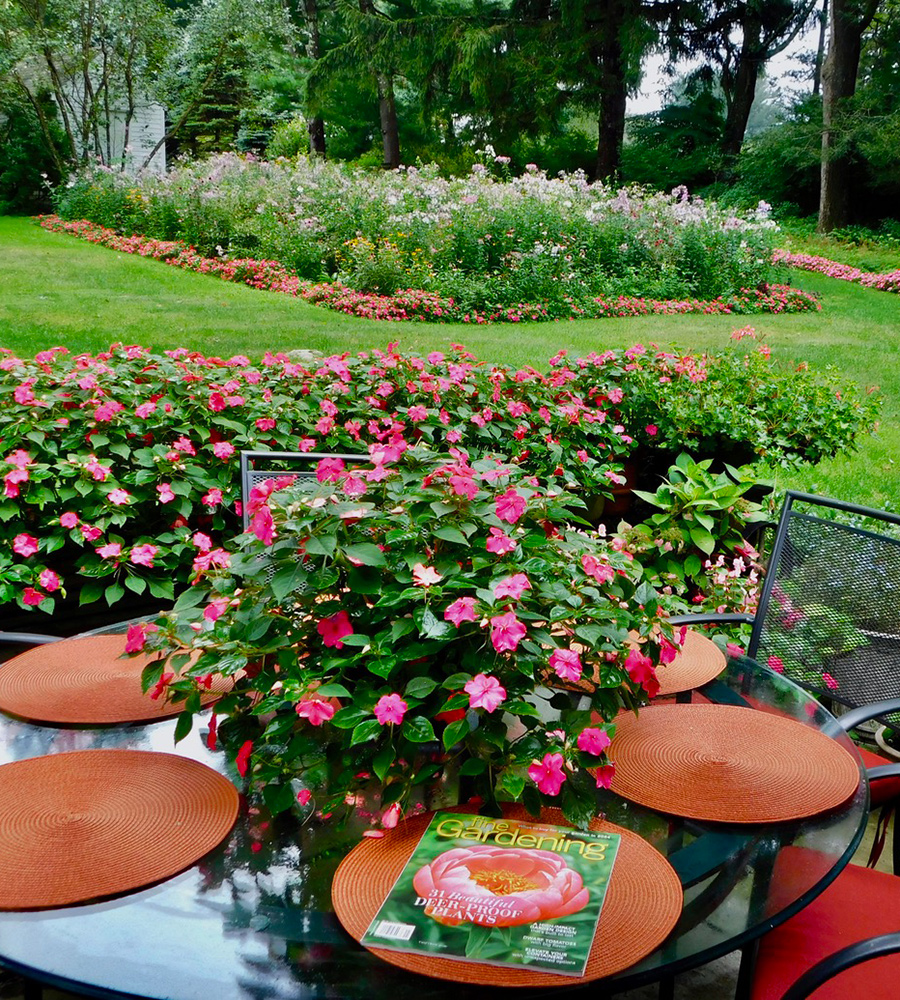
pink impatience around patio seating areaA flurry of pink impatiens is just as enchanting on and around this outdoor dining table. They also match perfectly with Heidi’s copy of Fine Gardening magazine!

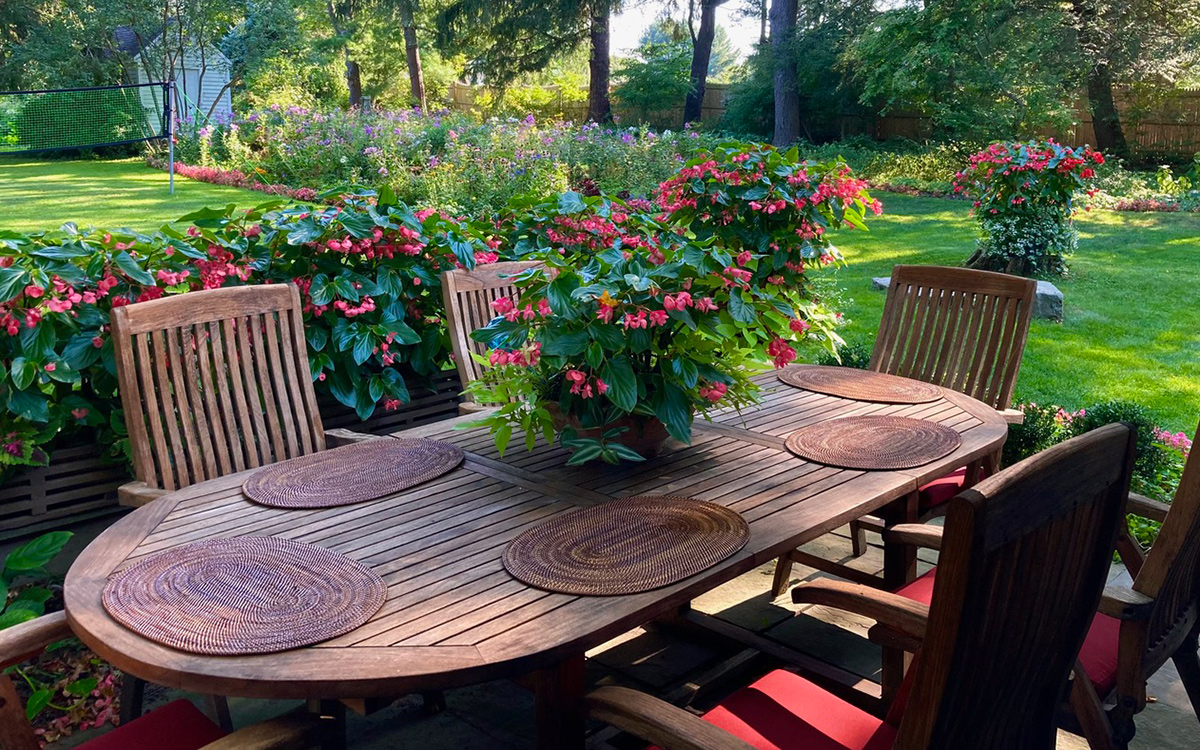
begonias around shady garden seating areaPink begonias complement the dark wood of this other table, while adding some tropical style to this shady spot.

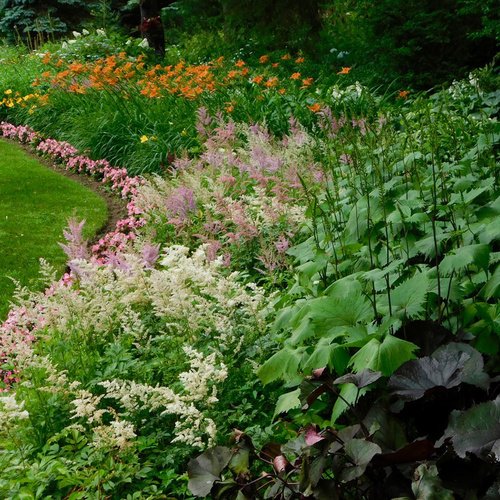
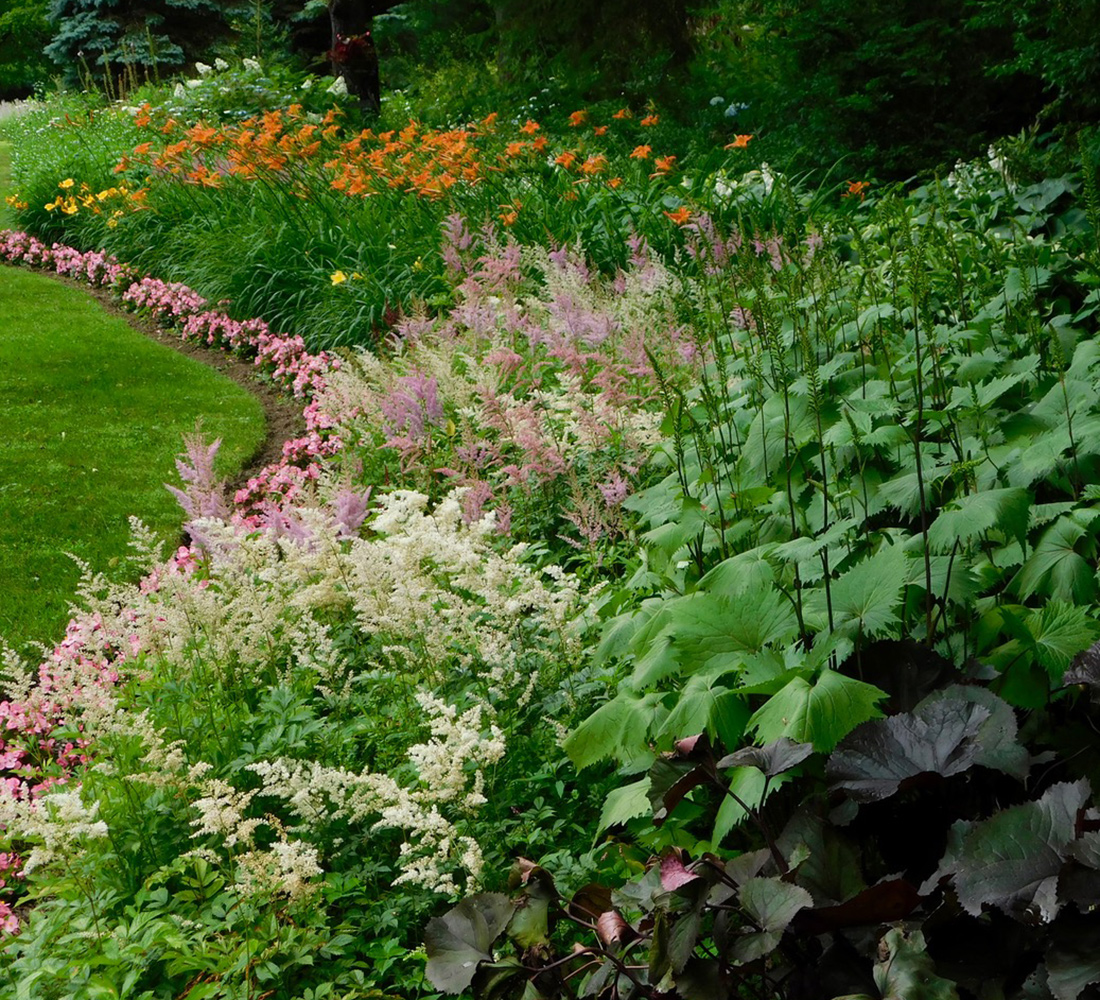
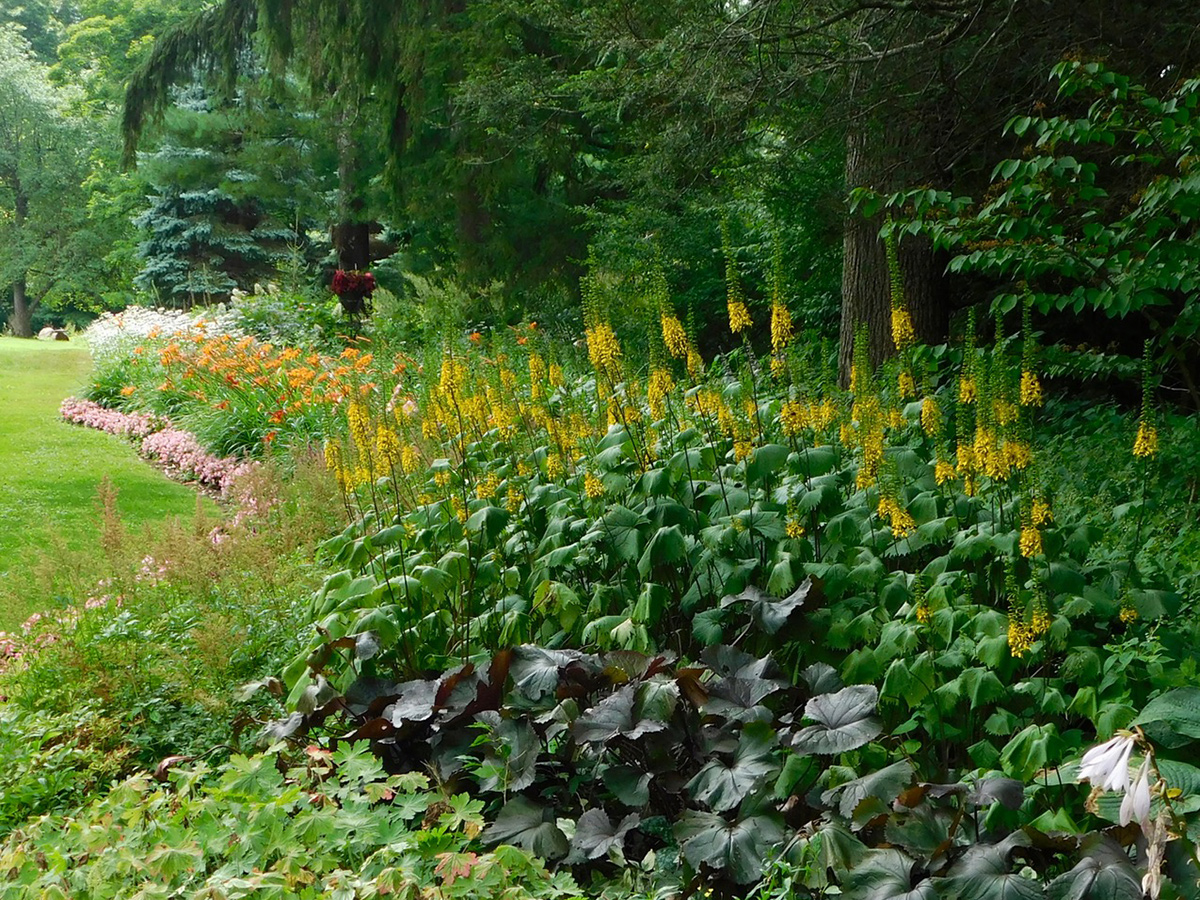
perennial border with lots of astilbesThe next 3 photos are from mid-June to mid-July. A perennial border subtly changes in blooms, from astilbes to lilies to ligularia.

long perennial border with summer flowersAs summer progresses, Heidi’s gorgeous mix of astilbes slowly starts to fade as her large mass of ligularia prepare to bloom.

perennial border with mass planting of ligulariaBy mid-July the ligularia have started opening their vibrant mustard-yellow flowers. What began as a lush cluster of green leaves is now a sea of complementary blooms to the orange lilies we see in the background.

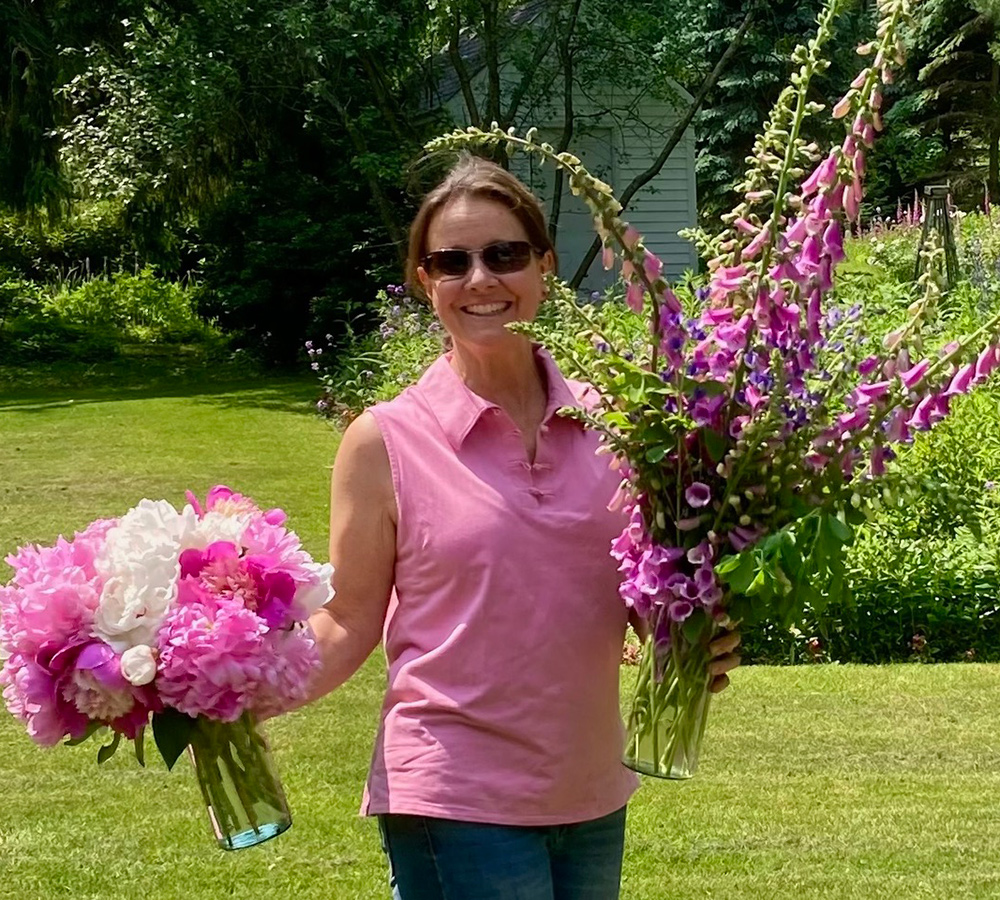
gardener with two vases of cut flowersGarden-cut flowers: peonies and foxgloves (Digitalis purpurea, Zones 4–9) in late May and June

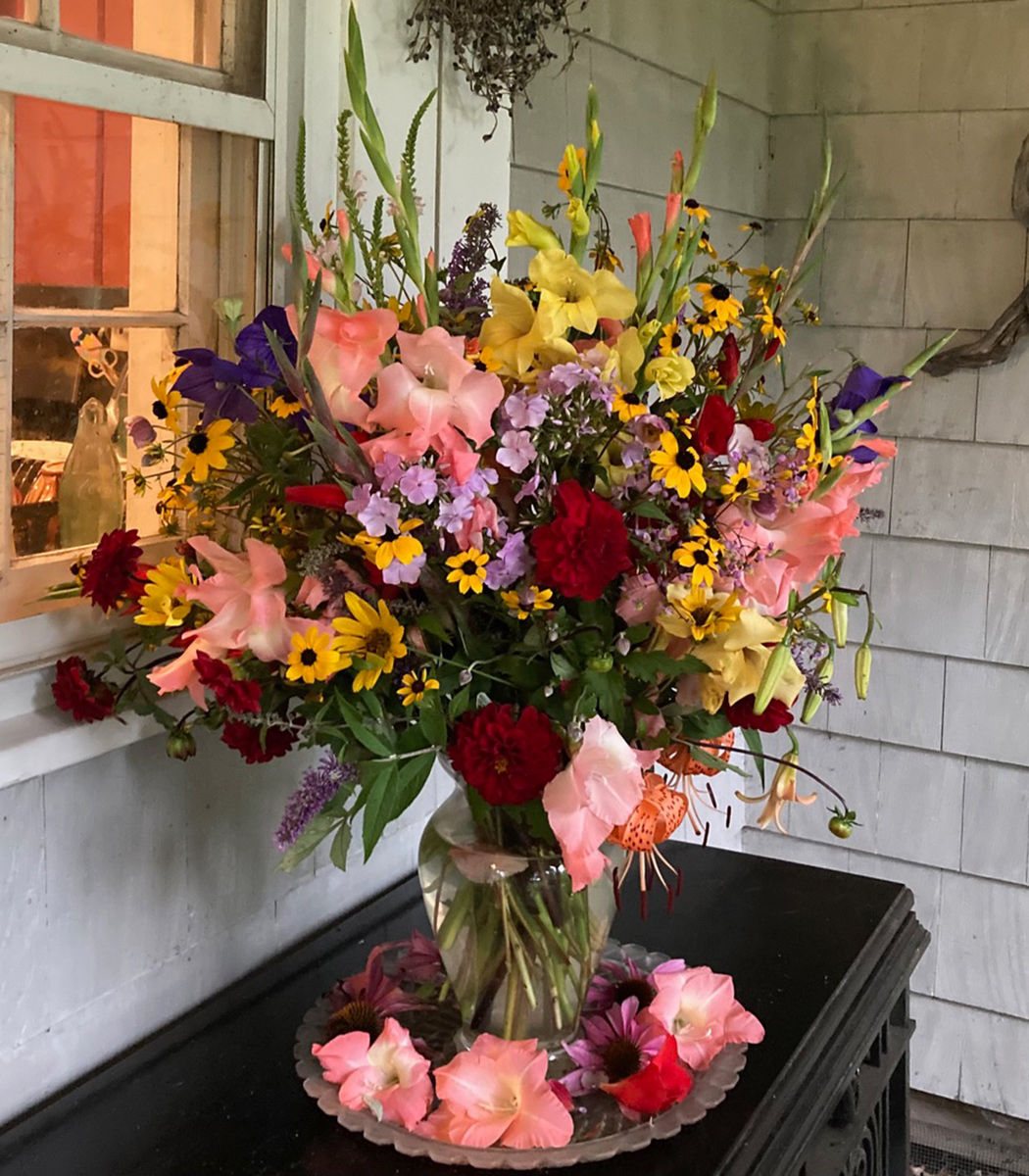
large flower bouquet in glass vaseDahlias, gladiolus, phlox, and rudbeckia in July–August

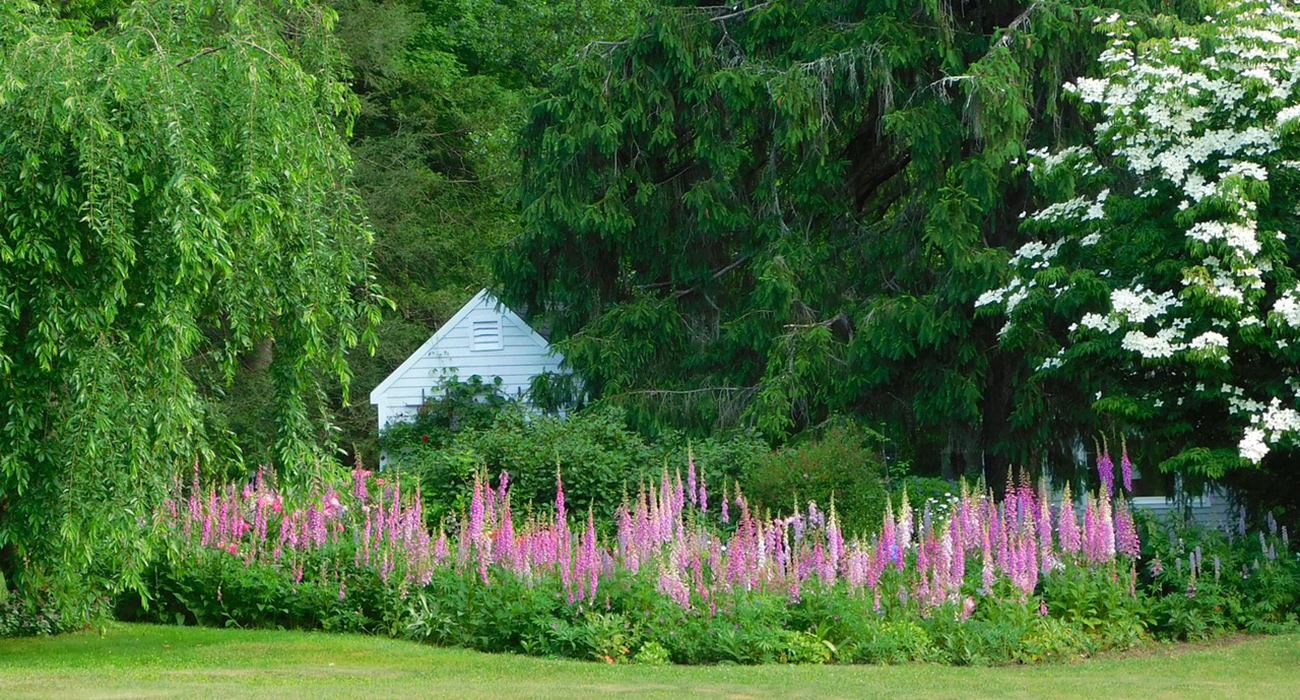
border of pink foxglovesLastly are photos of a foxglove border in June . . .

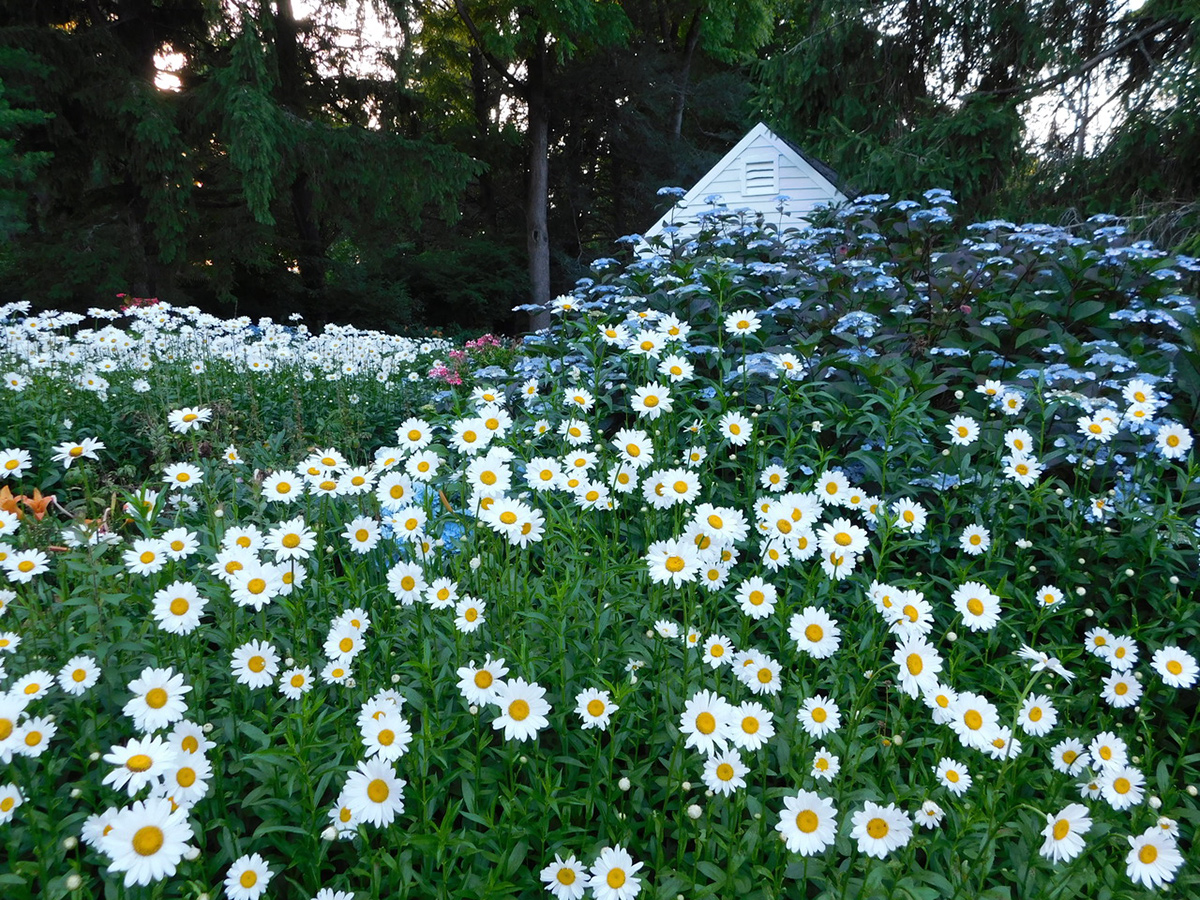
border of daisies and hydrangeas. . . that transforms to lacecap hydrangea and Shasta daisies (Leucanthemum x superbum, Zones 4–9) in July. Happy gardening!

Thank you for another marvelous tour through your flower gardens, Heidi! From your long borders of endless blooms to the containers that give you more opportunities for color, your landscape is a candy store for any floral fanatic!

What were your favorite flowers this season? Did daylilies delight during peak heat? Do hydrangeas never fail to make your heart flutter? Is there a native plant with flowers that deserve far more attention? Let us know in the comments, or send photos of your best blooms to Garden Photo of the Day! Follow the directions below to submit photos via email, or send me a DM on Instagram: @agirlherdogandtheroad.


We want to see YOUR garden!

Have photos to share? We’d love to see your garden, a particular collection of plants you love, or a wonderful garden you had the chance to visit!

To submit, send 5–10 photos to [email protected] along with some information about the plants in the pictures and where you took the photos. We’d love to hear where you are located, how long you’ve been gardening, successes you are proud of, failures you learned from, hopes for the future, favorite plants, or funny stories from your garden.

Have a mobile phone? Tag your photos on Facebook, Instagram, or Twitter with #FineGardening!

Do you receive the GPOD by email yet? Sign up here

Herb-Roasted Acorn Squash

0


Herb-Roasted Acorn Squash


Privacy & Cookies Policy

Healthy Spiced Apple Crisp Recipe (Grain-Free)

0

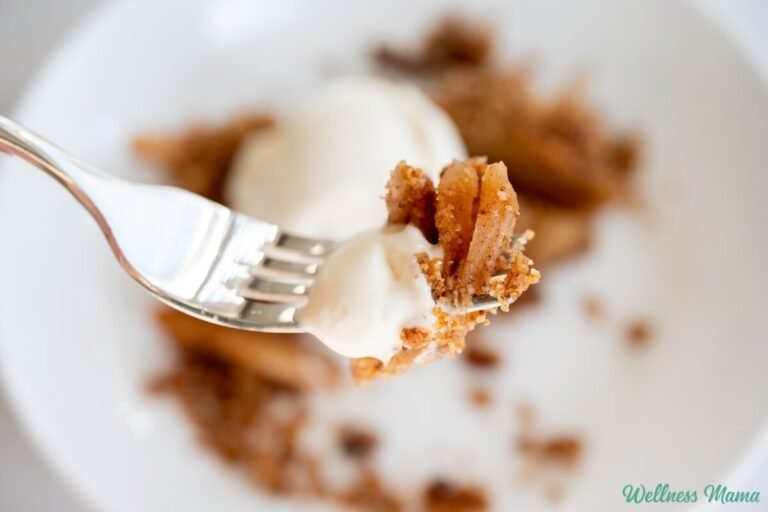
I’m a fan of all things fall, but pumpkin spice can get old after a while. This delicious, healthy apple crisp recipe features sweet and tart apples, fragrant apple pie spice, and a melt in your mouth crunchy topping. All of the flavors you could want on a cool autumn day.

Most of us grew up with apple pie, apple crisp, and apple cobbler. These classic dishes tasted so good, but they were also absolutely packed with sugar! This updated version still has all the flavors you love about the original apple crisp, but it’s naturally sweetened and grain-free.

The (not so) secret ingredient is my homemade apple pie spice. Once you have a batch mixed up (it’s earned a permanent place in my pantry!), it’s really easy to flavor your apple crisp. Or pancakes, or muffins, or anything else you want to add some delicious fall flavor to.

Healthy Apple Crisp Ingredients

Apple crisp typically has oats, but not always. Sometimes the terms apple crisp and apple crumble are used interchangeably and many of the ingredients overlap. All you really need to know though is that this apple crisp tastes amazing!

Instead of regular flour and oats it uses almond flour and coconut flour. These give the crumble topping a nice crunch without the grains. The toasted pecans also add to the crunchy, nutty flavor. It’s naturally sweetened with coconut sugar and maple syrup, but if you can find maple sugar it really amps up the fall flavor.

How to Make Toasted Pecans

You can use raw pecans, but toasting them really adds another depth of flavor. There are several methods, but I find the stovetop method the easiest. Nuts start to burn quickly once they’re toasted, so be sure to keep a close eye on them!

  • Heat a skillet to medium low heat.
  • Add the pecans and stir continually until they smell nutty and fragrant, about 1-2 minutes.
  • Immediately remove pecans from the pan.

And here’s how to make a delicious and healthy apple crisp recipe that’s perfect for company or everyday dessert!

Healthy Apple Crisp

This apple crisp recipe is a healthy twist on the classic comfort food. Made with apple pie spice, it’s as convenient as it is delicious!

  • 7 medium sweet-tart apples (fuji, honeycrisp, pink lady, etc.)
  • ¼ cup apple cider or juice
  • 1 TBSP maple syrup (more if your apples are very tart)
  • 1 ½ TBSP lemon juice
  • 1 ½ tsp apple pie spice
  • tsp salt
  • 3 TBSP unsalted butter (diced)
  • Position a rack in the lower third of the oven and preheat the oven to 350ºF.

  • Peel and core the apples. Cut into thin slices, about ?-inch thick.

  • In a large bowl combine the apples, apple cider, maple syrup, lemon juice, apple pie spice, and salt. Stir to coat.

  • Spread the apples into a 9-inch round baking dish with 2-inch high sides or an 8×8-inch square pan. Dot with cubed butter.

  • Bake until bubbling, about 30–35 minutes. Stir gently.

For the crumble topping

  • While the apples bake, prepare the topping. In a bowl, combine almond flour, coconut flour, nuts, coconut sugar, apple pie spice, and salt.

  • Stir in the melted butter until the mixture resembles coarse crumbs.
  • Crumble topping evenly over the partially baked apples.
  • Return to the oven and bake until the topping is deep golden and the apples are bubbling, 40–50 minutes (check after 25 minutes, as ovens vary).
  • Let cool for at least 10 minutes before serving. The topping will crisp as it cools.

Nutrition Facts

Healthy Apple Crisp

Amount Per Serving (1 serving)

Calories 455
Calories from Fat 270

% Daily Value*

Fat 30g46%

Saturated Fat 12g75%

Trans Fat 1g

Polyunsaturated Fat 2g

Monounsaturated Fat 8g

Cholesterol 42mg14%

Sodium 179mg8%

Potassium 294mg8%

Carbohydrates 48g16%

Fiber 9g38%

Sugar 32g36%

Protein 5g10%

Vitamin A 612IU12%

Vitamin C 12mg15%

Calcium 64mg6%

Iron 1mg6%

* Percent Daily Values are based on a 2000 calorie diet.

What are some of your favorite ways to eat apples? Leave a comment and let us know!