41 F
Klamath Falls
Saturday, March 14, 2026
Home Blog Page 91

17 Christmas Flower Arrangement Ideas

0

You don’t need a florist skill to decorate your home for this holiday. A combination of fresh amaryllis, vibrant colored poinsettias and dried flowers along with green foliage are enough to make a wonderful Christmas flower arrangement.

To infuse the festive spirit into your home, start by choosing red and green colored flowers that captures the essence of Christmas. Roses, lilies, pinecones and holly plants can blend seasonal elements to your decoration.

Iconic plants like poinsettias, amaryllis and bleeding heart are essential addition to your Christmas flower arrangement ideas.

Adding metallic elements like gold dipped leaves and silver arrangements give a glamour touch your decoration.

Whatever the decoration is for, be it a small arrangement for side tablets or a center piece of attraction in your living room, it is crucial to balance the color, shape and texture to reflect the warmth of the festive season.

Decorating with flowers will not just be visually appealing but adds fragrance that escalate your holiday joy.

1. Classic Poinsettia Arrangements

poinsettias is Christmas flower

To create a stunning arrangement, pair poinsettias with seasonal greenery like pine or cedar branches for texture, and add accents like berries and pinecones for a rustic touch.

For a more glamorous look, combine white poinsettias with silver eucalyptus or sparkling ornaments. Use decorative baskets or gold vases to elevate their charm and place them where they can shine while avoiding drafts to keep them fresh throughout the season

Keep poinsettias away from drafts and water them sparingly. Arrange with evergreens like pine or cedar for added texture

2. Elegant White Amaryllis Centerpieces

Create a sophisticated holiday centrepiece using white amaryllis blooms as the star of the arrangement. Their large, trumpet-shaped flowers exude elegance and pair beautifully with soft, silver-dusted greens like eucalyptus.

For added dimension, place them in tall, sleek vases and incorporate accents such as glittering ornaments or frosted branches. These arrangements work wonderfully as dining table centrepieces or statement pieces for a holiday party.

Start planting amaryllis bulbs early to ensure they bloom by Christmas, and keep the soil moist but not overly wet. Add silver foliage or delicate white blossoms for a frosty, wintry look.

3. Holly and Ivy Table Runners

Enhance your holiday tablescape with a natural table runner made from lush holly leaves and elegant ivy vines. Incorporate small white flowers or baby’s breath to mimic the look of snowflakes, adding a delicate charm.

Arrange the greenery along the length of your table, securing it with floral wire for a neat appearance, and finish with candles or ornaments for a festive touch.

Use fresh greenery and mist lightly to keep it looking vibrant. Mix in berries or pinecones for added texture and holiday colors.

4. Festive Floral Wreaths

Create a stunning Christmas wreath by combining traditional evergreens like fir or pine with fresh flowers such as roses or carnations.

Incorporate pinecones, ribbons, and ornaments to complete the festive look. Hang the wreath on your front door or use it as a centerpiece by placing a candle in the middle.

Choose hardy flowers that can withstand cooler temperatures and secure them firmly. Add a bright red bow or metallic accents for extra holiday sparkle.

5. Mini Christmas Tree Floral Arrangements

Design a charming miniature Christmas tree using sprigs of rosemary, fir, or juniper. Arrange the greenery into a tree shape in a vase and decorate with small red roses, carnations, or even tiny ornaments. This arrangement is perfect for table tops or desks, adding a festive touch to any space.

Use florist foam or tape to help structure the tree. Add fairy lights or glittery decorations for a magical holiday look.

6. Rose and Pine Garland Staircase Decor

Dress up your staircase with a garland of fresh pine and red roses. Add festive elements like berries, gold ribbons, and fairy lights for a cozy, welcoming vibe.

Drape the garland along the banister, securing it with floral wire for a stable display.

Keep flowers hydrated with water tubes to maintain freshness. Combine with holly or magnolia leaves for extra richness.

7. Orchid and Winter Greenery Mantelpiece

Bring elegance to your fireplace mantel with orchids paired with lush winter greenery. The orchids’ unique blooms contrast beautifully with seasonal elements like magnolia leaves, pine branches, or eucalyptus. Incorporate gold or silver accents for a luxurious holiday aesthetic.

Ensure orchids receive adequate light and avoid drafts. Add candles or metallic ornaments for an elevated look.

8. Window Box Blooms with Christmas Spirit

Transform your window boxes into festive displays using winter flowers like cyclamen, hellebores, and seasonal evergreens.

Accent with decorative elements like faux snow, berries, or ornaments to capture the Christmas spirit.

Choose hardy plants that thrive in cooler weather. Combine red and white blooms for a traditional holiday palette.

9. Frosted Hydrangea and Pine Cone Centerpieces

are eggshells good for hydrangeasare eggshells good for hydrangeas

Create a wintry centerpiece by combining white hydrangeas with frosted pinecones and silver foliage. Use a silver or mirrored tray as the base to enhance the frosty theme, and incorporate candles for a soft glow.

Spray pinecones with artificial snow or glitter for a frosted effect. Add touches of blue or icy gray for a modern winter look.

10. Christmas Flower Baskets

Fill woven baskets with an assortment of flowers like carnations, chrysanthemums, and lilies alongside seasonal greenery. Add festive accents like cinnamon sticks, dried oranges, or ribbon to complete the rustic holiday vibe.

Line baskets with floral foam to keep flowers hydrated. Incorporate holly or ivy for extra greenery.

11. Hanging Mistletoe and Floral Swags

Add charm to doorways or entryways with swags made of mistletoe, red berries, and small seasonal flowers. Wrap the stems in a burlap bow or ribbon for a natural yet festive look.

Lightly mist the mistletoe to keep it fresh throughout the season. Include sprigs of rosemary or thyme for a fragrant touch.

12. Festive Floral Chandeliers

Turn your chandelier into a holiday centerpiece by hanging greenery and flowers like roses, lilies, or mini poinsettias from it. Add small ornaments or ribbons for a fully festive display.

Use lightweight flowers and secure them with clear thread or wire. Incorporate fairy lights for a magical evening glow.

13. Holiday-Themed Flower Wall Installations

Create a dramatic holiday flower wall using red and white flowers, greenery, and festive decorations. Arrange them in patterns or layers for a stunning backdrop that’s perfect for holiday gatherings.

Use a mesh grid or chicken wire to securely hold the flowers in place. Add string lights for an enchanting touch.

14. Pine and Flower Table Lanterns

Place candles inside decorative lanterns and surround them with pine sprigs, red and white flowers, or berries. These lantern arrangements make beautiful centerpieces or accents for holiday tables.

Opt for fire-safe LED candles for worry-free decor. Add holly or cedar for a rich, textured look.

15. Rustic Mason Jar Floral Displays

Use mason jars as vases for festive arrangements of red and white flowers, pine branches, and cranberries. Tie a burlap or plaid ribbon around the jar for a cozy, farmhouse-style display.

Layer the jar base with cranberries or faux snow for added charm. Pair with miniature trees or pinecones for a complete rustic look.

16. Living Christmas Flower Advent Calendar

Create a living Advent calendar by adding a new flower, like holly, carnations, or ivy, each day leading up to Christmas. Secure flowers to a board or frame for a unique holiday decoration.

Choose long-lasting flowers that stay fresh for several days. Number each addition with decorative labels for a festive countdown.

17. Floral Christmas Stockings

Fill oversized stockings with fresh flowers like white lilies, red roses, and sprigs of evergreens for a creative holiday display. Hang them on the mantel or entryway for a unique festive touch.

Use water tubes to keep flowers fresh and vibrant. Include small sprigs of mistletoe or holly for added holiday cheer.

Conclusion

Nothing says Christmas quite like the beauty of fresh flowers in your holiday decor. Whether it’s the elegance of white amaryllis centrepieces, the cozy vibe of holly and ivy runners, or the fun twist of floral Christmas stockings, these ideas bring warmth and cheer to any space.

By mixing seasonal flowers with classic greenery and your own personal style, you can create decorations that make your home feel extra festive. So, let your creativity shine and enjoy the magic of the season with these beautiful floral touches!

Children’s hospitals brace for Medicaid cuts in Trump’s budget : Shots

0

Phoenix Children’s Hospital, pictured during the pandemic on April 15, 2020, stands to lose $172 million a year, its chief executive says.

Ross D. Franklin/AP


hide caption

toggle caption

Ross D. Franklin/AP

Republicans insist that President Trump’s cuts to Medicaid were aimed at reducing fraud and getting more of its adult beneficiaries into jobs. But the side effects may include less care for sick kids.

Some children’s hospitals collectively stand to lose billions of dollars in revenue once Trump’s wide-ranging tax and spending law is fully enacted, according to the Children’s Hospital Association. Kids account for nearly half of enrollees in Medicaid, the state and federally financed health insurance for low-income and disabled people, and the related Children’s Health Insurance Program.

The law will cut federal Medicaid spending by about $900 billion over a decade.

The reduction “cannot be achieved without directly affecting coverage and care for Arizona’s kids, especially the most vulnerable among them,” said Robert Meyer, chief executive of Phoenix Children’s, a pediatric hospital system. About half the system’s revenue comes from Medicaid.

Trump’s law locks into place much of his domestic agenda, including a massive expansion of immigration enforcement and an extension of tax cuts that largely benefit the wealthiest Americans. The cuts to Medicaid are expected to partially offset the cost of the president’s priorities, which will add more than $3 trillion to the nation’s deficit, according to the Congressional Budget Office. About 7.5 million Americans will lose Medicaid coverage by 2034 as a result, the CBO estimates.

Throughout debates over the measure, Republicans insisted the Medicaid cuts would affect only nondisabled adults enrolled in the program who don’t work and immigrants living in the U.S. without legal status.Our legislation preserves Medicaid, strengthens Medicaid for the people who actually need it and deserve it,” House Speaker Mike Johnson said June 1 on NBC News’ Meet the Press. “And we’re going to get rid of the fraud, waste, and abuse.”

Meyer, though, warned that unless some cuts are reversed, Phoenix Children’s would lose about $172 million a year in payments that supplement the health system’s regular Medicaid revenue, for treating low-income children covered by the insurance. Medicaid typically pays lower rates for care than commercial insurance or Medicare, the federal program for people age 65 and older.

Cuts would mean “long-term headwind” for hospitals

The supplemental payments, known as state-directed payments, are financed largely by federal taxpayers through complicated tax arrangements adopted by nearly all states. The payments have helped the Phoenix system open additional pediatric clinics, increase mental health staffing, and screen children for abuse and other trauma, Meyer said.

A provision of Trump’s law would cap the amount of directed payments states could make to any hospital, including those for children. But the cap, which doesn’t take effect until 2028, will be phased in over a decade — and hospitals are already lobbying to ensure that never happens. Days after voting for Trump’s law, Sen. Josh Hawley, R-Mo., introduced legislation that would eliminate provisions of the measure cutting Medicaid payments to hospitals.

If the law isn’t changed, at least 29 states would need to reduce their payments, according to an analysis by KFF, a health information nonprofit that includes KFF Health News.

The extra Medicaid funds, on average, make up more than a third of children’s hospitals’ total Medicaid revenue and about 14% of their operating revenue overall, according to the Children’s Hospital Association.

Richard Park, a director at Fitch Ratings, a credit rating agency, said the Medicaid funding cuts present a “long-term headwind” for children’s hospitals. Hospital officials say that if the payments are cut and states don’t replace the funding, they could be forced to cut staff and services.

“Services the hospitals provide that require longer admissions or bring in less revenue are going to be in the crosshairs, for sure,” Park said.

Children’s hospitals are especially vulnerable to changes in Medicaid because they count on the program for about half their revenue — a much higher proportion than general acute-care hospitals do.

Most children’s hospitals are in good financial condition, however, because they face little competition — there are seldom more than one or two in a metropolitan area — and strong philanthropic support. And the funding cuts won’t affect all the nation’s approximately 200 children’s hospitals.

In 2023, Phoenix Children’s had a $163 million surplus on nearly $1.5 billion in revenue, according to its 2023 IRS tax return.

Under the law, the extra payments in the District of Columbia and 40 states that expanded Medicaid under the Affordable Care Act would be capped at Medicare payment rates. The 10 states that didn’t expand would be able to pay up to 110% of Medicare rates.

The Biden administration had allowed states to pay as much as private insurers do, on average. That’s generally about 2.5 times the Medicare rate, according to KFF.

Medicaid’s traditionally low fees to health providers can make doctors, dentists, and other specialists reluctant to treat patients in the program.

Brian Blase, president of the conservative Paragon Health Institute and a key architect of Medicaid changes in the new law, said cutting state-directed payments is justified because states should not pay hospitals more to treat Medicaid patients than they do for Medicare patients. Unlike regular Medicaid payments for specific health services, hospitals are not always held accountable for how they spend the extra money, he said.

He said state-directed payments to children’s hospitals and other facilities amount to “corporate welfare,” often helping financially strong institutions get richer.

Variations state to state: Virginia, Texas, Arizona

Blase said states have little incentive to pay hospitals less because the money from state-directed payments comes mostly from federal taxpayers.

In Norfolk, Va., Children’s Hospital of The King’s Daughters depends on more than $11 million annually in state-directed payments to make up for what it says is a shortfall between Medicaid’s low reimbursement rates and the cost of advanced care.

The cuts to Medicaid in Trump’s law “will have serious and far-reaching consequences to our services, programs, and patients,” spokesperson Alice Warchol told KFF Health News. “Medicaid supplemental funding helps us pay for the highly specialized pediatric medical, surgical, and psychiatric physicians that are needed to care for every child who needs our services.”

In fiscal year 2023, King’s Daughters had a $24 million surplus on $646 million in revenue, according to its federal tax return.

King’s Daughters has used the extra Medicaid money to expand treatment for abused and neglected children and mental health services, Warchol said.

How states account for the extra payments made to hospitals varies. For instance, Utah Medicaid Director Jennifer Strohecker said her state does not track how the money gets spent.

Other states, such as Texas, use the money as an incentive for hospitals to improve their performance in treating patients. They track how well the facilities do each year and publish the findings in public reports.

Matthew Cook, president and chief executive of the Children’s Hospital Association, said that even with the extra funding, Medicaid doesn’t cover the full cost of treatment for its patients.

While some children’s hospitals have strong balance sheets, boosted by philanthropy, that is not the case for all, Cook said. And the Medicaid funding cuts come on top of reductions in other federal payments, including for training doctors and research, he said.

At Phoenix Children’s, Meyer said, the loss of extra funding would curtail expansions of care for children and growth of the hospital’s workforce. The hospital hopes Congress delays or reverses the cuts — but it’s not counting on it, he said.

“We see this grace period as a godsend to get ourselves ready to close the funding gap,” he said.

13 of the Best Scary-Looking Plants for Halloween and Beyond

0

Why spend the money on a bunch of flimsy plastic Halloween decorations when you could just grow your own?

Nature is full of plants with creepy colors, twisting vines, and spiky stems.

Some devour whole insects or are viciously aggressive towards other plants, others are associated with bizarre history and scary stories.

Take your decor up a notch this Halloween and try decorating your home and yard with a collection of spooky plants!

A horizontal image of a spooky house on Halloween with lots of carved pumpkins in the foreground creating a creepy scene.

We link to vendors to help you find relevant products. If you buy from one of our links, we may earn a commission.

Check out our list of 13 eerie plants sure to give you the heebie-jeebies this October!

Here’s the lineup:

13 Creepy, Spooky Plants for Halloween and Beyond

1. Bat Flower

Easy to grow indoors as a houseplant, the bat flower (Tacca chantrieri) is an unusual deep purple tropical bloom, with ruffled winglike petals and long hanging whiskers.

It kind of resembles a bat in flight. This species is also known as devil flower and cat’s whiskers.

A close up horizontal image of a bat flower growing in the garden pictured on a soft focus background.A close up horizontal image of a bat flower growing in the garden pictured on a soft focus background.

Native to tropical rainforests in Southeast Asia, this species will grow wild in shady areas with high humidity.

Plus the incredible flowers can grow up to a foot wide, with whiskers up to 28 inches long!

Packets of seeds are available for purchase from Seedville via Amazon.

2. Black Elephant Ears

Colocasia esculenta is a striking tropical perennial with massive black and purple heart-shaped leaves that can grow to be a foot wide and reach three feet in length.

A close up horizontal image of large black colocasia growing in the garden pictured on a soft focus background.A close up horizontal image of large black colocasia growing in the garden pictured on a soft focus background.

If you are looking for a striking display of darkness this Halloween, the cultivar ‘Black Magic’ is the way to go.

Hardy to Zones 8 and up, elephant ears can easily be grown indoors in colder zones as well – as long as you can find a spot with high humidity and indirect sunlight.

Just keep this in mind: it can be massive!

Bulbs are available at Eden Brothers in packets of one or three.

3. Cobra Plant

Also known as the California pitcher, the cobra plant (Darlingtonia californica) is a carnivorous species that can grow up to three feet in height.

A close up horizontal image of the carnivorous cobra plant pictured on a black background.A close up horizontal image of the carnivorous cobra plant pictured on a black background.

It has tubelike leaves that expand at the end like a hood, and the forked protuberances make it look like a cobra with fangs out, ready to strike!

Try to grow this one if you dare. Recommended for experienced growers of carnivorous plants, it is finicky, requiring fairly specific growing conditions.

You can learn more about growing pitcher plants here.

4. Cockscomb

Cockscomb (Celosia cristata) is an easy-to-grow annual with showy, fuzzy, blood-red flowers that bear a striking resemblance to brains.

A close up horizontal image of a red cockscomb flower blooming in the garden surrounded by foliage.A close up horizontal image of a red cockscomb flower blooming in the garden surrounded by foliage.

You can also find cultivars available in pink, orange, yellow, green, and white.

While they flower outdoors in late summer and early fall, they are also easy to grow indoors for your Halloween display!

You can find seeds for ‘Red Velvet Cake,’ a cultivar with intense dark-red flowers, from Burpee.

For detailed information about cockscomb, check out our celosia growing guide.

5. Corpse Flower

As its name suggests, the corpse flower (Amorphophallus titanum) smells like death when it is in bloom. Some have described the scent as something akin to rotting meat or trash.

A close up vertical image of a purple corpse flower in full bloom growing in the garden, with trees and shrubs in the background.A close up vertical image of a purple corpse flower in full bloom growing in the garden, with trees and shrubs in the background.

The disgusting scent is meant to imitate that of a dead animal, to attract pollinators such as dung beetles and flesh flies that normally feed on rotting flesh.

You will need to be patient if you want to experience the full display of a corpse flower as it can take seven to 10 years for a bloom to appear!

6. Devil’s Walking Stick

In addition to its spooky name, this large deciduous shrub (Aralia spinosa) is armed with sharp spiky stems, leaf stalks, and branches, and topped with a crown of giant compound leaves.

It produces clusters of dark purple or black berries in the fall.

A close up horizontal image of the vicious thorns of the devil's walking stick pictured on a soft focus background.A close up horizontal image of the vicious thorns of the devil's walking stick pictured on a soft focus background.

While it may look otherworldly, devil’s walking stick is native to much of eastern North America, growing naturally in disturbed areas along the edges of forests.

This species makes an effective defensive plant as well, keeping out unwanted visitors.

Devil’s walking stick is easy to transplant or propagate by division or from seed.

7. Ghost Plant

Also known as Indian pipe or corpse plant, this scary succulent (Monotropa uniflora) contains no chlorophyll, causing it to appear totally white in color.

A close up horizontal image of a white ghost plant growing on the forest floor, surrounded by dead leaf litter and pine needles.A close up horizontal image of a white ghost plant growing on the forest floor, surrounded by dead leaf litter and pine needles.

Because it doesn’t need light to grow, it can survive in even the darkest of places. What’s more, it is parasitic, stealing nutrients from neighboring species through its roots.

Since it is unable to photosynthesize, the ghost plant is dependent on specific fungi, trees, and decaying plant matter in the soil to live.

It can be found growing in the wild in damp, cool soils, often near beech trees.

Pumpkin Blondies

0


Pumpkin Blondies


Privacy & Cookies Policy

Wendy’s Mature Garden in Pennsylvania, Part 1

0

Happy Monday, GPODers!

Today we’re returning to Wayne, Pennsylvania, to Wendy Quereau’s stunning garden. It has been a little while since we’ve gotten an update on Wendy’s diverse designs, but we’ve enjoyed scenes from her beds and borders several times over the years, and there is always something new to admire (check out some of her previous submissions for a refresher: Beauty from Wendy’s Garden, Wendy’s Pennsylvania Garden, A Garden Full of Favorites, Still Gardening, and more). She’s back to share how her nearly 50-year-old garden continues to evolve and grow.

Many of you have seen my garden of 47 years before. There were only a few large deciduous trees here when we started trying to create a pleasure garden from masses of weeds and poison ivy.

A mature garden like mine presents its own problems. Namely, some plants need to be replaced from decline, and it is necessary to prune, edit here and there, and then prune some more. On the bright side, I well remember impatiently waiting for all the tiny plants to grow, feeling like it would never fill in. Before you know it, you’re part of a jungle-like atmosphere—especially if self-control in garden centers eludes you.

My garden is on one overplanted acre, which contains both sun and shade. Now, in August, my little woodland has gone quiet, and I rely on sun perennials to provide a bit of pizazz to see me through until the blaze of fall color arrives. I always keep low maintenance in mind as I move toward adding shrubs for color and texture to replace the work of perennial and annual flowers.

I have help three days a year. That professional work includes spring cleanup, edging and mulching, summer pruning of shrubs and trees, and carting away masses of leaves in the fall. There are far too many leaves to shred and replace back into the beds. Sacrifices which defy cultural recommendations must be made to be able to continue caring for my garden on my own as I approach age 80. Yikes!

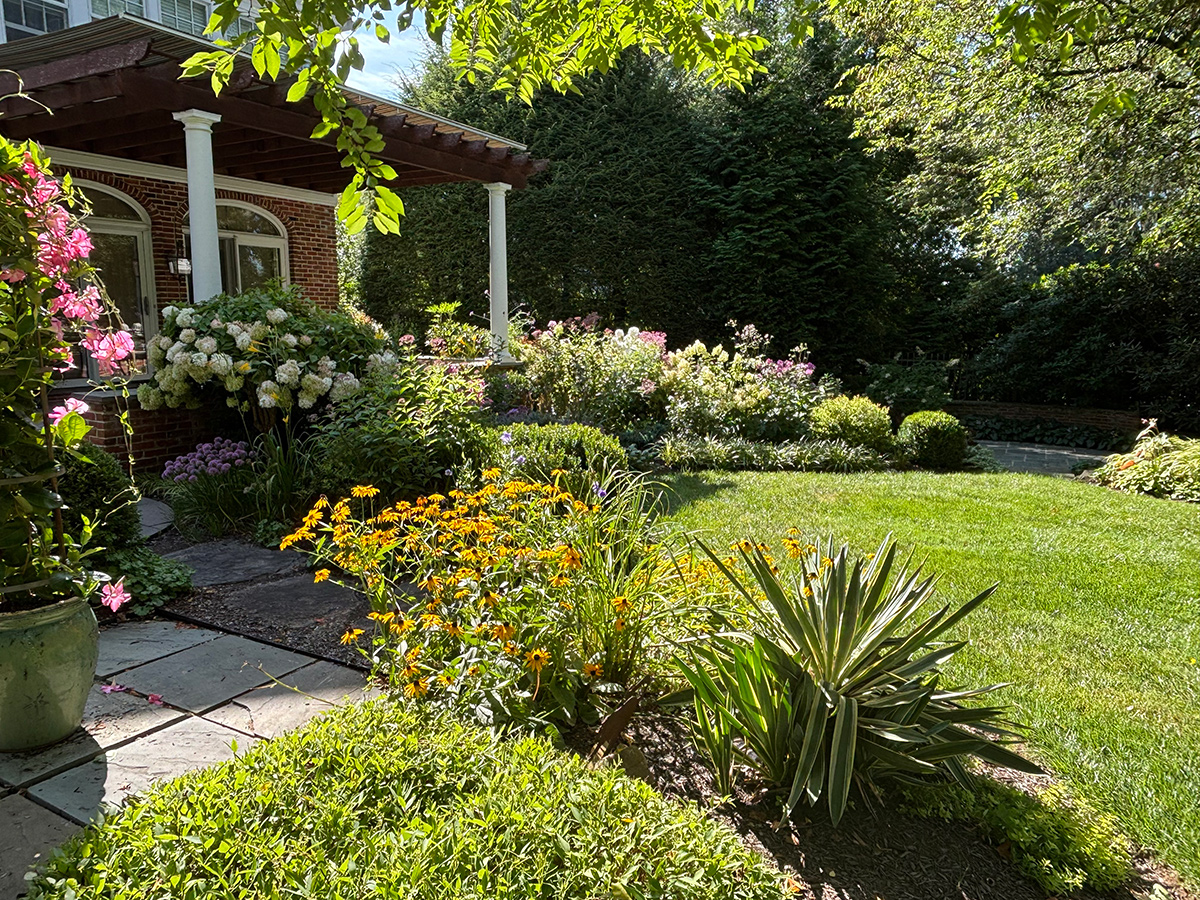
West-facing perennial garden against patio wall: The attempt is to provide interest in all seasons.

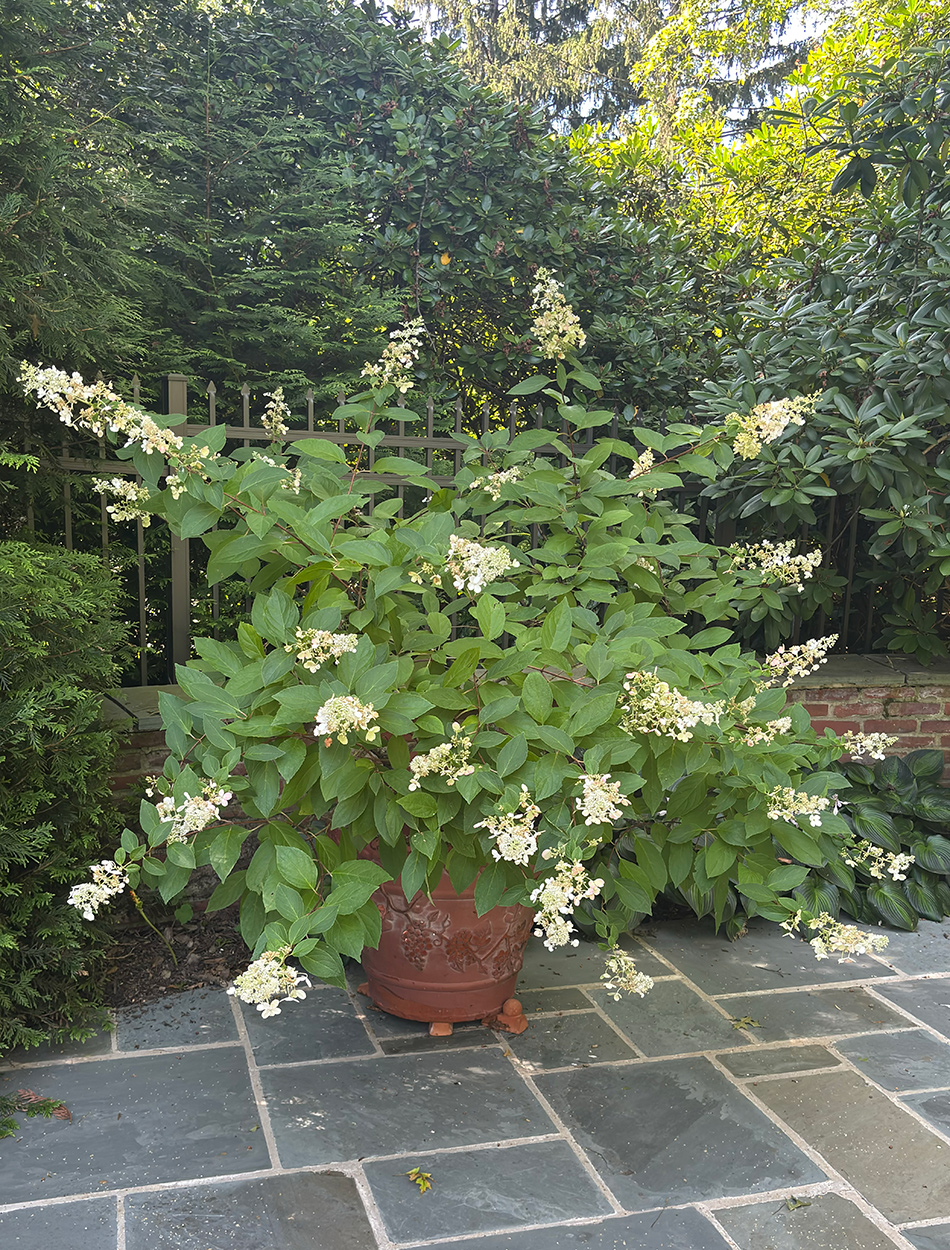
panicle hydrangea in pot‘Pinky Winky’ panicle hydrangea (Hydrangea paniculata ‘DVP PINKY’, Zones 3–9) in a frost-free container. It softens the expanse of the bluestone patio floor with little work involved. I cut back all its branches to 12 inches in early March. The shrub is 10 years old with no hardiness issues. Mulch, fertilizer, and keep well-watered. Sun and shade mix here.

woodland path in the summerThis circuitous woodland path shines in April, when drifts of wildflowers are in full bloom. Morphs into a sea of green in summer.

pink flowers in front of hydrangeasThis part of my perennial garden is encouraged to intermingle for a less structured appearance. Here, ‘Bobo’ panicle hydrangea (H. paniculata ‘ILVOBO’, Zones 3–9), pink phlox, and anemone mix together. Not shown, but another good player in this combo is ‘ Little Joe’ Joe Pye weed (Eutrochium dubium ‘Little Joe’, Zones 3–9), which stays at 5 feet in height.

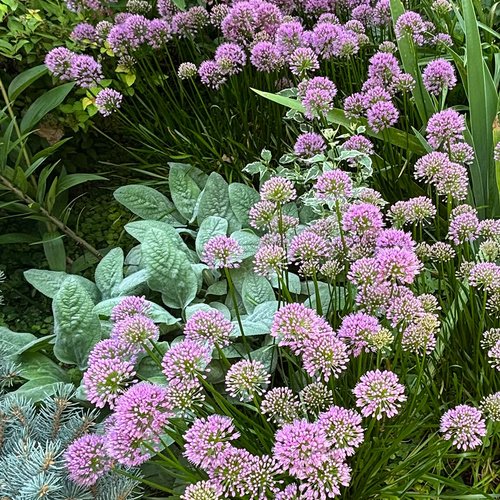
allium with lamb's earI’m trying for a riverlike drift of ‘Millenium’ allium (Allium ‘Millenium’, Zones 5–8) shown here, combined with the blue-gray of ‘Helen von Stein’ lambs’ ears (Stachys byzantina ‘Helen von Stein’, Zones 4–9), and a Globosa blue spruce (Picea pungens ‘Globosa’, Zones 2–8). The sword-shaped foliage of iris contrasts well with the rounded shape of the allium heads.

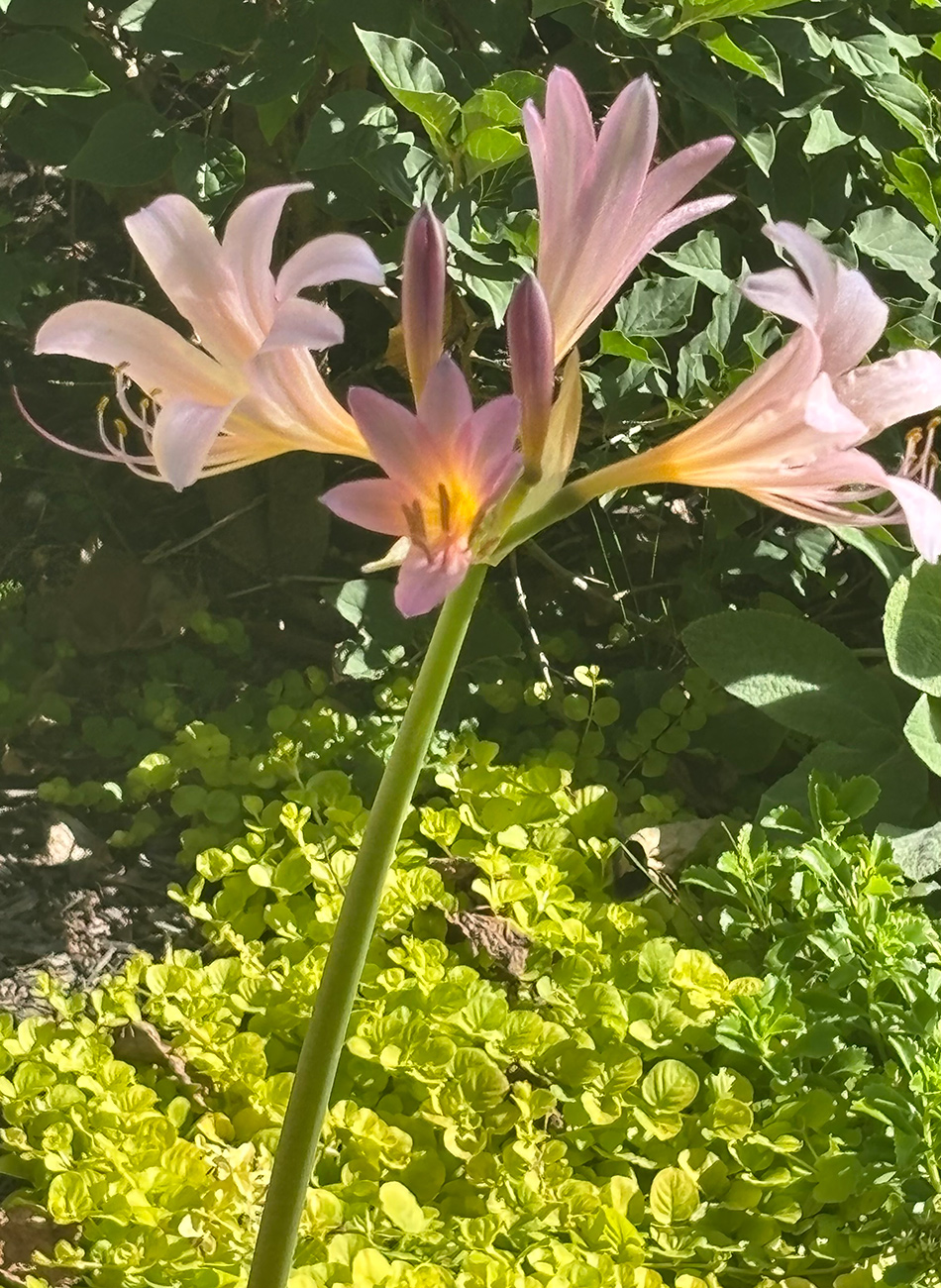
chartreuse foliage around Surprise lilyFrom a large mushy mass of spring foliage that thankfully disappears, a disappointing lonely single stalk of surprise lily (Lycoris squamigera, Zones 5–9) emerges in August. It is indeed a surprise, as it appears in one day and lasts for about 10 days.

Wendy shared so many sensational scenes and captivating combinations that I have more photos to share tomorrow. Keep an eye on your inbox so you don’t miss our return to Pennsylvania for installment 2 of Wendy’s garden update.


We want to see YOUR garden!

Have photos to share? We’d love to see your garden, a particular collection of plants you love, or a wonderful garden you had the chance to visit!

To submit, send 5–10 photos to [email protected] along with some information about the plants in the pictures and where you took the photos. We’d love to hear where you are located, how long you’ve been gardening, successes you are proud of, failures you learned from, hopes for the future, favorite plants, or funny stories from your garden.

Have a mobile phone? Tag your photos on Facebook, Instagram, or Twitter with #FineGardening!

Do you receive the GPOD by email yet? Sign up here

Got hypertension? Millions of Americans can slash stroke and dementia risk. Here’s how. : Shots

0

J Studios/Getty Images/Digital Vision

By age 40, more than half of Americans have high blood pressure, but many are unaware of it. Hypertension has long been known as the silent killer. When it’s left untreated it can be deadly. And it’s considered a silent threat since most people have no symptoms. You can’t feel the pressure in your blood vessels increasing.

New recommendations from the American Heart Association aim for early treatment, including lifestyle changes and medications, once systolic blood pressure rises above 130/80 mm Hg, (which stands for millimeters of mercury, a measure of pressure). Experts say it’s clear that the sooner you take action, the more you can protect yourself.

Hypertension is a leading cause of heart disease, which is the #1 cause of death of both men and women in the U.S. High blood pressure also increases the risk of kidney disease and dementia. And, research shows that hypertension can lead to damage in small blood vessels in the brain, which is linked to cognitive decline.

“There’s a really enormous preventive health opportunity in treating hypertension earlier,” says Dr. Jordana Cohen, a nephrologist and hypertension specialist at the University of Pennsylvania. She says millions of adults in the U.S. could benefit from medications and lifestyle changes.

“If you catch it early, and treat it early, you can end up with many more years of healthy life expectancy,” Cohen says, pointing to a reduced risk of heart attacks, strokes, kidney damage and dementia.

The new guidelines point to decades old advice about the benefits of a low-sodium diet, which can be challenging to follow, given more than half the calories consumed in the U.S. come from ultra-processed foods, which tend to be high in salt.

The new guidelines also emphasize lifestyle strategies including exercise, limiting alcohol consumption, and stress reduction in the form of meditation, yoga, or deep breathing. For people with systolic blood pressure ( the upper number) in the 130s, the recommendation is to start with these diet and lifestyle-related changes, then move to medication if blood pressure doesn’t improve.

For people who hit the risky range of a systolic blood pressure of 140 or higher, which is considered stage 2 hypertension, evidence shows starting on high blood pressure medications is beneficial.

“For all people with a blood pressure over 140/ 90, mm Hg, we recommend beginning with two medications,” Dr. Dan Jones, chair of the guideline writing committee at the Heart Association, told NPR. Research shows one medication alone is often not enough to lower blood pressure to the optimal range, he says.

Jones says even when people are aware they have hypertension, more than half don’t manage to lower it to the normal range, which is 120 /80 mm Hg or lower. Some of the challenges include side effects of the medications and individual differences in how well the medication works, as well an unwillingness to take medicines among some people. In addition, some people struggle the everyday hurdles of making lifestyle changes. Jones points out that healthcare providers also use a risk calculator to estimate a person’s individual risk of heart disease, as part of a treatment plan.

When George Solomon was told about the risks of high blood pressure he was hesitant to take medications. “I felt fine,” he says. Then, at age 63, he had a stroke.

Solomon had retired from a career in law enforcement, and was settling into a new routine, making time for exercise and hobbies, such as splitting wood on his farm. One day in the spring of 2023, he started to feel off.

” I went upstairs to watch TV, and when I sat down in the chair, I couldn’t get back up. I had a sensation that came up across my back,” he recalls and he lost feeling in his arm and leg. An ambulance took him to Duke University Hospital, near his home, where he underwent treatment and rehab for a stroke.

He estimates that he’s now about 80% recovered, and back to exercising and working on his farm. He realizes now that he needs healthy lifestyle habits and medications to prevent another stroke.

” I feel I’m on the right path ,” he says. He’s lost weight and he’s doing more cardio and strength training. He’s sharing his story in hopes it encourages others to take action.

Medications: what’s out there, what’s coming

There are several types of medications used to treat hypertension. They include diuretics that help the body get rid of extra salt and water, ACE inhibitors that help block the production of a hormone called angiotensin II, and help relax the blood vessels and calcium channel blockers that slow down the movement of calcium into cells, which can help lower pressure.

But many people with hypertension don’t get enough reduction with current medications, and University of Pennsylvania’s Cohen says there’s a lot of interest in a new class of medication that works by targeting the hormone aldosterone, which helps regulate fluid and sodium in the body. Too much of the hormone is one cause of high blood pressure. The drug is not yet on the market, but new study results could pave the way for a new treatment option.

“In hypertension, we haven’t seen anything new that’s effective since the nineties,” Cohen says. So another tool in the toolkit for treatment could be beneficial, she says.

A study published in the New England Journal of Medicine found the aldosterone blocking drug, known as baxdrostat, was effective in lowering blood pressure in many people who have difficulty controlling their hypertension.

The study included about 800 people who, despite taking two or three medications, still had not lowered their blood pressure to the normal range. “What we saw is that after 12 weeks of treatment, there was about a ten point improvement in blood pressure in the patients treated with baxdrostat, over the placebo effect, Dr. Jennifer Brown, a cardiologist at Brigham and Women’s Hospital, who is one of the researchers behind the study, told NPR. The study was sponsored by drugmaker Astra Zeneca, which plans to share its data with regulatory authorities by the end of the year.

A 10 point drop in systolic blood pressure is linked to about a 20% reduction in the risk of heart attacks and strokes, and also a decreased risk of dementia.

How to Build a Brooder Box for Chicks?

0

You can’t describe the mixed experience of seeing chicks grow into a full-sized hen. They are quick learners, and easily understands their boundaries.

But first few weeks are critical and chicks can’t regulate their own body temperature. As they are vulnerable to drafts and predators, you as a chicken grower need to provide a safe and controlled environment with a brooder box.

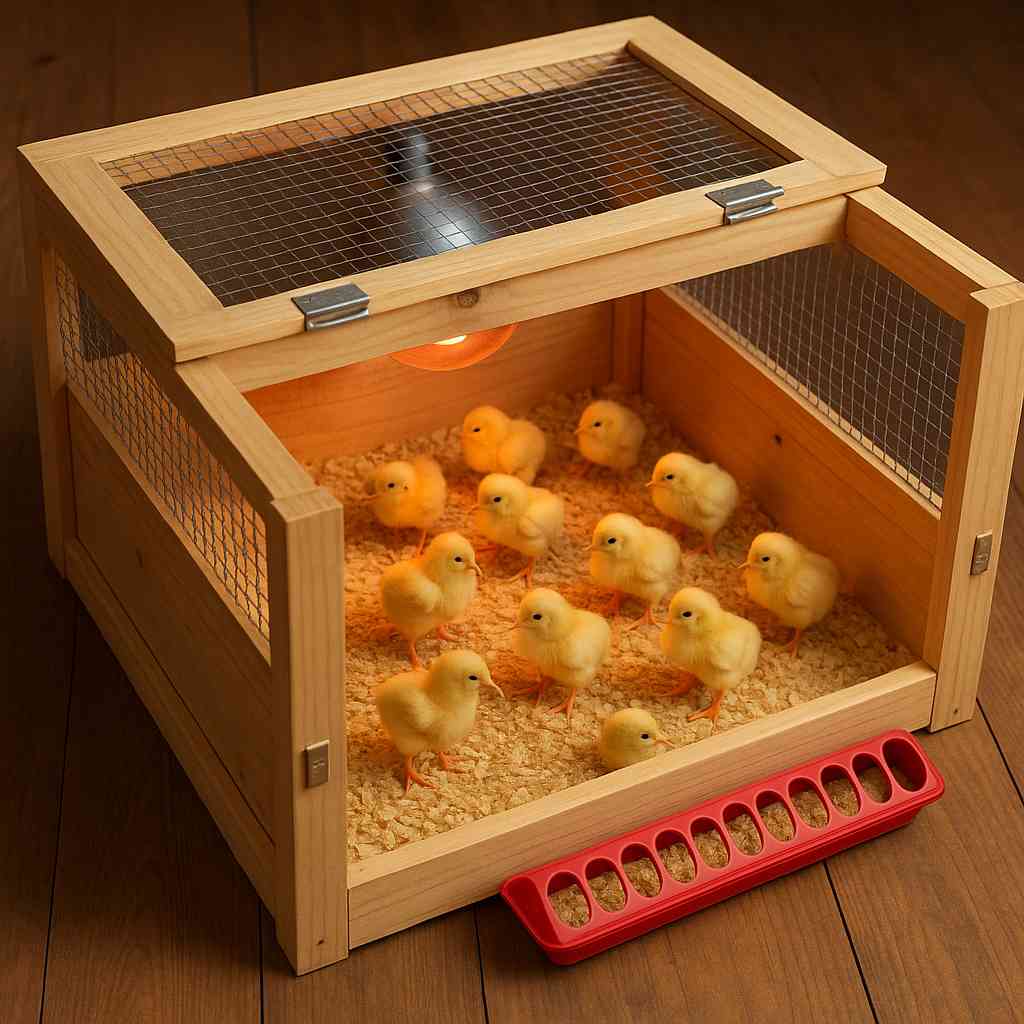
A brooder box is essentially a nursery for chicks. It keeps them warm, dry, and secure until they’re feathered out and ready to move into the coop.

You don’t need to spend hundreds of dollars on a pre-made brooder—building one yourself is simple, cost-effective, and customizable.

In this guide, we’ll cover everything you need to know: why brooders matter, what materials to use, step-by-step instructions for building one, and how to set it up for happy, healthy chicks.

Why Do You Need a Brooder Box?

A brooder box is the perfect setup for chicks because it gives them the right temperature they need to survive and thrive. Since young chicks can’t regulate their own body heat, the box provides consistent warmth, helping them grow strong during those critical early weeks.

It also shields them from drafts, which can be dangerous for little birds. Even a slight chill can make them weak or sick, so having an enclosed, draft-free space is essential.

Safety is another big reason. A brooder keeps chicks protected from curious pets, pests, and other dangers that could harm them when they’re most vulnerable.

Cleanliness is easier to maintain too. With controlled bedding, food, and water areas, you can manage hygiene better, reducing the risk of disease and keeping the environment fresh.

How to Build a Wooden Brooder Box for Chicks?

Building a wooden brooder box for chicks is an essential project for anyone raising poultry, providing a safe, warm environment where day-old chicks can grow and develop during their most vulnerable first weeks of life.

A well-constructed brooder box serves as a protective nursery that maintains proper temperature, ventilation, and security while being accessible for daily care and cleaning.

What Size Brooder for 20 Chicks?

For 20 chicks, you’ll need enough room for them to move freely without overcrowding. A good rule is ½ square foot per chick for the first couple of weeks. That means around 10 square feet of floor space for 20 chicks.

As they grow, they’ll need more room, so plan to upgrade or expand after 4–6 weeks.

A box around 4 feet by 2.5 feet works well in the beginning, with tall enough sides (at least 18 inches) to keep them from jumping out.

Check this: How to Build a Chicken Coop for 20 Chickens?

Materials Needed:

Wood and Framework:

  • One sheet of 3/4-inch plywood or OSB board (4×8 feet)
  • Several pieces of 2×2 inch or 2×3 inch lumber for framing
  • Wood screws (1¼ to 2½ inches long)
  • Wood glue (optional for added strength)

Hardware and Ventilation:

  • 1/2-inch hardware cloth for ventilation panels
  • Hinges and latches for the lid
  • Staple gun and heavy-duty staples
  • Small handle for easy lid access

Tools Required:

  • Circular saw or hand saw
  • Drill with bits
  • Screwdriver
  • Measuring tape
  • Pencil for marking
  • Sandpaper for smoothing edges

Optional Additions:

  • Small furniture wheels/casters for mobility
  • Chain or rope for securing the lid
  • Corner brackets for extra reinforcement

How to Set Up and Build the Brooder Box?

Step 1: Plan and Cut Your Materials

Start by measuring and marking all your cuts on the plywood. You’ll need:

  • Floor: 36″ x 24″
  • Two long sides: 36″ x 24″ (height)
  • Two short ends: 24″ x 24″ (height)
  • Lid: 36″ x 24″

Next, cut your 2×2 lumber. Make four posts (24″ each) for the corners, plus two 36″ and two 24″ pieces for the base frame. Having everything cut and ready before you start makes assembly much easier.

Step 2: Build the Base Frame

Use the 2×2 pieces to build a simple rectangular frame. Connect the corners with screws and double-check that the frame is square by measuring diagonally—both sides should be the same. This base keeps the box sturdy and lifts it slightly off the ground, which helps with insulation.

Step 3: Construct the Box

Attach the plywood floor to the base frame with screws spaced about 6–8 inches apart. Then, stand the four corner posts upright and secure them. These posts will hold the walls and lid in place.

Once they’re solid, screw on the side panels—first the short ends, then the long sides. Make sure everything is lined up square and tight. A bit of wood glue at the joints can add extra strength.

Step 4: Add Ventilation

Chicks need fresh air, so cut hardware cloth to cover part of the lid and a section near the top of one long side. Aim for about 25–30% of wall space as ventilation.

Staple the mesh securely, and cover the sharp edges with thin wood strips so the chicks don’t get hurt. This setup allows airflow but still keeps the brooder safe from drafts and predators.

Step 5: Install the Lid

Attach the lid with 2–3 hinges along one long side. You can keep it as a single piece or split it into two sections for easier access.

Add a latch or lock so the lid stays shut, and a handle for quick opening. If you want to prevent strain on the hinges, attach a small chain or rope so the lid doesn’t swing open too far.

Step 6: Interior Setup and Safety

Line the floor with 2–3 inches of bedding such as pine shavings, straw, or wood chips. Avoid cedar—it’s harmful to chicks.

The bedding should be soft, absorbent, and easy to replace. It also gives the chicks good footing to prevent leg issues. Once the bedding is in, place your feeder, waterer, and heating source, and your brooder is ready to go.

Alternative Brooder Options

While a wooden brooder box is a sturdy and long-lasting choice, you don’t always have to build one from scratch. There are plenty of other options that can work just as well, depending on your budget, space, and how long you plan to keep chicks inside.

One simple option is a large plastic storage bin. These are lightweight, easy to clean, and affordable. Just make sure to drill some ventilation holes near the top or replace part of the lid with wire mesh for airflow.

Another popular choice is a cardboard box. It’s cheap, disposable, and works well for the first couple of weeks. However, it won’t last long—chicks grow fast, and cardboard can get soggy and unhygienic, so it’s best as a short-term solution.

For bigger flocks, some people use kiddie pools or livestock water troughs. These give chicks lots of space to move around, and with a wire cover on top, they’re very secure.

If you prefer something quick and reusable, a dog crate or rabbit hutch lined with bedding also works. Just cover any wide gaps with mesh so chicks can’t slip through.

The key is to choose something safe, warm, and easy to clean. No matter what you use, always make sure it offers enough space, good ventilation, and protection from drafts and predators.

How Big Should Brooder be for 20 chicks?

For 20 chicks, the brooder should give them enough room to move comfortably without being overcrowded. A good rule of thumb is:

  • First 1–2 weeks: About ½ square foot per chick → around 10 square feet total. A box that’s roughly 4 feet by 2.5 feet will work well at this stage.
  • By 3–6 weeks: They’ll need closer to 1 square foot per chick → at least 20 square feet total. Something like 5 feet by 4 feet will give them the space they need as they grow.

Also, make sure the sides are at least 18–24 inches tall, since chicks get more adventurous as they age and may try to hop out.

A good plan is to start with a manageable size and then either expand the brooder or transfer them to a larger pen once they feather out.

Conclusion

A good brooder box can mean the difference between thriving chicks and heartbreak. Luckily, you don’t need an expensive setup—just some plywood, hardware cloth, and basic tools.

With warmth, space, safety, and cleanliness in place, raising chicks becomes a joy, and your future hens will have started in the brooder you built yourself.

45 Delicious Fall Dinner Ideas

0


45 Delicious Fall Dinner Ideas


Privacy & Cookies Policy

DIY Natural Foundation Powder

0

Cocoa powder is great for making (healthier) homemade Nutella, but it’s also great for adding an antioxidant boost to your skincare routine. Many years ago a friend of mine shared that she used cocoa powder as a natural bronzer. I started experimenting with it in makeup and came up with this DIY natural foundation powder.

This foundation powder is similar to the mineral make-up you find on many drugstore shelves. However, it skips some of the ingredients that aren’t so great for our health. 

How to Make Foundation Powder

I start with a base of arrowroot powder and zinc oxide. You can use non-gmo cornstarch, but I find arrowroot works better. It offers a nice slip and feels so silky on my skin. Next add cocoa powder for color and a little gold mica for sparkle. I discovered that adding gold mica powder gives it an even smoother texture and makes my skin radiant.

You can also mix in some cinnamon powder for a more brown hue. Be careful here though, since cinnamon powder has volatile oils that are irritating to sensitive skin. It took me a few tries of mixing to get the color correct for my skin tone.

There’s a lot of variation in this recipe… creating homemade makeup is more of an art than a science. Your exact color and base combinations will depend on the amount of coverage and color you want. Zinc oxide as a base will create a makeup very similar to store bought mineral makeups. Adding mica powder will give skin a natural “glow.”

I used a blend of three different natural clay powders in this recipe. They help to control shine, improve blemishes, and balance out the color. You can use what you have, but I would avoid anything with a grey or red tone since these would throw off the color too much. 

How to Use Natural Foundation Powder

Since this is a powder I find it usually works best when applied to (fairly) freshly moisturized skin, especially for those with drier skin types. When I was using the oil cleansing method my skin was very hydrated and I had no issues getting this to stick. You may need to apply primer, liquid foundation, lotion, or a thin layer of oil to your face before applying. Just make sure it has a few minutes to absorb or you’ll get streaks!

If you already have oily skin, then this should help balance things out. 

You can also use this as a setting or finishing powder for your makeup routine. I store mine in a repurposed glass jar or powder container and use a brush to apply. Most days a quick brush of this is all I need!

DIY Natural Foundation Powder

This simple to make foundation powder can be customized to your exact skin tone.

Active Time5 minutes

Total Time5 minutes

Yield: 4 TBSP

Author: Katie Wells

  • Combine the zinc oxide, arrowroot powder, and clay in a mixing bowl and gently whisk.

  • Add the mica and cocoa powder until you get your desired shade. Start with the smaller amount and slowly add more.

  • Test the powder color on your inner arm and tweak until you get what you like.

  • Store in a small glass jar with a lid and use a brush to apply.
  • This will last for at least a year if stored away from direct light and moisture. 

A Note On Mica

There’s been some controversy about mica powder and if it’s really natural or safe. Mica is a naturally occurring mineral that’s in the same family as quartz. It can also be made in a lab. 

There’s also been some discussion on the ethics behind its sourcing. Mica is often mined in dangerous conditions by child laborers. The mica I use avoids these issues and only sources from places where no child labor is used at any point of the process. If you’d rather not use it though, you’ll still have a great foundation powder without it. 

An Even Simpler Version

If you prefer, you can just use arrowroot powder (or kaolin clay), cocoa powder, and a pinch of (optional) cinnamon powder. This will create a great and completely natural foundation. The only downside is it won’t stay as long as a powder with zinc oxide and mica. I feel safe using zinc oxide on my skin (non-nano and uncoated) but if you don’t, try the arrowroot version.

Have you ever made your own makeup before? What’s worked (or hasn’t!) for you so far? Leave a comment and let us know!

Protecting Outdoor Plants from Cold

0

2. Canopy Cover

Along with the roots being susceptible to damage from cold temperatures, the canopy of leaves are frost tender as well.

Freezing temperatures can cause leaves to blacken and die off or the entire canopy may suffer, first turning brown at the crown where the leaves emerge from the stem, then collapsing entirely.

A close up horizontal image of a dracaena plant covered in snow.

If you’re in Zone 9 and expect cold nights, you can protect the foliage by covering it with burlap, an old sheet, or a frost protection blanket.

Avoid using sheets of polyurethane – plastic touching the leaves can transfer cold temperatures and cause even more damage.

I use spun bond frost cover that is available by the linear foot from Arbico Organics.

A square image of a gardener applying frost cloth from a roll in the garden.A square image of a gardener applying frost cloth from a roll in the garden.

Spun Bond Frost Cloth

Gently drape the protective fabric over the canopy, using poles or stakes to prop it up into a tent to keep it from touching the leaves if needed.

Secure the drape to the plant’s stem or supporting stakes with clips or by tying the four corners together.

Now, I have to confess, when my trees grow more than 10 feet tall I don’t cover the canopies.

A close up vertical image of large dracaena plants with fairy lights wrapped around the stems to protect them from cold, with the ocean in the background.A close up vertical image of large dracaena plants with fairy lights wrapped around the stems to protect them from cold, with the ocean in the background.
Photo by Lorna Kring.

It’s too much work for this lazy gardener, and should a cold spell kill the crowns, I don’t mind the change.

But the root zone always gets a good mulch so that the basal shoots stay healthy enough to replace what nature takes away – out with the old, in with the new!

A string of small holiday lights spread through the canopy can also produce a little heat to keep it warmer for short periods of time, but only if they’re the old incandescent bulbs – LED bulbs run cool and won’t produce enough heat to make a difference.

Remove canopy covers once the danger of frost has passed.

3. Tie Up Basal Shoots

Mature dracaena plants push up basal shoots each year and the tender new growth may require protection from cold temperatures or snowy buildups.

To protect the root zone of basal shoots, use a thick mulch as outlined above.

A close up vertical image of dracaena plants with their foliage tied together to protect from cold weather.A close up vertical image of dracaena plants with their foliage tied together to protect from cold weather.
Photo by Lorna Kring.

To keep the crowns of young shoots healthy over winter, they need to be shielded from build ups of ice or snow, which can flatten the foliage and quickly cause crown rot.

You can tent the foliage with a frost blanket and stakes, or a cloche set over top of the tender shoots is an easy way to keep the crowns covered.

If your dracaena is too big for a cloche, you can gently tie the foliage together to form tight spears.

Tying the foliage together greatly reduces the surface area so snow and ice can’t settle, plus it effectively envelops the crown, shielding it from the cold.

Use garden or kitchen twine to wrap the shoots. Gather the foliage together into manageable bundles, then start wrapping the twine at the bottom.