Semi-evergreen types will remain evergreen in warmer locations, and drop their leaves in cooler growing zones.
In our guide to growing cotoneaster, you’ll learn that they’re very easy to care for – a little spring pruning for shape if needed, and that’s about it for maintenance!
Sound like a plant-and-forget shrub your garden needs?
Then join us now for a look at 21 of the best cotoneaster varieties for ground covers, hedges, and more!
Here they are:
21 of the Best Cotoneaster Varieties for Your Garden
It should be noted that some species have escaped garden cultivation and are considered invasive in certain coastal areas in North America such as British Columbia, California, the Great Lakes states, Hawaii, and the Pacific Northwest, as well as in parts of Australia, New Zealand, and western Europe.
You may wish to check with your local extension office or the USDA invasive plants list before planting, to ensure that your chosen variety is not considered invasive in your area.
1. Bearberry
Bearberry, C. dammeri, has low, trailing stems that grow up to 10 feet long, with a height that ranges from six to 24 inches.
An evergreen, the ovate leaves are deep green and glossy, turning reddish-purple in the fall. The stems are covered with a showy display of single white flowers in late spring followed by bright red berries through fall and winter.
Bearberry cotoneaster is a versatile shrub that can be used for borders, ground covers, atop retaining walls, or for soil stabilization. Hardy in Zones 5 to 9, plants are semi-evergreen in colder areas.
The black-fruited C. melanocarpus is a mid-sized shrub with a rounded form and is extremely drought tolerant once established.
Abundant panicles of pinky-white flowers appear in late spring and pomes emerge as deep orange or red, then ripen to a rich, purplish black.
The glossy, ovate leaves shine in blazing shades of orange, red, and yellow in fall.
Suitable for cultivation in Zones 3 to 7, black-fruited cotoneaster is a deciduous shrub used for borders, hedges, and bank stability. It has a height and spread of four to eight feet.
3. Cranberry
Cranberry cotoneaster, C. apiculatus, is low and sprawling with fine-textured foliage and long, trailing stems. Plants grow up to 18 inches tall and spread three to six feet.
Pink blooms appear in spring, then a profusion of bright red berries in fall, with round, glossy leaves that turn red to burgundy in autumn.
This deciduous species is a beautiful choice for a low barrier, ground cover, rockeries, or for slope and bank stabilization. Plants are suitable for cultivation in Zones 4 to 7.
C. adpressus, aka creeping cotoneaster, are compact deciduous plants with trailing stems that reach up to six feet long with a height of only 12 inches.
Pinky red flowers are followed by dark red berries and deep burgundy fall colors. This species is hardy in Zones 4 to 7 and is highly drought tolerant once established.
Most effective when used for borders, ground covers, and in rockeries. It’s also a popular choice for topiary and bonsai.
A good choice for regions with cool summers, the deciduous European species, C. integerrimus, has a multi-stemmed, upright growth of five to eight feet with a similar spread.
In late spring, the stems are covered with attractive, small cream flowers and dense foliage, then an abundance of rose-colored berries.
Many years ago, I switched to natural cleaning products. Since then, I’ve found a lot of great recipes, tricks, and shortcuts. They’ve not only taken the toxins out of daily life, but made our house cleaner, fresher, and faster to clean!
One of the simplest cleaning hacks I’ve found is something you probably already have in your pantry.
Distilled white vinegar (also available in organic versions) is a cleaning powerhouse. I know, I know, you don’t want your house to smell like pickles. Don’t worry, the smell fades when it dries and you can easily mask it with a few drops of essential oil.
How to Clean With Vinegar
There are so many things around the home that you can clean with vinegar. There are a few things though that vinegar can damage. Since vinegar is acetic acid, it has a low pH that can dissolve certain substances.
Things You Should Not Clean With Vinegar
While vinegar is a weak acid, it’s still powerful enough to damage certain surfaces. Here are a few things around the home that could be damaged by cleaning with vinegar.
Finished wood – I found adding a little vinegar to my mop bucket did great on my hardwood floors. However using too much or on certain types of wood can damage the finish. The same goes for furniture.
Mold – Yes, vinegar does kill mold and I have used it for that. However the danger is you may just be scratching the surface of a bigger problem. See more below.
Dishwashers and Washing Machines – Again, this one is controversial. Adding too much vinegar to these or using it too often can damage the rubber components over time.
Stone Countertops – Vinegar can damage granite, marble, and natural stone countertops.
Tile grout – Using diluted vinegar on occasion is a great way to give sealed grout a deep clean. Too much and too often though can erode the grout.
Here’s how I’ve used vinegar to clean around the house:
Stains
With lots of kids, I’ve gotten plenty of practice with stains. White clothes especially seem to attract stains like a magnet. The most effective treatment I’ve found so far is pouring undiluted vinegar onto the stain and washing as normal. This also works great for wine, tomato sauce, or other spills on carpet. Immediately pour vinegar on the area, wait a few minutes, and wipe up with a damp cloth.
Looking for that spot free shine? Vinegar is by far more effective than Windex or other window cleaners for windows and mirrors. Here’s how I use it:
Mix 1 part vinegar to 3 parts water in a spray bottle
Add 1-2 drops of essential oil (optional, my favorite is lemongrass)
Add 1/2 tsp of natural dish soap (optional)
Use to clean windows and mirrors
Mold Remover
One part borax mixed with four parts white vinegar in a spray bottle does wonders for mold. Just spray it onto non-porous surfaces, wait about an hour, and wipe up. The mold wipes right off. This works best for small areas of mold.
If you notice mold in the home this can indicate a larger, more serious issue. The mold you see may just be the tip of the iceberg. Here’s more about toxic mold, how to tell if you have it, and what to do.
Hardwood Floors
Our last house had all hardwood floors, and this meant a lot of mopping for me. I found that 1/3 to 2/3 cup of white vinegar in a gallon of warm water cleans hardwoods very quickly and easily. Be careful though as vinegar can damage certain wood finishes. Check with the manufacturer if possible before using vinegar on your floor.
Toilet Cleaning
Vinegar is great for breaking down minerals on hard surfaces. When it comes to toilet cleaning, I like to pair it with baking soda. Pour a little baking soda into the toilet, add 1 cup of vinegar and let it bubble. Scrub and admire the shine. These toilet cleaning fizzies are also fun to use.
Cleaning Cabinets
If you have food spots, oil buildup, or stains on your cabinets, vinegar works here too. Mix 1 part vinegar with 3 parts water and scrub with a rag or sponge. The vinegar will cut any grease, leaving the cabinets clean and shiny.
All Purpose Cleaning With Vinegar
For everything else, you can easily make a homemade all purpose spray with vinegar. Here’s how to make it
Add 1 part white vinegar and 4 parts water to a spray bottle
Add 10-20 drops of essential oil (optional)
Add 1 tsp of natural dish soap
This spray works wonders on counter tops, high chair trays, baseboards, walls, appliances, floors, and everywhere else things can be dumped or spilled.
More Ways to Clean With Vinegar
Faucets, showers, and bathtubs
Add 1-2 cups of vinegar to the rinse cycle for softer laundry
Use it to shine the kitchen sink or stovetop
Clean and deodorize trash cans
Use to descale a coffee maker (here are my favorite healthy ways to brew coffee)
Rinse produce from the store with vinegar before eating
This is my second year starting veggies from seed and maintaining a full kitchen garden (rather than the couple of tomato and pepper plants I would buy in years prior). I can happily say that I learned a lot from last year’s successes and failures, and have implemented changes that have already increased my yield so far this year. One of those changes was incorporating way more flowers. I mentioned the power of flowers when discussing Kimberly’s incredible vegetable and flower garden in North Carolina earlier this week (check that post out here: Kimberly’s Golden Garden), and it inspired me to scroll through my camera roll to shout out the flowers that have been making my garden more productive (and beautiful) this year.
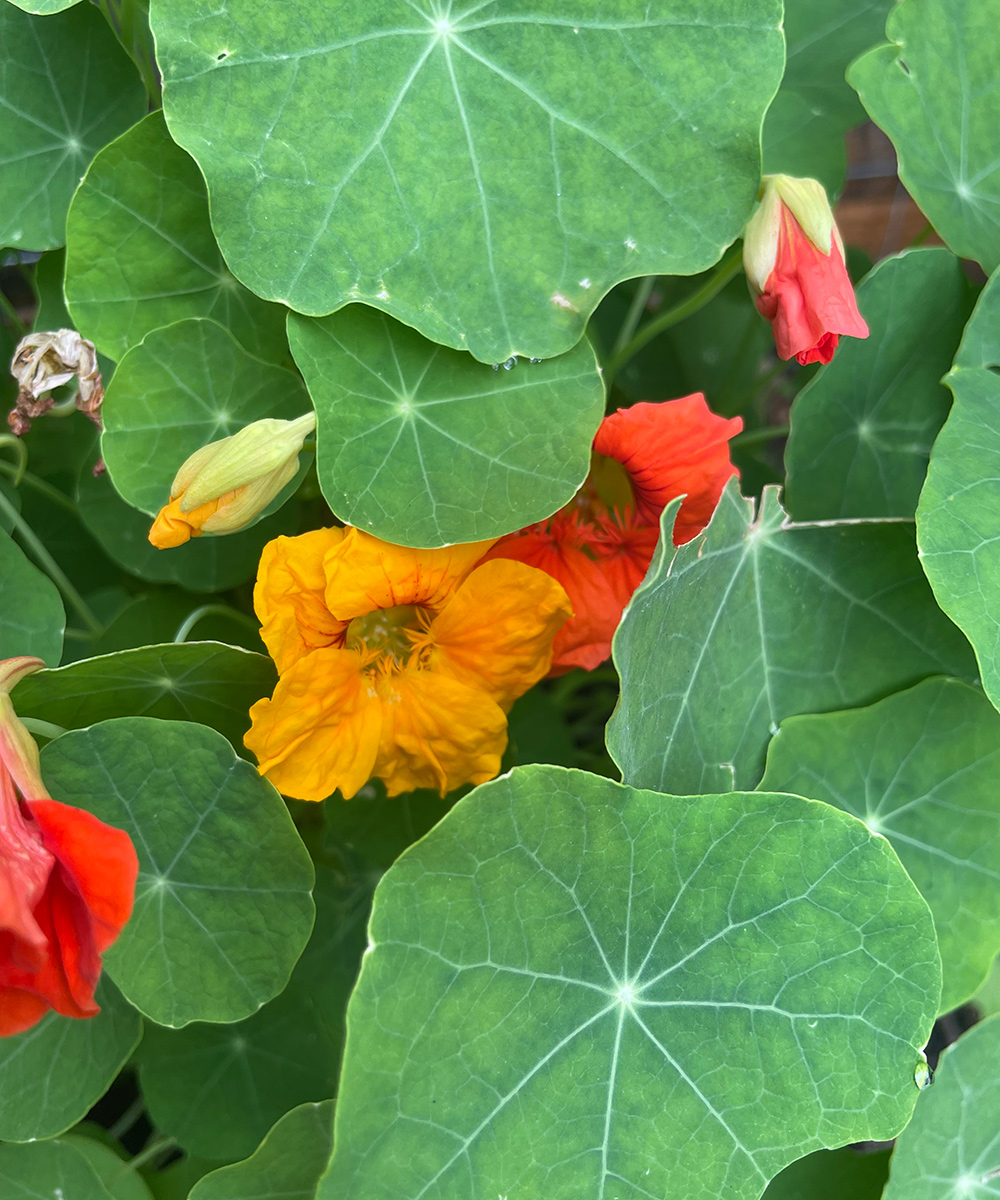
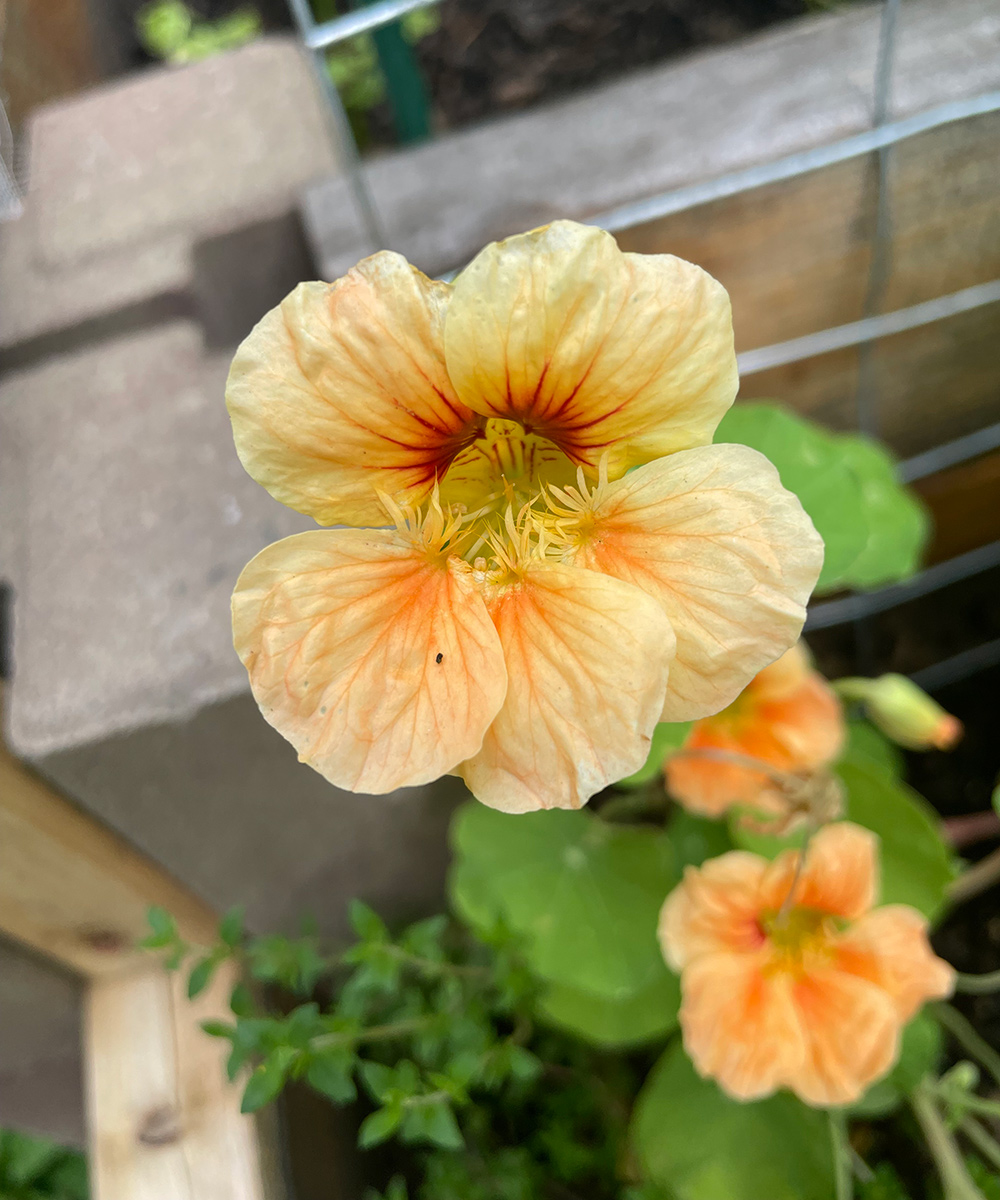
The most exciting addition to my gardens has definitely been these Tip Top Mix nasturtiums (Tropaeolum majus, annual). This variety produces a delightful mix of apricot, gold, orange, and scarlet blooms that are also a delicious addition to salads. All parts of the plant are edible, but the flowers have the strongest peppery taste. I haven’t harvested many of my flowers, however—they look too good in my beds!
These stunning flowers make incredible color combinations all by themselves, and the shield-shaped leaves are also noteworthy. Some gardeners plant nasturtium for its ability to deter rabbits and deer, but I remove the risk completely with barriers around my raised beds.
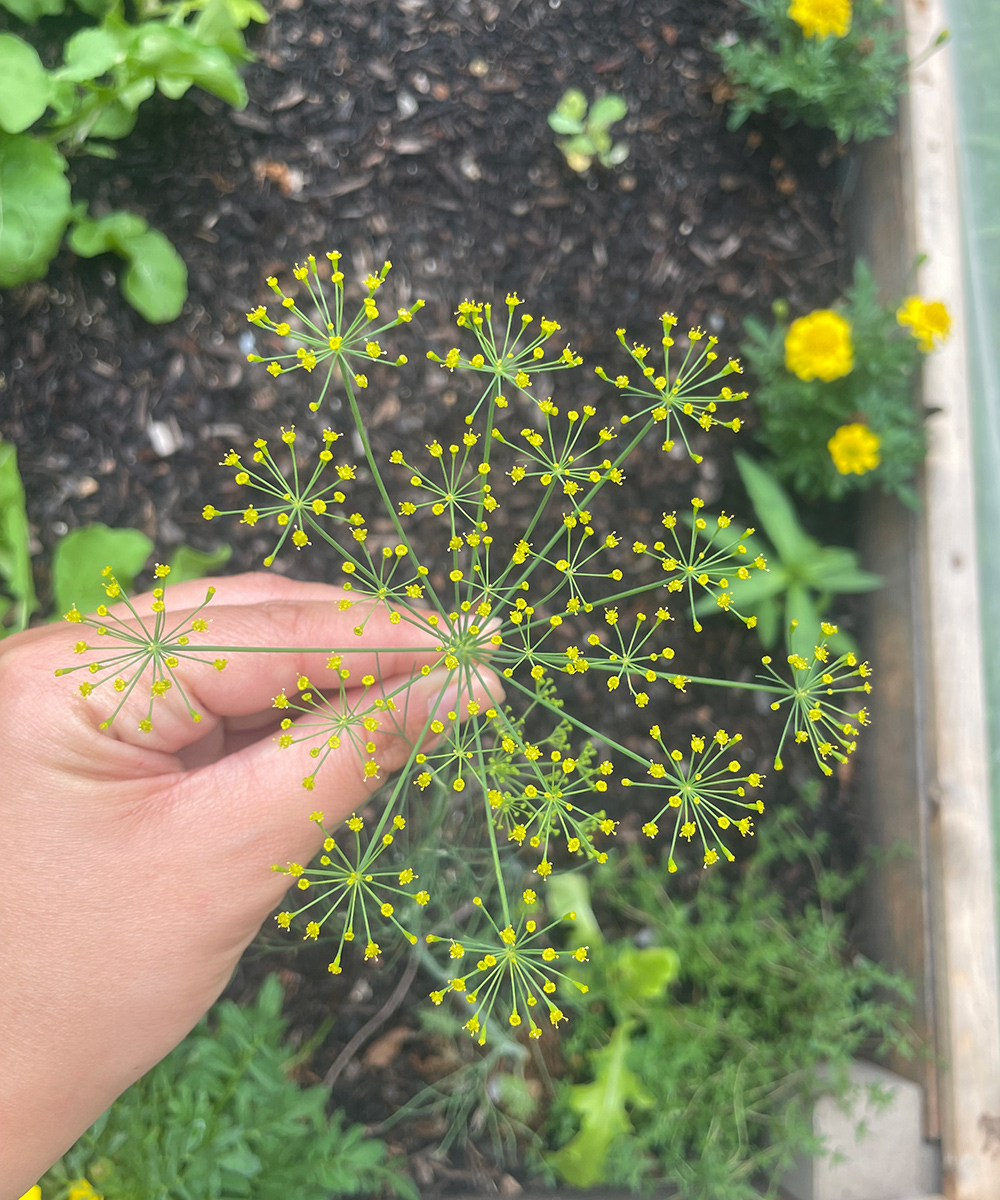
Some of the flowers in my veggie beds aren’t necessarily for the bees but for the seeds they will bear. I will let some of my herbs, like this dill, flower so they will hopefully self-sow and come back up next year. As a bonus, they add even more color and interest to the garden.
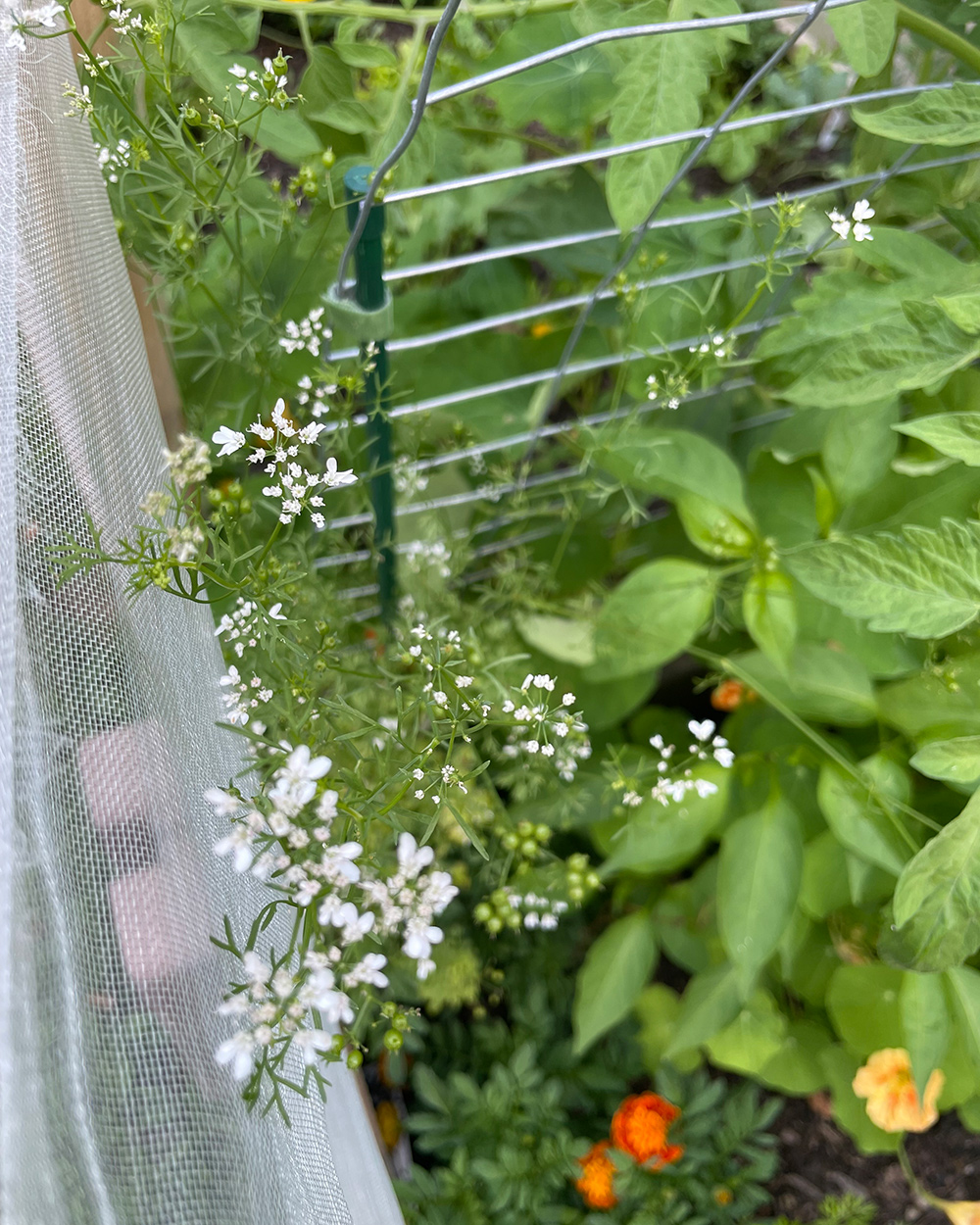
Cilantro is another herb I do this with, or rather, cilantro flowers give me no choice in the matter. I have a bad habit of planting my cilantro too late into spring, and in no time, it will start trying to flower. I pinch the buds back for a few weeks, attempting to get my plants to last a little longer, until I finally give up the fight and let these pretty little white blooms flourish.
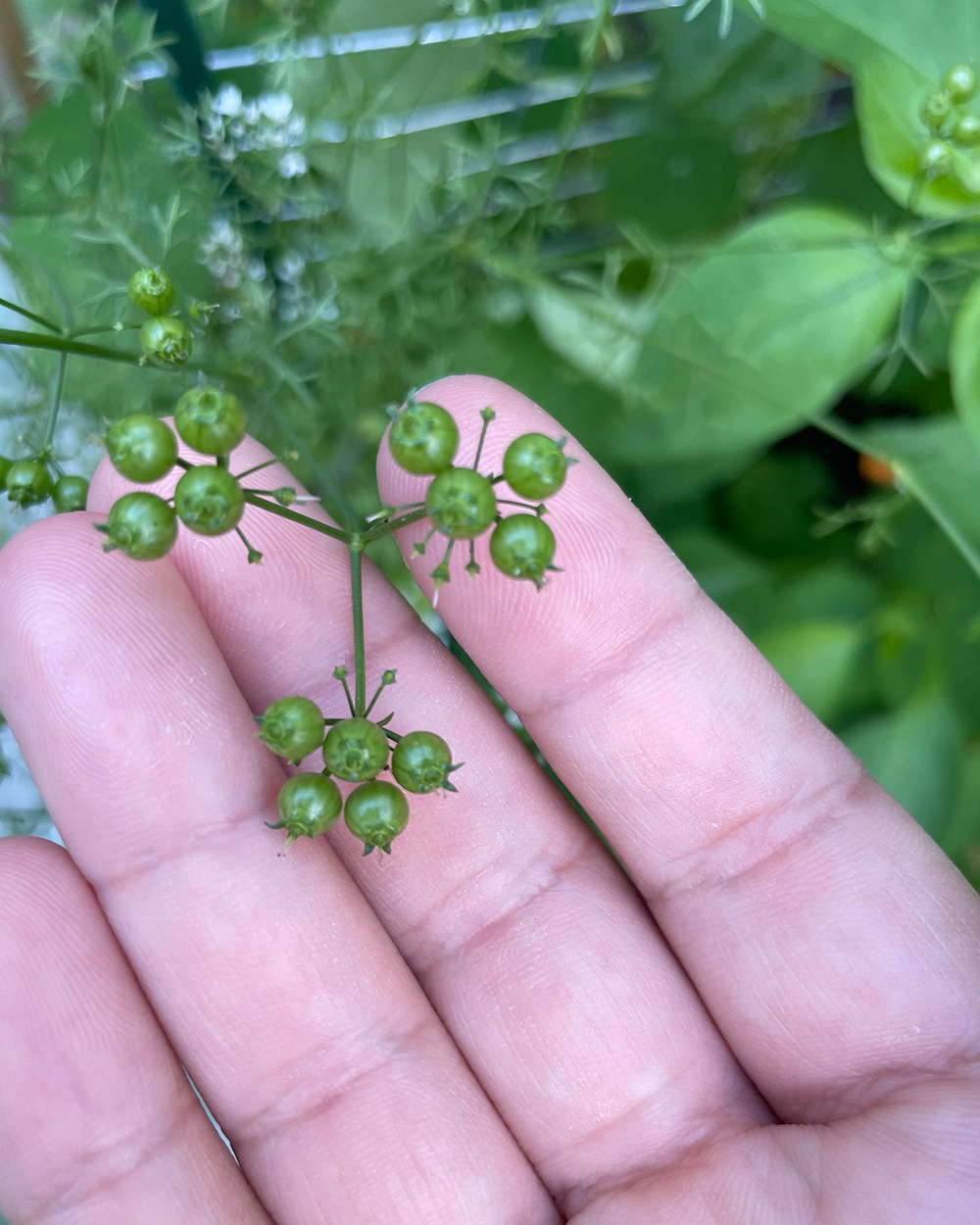
However, most of these adorable seeds don’t get dispersed into the garden. As soon as they turn brown, I trim the clusters off the plant and put them into a brown paper bag to dry out further. When all the seeds have fallen from the stems, I grind them up into coriander powder that I use all year.
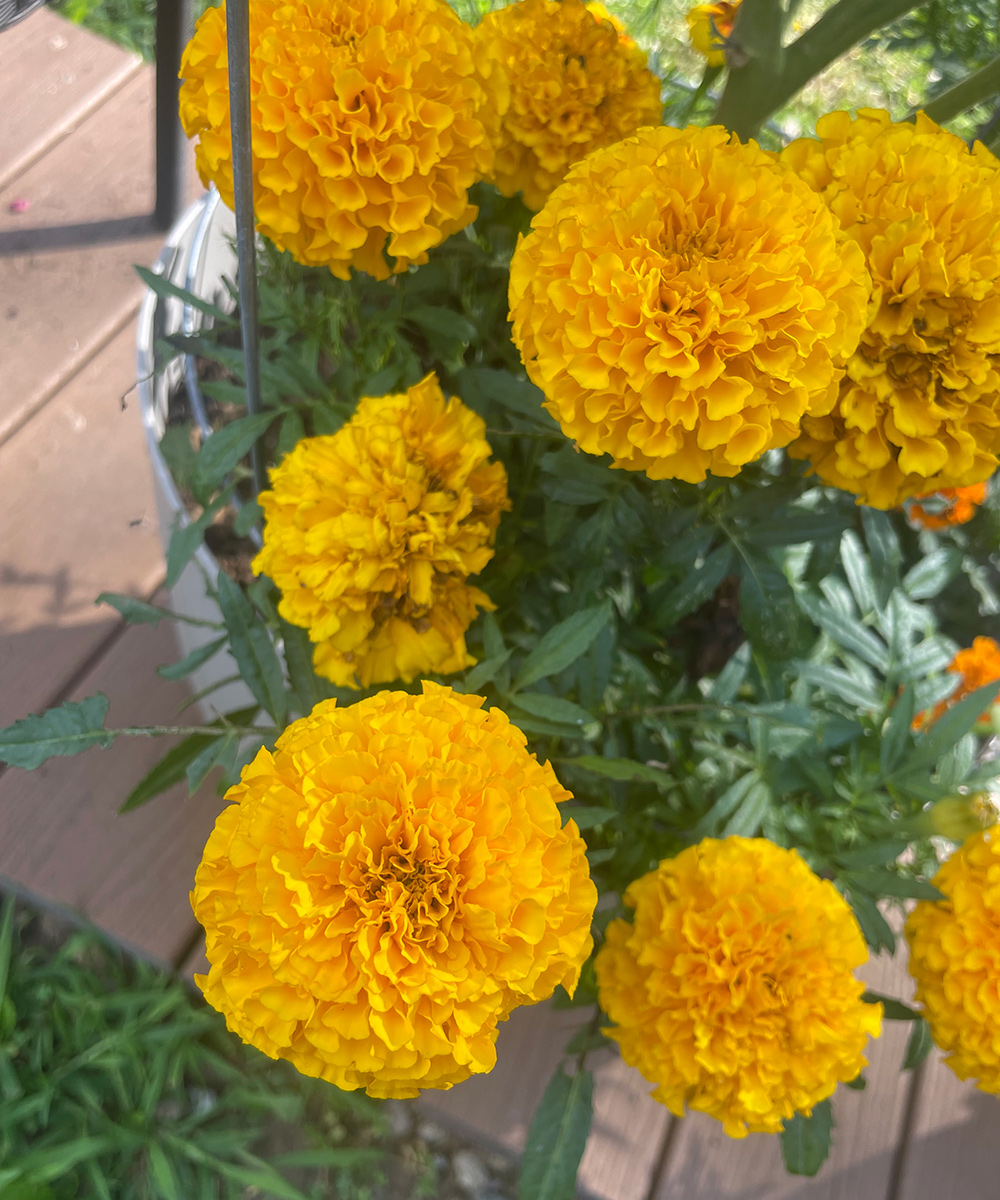
Marigolds are not a new addition to my gardens this year; I enjoyed a few different varieties last year. However, I skipped starting marigolds from seed, opting to purchase them from my local nursery, and got way more plants and more varieties. So many, in fact, that I decided to plant some in my tomato and pepper containers as well. These giant African marigolds (Tagetes erecta, annual) have definitely been producing the most flowers so far this year.
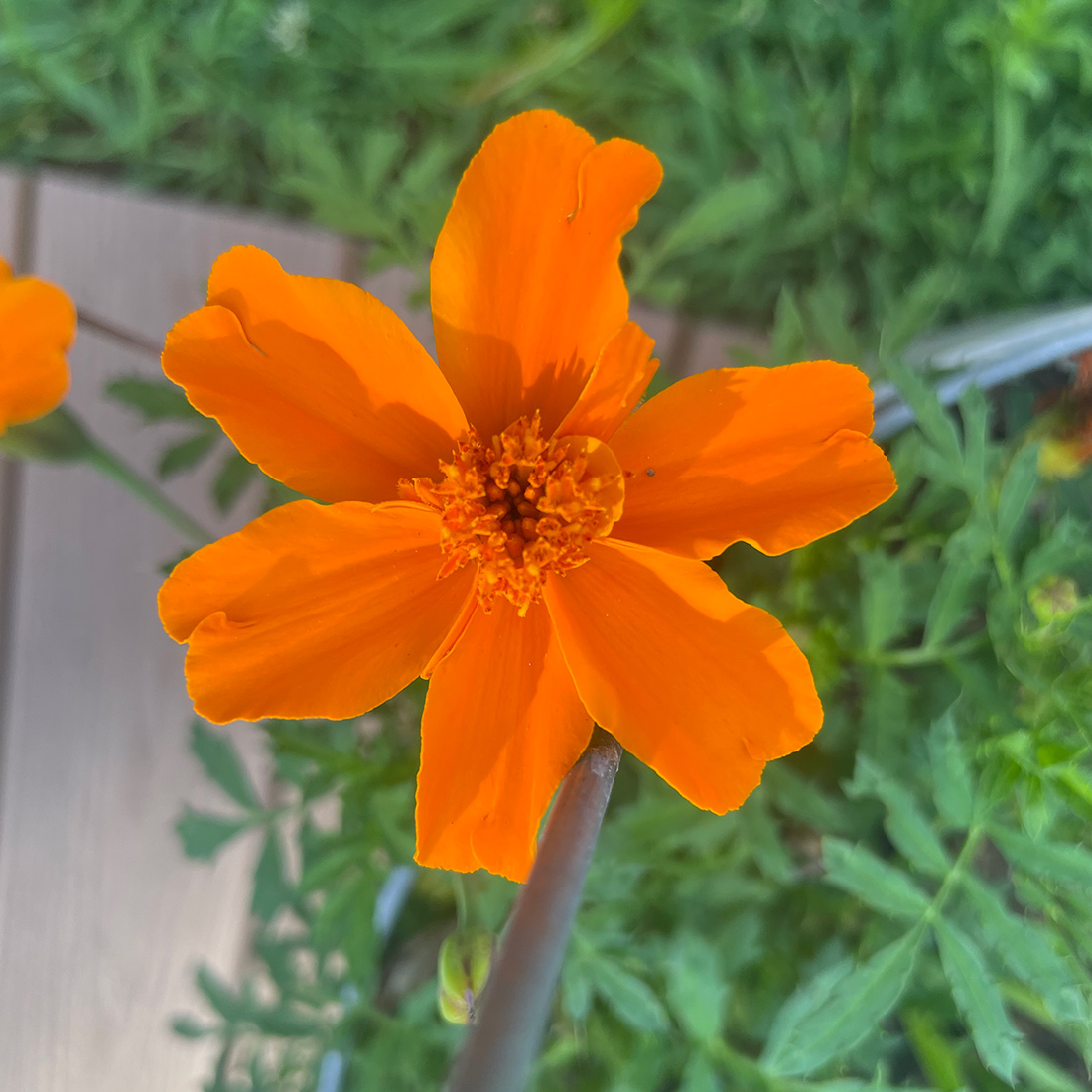
Disco Orange French marigolds (Tagetes patula, annual) have been much less floriferous, but their bright, single blooms have been far more popular with the bees.
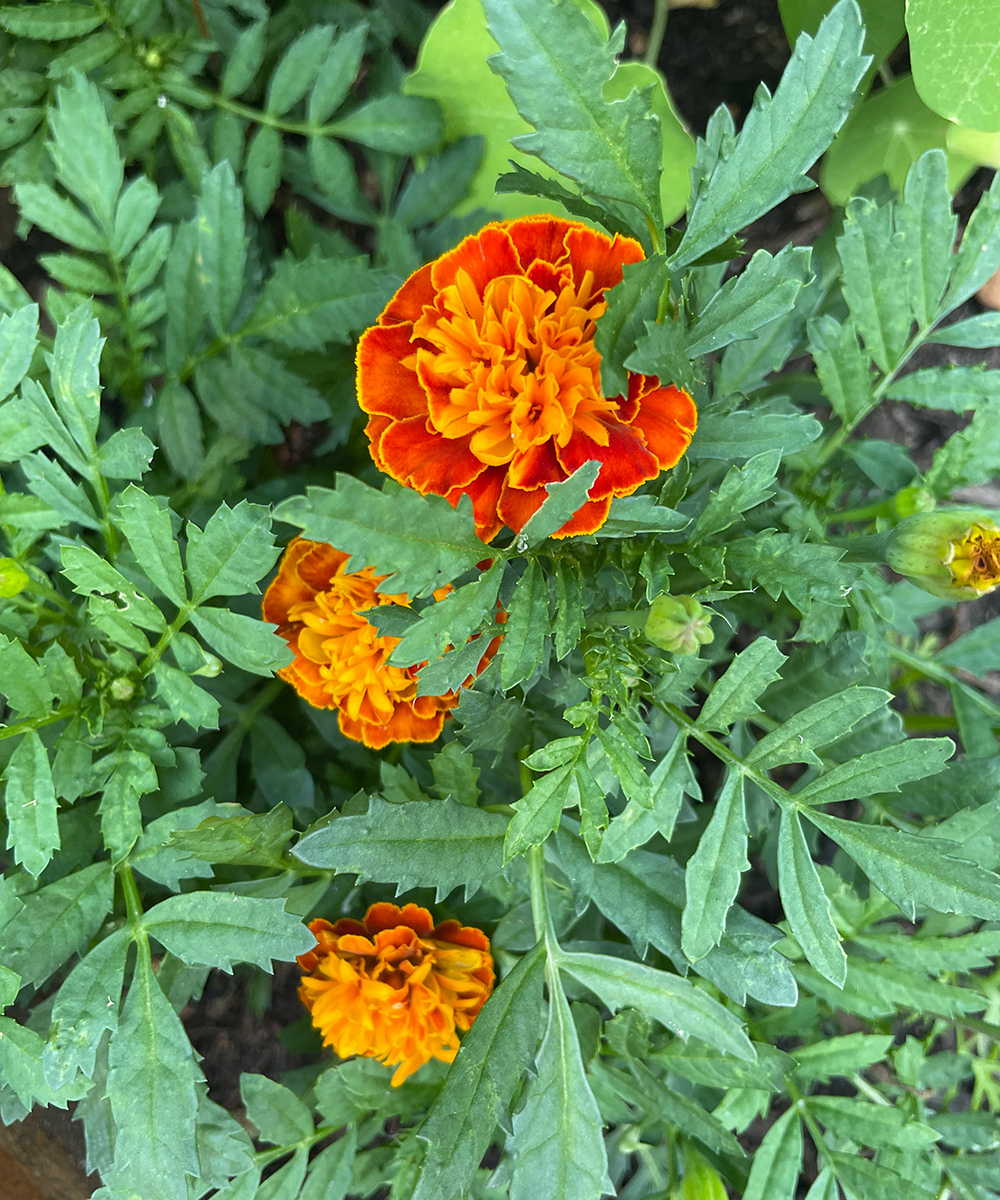
These French marigolds with double blooms—I believe they’re the Bonanza™ Mix—are another variety that have bloomed sparingly, but their incredible colors and double crested flowers are show-stopping when they do pop up.
Lastly, another single French marigold called Disco Marietta: These may be my favorite of the varieties I planted this year. It has a simple form but really fabulous coloration.
I hope you enjoyed this little tour of my veggie garden blooms! If you’re interested, I can give you a tour of the vegetables and herbs I decided to grow this year, with a breakdown of what flourished and what completely failed. Let me know in the comments!
What plants have given your garden a boost this year? Is a new planting giving an old bed a refresh? Did you rip out that thuggish species that was running rampant in a neglected corner? The common sentiment at Garden Photo of the Day is that the garden is never truly done. While that can be overwhelming, it also means endless opportunities to reevaluate, reimagine, and revitalize. Consider sharing your great garden achievements with the blog! Follow the directions below to submit photos via email, or send me a DM on Instagram: @agirlherdogandtheroad.
We want to see YOUR garden!
Have photos to share? We’d love to see your garden, a particular collection of plants you love, or a wonderful garden you had the chance to visit!
To submit, send 5–10 photos to [email protected] along with some information about the plants in the pictures and where you took the photos. We’d love to hear where you are located, how long you’ve been gardening, successes you are proud of, failures you learned from, hopes for the future, favorite plants, or funny stories from your garden.
Do you receive the GPOD by email yet? Sign up here
Fine Gardening Recommended Products
Nesco Snackmaster Express Food Dehydrator
Fine Gardening receives a commission for items purchased through links on this site, including Amazon Associates and other affiliate advertising programs.
500-watt 4-tray food dehydrator dries in hours with adjustable thermostat that allows you to dry different foods at proper temperatures (95°F – 155°F). Four 13.5-inch BPA-free trays allow you to dry large quantities at once with no tray rotation needed. Includes 1 fruit roll sheet and 2 original-flavor jerky spice and cure packets.
The New Organic Grower, 3rd Edition: A Master’s Manual of Tools and Techniques for the Home and Market Gardener, 30th Anniversary Edition
Fine Gardening receives a commission for items purchased through links on this site, including Amazon Associates and other affiliate advertising programs.
Since its original publication in 1989, The New Organic Grower has been one of the most important farming books available, with pioneer Eliot Coleman leading the charge in the organic movement in the United States. Now fully illustrated and updated, this 30th Anniversary Edition is a must-have for any agricultural library.
A.M. Leonard Deluxe Soil Knife & Leather Sheath Combo
Fine Gardening receives a commission for items purchased through links on this site, including Amazon Associates and other affiliate advertising programs.
MULTITASKING DUAL EDGES: a deep serrated edge and a tapered slicing edge ideal for tough or delicate cuts. DURABLE 6-inch stainless steel blade withstands 300 lbs of pressure. TWINE CUTTING NOTCH, DEPTH GAUGE MARKINGS & spear point – no need to switch tools when using this garden knife. LEATHER SHEATH: heavy duty, protective, clip on sheath to keep your knife convenient and secure. LIFETIME WARRANTY.
State lawmakers are targeting food dyes and other additives in a slew of new bills.
Inna Reznik/iStockphoto/Getty Images
hide caption
toggle caption
Inna Reznik/iStockphoto/Getty Images
As policy counsel for the Center for Science in the Public Interest, it’s Jensen Jose‘s job to track food policy law. But this year it’s been very hard to keep up. Lawmakers of all political stripes offered up proposals targeting food additives across many states.
“There’s a lot of bills out there,” Jose says.
State policymakers are considering dozens of proposals this year aiming to limit the use of synthetic coloring and other chemical additives, like preservatives.
State bills vary, but Jose says most of the proposals focus on broadening the list of banned petroleum-based food colorings from Red No. 3, which the Food and Drug Administration already plans to phase out.
Many include Blue 1, Blue 2, Green 3, Red 40, Yellow 5, or Yellow 6. Some bills seek to regulate other chemicals, such as the preservative propylparaben, or potassium bromate, a chemical added to flour to strengthen dough.
Some bills have already become law. Arizona and Utah’s new laws will eliminate dyes and some additives from food served in schools. Texas will require, instead, warning labels for 44 listed food additives, specifying some ingredients are not recommended for human consumption by authorities in Australia, Canada, the European Union and the United Kingdom.
Many other proposals have died in the legislative process. But Jose says the sudden overall enthusiasm for food additive regulation reflects consumer frustration with federal inaction and an abrupt political embrace of the issue by conservative lawmakers historically resistant to regulation.
“The rise of MAHA — Make America Healthy Again — really was probably one of the more influential themes,” he says of this year’s state legislative season.
That movement — championed by President Trump and his Health and Human Services Secretary, Robert F. Kennedy Jr. — has shifted the political landscape on this issue.
When it comes to food additives, Jose supports eliminating those linked with health issues. But he also worries that some of MAHA’s other policy stances go too far in touting unscientific or pseudoscientific claims repeated by social media influencers.
“When you see MAHA translate that to things like vaccines and drugs and COVID, then it starts becoming a problem,” he says.
Take, for example, some proposals seeking to regulate seed oils such as soybean or safflower — despite a lack of evidence showing they pose a danger to public health.
Some of the legislation limiting food dyes may not be necessary, nor do all those ingredients pose a health risk, says John Hewitt, a lobbyist for the Consumer Brands Association, a food industry trade association.
He notes that food dyes have been approved for consumption, and many food makers — notably Nestle, Kraft Heinz, Kellogg (maker of Froot Loops), and the ice cream industry — already announced plans to remove artificial dyes from products in response to consumer demand.
Hewitt says having varying state rules on food dyes will not work; national brands can’t manage different recipes or packages for different states. “Supply chain and logistics get to be very challenging when we have state specific requirements,” he explains.
That’s why many experts believe the FDA will eventually have to step back in and create new regulations so there’s a uniform national standard, going beyond its ban on Red No. 3 and its request that industry voluntarily phase out other synthetic food dyes.
A stricter national standard is what some consumers want, and pushing the FDA to act may have been the original intent of those state bills, says Steve Mandernach, head of the Association of Food and Drug Officials, representing state and local membership.
But even if new national bans on food dyes come to pass, Mandernach doesn’t foresee synthetic dyes fading from food soon.
Manufacturing processes, he says — as well as consumer expectations for things like pastel-green mint chip cream — don’t change overnight.
“The thought that all dyes will be out of food quickly is probably just not a reality … it’s going to take a long time to make that happen,” he says.
Epiphyllum, also known as “orchid cactus” and “epiphytic cacti,” is very popular due to its unique growth habit and large bright blooms. All the epiphytic plants grow as hosts on other plants, rather than in a parasitic fashion.
The plant has flat, leaflike, broad stems slightly scalloped at the edge, with many woody midvein strings. The epiphyllum cactus is considered the family of some of the most unbelievable and largest variants of flowers in plants’ whole world.
These plants are usually found as greenhouse specimens or houseplants. And water balancing act is the most important factor in caring for epiphyllum. You can’t leave them dry at all, but overwatering them is similar to killing them indirectly! Here are a few important steps to grow epiphyllum perfectly to achieve beautiful flowers as well as fruits.
To propagate an Orchid Cactus (Epiphyllum), take a healthy stem segment 6–9 inches long and let the cut end dry for several days until a callus forms. This helps prevent rot once planted. Cuttings should be taken from mature plants and kept in a warm, dry spot away from direct sun during this period.
Once callused, insert the cutting about 1–2 inches deep into a pot filled with well-draining cactus compost (optionally topped with grit). Keep the compost just moist and place the pot in bright, indirect light at 65–75F. Roots should form within 3–6 weeks, and new plants can flower the following season.
Epiphyllum – Know Your Plant
Epiphyllum is considered the most preferred plant for hanging baskets as they can grow 18 to 30 inches (46-76 cm) long with their jointed stems.
These amazingly beautiful plants are native to South and Central America and have as many as 20 different species!
The plant stems are crowned with stunningly gorgeous flowers that usually last for only a couple of days, but keep blossoming from the early winter to the end of spring. They are considered as one of the most peculiar plant species as they grow best in warm temperatures with short periods of light.
You need to know the perfect growing conditions if you are trying to know how to propagate epiphyllum cactus. The cacti grow perfectly in rotting vegetation, tree crotches, and tropical forests.
They can even live off the organic wastes and leaf mold. When it comes to cultivation, standard potting soil supported with sand and peat is very suitable.
Epiphyllum Orchid Cactus – Not Necessarily an Orchid!
Although it is termed as “epiphyllum orchid cactus,” it is actually not an orchid, but a cactus. But it is very closed to orchid as it is an epiphyte, and of course, still not a parasitic! It absorbs sustenance directly from the air, instead of absorbing from the vegetation process.
These are not only some of the most beautiful hanging plants, but are easy to care and handle. There is many different miniature, basket, compact, free-flowing hybrids, and can make your home look stunningly beautiful.
How to Care Orchid cactus?
If you are looking for answers to “how to propagate and caring for epiphyllum,” this section is going to be very important for you.
Like other sunning summer-flowering plants, tuberous begonia, epiphyllum love shades for proper growth, and hot climates are nearly perfect for them. You can place them near a protective north wall or under a tree with dappled shade during the summer season.
During other seasons like spring, fall, and winter, the plants need direct sunlight. Epiphyllum flowers blossom perfectly in high temperatures with some humidity in the air. If there is no humidity in your surroundings, you can opt for spraying the mist on stems, except when there are buds or flowers on the pants. Avoid the accumulation of clogging dust as much as you can!
In addition to knowing how to root epiphyllum cuttings, you must have to know the perfect type of soil and pot to ensure the proper growth of the plant.
The general conception of using mixed soil for cactus is not suitable at all for growing orchid cactus. Whether at homes or tropical regions, they dwell a lot on other trees, feed mainly on decaying organic matter, and get fair exposure of air.
If you feel that the pot you are using is not big enough, transfer the plant only to the next size, rather than transferring it into a large bucket.
You need to ensure that the pot is filled with porous and soft soil, and the pot can hold a bit of moisture, and at the same time, can drain very quickly.
Always opt for coarse, slightly acidic, not finely sifted soil to enhance the chances of healthy and timely growth.
Try to add some crushed charcoal for proper aeration and purification.
Avoid fertilizers rich with nitrogen.
To ensure proper caring for the epiphyllum, don’t over pot it. Instead, keep slightly root-bounded.
Don’t repot the plants before at least a couple of years.
Usually, epiphyllum needs transplanting after a month of flowering, but avoid it until you feel the requirement.
Avoid watering for three to four days after repotting and ensure watering sparingly for the next four weeks.
Water and feeding
Epiphyllum remains in the rest phase during winter and needs only a bit of water to ensure stems do not shiver. Most varieties of epiphyllum start growing in early spring. And for proper and constant growth, they need enough moisture in the air and roots.
They need proper ventilation, water, and complete protection from direct sunlight and extreme heat throughout the growth. During dormancy, ensure giving the plants a drying off period, but avoid a complete dry phase.
Once the dormancy period is over and growth starts again in February, feed regularly but mildly with weak liquid foliar cactus fertilizer solutions every 12 to 14 days.
Understanding the early bloomers phase is important to learn how to propagate epiphyllum cactus.
Instead of having leaves, these plants only have branches or stems from having two-edged structures. Bloomers appear along with these triangular structures. Differences in color, varieties of flowers, and the branch’s shape are three of the chief differences in various varieties of epiphyllum.
The flowering starts in February when the plants are young, and most of the plants keep flowering until July. After the end of the blooming period, they go through the autumn growth, and then comes the period of dormancy.
Once the buds start showing on the branches, it is recommended to move the pots outdoors, only in the mild weather. According to experts, the conditions during buds forming should not be changed at all. Most of the varieties spend almost half of their lives in a greenhouse or a lath house.
How to Propagate Orchid Cactus?
Most of the epiphyllum species are easily grown through seeds. But if you want to know how to root epiphyllum cuttings, here is the answer for you.
All varieties of epiphyllum can easily be propagated by cutting long stems having a stronger center stem. Stems are usually kept aside for 5 to 10 days until the cut end becomes hard.
Once the cutting end is hard enough, insert it one inch deep in dry, coarse sand exposed to good light, but not direct sunlight. When the cuttings are potted and rooted, avoid watering for a few days.
Give extra time and care to the cuttings to avoid bruises and broken spots, as they can give entry to the fungus – and all of your efforts with hopes will go in vain!
Different classes of growth habit
Epiphyllum Ackermannii is very famous for its “ugly” appearance in the beginning phase of its life. But it suddenly gets a surprisingly beautiful look with sizeable pops, scarlet, and trumpet from almost all the joints. This variety is triangular and is nothing less than a thrill for a plant lover.
The real photogenic prima donna is the highlight of the second class. There are fleshy stems scalloped around the edges. A beautiful reddish appearance characterizes the new growth.
Most of the varieties are of sprawling habit and need enough support to take a lot of space.
When it comes to flowers, they are usually 6 inches or more in diameter, curved and drooping like a pipe, with a conspicuous cluster of stems in the center, and numerous petals. The color of the flower is a mixed shade of red and purple.
They look very similar to night-blossoming cereus (epiphyllumoxypetalum and other hybrids), but are day blooming, larger in size, and are long-lasting.
Cactus Varieties and Options
Caring for epiphyllum also depends heavily on the wide range of varieties. Plant specialists indicate thousands of various orchid cacti, and most of them are originally white and blossom mainly at night.
Epiphyllum oxypetalum is the most popular and is also known as “the queen of the night,” mainly due to its graceful, chaste white, long-tubed flowers. The flowers can easily work like perfume, especially during summer evenings.
There are many other varieties, especially after they are crossed with their counterparts and even other genera – and that’s how we are fortunate to see today’s varieties of beautiful, day-blossoming hybrids.
One variety of epiphyllum can give birth to as many as seventy-five different varieties! And that’s why knowing how to root epithelium cuttings becomes even more important!
Most of the plants give white or pale-yellow flowers, but some other colors like red, pink, rosy-lavender, orange, amber, copper, orchid, purple, salmon, and a lot of other combinations and blends.
Let’s have a look at some of the other, very popular varieties.
Aporophyllum – Also known as “rat-tail cactus”, is famous for round stems, and can reach six feet of height, and usually promises for an extended flowering season.
The word “aporocactus” is derived from the Greek origin “aporia,” meaning “impenetrable.” And that’s most probably because of the prickly and knotted properties of stems which make touching the plant very difficult.
Unlike most of the other variants, sporophylls grow perfectly in brighter light. They even need a few hours of sunlight. Providing them with downwards space for growth is the best option, as their stems bend very easily.
Diaspora – Plants with ribbed, slender stems, and carmine flowers of two-inch size and unusual appearance.
ChiapsiaNelsoni – Blossoms in early spring, with lilac-pink flowers and thin stems.
Disophyllum– One of the new hybrids with vivid red-violet, tubular flowers, and beautiful, three-foot hanging stems.
Problems Related to Epiphyllum and their Solutions
Looking for different types of problems and their solutions is another important aspect of caring for epiphyllum. Here are a few common problems with their solutions.
Dropped flower buds – Once the buds appear, avoid moving the plant so often. Irregular changes in light won’t help buds’ growth, and there are very high chances of them falling off. Although these tropical hybrids live very long, taking care of their requirements is very important, and correct placement is one of them.
Check for different bugs – Mealybugs and scale insects commonly attack these plants. Don’t ignore the appearance of bugs around the plants. In addition to proper treatment, isolate the affected plant for a few days to avoid other plants’ infection.
Limp stems – Over watering is one of the major problems for these plants. They don’t like it at all! Over watering can cause limped stems that may turn blackish at the base. If you notice something like that, cut off the stems at the soil level as soon as possible.
Aphids – Aphids are sap-sucking insects that can affect the growth and look of the plants. They often leave yellowish sticky substance on the stems, which can inspire the growth of molds. Some of the aphids even transmit different types of plant viruses. So, identifying these aphids is very important if you are trying to understand “how to root epiphyllum cuttings.”
There are plenty of different varieties of epiphyllum. And all of them are extraordinarily attractive and beautiful. They can make your home or workplace look like a small, stunning garden. Now, you must be familiar with everything necessary for proper care of epiphyllum plants. They are unique; they are among the most atypical types of plants and need extra and special care. You will have to do some extra work if you want to grow epiphyllum, but in return, you will be amazed by a completely different type of natural beauty, and some refreshing scents as a bonus!
Khaja Moinuddin, a computer science graduate, finds joy in gardening and homesteading. Join him on this blog as he shares his experiences in homesteading, gardening, and composting
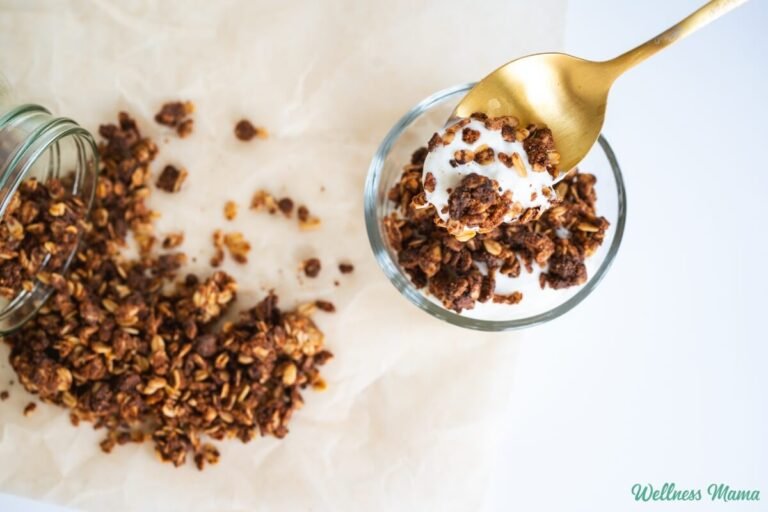
This homemade granola is everything I want in a pantry staple: super simple, naturally sweetened, and filled with nutrient-dense ingredients I already have on hand. It’s lightly sweet, perfectly crunchy, and totally customizable. The only downside is the kids eat it as fast as I can make it!
I added a pinch of cream of tartar in this version to help the baking soda activate better and give it that crave-worthy crunch. This recipe has been on repeat in our house, it’s that good.
How to Make Homemade Granola
Some granola is soft and chewy, while others are crunchy. While I love soft, chewy cookies, this recipe makes a big batch of crunchy chocolate granola. Coconut sugar and maple syrup give it a little natural sweetness and the slightly melted chocolate chunks help hold it together.
The trick is to make sure you don’t overcook it. Yes, it’s crunchy, but we don’t want the bad kind of burnt crunchy. Once it’s out of the oven it will continue to crisp up. I’ll also stir the chocolate chunks in while the granola is still slightly warm. You don’t want them to completely melt, just soften enough to hold the oats together.
How to Use Homemade Granola
A lot of the granola you’ll find at the store has loads of sugar or filler ingredients. There are some healthier brands now, but they’re also expensive. And with a houseful of kids who love chowing down on granola, homemade is the easiest, cheapest option!
Here are some of our favorite ways to use homemade granola
Here’s how to make your own crunchy chocolate chunk granola!
Homemade Chocolate Chunk Granola
Preheat the oven to 325°F and line a large baking sheet with parchment paper.
In a large mixing bowl, whisk together the dry ingredients: oats, coconut sugar, oat flour, coconut flour, chia seeds, salt, cinnamon, baking soda, and cream of tartar.
In a separate bowl, mix the wet ingredients: almond butter, melted coconut oil, maple syrup, and vanilla. Stir until smooth and well combined.
Pour the wet ingredients into the dry and stir until everything is evenly coated. The mixture should be slightly sticky and clumpy.
Spread the mixture evenly on your baking sheet. Press it down gently with the back of a spoon or spatula if you want more granola clusters.
Bake for 20 minutes, then gently stir and rotate the pan. Bake for another 10–15 minutes or until golden and fragrant. (The granola will crisp up as it cools.)
Remove from the oven and let it cool for 10–15 minutes. Once the granola is still warm but not hot, gently stir in the chocolate chunks. This helps them melt just enough to bind to the granola without turning into a full chocolate coating.
Let the granola cool fully before storing. It will crisp up as it cools. Break into clusters.
Nutrition Facts
Homemade Chocolate Chunk Granola
Amount Per Serving (1 serving)
Calories 466 Calories from Fat 180
% Daily Value*
Fat 20g31%
Saturated Fat 8g50%
Trans Fat 0.01g
Polyunsaturated Fat 3g
Monounsaturated Fat 7g
Cholesterol 1mg0%
Sodium 162mg7%
Potassium 414mg12%
Carbohydrates 61g20%
Fiber 9g38%
Sugar 13g14%
Protein 12g24%
Vitamin A 8IU0%
Vitamin C 0.01mg0%
Calcium 90mg9%
Iron 4mg22%
* Percent Daily Values are based on a 2000 calorie diet.
Store the granola in an airtight container at room temperature for up to 2 weeks (if you don’t devour it before then!).
What are some of your favorite make ahead snacks? Leave a comment and let us know!
I’ll go over what to expect in terms of color and shape so that you can decide which ones you might like to seek out to add to your succulent collection.
Here’s a quick look at our selection:
11 of the Best Types of Pachyverias
All pachyverias share similar care requirements: they thrive in full sun with infrequent watering. Admittedly, there is a bit more to successful cultivation than just getting light and water right.
You’ll also need to understand how and when to repot, choose appropriate soil types, and address any pest or disease issues.
And most growers want to know how to propagate succulents to share with others or expand their collection.
You can purchase two-inch, live ‘Bubble Candy’ plants from Sprout N Green via Amazon.
4. Clavata
Not all pachyverias are chunky, some of these succulents have wider, more open forms, such as ‘Clavata.’
‘Clavata.’
With grayish-green, flattish leaves that are held in a loose rosette, this cultivar reaches 11 to 15 inches tall and produces orangish-red flowers.
‘Clavata’ is a cross between Pachyphytum bracteosumand an unknown Echeveria species.
5. Clavifolia
‘Clavifolia’ features finger-like foliage held in a densely-packed rosette. This plant has thick, curving, blunt leaves in pinkish gray, dusted with a white farina.
A cross between Pachyphytum bracteosum and Echeveria rosea, this cultivar reaches up to six inches tall and bears blooms that are a muted red hue.
You can purchase two-inch ‘Clavifolia’ plants from The Next Gardener Store via Amazon.
6. Elaine
‘Elaine’ is a plant that dazzles with her quirky coloring. This cultivar has chunky, rounded leaves that are light blue to orange with pointed tips, held in dense rosettes.
A cross betweenEcheveria colorata‘Lindsayana’ and Pachyphytum oviferum, ‘Elaine’ sportsyellow blooms.
Some pachyverias have a trailing habit with loosely arranged leaves.
‘Glossoides Gossot’ produces long stems that hold open, bluish-green rosettes of tongue-shaped leaves covered with a white farina.
‘Glossoides Gossot.’ Photo by Michael Wolf, Wikimedia Commons, via CC BY-SA.
The stems of this cultivar reach up to 12 inches long and the flowers are yellow or red on the outside with yellow interiors.
‘Glossoides Gossot’ is a cross with unknown parentage.
9. Little Jewel
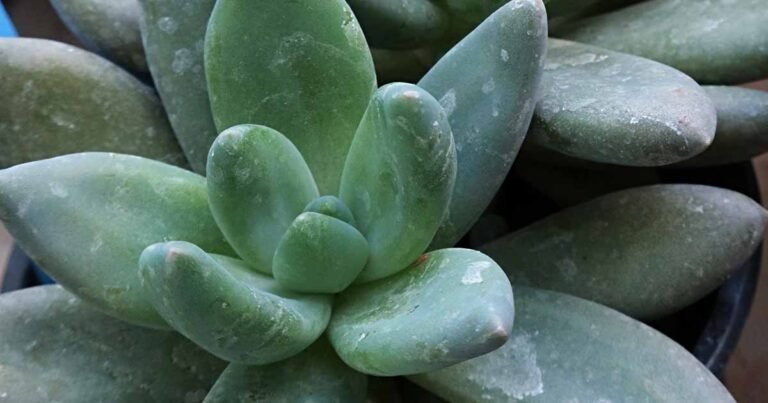
One of the most well-known pachyverias, little jewel aka ‘Bea’ features green to blue rosettes covered with a dusting of farina, and pointed and faceted leaves that are held upright.
‘Bea.’
‘Bea’ is a cross between Pachyphytum compactum and an unknown Echeveria species. It reaches up to six inches tall and has coral-colored blooms.
Two senators introduced a resolution Tuesday evening to preserve the U.S. Preventive Services Task Force, following reports that Health Secretary Robert F. Kennedy Jr. may soon fire its current members.
Sen. Angus King, an independent from Maine and Senator Elizabeth Warren, D-Mass., sponsored the resolution.
“Prevention is at the heart of how we need to approach the cost of health care in this country,” King said, in an interview with NPR. “To see that process disrupted would be a huge blow to the health of Americans.”
The resolution recognizes the “important work” of the Task Force, which has convened voluntary, independent medical experts to review evidence and make recommendations for primary care physicians since 1984. Since the Affordable Care Act passed in 2010, its recommendations have been tied to services and medicines that most health insurers must cover without co-pays.
These include “screenings for heart disease, screenings for breast, colorectal, cervical, and lung cancer, and folic acid supplements for women to prevent birth defects in their babies,” along with recommendations to prevent “the most common causes of chronic disease in the United States [including] smoking, obesity, high blood sugar, hypertension, and high cholesterol” in children and adults, the resolution states.
It calls for the Task Force to continue without interruption or delay, and to “continue to be grounded in transparent, evidence-based review that is based on vetted, proven, and scientifically demonstrated studies.”
In response to reports that Kennedy may disband the committee, Department of Health and Human Services spokesperson Andrew Nixon told NPR: “No final decision has been made on how the USPSTF can better support HHS’ mandate to Make America Healthy Again.”
That’s why King and his colleagues are introducing the resolution. “We’re trying to call attention to what’s going on here and put some pressure on the administration to back off,” he says. “If anything, this is an initiative that should be significantly beefed up rather than compromised.”
King worries that if the Task Force’s current processes get disrupted, “we could end up with recommendations for interventions that aren’t proven, that don’t have a scientific and factual basis that could end up costing the system more money.”
While a simple resolution doesn’t carry the force of law, “In this case, it’s still the Senate sending a strong message,” says Dr. Aaron Carroll, a pediatrician and CEO of AcademyHealth, a nonpartisan professional group of health service researchers. “It shows that lawmakers get how crucial the USPSTF is for keeping health decisions grounded in evidence and not partisan.”
U.S. primary care doctors use these guidelines every day, says Dr. Carol Mangione, a primary care doctor and professor at UCLA, who has served as a member and chair of the USPSTF, and she hopes the task force will continue to function as it currently does.
“I hope that Americans continue to get the health dividends from screening for colon cancer, starting a statin if you’re high risk, getting screened for depression if you’re postpartum,” Mangione says. “It would be a loss to not have easily accessible, tailored recommendations for someone’s age, their background risk, to make sure they get to have the best health possible in their lives.”