Two senators introduced a resolution Tuesday evening to preserve the U.S. Preventive Services Task Force, following reports that Health Secretary Robert F. Kennedy Jr. may soon fire its current members.
Sen. Angus King, an independent from Maine and Senator Elizabeth Warren, D-Mass., sponsored the resolution.
“Prevention is at the heart of how we need to approach the cost of health care in this country,” King said, in an interview with NPR. “To see that process disrupted would be a huge blow to the health of Americans.”
The resolution recognizes the “important work” of the Task Force, which has convened voluntary, independent medical experts to review evidence and make recommendations for primary care physicians since 1984. Since the Affordable Care Act passed in 2010, its recommendations have been tied to services and medicines that most health insurers must cover without co-pays.
These include “screenings for heart disease, screenings for breast, colorectal, cervical, and lung cancer, and folic acid supplements for women to prevent birth defects in their babies,” along with recommendations to prevent “the most common causes of chronic disease in the United States [including] smoking, obesity, high blood sugar, hypertension, and high cholesterol” in children and adults, the resolution states.
It calls for the Task Force to continue without interruption or delay, and to “continue to be grounded in transparent, evidence-based review that is based on vetted, proven, and scientifically demonstrated studies.”
In response to reports that Kennedy may disband the committee, Department of Health and Human Services spokesperson Andrew Nixon told NPR: “No final decision has been made on how the USPSTF can better support HHS’ mandate to Make America Healthy Again.”
That’s why King and his colleagues are introducing the resolution. “We’re trying to call attention to what’s going on here and put some pressure on the administration to back off,” he says. “If anything, this is an initiative that should be significantly beefed up rather than compromised.”
King worries that if the Task Force’s current processes get disrupted, “we could end up with recommendations for interventions that aren’t proven, that don’t have a scientific and factual basis that could end up costing the system more money.”
While a simple resolution doesn’t carry the force of law, “In this case, it’s still the Senate sending a strong message,” says Dr. Aaron Carroll, a pediatrician and CEO of AcademyHealth, a nonpartisan professional group of health service researchers. “It shows that lawmakers get how crucial the USPSTF is for keeping health decisions grounded in evidence and not partisan.”
U.S. primary care doctors use these guidelines every day, says Dr. Carol Mangione, a primary care doctor and professor at UCLA, who has served as a member and chair of the USPSTF, and she hopes the task force will continue to function as it currently does.
“I hope that Americans continue to get the health dividends from screening for colon cancer, starting a statin if you’re high risk, getting screened for depression if you’re postpartum,” Mangione says. “It would be a loss to not have easily accessible, tailored recommendations for someone’s age, their background risk, to make sure they get to have the best health possible in their lives.”
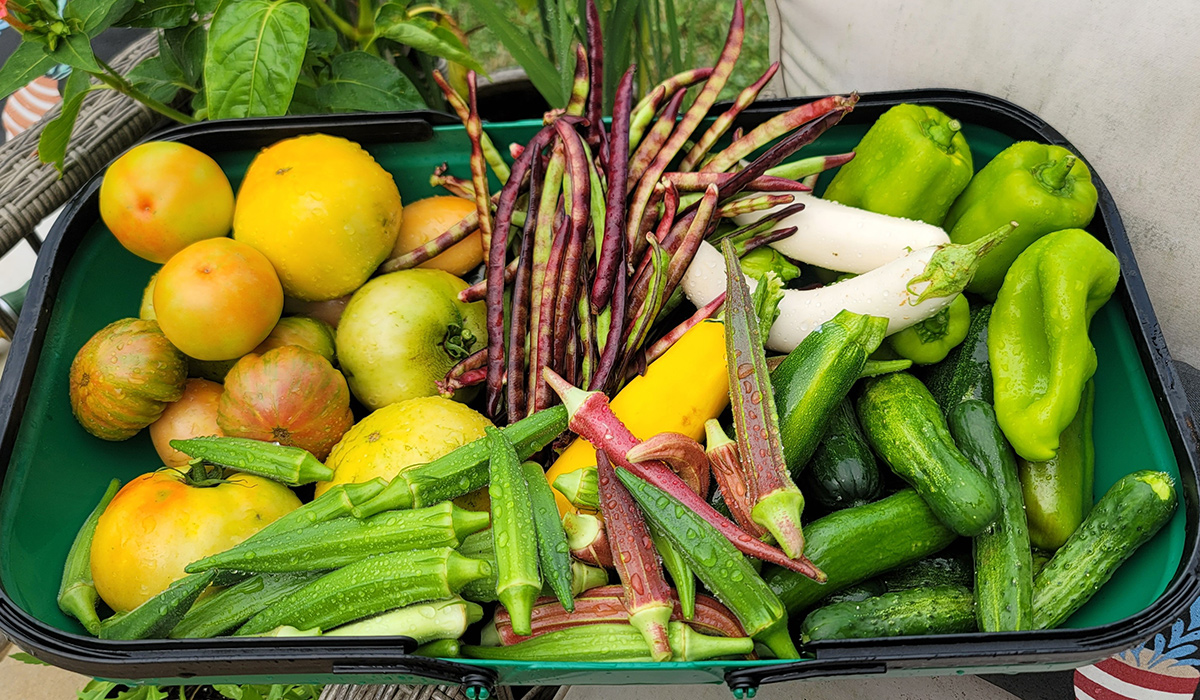
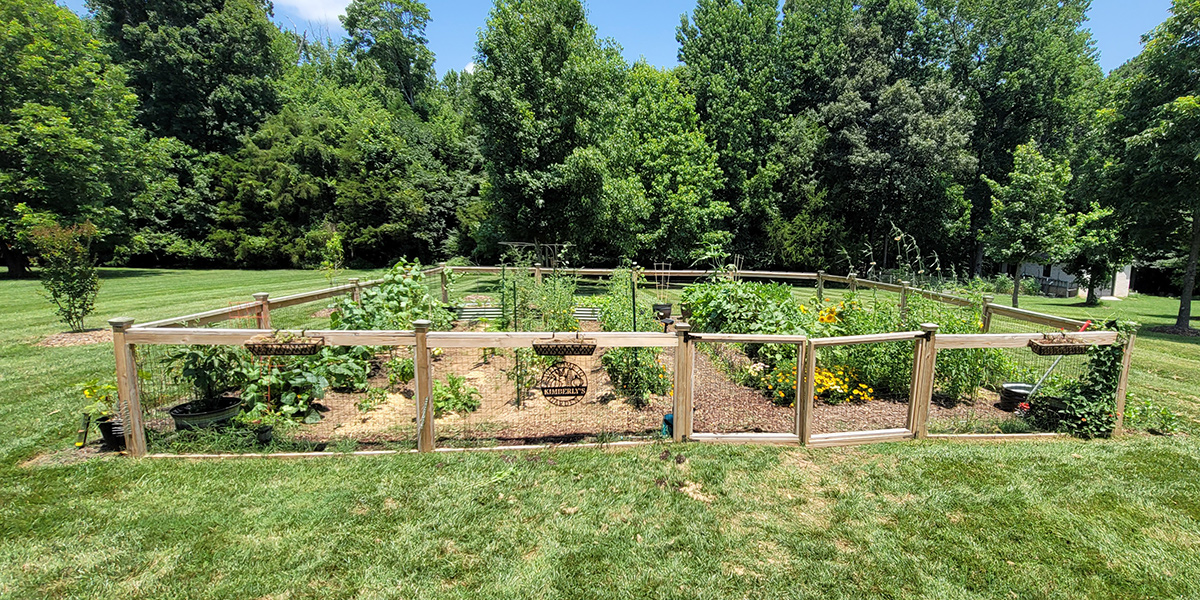
We see a diverse range of gardens here at Garden Photo of the Day, but I often wish we saw more edible gardens. Don’t get me wrong—I want to see any and all of the plants you grow, and what is shared with the blog on a weekly basis blows me away, but the beauty of a kitchen garden should not be understated. One gardener proving my point is Kimberly Moore-Dudley from Greensboro, North Carolina. Kimberly grows a wide variety of gorgeous vegetables and includes a lot of flowers to encourage pollinators. Her bountiful garden proves that gardening can be just as delicious as it is beautiful.
Hi! I’m Kimberly, and I live in Greensboro, North Carolina. I have a 1,000-square-foot vegetable and flower garden. I’ve always dreamed of having a kitchen garden full of the southern varieties I grew up with. I’m currently a Master Gardener volunteer intern with the NC State University Master Gardener Volunteer program working toward my certification in November. My family has always had gardens, and I’m sharing our traditions with my daughter, who graduated from college last year. Gardening will always be a part of my life, and it brings me so much joy.
You can find me on Facebook and Instagram under Kimberly’s Golden Garden.
Kimberly has ample space for growing; I know a lot of small-space gardeners are salivating at the sound of 1,000 square feet of open gardening space, but even a decent-sized plot fills up fast. Aside from the necessary room needed for maintaining plants and accessing her harvest, Kimberly utilizes every available inch.
And her hard work pays off in the form of these diverse and delicious harvests! A grocery store’s produce department is a rainbow of fruits and vegetables, but growing your own crop can open your eyes to the incredible diversity in varieties and flavors that are actually available. The gorgeous purple hull beans in the center are a great example. They are a type of cowpea and a nitrogen-fixing plant—beautiful, delicious, and beneficial!
A vegetable gardener’s best friends are some bright flowers that signal to the pollinators that it’s their turn to put some work in. Vegetable flowers tend to be small and can easily be overlooked by bees in their hunt for nectar and pollen. Planting some bigger blooms will attract the bees, who will eventually find their way to your veggie plants as well. Learn more about this technique here: Grow More Flowers to Harvest More Food. Kimberly’s impressive harvests are absolutely due, in part, to her abundance of flowers.
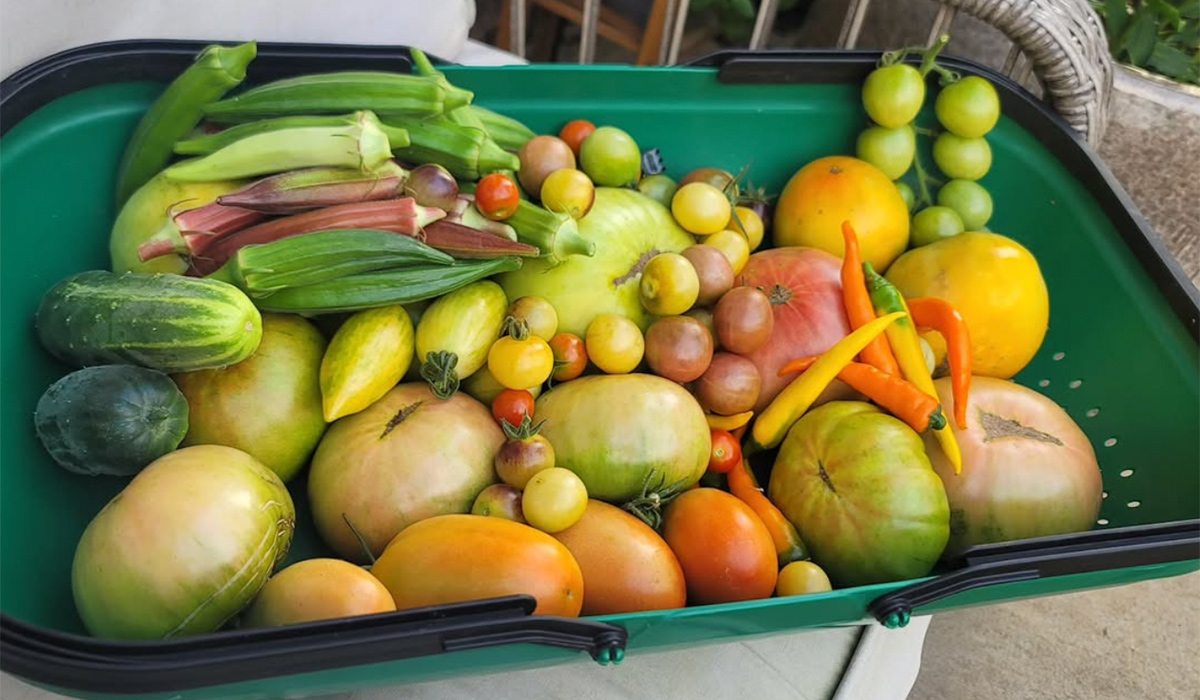
Another colorful and delectable harvest: You know your garden (and diet) is successful when you’re producing this much color.
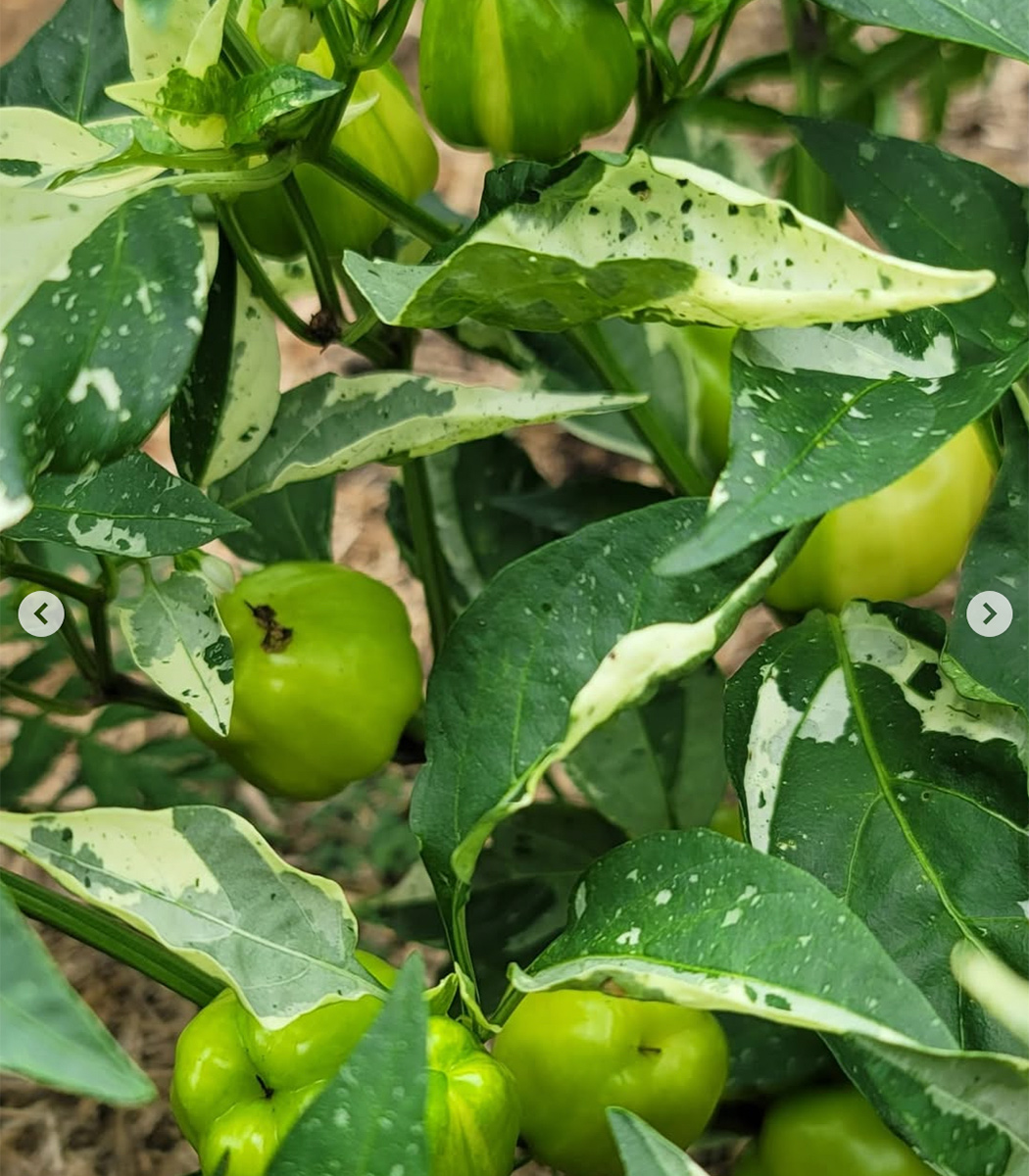
Aside from the colorful harvest and beautiful flowers, the plants in a veggie garden can have some ornamental qualities. Your average tomato plant isn’t going to be anything to write home about, but the variegated foliage on Kimberly’s ‘Confetti’ sweet bell peppers is worthy of any garden bed.
Among all these stunning vegetables and flowers, Kimberly still finds space to grow some incredible fruit. This watermelon isn’t quite ready for harvest, but it’s shaping up to be a beautiful and delectable summer snack.
Thank you so much for sharing your incredible garden with us, Kimberly! The wide array of gorgeous crops that you grow is inspirational, and your mission to pass on the tradition of gardening with your daughter is truly heartwarming.
I know many more GPODers have vegetables patches, but opt to share “prettier” parts of their garden. I challenge you to share both! My favorite part of Garden Photo of the Day is celebrating all facets of gardening, from our ornamental beds to native havens, and edible gardens to indoor plant collections. No matter what you grow, we love to see it and learn more about it! Follow the directions below to submit photos via email, or send me a DM on Instagram: @agirlherdogandtheroad.
We want to see YOUR garden!
Have photos to share? We’d love to see your garden, a particular collection of plants you love, or a wonderful garden you had the chance to visit!
To submit, send 5–10 photos to [email protected] along with some information about the plants in the pictures and where you took the photos. We’d love to hear where you are located, how long you’ve been gardening, successes you are proud of, failures you learned from, hopes for the future, favorite plants, or funny stories from your garden.
Do you receive the GPOD by email yet? Sign up here
Fine Gardening Recommended Products
Lee Valley Garden Obelisks
Fine Gardening receives a commission for items purchased through links on this site, including Amazon Associates and other affiliate advertising programs.
Sturdy yet lightweight, these obelisks provide ample support for climbing plants while being easy to install and move. The medium obelisk stands 68 1/2″ high overall with a diameter of about 9 1/2″, compact enough for smaller containers indoors or out. The large size stands 86 1/2″ high with a diameter of 15 3/4″, ideal for larger outdoor spaces and containers.
Gilmour 5/8″ x 25′ Round Weeper Soaker Hose
Fine Gardening receives a commission for items purchased through links on this site, including Amazon Associates and other affiliate advertising programs.
Lightweight garden hose is made of 100% recycled vinyl for clog resistant, consistent soaking in the garden or around foundations. Can be installed above or below ground to efficiently deliver water directly to plant roots. Can be linked with other hoses to create your own DIY garden drip irrigation system, and is flexible for easy storage and space saving.
Lee Valley Large Gardener’s Wash Basket
Fine Gardening receives a commission for items purchased through links on this site, including Amazon Associates and other affiliate advertising programs.
This basket was designed to be used by gardeners to wash freshly harvested vegetables before taking them inside. You can gather your vegetables and then hose them off right in the same basket. However, you can also use it for fruit or add a cloth liner for serving bread or other baked goods. Measuring 16″ long, 11″ wide and 4″ deep, it is made of chrome-plated steel to resist rust.
Growing planting indoors is one of the recommend way to make your indoor space more aesthetically pleasing.
Pothos being most popular and easy to grow houseplant, it does well when planted with other indoor plants.
Companion planting is an age-old practice that has been proved to deter pests, attract pollinators and enhance overall growth of crop.
Even container gardeners have adopted companion planting, as it allows them to increase the variety of plants they can grow together in limited space.
In this write-up, you’ll learn about the plants that can be grown with pothos.
Before that let me share a few benefits of companion planting.
Benefits of Companion Planting
Companion planting is a smart way to get the most out of your space—you can grow more plants together, even if your shelves or windowsills are already full.
Plus, mixing different plants helps them grow better and keeps your indoor garden looking lively.
Another cool perk is that certain plant combos can naturally keep pests away, so you don’t need to mess with chemicals. Your plants also end up sharing nutrients more efficiently, which means less work for you and healthier greenery overall.
Grouping plants with different colors and shapes makes your home feel cozy and full of life.
It turns your indoor garden into a little oasis that’s both productive and super pretty.
15 Pothos Companion Planting
When choosing houseplants to grow with pothos, it is essential to choose species that share similar growing conditions.
Go for plants that thrive in moderate to bright, indirect light and prefer well-drained soil with consistent but not excessive moisture.
Ensuring such compatibility allows both pothos and its companions to flourish together, making care routines simpler and promoting a cohesive, healthy indoor garden.
1. Peace Lily
Peace Lily is an elegant indoor companion for Pothos, featuring lush dark leaves and graceful white blooms.
Peace Lilies thrive in moderate to bright, indirect light—direct sun can scorch their leaves, while low light may reduce flowering. Their water needs are similar to Pothos, preferring the soil to dry out slightly between waterings, but not allowed to get bone dry.
Peace Lilies do best at temperatures between 65–80F and enjoy a humid environment, so regular misting can help.
Like Pothos, they benefit from a balanced liquid fertilizer, but only during their growing season, about every 4–6 weeks at half strength.
With their air-purifying abilities and overlapping care routines, Peace Lilies make both practical and beautiful partners for your indoor Pothos plantings.
2. Snake Plant
Looking for a hardy, adaptable partner for your Pothos? Snake Plants fit right in. With their sword-like leaves shooting upright, they handle a wide range of household light—happy with anything from bright corners to that dim spot you’re not sure what to do with.
Like Pothos, Snake Plants prefer when you let the soil dry out before watering again, reducing the risk of root rot.
Temperature swings aren’t a problem for these tough plants; anything from 60–80F feels just right. Feed them lightly with diluted liquid fertilizer in spring and summer, but otherwise they thrive with little attention.
If you want an indoor combo that looks sharp, purifies the air, and pretty much cares for itself, Snake Plants and Pothos make the perfect low-maintenance team.
The Jade Plant, with its plump, glossy green leaves and tree-like appearance, adds structure and contrast to a Pothos arrangement.
Its preference for bright, indirect light complements Pothos’ own needs, making window sills or well-lit corners ideal locations.
Both plants dislike soggy soil—allow their pots to dry out between waterings, and use a well-draining mix to keep roots happy.
Jade’s compact, upright form balances nicely against Pothos’ trailing vines, giving your display interesting height and texture.
4. Begonia
Begonia offers a burst of color and drama with its diverse foliage and often vivid flowers.
Perfect for humid areas, both Begonia and Pothos appreciate regular misting and indirect light; avoid direct sun to prevent leaf scorching.
Begonias require soil that is kept gently moist (not wet), while Pothos is more drought-tolerant, so keep them on a similar watering schedule for ease.
Together, they form a vibrant, multifaceted arrangement that draws the eye and livens up shaded spots.
5. Ficus Benjamina (Weeping Fig)
Ficus Benjamina, with its glossy, cascading leaves, grows upward and outward, providing a natural “canopy” for trailing Pothos.
Best placed in bright, filtered sunlight, both plants share a need for even moisture—water when the top inch of soil is dry.
Ficus benefits from occasional misting, which also suits Pothos if humidity dips.
While Ficus can grow into a small indoor tree, its slender trunk and arching branches offer a graceful backdrop to Pothos’ lush foliage.
6. Asparagus Fern
Airy and delicate, Asparagus Fern softens the look of larger, bolder leaves like Pothos’.
Both like a spot with filtered sunlight and consistent water; mist regularly to prevent browning fronds, especially in dry homes.
Their growth habits—Pothos trailing, fern arching—mesh beautifully in mixed planters or hanging baskets, creating a gentle, woodland-inspired feel in your space.
7. Monstera (Swiss Cheese Plant)
Monstera’s dramatic, fenestrated leaves immediately draw attention, while Pothos provides a flowing cascade beneath.
Both thrive in bright, indirect light and require watering once the top layer of soil has dried out.
Monstera can grow quite large, so it pairs best in spacious rooms or as the statement plant in a group. Fertilize both plants in growing months for best results—this duo turns any room into a tropical hideaway.
8. Spider Plant
Spider Plants are energetic, with striped leaves and offshoots that dangle below the pot, mixing well alongside Pothos.
Adaptable to most light conditions, both these plants take well to being a little neglected—let soil dry out then water well.
Spider Plants send out “pups,” or new small plants, adding more greenery without extra work. The mutual air-purifying abilities and easy-care routines make them perfect for busy households.
9. ZZ Plant (Zamioculcas zamiifolia)
ZZ Plants boast glossy, feather-like stalks that stand upright and shine in low-light corners, just like Pothos.
This pairing thrives on neglect: allow soil to dry out thoroughly between waterings, reducing the risk of rot.
Both tolerate low humidity but look fuller with occasional misting. Their contrasting vertical and trailing habits create visual variety while streamlining plant care for minimal fuss.
10. Dieffenbachia (Dumb Cane)
Dieffenbachia’s broad, highly-patterned leaves stand out in any grouping, especially when set against the sleek green Pothos.
Both prefer warmth, moderate light, and soil kept evenly moist but never soggy.
Use caution when handling Dieffenbachia plants, as their sap can irritate skin and is toxic if ingested. When grouped with Pothos, they make a striking, statement arrangement with a lush, tropical vibe.
11. Philodendron
Many Philodendrons closely resemble Pothos, with heart-shaped leaves and vining growth.
This classic pairing thrives best in moderate, indirect sunlight and with regular light watering, allowing soil to partially dry out between drinks.
High humidity is a plus, so consider grouping pots or using a pebble tray. Let the vines tangle for an untamed, wild appearance or train them along support stakes for a neater look.
12. Calathea
Calathea adds drama with its stunning, patterned foliage that moves to follow the light throughout the day. It prefers filtered sunlight, consistent moisture, and higher humidity—conditions that also help Pothos shine.
Calathea is particular about water quality; distilled or filtered water helps avoid leaf edges browning. Together, these two create a luxurious, rainforest effect for the discerning plant lover.
13. Tradescantia (Wandering Jew)
Tradescantia boasts eye-catching leaves in shades of green, purple, or silver and grows quickly with Pothos in similar moderate, indirect light.
Keep their potting soil moist but not wet, and enjoy trimming cuttings for new plants.
Hanging planters show off their trailing habits, creating a dynamic, layered waterfall of color and texture perfect for brightening up shelves, mantles, or window ledges.
14. Areca Palm (Butterfly Palm)
With its slim, feathery fronds and gentle upward growth, Areca Palm pairs elegantly with flowing Pothos vines.
Both love lots of indirect light and evenly moist soil—never soggy.
Areca’s ability to raise humidity helps Pothos (and nearby plants) thrive, while its substantial size makes it a stunning anchor for mixed indoor planters or as a floor plant next to cascading containers.
15. Boston Fern
The Boston Fern brings full, arching fronds and lush, thick greenery to your Pothos groupings. Both plants do well with bright, indirect light and benefit from regular misting to keep fronds soft and healthy.
Boston Fern requires more moisture than Pothos, so group them in high-humidity spots like kitchens or bathrooms.
The combination delivers a soothing, classic green backdrop with plenty of natural movement and texture.
Choose the Right Companion Plant for Pothos
Selecting the right companion plants for Pothos not only enhances the beauty of your indoor garden but also ensures all plants thrive together.
By selecting species with similar care requirements, you create an effortless and harmonious environment, making plant care simpler and your indoor space healthier and more attractive.
Light Requirements
Choose companions that prefer moderate to bright, indirect sunlight, just like Pothos. Avoid pairing with plants needing either deep shade or direct sun, as consistent lighting helps all grouped plants grow evenly.
Water Requirements
Opt for plants that like the soil to dry out partially between waterings. Pothos and its ideal companions typically dislike overwatering and are prone to root rot if kept too wet, so synchronized watering routines benefit all.
Soil Requirements
Use a well-draining, airy potting mix to support both Pothos and its companions. Good drainage prevents waterlogging, which is crucial for the health of these houseplants.
Nutrients
Feed Pothos and its companions with a balanced, diluted liquid fertilizer every 4–6 weeks in the growing season. Uniform fertilization ensures each plant gets what it needs without risk of over-feeding.
Conclusion
Companion planting with Pothos transforms an ordinary indoor collection into a thriving, resilient, and visually dynamic environment.
By carefully choosing plants with similar light, water, and soil needs, you simplify plant care while enhancing growth, air quality, and aesthetic diversity.
This thoughtful pairing also encourages mutual benefits, such as improved pest resistance and a stabilized microclimate, which helps all plants flourish together.
Ultimately, grouping compatible companions with Pothos results in a healthier, more attractive, and effortlessly maintained indoor garden
Khaja Moinuddin, a computer science graduate, finds joy in gardening and homesteading. Join him on this blog as he shares his experiences in homesteading, gardening, and composting
Georgia Gov. Brian Kemp, left, and Centers for Medicare and Medicaid Services Administrator Seema Verma, right, sign waivers allowing Georgia to institute work requirements for certain Medicaid recipients at the state Capitol in Atlanta, Oct. 15, 2020.
Jeff Amy/AP
hide caption
toggle caption
Jeff Amy/AP
Now that Republicans’ big tax-and-spendingbill has become law, there will be new bureaucratic hurdles for millions of Americans who rely on Medicaid.
The new law contains a provision that in most states, for the first time, low-income adults will have to start meeting work requirements to keep their health coverage.
Some states have already tried this, but Georgia is the only state that currently has an active system using work requirements to establish Medicaid eligibility — and recipients must report to the system once a month.
When she first started using the system, Tanisha Corporal, a social worker in Atlanta, wasn’t opposed to work requirements — in principle.
But then she left her job at a faith-based nonprofit to start her own project, called the Be Well Black Girl Initiative. While she got that up and running, she needed health coverage. She soon came face-to-face with the daunting bureaucratic hurdles involved in meeting Georgia’s work requirements.
“I would have never thought that I was going to run into the challenges that I did, with trying to get approved, because I’m like, I know the process,” Corporal said. “I’m a social worker. I’ve been in human service.”
Georgia’s system: a win for other states, or a warning?
Corporal was familiar with the state’s social service programs. She had spent many years helping other Georgians sign up for benefit programs.
But the challenges Corporal ran into, with paperwork and the process, were unexpectedly severe. Other Georgians have also struggled to comply with the work requirements.
Tanisha Corporal spent eight months resubmitting paperwork and navigating through red tape to prove that she, and her son, a full-time college student in Georgia, both met the requirements of working, studying, or volunteering at least 80 hours a month to qualify for Medicaid.
Jess Mador/WABE
hide caption
toggle caption
Jess Mador/WABE
That’s why health advocates are concerned about other states having to set up their own systems, given Georgia’s experience. They say the eligibility verification involves excessive red tape, leading to improper denials and loss of health coverage.
As early as 2027, the law will require adults on Medicaid who are under 65 to report how they are using their time: to be eligible for coverage, they will have to spend at least 80 hours every month at work, in school, or in volunteer activities.
Alternatively, these adults could submit documentation showing they qualify for an exemption, such as being a full-time caregiver.
Verification systems like Georgia’s can be expensive to implement and run. In the two years since launching its program, Georgia has spent more than $91 million in state and federal funds, according to state data.
More than $50 million of that was spent on building and operating the eligibility reporting system.
Currently, 8,078 people are enrolled in Georgia as of June 30.
Denials, appeals and confusion
For Corporal, 48, forgoing health insurance wasn’t an option. She had pre-diabetes as well as other medical concerns.
“I have breast cancer in my family history,” she said. “I gotta get my mammograms.”
On paper, it looked like she qualified for Georgia’s program, called Pathways to Coverage, for adults who wouldn’t otherwise qualify for traditional Medicaid in Georgia.
To be eligible, adults must have an income below the federal poverty level, which is $15,650 per year for an individual, or $26,650 per year for a family of three. They also must show they’re working at least part time, attending school, training for a job, or volunteering at least 80 hours a month.
Corporal was already volunteering at least that much, including with the nonprofit Focused Community Strategies, and helping with other South Atlanta community improvement efforts.
An information booth for Georgia Pathways, the state’s Medicaid program that includes work requirements, at a job fair in Atlanta, Ga. on June 5.
Sudhin Thanawala/AP
hide caption
toggle caption
Sudhin Thanawala/AP
She gathered up the various documents and forms needed to verify her volunteer duties and hours, then submitted it all through Georgia’s online portal.
“And we were denied. I was like, this makes no sense,” said Corporal, who has a master’s degree in social work. “I did everything right.”
In the end, it took eight months fighting to prove that she, and her son, a full-time college student in Georgia, both qualified for Medicaid.
She repeatedly uploaded their documents, only for them to bounce back or seemingly disappear into the portal. She went through numerous rounds of denials and appeals.
Corporal pulled up one of the denial letters on her cell phone, and read it out loud.
“Your case was denied because you didn’t submit the correct documents. And you didn’t meet the qualifying activity requirement,” she read from the email.
When she tried to call the state Medicaid agency, it was difficult to reach anyone who could explain what was wrong with her application paperwork, she said.
“Or, they’ll say they called you and we look at our call log. Nobody called me,” she said. “And the letter will say, you missed your appointment and it’ll come on the same day.”
Georgia promises tech fixes
Corporal’s application was finally approved in March after she spoke about her experience at a state public hearing about Pathways to Coverage, covered by Atlanta news outlets.
When asked about the delays and difficulties Corporal experienced, Ellen Brown, a spokesperson for Georgia’s Department of Human Services, emailed this statement: “Due to state and federal privacy laws, we cannot confirm or deny our involvement with any person related to a benefits case.”
Brown added that Georgia is implementing a number of tech fixes to streamline the uploading and processing of participants’ documents. They include, “rolling out a refresh to the Gateway Customer Portal in late July that will include easier navigation and training videos for users as well as built-in prompts to ask customers to upload required documents.”
Now that Corporal has Medicaid coverage, she has to recertify her volunteer hours every month using the same glitchy reporting system.
“It’s still a nightmare. Even once I got through the red tape and got approved,” Corporal said. “Now maintaining it is bringing another level of anxiety.”
But she wonders how anyone without her professional background manages to get into the program at all.
“I think the system has to be simplified,” she said.
Because Georgia set up its work requirement before the recently-passed law, it had to get permission from the federal government through a special waiver.
It is now seeking an extension of that waiver to continue the Pathways to Coverage program beyond its current expiration of September 2025. In the application, officials said they would reduce the frequency by which participants needed to re-verify their hours from once a month, to once per year.
What happened in Arkansas
But for now, Corporal’s experience remains typical. And many health advocates fear it will be replicated elsewhere.
“In Georgia, we have seen that people just can’t get enrolled in the first place. And some folks who do get enrolled lose their coverage because the system thinks they didn’t file their paperwork or there’s been some other glitch,”said Laura Colbert, who leads the advocacy group Georgians for a Healthy Future.
Another state, Arkansas, also tried work requirements in 2018.
But it didn’t go any better for Arkansas, said Joan Alker, who leads the Center for Children and Families at Georgetown University.
“A lot of the problems were similar to Georgia,” she said, “in terms of the website closed at night, people couldn’t get a hold of people.”
Some Republicans who backed the legislation known as the “One Big, Beautiful Bill” said the idea behind the national Medicaid work mandate is to ensure that as many people as possible who can work, do work.
Another benefit is it will help eliminate what the Trump administration deems waste, fraud and abuse.
“What we’re doing is restoring common sense to the programs in order to preserve them because Medicaid is intended to be a temporary safety net for people who desperately need it,” said Speaker Mike Johnson during a June appearance on the Megyn Kelly Show.
Medicaid was meant for certain populations, Johnson argued, such as people with disabilities and “young, single, pregnant moms who are down on their luck.”
“But it’s not being used for those purposes because it’s been expanded under the last two Democrat presidents, and to cover everybody. So, you’ve got a bunch of able-bodied young men, for example, who are on Medicaid and not working. So what we’re doing is restoring work requirements to Medicaid, okay? This is common sense,” Johnson said.
National work requirements are unlikely to actually boost employment, Alker said, because more than two-thirds of Medicaid recipients already have jobs. The remainder includes students, or those who are too sick or disabled to work.
“Work requirements don’t work, except to cut people off of health insurance,” she said.
The logistical steps required to report one’s activities assume that a recipient has reliable internet or transportation to travel to an agency — both things that low-income Georgians may not be able to access, Alker said.
The paperwork requirements to gain coverage via is time consuming, said Georgia resident Paul Mikell, who has Medicaid.
Mikell is a licensed truck driver, but does not have coverage through that job. He’s also an electrician who currently does property maintenance in exchange for free housing.
Mikell has had Medicaid through Pathways for nearly two years. He had problems navigating the Pathways web portal.
“And I know it wasn’t my device because I would go to the library and use the computer, I would try different devices, and I’ve had the same issues,” he said. “Regardless of the device, it’s something with the website.”
Another time, he said, his attempt to recertify his work hours got delayed for paperwork issues.
“They said I was ineligible for everything because of a typo in the system or something, I don’t know what it was. I eventually was able to speak to someone and she fixed it,” he said.
This story comes from NPR’s health reporting partnership withWABEandKFF Health News.
This perennial is hardy in Zones 2 to 7 and is also known as narrow leaf fireweed or blooming sally.
Fireweed (Epilobium angustifolium).
The long, narrow leaves resemble those of willows, inspiring a couple of other common names: willow herb and great willow herb.
A member of the Onagraceae family like its relative evening primrose, the upright racemes of magenta flowers bloom from summer to fall.
Though fireweed usually grows to heights of two to six feet, occasionally it reaches an outstanding nine feet tall. It typically has a spread one to three feet.
This species grows well in full sun, but in climates with hot summers, it is happier in part shade.
Fireweed is adaptable to medium-dry to medium-wet soil. It grows best in acidic soils that are rich in organic matter and well-drained, with a pH between 5.0 and 6.6.
C. angustifolium spreads via rhizomes and self-seeding, so this plant works best in a naturalized-type planting.
It is also suitable for rock gardens, borders, and cottage gardens, and is very striking when grown in large swaths, for more color impact.
Fireweed is a larval host to the white-lined sphinx moth (Hyles lineata), and also attracts long-tongued bees and hummingbirds.
With its large sprays of golden flowers, gray goldenrod (Solidago nemoralis) creates a mass of bright color from summer to fall.
Native to the eastern two-thirds of North America this species is hardy in Zones 3 to 9.
Gray goldenrod (Solidago nemoralis).
A member of the sunflower family, gray goldenrod has grayish-green foliage, and its spikes of yellow flowers nod slightly when in full bloom.
Also called prairie goldenrod, old field goldenrod, or field goldenrod, it grows six to 24 inches tall with a six- to 24-inch spread. It’s one of the smaller varieties of goldenrod.
Gray goldenrod can grow in full sun or part shade, tolerates dry or medium-dry conditions, and thrives in poor soil. It’s ideal for planting in sandy, rocky locations.
This species spreads by rhizomes and self-seeding, so it is best used in naturalized plantings, like cottage gardens.
Butterflyweed, black-eyed Susan, common yarrow, Jerusalem artichoke, nodding onion, and wild bergamot make excellent companions for gray goldenrod.
Related to sunflowers, the Jerusalem artichoke (Helianthus tuberosus) produces edible tubers, which have a taste reminiscent of globe artichoke.
This species is native to eastern and central North America, the Intermountain West, Idaho, and Washington. It is hardy in Zones 3 to 9.
Jerusalem artichokes (Helianthus tuberosus).
Also called sunchoke, the flowers have yellow petals and greenish-yellow centers, with green foliage that is rough to the touch.
It grows six to 10 feet tall with a spread of three to five feet, and blooms in late summer.
Jerusalem artichokes are adaptable to either full sun or part shade, and either dry or moderately moist soils. The plants are not fussy about soil type, provided it is well draining.
This species spreads through rhizomes and self-seeding, so it is best used in a natural-type planting where its spread will be appreciated.
Purple coneflower, wild bergamot, nodding onion, and New England aster will make good companions.
With flat clusters of fragrant pink or purple flowers, joe-pye weed (Eutrochium spp.) is a pollinator favorite.
This plant is native to most of the northern two-thirds of North America, and is hardy in Zones 4 to 8.
The species that I am recommending here is a perennial that was formerly classified as Eupatorium purpureum.
Joe-pye weed (Eutrochium maculatum) in the background with Aster macrophyllus in the foreground. Editorial credit: Sergey V Kalyakin / Shutterstock.com
There are several more closely related species that also go by this common name, and all have similar growing requirements.
When I find my favorite summer salad on the menu, I have no choice but to indulge. The combination of roasted deep red beets, goat cheese, and mixed greens with a balsamic dressing is just delicious. With a patch of soil or even a large container, one does not need to visit their local café to have this easy-to-prepare dish.
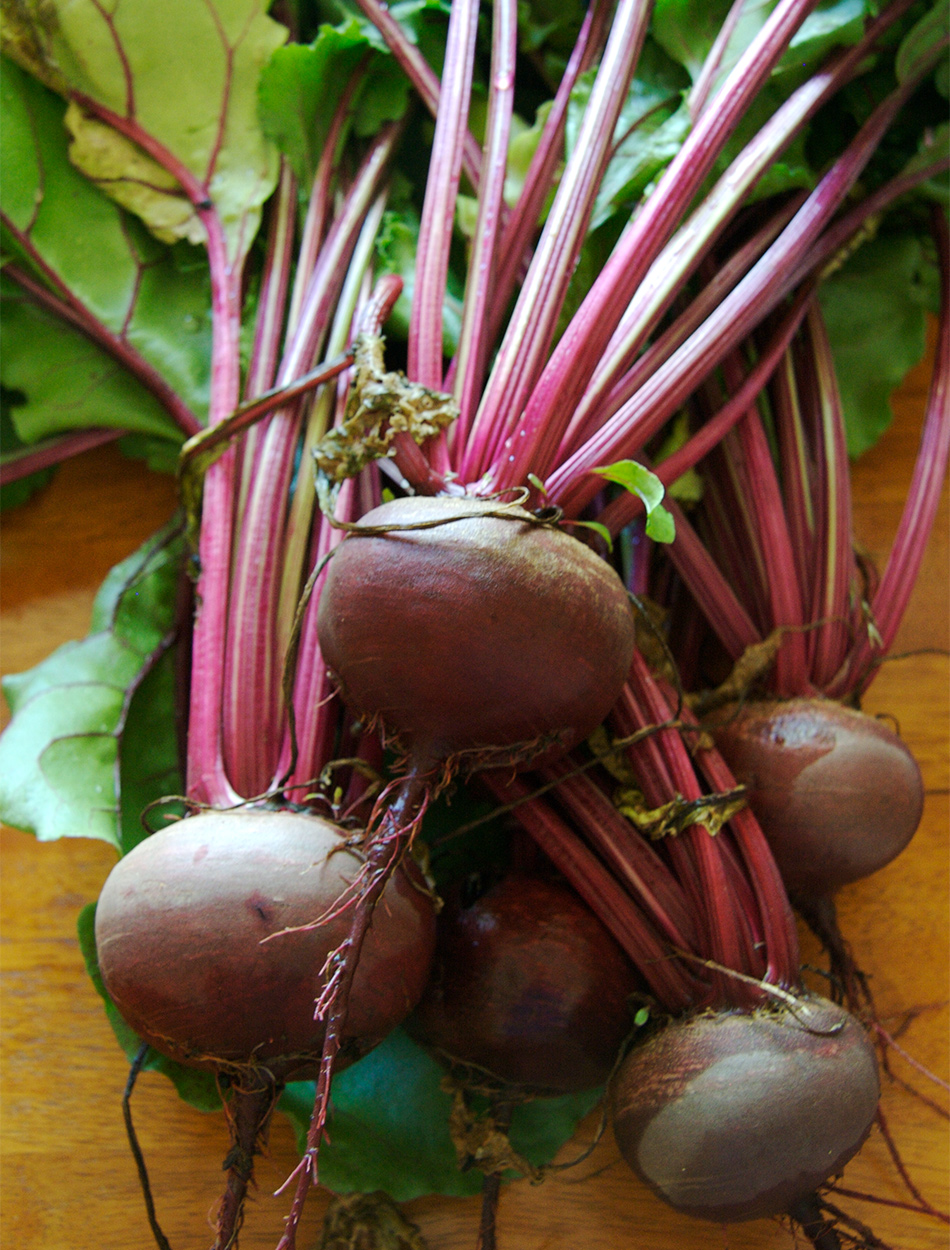
Beets, or beetroot (Beta vulgaris) as they are known in Europe, are a cool-season root vegetable packed with essential nutrients, fiber, vitamins B9 and C, manganese, potassium, and iron. Consisting of 87% water, they are less than 60 calories per cup. Delicious eaten raw, they are most often cooked or pickled. The tender greens are also a tasty addition to your evening’s salad. If you’ve been a beet-hater since their earthy taste hit your palate during childhood, it’s time to try these nutrient-dense veggies again.
Starting beets from seed
No, it doesn’t take one seed that large to create one small beet. Beet “seeds” are actually clusters of two to four seeds fused together. Photo: Saxon Holt
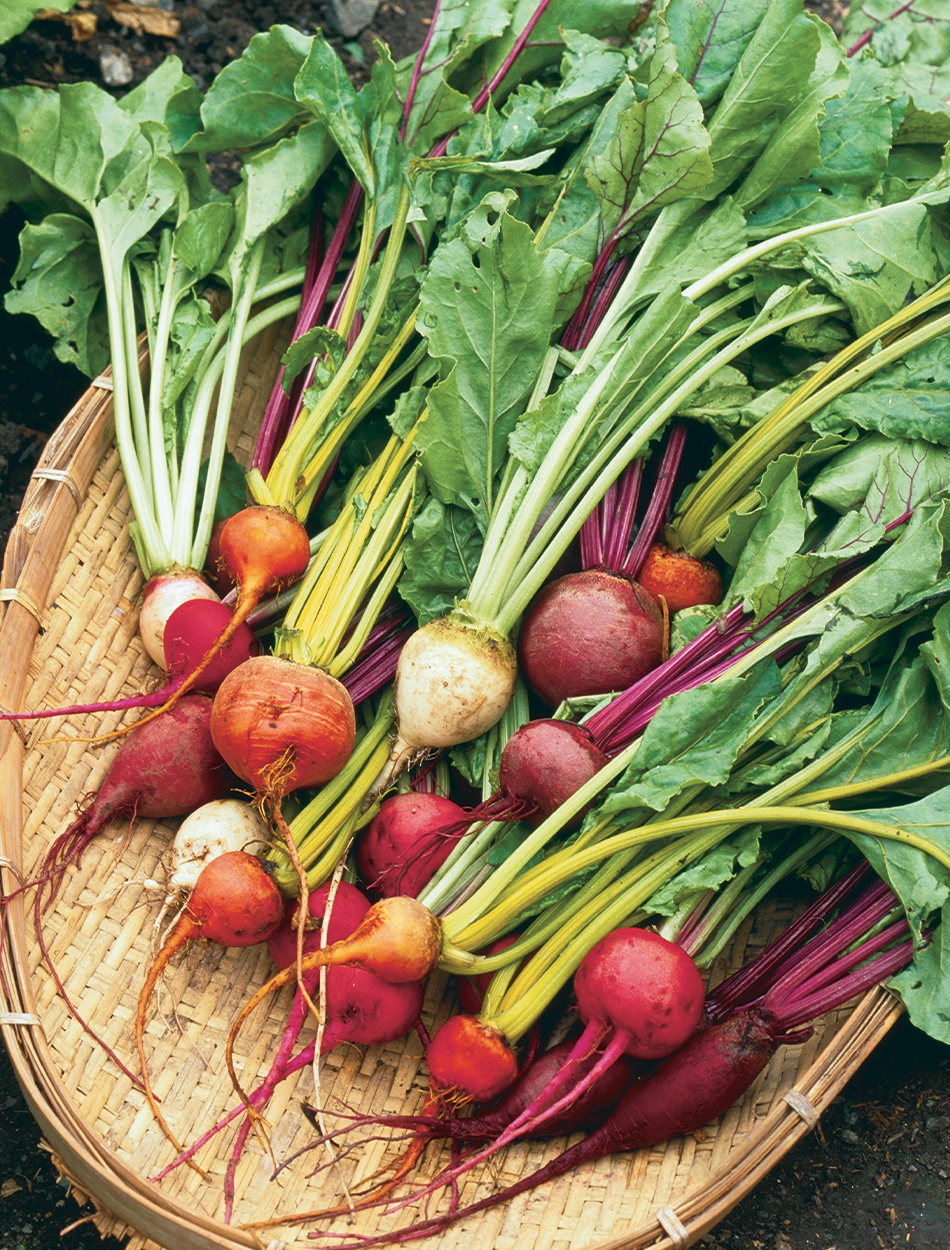
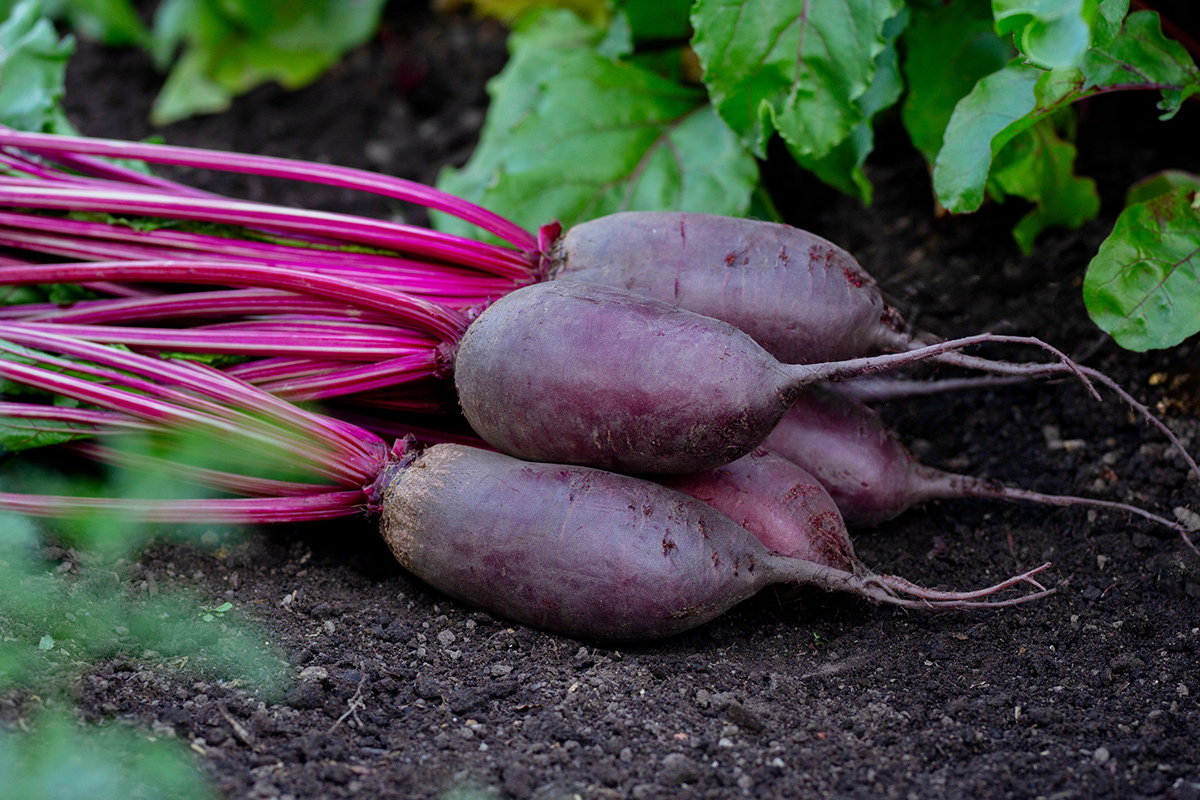
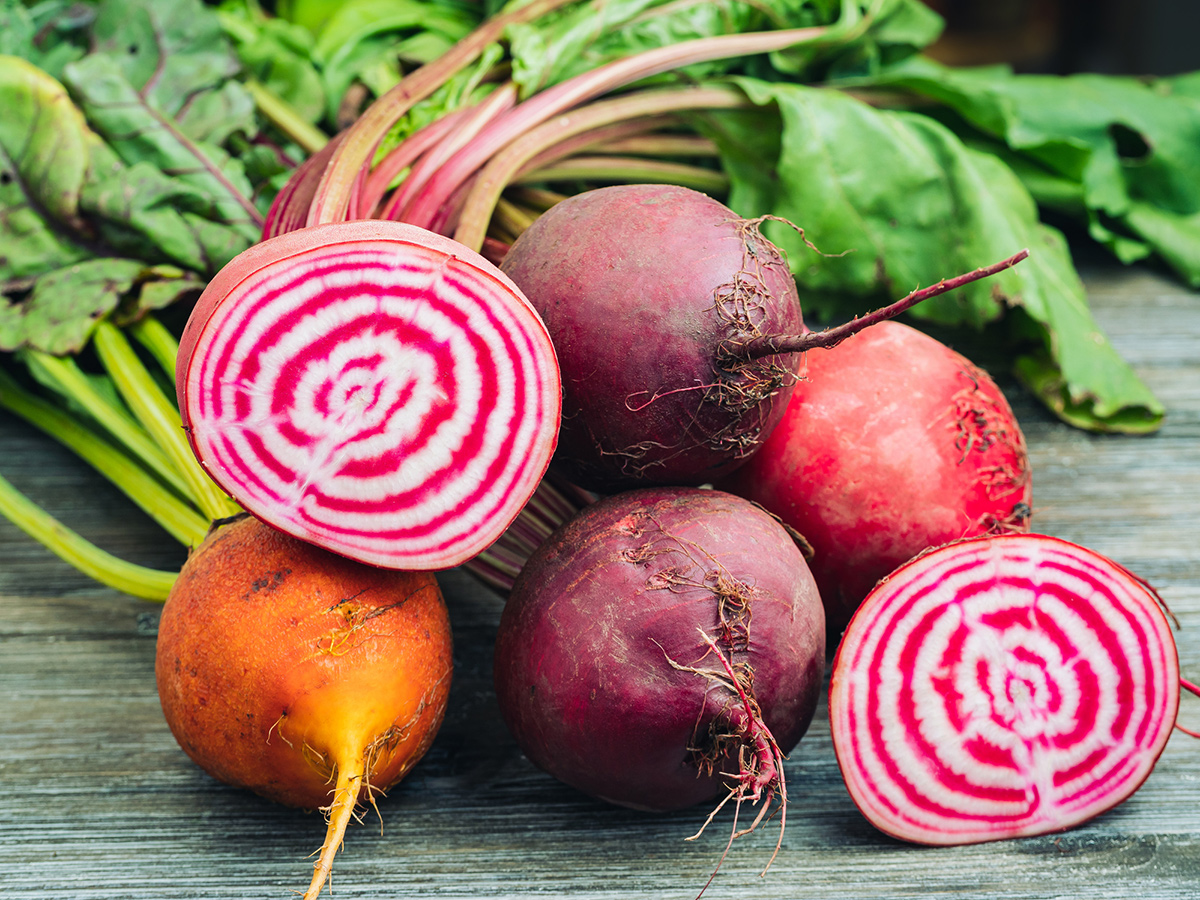
Numerous beet varieties are in catalogs, with color being their most distinguishing characteristic. While most are round, some are cylindrical or shaped like turnips. You will find red to be the most common color, with yellow, white, pink, and purple varieties also available. Tolerant of the cold, they thrive in both spring and fall, being able to survive frosts and near-freezing temperatures.
Best grown by direct-seeding in their beds, they do not like to be transplanted. Rows should be 12 to 18 inches apart and seeds planted 1 to 2 inches apart. If you are short on space, plant them in 2- to 3-foot squares, and keep the spacing even to maximize your production. Sow at least two seeds per space, as germination can be low, but don’t go overboard. Each wrinkly beet “seed” is actually a cluster with two to four seeds inside. Once your plants reach a height of 4 to 5 inches, thin the plants to 3 to 4 inches apart. Pinch or cut off the excess seedlings, leaving it to form a single beet root. Do not disturb the soil by pulling the plants.
Which beets are the best? My first attempt was with a prepackaged mix of red, gold, striped, round, and cylindrical varieties, and they were all wonderful. These are some good ones for you to try.
The world of beets is just as diverse and interesting as tomatoes, peppers, or any of your other favorite edibles. Photo: Saxon Holt
The best beet varieties
Red beets
Detroit Dark Red beet.Photo: BriannaWalther, CC BY-SA 3.0, via Wikimedia Commons
Globe shaped with a solid, deep red flesh, red beets are full of rich flavor. Detroit Dark Red has red-tinged tops and is recommended for sowing late in the season for winter storage.
When looking for a multipurpose beet, Bull’s Blood will do all you ask. Frost hardy, it’s ideal temperature for growing is 50 to 85°F, and it matures in only 50 days. This beet is considered a gourmet addition to salads when picked in the baby stage, and the greens can also be selectively harvested for a burst of color. An heirloom variety, one of its parents is the ancient Crapaudine beet.
Boltardy is one of the most popular and best-known beets in the United States and United Kingdom. Boasting a sweet flavor and a tender, solid, dark red flesh, it’s a great option for roasting, pickling, and eating raw in salads. For a steady supply of these all season long, plant seeds every two weeks, from March to mid-July.
Chefs favor ingredients that offer uniformity and ease of preparation. The heirloom beet Cylindra fits that need perfectly. With roots 5 to 6 inches long and 1 to 2 inches wide when mature, they are easy to process, with a fine texture and sweet taste.
The oldest beet variety still in use is Crapaudine. Beloved in French markets and kitchens, it is typically roasted over a charcoal fire, allowing its thick skin to slip off. It has one of the deepest, earthiest, and most savory flavors of any beet. It keeps well over the winter in cool storage with no loss of taste but is so exceedingly difficult to grow. If you are up for a challenge, this is one to try.
Yellow beets
Touchstone Gold beet.Photo: courtesy of Marti Neely
Golden beets are a bit sweeter than the red varieties and non-staining when you prepare them. With bright green tops, Touchstone Gold has consistently round roots, smooth skin with a bright orange exterior, and golden flesh. When cooked, the gold color is retained.
For good yield and flavor, the heirloom cultivar Golden Detroit has a smooth orange skin and gold interior. A variation of Detroit Red, it is milder and sweeter than its red relative.
Pink beets
Chioggia beet.Photo: nadiasphoto, iStock
An Italian beet with candy cane rings of flesh, Chioggia is yet another heirloom variety that adds visual interest to any dish. Sweet and mild, the colors fade to pink when cooked. When sliced paper thin, they are beautiful on a salad and delicious as a snack.
It’s difficult to pick just one or even a couple of varieties. That’s why we need farmer’s markets—to fill the gaps our garden doesn’t provide. Whichever one you try, you won’t be disappointed. No room in the garden? A large container will give you enough space to get started. If you find a winner I haven’t mentioned, let us know.
Find more information on beets and other root vegetables:
Discuss this article or ask gardening questions with a regional gardening expert on the Gardening Answers forum.
And for more Midwest regional reports, click here.
Marti Neely, FAPLD, owns and operates Marti Neely Design and Associates in Omaha, Nebraska.
Fine Gardening Recommended Products
Gardener’s Supply Company Summerweight Fabric Plant Cover
Fine Gardening receives a commission for items purchased through links on this site, including Amazon Associates and other affiliate advertising programs.
Ideal for summertime pest control, this garden cover effectively screens out Japanese beetles, potato beetles, cabbage worms, leaf miners, carrot flies and most vine borers. It transmits 97.6% of the light to your plants without allowing heat build-up, and it provides cold protection down to 41° F, to extend your growing season.
The New Organic Grower, 3rd Edition: A Master’s Manual of Tools and Techniques for the Home and Market Gardener, 30th Anniversary Edition
Fine Gardening receives a commission for items purchased through links on this site, including Amazon Associates and other affiliate advertising programs.
Since its original publication in 1989, The New Organic Grower has been one of the most important farming books available, with pioneer Eliot Coleman leading the charge in the organic movement in the United States. Now fully illustrated and updated, this 30th Anniversary Edition is a must-have for any agricultural library.
A.M. Leonard Deluxe Soil Knife & Leather Sheath Combo
Fine Gardening receives a commission for items purchased through links on this site, including Amazon Associates and other affiliate advertising programs.
MULTITASKING DUAL EDGES: a deep serrated edge and a tapered slicing edge ideal for tough or delicate cuts. DURABLE 6-inch stainless steel blade withstands 300 lbs of pressure. TWINE CUTTING NOTCH, DEPTH GAUGE MARKINGS & spear point – no need to switch tools when using this garden knife. LEATHER SHEATH: heavy duty, protective, clip on sheath to keep your knife convenient and secure. LIFETIME WARRANTY.
Venus Williams returns a shot against Magdalena Frech on day 4 of the Mubadala Citi DC Open. Williams, 45, said she’s been on COBRA health insurance.
Scott Taetsch/Getty Images
hide caption
toggle caption
Scott Taetsch/Getty Images
What drove Venus Williams to the court at the Mubadala Citi DC Open this week after a year-long break from competition?
“I had to come back for the insurance,” she quipped in an on-court interview after winning her first-round match on Tuesday. “I was like, ‘I got to get my benefits on!’ Started training.”
The crowd at the stadium in D.C. laughed knowingly. “You guys know what it’s like!” she said.
Venus Williams made the remarks about health insurance after winning her first round match on Tuesday.
YouTube
Even if you’re not a seven-time grand slam champion who just became the oldest player to win a pro women’s singles match in decades, you probably know the job-health insurance juggle that Williams was talking about.
Here are four ways U.S. health insurance can be challenging for Williams and many other Americans.
1. Her job is a little off and on.
In the U.S., most working-age people get their health insurance through work. Their employer gives them a few plan options and then pays a healthy chunk of the premium cost, with the rest deducted from employees’ paychecks.
When someone leaves a regular job maybe to start a business or take a break, there goes that health insurance deal. That’s essentially what happened to Williams — she took a break from competition and lost access to her regular benefits.
The health insurance Venus Williams got through the Women’s Tennis Association was a “best-in-class global medical, dental and vision insurance plan,” WTA wrote in a statement to NPR. In order to be eligible, players have to have a certain ranking and play a certain number of events in the previous year, according to the statement, and coverage lasts for the full calendar year.
“They informed me earlier this year I’m on COBRA,” Williams explained on the court Tuesday. COBRA is a law that allows you to keep your job-based insurance plan after your job ends, but you have to pay for the whole premium yourself.
“With COBRA, you may have a very good plan, but your health care costs are going to go up,” explains Miranda Yaver, health policy professor at the University of Pittsburgh. It’s notoriously expensive, often $500 per month or more. COBRA to cover a whole family’s insurance premium can easily rival a mortgage payment.
Venus Williams is a multi-millionaire, so the premium cost might not matter to her in the same way it does to the average person, especially if it allows her to keep that “best-in-class” plan she’s used to.
2. She has health care needs.
“Let me tell you, I’m always at the doctor, so I need this insurance,” Williams said in her courtside interview.
She’s also an elite athlete. “Someone in her position might need physical therapy, sports, medicine, specialized care, and to be able to get that anywhere in the world,” says Cynthia Cox, a vice president at the health research organization KFF.
Plus, Williams is now 45 years old. Health insurance costs generally increase with age, as do health problems.
All of that could make finding a health plan that works for her more complicated than for most people.
3. She has way more options than she used to.
Before the Affordable Care Act, Venus Williams would have really been in a tough spot.
Professional athletes were included on a list of “Ineligible Occupations” — jobs that health insurance companies deemed too risky to provide coverage for — along with loggers, miners and taxi cab drivers.
Also back then, “even a wealthy person might have had preexisting conditions that could have made them uninsurable no matter how much money they were willing to pay for their premium,” Cox says.
That contributed to “job lock” — where people were stuck in their jobs no matter what because they needed the health insurance.
Now, if Williams really didn’t want to compete anymore and ran out of her 18-months of COBRA coverage, she could go to Healthcare.gov and buy an Affordable Care Act plan.
4. Only in the U.S., jobs and health insurance are deeply linked.
There’s no escaping the fact that in America, health insurance is connected to employment. “The dominant insurance model in the United States is employer-sponsored insurance,” Yaver says. (The story of how that came to be is related to the post-World War II economy when health insurance was a “fringe benefit,” to attract employees in a tight labor market.) Yaver adds that for workers who get insurance from their jobs, it’s often “a good deal.”
Since Congress passed the One Big Beautiful Bill Act, the public insurance plan for low-income people, Medicaid, will soon be tied to work, too. Beneficiaries will have to periodically prove they’re working a certain number of hours per month to be able to keep their health benefits. That requirement will affect mostly middle-aged, low-income women, according to a recent analysis.
For Venus Williams, the off-and-on nature of her job that comes with a high risk of injuries makes employer-based health insurance especially hard. In a way, the tennis hall-of-famer is dealing with a very special version of “job lock.”
Her fans can celebrate, though. Even if it’s for the health insurance, they get to see her on the court again; she’s playing a tournament next month in Cincinnati.
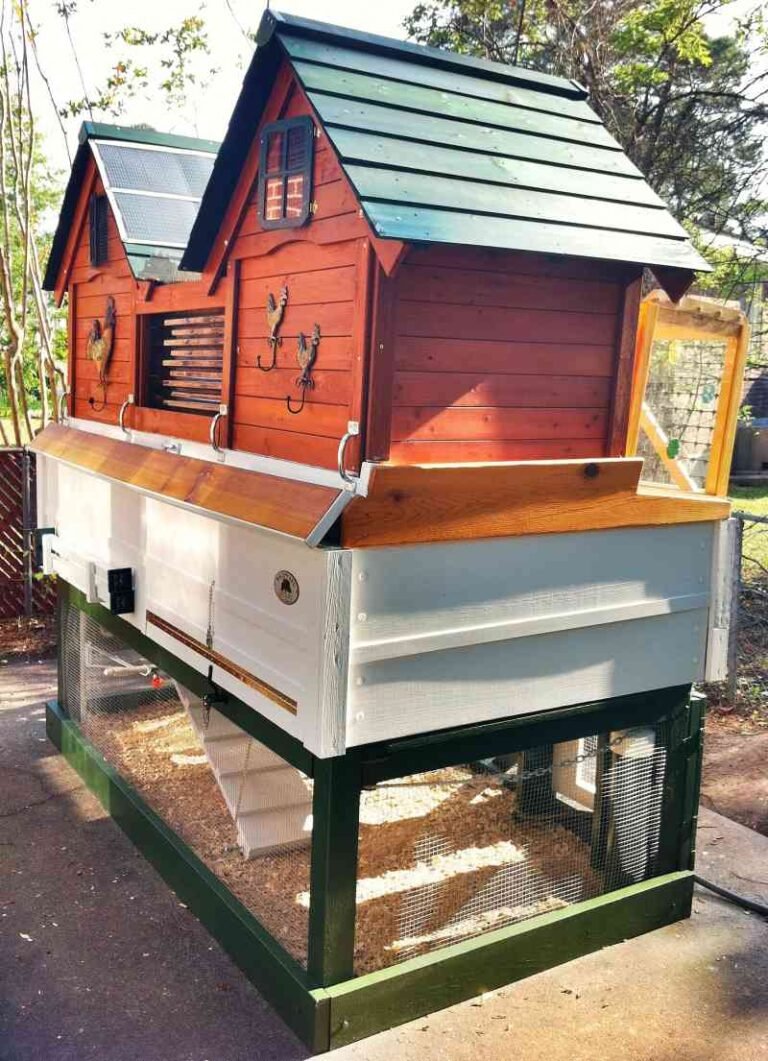
Cleaning the coop on regular basis is one of the key aspects of maintaining healthy flock.
Especially, when you’re adding new chicks to the coop, it is essential to disinfect to avoid the spread of infection and diseases.
Cleaning and disinfecting the coop is beyond aesthetics. Overtime, bacteria, viruses and pests build-up in the chicken coop. If left unchecked, it can cause serious health diseases.
To avoid ailments among flocks, it is essential that you clean and disinfect the coop at regular intervals. Right technique, proper timing and cleaning supplies are key part to ensure healthy chickens.
Start by removing all bedding, scrub surfaces thoroughly, disinfect safely, refresh with clean materials, and inspect for any needed repairs.
Use safe disinfectants like white vinegar, hydrogen peroxide, or a diluted bleach solution (1:10 ratio) to eliminate germs without endangering your flock.
How Often Should You Clean the Chicken Coop?
Ideally, you should clean the coop on a daily, weekly, monthly, and seasonal basis, with each level of cleaning serving a different purpose.
From quick daily tasks to deep seasonal disinfecting, maintaining a routine ensures your chickens live in a fresh, disease-free environment.
Daily Maintenance
Remove droppings from roost bars and replace soiled nesting material to keep the coop fresh. Quick daily checks help prevent buildup and catch problems early.
Weekly Cleaning
Spot clean heavily used areas, sweep out feathers, and clean feeders and waterers. This weekly habit keeps odors and pests under control.
Monthly Clean-Out
Remove all bedding, scrub surfaces, and sanitize key areas like nesting boxes and perches. A thorough monthly clean supports long-term flock health.
Seasonal Deep Cleaning
Every 3–4 months, do a full coop overhaul—scrub, disinfect, and inspect for damage. This deep clean helps prevent disease outbreaks and ensures a safe living space.
What Do You Need to Clean and Disinfect the Coop?
Before you start cleaning your chicken coop, gather all the essential tools and supplies to make the job easier and more effective. Having everything ready will save time and ensure you can clean thoroughly without missing a step.
Basic Cleaning Tools
Gloves and a dust mask – Protect yourself from dust, ammonia, and bacteria.
Broom and dustpan – For sweeping out feathers, dust, and loose bedding.
Scraper or putty knife – To remove dried droppings from roosts and corners.
Bucket and scrub brush – For washing floors, walls, and nesting boxes.
Hose or pressure sprayer – To rinse off soap and debris (optional but helpful).
Cleaning Solutions
Mild dish soap – Gentle and effective for removing dirt and grime.
White vinegar or apple cider vinegar – Natural cleaners that cut through residue and help neutralize odors.
Hot water – Enhances the cleaning power of any natural solution.
Disinfectants
White vinegar – Safe and natural for routine disinfecting.
Hydrogen peroxide – Breaks down safely into water and oxygen.
Diluted bleach – Use a 1:10 ratio (1 part bleach to 10 parts water) and rinse thoroughly.
Optional Add-Ons
Diatomaceous earth (food-grade) – Sprinkle around corners and bedding to control mites and lice.
Fresh bedding – Replace old material with pine shavings, straw, or hemp.
Trash bags or compost bins – For disposing of dirty bedding and manure.
With these items on hand, you’ll be fully equipped to clean and disinfect your coop safely and thoroughly.
How to Clean and Disinfect the Chicken Coop?
Whether you’re doing a quick weekly clean or a seasonal deep scrub, learning how to clean and disinfect your chicken coop properly is essential. Below is a complete step-by-step guide to help you get the job done efficiently and safely.
Step 1: Remove the Chickens
The first step is to move your chickens out of the coop and into a safe, temporary space. This could be a secure chicken run, a fenced garden area, or a shaded portable pen. Keeping your flock out of the coop during cleaning protects them from dust, moisture, and exposure to disinfectants.
Make sure they have access to water, shade, and food while you work. Close the coop door or secure it to ensure they don’t wander back in before it’s safe.
Step 2: Take Out Feeders, Waterers, and Accessories
Once your chickens are safely out of the way, remove all movable items inside the coop. This includes:
Feeders and waterers
Grit trays or oyster shell containers
Nesting box pads or liners
Perches, if removable
Toys or enrichment items
Set these aside for separate cleaning. Cleaning these items separately helps ensure all surfaces get properly disinfected and reduces the chance of re-contaminating the coop later.
Step 3: Remove All Bedding and Waste
Now it’s time to roll up your sleeves and dig into the messy part—removing all soiled bedding, manure, feathers, and debris from the coop floor, nesting boxes, and corners.
Use tools like:
A shovel or pitchfork
Dustpan and broom
Heavy-duty trash bags or a wheelbarrow
Gloves and a dust mask (to avoid ammonia fumes or dust inhalation)
If your bedding is compostable (like straw, pine shavings, or hemp), you can transfer it directly to your compost pile. Chicken manure is rich in nitrogen and makes an excellent addition to garden compost after proper aging.
Once all the bulk waste is out, sweep down all surfaces of the coop. Pay special attention to:
Walls and ceilings
Window sills and ledges
Floor corners and under roosts
Nesting boxes
Use a stiff-bristled broom or brush to remove cobwebs, dust, and small debris. Then, take a putty knife or paint scraper and scrape off any dried-on droppings stuck to perches, walls, and corners. This step helps reduce the presence of mites and other parasites that thrive in undisturbed corners.
Step 5: Wash with Soap and Water
Now that the coop is free from loose debris, it’s time to wash all the surfaces. Fill a bucket with warm water and add either a few drops of mild dish soap or mix a 50/50 solution of white vinegar and water.
Using a scrub brush or sponge, scrub the following areas thoroughly:
Floorboards
Nesting boxes
Roosting bars
Inside doors and wall panels
If you have access to a hose or pressure sprayer, you can rinse off stubborn dirt more easily. Just avoid soaking wooden structures too heavily, as prolonged moisture can cause wood rot.
Once the surfaces are clean, the next step is disinfection. Cleaning removes visible dirt, but disinfecting kills invisible germs, bacteria, viruses, and parasites.
Safe Disinfectants for Chicken Coops:
White vinegar – Spray generously on all surfaces and let air-dry. Safe and natural.
Hydrogen peroxide (3%) – Use directly on surfaces; it breaks down into water and oxygen.
Oxine AH (activated with citric acid) – A strong, poultry-safe disinfectant. Follow label instructions.
Diluted bleach – Mix 1 part bleach with 10 parts water. Apply, let sit for 10–15 minutes, then rinse thoroughly.
Focus especially on:
Nesting boxes
Roosting bars
Corners and crevices
Floor seams and joints
Allow the disinfectant to sit for the recommended contact time before rinsing (if needed) and letting everything dry completely. Never allow chickens back into the coop while it is still damp or has chemical residue.
Step 7: Clean and Disinfect Feeders and Waterers
While your coop dries, it’s a great time to clean the feeding and watering equipment. Chickens drink from and eat off these items daily, so it’s critical to keep them sanitary.
Steps to Clean Feeders and Waterers:
Empty any leftover feed or water.
Scrub with hot, soapy water or white vinegar solution.
Use a bottle brush to reach inside narrow containers.
Rinse thoroughly with clean water.
Disinfect using vinegar or diluted bleach if needed.
Allow to air-dry before refilling.
Keeping these items clean helps prevent mold, algae, and the spread of diseases like coccidiosis and salmonella.
Step 8: Replace With Fresh Bedding
Once the coop is completely dry and disinfected, it’s time to add fresh bedding. Choose a dry, absorbent material that controls odor and is comfortable for your chickens.
Popular bedding options:
Pine shavings – Absorbent and affordable, but avoid cedar (toxic fumes).
Straw or hay – Good for nesting boxes, though it can mold if wet.
Hemp bedding – Low-dust, biodegradable, and long-lasting.
Paper-based bedding – Absorbent and easy to compost.
Spread a thick layer (about 2–4 inches) over the coop floor and in nesting boxes. If you’re using the deep litter method, start with 4–6 inches and stir it regularly to encourage composting action.
Step 9: Apply Natural Pest Deterrents (Optional)
To prevent future infestations of mites, lice, or other pests, consider applying natural deterrents before adding your flock back in.
Food-grade diatomaceous earth (DE) – Sprinkle a light layer under bedding and in cracks to kill parasites.
Herbal blends – Add dried lavender, rosemary, mint, or oregano to nesting boxes for a fresh scent and insect-repelling properties.
Wood ash – Some keepers mix this into dust baths or corners as a natural pest repellent.
Always apply DE carefully, as the dust can irritate lungs if inhaled by you or the chickens.
Once the coop is clean, dry, and reset with fresh bedding and gear, open the door and let your flock return. Most chickens will curiously explore the refreshed space and settle in quickly.
Take time to observe them:
Are they eating and drinking normally?
Are they using the nesting boxes?
Are there signs of stress, limping, or excessive preening?
Use this post-cleaning period to check your chickens’ health and comfort. A clean coop leads to healthier birds, cleaner eggs, and fewer vet bills in the long run.
Use dropping boards under roosts and clean them daily to reduce buildup.
Keep feed and water off the ground using hanging systems or raised platforms.
Ensure proper ventilation to keep moisture and ammonia levels down.
Inspect for leaks or drafts to avoid damp bedding.
Stay consistent—even light daily maintenance helps reduce the need for deep cleans.
Conclusion
Cleaning and disinfecting your chicken coop is one of the best investments you can make in your flock’s health and happiness. Though it takes effort, a clean coop helps prevent disease, controls odor, and creates a safe environment where your chickens can thrive.
By following these ten steps and sticking to a regular cleaning routine, you’ll enjoy a more productive flock and fewer problems down the road.
Your chickens give you eggs, compost, and companionship—keeping their home clean is the least we can do in return.
Khaja Moinuddin, a computer science graduate, finds joy in gardening and homesteading. Join him on this blog as he shares his experiences in homesteading, gardening, and composting