37.2 F
Klamath Falls
Sunday, March 15, 2026
Home Blog Page 121

Healthy Meal Delivery Works Best for These Types of People

by Caitlin H,

Mar 25, 2024

healthy-meal-delivery-works-best-for-these-people

The healthy prepared meal delivery market has exploded in recent years. A report published on The Business Research Company website valued the global market at $13.32 billion in 2023, predicting it will reach a staggering $22.99 billion by 2027.

This market consists of companies that send customers fresh or frozen prepared meals that are individually portioned and aim to support a healthy diet. Most providers offer a range of meal plans for unique diets, such as vegetarian, low-carb, calorie-controlled, Mediterranean, and more.

Convenience and the time-saving aspect of the meals are likely significant factors pushing the industry’s growth. In this article, we look at the types of people who can potentially gain the most from freshly prepared, healthy meals delivered right to their door.


Singles with Demanding Jobs and Busy Lives


Single folks with jobs that occupy a large part of their time are among those most likely to find themselves ordering greasy, unhealthy takeout or hurrying through a drive-thru more than once a week. The late (or early!) hours make it challenging to find time to shop or cook, and that’s a recipe for unhealthy eating and the potential weight gain and health problems that come with it. Ordering from a meal delivery service like Diet-to-Go removes that worry by allowing them to stock their fridge with healthy, prepared meals that they can simply heat and eat — no yelling at the drive-thru talk box required.


Parents of Young Children


“Where does the time go?” That’s a question parents of young children find themselves asking often. Days fly by, and temptations to grab handfuls of unhealthy snacks or order an easy (but unhealthy) meal from a local restaurant are commonplace when trying to manage the nonstop demands of caring for little ones. Meal times can be especially challenging as picky eaters throw temper tantrums when they are served wholesome meals. These reasons are why having delicious, portion-controlled meals from a trusted company can make all the difference, particularly for moms trying to lose the baby weight* and make themselves a priority, too.


Working Couples


Anyone who’s ever lived with their partner knows that one of the most cumbersome questions of the day will consistently be, “What do you want to have for dinner?” If there’s a little time left over after the busy workday, one may offer to cook — but, more often than not, they’re also just as likely to “pick something up on the way home.” Subscribing to a prepared meal delivery service like ours is a simple way to kick that question to the curb and ensure both partners have an easy, healthy, delicious meal ready and waiting for them the minute they walk in the door.


People with Dietary Restrictions


If you have diabetes, want to try low-carb, are a vegetarian, or have some other dietary restriction, a healthy meal plan may be just the thing for you. Diet-to-Go offers meal plans specifically made for vegetarians and people with type 2 diabetes. We also have plans for people following keto or Mediterranean diets, as well as general, calorie-controlled plans for individuals who want to lose weight.


People Who Hate Cooking


Cooking is an extraordinarily popular activity in the U.S. and internationally, but it’s certainly not for everyone. On the contrary, many people prefer the convenience of eating out and not having to make their meals. That’s all well and good, but it can make eating healthy challenging as it’s difficult to know exactly what restaurants put into their meals and if the calorie counts listed are correct. Getting freshly made, packaged meals delivered right to their door is an excellent solution for these individuals because it gives them wholesome, nutritious food without the kitchen struggles.


Busy College Students


College students living off campus often juggle classwork, exams, and side jobs simultaneously. They’re unlikely to have a minute to themselves in the evening to even think about preparing a wholesome meal, making them perfect candidates for receiving healthy, individually portioned meals they can heat up and eat in minutes so they can keep their full focus on building a foundation for lifelong success.


Retirees


Retirement is a wonderful thing that includes more free time for people to do what they love, foster positive relationships, and enjoy the fruits of their years of labor. And while it’s true that many retirees find themselves with plenty of time on their hands to cook, it’s also true that they are more likely to live alone or with a partner and lack the need to cook massive meals for their family. That’s why many Diet-to-Go customers are retired folks who want to spend their golden years doing activities they didn’t have time to do while working while eating healthy meals that help them maintain an active lifestyle.

Since 1991, Diet-to-Go has been creating and delivering delicious, healthy meals to satisfied customers throughout the continental U.S. Our mission has always remained the same: helping customers from all facets of life lose weight* and maintain a healthy lifestyle. Our customers receive delicious, chef-crafted, portion-controlled meals that taste amazing — which we believe is vital to our success. Epicurious rated our meals No. 1 in a blind taste test, beating out other key industry players like Nutrisystem, eDiets, and Biggest Loser.

Check out our five meal plans and sample menus here, and get started with us today!


————————————————————————————


Author: Caitlin H

Diet-to-Go Community Manager

Caitlin is the Diet-to-Go community manager and an avid runner. She is passionate about engaging with others online and maintaining a healthy, active lifestyle. She believes moderation is key, and people will have the most weight loss success if they engage in common-sense healthy eating and fitness.




Parents should talk to a doctor about COVID shots for kids, CDC says : Shots

0

The CDC’s vaccine schedule recommends COVID vaccines for children through ‘shared clinical decision-making.’ There is no recommendation for pregnant women.

kamon_saejueng/iStockphoto/Getty Images


hide caption

toggle caption

kamon_saejueng/iStockphoto/Getty Images

The federal government has removed the recommendation that children and pregnant women get routine COVID-19 vaccines.

The change, reflected in new vaccine schedules posted by the Centers for Disease Control and Prevention on May 30, results from a directive announced on May 27 by Health and Human Services Secretary Robert F. Kennedy Jr., in a minute-long video posted on X.

“I couldn’t be more pleased to announce that as of today the COVID vaccine for healthy children and healthy pregnant women has been removed from the CDC recommended immunization schedule,” Kennedy said in the video, “We’re now one step closer to realizing President Trump’s promise to make America healthy again.”

The reality of the recommendations is more nuanced.

Previously, the CDC had urged everyone six months and older to get annual, updated COVID shots as a routine recommendation.

Now, the CDC’s vaccine schedule recommends COVID vaccines for children through shared clinical decision-making — that is, if a doctor and a patient decide together that it makes sense. And there’s no recommendation for pregnant women to get COVID vaccines.

“We are relieved to see today that the U.S. Centers for Disease Control and Prevention (CDC) updated its schedules for child and adolescent immunizations to allow families to maintain the choice to immunize their children against COVID in consultation with their doctor,” Dr. Susan Kressly, President of the American Academy of Pediatrics, said in an emailed statement.

“However, the deeply flawed process to reach the recommendation raises serious concerns about the stability of the nation’s immunization infrastructure and commitment by federal leaders to make sure families can access critical immunizations, whether for COVID or other infectious diseases,” Kressly said.

Kennedy’s announcement on May 27 blindsided CDC staff, who were not informed of the change to COVID-19 vaccine policy before the decision went public, according to a CDC official who requested anonymity since they were not authorized to speak to the media.

Hours after the post on X, CDC staffers received a directive from Secretary Kennedy — dated May 19, but sent May 27 — rescinding the department’s 2022 acceptance of the CDC’s recommendations for the use of COVID shots in children and during pregnancy. The directive, viewed by NPR, ordered the CDC to remove these recommendations from their vaccine schedules.

The changes contradict the advice of professional medical groups such as the American Academy of Family Physicians and the American Academy of Pediatrics, who continue to recommend COVID vaccines to children and pregnant women based on scientific evidence that shows they are safe and effective. Their logos appeared on previous versions of the CDC’s vaccine schedules, but are absent from the current versions as their recommendations no longer align.

Although children don’t tend to get seriously ill from COVID, some do, especially very young children. Pregnant women remain at high risk for serious complications from the virus, according to the American Academy of Obstetricians and Gynecologists.

Public health experts are alarmed by how the changes were made. Typically, “it’s a very transparent public process,” says Dr. Sean O’Leary, a professor of pediatrics at the University of Colorado School of Medicine, who represents the AAP as a liaison to the CDC’s vaccine advisory committee. “The data are shared publicly, the discussion happens publicly and then they come to a decision on how to recommend vaccines.”

The closed-door process upends the public discussions and votes that have been a hallmark of vaccine policymaking for decades.

The decision will make it much harder for parents to get their children vaccinated and for pregnant people to get the shots, O’Leary says. For clinicians, “shared clinical decision-making conversations are really challenging to have in a ten-minute office visit,” he says, and with a loosening of the recommendations, fewer doctors’ offices may choose to keep the vaccines on hand.

Some insurance companies may no longer pay for them, says Richard Hughes, a former executive at the vaccine company Moderna, who now teaches healthcare law and policy at George Washington University. “Expect variability in coverage, prior authorization and out-of-pocket [costs], all of which will discourage uptake,” he says.

The downgrading of COVID vaccine recommendations comes soon after the administration made changes that could dramatically restrict the availability of the next round of COVID boosters. The government will now require additional testing for the vaccines to be approved for use by anyone other than people who are at high risk from COVID because they are age 65 or older or have risk factors for other health problems.

Garden Companions for Healthy Plants

There’s no question that garlic and tomatoes are a great combo in the kitchen, but do they work well together as garden companions?

Companion planting is the practice of growing certain plants together to create a beneficial, symbiotic relationship – and it’s as old as agriculture itself.

In varying forms, intercropping was embraced by a range of cultures from North American indigenous nations to ancient Chinese and Egyptian farmers and is still practiced around the world today.

A close up horizontal image of harvested and cleaned bulbs of garlic with the scapes still attached.A close up horizontal image of harvested and cleaned bulbs of garlic with the scapes still attached.

Companion planting is one of the best ways to ditch commercial insecticides and enjoy the benefits of organic gardening.

For a pair of garden and kitchen classics like garlic (Allium sativum) and tomatoes (Solanum lycopersicum), it creates a match made in heaven!

Planted together, these favorites thrive in one another’s company.

The pungent A. sativum invigorates the soil and provides pest-repelling properties while the tender tomatoes keep the soil loose and improve drainage, which helps to prevent basal rot in the garlic.

This dynamic duo is an excellent choice for healthy, pest free crops, but care needs to be taken in how and when they’re planted to ensure both crops have the best possible conditions.

Are you ready to learn about this beneficial buddy system? Then let’s dig into the delicious subject of growing garlic and tomatoes as garden companions.

Here’s a quick look at what’s ahead:

Pungent Pest Fighters

Garlic makes an amazing companion to most plants thanks to its pungent aroma and many sulfur compounds.

A close up horizontal image of young shoots growing in a raised bed garden.A close up horizontal image of young shoots growing in a raised bed garden.

Compounds like diallyl disulfide and diallyl sulfide have powerful properties that interfere with the sensory receptors of insects and other pests, causing confusion, disorientation, and even death.

These compounds also act as a strong deterrent to the feeding and egg laying habits of many marauding bugs.

Other compounds, like allicin, have a strong odor and also contain antimicrobial and antifungal properties, which help to repel disease-causing pathogens as well as pests.

It’s these compounds that give garlic the well-earned nickname, the stinking rose!

A horizontal image of a productive polyculture vegetable garden with crops planted in rows on the edge of a forest.A horizontal image of a productive polyculture vegetable garden with crops planted in rows on the edge of a forest.

As garlic plants grow, sulfurs accumulate in the soil, acting as natural fungicides that help to protect crops from soil- and airborne pathogens.

And garlic leaf agglutinin (ASAL) is toxic to some pesky sapsuckers, protecting plants from notorious garden raiders like aphids and whiteflies.

Studies have shown that intercropping with A. sativum can help to improve the soil by stabilizing nutrients and pH, which in turn, improves the growth and nutrient content of tomatoes planted nearby.

Pests from aphids and ants to slugs and spider mites are put off by the pungent smell of garlic.

As for bigger critters, deer and voles don’t like the smell either and A. sativum is toxic to rabbits, so they stay away too.

You can learn more about using garlic as pest control here.

And as a bonus, if the scapes of hardneck varieties are allowed to flower, the clusters of tiny lavender, magenta, purple, or white flowers are highly attractive to pollinators like bees.

Clearly there are many benefits to using this fantastic flavor intensive as a companion plant!

Tomatoes have their own beneficial properties as well, keeping the soil loose which improves drainage, helping to prevent bulb rot.

But most of the advantages of this combination are for the tomatoes!

Hardneck or Softneck?

When you’re planning your garden, there is a slight complication as the planting timeline is different for both these species, depending on where you are located.

Hardneck Varieties

In regions with cold winters, the types of bulbs usually sold are the hardneck varieties which have outstanding cold hardiness and can be grown in Zones 2 to 9.

A close up horizontal image of a row of freshly harvested hardneck garlic set on the ground outdoors.A close up horizontal image of a row of freshly harvested hardneck garlic set on the ground outdoors.

Hardneck varieties have the same delicious flavor, health benefits, and pest-busting properties as braiding or softneck varieties, but they’re planted in fall and harvested from early to midsummer.

This leaves the tomatoes without protection during the crucial fruit set and ripening phases.

Solanum varieties are hot weather plants, and in areas with cold winters, typically aren’t planted out until mid to late spring, depending on winter’s length.

You can intercrop by planting the tomatoes in a bed where garlic is already established, but this can be tricky.

Care needs to be taken to avoid disturbing the existing root systems.

The further away you have to plant the tomatoes, the less beneficial impact the sulfur compounds from the garlic will have.

You can also sacrifice some or all of your hardnecks and bypass harvesting altogether, allowing the scapes to bloom and attract pollinators.

This gives a longer period of protection, but the flavor, texture, and quality of the bulbs diminishes when the plants are allowed to flower or when they’re left in the soil too long.

You can also try to plant hardnecks at the same time as the tomatoes go out, but they don’t generally do well in summer’s heat.

In hot conditions, they falter and struggle, and the stunted growth is less effective at repelling problem insects.

An easy workaround is to use softneck varieties.

Softneck Varieties

Softneck varieties don’t produce stiff flower scapes and the floppy foliage is easily braided for curing and storage.

And because softneck types typically have a better storage life than hardnecks, they’re the ones most readily available in grocery stores.

A close up horizontal image of freshly lifted garlic set on a wooden bench to cure.A close up horizontal image of freshly lifted garlic set on a wooden bench to cure.

Softnecks don’t tolerate freezing temperatures as well as hardnecks do, so they are suitable for cultivation in Zones 5 to 9.

Depending on the region, they’re planted in fall, late winter, or spring, then harvested from spring to midsummer.

For all-season protection, you’ll need to sow the softnecks at the same time you plant out the tomatoes.

Since they have better heat tolerance than hardnecks, they can be left in the ground over summer to be harvested later in the growing season.

The bulbs might not grow quite as large as ones that were planted in early spring, but they’ll still have the same amazing flavor and powerful pest repelling properties as early plantings.

The hitch is, if you garden in hardneck territory it can be hard to find softneck bulbs in spring. I look every year, but they’re never available at my local garden stores.

However, they are readily available from many reputable online garden suppliers. Choose from ‘Polish Red,’ ‘Chet’s Italian Red,’ or ‘Nootka Rose,’ among others.

Another option is simply to buy a few softneck bulbs from your grocery store or market to plant out with the tomatoes.

If you go this route, I suggest using only organic produce.

Non-organic bulbs that come from overseas sources have often been treated with chlorpropham (CIPC), an herbicide and growth regulator that inhibits sprouting.

Planting Together

Tomatoes and garlic make great companions, and both enjoy a full sun location with moderate amounts of water.

A close up horizontal image of small tomato seedlings growing in the vegetable garden.A close up horizontal image of small tomato seedlings growing in the vegetable garden.

But when planting, you want to keep an eye on spacing and placement to ensure plants aren’t competing for nutrients, have enough room to grow, and to prevent the taller plants from casting a shadow on the garlic.

To plant out, prepare the garden soil by loosening it to a depth and width of 18 to 24 inches, incorporating enough room for both species.

Mix in a shovelful of compost to enrich the soil plus a shovelful of grit to improve drainage if needed, using materials such as pea gravel or stone chips.

Use a tablespoon of bone meal per plant to give the roots a strong, healthy start and improve bud set.

Plant and space S. lycopersicum as outlined in our guide to growing tomatoes.

If growing indeterminate varieties, set cages or stakes in place for each plant as needed.

Grow the A. sativum on the south side of the bed or in front of the tomato plants to ensure they receive full sun.

Plant out as per our garlic growing guide and space the cloves six inches apart and six to 12 inches in front of the toms.

In areas with very hot summers, you can orient the garlic to the west or southwest so they’ll receive some light afternoon shade cast by the taller plants as the sun travels.

After that, water, fertilize, and mulch the combined plants as you would for individual crops.

If you like to grow your tomatoes in containers, simply pop two to four cloves six to 12 inches in front of the toms when planting, placing them on the sunny side of the container.

Beneficial Buddies

Planting garlic and tomatoes together as companion plants is a smart and easy way to keep pesky pests at a minimum.

A close up horizontal image of heirloom tomatoes whole and sliced on a chopping board set on a wooden surface with garlic cloves and other herbs scattered around.A close up horizontal image of heirloom tomatoes whole and sliced on a chopping board set on a wooden surface with garlic cloves and other herbs scattered around.

Locate the cloves at the front of the tomatoes so they get full sun or give them a western orientation for some light afternoon shade.

This companion planting system gives excellent protection for your Solanum plants, and planting softneck varieties at the same time is the best way to give them potent cover for the entire growing season.

What types of garlic do you folks use for interplanting with tomatoes? Let us know in the comments section below.

And for more information about growing garlic in your garden, check out these guides next:

Simple Red Wine Vinaigrette


Simple Red Wine Vinaigrette


Privacy & Cookies Policy

Easiest 5 Minute High Protein Caesar Dressing

0

I have a confession: I used to be intimidated by making homemade dressings. Like, how could something so simple as a Caesar dressing require so much work? The chopping, the mixing, the constant worrying about whether or not the emulsion would separate. I know I’m not the only one who’s had dressing anxiety!

But guess what? Caesar dressing doesn’t have to be a complex ordeal involving mystery ingredients or overly-complicated techniques.

You can make a super easy, creamy Caesar dressing in just minutes. You just need a blender and a handful of ingredients you probably already have in your pantry. I’m talking three steps, five ingredients, and the kind of bold, garlicky flavor that’ll make you rethink ever buying store-bought Caesar again. And no, this doesn’t require any weird processed oils or additives. Just real food that’ll make your salad feel like a five-star restaurant experience.

High Protein Caesar Dressing

First off, this recipe is egg-based, which is exactly what gives it that luxurious, creamy texture without needing to add tons of oil or mayo. Instead of the traditional raw egg yolks it uses hard-boiled eggs. These bring a healthy dose of protein to the mix (because why settle for empty calories when you can make a dressing that’s also good for you?).

The flavor of this dressing is on point, thanks to a splash of Worcestershire sauce, a kick of Dijon mustard, and a fresh hit of lemon juice. Oh, and let’s not forget the garlic—it’s the secret weapon that adds that zesty richness every Caesar dressing should have. Together, these ingredients work in harmony to give you the bold, tangy, and creamy dressing you love—without any of the weird fillers.

Traditional Caesar dressing uses anchovy filets or anchovy paste for more umami flavor. While I have a classic Caesar recipe here, this version skips the anchovies.

And the extra virgin olive oil in this dressing is key. It adds that smooth richness you expect from Caesar. We’re using pure olive oil full of healthy fats (not the highly processed stuff). So, you can feel confident knowing this dressing has no funky oils or artificial preservatives. Just wholesome, real ingredients.

An Easy Caesar Dressing

The best part? It’s ready in just one step. No whisking, no emulsifying, no separating drama. Just toss it all in the blender, and in about 5 minutes, you’ve got a Caesar dressing that’s perfect for salads, dipping, or even drizzling over roasted veggies. Plus, it’s a great replacement for store-bought dressings that are often loaded with junk.

It’s delicious over some crunchy romaine lettuce, grilled chicken, and capers. Salad recipes are often part of my meal plans, and this is a part of my regular rotation. It’s naturally gluten-free, but if you need a dairy free option, this dressing is dairy optional. And since it lasts for up to 5 days in the fridge you can meal prep and make it ahead of time!

Easiest 5-Minute Caesar Dressing Recipe

A high protein Caesar salad dressing recipe that’s perfect on salads, roasted veggies, or chicken.

  • 4 hard-boiled eggs
  • 1 TBSP white vinegar (or apple cider vinegar)
  • 1 tsp dijon mustard (or yellow, or ½ tsp mustard powder)
  • cup water (adjust to your desired consistency)
  • 1 TBSP Worcestershire sauce
  • 2 cloves fresh garlic, peeled (or 1 tsp minced garlic, or ½ tsp garlic powder)
  • 2 TBSP fresh lemon juice
  • ¼ cup olive oil
  • ½ tsp salt
  • ½ tsp black pepper
  • ½ cup fresh shredded Parmesan cheese
  • Put all of the ingredients, except the parmesan cheese, into a blender or food processor.

  • Blend for about 30-45 seconds or until smooth and creamy. If you find that the dressing is a bit thick for your liking, you can add a little more water to thin it out to your preferred consistency.

  • Once it’s creamy add the Parmesan cheese and pulse a few times just to incorporate it. This keeps the dressing creamy while still giving you that classic cheesy flavor and a little texture from the Parmesan. If you prefer it ultra-smooth, you can blend the Parmesan in with everything else from the beginning—but traditionally, pulsing it in at the end gives the best flavor and consistency.

  • Adjust the seasonings to taste. Feel free to add more lemon juice for extra tang, more garlic cloves if you’re a garlic lover (guilty!), or a pinch of salt if you think it needs it.

  • Serve and enjoy!

Nutrition Facts

Easiest 5-Minute Caesar Dressing Recipe

Amount Per Serving (1 serving)

Calories 35
Calories from Fat 18

% Daily Value*

Fat 2g3%

Saturated Fat 1g6%

Polyunsaturated Fat 0.3g

Monounsaturated Fat 1g

Cholesterol 75mg25%

Sodium 170mg7%

Potassium 46mg1%

Carbohydrates 1g0%

Fiber 0.1g0%

Sugar 0.5g1%

Protein 3g6%

Vitamin A 106IU2%

Vitamin C 2mg2%

Calcium 14mg1%

Iron 0.4mg2%

* Percent Daily Values are based on a 2000 calorie diet.

  • This dressing will keep in the fridge for up to 5 days.
  • Store in an airtight container, like a mason jar.
  • The recipe takes about 5 minutes to throw together if you already have hardboiled eggs on hand. If not, then add about 10 minutes for cook time. 

Final Thoughts

Drizzle your healthy Caesar salad dressing onto salads, roasted veggies, or dip your favorite chicken into it.

And there you have it—a high protein Caesar dressing that’s ridiculously easy to make, healthy, and ready in minutes. There’s no need for complicated ingredients or tedious mixing. Just toss everything into a blender, and you’re done! 

What’s your favorite way to use Caesar salad dressing? Leave a comment and let us know!

Mary’s Late Spring Garden in Maryland

Happy Monday, GPODers!

We have another week full of fabulous spring color ahead of us on Garden Photo of the Day, and we’re kicking it off with an update from Mary Spencer in Carroll County, Md. Mary has shared her garden during it’s summer peak and fall finale (check those posts out here: Woodland Garden in Maryland and Mary Spencer’s Fall 2023 Garden). But I think that spring is the season that really sets her heart ablaze, as this is her fourth submission during the early season (Mary’s Spring Garden, Spring in Mary’s Garden, and Spring in Mary’s Garden 2). This appreciation for spring color is entirely understandable; her woodland garden transforms into a sea of soothing green and bursts of bright blooms after winter’s palette of browns.

Hello from Zone 7 in Carroll County, Md.

My name is Mary, and I have been gardening on this property for 26 years. What was once almost totally a shaded garden has changed due to trees coming down on purpose or with storms.

I have a screened porch that I sit on and view the garden and listen to the many different birds. Gardening is always changing, and that’s what I like about it.

Mary has created wonderful layers of diverse and interesting foliage that are a perfect complement to the forests that surround her property. A bench is placed perfectly to enjoy the garden as well as the sounds of nature.

pink flowering shrub in woodland border gardenFoliage obviously plays a vital role in Mary’s garden, but certain flowering plants and some creative containers are easily the scene-stealing focal points. A massive rhododendron covered in bright pink blooms provides a beautifully bold pop of color.

bright green tree in woodland gardenBut just because a plant is green doesn’t mean it can’t make a big statement. This chartreuse Japanese maple glows against the deeper shades of green in Mary’s garden and is a perfect foil to the rhododendron on the opposite end of this long border bed.

containers in woodland gardenMore containers give more opportunities to add floral interest, and another garden bench is the perfect spot to admire these plantings as they continue to grow through the season.

close up of spring container with colorful flowers and foliageA close-up of one of Mary’s spectacular containers reveals a wonderful combination of flowers and colorful foliage. The begonia with dark foliage and creamy peach blooms is a highlight, but it might get shown up by the ‘Autumnale’ fuchsia (Fuchsia ‘Autumnale’, Zones 10–11 or as an annual) when that starts producing its bright pink blooms later in the season.

Thank you so much for sharing your lush spring landscape with us, Mary! As your garden continues to evolve, it’s clear you take each change in stride and find new opportunities to plant something beautiful. As long as you continue to share your spring garden with us, we’ll enjoy seeing it!

Have you shared your spring garden with Garden Photo of the Day in the past? Consider taking a page out of Mary’s book and send us a spring update! If you’ve never shared your garden with the blog, it’s never too late to start a new spring tradition. Follow the directions below to submit photos via email, or send me a DM on Instagram: @agirlherdogandtheroad.


We want to see YOUR garden!

Have photos to share? We’d love to see your garden, a particular collection of plants you love, or a wonderful garden you had the chance to visit!

To submit, send 5–10 photos to [email protected] along with some information about the plants in the pictures and where you took the photos. We’d love to hear where you are located, how long you’ve been gardening, successes you are proud of, failures you learned from, hopes for the future, favorite plants, or funny stories from your garden.

Have a mobile phone? Tag your photos on Facebook, Instagram or Twitter with #FineGardening!

Do you receive the GPOD by email yet? Sign up here

Our 8 Favorite Spring Side Dishes

by Caitlin H,

Apr 1, 2024

Favorite spring side dishes

There’s something special about enjoying brightly colored food that looks just as pretty as the flowers, fruits, and veggies that sprout in spring.

Take advantage of this bountiful season by creating one of our 8 favorite spring side dishes — delicious items like roasted carrots, avocado deviled eggs, pasta salad, and more — all of which you can bring to any upcoming event to leave your guests feeling satisfied and asking for more.


1) Strawberry Spinach Salad

Strawberry Spinach Salad

Serves: 6-8

Calories: ~300

Color meets taste in this citrusy blend of spinach, berries, pecans, goat cheese, and tangy lemon poppyseed dressing. It’s the perfect dish for your Easter brunch or evening potluck, sure to have everyone asking for the recipe.

Recipe courtesy The Pioneer Woman


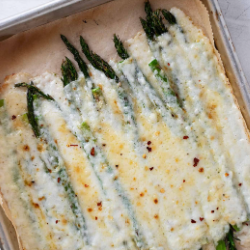
2) Creamy Cheesy Baked Asparagus

Creamy Cheesy Baked Asparagus

Serves: 6

Calories: 223

Your first warm-weather barbecue needs something extra special to wow friends and neighbors. Enter Creamy Cheesy Baked Asparagus, a delicious recipe made up of crunchy asparagus topped with creamy white sauce and aged cheddar cheese. Guests can take or leave as much of the sauce as they’d like, and you can substitute many of the ingredients to meet dietary restrictions — a dish for anyone and everyone.

Recipe courtesy Seasons & Suppers


3) Garlic and Herb Roasted Carrots

Garlic and Herb Roasted Carrots

Serves: 4

Calories: 36

Carrots are the star in this flavor-packed, easy-to-make dish that will steal the sideshow, whether you’re at a neighborhood potluck or preparing something to accompany the main at dinner. All you need are carrots, olive oil, garlic, Italian seasoning, salt, and pepper to prepare this bright, spring-themed dish everyone will enjoy.

Recipe courtesy Ahead of Thyme


4) Avocado Deviled Eggs

Avocado Deviled Eggs

Serves: 3

Calories: 275

Deviled eggs are a common go-to for spring potlucks or Easter events. This year, take them to the next level with a green twist by substituting the mayo with guacamole — a healthier creamy base that tastes just as good (if not better!) than the original. We can pretty much guarantee an empty dish within 30 minutes of setting them out.

Recipe courtesy Downshiftology


5) Twice-Baked Chipotle Sweet Potatoes

Twice-Baked Chipotle Sweet Potatoes

Serves: 4

Calories: ~140

Sweet potatoes may be naturally sugary, but that doesn’t mean they aren’t good for you! Sweet potatoes are packed with beta carotene, which supports gut health and your immune system. Elevate your usual baked sweet potato recipe with this take, which leverages chipotle peppers to add a bit of a kick. People are going to love it.

Recipe courtesy How to Eat


6) Cilantro Lime Rice

Cilantro Lime Rice

Serves: 6

Calories: 287

Nothing screams spring quite like a brightly colored dish with white rice and green cilantro. You can easily prep this tangy recipe in an instant pot or on the stove, and it’s just the thing to pair with a light chicken breast or as the base for homemade burrito bowls. It can work for an event or as a nice spring-themed side for a family dinner.

Recipe courtesy Tara Teaspoon


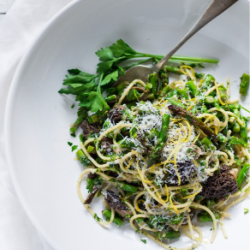
7) Spring Pasta Salad

Spring Pasta Salad

Serves: 6

Calories: 270

This spring-inspired pasta salad is laden with fresh, seasonal vegetables like asparagus and mushrooms, and topped with a tangy lemon parsley dressing. It’s easy to make, and you can serve it at room temperature or chilled.

Recipe courtesy Feasting at Home


8) Gaby’s Cucumber Salad

Gaby’s Cucumber Salad

Serves: 4

Calories: 185

Some people have described this particular spring side as “addictive.” And who can blame them? Its combination of crisp cucumber, velvety avocado, and tart balsamic dressing makes it a sure hit among those who try it.

Recipe courtesy Cookie and Kate


————————————————————————————


Author: Caitlin H

Diet-to-Go Community Manager

Caitlin is the Diet-to-Go community manager and an avid runner. She is passionate about engaging with others online and maintaining a healthy, active lifestyle. She believes moderation is key, and people will have the most weight loss success if they engage in common-sense healthy eating and fitness.



Memory cafes offer informal, local support and fun for people with dementia : Shots

0

Paula Baille leads the group of Sharon Hannamaker, Joe Edwards, Barb Edwards, and Murray Small in a playing of the bells.

Aimee Dilger/WVIA News


hide caption

toggle caption

Aimee Dilger/WVIA News

Rob Kennedy mingled with about a dozen other people in a community space in Clarks Summit, Pennsylvania.

The room, decorated with an under-the-sea theme, had a balloon arch decked out with streamers meant to look like jellyfish and a cloud of clear balloons mimicking ocean bubbles.

Kennedy comes to this memory cafe twice a month since being diagnosed with early onset Alzheimer’s disease in his late 50s.

Everyone here has a degree of memory loss or is a caregiver for someone with memory loss.

Attendees colored on worksheets with an underwater theme. They drank coffee and returned to the breakfast bar for seconds on pastries

A quick round of trivia gets everyone’s minds working.

“We start out with just little trivia, many of us cannot answer any of the questions,” Kennedy said with a laugh.

“We all have a good time going around,” he added. “You know, we all try to make it fun.”

This memory cafe in northeast Pennsylvania is one of more than 600 across the country. These gatherings for people with cognitive impairment and their caregivers are relatively cheap and easy to run — often the only expense is a small rental fee for the space.

As state and local health departments nationwide try to make sense of what the potential loss of $11 billion of federal health funding will mean for the services they can offer their communities, memory cafe organizers believe their work may become even more important.

As things get underway at the memory cafe in Clarks Summit, Penn., guests help themselves to breakfast pastries.

As things get underway at the memory cafe in Clarks Summit, Penn., guests help themselves to breakfast pastries.

Aimee Dilger/WVIA News


hide caption

toggle caption

Aimee Dilger/WVIA News

Kennedy’s diagnosis forced him to retire, ending a decades’ long career as a software engineer at the University of Scranton.

He recommends memory cafes to other people with dementia and their families.

“If they’re not coming to a place like this, they’re doing themselves a disservice. You got to get out there and see people that are laughing.”

The memory cafes happen twice a month. They have given him purpose, Kennedy said, and help him cope with negative emotions around his diagnosis.

“I came in and I was miserable,” Kennedy said. “I come in now and it’s like, it’s family, it’s a big, extended family. I get to meet them. I get to meet their partners. I get to meet their children. So, it’s really nice.”

Losing memory, and other things too

More than six million people in the U.S. have been diagnosed with some form of dementia. The diagnosis can be burdensome on relationships, particularly with family members who are the primary caregivers.

A new report from the Alzheimer’s Association found that 70% of caregivers reported that coordinating care is stressful. Socializing can also become more difficult after diagnosis.

“One thing I have heard again and again from people who come to our Memory Cafe is ‘all of our friends disappeared,'” said Beth Soltzberg, a social worker at Jewish Family and Children’s service of Greater Boston, where she directs the Alzheimer’s and related dementia family support program.

The inclusion of caregivers is what distinguishes memory cafes from other programs that serve people with cognitive impairment, like adult day care. Memory cafes don’t offer formal therapies or support. At a memory cafe, having fun together and being social is the support. And that support is for the patient and their caregiver — because both can suffer from social isolation and distress after a diagnosis.

A 2021 study from Frontiers in Public Health indicated that even online memory cafes during the pandemic provided social support for both patients and their family members.

“A Memory Cafe is a cafe which recognizes that some of the clients here may have cognitive impairment, some may not,” said Jason Karlawish, a geriatrics professor at the University of Pennsylvania’s Perelman School of Medicine and the co-director of the Penn Memory Center.

Karlawish regularly recommends memory cafes to his patients, in part because they benefit the caregivers as well.

“The caregiver-patient dyad, I find often, has achieved some degree of connection and enjoyment in doing things together,” Karlawish said. “For many, that’s a very gratifying experience, because dementia does reshape relationships.”

“That socialization really does help ease the stress that they feel from being a caregiver,” said Kyra O’Brien, a neurologist who also teaches at Penn’s Perelman School of Medicine. “We know that patients have better quality of life when their caregivers are under less stress.”

Guests at the Gathering Place Memory meet up help eachother to read a trivia question.

Guests at the Gathering Place Memory meet up help eachother to read a trivia question.

AIMEE DILGER/WVIA News


hide caption

toggle caption

AIMEE DILGER/WVIA News

As the population grows older, the number of available family caregivers is decreasing, according to the AARP’s Public Policy Institute. The report found that the number of potential caregivers for an individual 80 or older will decrease significantly by 2050.

In 2024, the Alzheimer’s Association issued a report projecting a jump in dementia cases in the U.S. from an estimated 6.9 million people currently living with Alzheimer’s dementia to 13.8 million people by 2060. It attributed this increase primarily to the aging of the baby boom generation, or those born between 1946 and 1964.

An affordable way to address a growing problem  

As cases of memory loss are expected to rise, the Trump administration is attempting to cut billions in health spending. Since memory cafes don’t rely on federal dollars, they may become an even more important part of the continuum of care for people with memory loss and their loved ones.

“We’re fighting off some pretty significant Medicaid cuts at the Congressional level,” said Georgia Goodman, director of Medicare policy for Leading Age, a national nonprofit network of aging services.

Although Medicaid doesn’t necessarily pay for memory cafes, they can play a part in long-term care, Goodman explained.

Activities at the memory cafe include trivia, crafting, coloring and playing songs on the bells.

Activities at the memory cafe include trivia, crafting, coloring and playing songs on the bells.

AIMEE DILGER/WVIA News


hide caption

toggle caption

AIMEE DILGER/WVIA News

The nonprofit Memory Lane Care Services operates two memory cafes in Toledo, Ohio. They’re virtually free to operate, because they take place in venues that don’t require payment, according to Salli Bollin, the executive director.

“That really helps from a cost standpoint, from a funding standpoint,” Bollin said.

One of the memory cafes takes place once a month at a local coffee shop. The other meets at the Toledo Museum of Art. Memory Lane Care Services provides the museum employees with training in dementia sensitivity so they can lead tours for the memory cafe participants.

The memory cafe that Rob Kennedy attends in Northeast Pennsylvania costs about $150 a month to run, according to the host organization, The Gathering Place..

“This is a labor of love,” said board member Paula Baillie, referring to the volunteers who run the memory cafe. “The fact that they’re giving up time – they recognize that this is important.” Baillie said.

The monthly budget goes to crafts, books, coffee, snacks and some utilities for the two-hour meetings. Local foundations provide grants that help her cover those costs.

Paula Baille talks with guests at the Gathering Place in Clarks Summit during the Friday memory cafe, while Joe and Barb Edwards listen.

Paula Baille talks with guests at the Gathering Place in Clarks Summit during the Friday memory cafe, while Joe and Barb Edwards listen.

AIMEE DILGER/WVIA News


hide caption

toggle caption

AIMEE DILGER/WVIA News

Even though memory cafes are inexpensive and not dependent on federal funding, they could still face indirect obstacles as a result of the Trump administration’s recent funding cuts.

Organizers worry that loss of federal funds could negatively impact the local institutions where they take place, such as libraries and other community spaces.

Wisconsin has become a memory cafe hotspot

At least 39 states have hosted memory cafes recently, according to Dementia Friendly America. Wisconsin has the most, with more than 100 memory cafes operating in the state.

Wisconsin has a strong infrastructure focused on memory care, which should keep the state’s memory cafes running regardless of what is happening at the federal level, according to Susan McFadden, a professor emerita of psychology at the University of Wisconsin, Oshkosh. She co-founded the Fox Valley Memory Project, which oversees 14 memory cafes.

“They’ve operated on the grassroots, they’ve operated on pretty small budgets and a lot of goodwill,” she said.

Many of those that attend just enjoy socializing and coloring.

Many of those that attend just enjoy socializing and coloring.

AIMEE DILGER/WVIA News


hide caption

toggle caption

AIMEE DILGER/WVIA News

Since 2013, Wisconsin has also had a unique network for dementia care, with state-funded dementia care specialists for each county and federally-recognized tribe in Wisconsin. The specialists help connect individuals with cognitive impairment to community resources, bolstering memory cafe attendance.

McFadden first heard about memory cafes in 2011, before they were popular in the United States. She was conducting research on memory and teaching courses on aging.

McFadden reached out to memory cafes in the United Kingdom, where the model was already popular and well-connected. Memory cafe organizers invited her to visit and observe them in person, so she planned a trip overseas with her husband.

Their tour skipped over the typical tourist hotspots, taking them to more humble settings.

“We saw church basements and senior center dining rooms and assisted living dining rooms,” she said. “That, to me, is really the core of memory cafes,” McFadden added.

“It’s hospitality. It’s reaching out to people you don’t know and welcoming them, and that’s what they did for us.”

After her trip, McFadden started applying for grants and scouting locations that could host memory cafes in Wisconsin.

She opened her first one in Appleton, Wisconsin in 2012, just over a year after her transformative trip to the UK.

These days, she points interested people to a national directory of memory cafes hosted by Dementia Friendly America. The organization’s Memory Cafe Alliance also offers training modules — developed by McFadden and her colleague Anne Basting — to help people start establish the cafes in their own communities, wherever they are in the country.

“They’re not so hard to set up, they’re not expensive,” McFadden said. “It doesn’t require an act of the legislature to do a memory cafe. It takes community engagement.”

This story comes from NPR’s health reporting partnership with WVIA and KFF Health News.

How to Propagate Coneflower (Echinacea) – Division, Cuttings and Seed Propagation

Continuous effort from breeders has morphed Coneflower into a rock star in the garden. This easy growing perennial flowering plant is prominent for its bold blooms, long flowering season and vibrant coloring range.

Also known as Echinacea, Coneflower can be propagated by division method, through cuttings or can be grown from seeds.

Of all these three methods, division is most easiest and reliable way to clone a specific variety. Growing Coneflower plant through cuttings can be time consuming but you’ll enjoy the process.

In this write-up, I shall share all three methods of propagation. Depending on your growing environment choose the easiest way to start.

Before moving further, it’s important that you know about the growing requirements of the plant.

Growing Coneflower Plant

Coneflower is a native North American wildflower known for its daisy-like blooms and prominent cone-shaped centers. These cheerful perennials are beloved not only for their beauty but also for their toughness, resilience, and pollinator appeal.

You’ll often see them buzzing with bees or hosting a butterfly or two. Plus, their seed heads stick around into fall and winter, offering food for birds like goldfinches.

Most coneflower varieties are hardy in USDA zones 3 to 9, making them suitable for a wide range of climates—from chilly northern gardens to warmer southern spots.

Once established, they can handle drought, heat, and even poor soil conditions without much fuss. They’re practically made for low-maintenance gardeners who still want bold, colorful blooms all summer long.

Coneflowers thrive in full sun (at least 6 hours a day) and well-draining soil. While they can tolerate some light shade, especially in hotter climates, they’ll bloom best in sunny spots. They aren’t picky about soil type, but they don’t like sitting in wet, soggy ground—so good drainage is key.

Another perk? They’re perennials, so they come back every year with minimal care.

How to Propagate Coneflower by Division Method?

Coneflowers are tough, beautiful perennials, but like many clump-forming plants, they can become overcrowded after a few years.

Dividing them helps revitalize older plants, encouraging better air circulation, healthier roots, and more blooms. Plus, it’s a great way to multiply your favorite varieties without spending a dime—perfect for expanding your garden or sharing with friends.

The best time to divide coneflowers is in early spring, just as new growth starts to emerge, or in early fall, when temperatures are cooler but the soil is still warm.

Both seasons give the new divisions enough time to settle in and grow strong roots before facing the heat of summer or the chill of winter.

Also Read: How to Propagate Hibiscus From Cuttings?

What You’ll Need:

  • Garden shovel or spade
  • Sharp knife or garden spade (for cutting roots)
  • Gardening gloves
  • Compost or aged organic matter (optional)
  • Watering can or hose

1. Water the Plant First

A day before you plan to divide your coneflowers, water the plant thoroughly. Moist soil makes digging easier and helps reduce shock to the roots.

2. Dig Up the Whole Plant

Use a shovel to dig a wide circle around the base of the coneflower—about 6 to 8 inches away from the center of the plant. Carefully lift the entire clump out of the ground, keeping as many roots intact as possible.

3. Gently Shake or Wash Off Soil

Once the clump is out of the ground, gently shake or rinse off the soil around the roots. This helps you see the natural divisions—places where the plant naturally separates into smaller clusters.

4. Divide the Root Ball

Use your hands, a sharp knife, or a garden spade to split the clump into smaller sections. Each section should have several healthy shoots (3–5 is ideal) and a solid root base. Don’t worry if some roots break—just try to keep each division as intact as possible.

5. Prepare the New Planting Spots

Choose sunny spots with well-draining soil. Dig holes slightly wider than each root section. If your soil is poor or compacted, mix in a little compost or aged organic matter to improve structure and drainage.

6. Replant the Divisions

Place each division into its hole, keeping it at the same depth it was growing before. Fill in with soil, press gently around the base, and water thoroughly to settle everything in.

7. Water and Mulch

Keep the soil consistently moist for the first couple of weeks while the divisions get established. Mulch around the base of each plant to help retain moisture and block weeds, but avoid piling mulch directly against the stems.

That’s it! Within a few weeks, your new coneflower divisions should show signs of fresh growth, and by the next growing season, they’ll be blooming right alongside the originals.

Check this: 19 Best Lavender Companion Plants

How to Propagate Coneflower through Cuttings?

While coneflowers are most often propagated by division or seed, you can also grow new plants from stem cuttings. This method is especially useful if you’re trying to clone a particular hybrid or cultivar and want to avoid the unpredictability of seeds.

Though it’s a bit trickier and takes more patience than division, it’s a fun and rewarding way to grow exact copies of your favorite plants.

The best time to take cuttings is in late spring to early summer, when the plant is actively growing and before it starts to bloom. Look for strong, healthy stems that haven’t flowered yet. These are more likely to root successfully and establish into full plants.

What You’ll Need:

  • Sharp, clean pruning shears or scissors
  • Small pots or seed trays
  • Sterile potting mix or a mix of perlite and peat moss
  • Rooting hormone (optional, but helpful)
  • Plastic bag or humidity dome
  • Spray bottle or watering can

1. Choose a Healthy Parent Plant

Select a mature, disease-free coneflower with plenty of vigorous, non-flowering stems. Avoid stems with buds or blooms—they tend to root poorly and focus energy on flowering instead of growing roots.

2. Take Your Cutting

Using sterilized scissors or pruning shears, snip a 4–6 inch section from the tip of a healthy stem. Make the cut just below a leaf node (where a leaf attaches to the stem). Remove the lower leaves from the bottom half of the cutting, leaving only a few leaves at the top.

3. Dip in Rooting Hormone (Optional)

To encourage faster root development, dip the cut end of the stem into a rooting hormone powder or gel. Tap off any excess. This step is optional, but it improves your chances of success—especially with woody or tougher stems.

4. Plant the Cutting

Fill a small pot or tray with moist potting mix (or a 50/50 blend of perlite and peat moss for better drainage). Poke a hole in the center and insert the cutting about halfway into the soil. Firm the soil around the base so the cutting stands upright.

5. Create a Humid Environment

Cover the pot loosely with a plastic bag or place it under a humidity dome to trap moisture. Keep the cutting in a warm, bright spot with indirect light—avoid direct sun, which can scorch it. Mist the soil regularly to keep it lightly moist but not soggy.

6. Wait for Roots to Develop

Rooting can take anywhere from 2 to 4 weeks. You’ll know roots are forming when you see new leaf growth or feel gentle resistance when you tug the cutting. Once rooted, remove the plastic covering and start acclimating the new plant to normal growing conditions.

7. Transplant When Ready

When your cutting has developed a healthy root system, transplant it into a larger pot or directly into your garden. Keep it well-watered for the first few weeks as it adjusts.

While coneflower cuttings may take a little more time and care than other methods, they’re a great way to replicate hybrids and expand your garden with identical, healthy plants.

Also Read: How to Propagate Clematis from Cuttings?

How to Grow Coneflower Plant from Seeds?

Growing coneflowers from seed is one of the most rewarding (and budget-friendly) ways to fill your garden with these vibrant, pollinator-friendly blooms. It’s especially fun if you enjoy a bit of mystery—seeds from hybrid plants may produce flowers in surprise colors!

While seed-grown coneflowers take a bit longer to reach blooming size compared to divisions or cuttings, they’re hardy, resilient, and worth the wait.

You can start coneflower seeds indoors in late winter to get a head start, or direct sow outdoors in early spring once the danger of frost has passed.

You can also sow them in the fall—many coneflower seeds actually benefit from a period of cold, known as stratification, which helps improve germination.

What You’ll Need:

  • Coneflower seeds
  • Seed-starting trays or small pots (if starting indoors)
  • Seed-starting mix or light, well-draining soil
  • Spray bottle or watering can
  • Plastic dome or clear cover (optional)
  • Grow lights or a sunny windowsill (for indoor starts)

1. Cold Stratify the Seeds (Optional but Helpful)

Coneflower seeds naturally go through cold winters, so giving them a cold period boosts germination. To do this:

  • Place seeds in a damp paper towel inside a plastic bag
  • Refrigerate for 30 days
  • After that, they’re ready to plant

If you’re sowing outdoors in fall, nature takes care of stratification for you.

2. Start Seeds Indoors or Outdoors

For indoor planting:

  • Start 8–10 weeks before your last frost date.
  • Fill trays or pots with moist seed-starting mix.
  • Press seeds lightly into the surface—they need light to germinate, so don’t bury them.
  • Mist the soil to keep it damp, and cover with a plastic lid or wrap to hold in humidity.

For outdoor planting:

  • Wait until soil warms up in early spring (or plant in fall for natural stratification).
  • Scatter seeds on loosened soil and press them in gently.
  • Water well and keep the soil moist until seedlings appear.

3. Provide Light and Warmth

Keep indoor trays in a warm place (around 65–70°F). As soon as seedlings appear—usually in 10 to 20 days—move them to a bright window or place them under grow lights. They’ll need 12–16 hours of light a day.

4. Thin and Transplant

Once the seedlings have 2–3 sets of true leaves, thin them out or transplant into larger pots to give them space to grow. Harden them off gradually by taking them outside for a few hours a day before planting them in the garden.

5. Plant in the Garden

Transplant seedlings outdoors after all danger of frost has passed. Choose a sunny spot with well-drained soil. Space the plants about 12–18 inches apart to give them room to grow.

Seed-grown coneflowers might not bloom their first year, but they’ll focus on building strong roots—and by their second summer, they’ll explode with color and charm.

How to Care Coneflower Plant?

  • Coneflowers grow best in full sun. Make sure they get at least 6 hours of direct sunlight each day.
  • They prefer well-draining soil. Avoid planting them in spots where water tends to collect.
  • Water regularly when the plant is young. Once established, they can handle dry spells easily.
  • Removing faded flowers encourages more blooms. This helps the plant stay neat and bloom longer.
  • After the plant dies back, trim the stems down. You can also leave seed heads through winter for birds.
  • These plants don’t need much fertilizer. A little compost once a year is usually enough.
  • Coneflowers are fairly pest-resistant. If you see aphids or spots, a gentle spray of neem oil can help.

Conclusion

Propagating coneflowers is a simple and rewarding way to expand your garden with bold, beautiful blooms.

Whether you choose to divide mature plants, start from seed, or try your hand at stem cuttings, each method gives you a chance to enjoy more of these hardy, pollinator-friendly flowers.

With a little time and care, you’ll have plenty of new coneflowers to fill your beds, borders, or share with fellow plant lovers.

Gluten-Free Zucchini Bread


Gluten-Free Zucchini Bread


Privacy & Cookies Policy