36.1 F
Klamath Falls
Sunday, March 15, 2026
Home Blog Page 75

How to Store Tomatoes from Garden?

0

Nothing can match the joy of pulling out a container to grab homegrown tomatoes and slice them for your recipe in the middle of winter. But that can’t be possible without keeping tomatoes fresh.

Now, the answer to how to store tomatoes from your garden isn’t straightforward. There are literally many ways to preserve them — canning, freezing, storing in olive oil, air-drying, and refrigerating. Eating right away when the tomatoes reach their peak is always the best way to enjoy that just-picked freshness.

But if you’ve grown more than you can eat, it’s smart to think ahead. One thing is clear: no method can completely capture the exact taste of a sun-warmed tomato fresh off the vine. Still, with a little care, you can hold onto that flavor and enjoy your harvest long after summer fades.

For short-term storage (not more than 7 days): place tomatoes upside down at room temperature between 55°F and 70°F.

For long-term storage: consider canning, dehydrating, freezing, or turning them into tomato puree.

When to Store Tomatoes?

Timing is everything when it comes to storage.

If your tomatoes are firm and just starting to turn color, leave them at room temperature for a few days until they fully ripen. Avoid the fridge at this stage — it dulls both the texture and the taste.

For tomatoes that are already ripe and you can’t use immediately, pick out the ones with no bruises or cracks. Gently wash and dry them. If you spot any overripe ones, set them aside to use right away in sauces or soups. The idea is to only store what’s in its best shape — bad ones can spoil the rest.

Choose Tomatoes at the Right Stage

Not all tomatoes are ideal for storing. Fully ripe, wrinkle-free ones work best for immediate use. If your plants are still producing and you want to extend their shelf life, pick tomatoes when they’re just starting to blush — that light pink stage before they fully ripen. These finish ripening beautifully indoors without losing their sweetness.

The ripening stages matter more than you’d think. A tomato picked at the breaker stage (when green starts turning whitish-yellow) will ripen slower but store longer. Roma and paste varieties generally store better than beefsteaks because of their thicker walls and lower moisture content.

Avoid tomatoes with cracks or bruises; they spoil quickly and can affect nearby ones. Always handle them gently, as a soft squeeze can leave unseen damage and invite mold later on. Check the stem end too—if it feels mushy or shows signs of darkening, that tomato won’t last long no matter which method you choose.

How to Store Tomatoes from Your Garden?
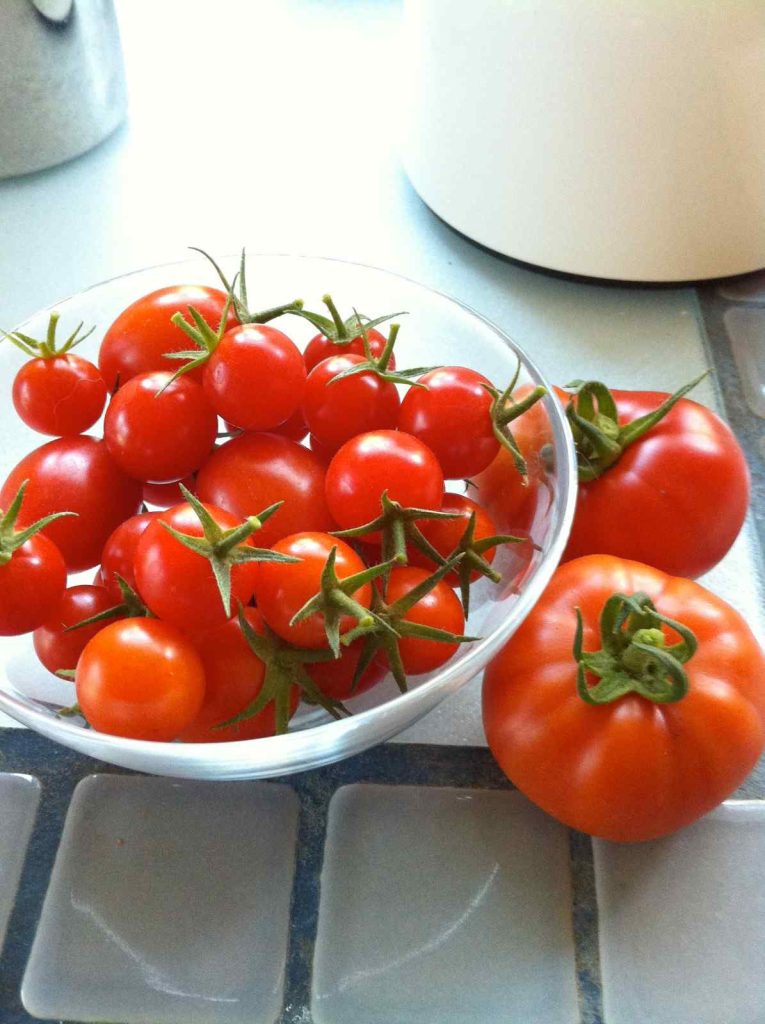
Let’s first start with by storing on the counter. Though for short-time, it is the best way to relish the freshness of tomato.

For a week or less, the kitchen counter is still the best place. Arrange your tomatoes stem-side down, so air doesn’t enter through the scar and cause early rotting. Keep them away from direct sunlight and heat sources, ideally at 55°F–70°F.

Never pile them up. A single layer works best so they can breathe evenly. If your kitchen gets too warm, choose a shaded corner or pantry shelf. Some gardeners place tomatoes in a shallow basket lined with cloth, which provides cushioning and allows air circulation from all sides.

Here’s a trick most people miss: separate tomatoes by ripeness level. Keep almost-ripe ones together and fully ripe ones separate. This way, you can grab the ready ones first without accidentally letting others over-ripen and turn soft.

If you notice a tomato starting to soften faster than expected, use it immediately in a salad or sandwich. One overripe tomato can release ethylene gas that speeds up ripening in others nearby.

Also Read: How to Can Green Beans with a Pressure Canner?

Refrigeration—When It’s Really Hot

Refrigerating tomatoes often sparks debate. Cold temperatures can make them lose flavor, but if your kitchen feels like a sauna, refrigeration might save them from rotting fast.

Place ripe tomatoes in the fridge only when necessary, ideally in the crisper drawer inside a paper bag. When ready to use, let them sit at room temperature for a few hours. This helps restore some of their natural texture and flavor.

The key is knowing when refrigeration makes sense. If temperatures climb above 75°F consistently, refrigerating becomes the lesser evil compared to watching them turn mushy within two days. Just remember to bring them back to room temperature before eating raw—cold tomatoes taste bland and mealy.

For cherry and grape tomatoes, refrigeration works slightly better since they’re often used in cooked dishes anyway. Store them unwashed in a breathable container, and they’ll hold up for nearly two weeks.

Freezing Tomatoes for Later

Freezing is perfect when your harvest overflows. You can freeze tomatoes whole, chopped, or pureed—it depends on how you plan to use them later.

Wash and dry them thoroughly. Remove stems and cores. You can blanch them in boiling water for 30 seconds if you’d like to remove skins easily—the skins will slip right off after a quick ice bath. For whole tomatoes, spread them on a baking sheet first and freeze until solid, then transfer to bags. This prevents them from clumping together.

Pack them into airtight freezer-safe bags or containers, leaving some space at the top. Label each bag with the date and variety if you’re freezing different types. Frozen tomatoes lose their firm texture but are great for sauces, soups, and stews. They last up to 8 months in the freezer.

When you need them, pull out however many you want and run them under warm water—the skins slide off effortlessly. Toss them directly into simmering pots without thawing. The texture won’t work for fresh salads, but for cooked dishes, they’re nearly as good as fresh.

Canning Tomatoes for Year-Long Preservation

Canning preserves tomatoes for months without losing too much flavor. It requires a bit of effort but pays off all winter.

First, sterilize your jars and lids by boiling them for 10 minutes. Peel and chop the tomatoes, or leave them whole if you prefer. For easier peeling, score an X on the bottom of each tomato, blanch for 30 seconds, then plunge into ice water.

Add lemon juice or citric acid for acidity and safe storage—this step isn’t optional, especially with modern low-acid tomato varieties. Use 2 tablespoons of bottled lemon juice per quart jar or 1 tablespoon per pint. Fill jars with tomatoes and seal tightly, leaving half an inch of headspace.

Process them in a hot water bath for the recommended time depending on altitude. At sea level, pints need 40 minutes and quarts need 45 minutes. Higher altitudes require longer processing times to ensure safety.

Properly canned tomatoes can last up to a year in a cool, dark pantry. Check seals after 24 hours—the lids should curve downward and shouldn’t flex when pressed. Any jar that didn’t seal properly should go straight into the fridge and be used within a week.

Making Tomato Puree or Sauce

If you cook often, turning extra tomatoes into puree or sauce is practical. The flavor concentrates as it cooks down, and you can season it lightly or keep it plain for later.

Simmer chopped tomatoes until thick, blend if needed, and cool completely before freezing or canning. For a richer sauce, roast tomatoes with garlic and onions first—the caramelization adds incredible depth. Puree stores well in small portions, ready to add directly into curries, soups, or pasta dishes.

Ice cube trays work brilliantly for portion control. Freeze tomato puree in trays, then pop out the cubes and store them in freezer bags. Each cube equals roughly two tablespoons, perfect for adding to single-serving meals.

If canning sauce, remember it needs to be processed longer than whole tomatoes because of its thickness. Follow tested recipes from reliable sources like the USDA or Ball canning guides to avoid food safety issues.

Also Read: How Do You Dry Rosemary Leaves?

Drying Tomatoes

Sun-drying or using a dehydrator can turn extra tomatoes into flavorful bites you can later rehydrate or blend into cooking.

Slice tomatoes thinly, about quarter-inch thick. Sprinkle lightly with salt, and dry them under the sun covered with mesh—this may take a few days depending on humidity and temperature. Choose a spot with good airflow and bring them inside at night to avoid moisture from dew.

If using an oven, set it at 135°F–150°F (57°C–66°C) and dry slowly until leathery but not brittle. Prop the oven door open slightly with a wooden spoon to let moisture escape. Flip slices halfway through for even drying.

Store dried tomatoes in airtight jars with olive oil for an incredible flavor boost. Add herbs like basil or oregano, and maybe a clove of garlic. They’ll keep for months in the fridge and make pasta dishes sing with minimal effort.

For grinding into tomato powder, dry them until completely crispy, then pulse in a food processor. The powder works as a flavor enhancer in soups, stews, and even popcorn seasoning.

Storing Green Tomatoes from Your Garden
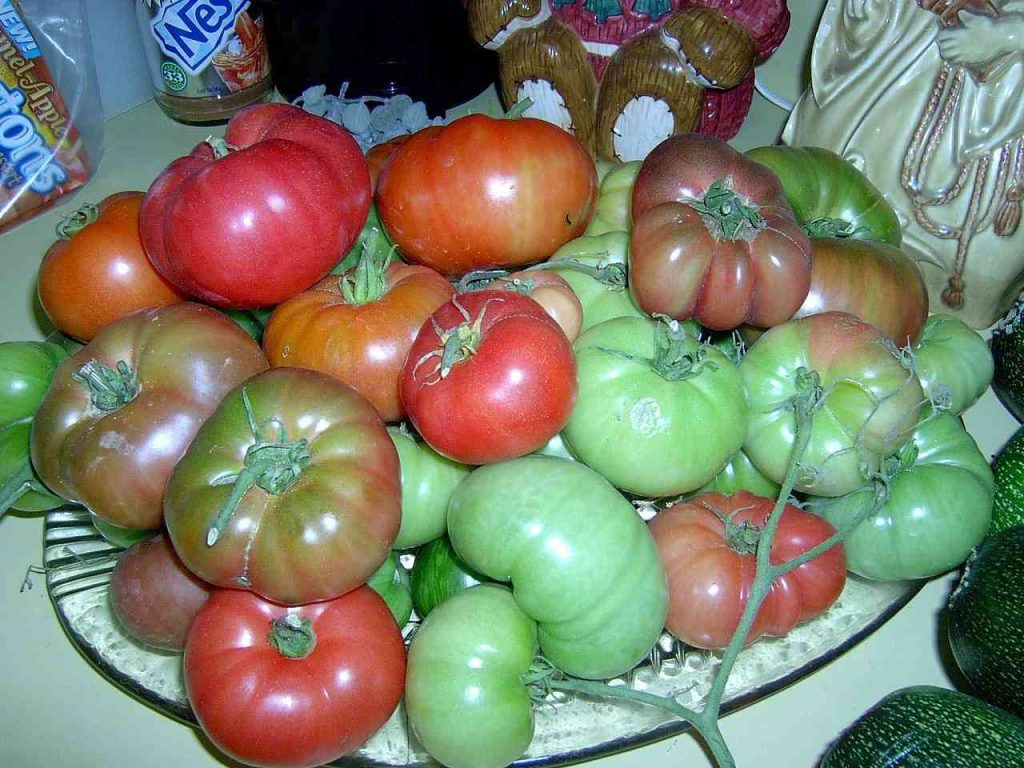
Have unripe green tomatoes at season-end? Wrap each in newspaper and store in a single layer in a box or basket. Keep it in a cool spot (around 55°F). Check every few days—some will ripen gradually, letting you enjoy a slow trickle of fresh tomatoes even after frost sets in.

Not all green tomatoes will ripen, though. Mature green tomatoes (full-sized but not yet colored) have the best chance. Tiny ones that never developed fully will likely just shrivel.

Adding a ripe banana or apple to the box speeds up ripening by releasing ethylene gas. Remove any that show rot immediately to protect the others. Some gardeners prefer pulling entire plants and hanging them upside down in a garage—the tomatoes ripen slowly while still attached.

You can also pickle green tomatoes or fry them for a tangy treat. They have a firm texture and tart flavor that works beautifully in Southern-style dishes.

Must Read: How to Store Carrots from the Garden?

How to Store Tomatoes in Olive Oil?
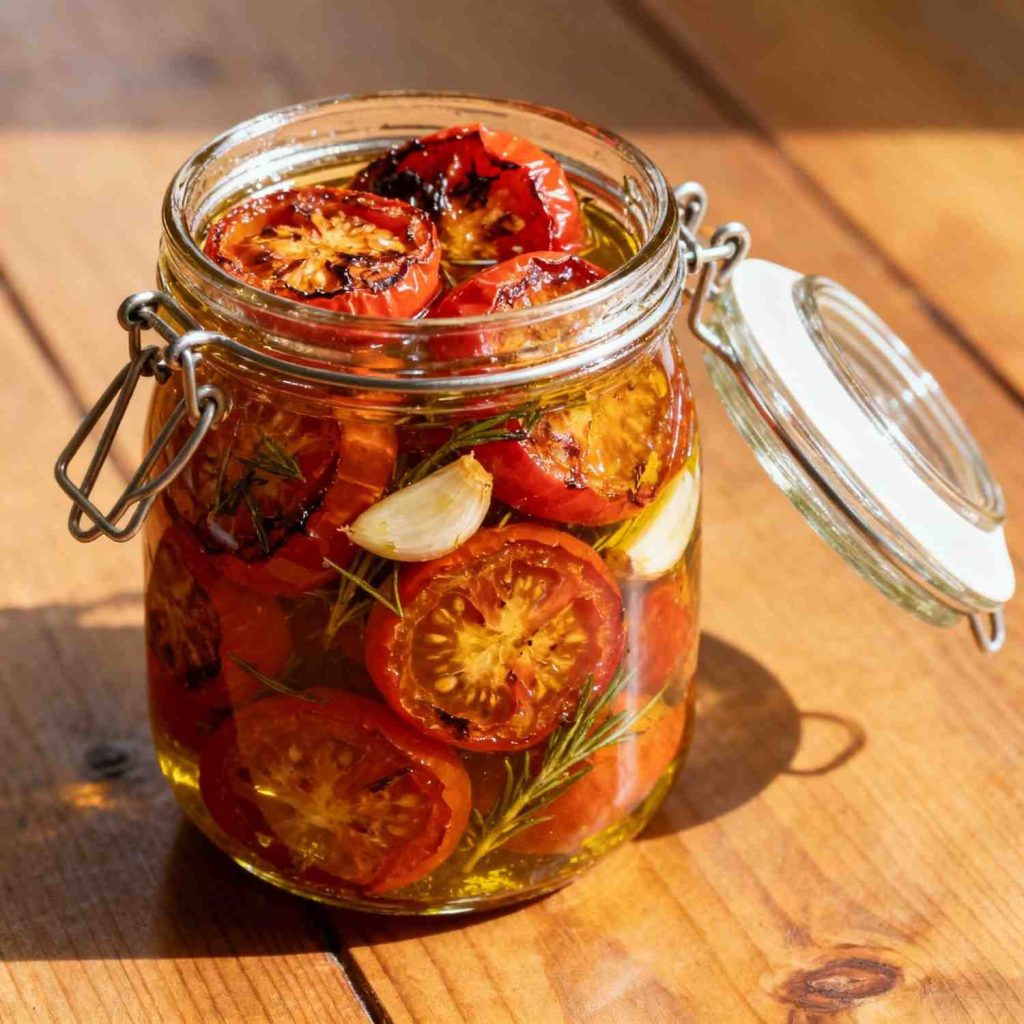
This method doesn’t get talked about enough. Roast halved tomatoes with olive oil, garlic, and herbs until slightly caramelized. Pack them in sterilized jars and cover completely with olive oil. The oil preserves them while infusing with tomato flavor.

Store these jars in the refrigerator for up to two weeks. Use the tomatoes in sandwiches, pasta, or bruschetta. The flavored oil becomes a bonus ingredient for salad dressings and sautéing vegetables.

Tips and Common Mistakes to Avoid

Never wash tomatoes before storing unless you’re using them immediately. Moisture invites mold and shortens shelf life dramatically.

Don’t store tomatoes with vegetables that release lots of ethylene gas, like potatoes or onions, unless you want them to ripen faster.

Avoid plastic bags for counter storage—they trap moisture and create the perfect environment for rot. Breathable containers or open baskets work better.

For canning, always use tested recipes with proper acid levels. Experimenting with low-acid ingredients can lead to botulism, which is dangerous and preventable.

When freezing, squeeze out excess air from bags before sealing. Less air means less freezer burn and better flavor retention.

Conclusion

There’s no one-size-fits-all method when it comes to storing tomatoes from your garden. It depends on how long you want to keep them and how you plan to use them later. For quick meals, freezing works great. For year-round use, canning is unbeatable. If you want something gourmet, preserve them in olive oil or dry them for an intense, concentrated flavor.

The key is to handle your tomatoes gently and give them the care they deserve. With a bit of prep, you can enjoy the taste of your summer garden even when snow covers the ground. Because honestly, few things taste better than that first spoonful of homemade tomato sauce in the middle of winter — straight from your own harvest.

Multifunction Tension Rope, 6-Tube Elastic Yoga Pedal Puller Resistance Band, Natural Latex Tension Rope Fitness Equipment, for Abdomen/Waist/Arm/Leg Stretching Slimming Training

0


Price: $16.99 - $15.98
(as of Oct 16, 2025 23:10:42 UTC – Details)


Feature:
😊Durable and comfortable with tens of thousands of times by tensile testing.
😊This resistance band set can be integrated seamlessly with every popular workout program including Insanity, Crossfit, Beach Body, Yoga, Pilates and more.
😊This resistance band allows you to do sit-up alone without help from others. Tone and tighten your waist, legs and arms, effectively strengthen your muscles to refine your figure, make your whole body fat burning!Improves Stretching and Flexibility.
😊The fitness bands resistance for workouts at home, outdoor, office, gym. Portable and light weight, easy to storage. This is one of the best gifts for your family and friends to exercise and lose weight.


Specifications:
Size:20.86×9.84 inch
Color: Purple/Pink
Material:Enviromental Foam & NBR
Weight:0.67lb(300g)


Package Include
1 X Multifunction Tension Rope Fitness
👍【6 TUBES PEDAL RESISTANCE BAND】- FateFan 6 tube pedal fitness ropeis made of enviromental foam, and tube is made of NBR, which is healthy to body. 6pcs pull ropes, high tensile strength and good elasticity than 2pcs or 4pcs ropes.
👍【LOSE FAT AND SHAPE YOUR BODY】 – Multifunction tension rope fitness. This resistance training tool workouts your arms, tummy, shoulders, legs and butt. It is not only way to lose your fat by exercising with our tummy trimmer but also a way to shape your body.
👍【VERY EFFECTIVE AND CONVENIENT TO USE】- You can use these Resistance Exercise Band Sets in the privacy of your home, hotel room, office, or even outdoors.Portable,light weight and easy to storage.
👍【INTIMATE DESIGN】The yoga resistance bands strap offers optimal resistance and great stability, never losing its shape, rip or fray.Superior foam grips and pedals for ideal exercise, sweat absorption and non-slip, cushioned foam keep your comfortable throughout the workout.
👍【PERFECT PROTECTION】Increase range of motion stretching. Reduce risk of injury warming up before playing sports and relieve post exercise aches and pains after exercise. Reduce stress and improve joint flexibility and mobility.

Customers say

Customers find the exercise band effective for muscle work and easy to use, with good stretching ability without force. However, the product receives mixed feedback about its quality and value for money. Moreover, durability is a concern as it breaks fast and is very fragile. Additionally, the length is too short for many customers, and while some love the tension rope, others say it doesn’t create enough tension.

Alllvocles Resistance Band, Pull Up Bands, Pull Up Assistance Bands, Workout Bands, Exercise Bands, Resistance Bands Set for Legs, Working Out, Muscle Training, Physical Therapy, Shape Body, Men Women

0


Price: $21.99 - $14.99
(as of Oct 16, 2025 11:09:19 UTC – Details)


High Quality Material: Resistance bands made from 100% high-grade natural rubber to prevents bands snapping and provide longer durability.
Different Color & 4 Pull Up bands levels: Set of 4 pcs Pull up assist bands correspond to different colors, Yellow(5-10 lbs), Red(15-30 lbs), Black(30-60 lbs), Purple (60-100 lbs), 81 inches in length and can be used alone or combine multiple workout bands to increase the challenge.
Suitable for Variety of Exercise & Multifunctional: Resistance bands offers effective training, suitable for a variety of exercise to Calorie Burning, Muscle Building and Fat Shredding Workout Program to work out your arms, shoulders, chest, gluteus, legs etc.
Lightweight and portable: The resistant bands set is portable and come with a waterproof bag for you to carry it anywhere, so you can use this resistance bands set to exercise, be it to your home, gym or even as you travel therefor you can continue with your work-out routine anywhere you go.
Great idea for a gift-It can meet your workout need for anyone looking to expand a home gym, build a fitness regimen, exercise on the go, or physical therapy whether you are a beginner or not.

Customers say

Customers find these resistance bands to be well-made and durable, noting they withstand heavy weight workouts without breaking. They work effectively for various exercises, including pull-ups and muscle-ups, and are particularly good for at-home workouts. Customers appreciate the multiple resistance levels and versatility, with one customer highlighting how the adjustable resistance provides a progressive challenge. Customers consider them good value for money, with one noting they’re more cost-effective than weights.

Doctor shortages and misinformation add to the care challenges in rural America : Shots

0

Dr. Banu Symington, at her office in Rock Springs, Wyo., is one of just a few full-time oncologists practicing in the state.

Charles Paajoe Tetteh for NPR


hide caption

toggle caption

Charles Paajoe Tetteh for NPR

When Dr. Banu Symington first moved to Rock Springs, Wyo., 30 years ago, she appreciated its empty desert landscapes and small-town respect for physicians like herself.

Fast-forward to today.

Some of Symington’s cancer patients curse at her for suggesting they vaccinate or wear masks to protect their weakened immune systems while undergoing chemotherapy.

“I actually had a patient’s husband say, ‘You only want me to mask because you’re a liberal bitch.'”

Symington is among many doctors who say political attacks on science and medicine are affecting their relationships with patients, particularly in rural communities, where physician recruitment already poses a chronic challenge. Increasingly, misinformation and conspiracy theories about health fill a vacuum created by the lack of doctors, adding challenges to care. Meanwhile, the Trump administration’s dramatic changes to health, science, public health and immigration policies are making recruitment of overseas talent tougher.

Conspiracy theories

In the sparsely populated mineral and coal mining towns that dot the area around Rock Springs, Symington says disinformation and political rage run rampant. At a recent county fair, for example, she stood for four hours offering free vials of sunscreen to passersby — but got no takers. One woman asked “Do you want to know why?” and then told Symington: “Doctors have been putting cancer-causing chemicals in sunscreen so we’ll all get cancer and they’ll enrich themselves.”

Symington says such conspiracy theories and political divisiveness over health and science have worn away at the basic civilities that once made the community feel cohesive. “‘You’re a pharma whore,'” she’s told. “They say it to my face.”

A street is shown leading to an arched sign that reads "Home of Rock Springs Coal" and "Welcome." No people or cars are on the road or sidewalks.

The town of Rock Springs, Wyo., has a population of about 23,000, according to the 2020 census.

Charles Paajoe Tetteh for NPR


hide caption

toggle caption

Charles Paajoe Tetteh for NPR

A leukemia patient of Symington’s refused vaccination, then died of COVID, still angrily believing the disease to be manufactured political fiction. Symington says until recent years, she’d been on friendly terms with that man, who always offered restaurant recommendations and suggestions for spots to rock hunt, which he knew was her hobby. His transformation is emblematic of a broader shift, she says.

“It’s very difficult, helping someone who scorns your help, or diminishes the value of it,” says Symington, who is 65 and on the cusp of retirement. “A lot of us who went into medicine did it because we believed we were helping people.”

Dr. Banu Symington, a petite woman with grey hair, is sitting on a bench with five small dogs. She's smiling broadly.

Dr. Banu Symington has been called crude names by patients when she suggests they do things to protect their health.

Banu Symington


hide caption

toggle caption

Banu Symington

There’s also a surge in use of ivermectin — an anti-parasite drug — adding to patients’ peril. “I have patients who are covertly taking ivermectin and then they end up in the intensive care unit because of a complication from the ivermectin,” Symington explains. They’re doing so on the advice of actor Mel Gibson, offered during his January appearance on Joe Rogan’s popular conservative podcast.

Physician shortages

Symington is one of only five full-time oncologists in Wyoming, she says. She also runs the only cancer center in the southwest corner of the state; the next closest one is about a three-hour drive away, in Utah.

“When I retire, which may be sooner than I planned because of the atmosphere, I don’t think they’ll be able to recruit anyone,” she says.

The doctor shortage was already acute and is contributing to a shortening of the lifespans of rural Americans, says Alan Morgan, CEO of the National Rural Health Association.

“There are so many workforce shortages that people can’t get past the junk on the internet to get to a local doc that they can trust,” Morgan says. “The only solution really to combat that with is good science, good data, and make sure that local clinicians are at the forefront,” disseminating accurate information.

But staffing rural health care has also gotten tougher. For many decades, the U.S. has relied heavily on foreign-born doctors; half the country’s oncology workforce, for example, comes from overseas. Now, in large part because of the Trump administration’s cuts to science, medicine and research funding, as well as new immigration policies, fewer physicians can — or want to — come to the U.S.

The beauty of the Wyoming landscape attracted Dr. Banu Symington to the area 30 years ago. The sun is shown low in the sky, glowing above a dry landscape of low bushes and below a striated cloudscape.

The beauty of the Wyoming landscape attracted Symington to the area 30 years ago.

Banu Symington


hide caption

toggle caption

Banu Symington

Symington says this trend is evident in Rock Springs, too, which feels less hospitable, even to domestic transplants like herself, a white female who grew up and trained in Philadelphia.

“We had a whole bunch of physicians 30 years ago who had emigrated from Canada,” she says. “There are no immigrant physicians here now.”

Morgan says rural America suffers more from health care workforce shortages, because fewer than 5% of doctors grew up in those communities. Morgan sees fostering more homegrown talent as the key.

“We need to do a better job of keeping our local, rural kids local in the first place,” he argues. “That way they’re knowing the community, they’re trusted in the community, and they can be a trusted resource.”

Bias revealed

Dr. Jennifer Bacani McKenney is the type of person Morgan is referring to. Her family medicine practice is attached to the hospital in Fredonia, Kansas, where she was born. Her Filipino parents emigrated from big-city Manila to this tiny farming community of 2,000 people in the 1970s, when her father, a surgeon, was recruited to work there. Bacani McKenney says adapting to the community was difficult for her parents initially, but eventually the community embraced them.

“If this community had not welcomed my dad — or the country had not welcomed my dad — I would not be here and probably not have the doctors that I recruited here,” Bacani McKenney says.

Bacani McKenney grew up feeling treated like a hometown girl, but says the spread of COVID-19 also revealed how some of her patients perceive outsiders.

“My patients were calling COVID the China flu and Kung flu — that kind of thing — and saying about ‘Asians needing to go back,’ and they would say it to my face,” she recalls. “I would say, ‘You know, I am Asian, right?’ And they go, ‘Oh, well, we don’t mean you.'”

Bacani McKenney is also an associate dean at the University of Kansas, where she helps place medical students in rural communities for monthlong rotations as part of their curriculum. Recently, she says more students — many of whom grew up in cities, or are racial or sexual minorities — object to that requirement, complaining that they feel unsafe in the tiny towns. Patients will casually make racist jokes, for example. Navigating that, she tells them, is also part of the job.

“What we tell the students is, ‘You’re going to be uncomfortable in lots of situations in medicine.'”

But Bacani McKenney acknowledges politics makes health care harder to manage these days. She’s changed how she talks to patients about vaccines, for example. She suggests familiar ones first, hoping to minimize increasing skepticism about other vaccines, including to prevent COVID or flu.

“There’s something about a pneumonia shot or a tetanus shot — people are like, ‘Oh yeah, I know that,'” she says.

Nevertheless, more patients are pushing back against her vaccine recommendations, especially since anti-vaccine champion Robert F. Kennedy Jr. took the helm as Health and Human Services secretary and began amplifying views unsupported by scientists and doctors. With them, she tries to keep the conversation going over several visits, if necessary. It’s the kind of balancing act her job now requires, she says.

“I think we have to keep doing it. And if people don’t like us because we’re having that conversation, they’ll probably go somewhere else,” she says. “But if I don’t have those conversations, I’m not doing my job.”

Rock Springs, Wyoming, photographed Oct. 6, 2025, in a wide angle shot from some distant height, shows a wide expanse of blue sky, hills with gentle slopes, trees and a small concentration of buildings in a downtown area.

Rock Springs, Wyo.

Charles Paajoe Tetteh for NPR


hide caption

toggle caption

Charles Paajoe Tetteh for NPR

Katie Hayes Luke edited the visuals for this story. Charles Paajoe Tetteh contributed photography.

How to Choose the Right Greenhouse Flooring

0

Materials to Consider

An easier question might be, “what kind of materials should I avoid?”

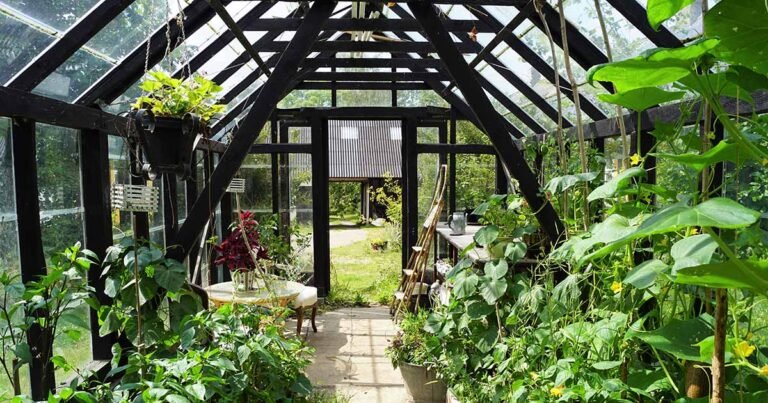
Pretty much any type of floor can be used, like rolled rubber, interlocking mats, ring mats, polyethylene, wood, tile, fake turf, pavers, gravel, concrete, grass, bricks, and even the existing soil.

A close up horizontal image of a greenhouse in the backyard on a brick surface.

Then there are underliners or foundational material. Weed barriers and vapor barriers will make your life easier and can extend the longevity of your greenhouse.

Here are some commonly used greenhouse flooring options and a few to steer clear of.

Existing Soil

This is the most basic option. It’s free and natural, and it drains well. But it also invites pests and weeds, holds moisture, and is impossible to clean.

If you go this route, kill all the weeds with an herbicide or flame weeder and compact the ground extremely well.

Best for: Temporary structures or growing directly in the ground.
Avoid if: You want a clean or permanent setup.

Gravel or Crushed Stone

Durable, easy to install, and great for drainage. Pair it with a weed barrier and you’re good to go.

Crushed stone works better than smooth pea gravel, which can shift underfoot. Some gardeners combine gravel aisles with raised beds or pavers for a more polished look.

Best for: Good drainage, moderate budgets, and flexible setups.
Avoid if: You need to reuse runoff water or want a solid surface.

Concrete

It’s expensive, but it might be the last floor you ever need to install. You can slope it for drainage, add textured mats for grip, and clean it easily with a hose or mop.

Concrete also holds heat during the day and releases it at night, which can help keep your greenhouse warm.

Best for: Permanent greenhouses, commercial setups, wheeled carts or benches.
Avoid if: You’re on a budget or don’t want to commit to a permanent material.

Pavers or Brick

Pavers offer a good balance of beauty and function. They’re easier on the feet than concrete and allow some water to soak in.

You can install them over gravel and weed barrier for a breathable floor with charm. Brick adds a rustic look and holds heat well, too.

Best for: Decorative spaces, warm-climate heating, raised beds.
Avoid if: You want a smooth, weed-free surface or minimal maintenance.

Rolled Rubber, Interlocking or Anti-Fatigue Mats

These are great for temporary or transitional spaces. Rubber mats provide comfort underfoot and a safe, non-slip surface.

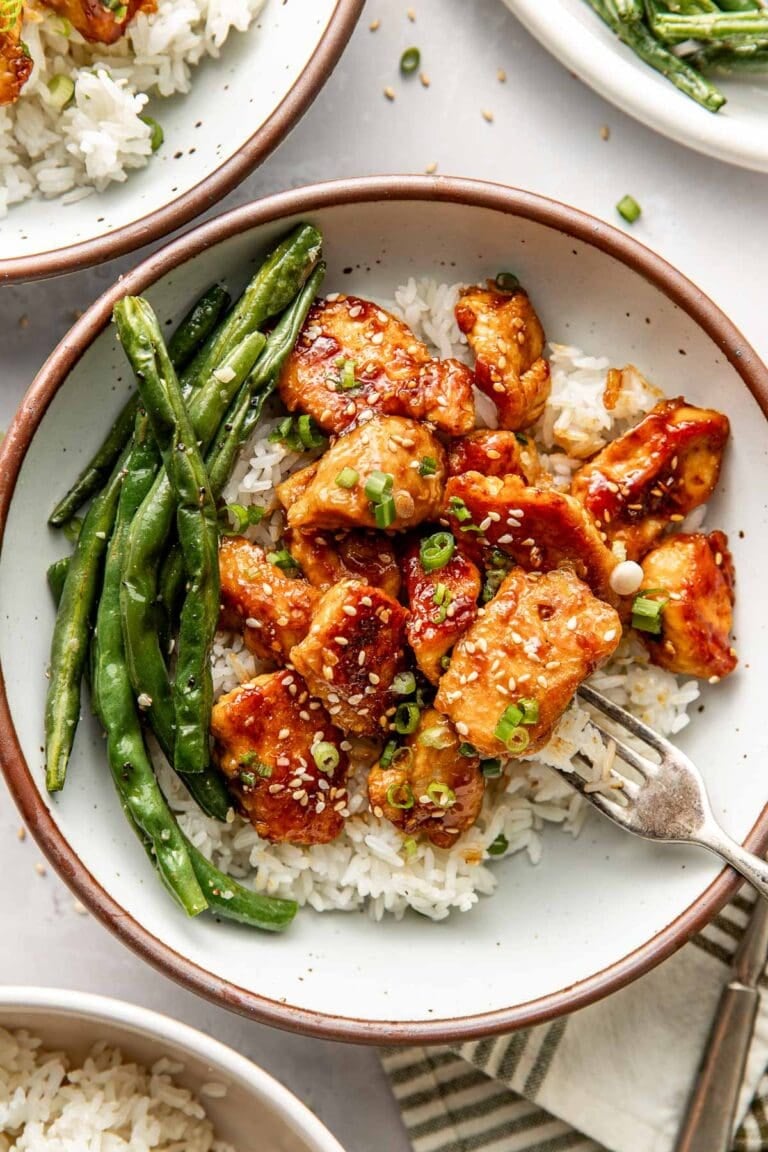
Sesame Chicken (No Fry Method)

0

Skip the takeout and try this homemade, no-fry sesame chicken recipe. Make crispy, golden chicken in a honey sweetened sesame sauce. It’s easy for weeknights, full of delicious flavors, and high in protein.

Resistance Bands, Professional Exercise Bands, Physical Therapy Bands for Strength Training, Yoga, Pilates, Stretching, Recovery, Stretch Elastic Band for Working Out, Workout Bands for Home Gym

0


Price: $6.59
(as of Oct 15, 2025 23:08:11 UTC – Details)

Product description

Image generated for ASIN B0DB7LP889Image generated for ASIN B0DB7LP889

Elevate Your Yoga Journey with Resistance Bands

Enhance your yoga practice with our versatile resistance bands. Designed for strength training, stretching, and recovery, these professional-grade bands offer varying resistance levels to suit your fitness goals. Crafted from high-quality, latex-free material, they provide a smooth, non-slip surface for a comfortable workout experience.

Upgrade Exercise Band: Made of high quality TEP material, latex free, skin friendly, odorless, smooth and non-sticky surface, safe and durable for long term elasticity, the elastic band is 59 inches long and 5.9 inches wide.
Different Level of Resistance: Exercise bands are divided into 3 different resistance levels: yellow bands (light, 7.3 to 10.2 pounds), blue bands (medium, 10.2 to 15.3 pounds), and green bands (heavy, 14.2 to 21.3 pounds). Never worry about the sweatbands being too stiff, and easily switch between the 3 levels at any time to suit your preference.
Training and Rehabilitation: Premium banding product for resistance training and rehabilitation that provides positive and negative forces on muscles and joints, stretching and conditioning all major muscle groups. It is ideal for resistance training, physical therapy and athletic training. Simple and effective resistance bands stretch and strengthen muscle groups and improve your posture.
Great With Any Workout: Ideal exercise band for legs, hips, arms, abdomen, head and cervical spine. Ideal for sports athletes, seniors, physical therapy, rehabilitation, wrestling, fitness, pilates, yoga, kickboxing and more. They are also great for women to use after giving birth to stay fit.
Surprise for Family and Friends: Women’s and men’s fitness bands are suitable for any age. With the training guide, it can be used as a surprise for loved ones or friends for Thanksgiving, Christmas, or birthdays.

Customers say

Customers find these resistance bands to be a wonderful set that works well for home physical therapy and Pilates workouts, offering a range of resistance levels and the right length for average users. They appreciate the value for money and versatility, with one customer noting they’re especially handy for working muscles. The durability and stretchability receive mixed feedback – while some find them durable and great for stretching, others report they break easily and have poor stretchability.

Sue Goldie Has Parkinson’s Disease

0

She is animated now, in full lecture mode. Patients, she says, should have access to therapists and trainers as soon as they’re diagnosed with Parkinson’s, not just after a fall or injury or when symptoms become debilitating. Insurance companies should pay for it, she says. Studies show that exercise is good for patients — for Parkinson’s symptoms, yes, and maybe for the progress of the disease itself, but also to help stave off problems and comorbidities that come when people stop moving much, like heart disease and diabetes.

Ezequiel’s Early Spring Garden in Buenos Aires

0

Hi GPODers!

The Northern Hemisphere is celebrating the first days of fall; temperatures are beginning to cool and leaves are shifting, but the Southern Hemisphere is just waking up to the first days of spring! As we say goodbye to our peak season of color, the other half of the world is getting ready for theirs to commence. Today we get a small sample of the Southern Hemisphere’s early spring as we enjoy Ezequiel Martín Barakat’s lively cottage garden in Buenos Aires, Argentina. Ezequiel has shared his garden a few times before (check out those previous submissions here: Cottage-Style Dreams, A Cottage Garden in Buenos Aires, and Ezequiel’s Autumn Garden), and each update introduces us to more of his great designs as well as the amazing plants he is able to grow in his warm climate.

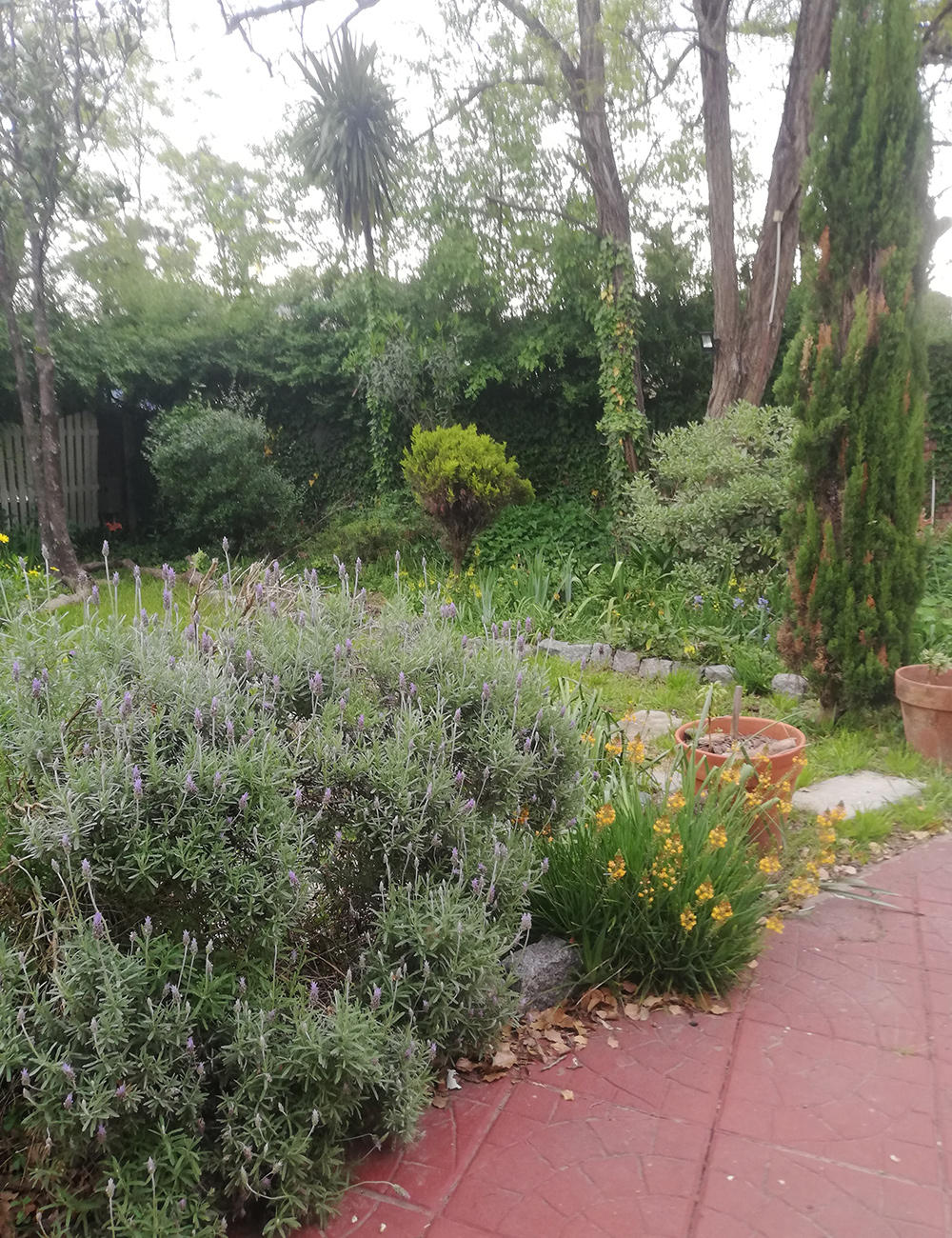
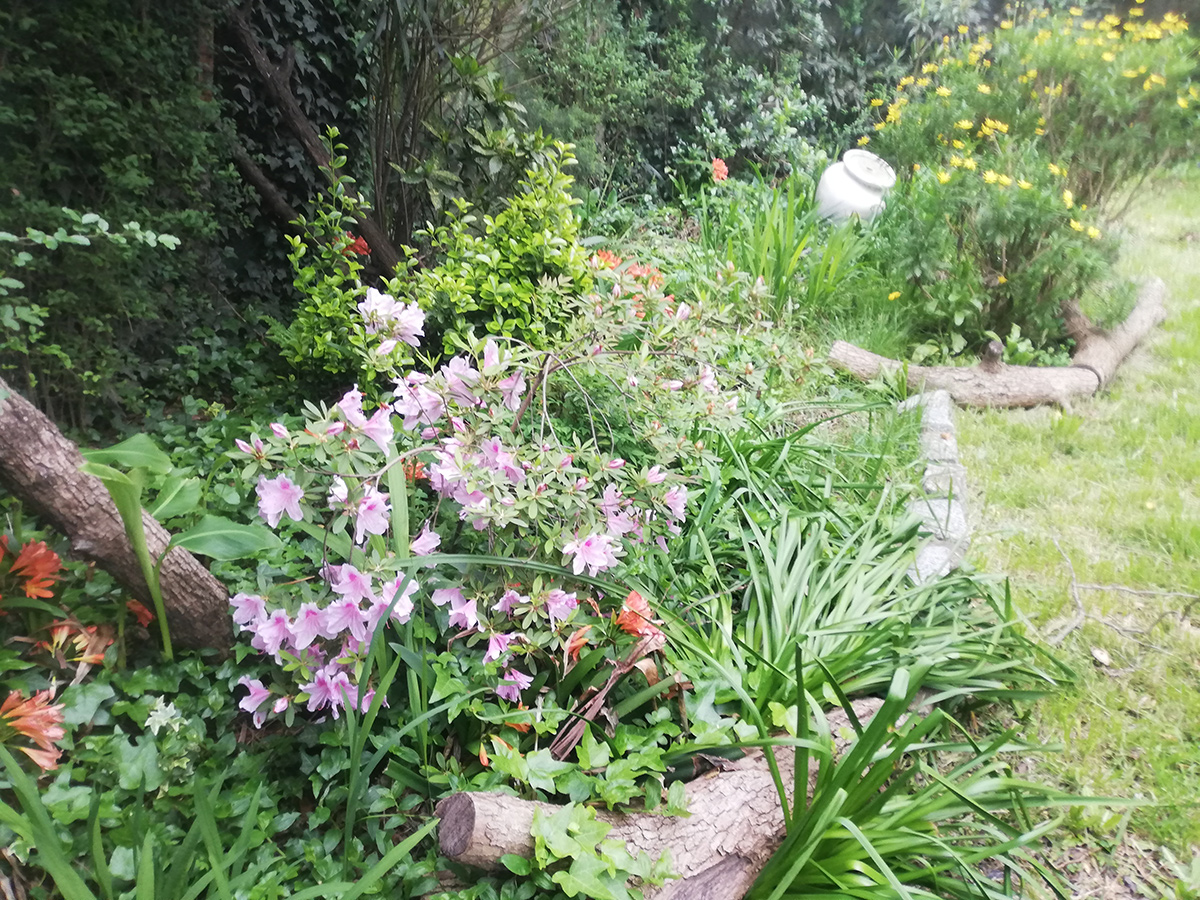
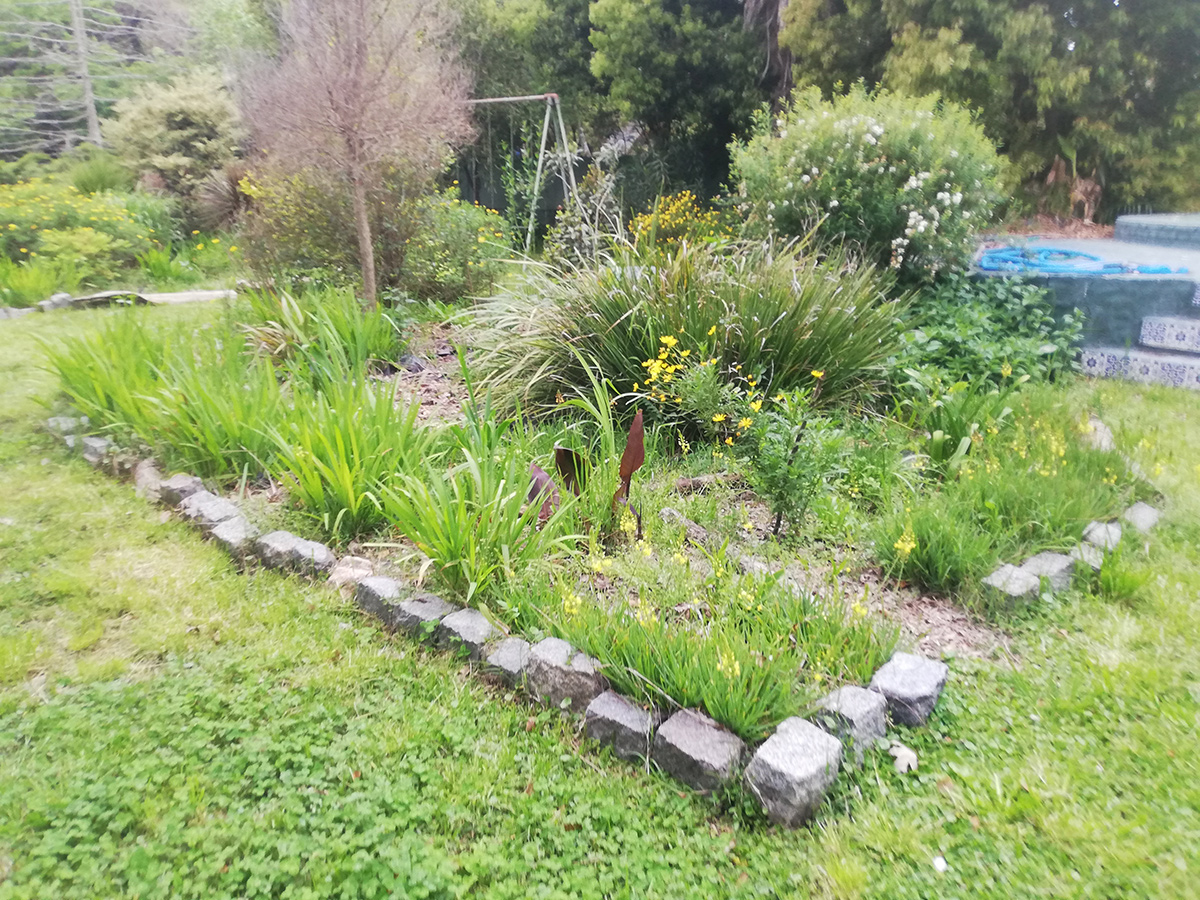
The first signs of spring are coming out in my cottage garden of Buenos Aires. Irises of deep blue and yellow colors, yellow daisies, blue Spanish scillas (Hyacinthoides hispanica, Zones 3–9), yellow bulbines (Bulbine frutescens ‘Yellow’, Zones 9–11), calendulas, a white rosebud and old rose azalea, and lavender are blooming in soft textures. It is not yet the explosion of energies of November or December here, when the sun is at its deepest power, but I love this early spring that promises the lushness and life of nature. Greetings and hugs from Argentina!

While flowers flourish and fade, Ezequiel’s beds are always filled with decadent greenery that keeps the garden looking lively. In this section, a Dutch iris (Iris × hollandica, Zones 6–9) pops against a massing of yellow and orange bulbines and taller spikes of foliage that signal more blooms to come.

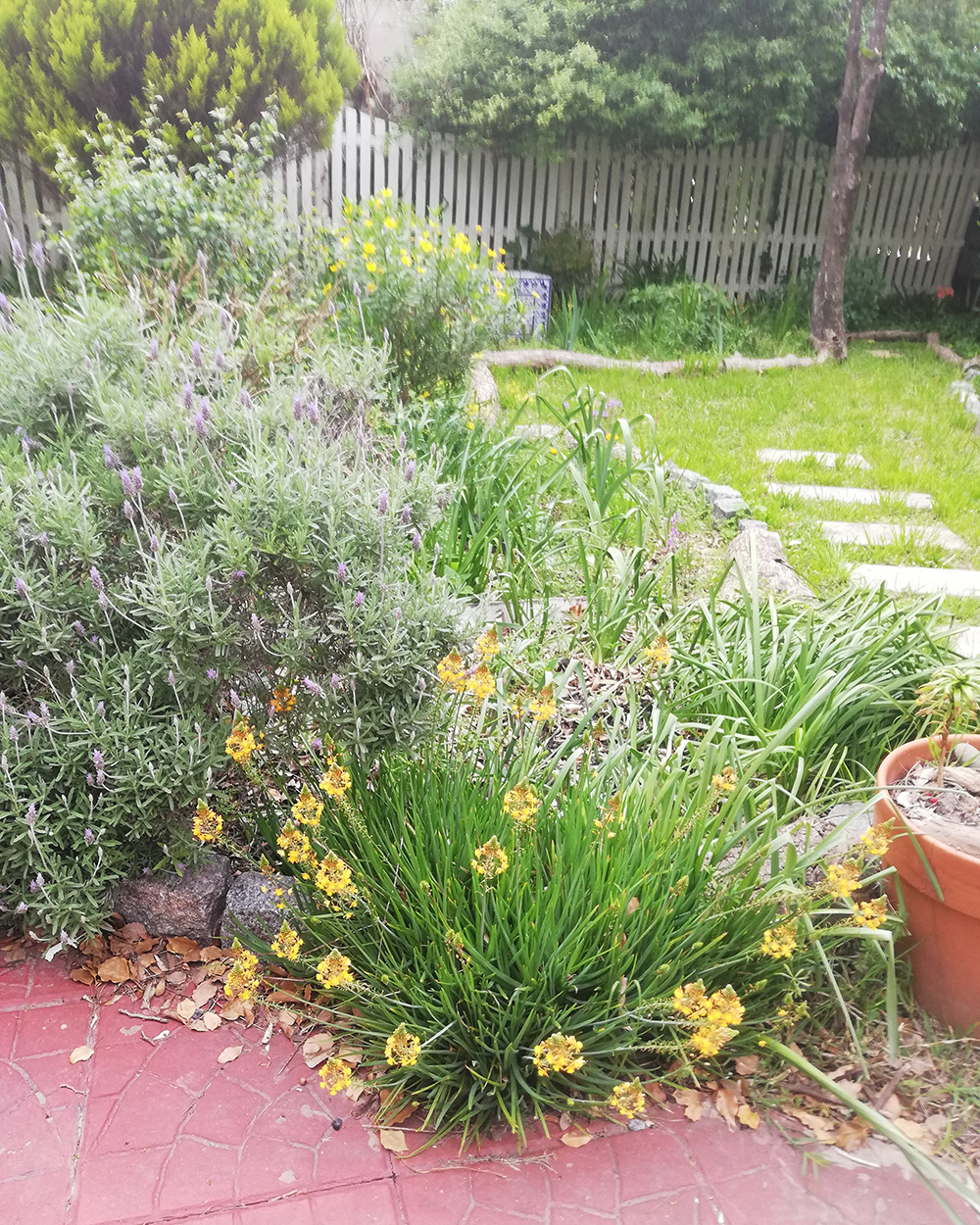
yellow and purple flowers in spring gardenAnother lovely clump of bulbine gives a better look at the slender succulent foliage that adds to the attractiveness of the plant. A South African native, it is well-loved in warmer climates for its drought tolerance but can struggle in locations that get too much fall and winter precipitation.

large lavender plant next to orange flowersAnother angle reveals more of the lavender planted alongside the bulbine—an absolutely impressive planting that is spilling onto Ezequiel’s patio. In the background, various shrubs and trees offer interesting shapes and plenty of vertical interest in the garden.

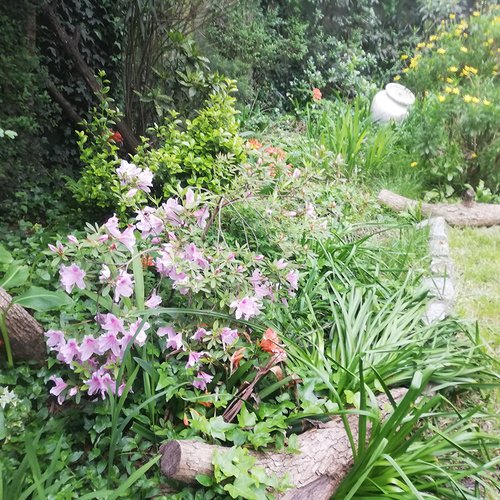
light pink azalea in front of spring gardenMore beds giving that romantic cottage-garden abundance: The foliage is particularly effective in this planting, as the light pink azaleas grow up from a luscious sea of green.

garden bed starting to come into bloom in early springThe show is just getting started in Ezequiel’s garden, but every corner is filled with healthy new growth that indicates many more flowers are on their way.

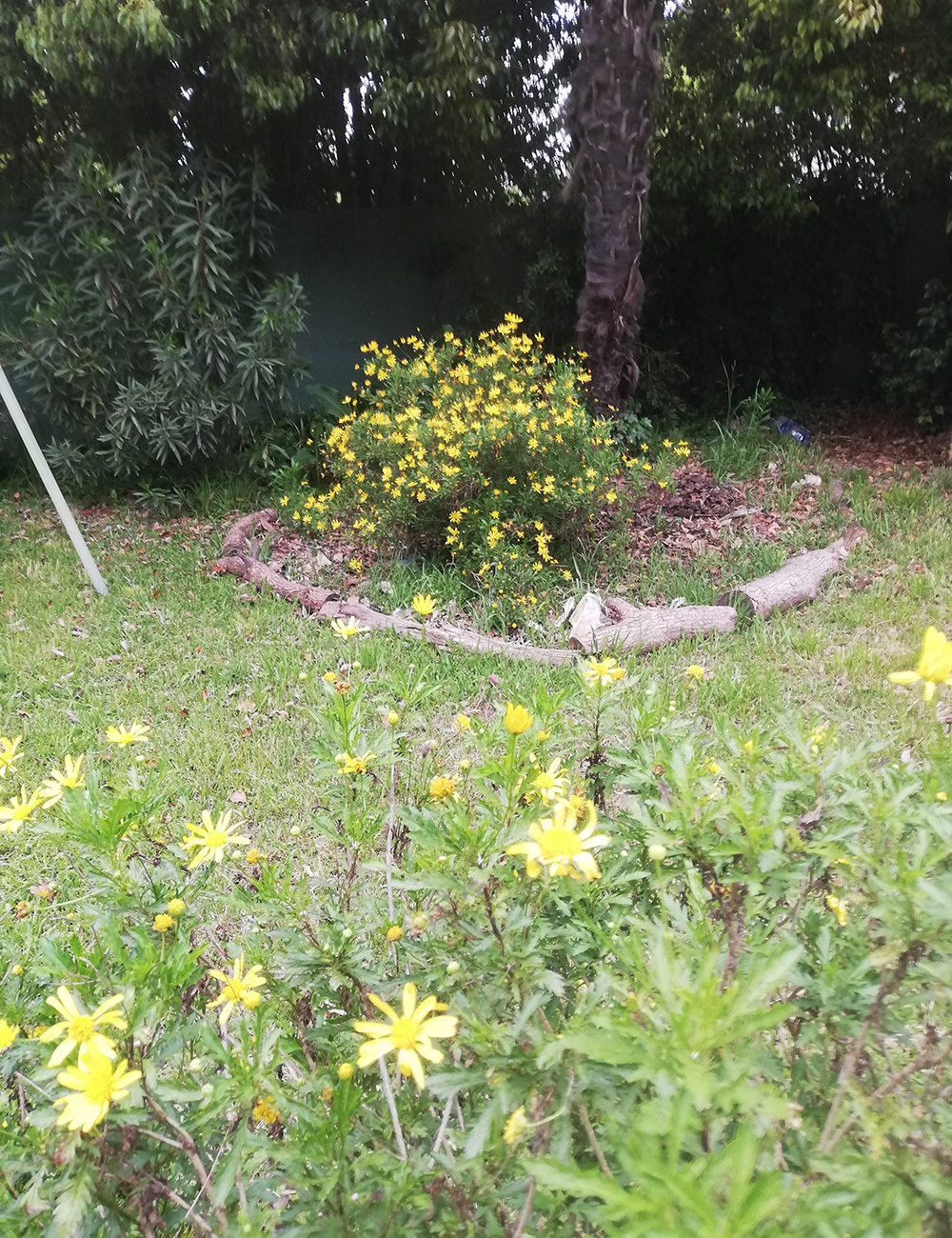
bright yellow flowers in spring gardenLastly, a couple of African bush daisies (Euryops chrysanthemoides, Zones 8–11) in Ezequiel’s garden add even more sunshine yellow to the landscape. These evergreens have fascinating deeply lobed leaves, but the bright flowers steal the show and are known to bloom year-round.

Thank you so much for another incredible update from your garden, Ezequiel! Your landscape always looks so lush and inviting, even during those early days of spring.

International gardens are rare on Garden Photo of the Day, but they are a special treat each time. If you live outside of North America, or have recently done some international travel, we would love to see your garden photos! Follow the directions below to submit photos via email, or send me a DM on Instagram: @agirlherdogandtheroad.


We want to see YOUR garden!

Have photos to share? We’d love to see your garden, a particular collection of plants you love, or a wonderful garden you had the chance to visit!

To submit, send 5–10 photos to [email protected] along with some information about the plants in the pictures and where you took the photos. We’d love to hear where you are located, how long you’ve been gardening, successes you are proud of, failures you learned from, hopes for the future, favorite plants, or funny stories from your garden.

Have a mobile phone? Tag your photos on Facebook, Instagram, or Twitter with #FineGardening!

Do you receive the GPOD by email yet? Sign up here

Air Fryer Green Beans

0

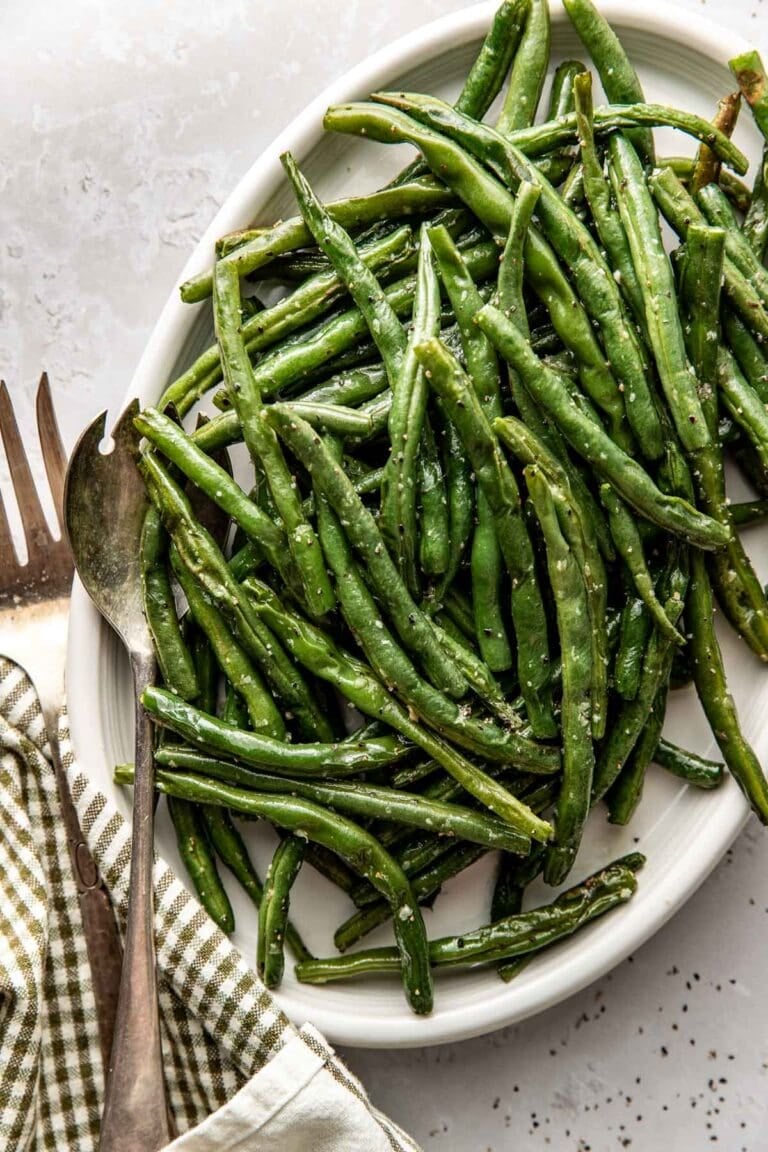
Overhead view of a platter filled with freshly roasted green beans topped with sat and pepper and garnished with lemon.These air fryer green beans are crisp, full of flavor, and require only 5 minutes of prep. They’re a simple, quick, and healthy veggie side dish that pairs well with a variety of entrees.